
society
Outrage as FG Fails to Pay NYSC’s Promised N77,000 Allowance


Outrage as FG Fails to Pay NYSC’s Promised N77,000 Allowance
The Federal Government is facing intense backlash from members of the National Youth Service Corps (NYSC) over its failure to implement the long-promised N77,000 monthly allowance, despite multiple official assurances. Frustration and anger have reached boiling point among corps members who feel abandoned in the face of an escalating economic crisis.
The government had initially announced an upward review of the NYSC stipend from N33,000 to N77,000, effective July 2024. However, delays ensued, with the Director-General of NYSC, Brig. Gen. Yushau Ahmed, citing a lack of released funds as the reason for the postponed implementation. In a bid to reassure corps members, the DG later stated that payments would officially begin in February 2025.
But as February drew to a close, corps members were left in shock and dismay after receiving only N33,000—the same outdated allowance that has been described as grossly inadequate to meet their needs in Nigeria’s harsh economic climate.
“This is Deceit!” Corps Members Cry Out
Reports from various states reveal widespread dissatisfaction, with corps members accusing the Federal Government of deception and insincerity.
A corps member serving in Abia State, who spoke to Sunday PUNCH under anonymity, decried the FG’s failure to deliver on its promises.
“The N33,000 is not enough for us. The PPA where we are posted doesn’t provide accommodation; we have to handle that ourselves. The economic situation of the country is not new to anybody. Feeding is another issue in an unfamiliar place. It’s nearly impossible to survive on N33,000 a month. PPAs don’t pay well; some pay as little as N4,000. Imagine surviving on N37,000 a month when you add the N4,000,” she lamented.
Another corps member in Osun State revealed the financial strain she has endured due to the government’s failure to implement the increase.
“The Federal Government should do something; this N33,000 is insufficient. After calculating my expenses, I see that I spend over N70,000 a month. The money I spend on transportation alone is over N12,000 monthly, excluding the days I go for CDS. I had to call my mother to ask for support because this monthly allowance is inadequate. One cannot survive on this unless one is ready to suffer.”
In Lagos, corps members expressed similar frustrations. One of them bluntly stated, “I don’t know how they expect us to survive on N33,000 when there is so much hardship. They keep promising N77,000, yet we have not seen anything.”
NYSC Officials Silent as FG Dodges Accountability
Attempts to get an official response from NYSC authorities have so far been met with silence. The Director of Communication of the NYSC, Carol Embu, failed to respond to calls or messages regarding the issue. However, a senior NYSC official, who spoke on condition of anonymity, confirmed that the scheme had yet to begin payments for the increased allowance.
With inflation at an all-time high, the cost of living soaring, and corps members struggling to make ends meet, many are now calling on the government to take immediate action and fulfill its promises. The continued failure to pay the revised allowance has fueled widespread resentment and calls for urgent intervention, as corps members grapple with financial hardship and dwindling trust in the system.
As frustration mounts, many are left wondering—will the Federal Government finally honor its commitment, or is this just another broken promise in a long list of disappointments?




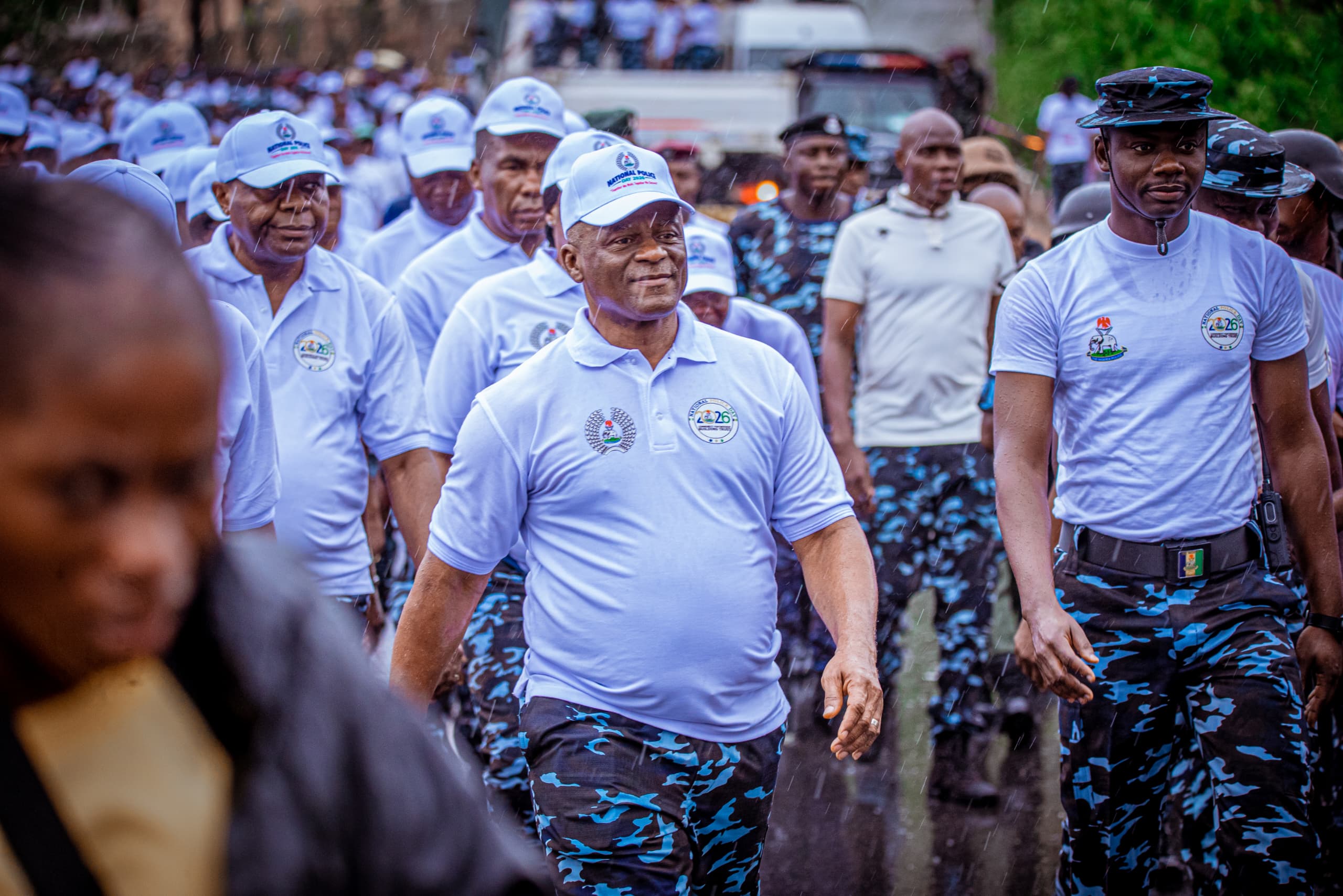
Police Day 2026: IGP Disu Leads Nationwide Walkathon To Strengthen Community Trust
The Inspector-General of Police, Olatunji Disu, on Tuesday led the management team, alongside officers and personnel of the Nigeria Police Force, in a nationwide walkathon to commemorate the 2026 National Police Day.
The event, held across state capitals and the Federal Capital Territory, formed part of activities marking Day Two of the annual celebration, themed “Community Partnership: Building Trust.”
The symbolic exercise, which drew participation from both police personnel and members of the public, was aimed at showcasing unity, discipline, and a renewed commitment to community policing and public safety.
According to the Force leadership, the walkathon underscores the Nigeria Police Force’s resolve to strengthen public trust, deepen engagement with citizens, and enhance collaboration in tackling security challenges across the country.
Participants described the initiative as a practical step toward bridging the gap between law enforcement and the communities they serve, while also promoting physical fitness and mental well-being among officers and civilians alike.
With the theme reflecting a shared responsibility for safety, the Police reiterated that sustainable security can only be achieved through active partnership with the public.
The event concluded with a renewed call for collective action under the banner: “Together We Walk, Together We Secure,” emphasizing unity of purpose in building a safer and more secure society for all Nigerians.


society
Dr. Chris Okafor invokes divine retribution upon individuals blackmailing the Grace Nation church

Dr. Chris Okafor invokes divine retribution upon individuals blackmailing the Grace Nation church
… Affirming God’s omnipotence to unveil malicious schemes.
To be frank, the ability of Doris Ogala and her associates to withstand the arduous challenges set by Senior Pastor Dr. Chris Okafor of Grace Nation Global at the culmination of the Harvest of Babies 2026 conference, the church’s flagship event, continues to elude me.
It’s advisable not to offend a powerful spiritual leader like Prophet Chris Okafor to avoid potential consequences, as seen in the situation with Doris Ogala, who was rebuked by the prophet; can she rectify the situation through confession?
Insiders close to the man of God claim that despite relentless online bullying and blackmailing, the Generational Prophet remains resolute, stating that God’s power has been evident throughout the commission’s existence. The reason for this wonderful statement is found in the scriptures, “Upon this rock I shall build my Church, and the gates of hell shall not prevail.” The more falsehoods are spread about the church and its leader, the more God elevates the church and propels him to greater heights, he asserted. He emphasized that blessings and fruitfulness are antidotes to curses, noting that God continues to bestow blessings upon the church, including miracles and the gift of children, which is one reason for the grand finale of the annual family liberation program, The Harvest of Babies.
However, the man of God issued a curse on each person speaking ill of the church, blackmailing, and uttering all sorts of falsehoods against the church, declaring that if they refused to repent within a few days, the earth would swallow them and their family members, stating that they would be of no use to themselves, their families, or society at large.
The spiritual leader cautions his followers to beware of such individuals including Doris Ogala who may taint their faith, and urges them to treat these persons as emissaries of the devil, avoiding them altogether.
Recall that the 2026 harvest of babies concluded with a remarkable birth of a miracle baby boy to a woman on the third day of the conference, accompanied by the dedication of several other miracle babies, all to the glory of God.
Christopher Sunday David writes from
Austria
“Together We Walk, Together We Secure”: Police Launch 2026 Walkathon In Abuja
The Nigeria Police Force has announced plans to host a walkathon in commemoration of the 2026 National Police Day, aimed at promoting unity, peace, and stronger community partnership.
The event is scheduled to take place on Tuesday, March 31, 2026, with participants expected to converge at the Force Headquarters Abuja by 6:00 a.m., where the walk will commence.
According to the organisers, the walkathon is designed to bring together members of the public, stakeholders, and security personnel in a show of solidarity and shared commitment to national security.
With the theme, “Together we walk, together we secure,” the initiative underscores the importance of collaboration between the police and citizens in maintaining peace and safety across the country.
Members of the public have been encouraged to participate in the exercise, which forms part of activities lined up to mark this year’s National Police Day celebration.
It is believed that the walkathon would not only foster closer ties between the police and the communities but also serve as a platform to promote awareness on collective responsibility in ensuring a safer society.


-

 society6 months ago
Religion: Africa’s Oldest Weapon of Enslavement and the Forgotten Truth
-

 news4 months ago
WHO REALLY OWNS MONIEPOINT? The $290 Million Deal That Sold Nigeria’s Top Fintech to Foreign Interests
-

 society6 months ago
“You Are Never Without Help” – Pastor Gebhardt Berndt Inspires Hope Through Empower Church (Video)
-

 celebrity radar - gossips2 months ago
Dr. Chris Okafor Returns with Power and Fire of the Spirit -Mounts Grace Nation Altar with Fresh Anointing and Restoration Grace on February 1, 2026