
society
Outrage in Elepe as Monarch Exposes Notorious Land Grabber, Adeyinka Bolaji Fakoya aka Bora’s Crimes


Outrage in Elepe as Monarch Exposes Notorious Land Grabber, Adeyinka Bolaji Fakoya aka Bora’s Crimes
…Says Endless Police Harrassment Frustrating, Disturbing Community Peace
The Baale of Elepe community in the Ikorodu area of Lagos State, Chief Ganiu Omotayo, has cried out to the state governor, Babajide Sanwo-Olu and the Inspector General of Police IGP Kayode Egbetokun, to intervene and put an end to the menace caused by protracted land grabbing activities of one Adeyinka Bolaji Fakoya aka Bora and his cohorts in the community.


The aged monarch lamented that Adeyinka aka Bora and his accomplices have also been involved in criminal intimidation, violence, evading judicial processes, threat to life, giving false information to police, and breaching public peace of the community.
Addressing the media on Wednesday in Elepe in the company of representatives of all five arms of the royal families of the town, Omotayo said he and the Ijaolu rulling royal family have become very frustrated by their inability to get justice after exploring legal options including taking many expensive trips to honour invitations at police headquarters in Abuja over the matter as the notorious land grabbers, led by Adeyinka have continued to sell lands duly owned by people for decades with clear titles, and evade judicial prosecution while truncating effort of various police formations to curb his ciminal and atrocious activities and bring him to justice.
The landgrabber has instead perfected a habit of courting different police formation with false information, for endless and indiscriminate arrest and intimidation of the aged monarch and community youths, while refusing to attend susbsisting police interviews with parties, and prosecution processes.
“As an elder, I’m tired of the endless circle and Adeyinka has refused to let peace reign despite all offers the community has extended to him which he usually takes before resuming his violent activities again. Even when we gave him and youths acres of land, he accepted and sold it but returned to his criminal ways thereafter.
“Once he writes one frivolous petition to police and I attend their invitation, he will not show up for interview, the next we will hear is another petition in another police formation. When they invite us and I attend, he will never show up. He did that at SCID, Panti, also at Zone 2 Command Headquarters, Onikan Lagos, and also at
Inspector General of Police Monitoring Unit, Force Headquarters, Abuja. He has been playing this hide and seek game but refused to show up at Area N Police Area Command in Ijede, Ikorodu where he is a wanted person for jumping bail since 2017.
“Even when we went with police officers from Ijede Area Commander to the lands unlawfully invaded by Adeyinka, we met him and his cohorts in company of some other police officers. It was decided that all parties and the two police groups return to office of Area Commander but enroute police station, Adeyinka vanished leaving us to wait out the entire day at Area Commander office but he never showed up since then.”
The visibly worried traditional ruler narrated how Adeyinka invaded and started selling lands owned by late Chief GOK Ajayi, SAN, since 1975, to unsuspecting buyers from 2016 and despite being warned refused to stop and as a result was arrested and arraigned. Due to his unrepentance, a petition to Area N Police Command by the community led to his arrest but he later ran away with his surety and since became untraceable by police.
He added that having spent almost 50 years on throne as the monarch of Elepe town, he and the ijaola Royal family members have become perplexed by indiscriminate harrassment from some police officers acting on instructions of Adeyinka, as well as having to endlessly bear the financial burdens of at least five visits to Police Headquarters in Abuja and many offices in Lagos, with no result while the culprit remains untouchable for the police and stayed away from lawful prosecution.
He revealed that Adeyinka at will comes to town in company of violent cultists with guns and other dangerous weapon to cause unrest and threatened his life.
He said he enjoyed the majority support of the lawful youths of the town because as a father after the youths had initially requested for share of community land, he had ensured the community gave out two acres to them, prompting them to sign undertaking to support the traditional leaders and maintain peace.
Adeyinka however had after exhausting the sales of the lands greedily proceeded to grabbing already owned lands and fomenting chaos with the elders, prompting other community youths to dissociate from him and his nefarious activities.
He appealed to the government and police authorities to save him and the royal family from the dilemma of the huge cost of attending endless meetings in Abuja while the assailants appear untouchable in Lagos, evading prosecution.
One of his numerous petitions to the police authorities on December 14, 2017 , signed by his lawyers read in part, “According to our Client, one BOLAJI ADEYINKA (A.K.A BORA) a notorious and dangerous criminal popularly known for his act of land grabbing, encroachment and selling of other people landed properties has continued to exert efforts to truncate the effort of various Potice formations to curb his ciminal and atrocious activities in order to avoid the lonig arm of the law.
“That sometime in 1975, our Client’s forefather sold portion of the land at Ewu Elepe to various persons, and these people have been in peaceful possession and quiet enjoyment of their landed properties until sometime last year when our Client received a call from Mrs. Ajayi who informed our Client that the said Bolaji Adeyinka A.K.A (BORA) encroached on her husband’s land and sold portions
thereof to unsuspecting buyers.
“That our Client who did not have prior notice of the unlawful and criminal
activities of the said Bolaji Adeyinka and his cohorts warned the said Bolaji Adeyinka to desist from his unlawful and criminal dealings with other people’s lands but despite our Client’s warnings the said Bolaji Adeyinka continued in his unlawful and criminal activities and as a result of which he was arrested by the police and arraigned before the Magistrate Court of Lagos State, Ijede, via Ikorodu, Lagos State in Charge No. IKD/E/06/2017.
“That thereafter, the said Bolaji Adeyinka did not stop in his criminal activities, he
intensified his acts of encroaching other people’s landed properties resulting in breach of peace, and public tranquility and our Client wrote a petition to the Area
Commander, Area N Command Headquarters. ljede, via Ikorodu, Lagos State, and upon which the said Bolaji Adeyinka was arrested by the police and granted bail with surety, and directed to report to the said police station on a later date.
“That the said Bolaji Adeyinka and his surety ran away and did not comply with the directive to report to the police at the said Area N Command Headquarters, Ijede, via Ikorodu, Lagos State and all efforts to trace them by the police were abortive until sometime in July, 2017 when our Client received an invitation from the office of the Deputy Commissioner of Police, SCID, Panti, Yaba, Lagos directing our Client to report to Officer in Charge, General investigation (D”), SCID, Panti, Yaba, Lagos.
“That upon the above, our Client honoured the said invitation and went to the said
Officer in Charge, General investigation (D3), SCID, Panti, Yaba, Lagos on 30th May
2017 where our Client’s statement was obtained, and the parties again directed to
attend an interview with the Officer in Charge, General investigation (D3), SCID, Panti, Yaba, Lagos on several occasions but on all such occasions, and throughout the period our Client reported to the said Officer in Charge, General investigation (D’),. SCID, Panti, Yaba, Lagos the said Bolaji Adeyinka (A.K.A BORA) refused to show up, and upon which the said Officer in Charge, General investigation (D’), SCID, Panti, Yaba, Lagos returned the case file to Area N Command Headquarters, ljede, via Ikorodu, Lagos State.
“That as soon as the said Bolaji Adeyinka realized that the police at General
investigation(D”), SCID, Panti, Yaba, Lagos could not to be used as a tool for the
perpetration of his unlawful and criminal activities, the said Bolaji Adeyinka again
wrote another petition to the Assistant Inspector General of Police, Zone 2 Command Headquarters, Onikan Lagos, and our Client was again directed to report to the Officer in Charge, Zonal Monitoring Unit; Nigeria Police, Zone 2 Command Headquarters. Onikan Lagos: vide
an invitation with AR: 3000/SZN.2/MTV/TM2/VOL.1. Dated. 7th of July, 2017.
“That our Client again honoured, the said Police Invitation and as a good citizen
volunteered his statetent to the police, and the parties were again directed to come
for an interview with the -Officer in- Charge, Zonal Monitoring Unit, Zone 2 Command.
“That recently our Client again received a letter of invitation from the office of the
Inspector General of Police Monitoring Unit, Force Headquarters, Loius Edet House, Shehu Shagari Way, Abuja by which invitation it is so glaring that the said Bolaji
Adeyinka again intends to use the said police formation to truncate ongoing
investigation into the matter and prevent the possibility of his being arraigned-in court for his numerous criminal activities by the police at General Investigation, Force
Headquarters, Alagbon, Ikoyi, Lagos.
“That upon the preceding paragraph, our Client who live in Lagos had once again been directed to report to the police at the Inspector General of Police Monitoring Unit
Force Headquarters, Loius Edet House, Shehu Shagari Way, Abuja without any regard for the enormous cost, expense and risk such a journey portend to our Client who is a pantry community leader in Ewu Elepe, via lkorodu, Lagos State.
“Our Client is of the sincere belief that the the matter for which our Client is being
summoned by the police, at the Inspector General of Police Monitoring Unit, Force
Headquarters, Loius Edet house, Shehu Shagari Way Abuja is already being effectively handled by the police at General Investigation, force Headquarters, Alagbon, Ikoyi, Lagos and for the fact that both parties reside in Lagos till date, it will serve the ultimate end of justice if the matter is left for the police at General Investigation, Force Headquarters. Alagbon., Ikoyi, Lagos for the conclusion of investigation into the matter
in the interest of all concerned.
We as Solicitor on behalf/of our Client-humbly pray that you look into this matter and prevent the desperate efforts of the said Bolaji Adeyinka. (A.K.A BORA) and his cohorts to use the Nigeria Police as a tool in an attempt to escape prosecution for their criminal activities by bringing them to book.”


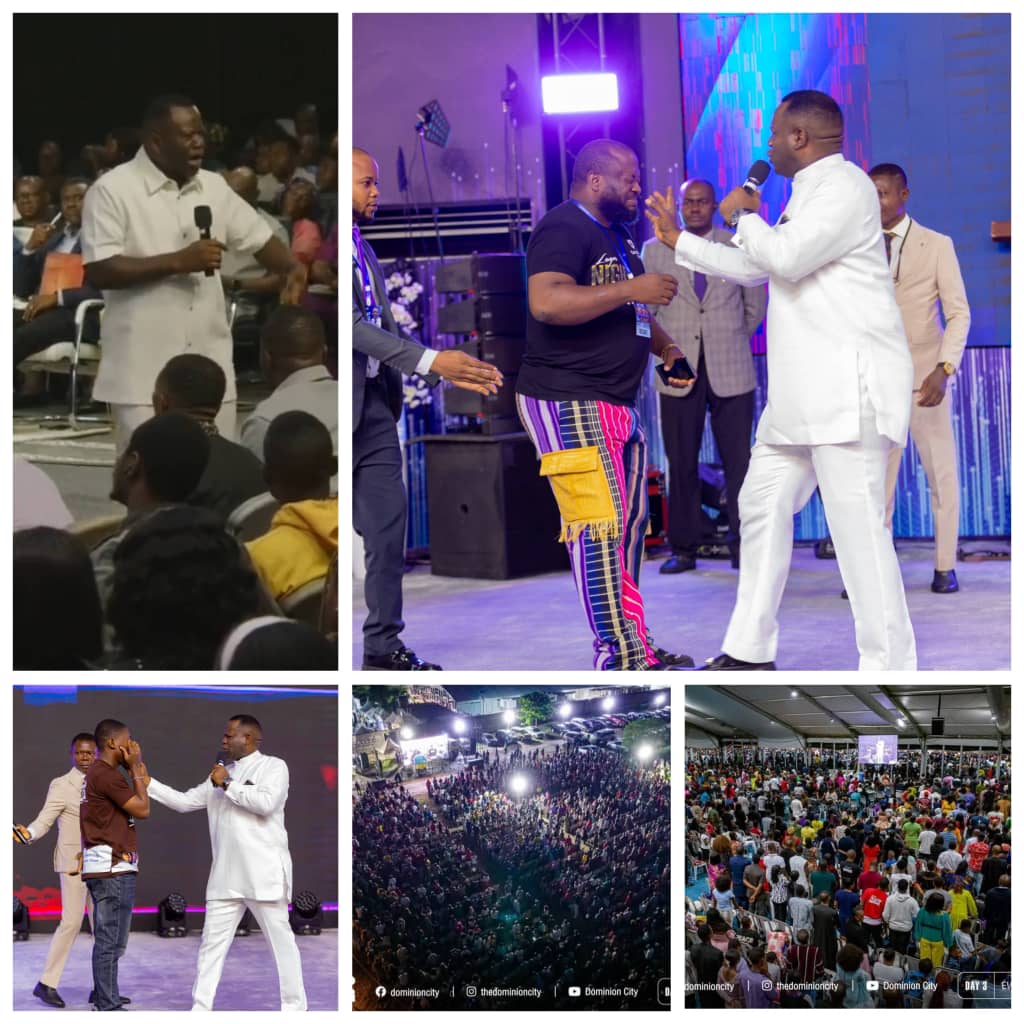
Revival Atmosphere as Dominion City Launches Night of Glory 2026.
Lagos – The atmosphere was charged with faith, worship, and expectancy as Dominion City’s Global Camp Meeting 2026 entered its peak with the first day of the “Night of Glory,” drawing thousands of worshippers to Lagos and Enugu in a powerful display of spiritual revival.
Held at the Golden Heart Place, Ajah, Lagos, the Friday evening gathering marked a significant moment in the ongoing six-day conference themed “Redigging the Wells of Our Fathers.” Participants from across Nigeria and beyond converged both physically and online, united by a shared hunger for divine encounter and transformation.
From the outset, the meeting was characterised by intense worship sessions led by gospel ministers, creating an atmosphere many attendees described as “tangible with God’s presence.” The night quickly transitioned into sessions of fervent prayers, prophetic ministrations, and teachings centred on restoration, healing, and spiritual awakening.
Presiding over the meeting, Dr. David Ogbueli, founder of Dominion City, charged participants to reconnect with foundational truths and spiritual disciplines necessary for personal and societal transformation. He emphasised that the “Night of Glory” was designed as a moment of divine visitation where destinies could be reshaped.
“As we redig the wells of our fathers, we are reconnecting with ancient graces and covenant realities that produce undeniable results,” he declared.
As the night unfolded, several remarkable testimonies were shared, reinforcing the theme of supernatural intervention. Among them was the case of a 14-year-old girl who was reportedly delivered from a seven-year struggle with pornography addiction, an experience that drew emotional reactions from the congregation.
Other testimonies included reported healing from cancer, recovery from a severe skin infection attributed to spiritual affliction, the healing of a heart-related condition, and three years of a non-menstrual period. Attendees also recounted instances of restored hearing and sight, with individuals testifying to improvements from partial deafness and blindness, among others.
Fathers of faith present were Barrister Emeka Nwankpa, Pastor Yemi Ayodele, Rev. Pade Tokun, Apostle Gbenga Adegbenro, Rev. Mike Adegbile, and others. Other Ministers present, including Pastor Dr. Charles Ndifon, Pastor Randy Mitchell, Apostle Ikechukwu Nnajiofor, and others, reinforced messages of faith and the power of God to intervene in human situations. They encouraged worshippers to remain steadfast and receptive, noting that miracles often spring from an atmosphere of unwavering belief.
Beyond the miraculous, the gathering also underscored a broader call to moral and spiritual renewal. Church leaders reiterated the need for believers to embody values that can positively influence society, especially in a time of perceived moral decline.
The “Night of Glory” is part of the larger Global Camp Meeting, which began on April 1 and will run through April 6, featuring daily teachings, leadership sessions, and specialized programmes for youths and families.
Organisers say expectations remain high for the second night, with many believing that the wave of miracles and transformation witnessed on the first night is only the beginning.
For many attendees, however, the message was clear beyond the signs and wonders; the true essence of the gathering lies in a renewed commitment to live transformed lives and impact society. //END.//
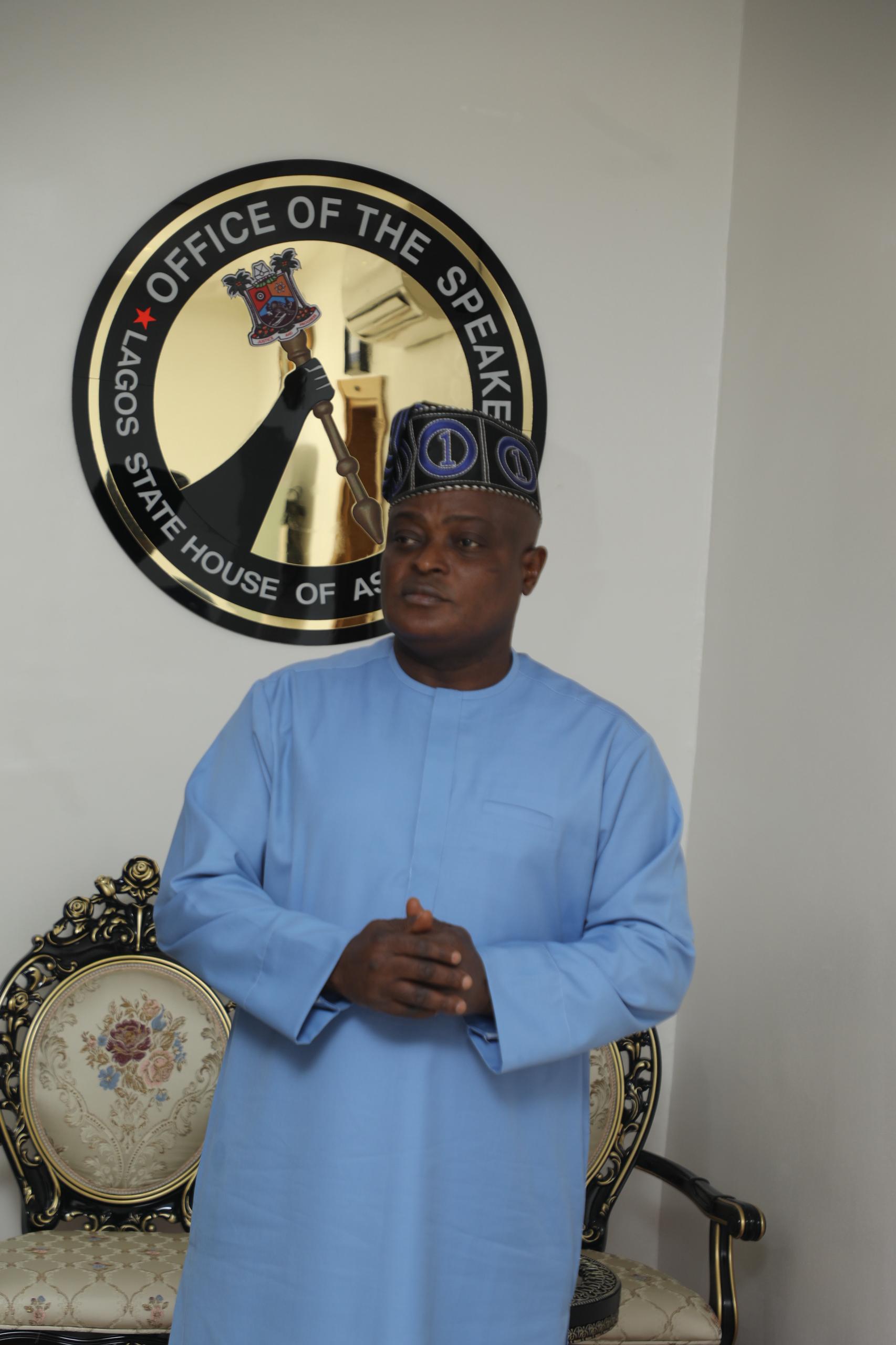
Easter: Obasa Urges Christians To Embrace Hope, Unity, Renewal
The Speaker of the Lagos State House of Assembly, Rt. Hon. Mudashiru Obasa, has congratulated Christian faithful in Lagos and across Nigeria on the celebration of Easter, urging them to draw strength from the lessons of Christ’s resurrection.
In his Easter message, released by his Chief Press Secretary, Mr. Dave Agboola, Obasa described the season as a reminder of victory over despair, renewal after trials, and the triumph of light over darkness. He noted that just as Christ overcame death, Nigeria can overcome its current challenges if citizens remain steadfast, prayerful, and committed to unity.
“Easter is a season of hope and renewal. As a nation, we face economic pressures and security concerns, but the resurrection teaches us that no situation is beyond redemption. Let us roll away the stones of division and despair, and work together for peace, justice, and prosperity,” the Speaker said.
He called on Lagosians to continue to show love and compassion to one another, stressing that collective effort is key to building a stronger Lagos and a better Nigeria.
Obasa prayed that the joy of Easter would fill homes with renewed faith and guide both leaders and citizens toward a brighter future.

*PDP CHIEFTAIN, ONIRETI RESIGNS FROM PARTY, CITES PERSONAL REFLECTION
A former House of Representatives candidate, Olufemi Onireti, has formally resigned his membership of the Peoples Democratic Party (PDP) in Oyo State.
His resignation was conveyed in a letter addressed to the Chairman of PDP Osupa Ward 9, Ogbomoso North Local Government, on Thursday.
Onireti described the decision as a difficult but necessary step after what he termed a period of “deep personal reflection.”
“I hereby formally resign my membership of the Peoples Democratic Party (PDP), effective immediately,” he wrote.
He acknowledged his years of active involvement in the party, including contesting for the House of Representatives in the last general election, noting that the PDP had offered him a platform for political participation, service, and growth.
Despite his exit, Onireti expressed appreciation to party leaders and members for the support he enjoyed over the years.
“I remain grateful for the opportunity to serve and for the relationships and experiences I gained during my time in the party.
I wish the party well in its future endeavours,” he added.
The development is expected to generate discussions within the Ogbomoso North political circle, as observers await his next political move.


-

 society7 months ago
Religion: Africa’s Oldest Weapon of Enslavement and the Forgotten Truth
-

 news4 months ago
WHO REALLY OWNS MONIEPOINT? The $290 Million Deal That Sold Nigeria’s Top Fintech to Foreign Interests
-

 society6 months ago
“You Are Never Without Help” – Pastor Gebhardt Berndt Inspires Hope Through Empower Church (Video)
-

 celebrity radar - gossips2 months ago
Dr. Chris Okafor Returns with Power and Fire of the Spirit -Mounts Grace Nation Altar with Fresh Anointing and Restoration Grace on February 1, 2026