society
Pen for Hire! OSMOSERVE Rubbishes Blogger’s Attempt To Tarnish Company, MD’s Reputation
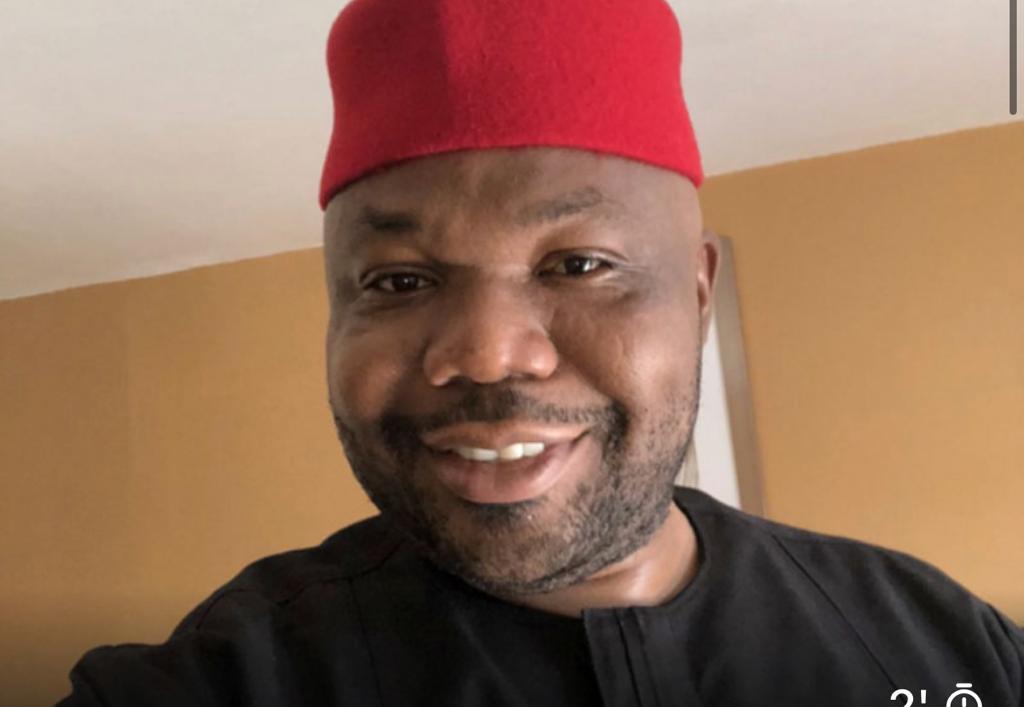
Necessity is the regular excuse of rapscallions. It is the mephistophelean plea used to legitimize devilish deeds, like the willful maligning of upright men by a hack writer, like Jackson Ude, the owner of Pointblank blog.
Ude recently embarked on a mission to malign patriotic and industrious businessman, Scott Tommey, whose exploits in the business sector have become a source of worry and sleepless nights to Ude and perhaps, his sponsors.
Ude in a manner unbecoming of a journalist launched an attack against the businessman, writing to harass the latter with trumped-up allegations fed to him by his malefic cohorts.
In the performance of his hatchet work, he contacted the illustrious businessman, quoting slanted facts and outright lies, in the purported discharge of his journalistic role.
But since he has deemed it fit to whore himself out to corrupt and faceless elements with destructive intent, the Media Consultant to Osmoserve Global Limited, Obafemi Ajayi, has slammed the controversy-prone blogger, over his story in which he imputed wrong and malicious motives into the business transactions of the Managing Director, Scott Tommey.
In the latest tirade tweeted by one Jackson Ude, whose stock-in-trade has been to fabricate utter falsehood, and disseminate same via multiple social media platforms, the pen-for-hire writer alluded that Scott Tommey is fronting for the Niger Delta Affairs Minister, Godswill Akpabio.
In all ramifications, Tommey possesses home-grown intelligence that complements his sophistication. A shrewd manager of resources and a billionaire with benevolent mien, Tommey’s journey to the summit of entrepreneurial success is strewn with tales of struggles, determination and destiny.
Tommey has done extraordinarily well to have built a world class multi-billion business enterprise in the mould of Osmoserve, whose specialty has brought physical infrastructural transformation to the Niger-Delta region. In his bid to play down his ingenuity and business savvy, Ajayi attributes Osmoserve’s climb to the pinnacle of entrepreneurial success to sheer determination, providence and God’s grace. He is not anybody’s bagman.
Debunking the story as utter lies, Prince Obafemi Ajayi, considers “very laughable the fact that Ude and his sponsors, as well as those mischievously escalating the fake news, were so blinded by mischief and pull-him-down syndrome that they could see the clear holes in their fabrication. Mr Scott Tommey is well respected businessman and he is not Akpabio or anyone’s front. The assertion is not true”.
Ajayi explained that Jackson Ude “is in the trade of tarnishing Nigerian brands with unsubstantiated contents. He pointed to the petition of Vice President Yemi Osinbajo to the Inspector-General Police, demanding a thorough investigation of the blogger after publishing malicious story, in which he alleged that the suspended acting Chairman of the EFCC, Ibrahim Magu, facing a presidential probe, told the investigative panel that he gave N4bn to Osinbajo. Not only has Magu debunked the claim; the panel has also released statement putting a lie to Ude’s allegation.
“This is calling on unsuspecting public to be wary of Ude’s shenanigans, as we also wish to sound a note of warning to all those who have made it their pastime to sponsor malicious write-ups, tweets and online publications against Osmoserve Global and our MD, that their day of reckoning is not far away,” Ajayi expressed.
“We have put our legal team on notice to deal with such malicious write-ups. We also urge the general public to kindly disregard the Ude mischievous tweets and similar others, for what they are: blatantly false and malicious,” he advised.
society
2027 Is Youths O’Clock: Ordinary Young Nigerians Will Build the Great Nation We Deserve.
By George Omagbemi Sylvester | Published by SaharaWeeklyNG.com
“Great nations are not built by the rich alone, but by the courage of ordinary youths who rise from humble beginnings.” That truth is not poetry; it is policy. It is the spine of every national rebirth. And it is Nigeria’s most urgent assignment as 2027 approaches. The class of 2027 must be the generation that trades CYNICISM for CIVIC MUSCLE, that takes our frustrations and forges them into reforms, that turns raw numbers into organized power. Simply put: 2027 is calling for Youths O’clock.
Across history, NATION-BUILDING is rarely a billionaire’s project; it is the hard, hopeful, everyday work of young citizens who show up (at the ballot, in town halls, in classrooms, on factory floors, in code labs, on farms, and in community boards. Nigeria has that workforce in abundance. Africa is the youngest continent on earth; in sub-Saharan Africa, 70% of people are under 30, and young Africans are projected to comprise about 42% of the world’s youth by 2030. This is not a statistic to admire; it is a mandate to act.
BUT POTENTIAL IS NOT DESTINY. If we don’t translate youthful energy into tangible power (votes, policies, enterprises, and institutions), our “DEMOGRAPHIC DIVIDEND” becomes a DEMOGRAPHIC DEBT. The window is open, but it will not stay open forever. In 2023, young Nigerians proved they are not spectators. Nearly 40% of registered voters were under 35, and youth drove unprecedented mobilization both online and on the streets. The SURGE was REAL; THE LESSON is CLEAR: when youths organize, the political class pays attention; willingly or otherwise.
Of course, COURAGE WITHOUT PATHWAYS is a CUL-DE-SAC. That is why the Not Too Young To Run Act (2018) matters. It didn’t just trend; it changed the rules, lowering age limits for key offices and opening the door for independent candidacy. Reform is never a miracle; it’s the residue of relentless youth organizing, and Nigerian youths achieved it. Now, that door must be kicked fully open by a 2027 wave of competent, ethical, ground-game-ready candidates.
Yet one can’t talk about 2027 without naming the economic headwinds young people face. Jobs remain too few, wages too high, and opportunities too gated. Globally, the youth unemployment rate hovered around 13% in 2023, masking deep regional inequalities; in Nigeria, official youth unemployment ticked up in 2023 under a revised methodology that many analysts debate, reminding us why UNDEREMPLOYMENT and INFORMALITY (not just joblessness) must be central to policy. If a reform does not turn schooling into skills and skills into dignified work, it is a slogan, not a solution.
So what must young Nigerians actually do between now and February 2027?
1) OWN THE REGISTER, OWN THE RESULT. Registration is power. A movement that does not obsess over PVCs is a mood, not a force. Learn from 2023: the line for your card is the first queue to your policy outcomes. Demand transparent voter data, track logistics, cs, and volunteer as party agents and observers. Youths do not just vote; we verify.
2) RECRUIT AND RUN. Stop waiting for “GOOD PEOPLE” to appear. Recruit them or be them. The legal barriers are lower now. Build slates of youth candidates for local councils, state assemblies, and the National Assembly. Pair them with seasoned technocrats and community elders in advisory roles. Competence is not anti-youth; it’s the oxygen of youth credibility.
3) BUILD POLICY FROM THE GROUND UP. The economy is not an abstract riddle. It is transport costs, stable power, affordable data, reliable security, and access to finance. Focus your manifestos on: (a) SKILLS-TO-JOBS PIPELINES (apprenticeship, coding academies, TVET married to real employer demand), (b) AGRO-INDUSTRIAL VALUE CHAINS that turn harvests into exports, (c) MSME capital that is patient, transparent and regionalized and (d) LOCAL INFRASTRUCTURE that cuts business friction—roads, markets, cold storage and mini-grids. Judges of seriousness will look for budget line, not buzzwords.
4) TURN PROTEST INTO POLICY. The world has watched youth uprisings reshape agendas from Nairobi to Lagos. But historic protests without INSTITUTIONAL FOLLOW-THROUGH risk becoming anniversaries instead of laws. Mobilize into the committees where procurement is designed, the town halls where tariffs aresett and the party primaries where tickets are traded. If policy is where the sausage is made, then 2027 must be where youths own the kitchen.
5) GUARD THE INFORMATION SPACE. Disinformation is voter suppression by other means. Youth-led fact-checking hubs, precinct-by-precinct results collation, and credible parallel vote tabulation will be decisive. Technology is not a savior, but in skillful hands it is a shield.
6) CLOSE THE REPRESENTATION GAP. Youths are not a monolith; inclusion is strength. Bring in women, rural youths, artisans, student leaders, creatives, techies, and persons with disabilities. Let your coalitions look like the country you seek to govern.
If this sounds like a moral crusade, it is. As Kofi Annan reminded the world, “No one is born a good citizen; no nation is born a democracy. Rather, both are processes that continue to evolve over a lifetime.” The generation that commits to that process (patiently, persistently, pragmatically) wins the future.
And if this sounds like a development strategy, it is that too. Amartya Sen defines development as the expansion of real freedoms to live, learn, work, and participate meaningfully. Youth empowerment is not window dressing; it is the engine of that expansion. Elections without expanded freedoms are ceremonies; with them, they become catalysts.
Skeptics will say, “We’ve heard this before.” Fair. Hope has been weaponized too many times in our politics. That is why 2027 must be different in METHOD, not just in MOOD. Replace personality cults with policy contracts (one-page, measurable commitments signed publicly by candidates, tracked quarterly by civic group, and published online. Replace patronage rallies with door-to-door listening, Ward Development Scorecards, and clear procurement dashboards. Replace “big man” endorsements with credible youth-elder compacts (inter-generational alliances that blend idealism and institutional memory.
Above all, replace the myth that change must be spectacular with the discipline that change must be systematic. Nations are built less by grand speeches than by thousands of small, sturdy decisions made daily by citizens who refuse to outsource their future. As Nelson Mandela said, “It always seems impossible until it’s done.” The work before us is not impossible; it is simply incomplete.
Let’s test this thesis with hard realities:
Demography is on the youth’s side. The youngest continent is ours; the youngest electorate in our history is alive now. If we don’t invest this advantage in 2027, it compounds against us in 2031.
The law is edging in our favor. The age barriers are lower; candidacy is more accessible. But legal keys unlock nothing without organized hands to turn them.
Economics is the battleground. Youth joblessness and underemployment corrode social trust and fuel brain drain. Sound, youth-centered economic policy (anchored in SMEs, skills, and infrastructure) is not a talking point; it’s survival.
So here is the challenge and the promise: if ordinary youths move from hashtags to handbooks, from outrage to outcomes, from “THEY” to WE, Nigeria can do in the 2027 (2031 cycle what others take decades to attempt) bend the arc of our politics toward competence, bend the arc of our economy toward inclusion and bend the arc of our society toward dignity.
The rich will fund projects; that is fine. But great nations are built by bus conductors who insist on receipts, by market women who demand bright-lit streets and fair taxes, by coders who ship local solutions, by nurses who refuse to normalize avoidable deaths, by teachers who measure learning rather than attendance, by artisans who formalize their craft, by farmers who join cooperatives, by creators who monetize culture, by athletes who anchor community pride and (above all) by voters who connect every promise to a performance review.
This is our moment. Youths O’clock is not a slogan; it is a schedule. It means registering now, organizing now, vetting candidates now, training polling agents now, drafting ward-level manifestos no, and building cross-party youth caucuses now. It means refusing to be rented crowds and choosing to be responsible stewards. It means pursuing power not as a trophy but, in the words of a wise admonition, as a loan to be repaid with service.
If we keep faith with that ethic, 2027 will not just change who sits in office; it will change what office is for. And then the old lie (that Nigeria is too complicated to fix) will finally meet its match in a new, stubborn truth: that ordinary young Nigerians, rising from humble beginnings, carried this republic on their shoulders and built something worth handing to their children.
The clock is ticking. The future is calling. 2027 is Youths O’Clock.
society
CANAAN CITY RESIDENTS DEMAND IGP ACTION OVER POLICE-BACKED LAND INVASION IN ONDO
Ondo, Nigeria – The residents of Canaan City Crescent, Fagun, Ondo West Local Government Area, have called on the Inspector General of Police, Kayode Egbetokun, to urgently intervene in an ongoing land invasion allegedly aided by officers of the Ondo State Police Command and SWAT operatives from Akure.
The disputed land, located at the end of Road 13 Avenue 14, Fagun, Ondo, has been the subject of multiple legal battles since 2007. From the Customary Court to the High Court and up to the Court of Appeal in Akure, the Fasimoye family has consistently been declared the lawful owner.
Despite these clear and repeated court judgments, in August 2023, a group led by Mr. Olanrewaju Fawehinmi and Mr. Williams allegedly invaded the land, destroying crops, obstructing access to property, and intimidating residents, with police backing. Since the invasion, residents have reported a spike in armed robbery, kidnapping, and burglary in the community.
A pending case at the Federal High Court, Akure, between the Fasimoye family and the Nigerian Police Force has not deterred the ongoing harassment and illegal occupation.
The residents are demanding that the IGP:
1. Launch an immediate investigation into the role of police officers in the illegal occupation.
2. Withdraw all police protection from the invaders until the court determines the case.
3. Guarantee the safety of lawful property owners and residents.
Speaking on behalf of the residents, Dr. Bolaji O. Akinyemi stated:
> “If the Nigerian Police can be weaponised by private interests to subvert court rulings, then no citizen’s property or peace is safe. We demand the IGP act now to restore the integrity of law enforcement.”
The residents warn that silence from the IGP will embolden further impunity and erode public trust in the Nigerian Police Force.
Contact:
Residents’ Association – Canaan City Crescent, Fagun, Ondo West LGA
Email: [email protected]
society
Revolutionizing Nigeria’s Energy Future: The Gbenga Komolafe Story
By Moses Udo
Among the constellation of Nigeria’s leadership, there are individuals whose vision and tenacity do more than just inspire people; they are representatives and architects of transformation. Engr. Gbenga Komolafe, helming the Nigerian Upstream Petroleum Regulatory Commission (NUPRC), is irrevocably one such luminary. His leadership over this critical agency has been exceptionally administrative; it is emblematic of the purposeful reform that has become one of the answers to the clarion calls within the broader framework of President Bola Ahmed Tinubu’s Renewed Hope Agenda.

Komolafe’s leadership has yielded structural innovations, an article that can be likened to a Master builder who is laying the foundation for a high skyscraper. He is constructing a new framework for Nigeria’s oil and gas industry. And for the record, he has championed non-kinetic strategies to quell crude oil theft, a feat which has remarkably reduced losses to 5,000 barrels per day, and has stabilized production at 1.7 million barrels per day. Under his Project 1 MMBOPD initiative, there is an expectation for an additional million barrels per day by December 2026. These types of gains are what cannot just be conjured from rhetoric, but only from disciplined execution by a focused leader.
However, what we can call the most compelling evidence of Komolafe’s reformative ascendancy lies in the report of N5.21 trillion mid-year revenue generated by the NUPRC in the first half of 2025 alone. To put this in a better context, this figure represents 42.7% of the record N12.2 trillion garnered in the entire year of 2024. Even against the N15 trillion target of 2025, this constitutes 34.7% already achieved in just six months. This is a sterling pace amid global oil market volatility and domestic production challenges. This monetary performance is not merely impressive; it is massive and undoubtedly transformative.
Moreover, Engineer Komolafe’s strategies have strengthened the confidence of investors and also repositioned Nigeria’s upstream sector as a reliable sector for the country’s revenue. It’s no mean feat that the nation now holds the largest gas reserves and the second-largest oil reserves in Africa; this enviable status owes much to the labor and strategic framework he has painstakingly put in place.
It is also worth noting to state that Komolafe’s tenure is equally defined by transparency, sustainability, and inclusivity. In achieving this feat, he has pioneered the Nigeria Gas Flare Commercialisation Programme (NGFCP) and the Carbon Credits Earning Framework, becoming a twin initiative that is positioned at the intersection of environmental responsibility and economic sustainability. These flagship projects are aimed at not just eliminating the challenges of gas flaring but also reducing methane emissions, encouraging carbon capture technologies, monetizing the decarbonization strategy, remaining at the vanguard of the country’s energy transition, and promoting sustainable energy practices.
In complementing these, he established the Host Community Development Trusts (HCDTs) and an Alternative Dispute Resolution Centre (ADRC), which help to create a participatory governance and further foster conflict resolution that once marred upstream operations.
Under his leadership, the upstream sector has achieved fiscal discipline through metering reforms, transparent cargo declarations, and simplified royalty frameworks as a result of his adoption of progressive regulation, which is a plan that is rooted in the Petroleum Industry Act (PIA), the 10-Year Regulatory and Corporate Strategic Plan (2023–2033), and the 2024 Regulatory Action Plan.
The Energy Policy Advancement Centre (EPAC) lauded this performance as a salient testament to strategic governance, foresight, and institutional discipline. Their Director-General, Dr. Ibrahim Musa, asserted, “NUPRC has moved beyond passive regulation to active value generation”, and he further emphasized that what sets this leadership apart “is not just the quantum of revenue but the discipline with which it is being pursued”.
Musa also praised NUPRC’s debt recovery drive, which yielded $459,226 from outstanding obligations — part of a cumulative $1.436 billion owed from crude oil lifting contracts.
He said: “Debt recovery may not attract headlines, but it is the backbone of fiscal discipline. Every dollar recovered is a step towards stabilising government finances and strengthening our economic resilience. The NUPRC’s persistence in this regard is commendable.”
But why do all these matter within President Tinubu’s Renewed Hope Agenda? At its heart, the president’s agenda seeks to restore public confidence, strengthen institutional capacity, and rejuvenate Nigeria’s struggling economy. Fortunately for Nigerians, Engr. Komolafe’s conduct encapsulates these ideals. Komolafe is not merely an agent of reform; he is an embodiment of that agenda’s promise. His work is the praxis through which Renewed Hope becomes a loved reality, and more than just a campaign slogan it used to be known for.
History praises visionaries because they alone perceive possibilities where others see only patches, and Komolafe exemplifies this through his strategic foresight in curbing theft and production stabilization within the oil and gas sector. His holistic reforms have integrated environmental imperatives, enshrined accountability within the NUPRC, and created community welfare; His ability to leverage policies and frameworks to recalibrate oil and gas governance has fostered institutional renewal; and his ability to deliver tangible gains for the federation’s revenue base has ensured fiscal prominence.
As we have found ourselves in an era where grandiloquence often eclipses genuine progress, and political ambition serves personal interest, the tenure of Eng. Gbenga Komolafe in NUPRC has stood among others as impactful, transformative, and substantive. He is not a mere bureaucrat; he is an architect of modern Nigeria’s energy future, who builds a legacy of reforms, and not rhetoric.
His contributions ripple outside the confines of the oil and gas sector, nourishing the ethos and reinforcing the Renewed Hope Agenda upon which our collective future depends. Thanks to him, the oil Industry is now much more efficient as a result of the implemented strategic reform, which drastically reduced capital and operational expenditure in oil production.
Indeed, a man of vision is not just an asset but a lodestar to his nation. In Gbenga Komolafe, we find a man of vision who is unequivocally an invaluable asset to our great nation.
Udo is a public affairs analyst writing from Glasgow, United Kingdom.
-
society6 months agoRamadan Relief: Matawalle Distributes Over ₦1 Billion to Support 2.5 Million Zamfara Residents
-
Politics2 months agoNigeria Is Not His Estate: Wike’s 2,000‑Hectare Scandal Must Shake Us Awake
-
society4 months agoBroken Promises and Broken Backs: The ₦70,000 Minimum Wage Law and the Betrayal of Nigerian Workers
-
society3 months agoOGUN INVESTS OVER ₦2.25 BILLION TO BOOST AQUACULTURE