
celebrity radar - gossips
Peter Obi’s Defection to ADC: A Defining Moment in Nigeria’s Struggle Against Poverty, Disunity, and Democratic Decay


Peter Obi’s Defection to ADC: A Defining Moment in Nigeria’s Struggle Against Poverty, Disunity, and Democratic Decay.
By George Omagbemi Sylvester | Published by saharaweeklyng.com
“Why Nigeria’s Former Presidential Candidate Chose a New Political Path, What It Means for National Unity, and the Battle for 2027.”
On December 31, 2025, Nigeria witnessed a politically seismic shift: Peter Obi, the former Labour Party (LP) presidential candidate in the 2023 general elections and former Governor of Anambra State, formally defected to the African Democratic Congress (ADC). In a stirring declaration made in Enugu, Obi not only changed his political affiliation but also articulated a powerful moral indictment of Nigeria’s leadership class, accusing it of economic mismanagement, corrosive division, and democratic erosion. His move calls for national unity, transcending ethnic and party boundaries, to confront what he described as the forces that have looted Nigeria into poverty and undermined its democratic promise.

Nigeria’s Existential Crisis: Poverty, Disunity and Democratic Decline
At the heart of Obi’s defection is a sobering diagnosis of Nigeria’s current socio-economic predicament. In his address, Obi described Nigeria as a nation “in deep distress,” where over 130 million Nigerians live in multidimensional poverty and more than 80 million youths remain unemployed—a human catastrophe that has cast a pall over the hopes of an entire generation.
These statistics, while staggering, reflect a deeper systemic failure. According to the World Bank, Nigeria has persistently battled high poverty rates and youth unemployment, even as it remains one of Africa’s most resource-rich nations. Structural challenges such as weak governance, corruption, and institutional paralysis have contributed to a reality where economic growth has not translated into broad-based prosperity. Obi’s critique resonates with leading development scholars like Professor Paul Collier, who has argued that poverty in Africa today is often rooted not in resource scarcity but in governance failures that stifle human potential.
Obi’s assessment aligns with this scholarship: “Nigeria is not poor; we are looted into poverty.” It is a deliberate moral indictment, asserting that Nigeria’s wealth has been systematically siphoned away by elites who prioritise self-enrichment over public service.
The Political Realignment: Beyond Party Loyalty to National Rescue. What makes Obi’s defection particularly significant is the context of his political journey. After his strong and unprecedented showing in the 2023 presidential election (where he galvanized millions of Nigerians, especially youths and urban professionals) Obi remained a symbolic figure in the country’s political landscape. Initially, he stayed within the Labour Party, even as defections and internal crises weakened its structure.
However, Obi’s engagement with the African Democratic Congress (ADC) began long before the formal defection. For months, he was part of a broader coalition of opposition forces that chose the ADC as their political platform for the 2027 general election. Political analysts noted that Obi’s approach was not conventional party-switching but a strategic alliance-building effort aimed at uniting disparate opposition voices against the ruling All Progressives Congress (APC).

In Enugu, Obi emphasised that this move is guided “solely by patriotism and national interest.” He called on his supporters, the Obidient Movement, and opposition leaders from across Nigeria to embrace a “broad national coalition” under ADC. This message is not simply electoral and it is ideological: that Nigeria must repair its broken political culture through unity rather than tribalism or tokenism.
Unity as a Strategic and Moral Imperative. Obi’s speech resonated with deep moral urgency. He did not frame his decision merely as a tactical manoeuvre but as a moral imperative. “ Nigeria is not collapsed, but severely betrayed,” he declared, emphasising that the nation’s problems are not intractable but stem from poor leadership and lack of consensus on national priorities.
His use of language (calling on Nigerians to dismantle entrenched systems of greed and division) reflects the broader intellectual traditions of African leaders who have championed unity against fragmentation. For instance, Kwame Nkrumah once stated, “We face neither East nor West; we face forward,” urging Africans to pursue unity in the face of external and internal pressures. Obi’s invocation of unity evokes this enduring legacy, challenging Nigerians to see beyond ethnic politics and short-term gain.
Moreover, Obi’s focus on electoral integrity as non-negotiable underscores the growing concern that Nigeria’s democratic process must be reformed to truly reflect the will of its people. His warning to those plotting to manipulate the 2027 elections aligns with global democratic norms emphasised by scholars like Larry Diamond, who identifies free and fair elections as essential to legitimate governance.
Reactions and Political Ripples. The implications of Obi’s defection have reverberated across Nigeria’s political terrain. The Labour Party, while publicly characterising Obi’s departure as a “blessing” and an opportunity for internal renewal, also apologised to Nigerians for its perceived failures after the 2023 election. The party’s statement suggests both introspection and a desire to rebuild its identity separate from Obi’s political magnetism.
On the other hand, critics from the ruling party view Obi’s move with scepticism. For example, the Lagos APC described the defection to ADC as “political promiscuity masquerading as principle,” implying that such alliances lack ideological coherence. Such pushback highlights the entrenched resistance within Nigeria’s political class to any realignment perceived as threatening to the status quo.
The Stakes for 2027 and Beyond. As Nigeria heads toward the 2027 general elections, Obi’s defection sets the stage for a dramatically reconfigured opposition landscape. The ADC, long a minor party, now finds itself at the centre of a coalition that could redefine political contestation in Nigeria. Scholars of African politics like Herbert Ekwe-Ekwe have argued that new political coalitions (when rooted in shared national purpose rather than personality cults) can serve as catalysts for democratic renewal.
Obi’s road ahead is not without challenges. Questions remain about the internal dynamics of the coalition, the balance between ideological cohesion and electoral pragmatism, and the capacity of the alliance to win over Nigeria’s diverse electorate.
Nevertheless, Obi’s message is clear: Nigeria’s salvation lies in unity, accountability, and visionary leadership. His defection to the ADC is not merely a change of party, it is an invitation to Nigerians to reclaim their nation from mediocrity and fragmentation.
In Summary: A New Chapter or Historic Turning Point? Peter Obi’s defection to the African Democratic Congress represents more than a personal political move—it is a declaration of national purpose. At a time when poverty, insecurity, and civic disillusionment threaten to erode Nigeria’s democratic fabric, Obi’s call for unity is a rallying cry with moral clarity and political urgency.
Whether this moment will mark the true beginning of a new national consensus or simply another chapter in Nigeria’s turbulent political saga remains to be seen. However, Obi’s defection undeniably reframes the discourse: Nigeria’s struggle is no longer just about elections, but it is about the soul of the nation. This is a story worth watching, worth engaging with, and worth defining the future of Nigeria itself.





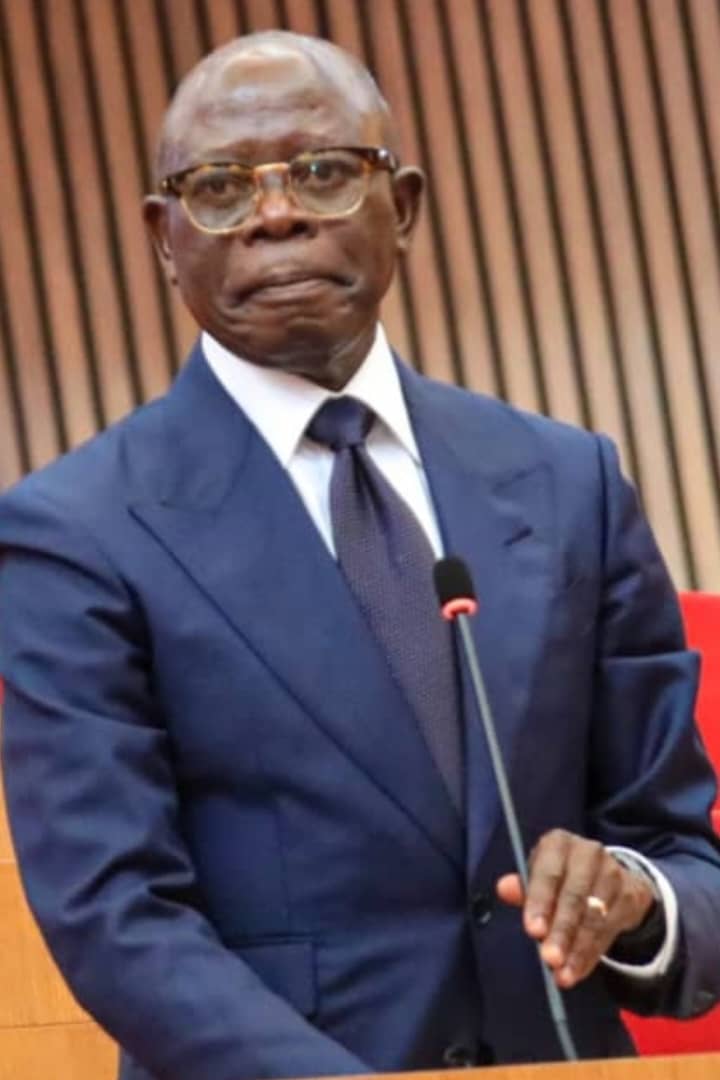
Daniel Eromosele Eulogize Adams Oshiomole as he turns 74 years
Today, I celebrate an exceptional leader, a fearless voice for the people, and a man whose life has remained a symbol of courage, sacrifice, and unwavering commitment to justice—Distinguished Comrade Senator Adams Aliu Oshiomhole.

Your journey has been nothing short of inspiring. From your days as a vibrant labour leader to your impactful tenure as the Executive Governor of Edo State, and now as a respected Senator of the Federal Republic, you have consistently demonstrated what it means to serve with integrity, strength, and purpose. Your contributions to the growth of our nation and the development of Edo State remain indelible and deeply appreciated.
You have not only built structures and institutions but have also built people. I am personally a beneficiary of your leadership, your guidance, and your belief in empowering others. Your influence in my life has been profound, and I remain grateful for the opportunities and inspiration you have given me.
On this special day, I celebrate not just your achievements, but the man you are—resilient, principled, and ever committed to the progress of Nigeria and her people.

May this new year bring you renewed strength, greater wisdom, good health, and more remarkable accomplishments. May your legacy continue to shine brighter with each passing year.
Happy Birthday, sir. Wishing you many more fruitful and impactful years ahead.
celebrity radar - gossips
Accolades to Empress Genevieve Wining as she Celebrate birthday in Grand style

Accolades to Empress Genevieve Wining as she Celebrate birthday in Grand style
Emmanuel Clement
Vilnius, Lithuania – The Grand Hotel Vilnius will host a grand birthday celebration in honor of Her Majesty The Empress Genevieve Wining of the United Kingdom of Atlantis (UKA) on April 4th, 2026.
The four-day event promises to be an extravagant affair, marking the special birthday of Empress Genevieve Wining. The celebration will take place at the prestigious Grand Hotel Vilnius, Lithuania, renowned for its luxurious ambiance and exceptional service.

According to the event flyer, the birthday celebration will be a spectacular occasion, fitting for an empress. Guests can expect an elegant setting adorned with golden accents, sparkling champagne, and festive decorations, creating a regal atmosphere befitting the occasion.
The Empress Genevieve Wining of UKA is expected to grace the event, which will include various festivities and celebrations in her honor. The occasion aims to bring together dignitaries, followers, and guests to commemorate the empress’s birthday with grandeur and joy.
For media inquiries, accreditation, or further information about the birthday celebration of The Empress Genevieve Wining of UKA, please contact the event organizers.
Courtesy of His Excellency Emperor Prof. Solomon Wining. UKA

Today, Dr. Chris Okafor turns a year older
~By Sunday Adeyemi
It is widely acknowledged that the exceptional Dr. Chris Okafor, a man of great character, always celebrates his birthday on April 4th, and in recognition of this occasion, I am inspired to write this special tribute to honor him.
Today marks a momentous occasion as we commemorate the birthday anniversary of Dr. Chris Okafor, a rare gem, a perfect gentleman, and the revered founder of Grace Nation Church, aka Liberation City.
Without reservation, this versatile and dependable Oracle foundry has consistently proven itself worthy of the accolades bestowed upon it on this notable anniversary.
Let it be reiterated that Dr. Chris Okafor is a leader known for his generosity and commitment to humanity’s welfare and advancement. The special gifts donated recently to widows and widowers within and outside the church are a testament to his exceptional leadership.
Your reputation as an outstanding and authentic man of God is evident in your exceptional goodwill and philanthropic endeavors.
Your dedication and perseverance have yielded impressive results, and numerous people, including myself, are justifiably proud of the remarkable work you are doing.
You have consistently exemplified outstanding leadership in the Christian community, demonstrating the profound impact of your role as a gift from God to humanity. I firmly believe this to be true.
Here’s to a year of productivity, success, and happiness. Congratulations and warm wishes on your birthday, sir.
Sunday Adeyemi
Your Son


-

 society7 months ago
Religion: Africa’s Oldest Weapon of Enslavement and the Forgotten Truth
-

 news4 months ago
WHO REALLY OWNS MONIEPOINT? The $290 Million Deal That Sold Nigeria’s Top Fintech to Foreign Interests
-

 society6 months ago
“You Are Never Without Help” – Pastor Gebhardt Berndt Inspires Hope Through Empower Church (Video)
-

 celebrity radar - gossips2 months ago
Dr. Chris Okafor Returns with Power and Fire of the Spirit -Mounts Grace Nation Altar with Fresh Anointing and Restoration Grace on February 1, 2026