
celebrity radar - gossips
Photos: Memorable Moments Of Football Legend, Maradona

Photos: Memorable Moments Of Football Legend, Maradona- I first came to know Diego Armando Maradona in September 1993, when I was watching the qualifying match between Argentina and my country of Colombia for the 1994 FIFA World Cup.

MEXICO. Mexico DF. 29/06/1986. Mundial 1986. Diego Maradona celebrating Argentina victory of World Cup at Azteca stadium.
I first came to know Diego Armando Maradona in September 1993, when I was watching the qualifying match between Argentina and my country of Colombia for the 1994 FIFA World Cup.
Even though I was just a young kid at the time, I knew that Maradona, Argentina’s star player, was something special. His vision, the way he dribbled past his opponents — he was respected and adored not just in his country, but across Latin America and the world.

1980: Diego Maradona (centre) of Argentina celebrating on his team mates shoulders after winning a game. Mandatory Credit: Allsport UK /Allsport
Maradona, who rose from the slums of Buenos Aires to lead Argentina’s national team to victory in the 1986 World Cup, died Wednesday at the age of 60, according to media reports. He reportedly suffered a heart attack at his home in a suburb of Buenos Aires.
As I found out about the news of his death, I asked a few Latinos at NPR to share their memories of Maradona. For us, in our region, we take soccer as seriously as religion — and as such, we all got to experience Maradona from our countries in our own way.

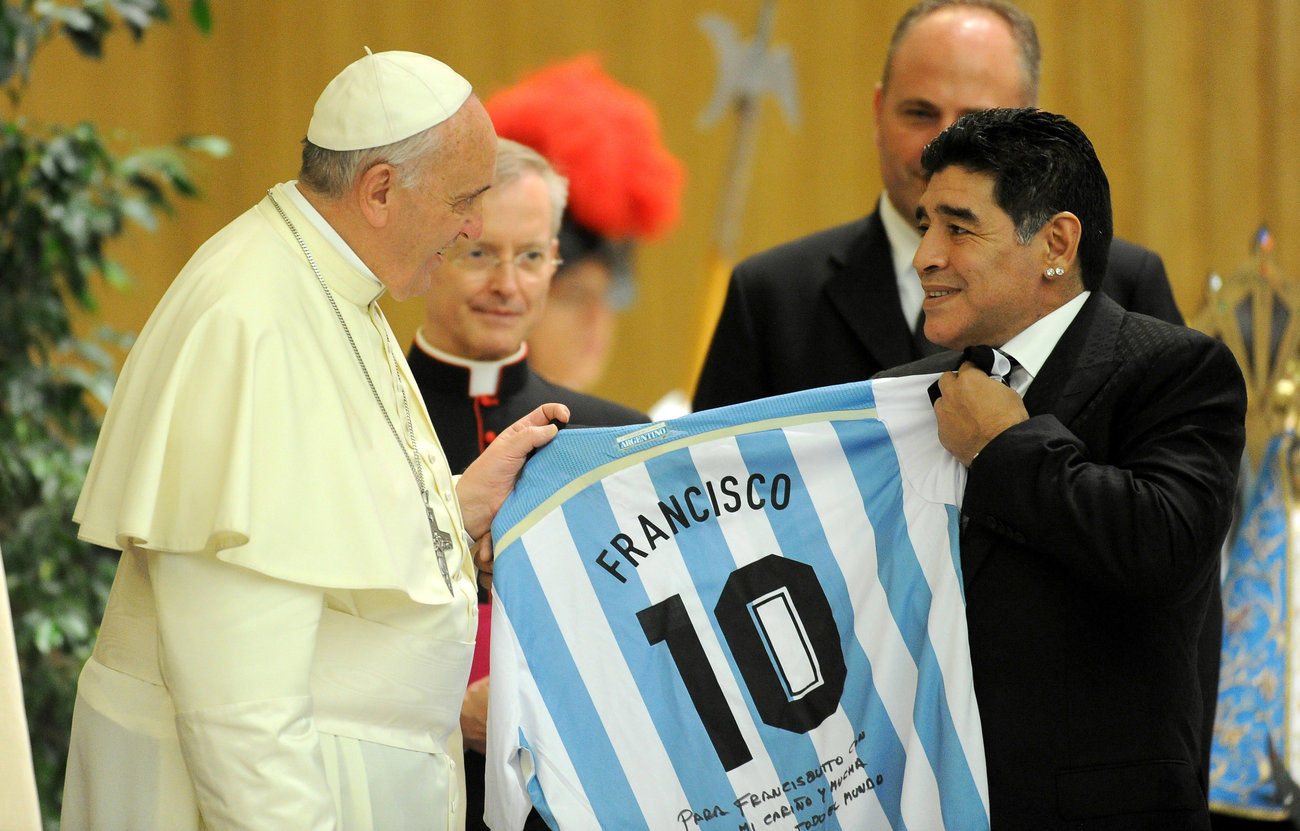
ROME, ITALY – SEPTEMBER 01: Pope Francis meets Diego Maradona during an audience with the players of the ‘Partita Interreligiosa Della Pace’ at Paul VI Hall before the Interreligious Match For Peace at Olimpico Stadium on September 1, 2014 in Rome, Italy. (Photo by Pier Marco Tacca/Getty Images)
Here is a selection of tributes from NPR staff members. These have been edited for length and clarity.

San Salvador, 29 de octubre de 2006.
El futbolista Diego Armando Maradona durante el partido en con los amigos de el Mgico Gonzlez realizado en el Estadio Cuscatln.
Foto Lissette Lemus
Santa Maradona’
Since I was born in the U.S., my first intimate exposure to the passion around fútbol was through my friend, colleague and former Alt.Latino co-host Jasmine Garsd. In fact, the very first episode of Alt.Latino 10 years ago was a collection of songs about soccer from Latin America and around the world.
But the one that made her eyes both sparkle with excitement and reflect more than a bit of nostalgia was “Santa Maradona” by the rock en Español pioneers Mano Negra. The recording includes the sonic excitement that she said she could hear every weekend living near a soccer stadium in Buenos Aires. Playing this on repeat to remember Maradona is just as good as watching him playing on YouTube on repeat. – Felix Contreras, co-creator and host of Alt.Latino.

1983: Diego Maradona of Argentina at his local ground where he first played in Argentina. Mandatory Credit: Allsport UK /Allsport
‘A Latino ambassador to the game’
I love walking past the Diego Maradona mural outside of Napoli Pasta Bar in Washington, D.C. I always get good vibes from it and love seeing a Latino displayed on a mural in the nation’s capital. I love that in one of his final years he took a job coaching second-division soccer in Sinaloa, Mexico, and nearly led them to promotion. Shows he really cared about the sport and was a Latino ambassador to the game. – Gustavo Contreras, assistant producer, All Things Considered

Diego Maradona, 16, warms up 12 September 1977 in Buenos Aires. Maradona was born on the 30th of October 1960 in Villa Fiorito, one the poorest suburbs of Buenos Aires. Most people consider him as the best soccerplayer ever in the history of soccer. Het started playing when he was 9 years old. His first club was Cebollitas, the youthteam of Argentinos Juniors. Because of his unknown talent he soon got the nickname �Pibe de Oro�, which literally means �Golden Boy�. He played through his 15th for the youthteam. On his 16th he debuted in professional football with Argentinos Juniors. And a few months later he already debuted in the national team of Argentina. AFP PHOTO (Photo credit should read -/AFP via Getty Images)
‘When Argentina won … we all partied so hard’
As a morenita Mexican-Colombian kid growing up in surfer-centric Southern California, seeing Maradona beat West Germany in Mexico City was huge. I’ve never met my South American family and I’ve always been aware that I was different from the rest of my very Mexican extended family, but when Argentina won, none of that mattered and we all partied so hard. That Hand of God goal against the British was the stuff every colonized country dreams of. – Nadia Grenier, traffic coordinator.

Jan 1981: General view of the scoreboard showing that Diego Maradona of Argentina has scored during a match. Mandatory Credit: Allsport UK /Allsport

MAR DEL PLATA, ARGENTINA – NOVEMBER 10: Diego Maradona, head coach of Gimnasia y Esgrima La Plata, gestures before a match between Aldosivi and Gimnasia y Esgrima La Plata as part of Superliga 2019/20 at Estadio Jose Maria Minella on November 10, 2019 in Mar del Plata, Argentina. (Photo by Marcos Brindicci/Getty Images)

Argentinian midfielder Diego Maradona (C) dribbles past three English defenders on June 22, 1986 in Mexico City during the World Cup quarterfinal soccer match between Argentina and England. Maradona scored two goals, the first one with his left hand as he jumped for the ball in front of goalkeeper Peter Shilton, as Argentina beat England 2-1. (Photo by STAFF / AFP) (Photo by STAFF/AFP via Getty Images)

Candles are placed next to a picture of soccer legend Diego Maradona outside the San Paolo Stadium in Naples, Italy, Wednesday, Nov. 25, 2020. Diego Maradona has died. The Argentine soccer great was among the best players ever and who led his country to the 1986 World Cup title before later struggling with cocaine use and obesity. He was 60. (AP Photo/Alessandra Tarantino)

MEXICO. Mexico DF. 29/06/1986. Mundial 1986. Diego Maradona celebrating Argentina victory of World Cup at Azteca stadium.

BUENOS AIRES, ARGENTINA – NOVEMBER 25: A jersey of Argentina with number ten and a black ribbon hang in a balcony of La Boca after the news of the death of Diego Maradona was known on November 25, 2020 in Buenos Aires, Argentina. Diego Maradona, considered one of the biggest football stars in history, died at 60 from a heart attack on Wednesday in Buenos Aires. (Photo by Tomas Cuesta/Getty Images)

MEXICO CITY, MEXICO – JUNE 22: Argentina player Diego Maradona outjumps England goalkeeper Peter Shilton to score with his ‘Hand of God’ goal as England defenders Kenny Sansom (top) Gary Stevens (c) and Terry Fenwick look on during the 1986 FIFA World Cup Quarter Final at the Azteca Stadium on June 22, 1986 in Mexico City, Mexico. (Photo by Allsport/Getty Images)
NPR




Beauty Meets Glamour as Olaide Ogunyemi Opens New Studio in Mushin
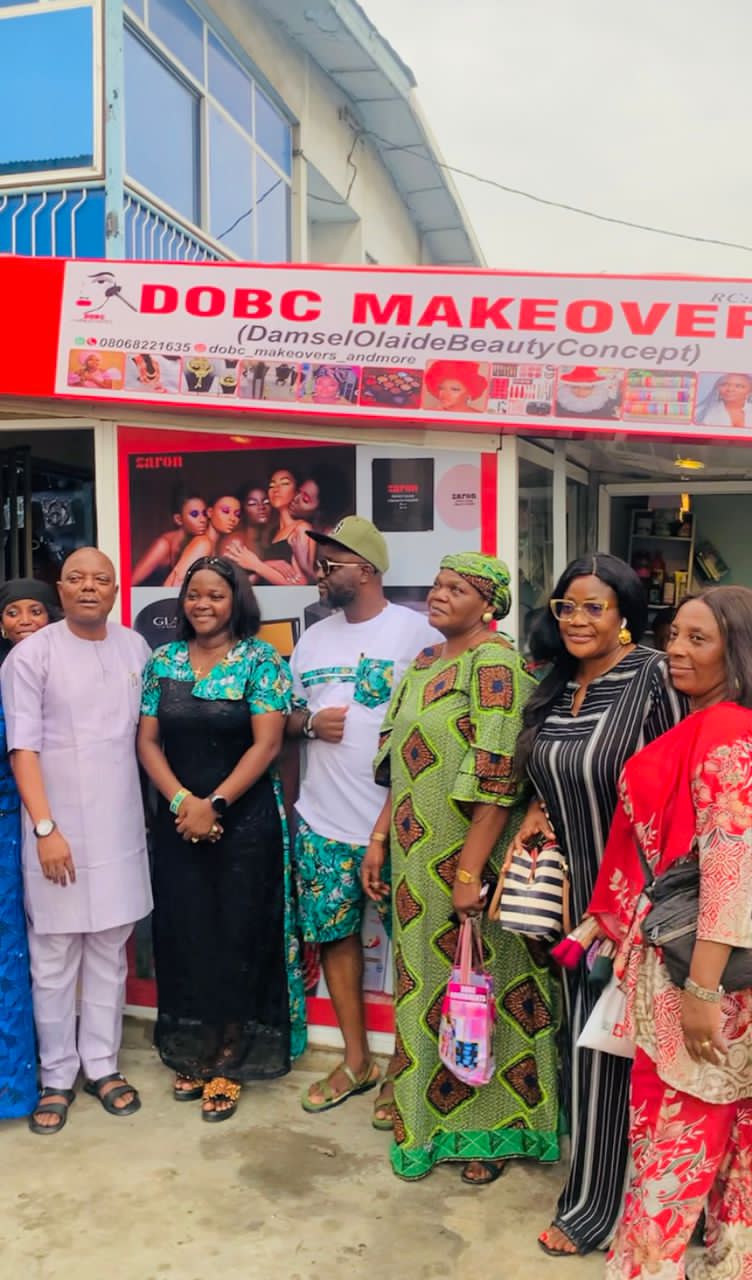
Popular Nollywood actress and professional makeup artiste, Olaide Ogunyemi Oluwayemisi aka Damilola, has expanded her footprint in the beauty industry with the grand opening of her new makeup studio in Lagos.
The talented thespian, who is also the Chief Executive Officer of @Dobc_makeovers_andmore, officially unveiled the ultra-modern beauty space last Thursday, April 2, 2026, in a colourful ceremony filled with glamour, fashion, and pageantry.
Strategically located at 101 Palm Avenue, right beside FitPlus and Sparklight Hospital in Mushin area of Lagos, the new studio is designed to offer top-notch beauty services, reflecting Ogunyemi’s commitment to excellence and professionalism in the ever-growing makeup industry.
The opening ceremony attracted friends, colleagues from the Nollywood industry, beauty enthusiasts, and well-wishers who came out in large numbers to celebrate the entrepreneur’s latest milestone. Guests were treated to a vibrant atmosphere that showcased creativity, style, and the evolving standards of the beauty business in Lagos.
Speaking at the event, Ogunyemi expressed her excitement and gratitude, noting that the new studio represents years of hard work, dedication, and passion for her craft. She reaffirmed her commitment to delivering premium beauty services while empowering aspiring makeup artistes.
The launch of the studio further cements her reputation as a dynamic force, successfully blending her career in Nollywood with a thriving beauty brand.
With this latest development, Olaide Damilola Ogunyemi continues to inspire many young entrepreneurs, proving that talent, consistency, and vision remain key drivers of success in Nigeria’s creative and business landscape.


Daniel Eromosele Eulogize Adams Oshiomole as he turns 74 years
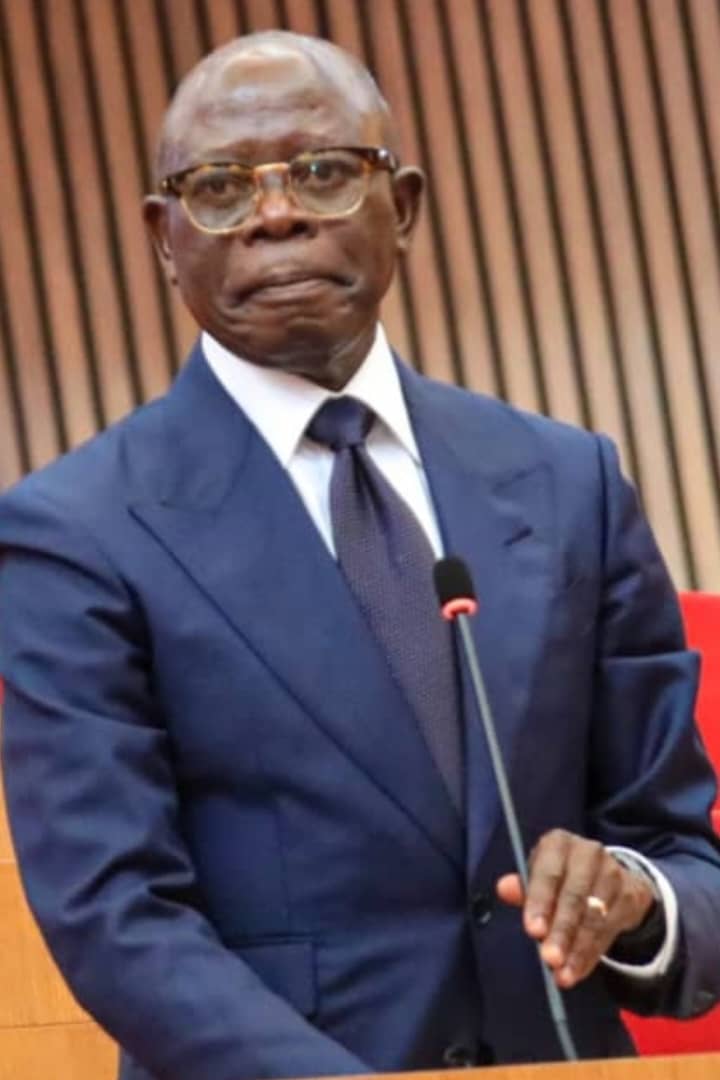
Today, I celebrate an exceptional leader, a fearless voice for the people, and a man whose life has remained a symbol of courage, sacrifice, and unwavering commitment to justice—Distinguished Comrade Senator Adams Aliu Oshiomhole.

Your journey has been nothing short of inspiring. From your days as a vibrant labour leader to your impactful tenure as the Executive Governor of Edo State, and now as a respected Senator of the Federal Republic, you have consistently demonstrated what it means to serve with integrity, strength, and purpose. Your contributions to the growth of our nation and the development of Edo State remain indelible and deeply appreciated.
You have not only built structures and institutions but have also built people. I am personally a beneficiary of your leadership, your guidance, and your belief in empowering others. Your influence in my life has been profound, and I remain grateful for the opportunities and inspiration you have given me.
On this special day, I celebrate not just your achievements, but the man you are—resilient, principled, and ever committed to the progress of Nigeria and her people.

May this new year bring you renewed strength, greater wisdom, good health, and more remarkable accomplishments. May your legacy continue to shine brighter with each passing year.
Happy Birthday, sir. Wishing you many more fruitful and impactful years ahead.
celebrity radar - gossips
Accolades to Empress Genevieve Wining as she Celebrate birthday in Grand style

Accolades to Empress Genevieve Wining as she Celebrate birthday in Grand style
Emmanuel Clement
Vilnius, Lithuania – The Grand Hotel Vilnius will host a grand birthday celebration in honor of Her Majesty The Empress Genevieve Wining of the United Kingdom of Atlantis (UKA) on April 4th, 2026.
The four-day event promises to be an extravagant affair, marking the special birthday of Empress Genevieve Wining. The celebration will take place at the prestigious Grand Hotel Vilnius, Lithuania, renowned for its luxurious ambiance and exceptional service.

According to the event flyer, the birthday celebration will be a spectacular occasion, fitting for an empress. Guests can expect an elegant setting adorned with golden accents, sparkling champagne, and festive decorations, creating a regal atmosphere befitting the occasion.
The Empress Genevieve Wining of UKA is expected to grace the event, which will include various festivities and celebrations in her honor. The occasion aims to bring together dignitaries, followers, and guests to commemorate the empress’s birthday with grandeur and joy.
For media inquiries, accreditation, or further information about the birthday celebration of The Empress Genevieve Wining of UKA, please contact the event organizers.
Courtesy of His Excellency Emperor Prof. Solomon Wining. UKA


- United States (U.S.) and Mozambique Advance Cooperation on Emergency Response and Safety April 6, 2026
- The Impacts of the Middle East Conflict on Africa April 6, 2026
- Ghana: President Mahama announces a high-level panel of the Accra Reset April 6, 2026
- Ghana: President Mahama reiterates his determination to build more businesses April 6, 2026
- Mauritius accelerates energy transition with renewable projects of 405 MW April 6, 2026
- Africa Centres for Disease Control and Prevention (Africa CDC) Appoints His Excellency Prof. Yemi Osinbajo as Senior Strategic Advisor to the Director General April 6, 2026
- 2026 Easter Message by the President of the Catholic Bishops’ Conference of Nigeria (CBCN): The Dawn is Coming, Don’t Let Go Now, Hold on to Hope! April 5, 2026
- "A Time to Pause and Begin Again”: President Dr Patrick Herminie reflects in Easter message April 5, 2026
- President Dr. Patrick Herminie Pays Tribute to the Late Seychellois Artist David Philoe April 5, 2026
- Ghana identifies priority areas to strengthen cholera prevention and control April 5, 2026
- United States (U.S.) and Mozambique Advance Cooperation on Emergency Response and Safety April 6, 2026
- The Impacts of the Middle East Conflict on Africa April 6, 2026
- Ghana: President Mahama announces a high-level panel of the Accra Reset April 6, 2026
- Ghana: President Mahama reiterates his determination to build more businesses April 6, 2026
- Mauritius accelerates energy transition with renewable projects of 405 MW April 6, 2026
- Africa Centres for Disease Control and Prevention (Africa CDC) Appoints His Excellency Prof. Yemi Osinbajo as Senior Strategic Advisor to the Director General April 6, 2026
- 2026 Easter Message by the President of the Catholic Bishops’ Conference of Nigeria (CBCN): The Dawn is Coming, Don’t Let Go Now, Hold on to Hope! April 5, 2026
-

 society7 months ago
Religion: Africa’s Oldest Weapon of Enslavement and the Forgotten Truth
-

 news4 months ago
WHO REALLY OWNS MONIEPOINT? The $290 Million Deal That Sold Nigeria’s Top Fintech to Foreign Interests
-

 society6 months ago
“You Are Never Without Help” – Pastor Gebhardt Berndt Inspires Hope Through Empower Church (Video)
-

 celebrity radar - gossips2 months ago
Dr. Chris Okafor Returns with Power and Fire of the Spirit -Mounts Grace Nation Altar with Fresh Anointing and Restoration Grace on February 1, 2026