
society
Police declare George Ibukun Olawale ‘wanted’ over alleged involvement in Homosexuality


Police declare George Ibukun Olawale ‘wanted’ over alleged involvement in Homosexuality
The Nigeria Police Force, Ondo state, has declared one George Ibukun Olawale wanted following his alleged involvement in gay practices.
In a statement, the Department of State Criminal Investigation Department (CID), quoting an intelligence report, explained that George was allegedly caught with one Pius Egbukuyomi‘ Alongside Omololu and Oladele while engaging themselves indecently as fellow men in Pius’s residence and they were sighted by people.
According to him, George escaped the scene while his partners were arrested, adding that they were handed over to the police and then launched a search for George, who escaped through the sea
He added that George was invited by the police but his refusal to appear made the police place him on wanted list in November 2024.
The statement read: “In accordance with the law banning homosexuality, the Nigeria Police Force, Ondo State command has declared George wanted. He is from Igbekebo Ese-odo local government area of ondo state, dark in complexion, 6ft tall, and he is on the run following his involvement in the act.
Intelligence report reaching this Department indicated that the said George who rarely entertains female visitors at his residence has been in the game since way back but has never been caught in the act
“The Command has assured a handsome reward for whoever will provide useful information leading to the arrest of George Ibukun Olawale, as he has been declared wanted by the police.




society
POCACOV Commences 2026 Nationwide Activities with Focus on School Outreach and Community Engagement

*POCACOV Commences 2026 Nationwide Activities with Focus on School Outreach and Community Engagement
The Police Campaign Against Cultism and Other Vices (POCACOV), the flagship preventive policing initiative of the Nigeria Police Force, has officially commenced its 2026 nationwide activities aimed at strengthening crime prevention and fostering community partnership.
The initiative is part of the broader vision of the Nigeria Police Force under the leadership of the Inspector-General of Police, Olatunji Rilwan Disu, psc(+), NPM, to deepen community partnership and promote proactive policing nationwide.
The 2026 rollout features a series of strategic engagements across the country, including intensive school outreach programmes, community sensitization campaigns, and stakeholder collaborations designed to address the root causes of crime, particularly among youths.
Activities are currently ongoing across several states, including Kwara, Lagos, Niger, Nasarawa, Abia, Bauchi, Kano, Kaduna, Borno, Sokoto, Enugu, Imo, Osun, Oyo, Ekiti, Rivers, Cross River, Kogi, the Federal Capital Territory, Katsina, Benue, Jigawa, Ogun, and Kebbi, with coordinated efforts being replicated nationwide.
Through its school-based interventions, POCACOV is engaging students at various levels, promoting values of discipline, responsible citizenship, and resistance to social vices such as cultism, drug abuse, cybercrime, and other forms of delinquency. These engagements are tailored to inspire positive behavioural change and empower young people to become ambassadors of peace in their communities.
In addition, community engagement initiatives are bringing together traditional rulers, religious leaders, parents, and local organizations to build stronger partnerships with the police, enhance trust, and encourage active participation in crime prevention efforts.
POCACOV remains committed to shaping a future free from crime and social vices by addressing underlying societal challenges and encouraging collective responsibility in maintaining peace and security across the country.


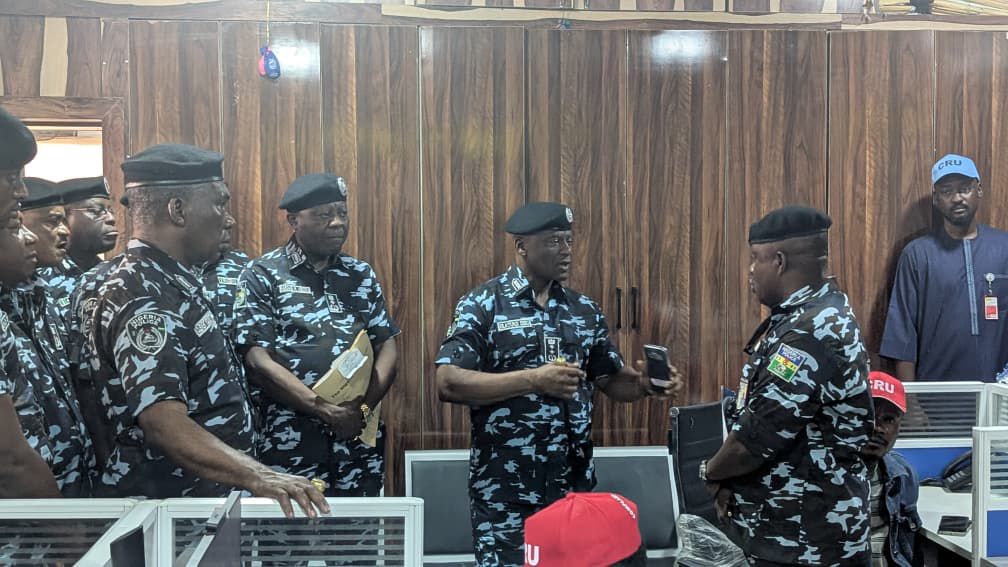
IGP Disu Visits PCRU, Reaffirms Commitment To Citizens’ Rights Protection
The Inspector-General of Police, Olatunji Rilwan Disu, on Tuesday paid a working visit to the Police Complaint Response Unit (PCRU), where he assessed ongoing operations and reiterated the importance of safeguarding citizens’ rights across the country.
During the visit, the IGP commended the unit for its consistent performance and notable achievements over the years in addressing public complaints and promoting accountability within the police system.
Speaking during the inspection, Disu emphasized the need for professionalism and responsiveness in handling complaints from members of the public.
“All public complaints must be handled with promptness, transparency, and strict accountability. Citizens’ rights must be protected at all costs,” the IGP stated.
He further pledged increased institutional support to enhance the operational capacity of the PCRU, ensuring it continues to function at optimal efficiency in delivering justice and strengthening public trust in the Nigeria Police Force.
The visit underscores the police leadership’s renewed focus on accountability, transparency, and improved service delivery, as part of broader efforts to build confidence between law enforcement agencies and the Nigerian public.


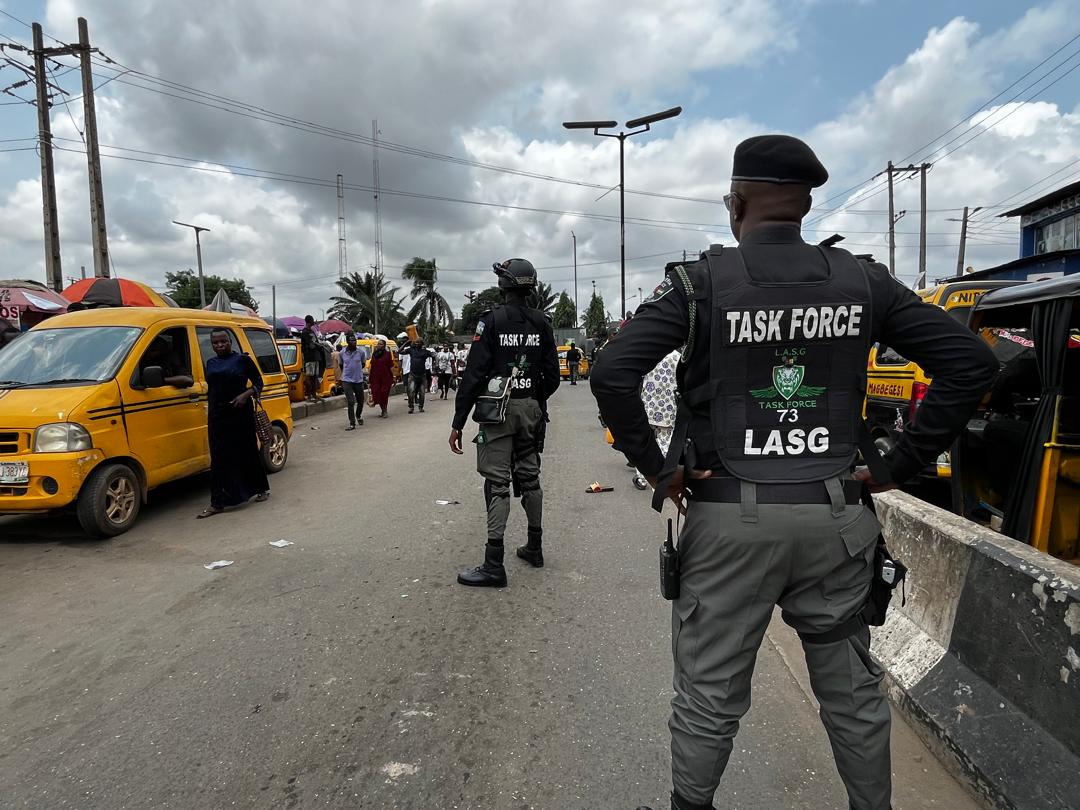
Lagos Task Force: Understanding Its Mandate And Role In Society
In societies grappling with evolving security challenges, the relevance of specialised policing units cannot be overstated. The Lagos State Environmental and Special Offence Unit aka Task Force is not established as an ornamental structure within the law enforcement system; it is a deliberate response to urgent threats that conventional policing frameworks often struggle to contain swiftly. The mandate of this unit is clear: restore order, enforce compliance with the law, and respond with precision to emerging patterns of crime that threaten public safety.


In predominantly urban areas like Lagos, criminal trends have grown more sophisticated and, at times, more brazen. From organised street gangs to opportunistic offenders, the strain on regular policing units is evident. It is within this context that Task Force operates, bridging the gap between routine patrol and rapid-response enforcement. Their presence serves not only as a deterrent but also as a visible assurance that the state retains control over law and order.
One striking example is the growing concern over the activities of “Omo Taku,” a loosely organised group whose notoriety has been linked to harassment, extortion, and street-level violence. For many residents, encounters with such elements have resulted in physical harm, financial loss, and, in tragic instances, untimely deaths. The intervention of police Task Force Units in curbing this menace has therefore been both necessary and impactful. Through targeted raids, surveillance, and enforcement operations, these units have begun to dismantle the operational networks of such groups, restoring a measure of safety to affected communities.
Similarly, the issue of one-way traffic violations has evolved beyond mere recklessness into a public safety crisis. What might appear as a simple traffic infraction has, over time, claimed lives and caused irreversible damage to families. The enforcement efforts of the Lagos State Environmental and Special Offences Unit in this regard are not acts of overreach but essential measures aimed at preserving life. By confronting these violations head-on, they send a clear message that indiscipline on the roads carries consequences.
However, the conversation around police task forces is incomplete without acknowledging the tensions that sometimes arise between these units and the public. Incidents such as the allegations against the CSP Akerele-led task force, Lagos State Environmental and Special Offences Unit have heightened scrutiny and, in some quarters, eroded trust. While such developments warrant investigation and accountability, they should not obscure the broader necessity of Task Force Units. Rather, they present an opportunity for institutional reform, improved training, and stronger community engagement.
Citizens, on their part, have a role to play in shaping the effectiveness of these units. Cooperation, lawful conduct, and constructive feedback can significantly enhance outcomes. A society where laws are routinely disregarded creates fertile ground for conflict between enforcement agencies and the public. Conversely, a culture of compliance reduces friction and allows task forces to focus on genuine threats.
Ultimately, police task forces exist not as adversaries to the people but as instruments of collective security. Their mandate is rooted in the protection of lives and property, and their success is intertwined with public cooperation and institutional accountability. As communities continue to navigate the complexities of safety and order, the need for such specialised units remains not only relevant but indispensable.


-

 society6 months ago
Religion: Africa’s Oldest Weapon of Enslavement and the Forgotten Truth
-

 news3 months ago
WHO REALLY OWNS MONIEPOINT? The $290 Million Deal That Sold Nigeria’s Top Fintech to Foreign Interests
-

 society6 months ago
“You Are Never Without Help” – Pastor Gebhardt Berndt Inspires Hope Through Empower Church (Video)
-

 celebrity radar - gossips2 months ago
Dr. Chris Okafor Returns with Power and Fire of the Spirit -Mounts Grace Nation Altar with Fresh Anointing and Restoration Grace on February 1, 2026