
Politics
‘If Politics Is Dirty, Let Us Be The Detergent’ – Akan Imoh, Aspirant, Lagos State House Of Assembly

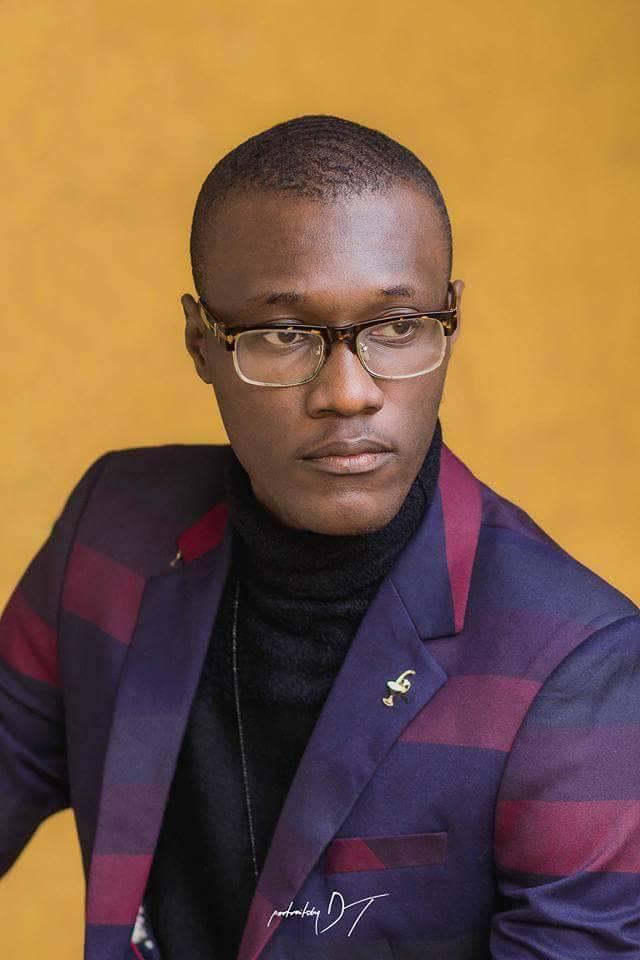

A very vibrant and smart young man, Akan Imoh is taking a plunge into the murky waters of Nigerian politics. He is coming in with new ideas, strategies and solutions, which has young people as a major target. He sat down with our reporter of recent to talk about his life, political ambitions and more.
Enjoy.
Can we meet you?
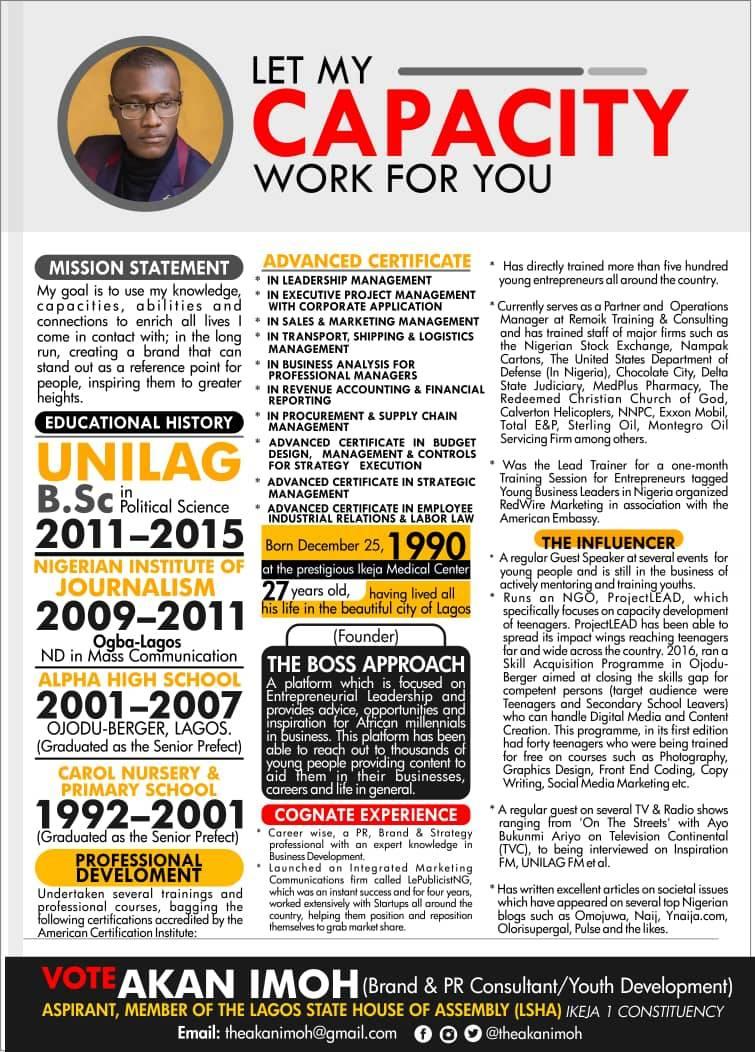
My name is Akan Imoh. I was born on the 25th of December, 1990, which means I am currently 27 years old. I have lived in Lagos all my life, having schooled, worked and run a business here. I’m a graduate of the University of Lagos, where I studied Political Science and also the Nigerian Institute of Journalism, where I studied Mass Communication.
How was growing up like for you?
Growing up was fun for me. I grew up in a house that had lots of love. We were four kids, two girls and two boys. My parents were the best. They made sure we were trained excellently. Two things my parents did that shaped our lives was that we were introduced to God at a very early age and made sure we had the best form of education. I remember one thing my parents always said is ‘train up a child in the way of the Lord, and when he’s old, he’ll never depart from God.’ This helped a lot.
During my growing up age, I never missed church. Sundays and weekday services. My father would bundle us all in his car and take us to church. It became a part of me. Trust me, we all somehow grew up with a deep love for the things of God. Also, for education, my parents didn’t spare any dime. They weren’t so rich, but education wasn’t what they wanted to ration or manage. I went to the best of schools. Very good private schools which were also expensive. I remember several times, I was sent home because I hadn’t paid my school fees. It was a regular feature. I was always at home for a larger part of the school session. But, I always somehow still came out top of the class. These two factors during my growing up age helped shape me to be what I am today.
How did you discover your passion, what challenges did you face in becoming who you are today and how did you tackle them?
Discovering passion is a very serious business (laughs). Today, I am a Politician and a host of other things. How did I find myself doing all these? Simple. First, is understanding that your purpose is in God. It’s not about what you want to do with your life, but, more about what God wants to do with your life. Hence, there’s a need to connect with the father in your discovery stages. Also, there’s a need to experience life. To make sure you never sit at the edge and just watch life pass by. You must get into the thick of things. Some call it ‘trial and error’, I call it ‘trial and discovery’. This is because, the more you do things and get involved, you’ll begin to find out more about yourself and what you can do. For me, I made sure I got the best out of life. I didn’t let anyone tell me I couldn’t do something. I already understood that my life was going to somehow revolve around the media and public life, so, I kept on moving and pushing myself.
As for challenges, the major one was financial. Growing up was not smooth. I was away from school more times than I was in school. I was always sent out for defaulting in fees payment. I grew up experiencing what its like to be poor. This can be a major limitation in a young man’s life. I have come to realize that poverty has a way of messing up with a person’s thinking and reasoning pattern. And so, one thing I did was to begin to work on my psyche. I used to say that I broke out of poverty in my head first before I broke out of it in my pocket. But, its been an amazing ride. With hard work, determination and God on my side, I have been able to surmount any obstacle life has thrown at me.
What motivated you to go into politics?
Hmmm. Politics has always been in the picture for me. Before we even talk politics, lets talk leadership. I think I was born to lead. I have always been at the fore front of things. You put me in the midst of people and somehow, I will just come out as the leader. I have extraordinary organizational and people skills. I was the Head Boy in both my primary and Secondary schools, I was also a major Teen Leader all through my teen age at the Foursquare Gospel Church, Saabo in Ojodu-Berger. Leadership has always been my thing. Now, let’s bring it to politics. It is obvious that we’ve a huge leadership problem in our country. We keep complaining, yet, we don’t do anything about it. I remember when I told my mum I was going into active politics, she nearly had a heart attack. Its not rare to hear people say that politics is dirty and they would never go into it or advice their family or friends to go into it. Now, I ask ‘if we don’t go into politics, how is it ever going to be better?’. I am tired of people who sit back and complain. We have got to move into the system and effect the kind of change we want. Yes, not all of us will run for office, but, what we all need to do is to get involved. Firstly, if you’re above 18 years old and you don’t have a PVC, im sorry to say, you are part of the problem. We must rise and take actions. We must hold our elected leaders accountable. We must ask questions, we must not just allow these people do as they please. Those of us who have decided to contest need your support, and not only support, we need your criticism. Make sure you hold us accountable. If politics is dirty, lets be the detergent.
Tell us a bit about your political ambitions
Yes. So, I intend to contest elections next year. I am aspirating for a seat in the Lagos State House of Assembly, LSHA (Ikeja 1 Constituency. Ikeja 1 Constituency consists of Ojodu-Berger, Omole, Agidingbi, Ipodo, Alausa, Oregun, Olusosun, Onilekekere, Onipetesi & Seriki Aro. I’ve been told several times that I stand no chance, especially because I am not an indigene of Lagos State. When I hear this, I just have one statement as a reply – Development doesn’t have a state of origin. If I’ve lived in this city for 27 years of my life, I think I deserve to be involved in the decision making process of this area.
Now, let me say that I am doing this for all the young people in this country. I am taking a step to take our fight to the place that matters. We need to have a seat at the table. When I get to the State House, I will push aggressively for youth-related bills. By this, I don’t mean all these ones they do where they come and give us jotters and other useless things. I mean creative policies that will better the lives of young people. We have young people with big entrepreneurial dreams, walking around with laptops in their bags and great ideas in their heads. How can we do something to help these ones? Some of them just need a place to work from, can’t we have entrepreneurial hubs or coworking stations? Have we thought about sports and how we could leverage on it to get to foster communal unity, get people off the streets and give them a purpose to live for? Why can’t we work towards setting up a football club (Ikeja FC), which will be poised to begin to play in the Nigerian Football League within three years of creation. This is what governance is about? The people who are voted into the Legislature are supposed to be your representatives, yet, many of us don’t even know them. So, tell me, how are they representing you. I believe that a legislator is supposed to be close to the people, close to the grassroots. You are supposed to know what is going on in your constituency, feel the heartbeat and take the concerns to the center. But, no. we have legislators who are comfortable in agbadas and don’t care about you. When elections are close, they then come out, do one or two things and make people feel like they’ve been working. We are no longer going to be deceived. I leave you with this, accountability and transparency will be the hallmark of my leadership. The power actually belongs to the people, we have to give comprehensive reports to the people who voted us in. I am bringing an open feedback system. This is time for a new kind of governance.
You’ve done a lot for young people over the years, why are you so passionate about this demography of people?
I am a lover of Young people. For eleven years now, I have consistently worked directly with teenagers and youths. I have always had a deep desire to help shape and positively impact young people. In church, I have worked closely with the teenagers and youths for years. This has led me to be a regular Guest Speaker at several events for young people, trained hundreds of them, mentored and still mentors hundreds of young people. I run an NGO, ProjectLEAD, which specifically focuses on capacity development of teenagers. ProjectLEAD has been able to spread its impact wings reaching teenagers far and wide across the country. In 2016, I ran a Skill Acquisition Programme in Ojodu aimed at closing the skills gap for competent persons (target audience were Teenagers and Secondary School Leavers) who can handle Digital Media and Content Creation. This programme, in its first edition had forty teenagers who were being trained for free on courses such as Photography, Graphics Design, Front End Coding, Copy Writing, Social Media Marketing etc. I also founded The Boss Approach, a platform which is focused on Entrepreneurial Leadership and provides advice, opportunities and inspiration for African millennials in business. This platform has been able to reach out to thousands of young people providing content to aid them in their businesses, careers and life in general. I am passionate about this set of people because I believe in the future, and that is why my campaign is themed ‘Create Your Tomorrow’. To me, I believe that the choices we make today will affect our tomorrow. I believe that these young people are the ones who are going to inherit the Nigeria of tomorrow. If we don’t take a step, we wont even have a country to inherit in the first place. I believe that we need to be deliberate about building a kind of future we can be proud of and our children can inherit and be happy.
Where do you see yourself in ten years?
In ten years’ time, I see myself married to an awesome woman, the very best on earth. I see myself with kids, two or three. I see myself being a key figure in the economic development of Africa as a whole. I see myself being a role model to many young people. I see myself still in governance and politics, influencing key decisions and helping to make the world a better place. I see myself more and more devoted to God and leading a life taught by Jesus.
What’s your advice for youths?
Youths, we can’t afford to continue our siddon-look attitude. Wake up and smell the coffee. Its time to fight for our rights. Go and get your PVC.
How can people follow your campaign?
Its easy. I am @theAkanImoh on Twitter and Instagram. Follow me to read up on my ideas on governance, read about my bio and my political agenda.



Lagos Politics: APC Elevates Sonayan-James, Strengthens 2027 Governorship Ticket
LAGOS — The All Progressives Congress has boosted its preparations for the 2027 Lagos State governorship election with the unveiling of Damilola Sonayan-James as its deputy governorship candidate, a move party leaders say is aimed at strengthening the party’s electoral prospects.

The announcement positions Sonayan-James as a key figure in the party’s campaign structure as the APC intensifies efforts to consolidate its political dominance in the state ahead of the polls.
Party officials described her emergence as the outcome of extensive consultations and a strategic decision to present a ticket that reflects competence, grassroots engagement and inclusive leadership.
Speaking on the development, APC leaders said Sonayan-James had demonstrated commitment to the party’s ideals and possessed the experience required to contribute meaningfully to governance if elected.
Her nomination is also expected to bolster the party’s appeal among women, youths and grassroots supporters, given her track record in community development and political mobilisation.
Political observers believe the decision underscores the APC’s determination to field a balanced ticket capable of sustaining its influence in Lagos while responding to the evolving expectations of the electorate.
With the unveiling concluded, attention is expected to shift to statewide mobilisation and engagement with stakeholders as the party prepares for what is anticipated to be a keenly contested governorship election in 2027.
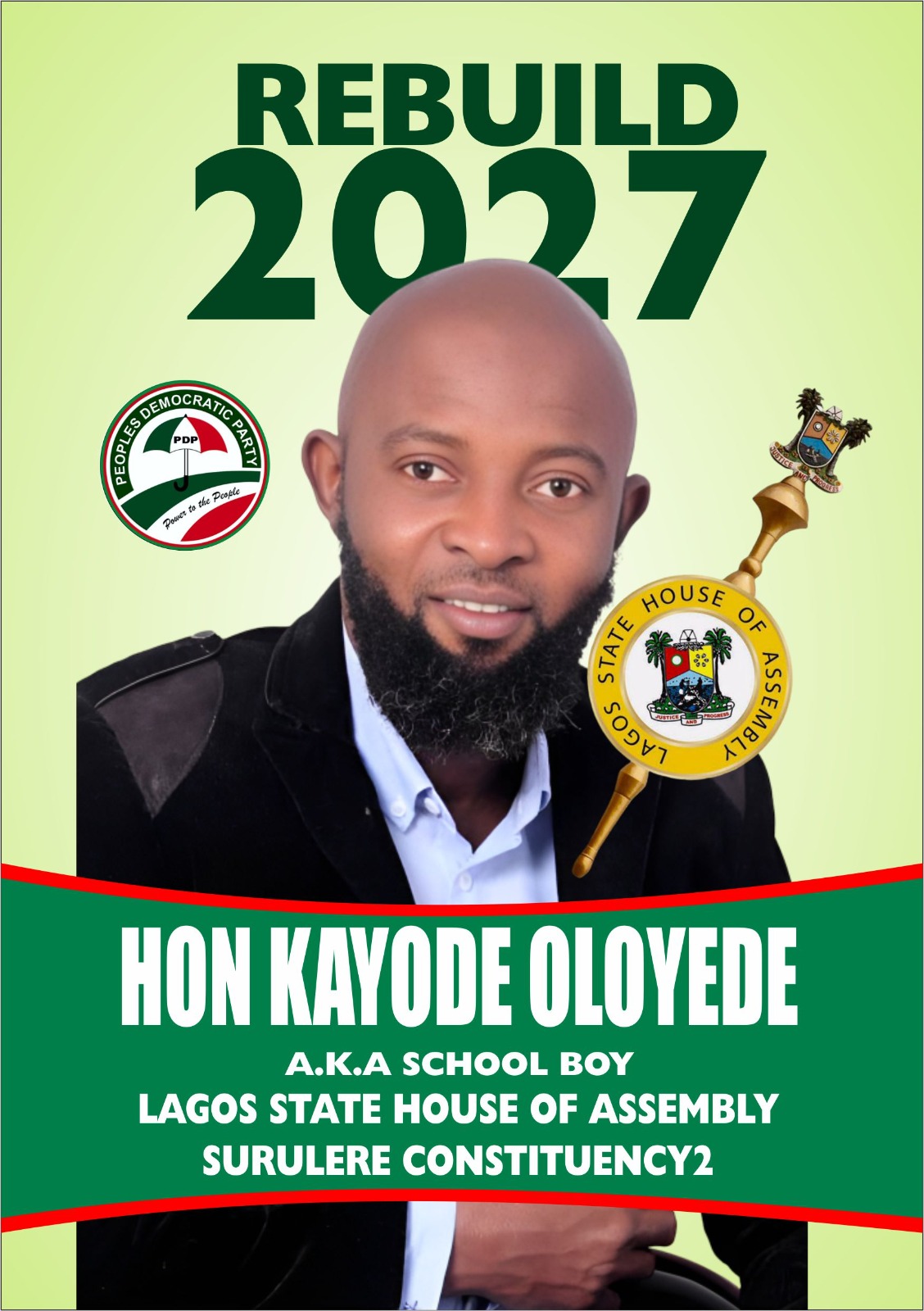
2027 Assembly Race: ‘School Boy’ Sparks Fresh Hope for Surulere Constituency II
LAGOS – As political activities gradually gather momentum ahead of the 2027 general elections, growing support is emerging in Surulere Constituency II for the Peoples Democratic Party (PDP) House of Assembly aspirant, Hon. Kayode Oloyede, popularly known as “School Boy.”
Running on the campaign theme, “Rebuild 2027,” Oloyede is positioning himself as an alternative voice for residents seeking a new direction in legislative representation and grassroots development.
A Vision Anchored on Four Pillars
The aspirant has built his campaign around a four-point agenda designed to address the concerns of constituents:
People First: Prioritising the welfare and everyday needs of residents above partisan considerations.
Transparent Leadership: Promoting accountability in legislative activities, constituency projects, and public resource management.
Inclusive Governance: Encouraging broad participation in decision-making by ensuring every segment of the constituency has a voice.
Sustainable Development: Advocating long-term investments in infrastructure, youth empowerment, education, and human capital development.
Growing Grassroots Appeal
Political observers say Oloyede’s grassroots engagement strategy and community-focused messaging have resonated with many residents who desire more accessible and responsive representation.
His campaign consistently emphasises the need to bridge the gap between elected representatives and the people, with a promise to build “a better, stronger, and more prosperous Surulere Constituency II.”
A community leader, who requested anonymity, said many residents are looking beyond political rhetoric and seeking leadership that understands their daily challenges.
“We need someone who genuinely understands the struggles of ordinary people and is prepared to serve the community. For many of us, the call to rebuild is not just a campaign slogan but a reflection of our aspirations for meaningful development,” the source said.
A Competitive Political Landscape
As the countdown to the 2027 elections continues, Oloyede has urged constituents to embrace a vision centred on progress, accountability, and community-driven governance.
While Surulere remains a politically competitive constituency with established structures and influential stakeholders, analysts believe the increasing visibility of the “School Boy” movement could make the contest one of the closely watched legislative races in Lagos State.
Ultimately, political observers note that while grassroots mobilisation is a significant factor, electoral outcomes will likely depend on a combination of candidate credibility, party strength, voter turnout, campaign organisation, and the prevailing political climate as the 2027 elections approach.
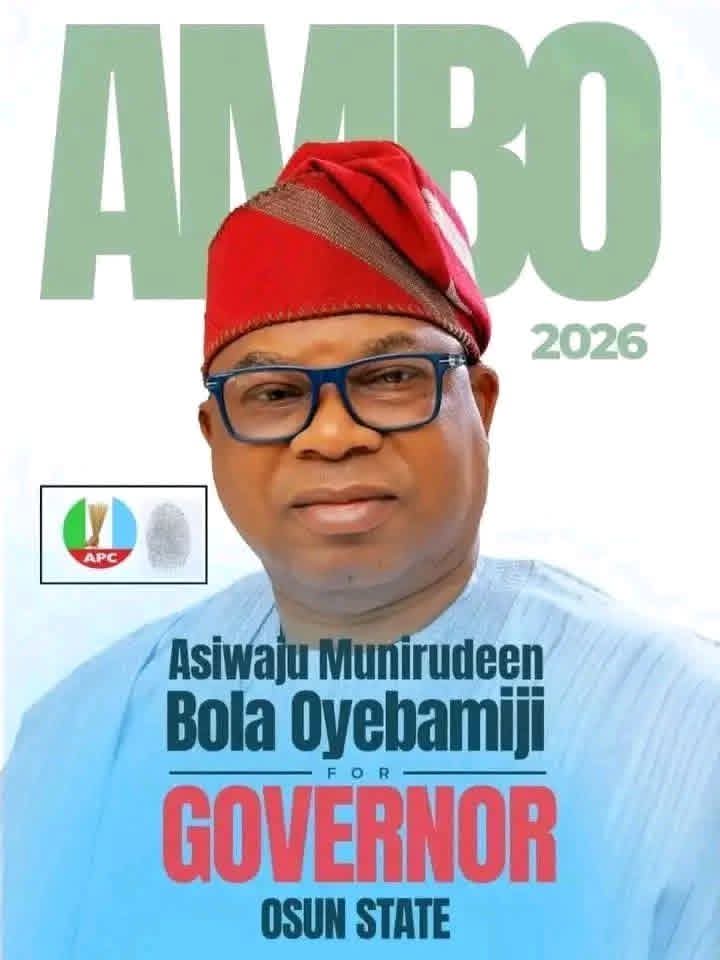
AMBO and the Osun Governorship Race: Assessing the Man, the Politics and the Vision
As political activities gather momentum ahead of the 2026 Osun State governorship election, a public affairs commentator, Oluseyi Olonade, has described the emergence of Asiwaju Munirudeen Bola Oyebamiji, popularly known as AMBO, as a significant development in the state’s political landscape.
In an article titled “Oyebamiji: The Man, The Politics and The Aspiration,” Olonade argued that the All Progressives Congress governorship hopeful possesses the character, experience and vision needed to reposition Osun State for sustainable growth.
According to the writer, Oyebamiji’s appeal stems from his extensive background in the banking sector, where he spent nearly three decades working with institutions including Wema Bank, Trans International Bank, Spring Bank and Enterprise Bank.
A native of Ikire in Irewole Local Government Area, Oyebamiji was described as a technocrat whose experience in corporate governance, finance and risk management has shaped his approach to public administration.
The article noted that his public service journey gained prominence in 2012 when he was appointed to oversee the then Osun State Investment Company Limited. Under his leadership, the organisation was reportedly restructured and transformed into Omoluabi Holdings Limited.
The writer further highlighted Oyebamiji’s tenure as Commissioner for Finance under successive APC administrations, where he was credited with managing the state’s finances during challenging economic periods.
Olonade also referenced Oyebamiji’s appointment as Managing Director of the National Inland Waterways Authority, describing it as further evidence of his administrative and leadership capabilities.
The article contrasted Oyebamiji’s governance philosophy with that of the current administration in Osun State, arguing that the APC aspirant favours institutional reforms, economic diversification and fiscal discipline.

According to the writer, Oyebamiji’s proposed agenda includes strengthening transparency in government spending, expanding internally generated revenue, attracting private-sector investments and promoting industrial and agricultural development.
The article also highlighted youth empowerment, entrepreneurship development and digital skills acquisition as key components of his vision for the state.
Olonade concluded that the forthcoming governorship election would present voters with a choice between different approaches to governance, expressing confidence that Oyebamiji’s experience and developmental agenda make him a strong contender in the race.


- Most Africans continue to experience economic hardship despite signs of recovery, latest Afrobarometer report shows June 9, 2026
- African Organisations Move from Awareness to Action as IT Asset Visibility Becomes a Board-Level Priority June 9, 2026
- Forget Energy Transition, Produce Oil Like Nothing Before June 9, 2026
- Heirs Energies' US$750 Million Financing Named Best Oil & Gas Deal of the Year June 9, 2026
- What Human Resource (HR) Professionals Gain from Automation June 9, 2026
- Spiro Appoints Former Indofast Energy Chief Executive Officer (CEO) Anant Badjatya as Group CEO to Lead its Next Phase of Growth June 9, 2026
- Gwede Mantashe Joins African Energy Week (AEW) 2026 as South Africa's Petroleum Reforms Open the Orange Basin to Drilling June 8, 2026
- Inspiring Tomorrow's Leaders: Senator Dr. Rasha Kelej Launches her First Virtual Mentorship and Leadership Platform June 8, 2026
- ExxonMobil and National Basketball Association (NBA) Africa interactive Science, Technology, Engineering, and Mathematics (STEM) Showcase and a Jr. NBA Clinic June 8, 2026
- Africa Centres for Disease Control and Prevention (Africa CDC) Welcomes Pandemic Fund’s US$220m Support for Bundibugyo Virus Outbreak Response June 8, 2026
- Most Africans continue to experience economic hardship despite signs of recovery, latest Afrobarometer report shows June 9, 2026
- African Organisations Move from Awareness to Action as IT Asset Visibility Becomes a Board-Level Priority June 9, 2026
- Forget Energy Transition, Produce Oil Like Nothing Before June 9, 2026
- Heirs Energies' US$750 Million Financing Named Best Oil & Gas Deal of the Year June 9, 2026
- What Human Resource (HR) Professionals Gain from Automation June 9, 2026
- Spiro Appoints Former Indofast Energy Chief Executive Officer (CEO) Anant Badjatya as Group CEO to Lead its Next Phase of Growth June 9, 2026
- Gwede Mantashe Joins African Energy Week (AEW) 2026 as South Africa's Petroleum Reforms Open the Orange Basin to Drilling June 8, 2026
-

 news6 months ago
WHO REALLY OWNS MONIEPOINT? The $290 Million Deal That Sold Nigeria’s Top Fintech to Foreign Interests
-

 society1 month ago
SOCIAL MEDIA IS NOT A BATTLEFIELD COMMAND – WHY THE NIGERIAN ARMY’S ACTION AGAINST JUSTICE CRACK IS A NATIONAL SECURITY IMPERATIVE
-

 celebrity radar - gossips4 months ago
Dr. Chris Okafor Returns with Power and Fire of the Spirit -Mounts Grace Nation Altar with Fresh Anointing and Restoration Grace on February 1, 2026
-

 celebrity radar - gossips6 months ago
Prophet Kingsley Aitafo Releases 2026 Prophecy: ‘Nigeria Will Rise, but the World Must Prepare for Turbulence’
You must be logged in to post a comment Login
You must log in to post a comment.