
Politics
‘If Politics Is Dirty, Let Us Be The Detergent’ – Akan Imoh, Aspirant, Lagos State House Of Assembly

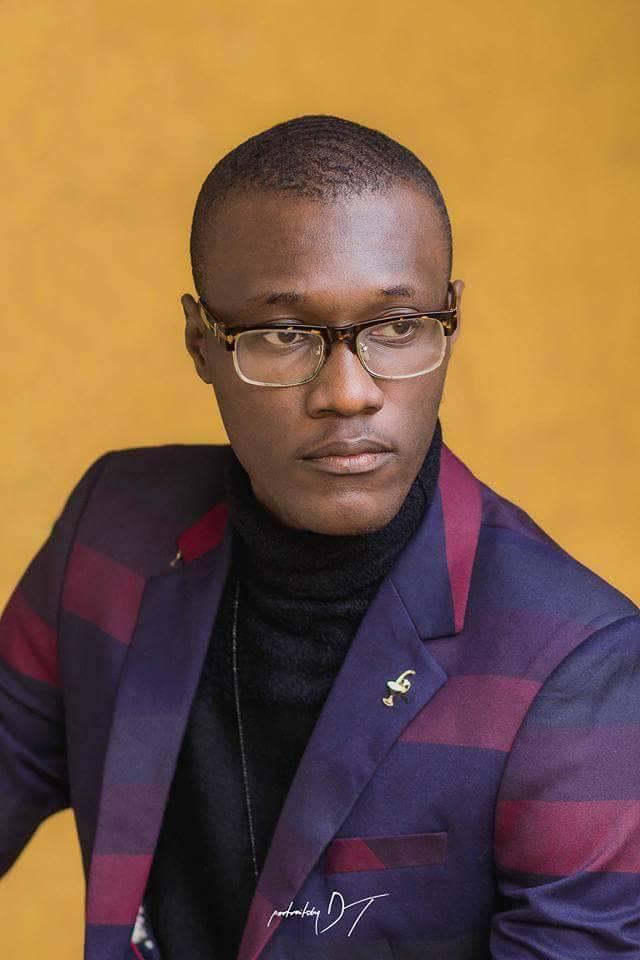

A very vibrant and smart young man, Akan Imoh is taking a plunge into the murky waters of Nigerian politics. He is coming in with new ideas, strategies and solutions, which has young people as a major target. He sat down with our reporter of recent to talk about his life, political ambitions and more.
Enjoy.
Can we meet you?
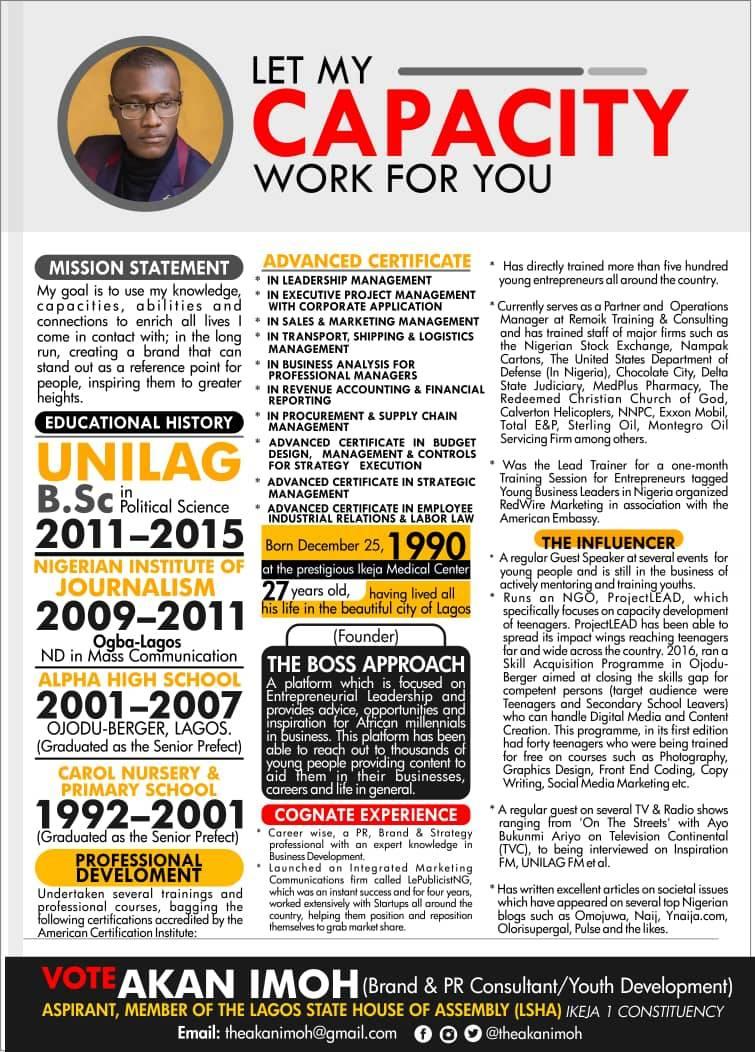
My name is Akan Imoh. I was born on the 25th of December, 1990, which means I am currently 27 years old. I have lived in Lagos all my life, having schooled, worked and run a business here. I’m a graduate of the University of Lagos, where I studied Political Science and also the Nigerian Institute of Journalism, where I studied Mass Communication.
How was growing up like for you?
Growing up was fun for me. I grew up in a house that had lots of love. We were four kids, two girls and two boys. My parents were the best. They made sure we were trained excellently. Two things my parents did that shaped our lives was that we were introduced to God at a very early age and made sure we had the best form of education. I remember one thing my parents always said is ‘train up a child in the way of the Lord, and when he’s old, he’ll never depart from God.’ This helped a lot.
During my growing up age, I never missed church. Sundays and weekday services. My father would bundle us all in his car and take us to church. It became a part of me. Trust me, we all somehow grew up with a deep love for the things of God. Also, for education, my parents didn’t spare any dime. They weren’t so rich, but education wasn’t what they wanted to ration or manage. I went to the best of schools. Very good private schools which were also expensive. I remember several times, I was sent home because I hadn’t paid my school fees. It was a regular feature. I was always at home for a larger part of the school session. But, I always somehow still came out top of the class. These two factors during my growing up age helped shape me to be what I am today.
How did you discover your passion, what challenges did you face in becoming who you are today and how did you tackle them?
Discovering passion is a very serious business (laughs). Today, I am a Politician and a host of other things. How did I find myself doing all these? Simple. First, is understanding that your purpose is in God. It’s not about what you want to do with your life, but, more about what God wants to do with your life. Hence, there’s a need to connect with the father in your discovery stages. Also, there’s a need to experience life. To make sure you never sit at the edge and just watch life pass by. You must get into the thick of things. Some call it ‘trial and error’, I call it ‘trial and discovery’. This is because, the more you do things and get involved, you’ll begin to find out more about yourself and what you can do. For me, I made sure I got the best out of life. I didn’t let anyone tell me I couldn’t do something. I already understood that my life was going to somehow revolve around the media and public life, so, I kept on moving and pushing myself.
As for challenges, the major one was financial. Growing up was not smooth. I was away from school more times than I was in school. I was always sent out for defaulting in fees payment. I grew up experiencing what its like to be poor. This can be a major limitation in a young man’s life. I have come to realize that poverty has a way of messing up with a person’s thinking and reasoning pattern. And so, one thing I did was to begin to work on my psyche. I used to say that I broke out of poverty in my head first before I broke out of it in my pocket. But, its been an amazing ride. With hard work, determination and God on my side, I have been able to surmount any obstacle life has thrown at me.
What motivated you to go into politics?
Hmmm. Politics has always been in the picture for me. Before we even talk politics, lets talk leadership. I think I was born to lead. I have always been at the fore front of things. You put me in the midst of people and somehow, I will just come out as the leader. I have extraordinary organizational and people skills. I was the Head Boy in both my primary and Secondary schools, I was also a major Teen Leader all through my teen age at the Foursquare Gospel Church, Saabo in Ojodu-Berger. Leadership has always been my thing. Now, let’s bring it to politics. It is obvious that we’ve a huge leadership problem in our country. We keep complaining, yet, we don’t do anything about it. I remember when I told my mum I was going into active politics, she nearly had a heart attack. Its not rare to hear people say that politics is dirty and they would never go into it or advice their family or friends to go into it. Now, I ask ‘if we don’t go into politics, how is it ever going to be better?’. I am tired of people who sit back and complain. We have got to move into the system and effect the kind of change we want. Yes, not all of us will run for office, but, what we all need to do is to get involved. Firstly, if you’re above 18 years old and you don’t have a PVC, im sorry to say, you are part of the problem. We must rise and take actions. We must hold our elected leaders accountable. We must ask questions, we must not just allow these people do as they please. Those of us who have decided to contest need your support, and not only support, we need your criticism. Make sure you hold us accountable. If politics is dirty, lets be the detergent.
Tell us a bit about your political ambitions
Yes. So, I intend to contest elections next year. I am aspirating for a seat in the Lagos State House of Assembly, LSHA (Ikeja 1 Constituency. Ikeja 1 Constituency consists of Ojodu-Berger, Omole, Agidingbi, Ipodo, Alausa, Oregun, Olusosun, Onilekekere, Onipetesi & Seriki Aro. I’ve been told several times that I stand no chance, especially because I am not an indigene of Lagos State. When I hear this, I just have one statement as a reply – Development doesn’t have a state of origin. If I’ve lived in this city for 27 years of my life, I think I deserve to be involved in the decision making process of this area.
Now, let me say that I am doing this for all the young people in this country. I am taking a step to take our fight to the place that matters. We need to have a seat at the table. When I get to the State House, I will push aggressively for youth-related bills. By this, I don’t mean all these ones they do where they come and give us jotters and other useless things. I mean creative policies that will better the lives of young people. We have young people with big entrepreneurial dreams, walking around with laptops in their bags and great ideas in their heads. How can we do something to help these ones? Some of them just need a place to work from, can’t we have entrepreneurial hubs or coworking stations? Have we thought about sports and how we could leverage on it to get to foster communal unity, get people off the streets and give them a purpose to live for? Why can’t we work towards setting up a football club (Ikeja FC), which will be poised to begin to play in the Nigerian Football League within three years of creation. This is what governance is about? The people who are voted into the Legislature are supposed to be your representatives, yet, many of us don’t even know them. So, tell me, how are they representing you. I believe that a legislator is supposed to be close to the people, close to the grassroots. You are supposed to know what is going on in your constituency, feel the heartbeat and take the concerns to the center. But, no. we have legislators who are comfortable in agbadas and don’t care about you. When elections are close, they then come out, do one or two things and make people feel like they’ve been working. We are no longer going to be deceived. I leave you with this, accountability and transparency will be the hallmark of my leadership. The power actually belongs to the people, we have to give comprehensive reports to the people who voted us in. I am bringing an open feedback system. This is time for a new kind of governance.
You’ve done a lot for young people over the years, why are you so passionate about this demography of people?
I am a lover of Young people. For eleven years now, I have consistently worked directly with teenagers and youths. I have always had a deep desire to help shape and positively impact young people. In church, I have worked closely with the teenagers and youths for years. This has led me to be a regular Guest Speaker at several events for young people, trained hundreds of them, mentored and still mentors hundreds of young people. I run an NGO, ProjectLEAD, which specifically focuses on capacity development of teenagers. ProjectLEAD has been able to spread its impact wings reaching teenagers far and wide across the country. In 2016, I ran a Skill Acquisition Programme in Ojodu aimed at closing the skills gap for competent persons (target audience were Teenagers and Secondary School Leavers) who can handle Digital Media and Content Creation. This programme, in its first edition had forty teenagers who were being trained for free on courses such as Photography, Graphics Design, Front End Coding, Copy Writing, Social Media Marketing etc. I also founded The Boss Approach, a platform which is focused on Entrepreneurial Leadership and provides advice, opportunities and inspiration for African millennials in business. This platform has been able to reach out to thousands of young people providing content to aid them in their businesses, careers and life in general. I am passionate about this set of people because I believe in the future, and that is why my campaign is themed ‘Create Your Tomorrow’. To me, I believe that the choices we make today will affect our tomorrow. I believe that these young people are the ones who are going to inherit the Nigeria of tomorrow. If we don’t take a step, we wont even have a country to inherit in the first place. I believe that we need to be deliberate about building a kind of future we can be proud of and our children can inherit and be happy.
Where do you see yourself in ten years?
In ten years’ time, I see myself married to an awesome woman, the very best on earth. I see myself with kids, two or three. I see myself being a key figure in the economic development of Africa as a whole. I see myself being a role model to many young people. I see myself still in governance and politics, influencing key decisions and helping to make the world a better place. I see myself more and more devoted to God and leading a life taught by Jesus.
What’s your advice for youths?
Youths, we can’t afford to continue our siddon-look attitude. Wake up and smell the coffee. Its time to fight for our rights. Go and get your PVC.
How can people follow your campaign?
Its easy. I am @theAkanImoh on Twitter and Instagram. Follow me to read up on my ideas on governance, read about my bio and my political agenda.


Politics
Airspace, Arrogance and Anarchy: Why Burkina Faso’s Seizure of a NAFc C-130 and 11 Nigerian Servicemen Threatens Regional Order
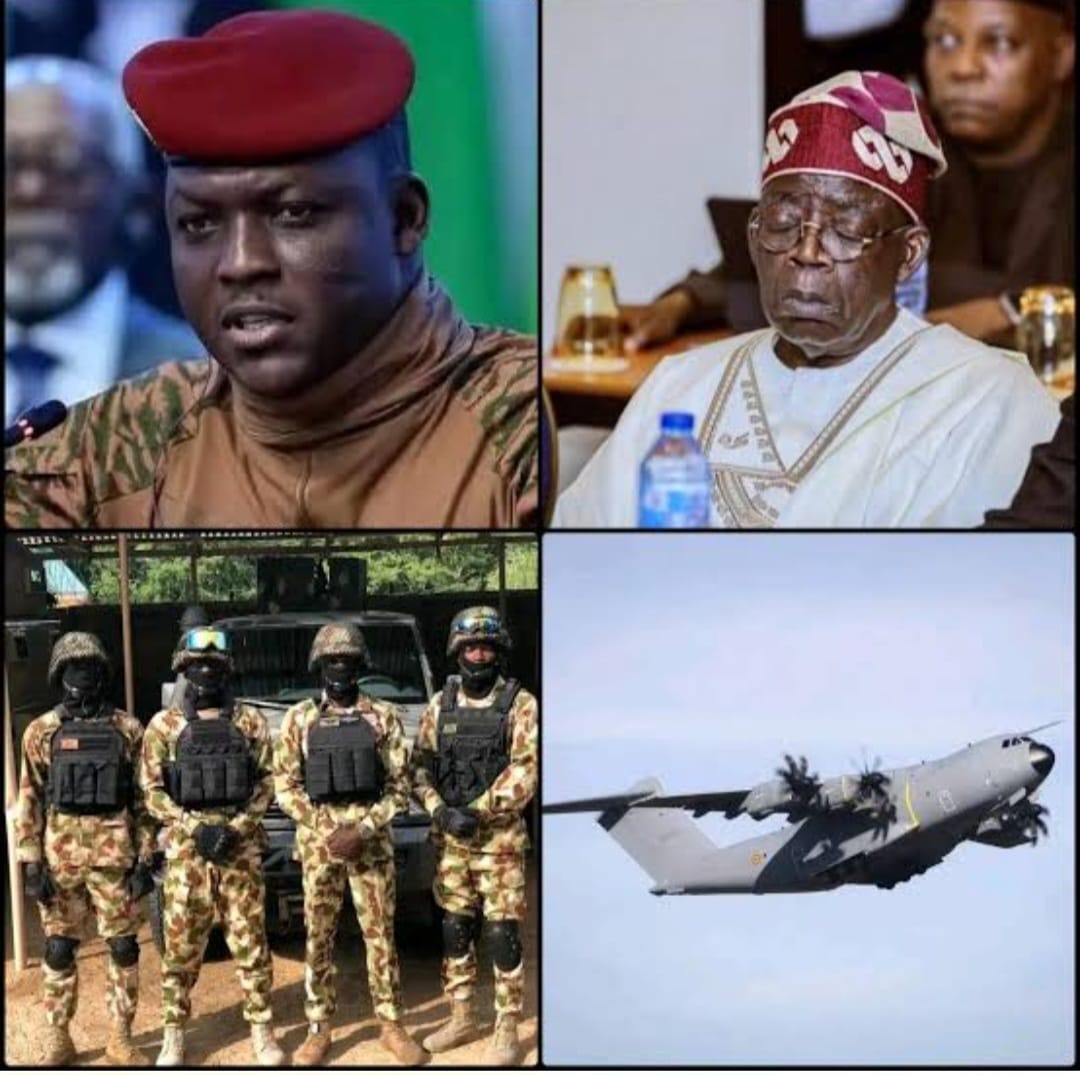
Airspace, Arrogance and Anarchy: Why Burkina Faso’s Seizure of a NAFc C-130 and 11 Nigerian Servicemen Threatens Regional Order.
By George Omagbemi Sylvester | Published by saharaweeklyng.com
“How an “UNAUTHORISED” emergency landing in Bobo-Dioulasso exposed the fracture between the Alliance of Sahel States and ECOWAS — and why legal norms, diplomacy and cool heads must prevail.”
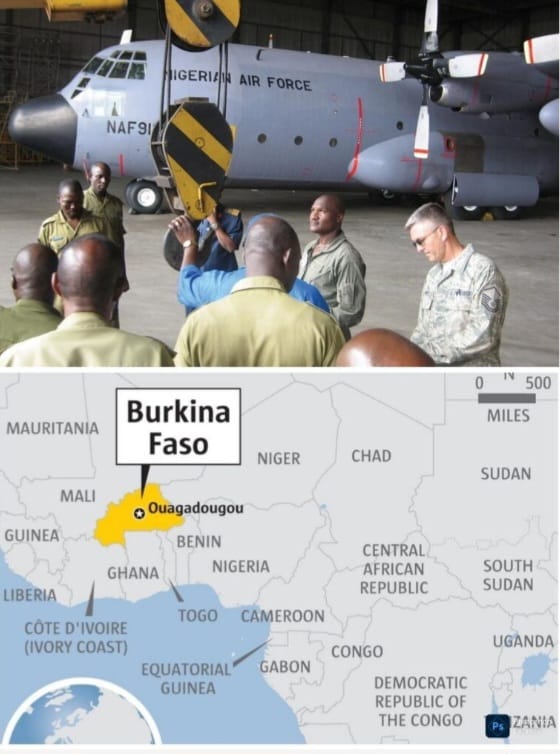
On 8 December 2025 a routine ferry flight by a Nigerian Air Force C-130 turned overnight into one of West Africa’s most dangerous diplomatic dramas. What Nigerian authorities describe as a precautionary, technical landing in Bobo-Dioulasso was treated by Burkina Faso and its Sahel partners as an airspace violation. Eleven Nigerian military personnel were detained and the aircraft impounded whereby a flashpoint in an already fractured regional landscape. The fallout since has been swift, ugly and instructive.
This is not a story about a single aircraft. It is a story about sovereignty, competing regional blocs, the fragility of international aviation law under political strain and the damage that escalatory language can do when armed governments face one another across a thin skin of protocol and precedent.
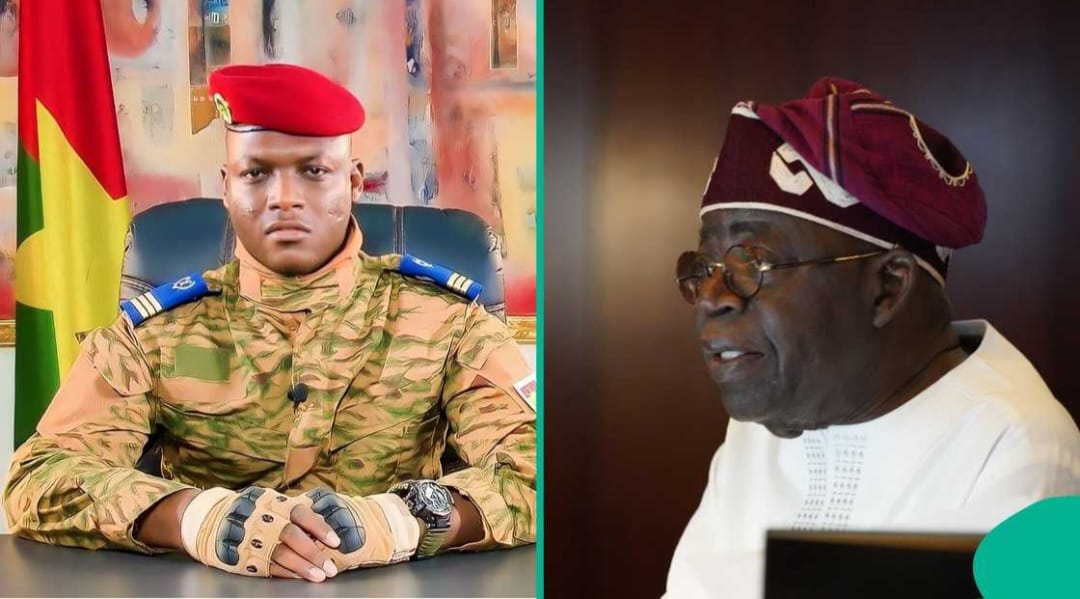
The facts (what we can establish reliably). Nigerian accounts say the C-130 was en route on a ferry mission to Portugal when a “TECHNICAL CONCERN” forced a precautionary landing in Bobo-Dioulasso; Nigeria’s Air Force insists crew and passengers were safe and that normal aviation procedures were followed. Burkina Faso’s ruling military authorities though speaking through the Alliance of Sahel States (AES) – say the aircraft entered Burkinabé airspace without prior authorisation and described the incident as an “UNFRIENDLY ACT.” The Alliance warned that in future it would neutralise unauthorised aircraft. Sahara reporters and the Nigerian media have all reported these competing claims.
Why this incident matters beyond the immediate headlines. Sovereignty and the primacy of airspace control. Under the Chicago Convention and customary international practice every State enjoys complete and exclusive sovereignty over the airspace above its territory. States may (and do) take defensive measures when they believe their airspace has been violated. Though that rule coexists with another clear principle: emergency landings for safety are an accepted feature of civil-military aviation and normally trigger established communications, escorts or diplomatic notifications though not seizing and publicly humiliating crew. The collision of these two principles creates a dangerous grey zone.
AES vs ECOWAS: a geopolitical schism. The seizure cannot be divorced from the political context: Burkina Faso, Mali and Niger have broken with the Economic Community of West African States (ECOWAS) and formed the Alliance of Sahel States (AES). That split has hardened narratives of hostility between the two blocs. Recent Nigerian involvement in neighbouring crises (including air operations connected to events in Benin) has heightened AES suspicions about Nigerian military activity in the region. This is not merely a diplomatic spat; it is the manifestation of two competing systems for regional order. Analysts at the Institute for Security Studies have warned that “stability in West Africa requires that both organisations take pragmatic and flexible approaches.” That warning has never been more urgent.
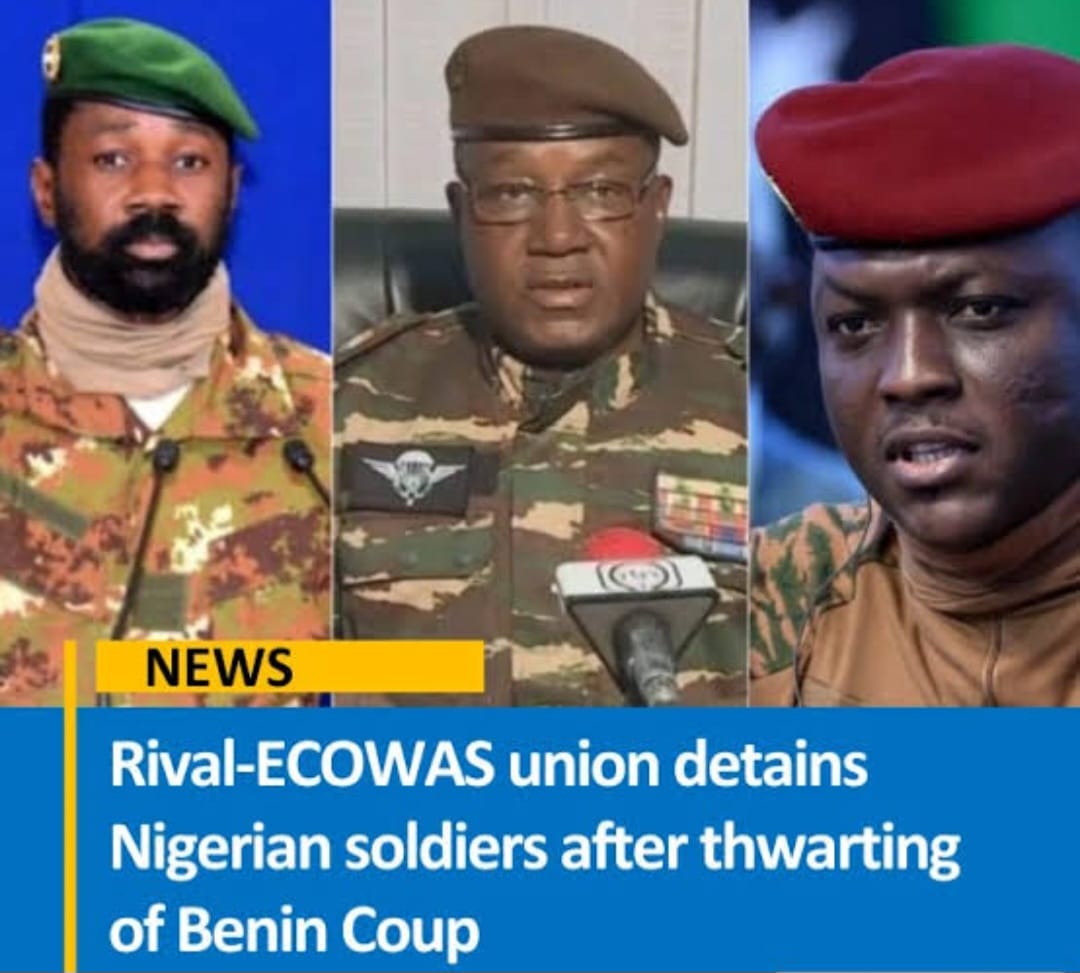
The risks of escalation. When a military junta pronounces it will “NEUTRALISE” unauthorised aircraft, that is not mere rhetoric but it is a doctrine that invites miscalculation. Intercepting or firing on a military transport (even one allegedly in breach of airspace rules) could produce casualties, retaliation, wider interstate military posturing, or a tit-for-tat pattern that drags neighbouring states into open confrontation. The incident exposed how quickly regional norms can be weaponised.
Where the Nigerian government stands (and why diplomacy must lead). The Federal Government opened diplomatic channels immediately after the incident. Abuja insists the landing was precautionary and says its crew were treated humanely; the Nigerian Air Force publicly denied a deliberate airspace violation and described the landing as an emergency measure. At the same time, Nigeria cannot treat the episode as simply an operational mishap: it is a diplomatic crisis that requires urgent, senior-level engagement to avoid further deterioration. Reports confirm that Abuja has moved to raise the matter through its foreign ministry and through regional interlocutors.
Voices and warnings from the region and experts
(Assimi Goïta, the Malian figurehead of the AES, publicly called the incident an “UNFRIENDLY ACT” and directed AES partners to treat unauthorised incursions firmly) language that underscores how seriously the alliance regards perceived threats. That tone, while politically resonant within AES constituencies, is dangerous in interstate practice because it narrows the margin for de-escalation.
– On the other side, the Nigerian Air Force’s spokesman, Air Commodore Ehimen Ejodame, categorically described the landing as a precautionary move due to technical concern; Abuja’s account stresses standard aviation safety obligations and seeks to frame the episode as a non-hostile emergency landing. That competing narrative, unresolvably opposed in public, fuels popular outrage on both sides.
– Regional analysts Djiby Sow and Hassane Koné of the ISS have cautioned that “stability in West Africa requires that both organisations take pragmatic and flexible approaches,” an apt reminder that durable security cannot be built on unilateral muscle or provocative signalling. Their analysis points to the deeper structural problem: two rival regional orders with overlapping geographies and incompatible political projects.
Legal notes for what international law allows and forbids:
International aviation law recognises both the sovereignty of states over their airspace and the necessity of emergency landings for safety. There is precedent for interception and diversion in bona fide security scenarios, but the law expects proportionality, communication and diplomatic resolution, but not detention and seizure as a first response. States that callously or reflexively detain foreign crews after emergency landings risk breaching obligations of humane treatment and peaceful dispute settlement. In practice, the legal rules require interpretation through a prism of good faith and common sense.
Recommendations and how to prevent this episode from becoming a catastrophe:
Immediate, senior diplomatic engagement. Nigeria must pursue quiet, high-level talks with Burkina Faso mediated by neutral ECOWAS or AU envoys to secure the immediate release of any property still impounded and to establish transparent facts. Public posturing should be replaced by private negotiation.
An independent fact-finding and technical review. Aviation experts (ICAO-compatible) should be given access to the aircraft and records to determine whether the landing was an unavoidable emergency or avoidable deviation. A neutral technical finding would deprive propagandists of oxygen.
Confidence-building measures between AES and ECOWAS. The two blocs must restore minimum channels for incident management: hotlines, agreed protocols for overflight and emergency landing, and mutually accepted procedures for military aircraft transiting neighbouring states. The alternative is a drift into permanent suspicion and frequent crises.
A public narrative of restraint. Leaders must avoid escalationist language. Warnings about “neutralising” airborne platforms are inflammatory and unnecessary when diplomacy and technical verification remain available.
Endnote; the test of leadership. This episode is a test. It tests Nigeria’s capacity for sober diplomacy; it tests Burkina Faso’s willingness to separate security concerns from showmanship; it tests the region’s ability to manage rival blocs without sliding into armed confrontation. If handled well, the incident can be contained and even used as a spur to create robust incident-management mechanisms. If mishandled, it could set a precedent for a dangerous new normal: where emergency landings become pretexts for seizure, and interstate suspicion becomes a constant driver of instability.
In the end, airplanes are not the only things that fly — words and consequences do too. The courageous, responsible thing now is restraint, verification and a deliberate commitment to dialogue. Anything less will turn an avoidable emergency into a preventable tragedy.
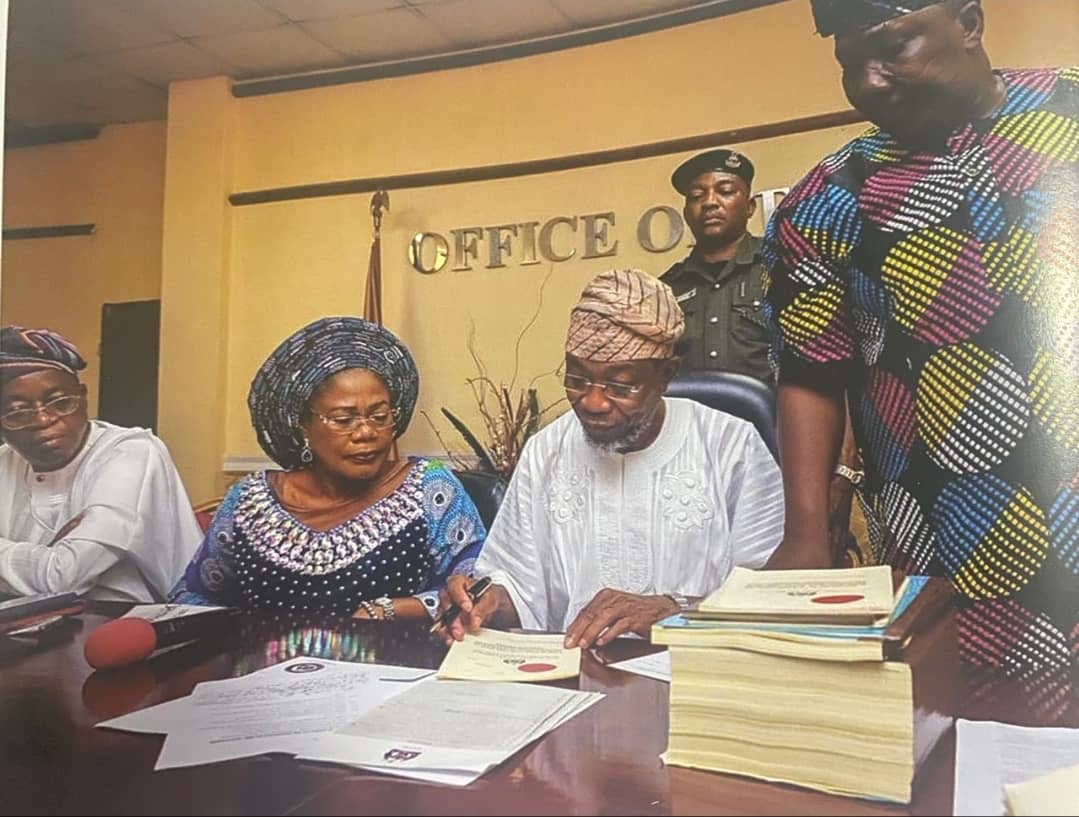
LIES VS FACTS: Revisiting The Aregbesola Years In Osun
Public debates about Rauf Aregbesola’s time as Osun governor often swing between praise and criticism, but many arguments overlook the economic realities of that period. The nationwide recession from 2014 to 2016 hit state finances hard, with 23 states unable to pay salaries at all. Osun faced a sharp drop in federal allocation and internally generated revenue, forcing difficult decisions.
One of the biggest misconceptions is that Aregbesola intentionally paid half salaries. In reality, the Labour Government Salary Apportionment Committee, which was made up of labour leaders and government officials, jointly agreed on a temporary modulated payment structure to prevent mass layoffs. Throughout the recession, over 70 percent of workers (junior staff, teachers, health workers and local government employees) continued receiving full salaries and pensions. The modulation applied mainly to senior officers and political appointees.
Another widespread falsehood is that Aregbesola’s successor, Gboyega Oyetola, inherited the salary modulation. Records show this is untrue. A few outstanding balances of the modulated salaries were already cleared before Aregbesola handed over, and full salary payment had resumed eight months before the end of his administration.
Beyond the salary debate, Osun continued major development programmes. The School Feeding initiative served 254,000 pupils daily and later became a national policy. Thousands of classrooms were constructed or rebuilt, the OYES youth programme absorbed unemployed youths, and road projects continued across the state despite the financial strain.
It is true that the recession created emotional and financial pain for many families, and their feelings are valid. But emotions cannot replace verified facts. Transparency was maintained throughout the crisis, and Aregbesola’s strong grassroots support today reflects public recognition of his long term developmental impact.
The Aregbesola years were a mix of economic challenges and visible transformation. Narratives based on half truths may trend online, but they cannot erase the documented reforms, infrastructural investments and social programmes that reshaped Osun during one of Nigeria’s toughest economic periods.
Ogun 2027: APC Chieftain, Hon Abiodun Isiaq Akinlade Eyes Governorship Seat
One of the most influential political figures in the state, Hon Abiodun Isiaq Akinlade has declared interest in the Ogun Governorship seat ahead of the 2027 general election.
Akinlade, Chairman, House of Representatives Committee on Agricultural Colleges and Institutions who doubles as the Baba Adinni of Yewaland is tipped as one of the most experienced grassroots politicians in the state who had long been at the forefront of the Yewa Governorship agenda.
A Chieftain of the All Progressives Congress, APC, Hon Akinlade made his intention known yesterday while addressing Owode-Yewa Youth during their socio-cultural event, which held in Owode Yewa.
Akinlade declared that God willingly, he shall be the next Governor of the state come 2027.
In his own words, ” We have a lot of people who can develop Yewaland. I can authoritatively tell you that, it is only God that can give people position. And I am assuring in the name of Almighty Allah, that I will be coming to this same event in 2027 as the Governor of the state”, he declared.
A quiet philanthropist who has been a major source of employment generation to Youths in Ogun West senatorial districts shares strong affiliations among the political class in the state regardless of political leanings.
Prominent at the event, Kabiyesi HRM Oba Matthew Akindele Olu of Owode. Honourable Babatunde Olaotan, Alhaji (Dr.) Mutiu Adewale Badmus Chairman Al-Hatyq Travels And Tours, Chief Sunday Adeleye (Sunday Ibadan) Chairman Julianky Petroleum.
“Earlier today, I had the honour of joining my revered Kabiyesi, the Olu of Owode‑Yewa, HRM Oba Matthew Akindele JP, and fellow brothers and sisters from Owode‑Yewa to celebrate the 2025 Owode‑Yewa Youth Week
I reaffirm my commitment to the youth of Yewaland and pledge continued support for empowerment programmes, job creation, and skill‑acquisition projects. Together, we will build a brighter future for Owode‑Yewa and for Ogun State at large.
Congratulations to all sons and daughters of Owode‑Yewa on the huge success of this year’s celebration”
Rt. Hon. Abiodun Isiaq Akinlade
Asiwaju of Owode‑Yewa
Baba Adinni of Yewaland
Chairman, House Committee on Agricultural Colleges and Institutions


-
 Politics6 months ago
Nigeria Is Not His Estate: Wike’s 2,000‑Hectare Scandal Must Shake Us Awake
-

 society6 months ago
JUSTICE DENIED: HOW JESAM MICHAEL’S KINDNESS WAS TURNED AGAINST HIM
-

 celebrity radar - gossips4 months ago
Why Babangida’s Hilltop Home Became Nigeria’s Political “Mecca”
-

 society4 months ago
Power is a Loan, Not a Possession: The Sacred Duty of Planting People
You must be logged in to post a comment Login