
Politics
Power to Poison: How Toxic Politics Is Destroying Nigeria’s Democracy and Future

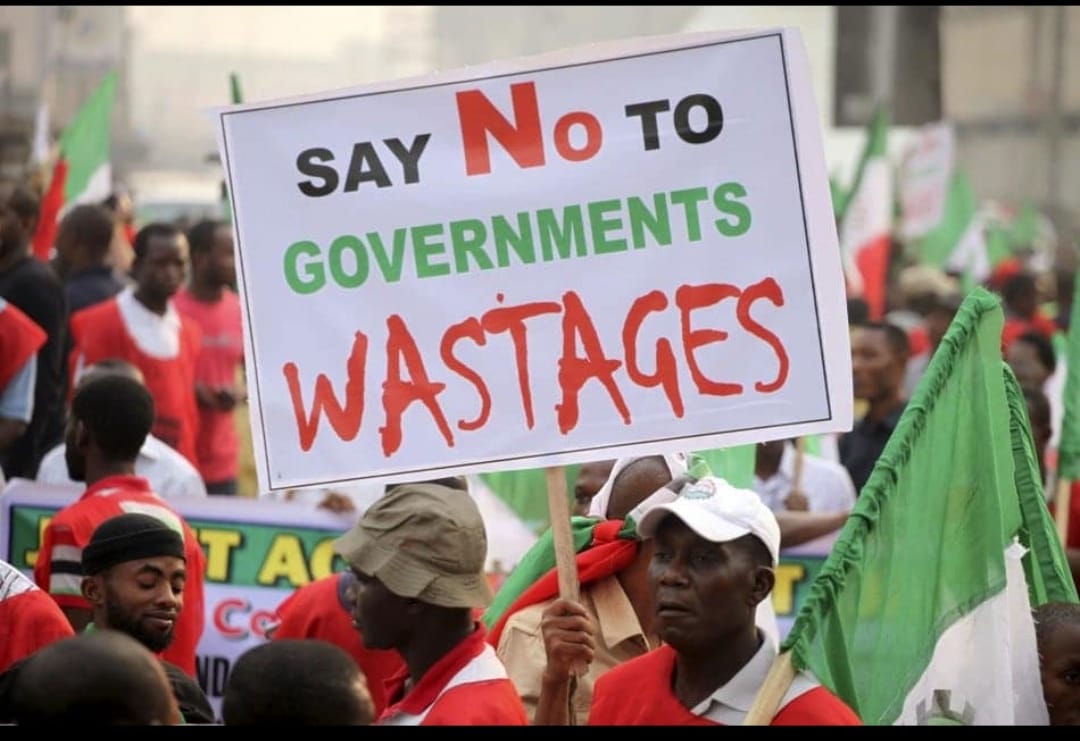
Power to Poison: How Toxic Politics Is Destroying Nigeria’s Democracy and Future
By George Omagbemi Sylvester
Nigeria’s political landscape in 2025 is best described as a battlefield of corruption, impunity, and institutional decay. Toxic politics has infested all arms of government—from the executive to the legislature and the judiciary—crippling national development and eroding public trust. Power is no longer a tool for service; it has become a weapon for suppression, self-enrichment, and systemic injustice. As the nation grapples with economic stagnation and widespread insecurity, the conduct of its political elite continues to alienate the populace and entrench hopelessness.

Executive Overreach: A Democracy Under Siege
In March 2025, President Bola Ahmed Tinubu stunned the nation by declaring a state of emergency in Rivers State, Nigeria’s oil-producing heartland. The federal government suspended the duly elected governor, deputy governor, and all members of the state assembly, citing uncontained pipeline vandalism and militant activities. In their place, a retired vice admiral was appointed to oversee the state’s affairs for six months.
This executive action, seen by many as a constitutional overreach, drew swift condemnation from legal experts, civil society, and opposition leaders. The Nigerian Bar Association (NBA) described the act as “a dangerous usurpation of democratic authority and a slide toward authoritarianism.” Legal analysts warned that allowing the president to unilaterally suspend elected officials under vague security pretenses sets a terrifying precedent—one where democracy can be dismantled on a whim.

The international community, including the African Union and ECOWAS, expressed concern over the erosion of Nigeria’s federal structure. While Tinubu’s administration defended its move as necessary to restore order, many see it as a political maneuver to neutralize dissent in a state known for opposition leanings.
The Rot in the Legislature: Corruption, Sexism, and Retribution
Toxicity in the legislative arm was on full display when Senator Natasha Akpoti-Uduaghan accused Senate President Godswill Akpabio of sexual harassment and political intimidation. Rather than addressing the serious allegations, the Senate retaliated by suspending her for six months over unrelated claims of “disruptive behavior.” The timing of the suspension raised widespread suspicion, and critics described it as a blatant abuse of parliamentary power.
The suspension ignited protests across the country under the slogan “We Are All Natasha.” Women’s groups and human rights organizations condemned the Senate’s action as misogynistic and retaliatory, exposing the entrenched patriarchy within Nigeria’s highest lawmaking body. Despite boasting over 100 senators, only about 8% are women, a glaring statistic that reflects the systemic barriers to female political participation.
Meanwhile, numerous legislators continue to face allegations of budget padding, contract inflation, and illegal constituency project allocations—yet few have been held accountable. The legislature has become a sanctuary for corrupt elites, shielded by procedural immunity and partisan loyalty.
Judiciary on Trial: Corruption, Compromise, and Complicity
The judiciary, theoretically the last hope of the common man, has not been spared. In 2024, the National Judicial Council (NJC) sanctioned multiple judges—two were compulsorily retired for falsifying their ages, and two others suspended for bribery-related offenses. But these internal corrective measures have failed to cleanse the judiciary of its deep-seated corruption.
A damning report by the National Bureau of Statistics in collaboration with the United Nations Office on Drugs and Crime (UNODC) in late 2024 ranked the judiciary as Nigeria’s most corrupt institution. Judges were found to be the highest recipients of bribes, surpassing police officers and tax officials.
This perception is damaging not just for the judiciary but for the rule of law itself. Lengthy trial procedures, endless adjournments, and politically influenced verdicts have become the norm. In several high-profile corruption cases, suspects walked free due to “lack of evidence,” despite overwhelming public documentation and media investigations.
The Patience Jonathan Saga: Power, Privilege, and Injustice
In a disturbing episode that underscores Nigeria’s elite impunity, former First Lady Patience Jonathan reportedly had several of her aides imprisoned for six years over allegations of stealing her jewelry—items that, according to investigative reports, were themselves acquired from looted public funds.
These aides, held without fair trial or substantive evidence, were denied basic legal rights. It was only after a protracted legal battle and pressure from human rights organizations that the truth began to emerge: not only were the allegations fabricated, but the items in question were part of illicitly acquired assets linked to public funds looted during her husband’s administration.
This saga is not just a tale of personal vendetta—it is a chilling reminder of how power in Nigeria is often weaponized against the powerless. The victims were collateral damage in a broader culture of impunity, where the elite operate above the law while ordinary citizens suffer the consequences of their greed and abuse.
Economic Cost of Corruption: A Nation Bleeding
Nigeria’s economic woes are inseparable from its political corruption. The Anti-Corruption Agencies of Nigeria estimate that over $18 billion is lost annually to graft and financial crimes—an amount equivalent to nearly 4% of Nigeria’s GDP in 2022. The impact is felt across every sector: failing hospitals, underfunded schools, collapsed infrastructure, and rising poverty.
Notable scandals like the Malabu Oil deal, the $2.1 billion arms deal under former National Security Adviser Sambo Dasuki, and Diezani Alison-Madueke’s luxury asset seizures in the UK and US have become symbols of elite plunder. In 2025, the U.S. repatriated $52.88 million in assets linked to Alison-Madueke, including high-end real estate and a luxury yacht. While such recoveries are welcome, they are mere drops in an ocean of stolen wealth.
Anti-Corruption Battles: Justice or Just Optics?
The Economic and Financial Crimes Commission (EFCC) boasts over 1,000 convictions, but critics argue that many are token victories. The agency is frequently accused of being a political tool—swift to prosecute opposition figures but slow to act against allies of the ruling party.
Institutional weaknesses plague anti-corruption efforts. The EFCC and Independent Corrupt Practices Commission (ICPC) are underfunded, politically manipulated, and struggle with outdated laws. Most corruption trials stretch for years, with wealthy defendants exploiting legal loopholes and endless adjournments.
The Way Forward: Reforms or Ruin
To break the cycle of toxic politics, Nigeria must pursue deep institutional reforms. These include:
Judicial Independence: Secure tenure and adequate funding for judges, alongside digital case management systems to prevent manipulation and delay.
Legislative Accountability: Open parliament sessions, public access to legislative votes, and stringent asset declarations.
Executive Restraint: Clear constitutional limits on presidential powers, with stronger checks from state governments and civil society.
Civic Engagement: Mass civic education and support for independent media to foster public awareness and accountability.
International Partnerships: Continued collaboration with global agencies for asset tracking, prosecution, and repatriation.
Nigeria can draw lessons from countries like Botswana and Rwanda, which have significantly reduced corruption through technology-driven governance, transparent budgeting, and rigorous law enforcement.
A Nation at the Crossroads
Nigeria’s political class has turned public office into a theatre of toxic ambition and moral bankruptcy. The executive abuses power, the legislature is riddled with corruption, and the judiciary is compromised. This triad of dysfunction not only sabotages national progress but endangers the very fabric of the democratic state.
Only a united citizenry, armed with truth, vigilance, and civic action, can reclaim Nigeria from the grip of political decay. The time to act is now—before the last remnants of justice, equity, and accountability are completely extinguished.





Lagos Politics: APC Elevates Sonayan-James, Strengthens 2027 Governorship Ticket
LAGOS — The All Progressives Congress has boosted its preparations for the 2027 Lagos State governorship election with the unveiling of Damilola Sonayan-James as its deputy governorship candidate, a move party leaders say is aimed at strengthening the party’s electoral prospects.

The announcement positions Sonayan-James as a key figure in the party’s campaign structure as the APC intensifies efforts to consolidate its political dominance in the state ahead of the polls.
Party officials described her emergence as the outcome of extensive consultations and a strategic decision to present a ticket that reflects competence, grassroots engagement and inclusive leadership.
Speaking on the development, APC leaders said Sonayan-James had demonstrated commitment to the party’s ideals and possessed the experience required to contribute meaningfully to governance if elected.
Her nomination is also expected to bolster the party’s appeal among women, youths and grassroots supporters, given her track record in community development and political mobilisation.
Political observers believe the decision underscores the APC’s determination to field a balanced ticket capable of sustaining its influence in Lagos while responding to the evolving expectations of the electorate.
With the unveiling concluded, attention is expected to shift to statewide mobilisation and engagement with stakeholders as the party prepares for what is anticipated to be a keenly contested governorship election in 2027.
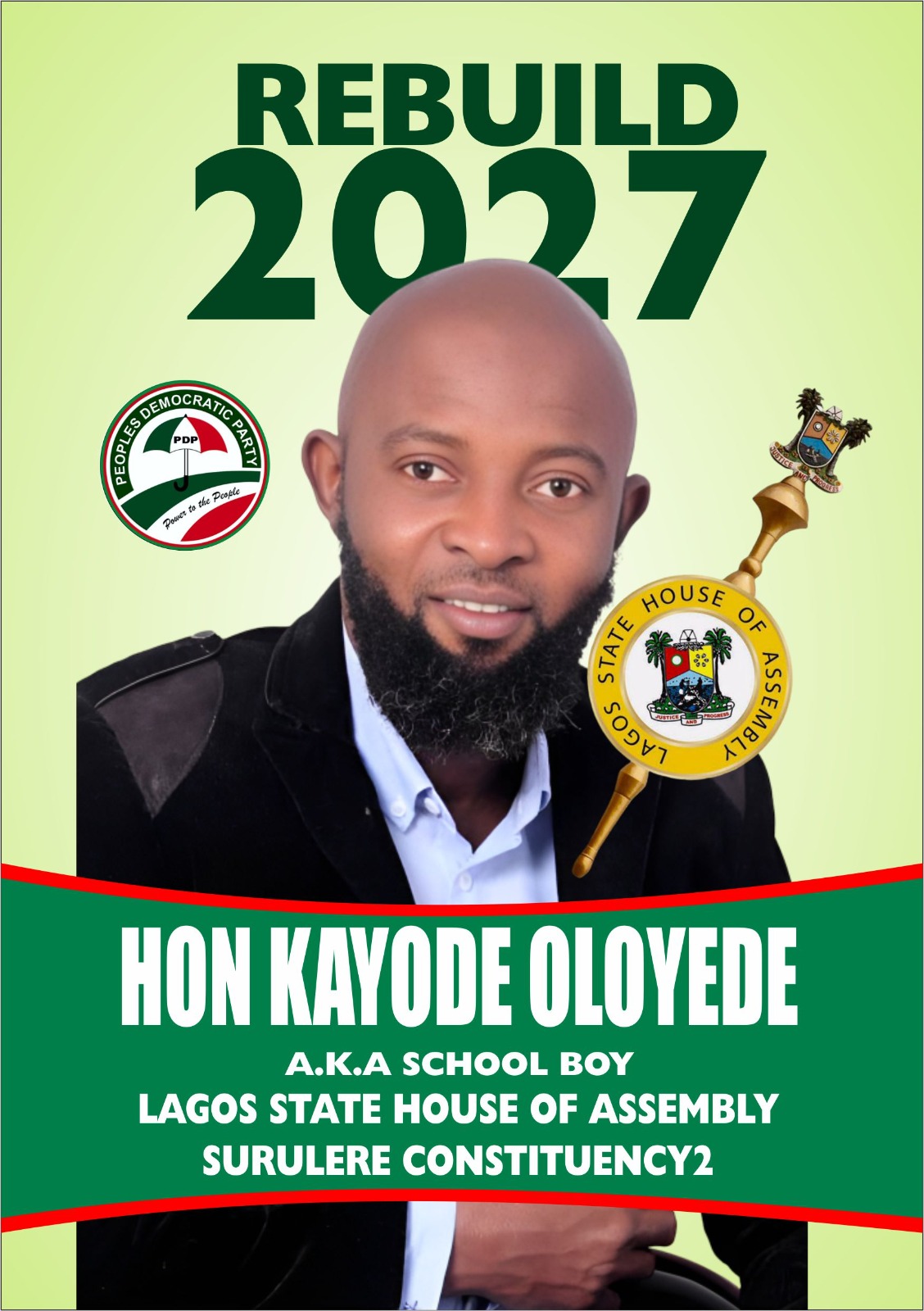
2027 Assembly Race: ‘School Boy’ Sparks Fresh Hope for Surulere Constituency II
LAGOS – As political activities gradually gather momentum ahead of the 2027 general elections, growing support is emerging in Surulere Constituency II for the Peoples Democratic Party (PDP) House of Assembly aspirant, Hon. Kayode Oloyede, popularly known as “School Boy.”
Running on the campaign theme, “Rebuild 2027,” Oloyede is positioning himself as an alternative voice for residents seeking a new direction in legislative representation and grassroots development.
A Vision Anchored on Four Pillars
The aspirant has built his campaign around a four-point agenda designed to address the concerns of constituents:
People First: Prioritising the welfare and everyday needs of residents above partisan considerations.
Transparent Leadership: Promoting accountability in legislative activities, constituency projects, and public resource management.
Inclusive Governance: Encouraging broad participation in decision-making by ensuring every segment of the constituency has a voice.
Sustainable Development: Advocating long-term investments in infrastructure, youth empowerment, education, and human capital development.
Growing Grassroots Appeal
Political observers say Oloyede’s grassroots engagement strategy and community-focused messaging have resonated with many residents who desire more accessible and responsive representation.
His campaign consistently emphasises the need to bridge the gap between elected representatives and the people, with a promise to build “a better, stronger, and more prosperous Surulere Constituency II.”
A community leader, who requested anonymity, said many residents are looking beyond political rhetoric and seeking leadership that understands their daily challenges.
“We need someone who genuinely understands the struggles of ordinary people and is prepared to serve the community. For many of us, the call to rebuild is not just a campaign slogan but a reflection of our aspirations for meaningful development,” the source said.
A Competitive Political Landscape
As the countdown to the 2027 elections continues, Oloyede has urged constituents to embrace a vision centred on progress, accountability, and community-driven governance.
While Surulere remains a politically competitive constituency with established structures and influential stakeholders, analysts believe the increasing visibility of the “School Boy” movement could make the contest one of the closely watched legislative races in Lagos State.
Ultimately, political observers note that while grassroots mobilisation is a significant factor, electoral outcomes will likely depend on a combination of candidate credibility, party strength, voter turnout, campaign organisation, and the prevailing political climate as the 2027 elections approach.
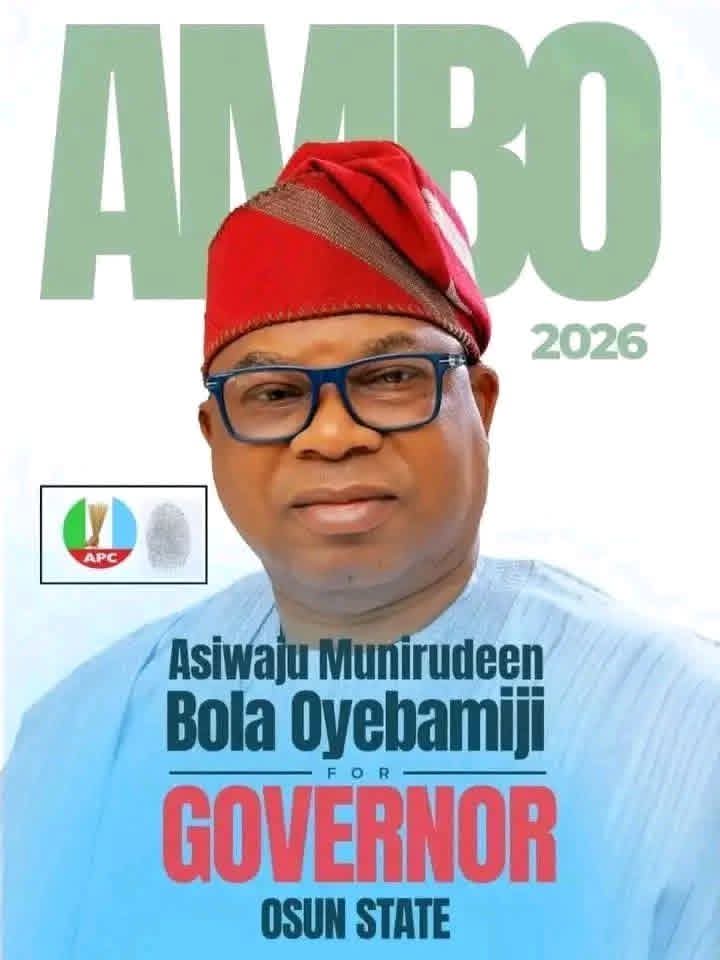
AMBO and the Osun Governorship Race: Assessing the Man, the Politics and the Vision
As political activities gather momentum ahead of the 2026 Osun State governorship election, a public affairs commentator, Oluseyi Olonade, has described the emergence of Asiwaju Munirudeen Bola Oyebamiji, popularly known as AMBO, as a significant development in the state’s political landscape.
In an article titled “Oyebamiji: The Man, The Politics and The Aspiration,” Olonade argued that the All Progressives Congress governorship hopeful possesses the character, experience and vision needed to reposition Osun State for sustainable growth.
According to the writer, Oyebamiji’s appeal stems from his extensive background in the banking sector, where he spent nearly three decades working with institutions including Wema Bank, Trans International Bank, Spring Bank and Enterprise Bank.
A native of Ikire in Irewole Local Government Area, Oyebamiji was described as a technocrat whose experience in corporate governance, finance and risk management has shaped his approach to public administration.
The article noted that his public service journey gained prominence in 2012 when he was appointed to oversee the then Osun State Investment Company Limited. Under his leadership, the organisation was reportedly restructured and transformed into Omoluabi Holdings Limited.
The writer further highlighted Oyebamiji’s tenure as Commissioner for Finance under successive APC administrations, where he was credited with managing the state’s finances during challenging economic periods.
Olonade also referenced Oyebamiji’s appointment as Managing Director of the National Inland Waterways Authority, describing it as further evidence of his administrative and leadership capabilities.
The article contrasted Oyebamiji’s governance philosophy with that of the current administration in Osun State, arguing that the APC aspirant favours institutional reforms, economic diversification and fiscal discipline.

According to the writer, Oyebamiji’s proposed agenda includes strengthening transparency in government spending, expanding internally generated revenue, attracting private-sector investments and promoting industrial and agricultural development.
The article also highlighted youth empowerment, entrepreneurship development and digital skills acquisition as key components of his vision for the state.
Olonade concluded that the forthcoming governorship election would present voters with a choice between different approaches to governance, expressing confidence that Oyebamiji’s experience and developmental agenda make him a strong contender in the race.


- Gwede Mantashe Joins African Energy Week (AEW) 2026 as South Africa's Petroleum Reforms Open the Orange Basin to Drilling June 8, 2026
- Inspiring Tomorrow's Leaders: Senator Dr. Rasha Kelej Launches her First Virtual Mentorship and Leadership Platform June 8, 2026
- ExxonMobil and National Basketball Association (NBA) Africa interactive Science, Technology, Engineering, and Mathematics (STEM) Showcase and a Jr. NBA Clinic June 8, 2026
- Africa Centres for Disease Control and Prevention (Africa CDC) Welcomes Pandemic Fund’s US$220m Support for Bundibugyo Virus Outbreak Response June 8, 2026
- Africa Centres for Disease Control and Prevention (Africa CDC) and World Health Organization (WHO) Launch Joint Continental Ebola Response Plan June 8, 2026
- Statement of the Catholic Bishops of Africa on the Tragic Killing of Most Rev. Osório Citora Afonso, Bishop of Quelimane and Apostolic Administrator of the Archdiocese of Beira June 8, 2026
- Journal of Public Health in Africa Expands with New Rapid Communications, Policy and News Sections June 8, 2026
- Mining Review Africa expands coverage to include global mining news June 8, 2026
- 13,000 Hectare Wild Coast Conservation Property Comes to the Market in the Eastern Cape June 8, 2026
- President Isaias Afwerki Departs for Egypt June 7, 2026
- Gwede Mantashe Joins African Energy Week (AEW) 2026 as South Africa's Petroleum Reforms Open the Orange Basin to Drilling June 8, 2026
- Inspiring Tomorrow's Leaders: Senator Dr. Rasha Kelej Launches her First Virtual Mentorship and Leadership Platform June 8, 2026
- ExxonMobil and National Basketball Association (NBA) Africa interactive Science, Technology, Engineering, and Mathematics (STEM) Showcase and a Jr. NBA Clinic June 8, 2026
- Africa Centres for Disease Control and Prevention (Africa CDC) Welcomes Pandemic Fund’s US$220m Support for Bundibugyo Virus Outbreak Response June 8, 2026
- Africa Centres for Disease Control and Prevention (Africa CDC) and World Health Organization (WHO) Launch Joint Continental Ebola Response Plan June 8, 2026
- Statement of the Catholic Bishops of Africa on the Tragic Killing of Most Rev. Osório Citora Afonso, Bishop of Quelimane and Apostolic Administrator of the Archdiocese of Beira June 8, 2026
- Journal of Public Health in Africa Expands with New Rapid Communications, Policy and News Sections June 8, 2026
-

 news6 months ago
WHO REALLY OWNS MONIEPOINT? The $290 Million Deal That Sold Nigeria’s Top Fintech to Foreign Interests
-

 society1 month ago
SOCIAL MEDIA IS NOT A BATTLEFIELD COMMAND – WHY THE NIGERIAN ARMY’S ACTION AGAINST JUSTICE CRACK IS A NATIONAL SECURITY IMPERATIVE
-

 celebrity radar - gossips4 months ago
Dr. Chris Okafor Returns with Power and Fire of the Spirit -Mounts Grace Nation Altar with Fresh Anointing and Restoration Grace on February 1, 2026
-

 celebrity radar - gossips6 months ago
Prophet Kingsley Aitafo Releases 2026 Prophecy: ‘Nigeria Will Rise, but the World Must Prepare for Turbulence’