
Business
PRESIDENT BUHARI ORDERS EFCC TO INVESTIGATE FORMER CHIEF OF DEFENCE STAFF, CHIEFS OF AIR STAFF, OTHERS OVER CORRUPTION IN MILITARY PROCUREMENTS (SEE LIST)


On the recommendation of the committee established to audit the procurement of arms and equipment in the Armed Forces and Defence sector from 2007 to 2015, President Muhammadu Buhari has directed the Economic and Financial Crimes Commission (EFCC) to carry out further investigation into the misconduct established against the following retired and serving officers of the Nigerian Air Force and Nigerian Army:
(1)Air Chief Marshal AS Badeh (Rtd)
(2)Air Marshal MD Umar (Rtd)
(3)Air Marshal AN Amosu (Rtd)
(4) Maj-Gen. ER Chioba (Rtd)
(5)AVM IA Balogun (Rtd)
(6)AVM AG Tsakr (Rtd)
(7)AVM AG Idowu (Rtd)
(8)AVM AM Mamu
(9)AVM OT Oguntoyinbo
(10)AVM T Omenyi
(11)AVM JB Adigun
(12)AVM RA Ojuawo
(13)AVM JA Kayode-Beckley
(12)Air Cdre SA Yushau (Rtd)
(13)Air Cdre AO Ogunjobi
(14)Air Cdre GMD Gwani
(15)Air Cdre SO Makinde
(16)Air Cdre AY Lassa
(16)Col N Ashinze
(17)Lt Col. MS Dasuki (Rtd)
Following the submission of the audit committee’s second interim report, President Buhari has directed the EFCC to investigate the roles of the officers and the following companies and their directors in fundamental breaches associated with the procurements by the Office of the National Security Adviser (ONSA) and the Nigerian Air Force (NAF).
(1)Messrs Societe D’ Equipments Internationaux
(2) Himma Aboubakar
(3)Aeronautical Engineering and Technical Services Limited
(4)Messrs Syrius Technologies
(5) Dr Theresa A. Ittu
(6)Sky Experts Nig Ltd
(7)Omenyi Ifeanyi Tony
(8)Huzee Nig Ltd
(9)GAT Techno Dynamics Ltd
(10) Gbujie Peter Obie
(11) Onuri Samuel Ugochukwu
(12)Spacewebs Interservices Ltd
(13)Oguntoyinbo Tayo
(14) Oguntoyinbo Funmi.
(15) Delfina Oil and Gas Ltd
(16)Chief Jacobs Bola
(17)Mono Marine Corporation Nig Ltd
(18)Geonel Intergrated Services Ltd
(20)Sachi Felicia
(20) Mudaki Polycarp
(21)Wolfgang Reinl.
The breaches identified by the Audit Committee include non-specification of procurement costs, absence of contract agreements, award of contracts beyond authorised thresholds, transfer of public funds for unidentified purposes and general non-adherence to provisions of the Public Procurement Act.
Furthermore, the procurement processes were arbitrarily carried out and generally characterized by irregularities and fraud. In many cases, the procured items failed to meet the purposes they were procured for, especially the counter insurgency efforts in the North East.
A major procurement activity undertaken by ONSA for NAF was that concerning the contracts awarded to Societe D’ Equipment Internationaux (SEI) Nig Ltd.
Between January 2014 and February 2015, NAF awarded 10 contracts totalling Nine Hundred and Thirty Million, Five Hundred Thousand, Six Hundred and Ninety US Dollars ($930,500,690.00) to SEI Nig Ltd.
Letters of award and End User Certificates for all the contracts issued by NAF and ONSA respectively did not reflect the contract sums. Rather, these were only found in the vendor’s invoices, all dated 19 March 2015. Additionally, some of the award letters contained misleading delivery dates suggesting fraudulent intent in the award process. The observed discrepancies are in clear contravention of extant procurement regulations.
The SEI contracts included procurement of two used Mi-24V Helicopters instead of the recommended Mi-35M series at the cost of One Hundred and Thirty Six Million, Nine Hundred and Forty Four Thousand US Dollars ($136,944,000.00).
However, it was confirmed that the helicopters were excessively priced and not operationally air worthy at the time of delivery. A brand new unit of such helicopters goes for about Thirty Million US Dollars ($30m). Furthermore, the helicopters were delivered without rotor blades and upgrade accessories.
Additionally, the helicopters were undergoing upgrade while being deployed for operation in the North East without proper documentation. It was further established that as at date, only one of the helicopters is in service while the other crashed and claimed the lives of two NAF personnel.
The Committee established that ONSA also funded the procurement of 4 used Alpha-Jets for the NAF at the cost of Seven Million, One Hundred and Eighty Thousand US Dollars ($7,180,000.00). However, it was confirmed that only 2 of the Alpha-Jet aircraft were ferried to Nigeria after cannibalization of engines from NAF fleet.
This is contrary to the written assertion of the former Chief of Air Staff, Air Marshal AN Amosu to the former NSA that all the 4 procured Alpha-Jets aircraft were delivered to the NAF.
The non-militarisation of the Alpha-Jets made them unsuitable for deployment to the North East and they are currently deployed only for training at NAF Kainji.
Furthermore, the procurement of the Alpha-Jets was contrary to the recommendation of the assessment team. The Committee found that the conduct of Air Marshal Amosu was deliberately misleading and unpatriotic.
The contract for the procurement of 36D6 Low Level Air Defence Radar for the NAF was awarded to GAT Techno Dynamics Ltd in April 2014 at the cost of Thirty Three Million US Dollars ($33m) and was funded by ONSA.
The Committee established that the radars were excessively priced as a complete set of such radars (comprising 6 radars including the Control Centre) goes for Six Million US Dollars ($6m) averagely. The Committee observed that the radars were delivered without the vital component of Identification Friend or Foe (IFF) that distinguishes between own and adversary aircraft, which has significantly degraded the operational capabilities of the NAF in the North East.
It was further observed that the sum of Three Million, Three Hundred Thousand US Dollars ($3.3m) was fraudulently included in the contract agreement as VAT and With Holding Tax and subsequently paid into the bank accounts of Spacewebs Interservices Ltd and Delfina Oil and Gas Ltd.
The Committee further established that Two Million US Dollars ($2m) from the proceeds was transferred to Mono Marine Corporation Nig Ltd, which is jointly owned by principal characters in this deal. The Committee opined that the infractions of extant regulations by these companies were clearly intended to defraud.
It was established that between September 2009 and May 2015, the NAF expended about Fifteen Billion Naira (N15bn) on the maintenance of its Alpha-Jets, C-130H aircraft and Mi-24V/35P helicopters. Out of this amount, Four Billion, Four Hundred and Two Million, Six Hundred and Eighty Seven Thousand, Five Hundred and Sixty Nine Naira, Forty One Kobo (N4,402,687,569.41) was paid out for contracts not executed.
It was also observed that in carrying out these maintenance activities, contracts worth over Two Billion, Five Hundred Million Naira (N2.5bn) were awarded to Syrius Technologies, a Ukrainian company that was not registered in Nigeria. Regrettably, in spite of these expenditures, the status of NAF fleet remained operationally appalling as only 3 Alpha-Jets, 2 C-130H and one each of Mi-24V and Mi-35P were serviceable as at 28 May 15.
In October 2013, NAF awarded contracts to DICON for the supply of weapons and ammunition at the cost of Five Hundred and Ninety Nine Million, One Hundred and Eighteen Thousand Naira (N599,118,000.00). However, only 2 of the 7 items contracted were delivered to NAF while the outstanding 5 items remained undelivered despite repeated requests to DICON.
The Committee also found that the delivered ammunition were about 40 years old, thereby casting doubts on their shelf life. The failure of DICON to fully execute the contract and the delivery of aged ammunition diminished the capacity of the NAF in North East operation.
The Committe uncovered insider dealings by military officers in procurement activities undertaken by ONSA and the NAF. The officers were found to have misused or abused their offices for personal gains by influencing award of contracts to private companies in which they have substantial interests.
For instance, an officer serving in the ONSA used his office to secure 2 contracts for his company, Geonel Integrated Services Ltd, for the protection of 20 Dams and Presidential Air Fleet security at the cost of Six Billion, Two Hundred and Fifty Million Naira (N6,250,000,000.00) and Five Million US Dollars ($5m) respectively.
Furthermore, some NAF officers used their companies to collect VAT and With Holding Tax that were never remitted to FIRS while another officer was found to have cross transferred about Five Hundred Million Naira (N500m) between a NAF company, Aeronautical Engineering and Technical Services Limited, SkyExperts Nig Ltd and Huzee Nig Ltd, companies in which he had personal interests.
It would be recalled that in its First Interim Report, the Committee on Audit of Defence Equipment established that the sum of Six Hundred and Forty Three Billion Naira (N643bn) and Two Billion, One Hundred Million US Dollars ($2.1bn) interventions were received for defence procurements by DHQ and the Services between 2007 and 2015.
In continuation of its assignment, the Committee has so far established that the nation spent about Twenty Nine Billion Naira (N29bn) and Two Billion US Dollars ($2bn) on NAF procurement activities alone.





Fidelity Bank grows gross earnings by 38% to N434.95b in Q1
Fidelity Bank Plc recorded 37.9 per cent growth in gross earnings to N434.95 billion in first quarter 2026 as the international commercial bank continued to expand its core banking market share.
Interim report and accounts of Fidelity Bank for the three months ended March 31, 2026 released at the Nigerian Exchange (NGX) showed that gross earnings rose from N315.42 billion in first quarter 20025 to N434.95 billion in first quarter 2026, representing an increase of 37.9 per cent.
The top-line performance was driven by impressive growth in the bank’s core business operations with interest incomes rising by 22.8 per cent to N314.48 billion in first quarter 2026 as against N256.10 billion in first quarter 2025.
With net interest income at N180.97 billion, the bank closed the period with profit before tax of N92.48 billion. After taxes, net profit stood at N74.47 billion for the three-month period. Earnings per share remained high at N5.69, underlining the capacity of the bank to reward its shareholders.
The balance sheet of the bank also emerged stronger. Total assets crossed the N11 trillion mark to N11.35 trillion by March 2026 compared with N10.46 trillion recorded in December 2025. Customers’ deposits increased from N6.89 trillion to N7.38 trillion. Total equity rode on the back of earnings growth to a 27.5 per cent increase from N1.09 trillion in December 2025 to N1.39 trillion by March 2026.
The first quarter 2026 results further consolidated the strong earnings outlook of the bank, which had successfully completed its recapitalisation amidst impressive earnings performance in 2025.
Fidelity Bank had recorded double-digit growths in interest and non-interest incomes as well as key balance sheet items during the year ended December 31, 2025.
The audited report showed that gross earnings rose from N1.04 trillion in 2024 to N1.52 trillion in 2025, an increase of 45.6 per cent. Interest and similar incomes had grown by 38.7 per cent from N803.1 billion in 2024 to N1.11 trillion in 2025. Fees and commission incomes also rose by 44.7 per cent from N78.4 billion to N113.4 billion. The bank recorded net profit after tax of N242.4 billion in 2025.
The bank’s balance sheet emerged stronger with total assets rising by 18.6 per cent to N10.46 trillion in 2025 as against N8.82 trillion in 2024. Customer deposits increased by 16.1 per cent from N5.94 trillion to N6.89 trillion, reflecting continued franchise strength and an improved funding profile. Net loans and advances meanwhile declined by 2.4 per cent to N4.28 trillion in 2025 as against N4.39 trillion in 2024, attributable to customers paying down on their mature obligations.
The bank had in 2025 strengthened its capital position, with eligible capital rising to N561 billion, above the regulatory minimum of N500 billion for banks with international authorisation. In addition, capital adequacy had remained robust, with Capital Adequacy Ratio of 30.94 per cent by December 2025 as against 23.47 per cent by December 2024.
Managing Director, Fidelity Bank Plc, Dr. Nneka Onyeali-Ikpe, said the first quarter 2026 results reinforced the bank’s strong and resilient business model.
She noted that with the remarkable success of its recapitalisation programme and continuing expansion, Fidelity Bank has entered a new era of growth and impressive returns.
“We are on a stronger footing and confident that we will set new growth records that are reflective of our legacy and the future we are working on,” Onyeali-Ikpe said.
Business
Dangote Refinery Ends Nigeria’s Era of Fuel Import Dependence, Boosts GDP, FX Earnings — EIU
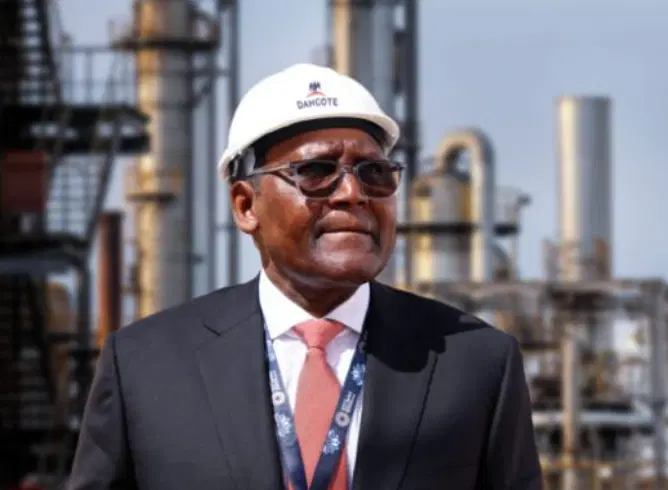
Dangote Refinery Ends Nigeria’s Era of Fuel Import Dependence, Boosts GDP, FX Earnings — EIU
The operational ramp up of the 650,000 barrels per day Dangote Petroleum Refinery & Petrochemicals is fundamentally reshaping Nigeria’s downstream oil sector, significantly reducing the country’s dependence on imported refined petroleum products and strengthening its external position, according to the Economist Intelligence Unit (EIU).
In its latest assessment on Nigeria’s fuel market and regulatory environment, the EIU said the refinery has already transformed a sector that was previously characterised by heavy reliance on imported fuel despite Nigeria being Africa’s largest crude oil producer. The report noted that the refinery met nearly 80 per cent of domestic petrol demand in April and produced enough volumes to satisfy local consumption requirements as operations approached full capacity.
The EIU described Nigeria’s downstream petroleum sector before the refinery as “long dysfunctional”, noting that the country had remained almost entirely dependent on costly imported fuel while producing nearly 1.5 million barrels of crude oil daily.
According to the report, the emergence of the refinery has reduced import dependence, improved domestic fuel availability and strengthened Nigeria’s balance of payments position through lower import demand and rising exports of refined petroleum products.
“The gradual ramp up of the 650,000 barrel/day Dangote refinery since May 2023 has transformed Nigeria’s long dysfunctional downstream sector,” the report stated. “The country’s main refineries, all state owned, had been inoperative for years and Nigeria was almost entirely reliant on costly imported fuel.”
The research and analysis division of The Economist Group, London added that the refinery’s attainment of full operational capacity and its planned expansion would further support Nigeria’s economic growth and foreign exchange earnings over the medium term.
“Meanwhile, the attainment of full capacity at, and an increase in exports from, the Dangote refinery will support real GDP growth and foreign exchange earnings in 2026 and 2027 and beyond, as a planned doubling of the plant’s output comes on stream around the end of the decade,” it added.
Industry analysts said the refinery is increasingly positioning Nigeria as an emerging refining and export hub, altering energy trade flows across Africa and reducing the vulnerability associated with fuel import dependence.
The EIU noted that the refinery’s expansion has coincided with major reforms in Nigeria’s downstream sector, including the removal of fuel subsidies and the introduction of market driven pricing mechanisms.
The report, however, said the transition from a state dominated fuel import structure to large scale domestic refining has triggered resistance from interests linked to the old import regime.
The latest tensions emerged following the decision by the Nigerian Midstream and Downstream Petroleum Regulatory Authority to relax restrictions on petrol imports despite the refinery’s growing capacity to meet domestic demand.
Dangote Industries subsequently initiated legal action, arguing that continued import approvals undermine domestic refining investments and conflict with the objectives of the Petroleum Industry Act, which seeks to encourage local refining capacity and reduce import dependence.
Analysts noted that the availability of large-scale domestic refining capacity has improved Nigeria’s energy security and reduced exposure to external supply shocks and foreign exchange volatility.
The Centre for the Promotion of Private Enterprise also cautioned against unrestrained importation of petroleum products, warning that such a policy could weaken Nigeria’s industrialisation drive and discourage investments in domestic refining.
Chief Executive Officer of CPPE, Muda Yusuf, said continued dependence on imported fuel had historically contributed to pressure on foreign reserves, exchange rate instability and fiscal leakages.
The refinery’s growing impact is also being reflected in Nigeria’s broader macroeconomic indicators. Earlier this month, S&P Global Ratings cited increased domestic refining capacity and rising hydrocarbon exports among the major factors supporting Nigeria’s sovereign credit rating upgrade – the first in 14 years.
Beyond Nigeria, analysts said the refinery is increasingly being viewed as a strategic industrial asset for Africa, where many countries remain heavily dependent on imported fuel despite rising demand for transportation, manufacturing, and power generation.
Business
BREAKING: Court Dismisses $19.6 Million Claim Against NNPCL — Rules Contract Scope Cannot Be Changed Orally
BREAKING: Court Dismisses $19.6 Million Claim Against NNPCL — Rules Contract Scope Cannot Be Changed Orally
In a landmark ruling on Friday, May 22, 2026, the Federal Capital Territory High Court in Abuja threw out a $19.6 million lawsuit filed by Alternate Dimensions Ventures Ltd against the Nigerian National Petroleum Company Limited (NNPCL), affirming a key legal principle: a written contract cannot be expanded through oral agreements or conduct.
Alternate Dimensions had sought $19,600,000 in professional fees, claiming the scope of its Direct Sale, Direct Purchase (DSDP e-pro) contract with NNPCL was orally expanded. Represented by counsel Patrick Peter, the firm argued it was entitled to the revised sum for services rendered under the alleged new terms.
But NNPCL, through its lawyer Ituah Imhanze of KENNA LP, pushed back sharply, arguing that parties are bound exclusively by the clear terms of their written agreement. Imhanze contended that without any written amendment, the claim was legally unsound, and the court agreed.
Delivering judgment, Justice Hamza Mu’azu upheld NNPCL’s defense, stating that the contract was unambiguous and that no evidence was adduced during the trial, which supported the alleged scope expansion. The court further found that NNPCL fully complied with all contractual terms and committed no breach.
Dismissing the suit as meritless, Justice Mu’azu reinforced the doctrine of sanctity of contract: any amendment to a written agreement must be express, unequivocal, and documented, not implied or verbal.
The ruling spares NNPCL from the S19.6 million claim and also a floodgate of similar potential liabilities.


- CANAL+ lists on the Johannesburg Stock Exchange (JSE), strengthening the Group’s dual-continental approach and reinforcing South Africa’s (SA) role as a gateway to global capital and African growth June 3, 2026
- African Mining Week (AMW) Country Focus to Spotlight Liberia’s Iron Ore, Gold and Critical Minerals Prospects June 3, 2026
- Venezuela to Host Its Largest-Ever International Energy Investment Summit June 3, 2026
- Canada–Africa Business Conference Preparations Advance Following Canadian Secretary of State’s High-Level Visit to Nigeria June 3, 2026
- Uganda: Parliament concludes vetting of ministers June 2, 2026
- Fund for Export Development in Africa (FEDA) Board Appoints Mr. Emmanuel Assiak as Chief Executive Officer June 2, 2026
- Ecobank Group Launches World First Nature Bond Mobilising Global Capital to Protect Africa’s Natural Ecosystems June 2, 2026
- Merck Foundation Chief Executive Officer (CEO) Dr. Rasha Kelej together with Kenya First Lady support the education of 47 Kenyan Schoolgirls by providing Annual Scholarships till they Graduate June 2, 2026
- Annual Meetings 2026: Governors Back the Bank’s Platform Solutions to Transform Aviation and Health Systems in Africa June 2, 2026
- ThinkMarkets launches ChelseaAI, bringing live CFD trading into Artificial Intelligence (AI) assistants June 2, 2026
- CANAL+ lists on the Johannesburg Stock Exchange (JSE), strengthening the Group’s dual-continental approach and reinforcing South Africa’s (SA) role as a gateway to global capital and African growth June 3, 2026
- African Mining Week (AMW) Country Focus to Spotlight Liberia’s Iron Ore, Gold and Critical Minerals Prospects June 3, 2026
- Venezuela to Host Its Largest-Ever International Energy Investment Summit June 3, 2026
- Canada–Africa Business Conference Preparations Advance Following Canadian Secretary of State’s High-Level Visit to Nigeria June 3, 2026
- Uganda: Parliament concludes vetting of ministers June 2, 2026
- Fund for Export Development in Africa (FEDA) Board Appoints Mr. Emmanuel Assiak as Chief Executive Officer June 2, 2026
- Ecobank Group Launches World First Nature Bond Mobilising Global Capital to Protect Africa’s Natural Ecosystems June 2, 2026
-

 news6 months ago
WHO REALLY OWNS MONIEPOINT? The $290 Million Deal That Sold Nigeria’s Top Fintech to Foreign Interests
-

 society1 month ago
SOCIAL MEDIA IS NOT A BATTLEFIELD COMMAND – WHY THE NIGERIAN ARMY’S ACTION AGAINST JUSTICE CRACK IS A NATIONAL SECURITY IMPERATIVE
-

 celebrity radar - gossips4 months ago
Dr. Chris Okafor Returns with Power and Fire of the Spirit -Mounts Grace Nation Altar with Fresh Anointing and Restoration Grace on February 1, 2026
-

 celebrity radar - gossips6 months ago
Prophet Kingsley Aitafo Releases 2026 Prophecy: ‘Nigeria Will Rise, but the World Must Prepare for Turbulence’
You must be logged in to post a comment Login
You must log in to post a comment.