
Business
‘President Buhari’s time is almost up, He has been rejected by the Living God’ – Femi Fani-Kayode

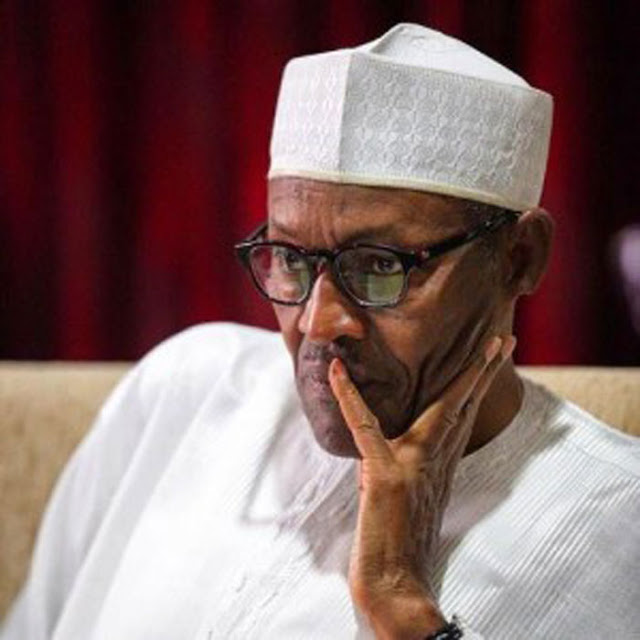

THE RESURRECTION OF CORPSOCRACY by Olufemi Olu-Kayode
The day before yesterday we were told by the First Lady, Mrs. Aisha Buhari, that her husband was not as ill as most of us believed and that despite his obvious challenges he has continued to “carry out his responsibilities”.
On the same day the media went to great lengths to convince us, without providing any pictures, that the President had resumed work and that he had had a series of fruitful and productive meetings with his Minister of Justice and the Managing Director of the Nigerian National Petroleum Corporation (NNPC) respectively.
They assured us that he would definately preside over the Federal Executive Council (FEC) meeting which was scheduled to hold the following day.
All of these assertions proved to be false. Buhari has now missed his FOURTH Federal Ececutive Council meeting in a row due to his chronic and debilitating ill health.
Whoever is holding this poor, frail, sick and elderly man to ransom and keeping him in the Presidential Villa, probably against his will, is wicked and ungodly and he or she is committing a grave sin against God and the Nigerian people.
It is clear that the President is no longer fit to govern. It is obvious that his time is almost up. It is self-evident that for him the bell is tolling.
It is incontrivertable that those around him have held him captive and are indulging in what I once described in an essay that I wrote seven years ago during the last days of President Umaru Yar’adua as “corpsocracy”. The essay was titled ”Corpocracy: A Gift From Umaru To The Modern World”.
Simply put corpsocracy means the rulership of the living by the dead. It is the art of hiding a walking corpse, a comatose zombie or what some have described as the “living dead” in a cupboard in the Presidential Villa, telling the world that it is hale and hearty and then ruling and running the country in its name.
This is what happened during Yar’adua’s last four months on earth whilst he still had one foot in the land of the living and it is happening to Buhari today.
Such was the ruthless and cold-blooded deception that Yar’adua’s inner circle brought into the equation that they managed to convince the Nigerian people and indeed the entire world that a President that was totally comatose and literally brain-dead managed to sign the 2010 budget all the way from dream-land.
They also managed to conjure up a fake but convincing telephone interview with the BBC television service which millions of unsuspecting viewers, including yours truly, watched and listened to from all over the world.
Such was the angst of the management of the BBC when the truth was unearthed and they finally discovered that they had been misled, conned, duped and used that the northern Nigerian woman that organised the so-called “interview”, passing off Yar’adua’s brother’s voice as Yar’adua himself, was expeditiously and unceremoniously sacked.
Her name was Jamilah Tangaza and she was the head of the BBC Hausa service at the time. She was also a double agent of both the MI6, the United Kingdom’s secretive international spy agency and Nigeria’s external spy agency known as the National Intelligence Agency (NIA). One is constrained to ask: what have the Nigerian people not been subjected to or seen?
All these dirty games conducted in a sqaulid and sordid attempt to hold on to power at all costs. Yet worse of all are the nauseating mendacities that the Minister of Information, Lai Mohammed, keeps churning out. Yesterday he told us that Buhari did not attend the FEC meeting this week because he was “still resting”.
Equally amusing was the absurd assertion from the Minister of Transport, the pot-bellied creek-Haramite known as Rotimi Amaechi, who claims that he “is not corrupt” and that he “does not like money” and who told Nigerians that Buhari was now “putting on weight”, was “much better” and that he was “fit enough to run for the Presidency in 2019”.
Honestly one wonders if these creatures have any genuine love and compassion for their principal because if they did instead of telling us lies about his medical condition they would simply get on their knees and beg him to resign.
One wonders if they have any shame. It is very clear to me that they are all under an accursed hex or Luciferean spell. They have been bound and blinded in body, spirit and soul.
This is a classic case of the Living God hardening Pharaoh’s heart unto destruction. Yet sadly those in power, including Buhari himself, are so obsessed with that power that they cannot see it.
Instead of letting God’s people go and bringing to an end the wickedness, persecution, slaughter and destruction of their perceived enemies, the Buhari administration has gone into full throttle and unleashed even more havoc on members of the opposition and those that they hate.
A few examples will suffice.
A couple of weeks ago when my younger brother Mr. Deji Adeyanju, the stormy petrel of Nigerian political activism, together with his equally dynamic colleague Mr. Ariyo Dare Atoye, organised protest marches across the country demanding for the release of the great Biafran leader and irrepressable Igbo nationalist Prince Nnamdi Kanu, they were both promptly arrested and briefly detained by the police.
The same thing happened to them again in Abuja a few days later after they organised yet another demonstration, this time calling for the release of two online bloggers and journalists, Mr. Austin Okai and Miss Kemi Omololu-Olunloyo.
It didn’t stop there. Two days ago the Southern Kaduna’s Peoples Union (SOKAPU) went on a march in Unity Square, Abuja protesting about the continued mass murder, genocide, butchering and ethnic cleansing of their Christian brothers and sisters and people by Buhari’s kinsmen, the Fulani militias and herdsmen.
Amongst their ranks was the courageous, refreshing, young, articulate, brilliant and bright rising star of Nigeria’s Middle Belt zone, Miss Ndi Kato.
Sadly instead of being treated with sensitivity and compassion and being given assurances that the killings would stop and the killers would be brought to justice, they were insulted, beaten, brutalised and dispersed with batons and tear gas by the Nigerian police.
When elements of the Bring Back Our Girls (BBOG) group led by Mrs. Aisha Yesufu joined them as a mark of solidarity, they were brutalised and dispersed as well.
Worse still Aliyu Babangida, the former Governor of Niger State, Sule Lamido, the former Governor of Jigawa state, Ibrahim El Zak Zaky, the leader of Nigeria’s Shiite Muslims, Sambo Dasuki, the former National Security Advisor to President Goodluck Jonathan and countless other opposition leaders and opponents of the government remain languishing in detention cells and prisons all over the country whilst plans are afoot to frame up and arrest numerous others like the Deputy Senate President, Ike Ekweremadu.
This is clearly a government and a President of “no going back”. Like Shakespeare’s Macbeth they are “so far steeped in blood that should they wade no more, returning would be as tedious as to go over”.
Yet the price for their chosen path, their sheer cruelty and callousness and their sanguine disposition is very high.
It is not just a matter of Buhari possibly dying in office as a consequence of whatever it is that has afflicted him but also what the aftermath of his death will bring.
Baba Bisi Akande, a leading member of the APC and one of the most reverred and credible figures in the country, has already fired a warning shot on behalf of the Vice President and the south-west by saying that nobody should mistake 2017 for 1993.
For those that are too young to know what he is saying is that if Buhari dies no-one should dream of scuttling Professor Yemi Osinbajo’s succession and thereby deprive the south-west of the Presidency like they did in 1993 when Chief MKO Abiola’s mandate was annuled by the northern military simply because they did not want a southern President.
This is a timely and useful intervention by Baba Akande but sadly it has fallen on deaf ears. The cabal and the ultra-conservative core north (which is the constituency that Buhari represents) has already made up its mind.
As a matter of fact the spokesman of the Northern Patriotic Assembly issued a prompt response to him yesterday and warned him and other “leaders from the south-west” to desist from making what they described as “such immoral and despicable statements”.
Again at the instance of the northern elders and leaders, the APC Youth Wing issued an even sterner warning and advised Akande to “go for a physchiatric test” for suggesting that the ill health of the President was taking its toll on the nation.
As far as these people are concerned the Presidency of Nigeria belongs to the north and whether Buhari lives or dies, it must stay there.
Worse still their view is that if they cannot have it then nobody will. That is the beastly mindset of those that we are contending with. And those that suffer from it will certainly come to an equally beastly end.
The truth is that President Muhammadu Buhari, his evil administration and those that they represent are venal and malevolent. They have been rejected by the Living God.
His is a government of compulsive liars, sadistic tyrants, blood-thirsty pyschopaths, closet kleptomaniacs, ethnic supremacists, radical Islamists, skull and bone diviners and voodoo merchants.
The fact of the matter is that whether they like it or not we are entering the end game. Everything is coming to a head. The next few months will be instructive and critical and much will happen that will surprise and shock the world and the Nigerian people.
To the spiritually sensitive and discerning one thing is clear: this dispensation is almost over. The beast is dying. The flesh is rotting. The vultures are gathering. The sky has turned black and a new era approaches.
Yet even in sickness, death and decay the tyrant and his followers revel in deception, treachery, doublespeak, blood-lust and wickedness.
My advice to them is to humble themselves and FEAR GOD before it is too late!
My counsel to them is to let this sick and elderly man resign in peace and allow him to go home to take care of his health and make his peace with God.
My appeal to them is to be sensitive to the Spirit and to recognise the fact that he has been struck and mortally wounded by the sword of the Lord.
My prayer to them is to accept the fact that he has been pierced with the arrow of God, he has been hit by the east wind of destruction, he has been afflicted with a deep spiritual wound and he is suffering from God’s judgement: it is time for him to GO!




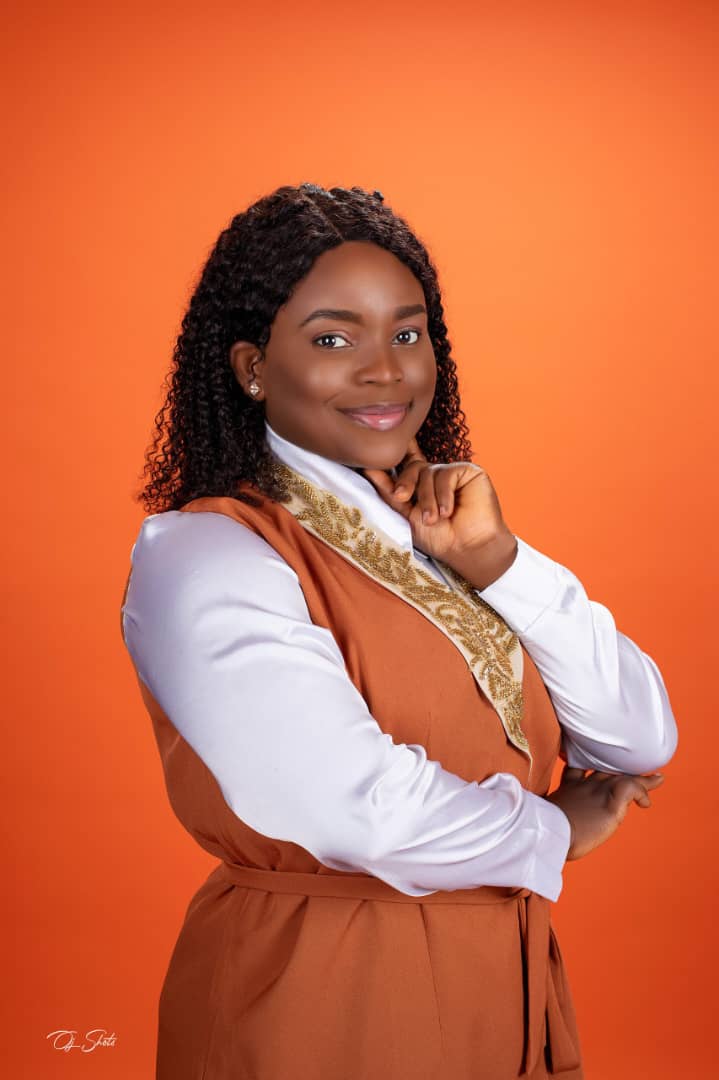
Precision and Heritage: How Fifi Stitches Is Rewriting African Fashion Narratives
A Nigerian-born designer is gradually carving out a cross-continental footprint in contemporary fashion, blending African textile heritage with British technical discipline.
Esther Fiyinfoluwa Adeosun, Founder and Creative Director of Fifi Stitches, is gaining recognition for structured womenswear and bridal couture that reinterprets traditional fabrics through architectural tailoring and precision construction.
Born in Ibadan, Oyo State, Adeosun’s fashion journey began at home, seated beside her mother’s sewing machine. What started as childhood curiosity, sometimes jamming the machine just to understand its mechanics—evolved into a disciplined design practice now operating between Nigeria and the United Kingdom.
During an interview with journalists the fifi Stitches once mentioned “I was fascinated by how flat fabric could transform into something structured and meaningful”.
In her Story , early designs made for her family, though imperfectly finished, were worn with pride—an encouragement that laid the foundation for her professional confidence.
Today, Fifi Stitches is recognised for sculpted bodices, controlled tailoring, corsetry construction, and the contemporary reinterpretation of Ankara, Aso Oke, and Adire textiles.
The brand challenges the long-held perception that African fabrics belong solely in ceremonial contexts, instead positioning them within global luxury and modern design spaces.
Adeosun’s training reflects this dual perspective. She studied Fashion Design and Entrepreneurship at the Institute for Entrepreneurship and Development Studies, Obafemi Awolowo University, and earned a Diploma in Fashion Design through Alison Online.
In the UK, she undertook industry-focused technical training with Fashion-Enter Ltd and gained fashion business exposure through Fashion Capital UK.
Her technical expertise spans pattern drafting, draping, garment technology, structured tailoring, corsetry, and bespoke fittings—skills she describes as central to credibility in fashion. “Precision builds trust,” she says. “A designer must understand construction as deeply as creativity.”
Fifi Stitches has showcased collections at the Suffolk Fashion Show, Liverpool Fashion Show – FB Fashion Ball, Red Carpet Fashion Event in London, and through editorial features in London Runway Magazine.
The brand has also received coverage in The Guardian Nigeria and Vanguard Allure, expanding its visibility across markets.
Beyond couture, Adeosun integrates community impact into her practice.
She has facilitated garment construction workshops, draping sessions, and introductory training programmes for women and emerging creatives, promoting fashion as both artistic expression and vocational empowerment.
Fifi Stcithes Boss operates between Nigeria and the UK, in order to continue to shape her brand identity.
According to her “Nigeria provides cultural richness and expressive textile traditions, while the UK offers structured production systems, sustainability conversations, and institutional frameworks”.
Looking ahead, Adeosun said she plan to establish a fully structured fashion house spanning Africa and the UK, develop scalable production partnerships, launch capsule collections, and expand independent editorial visibility.
Her broader ambition is clear: to position African textile craftsmanship within global contemporary design conversations—through structure, discipline, and technical excellence.

GTCO Launches “Take on Squad” Hackathon 3.0, Opens Call for Applications
Guaranty Trust Holding Company Plc (“GTCO” or the “Group”) has announced the launch of “Take on Squad” Hackathon 3.0, reaffirming its commitment to fostering innovation, empowering talent, and supporting the development of technology-driven solutions that address real-world challenges across Africa.
Now in its third edition, the Hackathon brings together developers, designers and entrepreneurs across Nigeria in a collaborative environment to build practical solutions across key sectors including financial services, healthcare, commerce and digital inclusion. Under the theme “Smart Systems: The Intelligent Economy,” participants are challenged to design and build intelligent, data-driven solutions that transform how communities engage with money.
Applications are now open, and interested teams can find full guidelines and registration details on the official portal at https://squadco.com/hackathon.
Speaking on the initiative, Eduophon Japhet, Managing Director of HabariPay, stated: “Today’s dynamic, digitally driven world demands continuous innovation, which is shaping how economies grow, how businesses scale, and how societies evolve. Through “Take on Squad” Hackathon, we are deliberately investing in the ideas and talent that will define the future. Our objective is not simply to encourage innovation, but to enable its translation into scalable solutions that deliver real and measurable impact. This reflects GTCO’s role as a financial services platform that connects capital, capability, and creativity to drive sustainable progress.”
The social coding event remains a cornerstone of HabariPay’s mission to foster creativity and problem-solving among emerging tech talents. Competing teams will leverage Squad’s advanced APIs to create scalable digital tools that address everyday challenges faced by businesses and individuals.
Through initiatives such as this, GTCO continues to position itself at the intersection of finance, technology and enterprise, actively shaping the future of digital transformation in Africa.
About HabariPay
HabariPay Ltd is the fintech subsidiary of Guaranty Trust Holding Company Plc (GTCO), one of the largest financial services institutions in Africa with direct and indirect investments in a network of operating entities located in 10 countries across Africa and the United Kingdom.
Licensed by the Central Bank of Nigeria (CBN), our goal is to support SMEs, micro merchants, large corporations and other fintechs (Tech Stars) with the tools they need to thrive in an evolving digital economy and expand beyond their current market reach. HabariPay’s solutions include Squad, a full-scale digital payments toolkit to make in-person and online payments simpler, HabariPay Storefront, an e-commerce website to facilitate online purchases, Value-Added Services to help merchants access cost-effective and flexible airtime and data bundles to run their businesses, as well as a switching infrastructure that enables tech-focused businesses to optimise cost and make transactions more efficient.
HabariPay’s contributions to Accelerating Digital Acceptance in Africa have not gone unnoticed–it received Mastercard’s Innovative Mobile Payment Solution Award at TIA 2022 for its innovative payment solution, SquadPOS.
About Squad
Squad is a complete digital payments solution that is reliable, secure, and affordable, making receiving in-person and online payments simpler and convenient.
Thousands of merchants currently leverage Squad’s payment solutions for their daily business operations. Squad’s current products and service offerings include SquadPOS, Squad Payment Links, Squad Virtual Accounts, USSD, and E-Commerce Storefront.
Find out more at www.squadco.com.
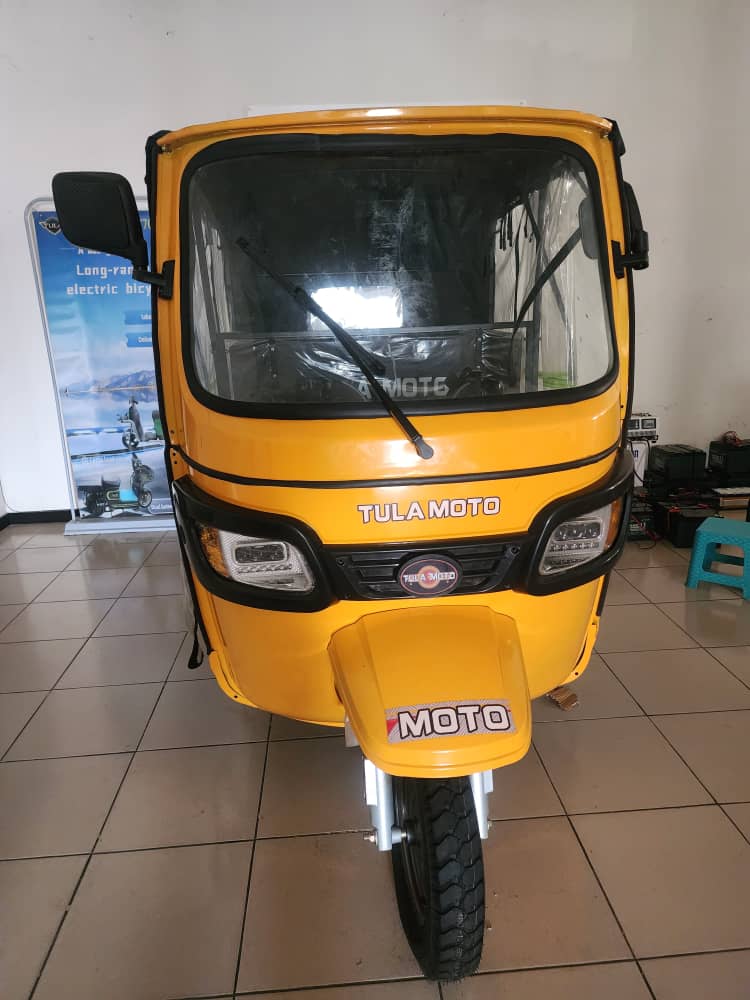
Electric 8-Seater Tula Moto Keke Enters Nigerian Market, Targets Higher Operator Earnings
LAGOS — A new electric-powered tricycle with an expanded passenger capacity has been introduced into Nigeria’s urban transport sector, offering operators a potentially more profitable and eco-friendly alternative to conventional petrol-driven “keke.”
The newly launched 8-seater electric tricycle, now available in Lagos with plans for nationwide distribution, features a dual-row seating arrangement capable of accommodating up to eight passengers per trip—significantly higher than the standard three-passenger configuration common across the country.
Promoters of the innovation say the increased capacity is designed to boost daily earnings for operators, particularly amid persistent fluctuations in fuel prices. By running entirely on electric power, the vehicle eliminates dependence on petrol, reducing operating costs and shielding drivers from fuel price volatility.
According to the distributors, the tricycle is equipped with a durable battery system capable of covering extended distances on a single charge, making it suitable for commercial operations across high-traffic routes, residential estates, campuses, and marketplaces.
“The concept is straightforward—enable drivers to earn more while spending less,” a company representative stated. “With higher passenger capacity and zero fuel requirements, operators can maximise each trip without the burden of daily fuel expenses.”
Beyond its cost-saving potential, the electric keke is also said to require less maintenance than traditional models, offering additional long-term savings. Its quieter and smoother operation is expected to enhance passenger comfort and overall commuting experience.
Industry analysts note that the introduction of electric mobility solutions reflects a growing shift toward cleaner and more sustainable transportation alternatives in Nigeria, particularly in densely populated urban centres such as Lagos.
The distributors added that the product is currently available under a limited promotional offer, with delivery options across the country.
For inquiries and purchase: 📞 08153432071
📞 08035889103
Office Address:
📍 Plot 9, Block 113, Beulah Plaza,
Lekki–Epe Expressway,
Lekki Phase 1, Lagos
As transportation costs continue to rise and environmental concerns gain prominence, innovations like the electric 8-seater keke may signal an emerging transition toward more efficient and sustainable mobility solutions nationwide.


-

 society7 months ago
Religion: Africa’s Oldest Weapon of Enslavement and the Forgotten Truth
-

 news4 months ago
WHO REALLY OWNS MONIEPOINT? The $290 Million Deal That Sold Nigeria’s Top Fintech to Foreign Interests
-

 society6 months ago
“You Are Never Without Help” – Pastor Gebhardt Berndt Inspires Hope Through Empower Church (Video)
-

 celebrity radar - gossips2 months ago
Dr. Chris Okafor Returns with Power and Fire of the Spirit -Mounts Grace Nation Altar with Fresh Anointing and Restoration Grace on February 1, 2026
You must be logged in to post a comment Login
You must log in to post a comment.