
Business
‘President Buhari’s time is almost up, He has been rejected by the Living God’ – Femi Fani-Kayode

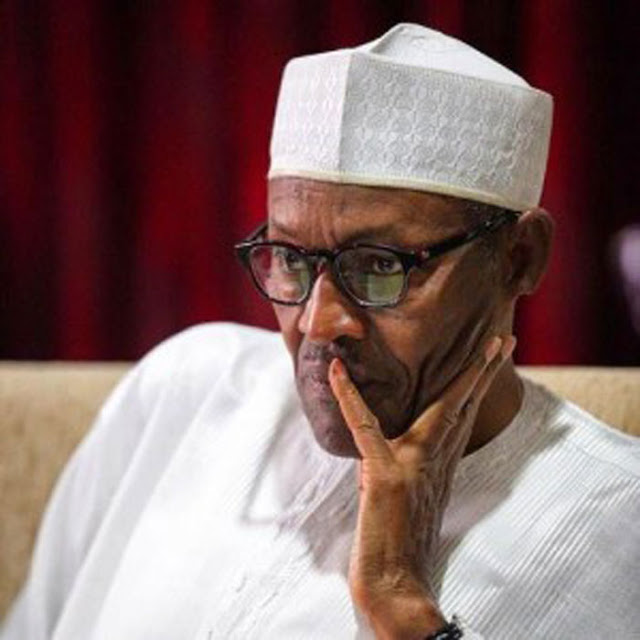

THE RESURRECTION OF CORPSOCRACY by Olufemi Olu-Kayode
The day before yesterday we were told by the First Lady, Mrs. Aisha Buhari, that her husband was not as ill as most of us believed and that despite his obvious challenges he has continued to “carry out his responsibilities”.
On the same day the media went to great lengths to convince us, without providing any pictures, that the President had resumed work and that he had had a series of fruitful and productive meetings with his Minister of Justice and the Managing Director of the Nigerian National Petroleum Corporation (NNPC) respectively.
They assured us that he would definately preside over the Federal Executive Council (FEC) meeting which was scheduled to hold the following day.
All of these assertions proved to be false. Buhari has now missed his FOURTH Federal Ececutive Council meeting in a row due to his chronic and debilitating ill health.
Whoever is holding this poor, frail, sick and elderly man to ransom and keeping him in the Presidential Villa, probably against his will, is wicked and ungodly and he or she is committing a grave sin against God and the Nigerian people.
It is clear that the President is no longer fit to govern. It is obvious that his time is almost up. It is self-evident that for him the bell is tolling.
It is incontrivertable that those around him have held him captive and are indulging in what I once described in an essay that I wrote seven years ago during the last days of President Umaru Yar’adua as “corpsocracy”. The essay was titled ”Corpocracy: A Gift From Umaru To The Modern World”.
Simply put corpsocracy means the rulership of the living by the dead. It is the art of hiding a walking corpse, a comatose zombie or what some have described as the “living dead” in a cupboard in the Presidential Villa, telling the world that it is hale and hearty and then ruling and running the country in its name.
This is what happened during Yar’adua’s last four months on earth whilst he still had one foot in the land of the living and it is happening to Buhari today.
Such was the ruthless and cold-blooded deception that Yar’adua’s inner circle brought into the equation that they managed to convince the Nigerian people and indeed the entire world that a President that was totally comatose and literally brain-dead managed to sign the 2010 budget all the way from dream-land.
They also managed to conjure up a fake but convincing telephone interview with the BBC television service which millions of unsuspecting viewers, including yours truly, watched and listened to from all over the world.
Such was the angst of the management of the BBC when the truth was unearthed and they finally discovered that they had been misled, conned, duped and used that the northern Nigerian woman that organised the so-called “interview”, passing off Yar’adua’s brother’s voice as Yar’adua himself, was expeditiously and unceremoniously sacked.
Her name was Jamilah Tangaza and she was the head of the BBC Hausa service at the time. She was also a double agent of both the MI6, the United Kingdom’s secretive international spy agency and Nigeria’s external spy agency known as the National Intelligence Agency (NIA). One is constrained to ask: what have the Nigerian people not been subjected to or seen?
All these dirty games conducted in a sqaulid and sordid attempt to hold on to power at all costs. Yet worse of all are the nauseating mendacities that the Minister of Information, Lai Mohammed, keeps churning out. Yesterday he told us that Buhari did not attend the FEC meeting this week because he was “still resting”.
Equally amusing was the absurd assertion from the Minister of Transport, the pot-bellied creek-Haramite known as Rotimi Amaechi, who claims that he “is not corrupt” and that he “does not like money” and who told Nigerians that Buhari was now “putting on weight”, was “much better” and that he was “fit enough to run for the Presidency in 2019”.
Honestly one wonders if these creatures have any genuine love and compassion for their principal because if they did instead of telling us lies about his medical condition they would simply get on their knees and beg him to resign.
One wonders if they have any shame. It is very clear to me that they are all under an accursed hex or Luciferean spell. They have been bound and blinded in body, spirit and soul.
This is a classic case of the Living God hardening Pharaoh’s heart unto destruction. Yet sadly those in power, including Buhari himself, are so obsessed with that power that they cannot see it.
Instead of letting God’s people go and bringing to an end the wickedness, persecution, slaughter and destruction of their perceived enemies, the Buhari administration has gone into full throttle and unleashed even more havoc on members of the opposition and those that they hate.
A few examples will suffice.
A couple of weeks ago when my younger brother Mr. Deji Adeyanju, the stormy petrel of Nigerian political activism, together with his equally dynamic colleague Mr. Ariyo Dare Atoye, organised protest marches across the country demanding for the release of the great Biafran leader and irrepressable Igbo nationalist Prince Nnamdi Kanu, they were both promptly arrested and briefly detained by the police.
The same thing happened to them again in Abuja a few days later after they organised yet another demonstration, this time calling for the release of two online bloggers and journalists, Mr. Austin Okai and Miss Kemi Omololu-Olunloyo.
It didn’t stop there. Two days ago the Southern Kaduna’s Peoples Union (SOKAPU) went on a march in Unity Square, Abuja protesting about the continued mass murder, genocide, butchering and ethnic cleansing of their Christian brothers and sisters and people by Buhari’s kinsmen, the Fulani militias and herdsmen.
Amongst their ranks was the courageous, refreshing, young, articulate, brilliant and bright rising star of Nigeria’s Middle Belt zone, Miss Ndi Kato.
Sadly instead of being treated with sensitivity and compassion and being given assurances that the killings would stop and the killers would be brought to justice, they were insulted, beaten, brutalised and dispersed with batons and tear gas by the Nigerian police.
When elements of the Bring Back Our Girls (BBOG) group led by Mrs. Aisha Yesufu joined them as a mark of solidarity, they were brutalised and dispersed as well.
Worse still Aliyu Babangida, the former Governor of Niger State, Sule Lamido, the former Governor of Jigawa state, Ibrahim El Zak Zaky, the leader of Nigeria’s Shiite Muslims, Sambo Dasuki, the former National Security Advisor to President Goodluck Jonathan and countless other opposition leaders and opponents of the government remain languishing in detention cells and prisons all over the country whilst plans are afoot to frame up and arrest numerous others like the Deputy Senate President, Ike Ekweremadu.
This is clearly a government and a President of “no going back”. Like Shakespeare’s Macbeth they are “so far steeped in blood that should they wade no more, returning would be as tedious as to go over”.
Yet the price for their chosen path, their sheer cruelty and callousness and their sanguine disposition is very high.
It is not just a matter of Buhari possibly dying in office as a consequence of whatever it is that has afflicted him but also what the aftermath of his death will bring.
Baba Bisi Akande, a leading member of the APC and one of the most reverred and credible figures in the country, has already fired a warning shot on behalf of the Vice President and the south-west by saying that nobody should mistake 2017 for 1993.
For those that are too young to know what he is saying is that if Buhari dies no-one should dream of scuttling Professor Yemi Osinbajo’s succession and thereby deprive the south-west of the Presidency like they did in 1993 when Chief MKO Abiola’s mandate was annuled by the northern military simply because they did not want a southern President.
This is a timely and useful intervention by Baba Akande but sadly it has fallen on deaf ears. The cabal and the ultra-conservative core north (which is the constituency that Buhari represents) has already made up its mind.
As a matter of fact the spokesman of the Northern Patriotic Assembly issued a prompt response to him yesterday and warned him and other “leaders from the south-west” to desist from making what they described as “such immoral and despicable statements”.
Again at the instance of the northern elders and leaders, the APC Youth Wing issued an even sterner warning and advised Akande to “go for a physchiatric test” for suggesting that the ill health of the President was taking its toll on the nation.
As far as these people are concerned the Presidency of Nigeria belongs to the north and whether Buhari lives or dies, it must stay there.
Worse still their view is that if they cannot have it then nobody will. That is the beastly mindset of those that we are contending with. And those that suffer from it will certainly come to an equally beastly end.
The truth is that President Muhammadu Buhari, his evil administration and those that they represent are venal and malevolent. They have been rejected by the Living God.
His is a government of compulsive liars, sadistic tyrants, blood-thirsty pyschopaths, closet kleptomaniacs, ethnic supremacists, radical Islamists, skull and bone diviners and voodoo merchants.
The fact of the matter is that whether they like it or not we are entering the end game. Everything is coming to a head. The next few months will be instructive and critical and much will happen that will surprise and shock the world and the Nigerian people.
To the spiritually sensitive and discerning one thing is clear: this dispensation is almost over. The beast is dying. The flesh is rotting. The vultures are gathering. The sky has turned black and a new era approaches.
Yet even in sickness, death and decay the tyrant and his followers revel in deception, treachery, doublespeak, blood-lust and wickedness.
My advice to them is to humble themselves and FEAR GOD before it is too late!
My counsel to them is to let this sick and elderly man resign in peace and allow him to go home to take care of his health and make his peace with God.
My appeal to them is to be sensitive to the Spirit and to recognise the fact that he has been struck and mortally wounded by the sword of the Lord.
My prayer to them is to accept the fact that he has been pierced with the arrow of God, he has been hit by the east wind of destruction, he has been afflicted with a deep spiritual wound and he is suffering from God’s judgement: it is time for him to GO!





Fidelity Bank grows gross earnings by 38% to N434.95b in Q1
Fidelity Bank Plc recorded 37.9 per cent growth in gross earnings to N434.95 billion in first quarter 2026 as the international commercial bank continued to expand its core banking market share.
Interim report and accounts of Fidelity Bank for the three months ended March 31, 2026 released at the Nigerian Exchange (NGX) showed that gross earnings rose from N315.42 billion in first quarter 20025 to N434.95 billion in first quarter 2026, representing an increase of 37.9 per cent.
The top-line performance was driven by impressive growth in the bank’s core business operations with interest incomes rising by 22.8 per cent to N314.48 billion in first quarter 2026 as against N256.10 billion in first quarter 2025.
With net interest income at N180.97 billion, the bank closed the period with profit before tax of N92.48 billion. After taxes, net profit stood at N74.47 billion for the three-month period. Earnings per share remained high at N5.69, underlining the capacity of the bank to reward its shareholders.
The balance sheet of the bank also emerged stronger. Total assets crossed the N11 trillion mark to N11.35 trillion by March 2026 compared with N10.46 trillion recorded in December 2025. Customers’ deposits increased from N6.89 trillion to N7.38 trillion. Total equity rode on the back of earnings growth to a 27.5 per cent increase from N1.09 trillion in December 2025 to N1.39 trillion by March 2026.
The first quarter 2026 results further consolidated the strong earnings outlook of the bank, which had successfully completed its recapitalisation amidst impressive earnings performance in 2025.
Fidelity Bank had recorded double-digit growths in interest and non-interest incomes as well as key balance sheet items during the year ended December 31, 2025.
The audited report showed that gross earnings rose from N1.04 trillion in 2024 to N1.52 trillion in 2025, an increase of 45.6 per cent. Interest and similar incomes had grown by 38.7 per cent from N803.1 billion in 2024 to N1.11 trillion in 2025. Fees and commission incomes also rose by 44.7 per cent from N78.4 billion to N113.4 billion. The bank recorded net profit after tax of N242.4 billion in 2025.
The bank’s balance sheet emerged stronger with total assets rising by 18.6 per cent to N10.46 trillion in 2025 as against N8.82 trillion in 2024. Customer deposits increased by 16.1 per cent from N5.94 trillion to N6.89 trillion, reflecting continued franchise strength and an improved funding profile. Net loans and advances meanwhile declined by 2.4 per cent to N4.28 trillion in 2025 as against N4.39 trillion in 2024, attributable to customers paying down on their mature obligations.
The bank had in 2025 strengthened its capital position, with eligible capital rising to N561 billion, above the regulatory minimum of N500 billion for banks with international authorisation. In addition, capital adequacy had remained robust, with Capital Adequacy Ratio of 30.94 per cent by December 2025 as against 23.47 per cent by December 2024.
Managing Director, Fidelity Bank Plc, Dr. Nneka Onyeali-Ikpe, said the first quarter 2026 results reinforced the bank’s strong and resilient business model.
She noted that with the remarkable success of its recapitalisation programme and continuing expansion, Fidelity Bank has entered a new era of growth and impressive returns.
“We are on a stronger footing and confident that we will set new growth records that are reflective of our legacy and the future we are working on,” Onyeali-Ikpe said.
Business
Dangote Refinery Ends Nigeria’s Era of Fuel Import Dependence, Boosts GDP, FX Earnings — EIU
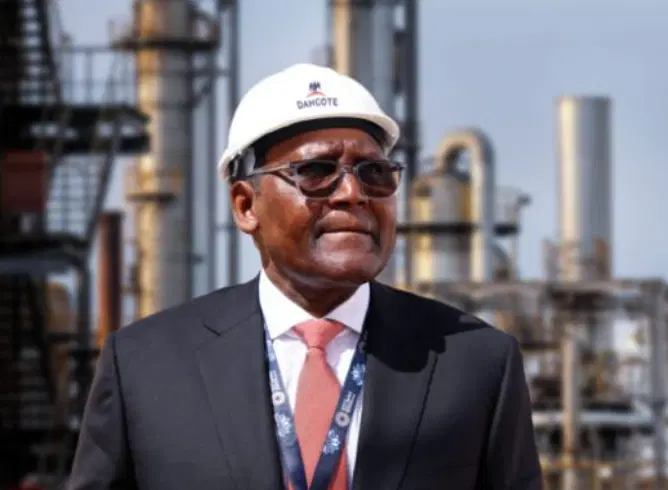
Dangote Refinery Ends Nigeria’s Era of Fuel Import Dependence, Boosts GDP, FX Earnings — EIU
The operational ramp up of the 650,000 barrels per day Dangote Petroleum Refinery & Petrochemicals is fundamentally reshaping Nigeria’s downstream oil sector, significantly reducing the country’s dependence on imported refined petroleum products and strengthening its external position, according to the Economist Intelligence Unit (EIU).
In its latest assessment on Nigeria’s fuel market and regulatory environment, the EIU said the refinery has already transformed a sector that was previously characterised by heavy reliance on imported fuel despite Nigeria being Africa’s largest crude oil producer. The report noted that the refinery met nearly 80 per cent of domestic petrol demand in April and produced enough volumes to satisfy local consumption requirements as operations approached full capacity.
The EIU described Nigeria’s downstream petroleum sector before the refinery as “long dysfunctional”, noting that the country had remained almost entirely dependent on costly imported fuel while producing nearly 1.5 million barrels of crude oil daily.
According to the report, the emergence of the refinery has reduced import dependence, improved domestic fuel availability and strengthened Nigeria’s balance of payments position through lower import demand and rising exports of refined petroleum products.
“The gradual ramp up of the 650,000 barrel/day Dangote refinery since May 2023 has transformed Nigeria’s long dysfunctional downstream sector,” the report stated. “The country’s main refineries, all state owned, had been inoperative for years and Nigeria was almost entirely reliant on costly imported fuel.”
The research and analysis division of The Economist Group, London added that the refinery’s attainment of full operational capacity and its planned expansion would further support Nigeria’s economic growth and foreign exchange earnings over the medium term.
“Meanwhile, the attainment of full capacity at, and an increase in exports from, the Dangote refinery will support real GDP growth and foreign exchange earnings in 2026 and 2027 and beyond, as a planned doubling of the plant’s output comes on stream around the end of the decade,” it added.
Industry analysts said the refinery is increasingly positioning Nigeria as an emerging refining and export hub, altering energy trade flows across Africa and reducing the vulnerability associated with fuel import dependence.
The EIU noted that the refinery’s expansion has coincided with major reforms in Nigeria’s downstream sector, including the removal of fuel subsidies and the introduction of market driven pricing mechanisms.
The report, however, said the transition from a state dominated fuel import structure to large scale domestic refining has triggered resistance from interests linked to the old import regime.
The latest tensions emerged following the decision by the Nigerian Midstream and Downstream Petroleum Regulatory Authority to relax restrictions on petrol imports despite the refinery’s growing capacity to meet domestic demand.
Dangote Industries subsequently initiated legal action, arguing that continued import approvals undermine domestic refining investments and conflict with the objectives of the Petroleum Industry Act, which seeks to encourage local refining capacity and reduce import dependence.
Analysts noted that the availability of large-scale domestic refining capacity has improved Nigeria’s energy security and reduced exposure to external supply shocks and foreign exchange volatility.
The Centre for the Promotion of Private Enterprise also cautioned against unrestrained importation of petroleum products, warning that such a policy could weaken Nigeria’s industrialisation drive and discourage investments in domestic refining.
Chief Executive Officer of CPPE, Muda Yusuf, said continued dependence on imported fuel had historically contributed to pressure on foreign reserves, exchange rate instability and fiscal leakages.
The refinery’s growing impact is also being reflected in Nigeria’s broader macroeconomic indicators. Earlier this month, S&P Global Ratings cited increased domestic refining capacity and rising hydrocarbon exports among the major factors supporting Nigeria’s sovereign credit rating upgrade – the first in 14 years.
Beyond Nigeria, analysts said the refinery is increasingly being viewed as a strategic industrial asset for Africa, where many countries remain heavily dependent on imported fuel despite rising demand for transportation, manufacturing, and power generation.
Business
BREAKING: Court Dismisses $19.6 Million Claim Against NNPCL — Rules Contract Scope Cannot Be Changed Orally

BREAKING: Court Dismisses $19.6 Million Claim Against NNPCL — Rules Contract Scope Cannot Be Changed Orally
In a landmark ruling on Friday, May 22, 2026, the Federal Capital Territory High Court in Abuja threw out a $19.6 million lawsuit filed by Alternate Dimensions Ventures Ltd against the Nigerian National Petroleum Company Limited (NNPCL), affirming a key legal principle: a written contract cannot be expanded through oral agreements or conduct.
Alternate Dimensions had sought $19,600,000 in professional fees, claiming the scope of its Direct Sale, Direct Purchase (DSDP e-pro) contract with NNPCL was orally expanded. Represented by counsel Patrick Peter, the firm argued it was entitled to the revised sum for services rendered under the alleged new terms.
But NNPCL, through its lawyer Ituah Imhanze of KENNA LP, pushed back sharply, arguing that parties are bound exclusively by the clear terms of their written agreement. Imhanze contended that without any written amendment, the claim was legally unsound, and the court agreed.
Delivering judgment, Justice Hamza Mu’azu upheld NNPCL’s defense, stating that the contract was unambiguous and that no evidence was adduced during the trial, which supported the alleged scope expansion. The court further found that NNPCL fully complied with all contractual terms and committed no breach.
Dismissing the suit as meritless, Justice Mu’azu reinforced the doctrine of sanctity of contract: any amendment to a written agreement must be express, unequivocal, and documented, not implied or verbal.
The ruling spares NNPCL from the S19.6 million claim and also a floodgate of similar potential liabilities.


- CANAL+ lists on the Johannesburg Stock Exchange (JSE), strengthening the Group’s dual-continental approach and reinforcing South Africa’s (SA) role as a gateway to global capital and African growth June 3, 2026
- African Mining Week (AMW) Country Focus to Spotlight Liberia’s Iron Ore, Gold and Critical Minerals Prospects June 3, 2026
- Venezuela to Host Its Largest-Ever International Energy Investment Summit June 3, 2026
- Canada–Africa Business Conference Preparations Advance Following Canadian Secretary of State’s High-Level Visit to Nigeria June 3, 2026
- Uganda: Parliament concludes vetting of ministers June 2, 2026
- Fund for Export Development in Africa (FEDA) Board Appoints Mr. Emmanuel Assiak as Chief Executive Officer June 2, 2026
- Ecobank Group Launches World First Nature Bond Mobilising Global Capital to Protect Africa’s Natural Ecosystems June 2, 2026
- Merck Foundation Chief Executive Officer (CEO) Dr. Rasha Kelej together with Kenya First Lady support the education of 47 Kenyan Schoolgirls by providing Annual Scholarships till they Graduate June 2, 2026
- Annual Meetings 2026: Governors Back the Bank’s Platform Solutions to Transform Aviation and Health Systems in Africa June 2, 2026
- ThinkMarkets launches ChelseaAI, bringing live CFD trading into Artificial Intelligence (AI) assistants June 2, 2026
- CANAL+ lists on the Johannesburg Stock Exchange (JSE), strengthening the Group’s dual-continental approach and reinforcing South Africa’s (SA) role as a gateway to global capital and African growth June 3, 2026
- African Mining Week (AMW) Country Focus to Spotlight Liberia’s Iron Ore, Gold and Critical Minerals Prospects June 3, 2026
- Venezuela to Host Its Largest-Ever International Energy Investment Summit June 3, 2026
- Canada–Africa Business Conference Preparations Advance Following Canadian Secretary of State’s High-Level Visit to Nigeria June 3, 2026
- Uganda: Parliament concludes vetting of ministers June 2, 2026
- Fund for Export Development in Africa (FEDA) Board Appoints Mr. Emmanuel Assiak as Chief Executive Officer June 2, 2026
- Ecobank Group Launches World First Nature Bond Mobilising Global Capital to Protect Africa’s Natural Ecosystems June 2, 2026
-

 news6 months ago
WHO REALLY OWNS MONIEPOINT? The $290 Million Deal That Sold Nigeria’s Top Fintech to Foreign Interests
-

 society1 month ago
SOCIAL MEDIA IS NOT A BATTLEFIELD COMMAND – WHY THE NIGERIAN ARMY’S ACTION AGAINST JUSTICE CRACK IS A NATIONAL SECURITY IMPERATIVE
-

 celebrity radar - gossips4 months ago
Dr. Chris Okafor Returns with Power and Fire of the Spirit -Mounts Grace Nation Altar with Fresh Anointing and Restoration Grace on February 1, 2026
-

 celebrity radar - gossips6 months ago
Prophet Kingsley Aitafo Releases 2026 Prophecy: ‘Nigeria Will Rise, but the World Must Prepare for Turbulence’
You must be logged in to post a comment Login
You must log in to post a comment.