
Politics
PRESIDENT TINUBU PLEDGES TO REMOVE ALL OBSTACLES ACROSS THE POWER SECTOR VALUE CHAIN

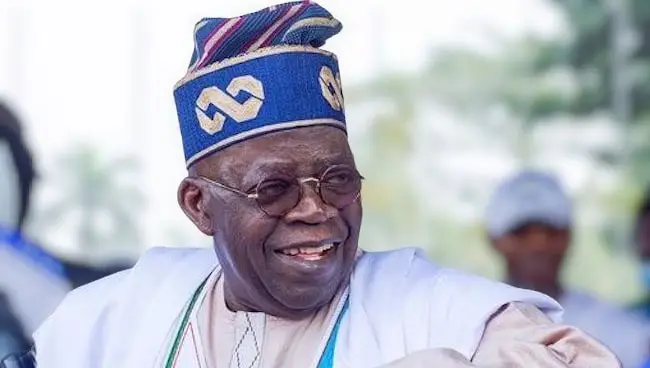
PRESIDENT TINUBU PLEDGES TO REMOVE ALL OBSTACLES ACROSS THE POWER SECTOR VALUE CHAIN
…notes NNPC-NIPCO partnership on 35 state-of-the-art CNG stations nationwide
President Bola Ahmed Tinubu, on Friday, declared that despite the nation’s current rate of energy supply, his administration is poised to address all the obstacles militating against stable electricity supply in the country.
He said his administration will bring solutions to the multifarious challenges across the electric power sector value chain which will significantly relieve longstanding problems of suppressed demand and improve the steadiness of peak supply for Nigerians, affirming that improved energy generation and distribution is an imperative for accelerated national growth.

President Tinubu spoke at the ground breaking ceremony of the new 350MW Gwagwalada Independent Thermal Power Plant (Phase 1) where he urged the NNPC and its partners to deliver the landmark project within the promised three years completion timeline, insisting that, “three years must be three years.”
“Although the Nigeria Electricity Supply Industry (NESI) is currently characterized by huge supply-gap deficits owing to dilapidated power infrastructure and poor distributions networks, amongst others, this administration is poised to address every power value chain challenge that will significantly relieve the suppressed demand, enhance generation, and improve national peak growth & sustainability far above the hitherto abysmal and unacceptable 5,300MW for over 200 million Nigerians,” the President declared.
President Tinubu noted that a swift improvement in the stability and quantum of energy supply will enhance national economic development, which remains a cardinal priority of his administration.
“During my electioneering campaign, I made a commitment to Nigerians on providing stable electricity. This is to be achieved by ensuring that we use all available energy sources to boost power generation beyond the current installed capacity of 12,000 megawatts, strengthening the integrity of our transmission infrastructure and ensuring that all distribution bottlenecks are removed. We can not form the productive and industrialised economy we need in order to conclusively tackle poverty, and create thousands of high paying manufacturing jobs for our teeming young people, whose creativity and talent we must harness for national development, without reliable electricity,” the president stated.
President Tinubu affirmed that adequate energy, broadly, and electricity, specifically, is to be treated as the topmost national economic imperative, if Nigeria must develop and maximise her human and natural resources, stating that “to accelerate our economic growth, we must work hard to remove every obstacle that has slowed down our progress. I have often said that electricity is the greatest human invention of the last 1,000 years.
“We cannot advance and join the rest of the developed world if we remain stuck with our current electricity supply situation and unable to supply the energy our country requires to power a doubling of the size of our Gross Domestic Product within the next decade.”
The President expressed his excitement that the landmark project was commencing at the onset of his administration.
“The groundbreaking for the Gwagwalada thermal power plant (Phase 1) is highly significant to the nation, as it marks the first bold step and the beginning of the administration’s concerted efforts to entrench a strong and virile energy foundation for uninterrupted power supply to boost the economy and accelerate industrial growth.
The Gwagwalada 350MW (Phase 1) project is part of an incremental 3,600MW cumulative power project that is based on market-driven designs along the Abuja, Kaduna and Kano (AKK) gas pipeline corridors, which will further underpin the project’s economic viability while generating multiple foreign direct investments (FDIs) for the nation,” President Tinubu further stated.
The President promised to harness the nation’s gas resources, assuring that “this administration will latch onto the global declaration of gas as a ‘transition fuel’ and the Petroleum Industry Act (PIA) to enhance investments in the oil and gas sector to fully harness the more than 200 trillion cubic feet (TCF) of proven gas reserves which are expected to deepen domestic gas utilization through improved power generation, establishment of gas-based industries, petrochemical firms, as well as liquified/compressed natural gas (auto-gas) development to catalyze sustainable economic development while creating millions of jobs for the teeming Nigerian populace.”
President Tinubu pledged his administration’s commitment to addressing the power challenges and gas utilisation with a clear focus on advancing the diversification of its energy mix.
“Nigeria will continue to vigorously pursue the implementation of other low-Carbon energy options as part of a larger mix, such as Solar, Hydro, Wind, Thermal and biofuels (for both on grid and off-grid power systems) to help shore-up our national energy supply to meet the growing domestic demands and ensure that adequate energy penetrates the homes of our people with a view to improving the standard of living of our people in the rural areas,” the President assured.
While commending the NNPCL for leveraging on the established AKK Gas pipeline through this laudable project, President Tinubu charged the NNPCL to ensure the prompt and early completion of the project saying, “while planning this project, the prudent use of resources has been given top priority, as by this endeavor, Nigeria will strategically underpin the commerciality of the multi-billion dollar AKK gas pipeline, even as we evolve a competitive low-power tariff structure and revitalize numerous industries that will create millions of direct and indirect jobs.”
“I would like to commend the efforts of the NNPC Ltd, alongside General Electric and CMEC, for this business partnership initiative and I hereby charge the team to ensure that this three year project is successfully implemented on the agreed scope, time, and budget,” the President charged.
President Tinubu further applauded the NNPCL for its proactive initiative in this direction, saying “the recent strategic partnership between the NNPC Ltd and NIPCO Gas Limited to deploy Compressed Natural Gas stations across the country is another excellent example. The landmark collaboration will expand Nigeria’s CNG infrastructure, improve access to CNG, and accelerate the adoption of a cheaper and cleaner alternative fuel for buses, cars, and kekenapep nationwide.”
According to the President, “under this NNPC-NIPCO partnership, 35 state-of-the-art CNG stations will be constructed nationwide, including three Mother stations. Once fully operational, the stations will have the ability to service 200,000 vehicles daily,” he emphasized.
Similarly, the Group Chief Executive Officer of the NNPC Ltd, Mallam Mele Kyari, stated that the NNPC Ltd will leverage on the nation’s endowment of gas resources to power the nation’s industrial growth and stimulate ubiquitous job creation, adding that, through the project, the NNPC Ltd would be providing a huge boost to the national grid.
Kyari assured the President that NNPC Ltd will continue to execute power projects to enhance energy security, noting that several of such have already been completed. These, according to the NNPCL Group CEO, include the 50MW Maiduguri Power Plant, and the 900MW and 1,300MW power plants in Kaduna and Kano, respectively.
The colourful event was witnessed by many dignitaries and senior government officials, including the Borno State Governor, Prof. Babagana Zulum, Governor of Nasarawa State, represented by his Deputy, Royal Fathers, the Chinese Ambassador to Nigeria, among others.




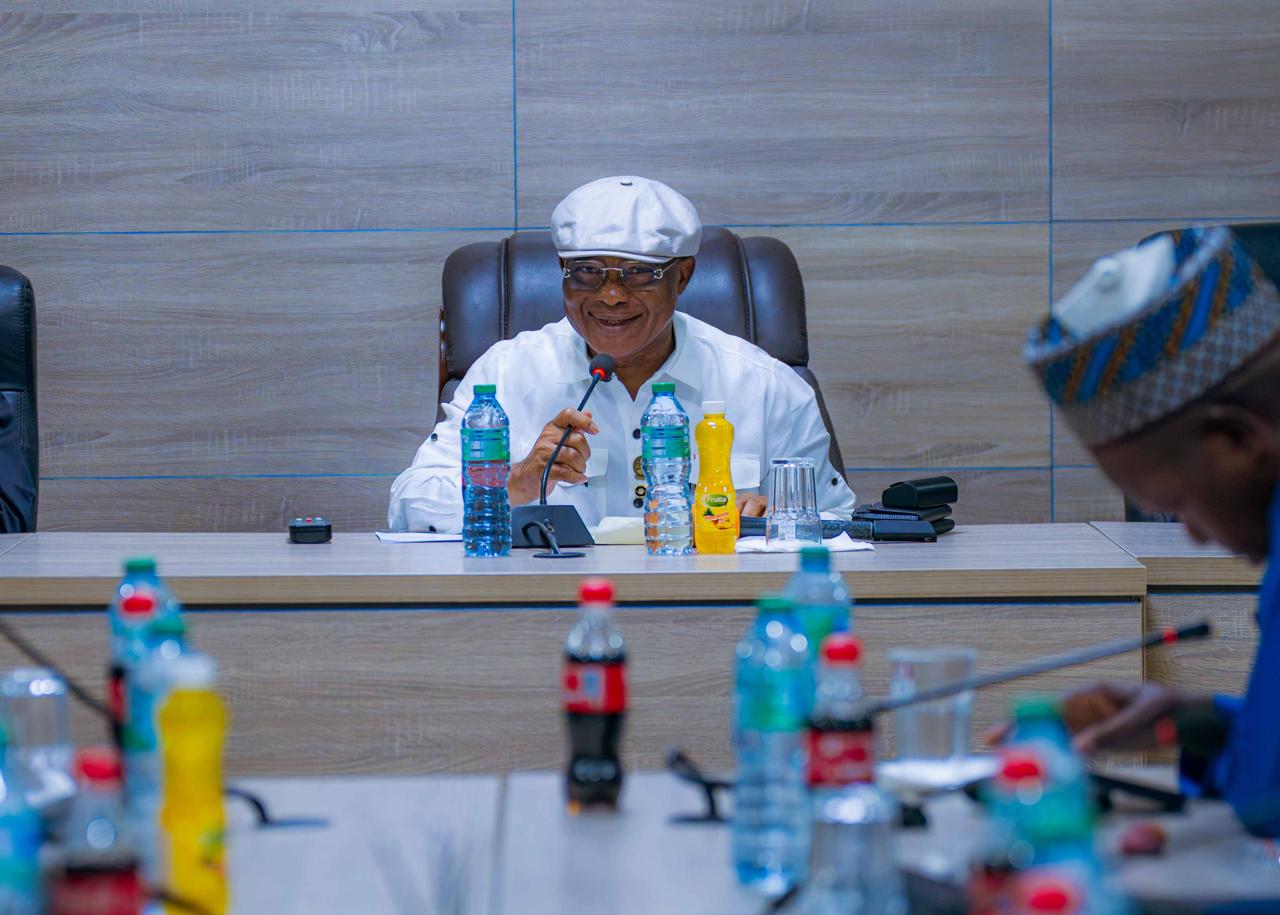
*Renewed Hope Ambassadors Step Into the Next Phase
Fresh from the successful APC 2026 National Convention, the Renewed Hope Ambassadors National, Zonal, and State leadership gathered in Abuja over the weekend, for its fourth strategic meeting, setting the tone for nationwide grassroots activation ahead of 2027.
Chaired by Governor Hope Uzodinma (Imo State) the Director General and National Coordinator of the Renewed Hope Ambassadors, alongside Deputy Director-General, Governor Uba Sani of Kaduna State, and Governor Inuwa Yahaya of Gombe State as Secretary, the session reinforced one clear direction: One Party. One Message. One Mobilization whilst also laying out a strategic roadmap for the activation of the network across all communities in Nigeria.
Backed by the strength of 31 APC-led states, the Renewed Hope Agenda is taking Bola Ahmed Tinubu’s message of progress and reform to every corner of Nigeria.
From bold economic restructuring to initiatives like NELFUND, the increase in the national minimum wage from ₦30,000 to ₦70,000, and strategic investments in critical sectors, including PNiCGI, the mission remains clear: helping Nigerians understand both the purpose and the progress of the Renewed Hope vision.
This is coordination at scale. This is grassroots engagement with purpose. This is the next phase of Renewed Hope with One Party, One Message, and One Mobilisation framework
#RenewedHopeAmbassadors #APC #WeAreAPC


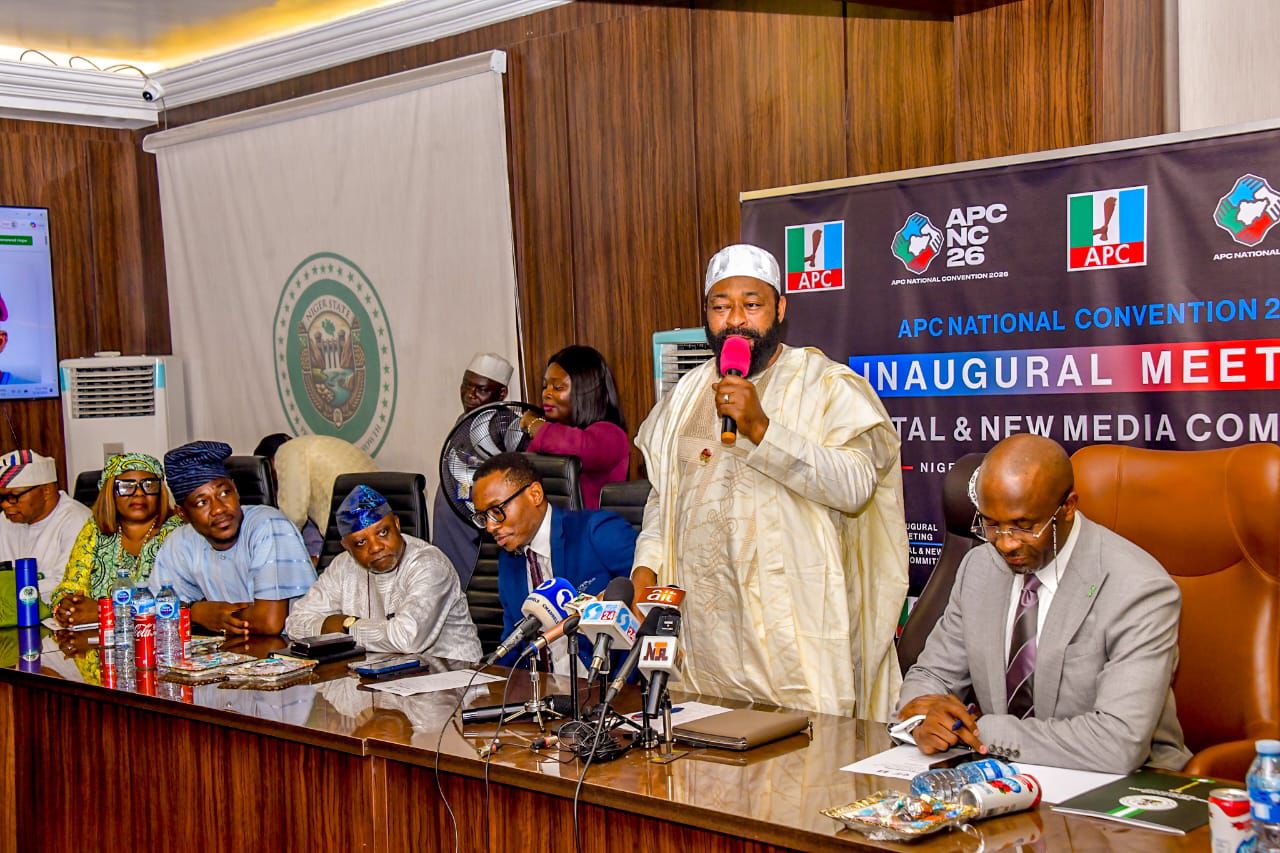
Governor Bago Inaugurates APC Digital Media Sub-Committee Ahead of National Convention.
Governor Umaru Bago has inaugurated the Digital Media Sub-Committee for the forthcoming National Convention of the All Progressives Congress (APC), scheduled to hold on March 27 and 28, 2026 in Abuja.
Chairing the sub-committee, Governor Bago tasked members with the responsibility of effectively communicating the party’s manifesto to the public.
He emphasized the need to leverage social media platforms to highlight the achievements and ongoing efforts of President Bola Ahmed Tinubu, noting that communication gaps have posed challenges that must now be decisively addressed.
The Co-Chair of the sub-committee, Hon. Benjamin Kalu, Deputy Speaker of the House of Representatives, echoed the Governor’s position, urging members to project the activities of both the party and the government to a broader audience.
He called for a deliberate and coordinated effort to showcase the party’s achievements and policy direction, stressing the importance of shaping a compelling and consistent narrative across all digital platforms.
Delivering a presentation to the committee, Otega Ogra, SSA to the President on New Media, who serves as Secretary of the sub-committee, outlined strategic focus areas to guide the team’s operations.
His presentation highlighted communication priorities and actionable steps to achieve the committee’s mandate and strengthen the party’s digital engagement.


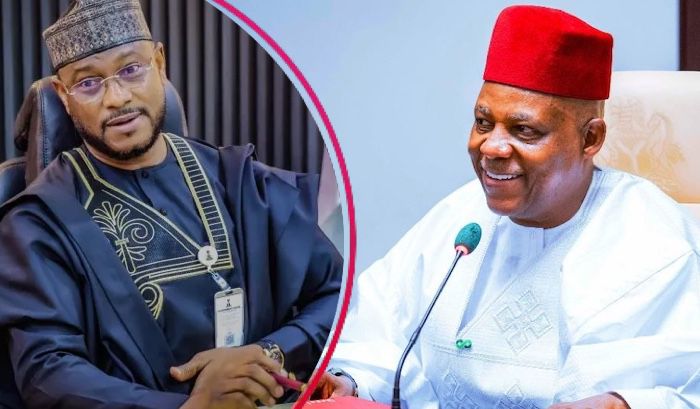
VP Shettima Set to Lead Delegation to Zamfara as Governor Dauda Lawal Formally Joins APC
The Zamfara State chapter of the All Progressives Congress (APC) has finalized plans to receive Vice President Kashim Shettima for the formal defection and reception of Governor Dauda Lawal into the ruling party, scheduled to take place on Tuesday.
State APC Chairman, Tukur Danfulani Maikatako, disclosed this during a high-level stakeholders’ meeting held in Gusau, the state capital. He noted that the Vice President would be joined by the party’s national leadership to mark what he described as a landmark political realignment in the state.
Maikatako expressed the party’s excitement over Governor Lawal’s return, recalling that Zamfara had historically been an APC stronghold and that the Governor was previously a bona fide member of the party before his earlier exit.
“We all know that Zamfara has long been one of the APC’s stronghold states, where the defected Governor was once a bona fide member. Now that he has decided to return home, having been satisfied that the APC remains his second choice after the one he left for obvious reasons,” Maikatako stated.
The Chairman called on all party faithful across the 147 wards in the state’s 14 local government areas to turn out en masse to honour the Vice President’s visit. He emphasized that the event was strategically positioned to bolster the party’s popularity and strengthen its structures ahead of the 2027 general elections.
In a strong appeal for unity, Maikatako urged members to set aside all factional tendencies, stressing that the APC remained one political family with shared goals, particularly the ambition to make Zamfara and Nigeria great again.
Echoing similar sentiments, a former state APC Chairman, Lawal M. Liman, appealed to members to cascade the message to their wards and local government areas. He reinforced the need for cohesion, noting that the party’s collective strength would be critical to achieving success in future elections.

All eyes are now on Gusau as the ruling party prepares for a high-profile political gathering expected to further consolidate its influence in Zamfara State.


-

 society6 months ago
Religion: Africa’s Oldest Weapon of Enslavement and the Forgotten Truth
-

 news4 months ago
WHO REALLY OWNS MONIEPOINT? The $290 Million Deal That Sold Nigeria’s Top Fintech to Foreign Interests
-

 society6 months ago
“You Are Never Without Help” – Pastor Gebhardt Berndt Inspires Hope Through Empower Church (Video)
-

 celebrity radar - gossips2 months ago
Dr. Chris Okafor Returns with Power and Fire of the Spirit -Mounts Grace Nation Altar with Fresh Anointing and Restoration Grace on February 1, 2026