
Politics
Primate Ayodele’s Prophecies On Abuja Flood, Tax Increase, Palace Attack, Other Fulfilled

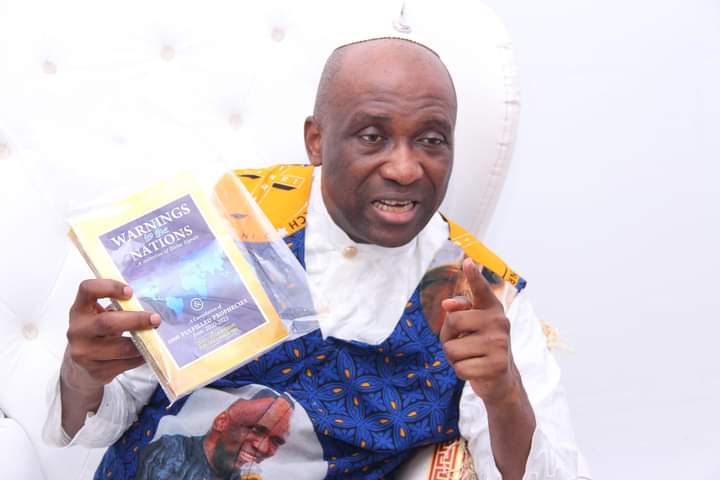
Primate Ayodele’s Prophecies On Abuja Flood, Tax Increase, Palace Attack, Other Fulfilled.
The Leader Of INRI Evangelical Spiritual Church, Primate Elijah Ayodele is one who has gotten the respect of people including his critics due to the avalanche of fulfilled prophecies he has to God’s glory.
In 2020, He released a compendium of 10,000 fulfilled prophecies, and three years later, he presented another 5,000 prophecies that have come to pass. In the prophetic ministry, Primate Ayodele is a record maker and a record breaker.
For several years now, there is hardly a day that comes by without an event fulfilling the prophecy of Primate Elijah Ayodele. He released his annual prophecy book ‘Warnings To The Nations’ a few days ago and as it stands, some international prophecies contained in the book have started coming to pass.

In addition to the already fulfilled prophecies, more have also come to pass and they include:
1 FAAN Toll-gate price increase: The federal airport authority of Nigeria (FAAN) has announced a 70% increase in the prices motorist pay for using its toll gate. Yesterday, there was serious traffic congestion as motorists found it unattractive. On page 298 of Warnings To The Nations, Primate Ayodele foretold an increase in airport VAT and toll gate prices.
AIRPORTS: I foresee there will be a review in Value Added Tax at the airports. The management will create avenues to make money moneys. The management will strengthen the activities at the airports toll gate to improve on the internally generated revenue
2 Palace Attack: Two days ago, armed robbers attacked Emir of Minna’s palace and stole huge amount of money. It was indeed an eyesore and something that rarely happens. The prophet in the 2022/2023 edition of Warnings To The Nations (pg 5) asked Nigerians to pray against any such attacks.
‘’Let us rebuke attack on any palace and kidnapping of traditional rulers and Emirs’’
3 Church Attack: Primate Ayodele in his prophecy book made it known that Nigeria will experience a religious crisis and churches will be attacked. This was noted in WTN 2022/2023 (Pg 2). He explained the need for the country to be watchful about these attacks. Since he released the warnings, religious organizations especially churches have been getting different attacks, and just recently in Ogun state, Taraba state and Edo state, such attacks were recorded.
‘’ The country will experience religious crisis as churches will be attacked’’.
4 Tax Increase: President Tinubu has announced his decision to increase the amount Nigerians pay in taxes. There have been reports that even traders will be required to pay taxes in order to boost the economy of the country. On page 7 of Warnings To The Nations 2023/2024, Primate Ayodele wrote that he foresees an increase in tax and that the methods of taxation will change.
‘’Nigeria government will increase the emoluments of workers. There will also be an increase in taxes and rates in Nigeria in order to boost the economy of the country. So many methods of taxation will be changed.’’
5 Bayelsa Medical University Fire: There was a fire outbreak at Bayelsa Medical University earlier this morning. Personal belongings of students were caught up in the unfortunate fire incident. This fulfills the warnings of Primate Ayodele which he shared in the 2022/2023 edition of Warnings To The Nations released last year. In the book, he specifically mentioned the institution and asked the management to be watchful against negativities or anything that can claim lives.
‘’BAYELSA MEDICAL UNIVERSITY: The university needs prayers against negativities and whatever can cause killings among the staff and students. The University Authorities need to put a lot of things in order to ensure peace on campus even as the staffs need prayers for God’s protection’’ (pg 220)
6 Abuja Flooding: It has been reported that several houses were submerged as a result of flooding in the federal capital territory, Abuja. This was contained in the newly released Warnings To The Nations (2023/2024) edition. The man of God wrote in the book that Abuja will face several issues of flooding and building collapse. This can be seen on Page 27 of the book.
‘’ FEDERAL CAPITAL TERRITORY – ABUJA Let us pray against flooding and cases of collapsed buildings in the FCT. The FCT needs prayers for God’s protection. The FCT will face various challenges. I foresee that houses will be demolished and there will be an increase in taxation’’




Politics
APC Group Endorses Fubara for 2027, Calls on Tinubu and APC to Prioritise Performance Over Politics in Backing Governor’s Second Term Ambition
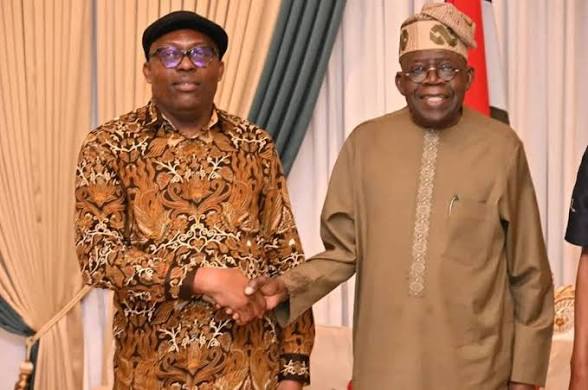
*APC Group Endorses Fubara for 2027, Calls on Tinubu and APC to Prioritise Performance Over Politics in Backing Governor’s Second Term Ambition*
The APC National Vanguard has appealed to President Bola Ahmed Tinubu and the leadership of the All Progressives Congress (APC) to support a second term in office for Siminalayi Fubara, citing what it described as “impressive and verifiable developmental strides” across Rivers State.
In a statement issued on Thursday by its National President, Dr Gbenga Salam (JP), the group said its position followed an extensive assessment tour of key infrastructure and public service projects executed under the Fubara administration.
The APC National Vanguard said the appeal was based strictly on performance, arguing that governance outcomes should outweigh partisan considerations, particularly in a state as economically significant as Rivers.
“We respectfully urge President Bola Ahmed Tinubu and the leadership of the All Progressives Congress to support the continuity of Governor Siminalayi Fubara beyond his current tenure, in recognition of his commitment to development, prudent resource management, and people-focused governance,” the statement read.
According to the group, its delegation visited multiple project sites across the state, observing ongoing and completed works spanning road construction, urban renewal, and public infrastructure upgrades.
It noted that the scale and distribution of these projects reflect a deliberate effort by the state government to extend development beyond traditional urban centres and into underserved communities.
“Our findings from the tour reveal a government that is not only active but intentional in its development agenda. The execution of capital projects across various parts of Rivers State demonstrates a clear understanding of the needs of the people and a commitment to addressing them,” Dr Salam said.
The group particularly commended what it described as prudent financial management by the administration, noting that the projects reviewed showed evidence of careful planning and efficient allocation of resources.
“At a time when economic pressures are evident across the country, it is commendable that the Rivers State government has managed its resources in a way that delivers visible and impactful development without signs of fiscal recklessness,” the statement added.
The APC National Vanguard further observed that despite political tensions in the state, the Fubara administration has maintained focus on governance, ensuring continuity in project execution and service delivery.
The group argued that such stability is critical for sustained development and should be encouraged rather than disrupted.
“Leadership must ultimately be judged by results. In Rivers State, there is clear evidence of progress—projects that are not only announced but executed, and policies that translate into real benefits for citizens,” Dr Salam noted.
The group warned that discontinuity in leadership could stall ongoing projects and reverse gains already recorded, stressing the importance of allowing a performing administration to consolidate its achievements.
“Rivers State is at a pivotal stage where continuity will allow for the completion of ongoing initiatives and the deepening of development gains. Supporting Governor Fubara for a second term is, therefore, a decision in the best interest of the people,” the statement said.
In addition to its call on the APC leadership, the group reaffirmed its support for President Tinubu, expressing confidence in his administration’s broader economic and governance reforms.
The APC group urged Nigerians to remain supportive of efforts aimed at stabilising the economy and strengthening public institutions.
“We reiterate our endorsement of President Bola Ahmed Tinubu for a second term in office, in recognition of his leadership and commitment to national development. With sustained support, the administration can consolidate its reform agenda for the benefit of all Nigerians,” Dr Salam added.
The APC National Vanguard concluded by calling on political actors to prioritise development and public interest over partisan divides, insisting that governance should always be guided by performance and accountability.
“Where leadership demonstrates prudence, delivers development, and remains focused on the welfare of the people, it deserves continuity. This is the position we have reached after a careful and independent assessment of Rivers State,” the statement added.
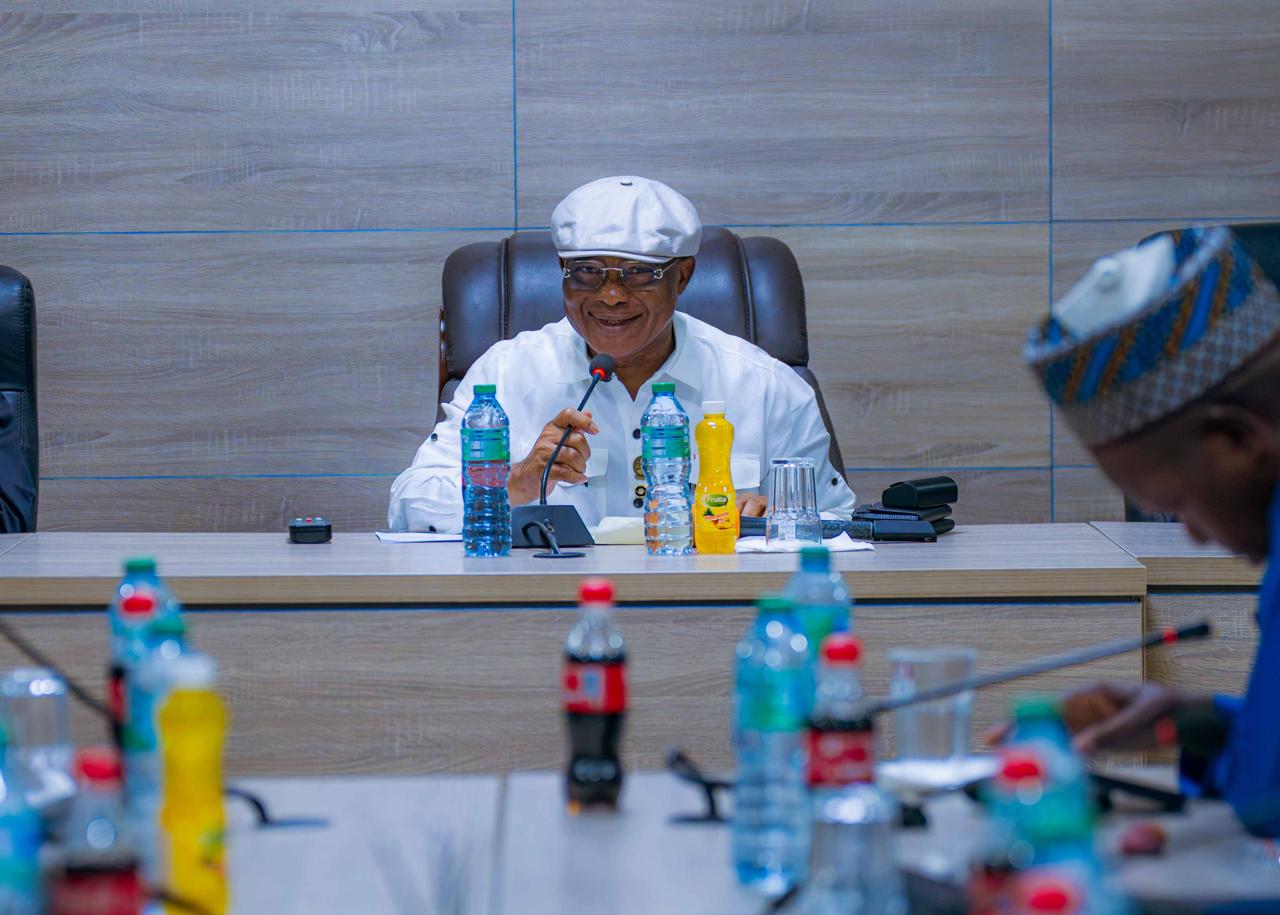
*Renewed Hope Ambassadors Step Into the Next Phase
Fresh from the successful APC 2026 National Convention, the Renewed Hope Ambassadors National, Zonal, and State leadership gathered in Abuja over the weekend, for its fourth strategic meeting, setting the tone for nationwide grassroots activation ahead of 2027.
Chaired by Governor Hope Uzodinma (Imo State) the Director General and National Coordinator of the Renewed Hope Ambassadors, alongside Deputy Director-General, Governor Uba Sani of Kaduna State, and Governor Inuwa Yahaya of Gombe State as Secretary, the session reinforced one clear direction: One Party. One Message. One Mobilization whilst also laying out a strategic roadmap for the activation of the network across all communities in Nigeria.
Backed by the strength of 31 APC-led states, the Renewed Hope Agenda is taking Bola Ahmed Tinubu’s message of progress and reform to every corner of Nigeria.
From bold economic restructuring to initiatives like NELFUND, the increase in the national minimum wage from ₦30,000 to ₦70,000, and strategic investments in critical sectors, including PNiCGI, the mission remains clear: helping Nigerians understand both the purpose and the progress of the Renewed Hope vision.
This is coordination at scale. This is grassroots engagement with purpose. This is the next phase of Renewed Hope with One Party, One Message, and One Mobilisation framework
#RenewedHopeAmbassadors #APC #WeAreAPC


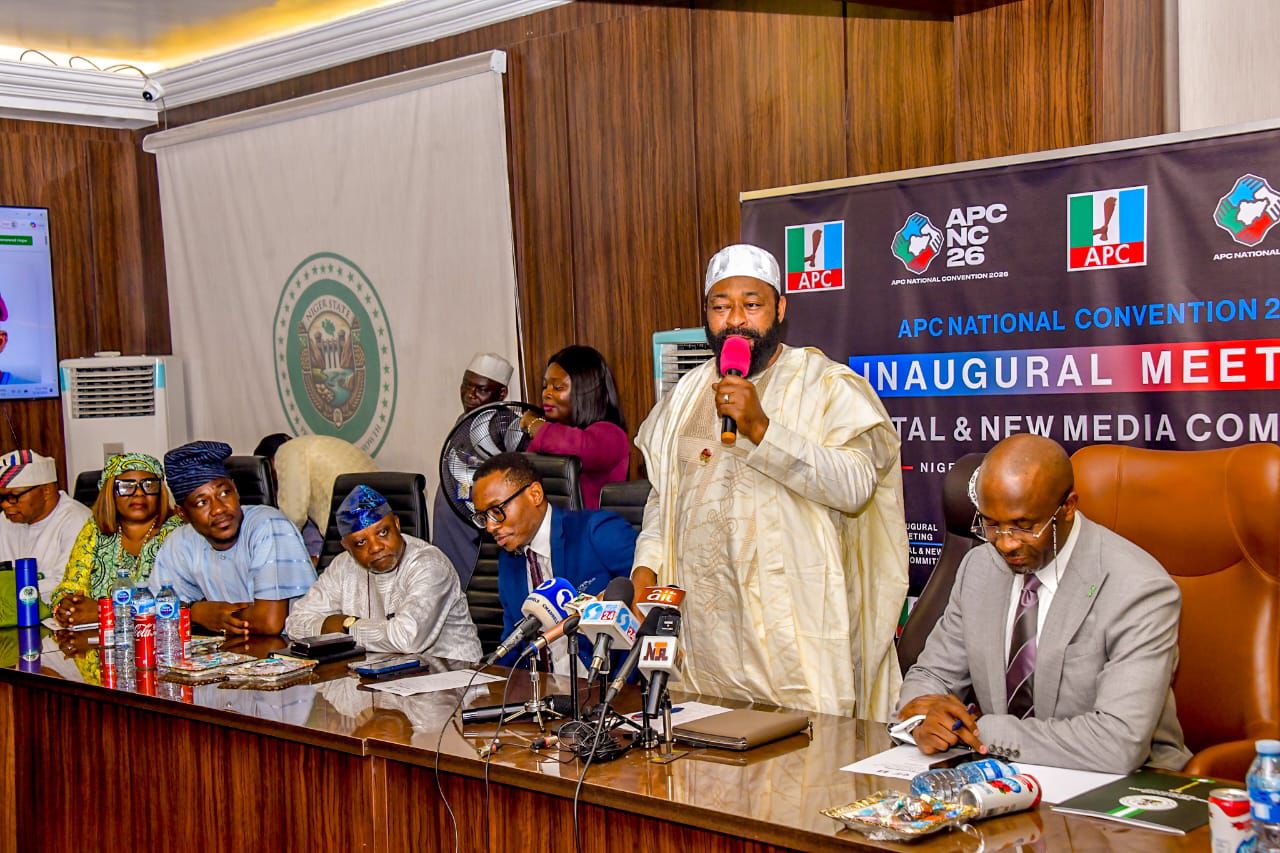
Governor Bago Inaugurates APC Digital Media Sub-Committee Ahead of National Convention.
Governor Umaru Bago has inaugurated the Digital Media Sub-Committee for the forthcoming National Convention of the All Progressives Congress (APC), scheduled to hold on March 27 and 28, 2026 in Abuja.
Chairing the sub-committee, Governor Bago tasked members with the responsibility of effectively communicating the party’s manifesto to the public.
He emphasized the need to leverage social media platforms to highlight the achievements and ongoing efforts of President Bola Ahmed Tinubu, noting that communication gaps have posed challenges that must now be decisively addressed.
The Co-Chair of the sub-committee, Hon. Benjamin Kalu, Deputy Speaker of the House of Representatives, echoed the Governor’s position, urging members to project the activities of both the party and the government to a broader audience.
He called for a deliberate and coordinated effort to showcase the party’s achievements and policy direction, stressing the importance of shaping a compelling and consistent narrative across all digital platforms.
Delivering a presentation to the committee, Otega Ogra, SSA to the President on New Media, who serves as Secretary of the sub-committee, outlined strategic focus areas to guide the team’s operations.
His presentation highlighted communication priorities and actionable steps to achieve the committee’s mandate and strengthen the party’s digital engagement.


-

 society6 months ago
Religion: Africa’s Oldest Weapon of Enslavement and the Forgotten Truth
-

 news4 months ago
WHO REALLY OWNS MONIEPOINT? The $290 Million Deal That Sold Nigeria’s Top Fintech to Foreign Interests
-

 society6 months ago
“You Are Never Without Help” – Pastor Gebhardt Berndt Inspires Hope Through Empower Church (Video)
-

 celebrity radar - gossips2 months ago
Dr. Chris Okafor Returns with Power and Fire of the Spirit -Mounts Grace Nation Altar with Fresh Anointing and Restoration Grace on February 1, 2026