
Business
Professor Alexia Thomas Genius In The Myth

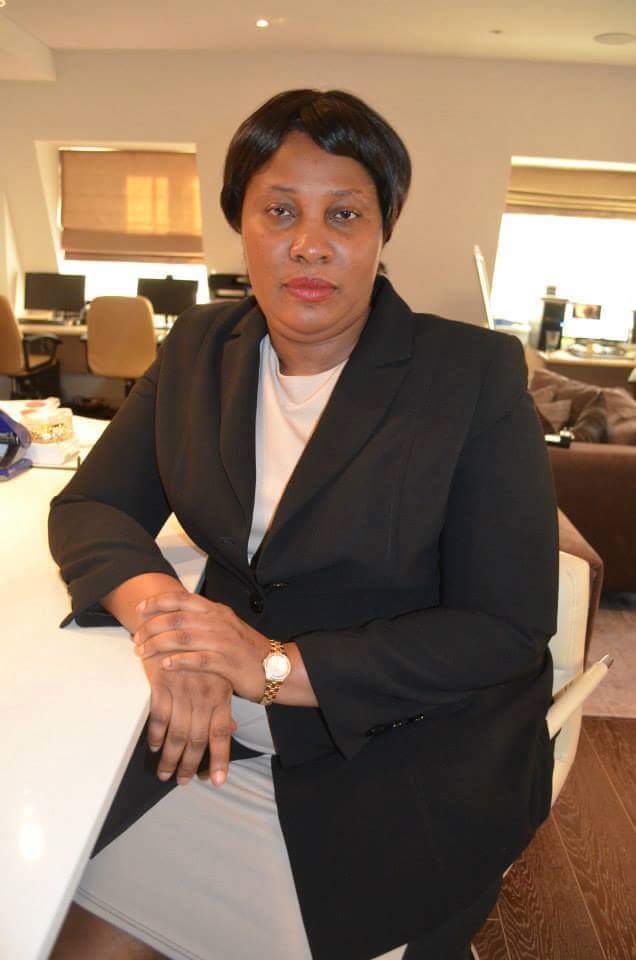

Prof. Alexia Thomas was born on the 2nd of March 1973. She is a Philosopher, a Musician, a Humanitarian, a Politician, a Writer, a Curator, a Political Advocate, an Idealist, a Socialist, a Counsellor, a Teacher, a Human Rights Advocate, a Legal Practitioner, an Activist, a Realist and a Bureaucrat.
A British fiery Human Rights Activist who is the Chairman, The Commonwealth Liberation Party, a registered political party in United Kingdom (UK) and President, Independent Diplomat Commission (IDC), and Chieftain, Commonwealth Alliance Treaty Commission in United Kingdom. Fondly called ‘Royal Mother’,she has been at the fore-front of fighting against the acts of slavery, injustice and dehumanization of United Kingdom Border Agency, UKBA against Commonwealth citizens.
NOBLE QUOTES BY PROF ALEXIA THOMAS:
“Human race has the power to enact love energy to accept different race with oneness and love”
“We cannot drive the wagon into the future without retrogressing to the past”
“No man has the right to deny another man his free will liberty to be free”
“All government of the world and leaders of the world should observe protocol against human oppression”
“Law of magna carta is broken and the consequences of retribution must be averted as the dice has been cast and denial is not an option for the threat of karma not to hunt great Britain and her territories”
Prof. Thomas was born in Nigeria to Mr. Thomas Anofojie Ihenyen and late Mrs Bridjet Okhen Itua both from Esan Central, Edo State – Nigeria.
Prof. Thomas at birth was named Elizabeth Ihenyen.
• At age 4, her mother separated from her father and she her three siblings were taken to the village in Oghabgo-Ekpomo by her mother to live with their grandmother.
• At age 8, her father fought hard to bring them back to Lagos where they lived and grew up with their step mother.
• At age 17 she realised her talent in singing with the aid of her mother’s advice, she abbreviated Elizabeth to be Lizzy and Ihenyen to be Henz and became known as Lizzy Henz, which became her artistic name.
• At age 18, she lost her mother to a mysterious death at age 35. Having had a mother who was the prettiest woman she ever knew, who spoilt her with rich gifts. She felt the death of her mother is a strive to achieve greatness not wanting to be consoled by the lost. Her father’s words of encouragement kept her going “Forget your mother’s wealth, strive to achieve yours”. Reasons being that Prof. Thomas mother was married to another man and this denied her access to her mother’s wealth. Ever since, her courage is not to value Gold and Silver but wake her conscious knowledge to develop life ethical wisdom.
• At age 29 she got married to Mr. Lennox Igoche Ikwue and then adopted the name Lizzy Ikwue-Henz.
• At age 35 she separated from her husband due to his infidelity in the marriage and she relinquished the use of her name Lizzy Ikwue-Henz and officially and formally adopted the name Alexia Thomas through deed poll change of name.
• Prof. Thomas is a woman who believes in the dignity of labour. She is born to a family of four. She has a younger sister Loveth born 1975 lives in Canada, a younger brother Alex born 1976 lives in Nigeria and another brother Victor born 1978 lives in America.
• At age 17, a lady by name Miss Uche and her male associate in Festac Town, Lagos approached Prof. Thomas then known as Lizzy by name in a conversation and told her she is beautiful, look like a model and that she should take up music as a career. Yes this was the beginning of new dream.
• Prof. Thomas mum and dad refused to support her but she refused giving up her career and pushed her inspiration. She got herself a company to sponsor her album by name Diya Fatimelehin and Co. They invested in her demo and requested she travels to America for realisation of her dream. Prof. Thomas parents stopped the ambition to travel to America, because she was a minor as her mum went to her sponsor’s office to threaten him. Nevertheless, a turbulent Nigerian economy, Prof. Thomas resulted to make her first album production locally. Though she failed to meet up with her sponsor’s expectation and she lost the financial support to further her career.
• At age 19, she gained admission to Federal University of Technology Minna Niger State to study Mathematics and Computer Science.
• She met her first love Mr. Kayode Agbetusin, got pregnant with her first son Torpy Agbetusin as refusing to abort the pregnancy left her a young mother and the birth of her son in 1994. She left University at 200 levels to live with her mother-inlaw for support care of her son. Within 9 months after Torpy’s birth her relationship fell apart with Mr. Agbetusin because she refused to give up her career as a musical artiste. She could not return back to school in the North of Nigeria as Torpy was still too small for her to take the risk. She had a transfer to University of Lagos and repeated 200 levels again and later the school noticed the transfer was not properly officiated by her previous University. Prof. Thomas refusal to return to the Northern Nigeria to continue her education made her give course of study and was able to focus fully on her musical career alongside mother hood.
• At age 22, she realised her first break through of a duo album with her partner Isaiah Okoro titled Evidence.
THE GENIUS
• Prof. Thomas Mind Archaeology was born, like a fairy too fake to be real, she had dream in August 1995, late Bob Marley with wife Rita and their children paid her a visit in her one room apartment in Ilogbo, Okokomaiko-Lagos. In her dream, she questioned the fact why the dead were paying her a visit. In her dream she was sleeping while her guest arrived as she woke up in her dream sleep to receive her guest, she woke up in reality and realised it was a dream. Ever since that night, her generic being as a genius was born. She has powers to do everything through her mind apart from waking up the dead. For the first time in 1995 her School of Taught was born “The Mind Science Regression”. Her ability to travel back to time using the focus of Natural Mystic, as a result, her pen has been her sword. She writes the write, craft the craft, draft the draft and as an idealist her redemption is a world free of Human Torture and Life Equality between the rich and poor.
• At age 25, she released her solo album called Woske. It was difficult for Prof. Thomas to achieve her dream as an artiste as she had no support from musical label since she refused to flirt with musical boss and their promoters so she went ahead to release both of her albums on her musical label called Lizalex Records.
• At age 26, Prof. Thomas phenomenon gift of mind science healing began. She realised she could heal the sick from mysterious sickness. She could heal stroke patients. Her gift advanced to Hybrid Psychic.
She sees you deeper than a mere two eyes. She could see individual beings in the spirit and in the physical. She performed numerous healings. In 1995 she was confronted with a major task of delivering a female diagnosed with HIV. She delivered the female using her mystical doctrine but sadly in payback she lost her two months pregnancy because of her failure to comply with the doctrine ethics hence non compliance practise. She delivered her chairman Dr. Ola Oki from his stroke in the year 2000 which paralysed his entire body. Prof. Thomas finally abandoned her mind science healing till she is 57 years old in 2040, but on special invitation by close friends and associates, she still exercise the use of her gift of mind science healing.
BRITISH LIFE
She later left the shores of Nigeria as a music diva in 2004 and relocated to London. In the past 17 years in United Kingdom, UK, her fame has soared all over the Queen’s enclave for a different vocation but music. It all stems from her boldness, profound ideology in litigation philanthropy and various forms of human right crusades which has brought freedom and hope to hundreds of Commonwealth citizens that were earlier facing arduous and diverse British immigration problems.
POLITICS
PROF Alexia is the Chairman, The Commonwealth Liberation Party (TCLP), an opposition government in United Kingdom, Chairman, Commonwealth Alliance Treaty Commission and President, Independent Diplomat Commission (IDC), British Naturalized citizen whose face is very familiar in most homes in United Kingdom (UK) through her regular legal assistance to hundreds of Commonwealth citizens entering UK having various Immigration issues or court representation through her sound litigation attorneys who offers several assistance to citizens of Commonwealth inside UK that are having challenges with either the British police, Immigration or Home Office over illegal arrests or detention.
Alexia, highly revered for her political stance, economic acumen, human rights concepts amidst Commonwealth communities for her rich and deep knowledge repertoire all over Europe and UK revealed that she renounced her Nigerian nationality officially January 12, 2015 due to spiritual ideology of Queen Elizabeth 1 living in her which led to her belief, “I have renounced my Nigerian nationality on January 12, 2015 for British citizenship. I still retain my Nigerian heritage with ancestry rights. My skin may be black, but my mentality is that of a white person due to my deep spiritual inclination with Queen Elizabeth 1 of England, Her Majesty described in Hall of Fame as royal monarch whose name was epochal in world history for her sense of duty, preserving English peace and stability at a personal cost.”
“Since Queen Elizabeth 1 lives in me, I strongly believe Countries of Commonwealth nations deserve total freedom through enforcement of free trade, travel and currency. We are to enforce Nations of Commonwealth in prompt obedience to upholding Articles 9, 13,15, 22 and 26 of Universal Declaration of Human Rights (UDHR) 1948 United Nations Members State Bonded Oath of Allegiance. I am in the know that based on my work as an Independent Diplomat, I’m a Citizen of the World.”
ACTIVISM
In her quest to lead the ‘Movement of Liberation’ and ‘Prepare Men and Women for the Battle of Armageddon an ‘Enforcement of the Manifesto Mandate 21st Century of 2021, for a ‘Face of Change, ‘She Faced Challenges And Trials’, ‘She Faced Death’, ‘She Got Oppressed’, ‘She Was Imprisoned’, ‘The System Humiliated and Manipulated Her’, ‘She Wrote Free Nobles Of Consciousness Of Man’s Will For Government’, ‘Her Reforms were passed in to Law’, ‘Her Ideas Were Stolen’ And ‘She Was Denied Recognition’. To understand the Myth of Her Knowledgeable Professor Alexia Thomas in finding a lasting solution of the problems of the Countries of the World and healing the pains with her Clinic of the Orthodox School of Thoughts, to treat the psychological torture Men, Women and Children have suffered for years from generations to generations, ‘Her Actions, World, Command, Authority and Power Can Be Interpreted For Man To Understand That Her ‘MISSION’ in the World is AN ORCHESTRATION OF A SYMBOLIC SUPERNATURAL BEING THROUGH THE FILM TITLED ‘THE CLASH OF THE TITANS’.
In one of her quest for fighting slavery, injustice and dehumanization of united kingdom border agency, ukba against commonwealth citizens happen to hit rock as the strides she has made in nearly two decades seem not to be going well with some people at the united kingdom border agency (ukba).
In some of her moves, she wrote letter to commissioner of police, metropolitan police, new scotland yard
Titled: “ukba personnel plot, decoy to assassinate me and eliminate my family”- 24th July 2008 ,
She narrated that her life was threatened daily by some personnel of ukba, especially from oakington and collinbrook detention centers, because i fight against the injustice orchestrated on commonwealth citizens.”
She exhibited strong political will as such in local election In United Kingdom (UK)( 5th May 2016), ‘Britain Must Leave European Union, Commonwealth Citizens Don’t Cast your Vote for Britain in EU’
She stood by to agree that European Union (EU) Treaty must be abolished and the European Union must be dissolved. She quoted: “You Cannot Push the Wagon into the Future without Retrogressing into the Past.”
In the coming UK election, Britain Must Leave European Union or else they must be ready to kill Her Monarchy and destroy The Commonwealth. Commonwealth Citizens are advised not to vote Britain in EU.”
She maintained that there are Secret Plot of EU Agenda and Hunt for Judaism Exposed and Uk making unending profit through Royalties for Commonwealth Nations.
Prof Thomas informatively backed her party statement of Britain Must Leave European Union, Commonwealth Citizens Don’t Cast your Vote for Britain in EU
by exposing the relationship that exist between EU and Chinese Government, according to her: “The EU are busy occupying the Agenda of Great Britain, so also the Chinese Government are busy occupying the Agenda of Commonwealth Nations. What do both the EU and the Chinese Government intend to achieve by plotting Great Britain and Commonwealth Nations? The God of Men should watch out as the Dragon of Hell is being controlled in the body of Man to destroy the World.”To clam it all, European Union Treaty is a Criminal Act
As an activist, the rights activist also accused the police in the country of illegally detaining people in their cells against their rights. She named the British Immigration and other such law enforcement agencies as culpable in the silent killing of citizens from Commonwealth. These killed citizens, according to her, are buried in unmarked graves.
The rights activist also accused the police in the country of illegally detaining people in their cells against their rights.
In a petition she wrote and copied all top officials of government as well as the office of the Queen, Professor Thomas said Sir Bernard Hogan-Howe, the Commissioner of Police, New Scotland Yard could be stripped off his honour for allowing injustice on the citizens of the nations of Commonwealth.
“Mr. Commissioner, your office cannot be in denial of the death toll of Commonwealth citizens. The British Immigration officers have been destructive as their views of the Commonwealth citizens are human bugs…” She said.
She wrote the British Police Commissioner a letter dated 26 February, 2016 over rights abuse and queried Why Commissioner of Police must open up on historical & current cases of homicide and copied Copied Queen Elizabeth II, Prince of Wales, Prime Minister, Buckingham Police Dept, Parliament; House of Commons, Foreign & Commonwealth Office
In a letter also copied to Queen Elizabeth II, Prince of Wales, Prime Minister, Buckingham Police Dept, Parliament; House of Commons, Foreign and Commonwealth Office in a bid to bring to their attention all salient issues raised, Professor Thomas said: “The police should stop the immigration officers commissioned as Cameron’s stormtroopers to stop killing the Commonwealth citizens and to stop destroying their values as they are not the British peoples’ problem but instead the British are their own muggers because they cannot survive without the Commonwealth countries.
“Sir Bernard Hogan-Howe, as a law graduate, I would have expected that you challenge the obscenity of Cameron’s government, rather you will see it has nothing to do with you and you refuse to expose the atrocities committed against the citizens of Commonwealth. Your officers must check themselves, they have failed their strangers unequivocally and your land, their settlement.
“The whole British Police Force needs serious overhauling of their institution as their criminality has brought dis-reputation to law integrity. You have soaked yourself in political mud of corruption. The British Police as a Force now confraternized and using deceit diplomacy to imprison people .
Why Commissioner of Police must open up on historical & current cases of homicide
For the purpose of truth, justice, fairness and posterity, Professor Thomas brings to the attention of Sir Bernard Hogan-Howe the need to open historical and current cases of homicides. She said: “Mr. Commissioner, your office must open historical and current cases of homicide as judgement must prevail; hence no man is above the law.
“Failure to open these investigations becomes evidential race superiority complex is a sicken trait, therefore Britain rather be an Island of its own, so Commonwealth nations must not be cheated in a white man’s deceit to steal their Gold and give them rubbles.
“Evidence proving that immigration officers killed unlawfully is in a letter on our server which in its re-investigation is a cold case as justice is required for the unlawful death of the Commonwealth citizens and ignorance of duties is death of service.
RELIGION
Prof Alexia believes in Saintism, Saintism’ as a religion which protects the human race, she strongly holds that Saintists are human guardian angels.
Saintism Practise is the religion that appreciates the beauty of human creation. The Movement of the Independent Diplomat Commission (IDC) gave birth to the Saintism Practise. Saintism Religion is about using the powers of Natural Mystic to regress to the Orthodox Teachings, perceiving Nature Equilibrium where Humans agree to accept other breeds by emanating energy from Mystic of Nature Philosophizing today man purported as Illusion Imagination.
Newest Saintism religion could impact lives of millionaires, billionaires and people that are exposed to all the atrocities being perpetuated by religious leaders in exploiting the black race, amongst other issues. Saintism religion protects human race
POSITION.
Professor Alexia Thomas Founded Independent Diplomat Commission on the 6th May 2007 and later became the Company Secretary of Independent Diplomat Commission in July 16, 2010
She founded The Commonwealth Liberation Party (Political Party In Britain) and she is the Party Leader and Nominating Officer of The Commonwealth Liberation Party which was registered on 25th March 2015
She is the President And Chairman of Independent Diplomat Commission (IDC) till date
She became the Company Director of Independent Diplomat Commission in August 13, 2009





Fidelity Bank grows gross earnings by 38% to N434.95b in Q1
Fidelity Bank Plc recorded 37.9 per cent growth in gross earnings to N434.95 billion in first quarter 2026 as the international commercial bank continued to expand its core banking market share.
Interim report and accounts of Fidelity Bank for the three months ended March 31, 2026 released at the Nigerian Exchange (NGX) showed that gross earnings rose from N315.42 billion in first quarter 20025 to N434.95 billion in first quarter 2026, representing an increase of 37.9 per cent.
The top-line performance was driven by impressive growth in the bank’s core business operations with interest incomes rising by 22.8 per cent to N314.48 billion in first quarter 2026 as against N256.10 billion in first quarter 2025.
With net interest income at N180.97 billion, the bank closed the period with profit before tax of N92.48 billion. After taxes, net profit stood at N74.47 billion for the three-month period. Earnings per share remained high at N5.69, underlining the capacity of the bank to reward its shareholders.
The balance sheet of the bank also emerged stronger. Total assets crossed the N11 trillion mark to N11.35 trillion by March 2026 compared with N10.46 trillion recorded in December 2025. Customers’ deposits increased from N6.89 trillion to N7.38 trillion. Total equity rode on the back of earnings growth to a 27.5 per cent increase from N1.09 trillion in December 2025 to N1.39 trillion by March 2026.
The first quarter 2026 results further consolidated the strong earnings outlook of the bank, which had successfully completed its recapitalisation amidst impressive earnings performance in 2025.
Fidelity Bank had recorded double-digit growths in interest and non-interest incomes as well as key balance sheet items during the year ended December 31, 2025.
The audited report showed that gross earnings rose from N1.04 trillion in 2024 to N1.52 trillion in 2025, an increase of 45.6 per cent. Interest and similar incomes had grown by 38.7 per cent from N803.1 billion in 2024 to N1.11 trillion in 2025. Fees and commission incomes also rose by 44.7 per cent from N78.4 billion to N113.4 billion. The bank recorded net profit after tax of N242.4 billion in 2025.
The bank’s balance sheet emerged stronger with total assets rising by 18.6 per cent to N10.46 trillion in 2025 as against N8.82 trillion in 2024. Customer deposits increased by 16.1 per cent from N5.94 trillion to N6.89 trillion, reflecting continued franchise strength and an improved funding profile. Net loans and advances meanwhile declined by 2.4 per cent to N4.28 trillion in 2025 as against N4.39 trillion in 2024, attributable to customers paying down on their mature obligations.
The bank had in 2025 strengthened its capital position, with eligible capital rising to N561 billion, above the regulatory minimum of N500 billion for banks with international authorisation. In addition, capital adequacy had remained robust, with Capital Adequacy Ratio of 30.94 per cent by December 2025 as against 23.47 per cent by December 2024.
Managing Director, Fidelity Bank Plc, Dr. Nneka Onyeali-Ikpe, said the first quarter 2026 results reinforced the bank’s strong and resilient business model.
She noted that with the remarkable success of its recapitalisation programme and continuing expansion, Fidelity Bank has entered a new era of growth and impressive returns.
“We are on a stronger footing and confident that we will set new growth records that are reflective of our legacy and the future we are working on,” Onyeali-Ikpe said.
Business
Dangote Refinery Ends Nigeria’s Era of Fuel Import Dependence, Boosts GDP, FX Earnings — EIU
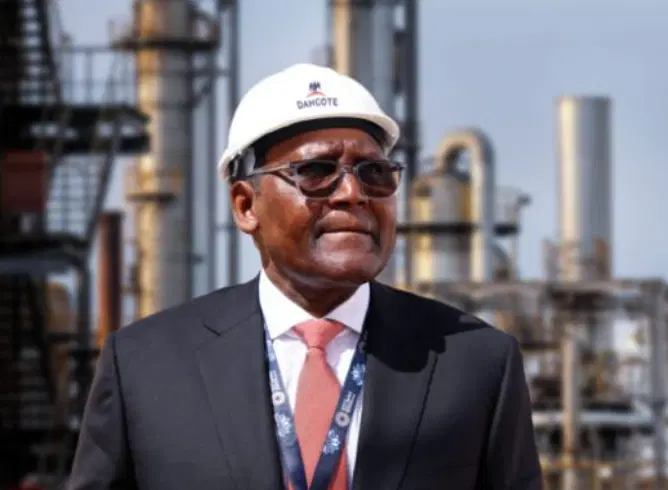
Dangote Refinery Ends Nigeria’s Era of Fuel Import Dependence, Boosts GDP, FX Earnings — EIU
The operational ramp up of the 650,000 barrels per day Dangote Petroleum Refinery & Petrochemicals is fundamentally reshaping Nigeria’s downstream oil sector, significantly reducing the country’s dependence on imported refined petroleum products and strengthening its external position, according to the Economist Intelligence Unit (EIU).
In its latest assessment on Nigeria’s fuel market and regulatory environment, the EIU said the refinery has already transformed a sector that was previously characterised by heavy reliance on imported fuel despite Nigeria being Africa’s largest crude oil producer. The report noted that the refinery met nearly 80 per cent of domestic petrol demand in April and produced enough volumes to satisfy local consumption requirements as operations approached full capacity.
The EIU described Nigeria’s downstream petroleum sector before the refinery as “long dysfunctional”, noting that the country had remained almost entirely dependent on costly imported fuel while producing nearly 1.5 million barrels of crude oil daily.
According to the report, the emergence of the refinery has reduced import dependence, improved domestic fuel availability and strengthened Nigeria’s balance of payments position through lower import demand and rising exports of refined petroleum products.
“The gradual ramp up of the 650,000 barrel/day Dangote refinery since May 2023 has transformed Nigeria’s long dysfunctional downstream sector,” the report stated. “The country’s main refineries, all state owned, had been inoperative for years and Nigeria was almost entirely reliant on costly imported fuel.”
The research and analysis division of The Economist Group, London added that the refinery’s attainment of full operational capacity and its planned expansion would further support Nigeria’s economic growth and foreign exchange earnings over the medium term.
“Meanwhile, the attainment of full capacity at, and an increase in exports from, the Dangote refinery will support real GDP growth and foreign exchange earnings in 2026 and 2027 and beyond, as a planned doubling of the plant’s output comes on stream around the end of the decade,” it added.
Industry analysts said the refinery is increasingly positioning Nigeria as an emerging refining and export hub, altering energy trade flows across Africa and reducing the vulnerability associated with fuel import dependence.
The EIU noted that the refinery’s expansion has coincided with major reforms in Nigeria’s downstream sector, including the removal of fuel subsidies and the introduction of market driven pricing mechanisms.
The report, however, said the transition from a state dominated fuel import structure to large scale domestic refining has triggered resistance from interests linked to the old import regime.
The latest tensions emerged following the decision by the Nigerian Midstream and Downstream Petroleum Regulatory Authority to relax restrictions on petrol imports despite the refinery’s growing capacity to meet domestic demand.
Dangote Industries subsequently initiated legal action, arguing that continued import approvals undermine domestic refining investments and conflict with the objectives of the Petroleum Industry Act, which seeks to encourage local refining capacity and reduce import dependence.
Analysts noted that the availability of large-scale domestic refining capacity has improved Nigeria’s energy security and reduced exposure to external supply shocks and foreign exchange volatility.
The Centre for the Promotion of Private Enterprise also cautioned against unrestrained importation of petroleum products, warning that such a policy could weaken Nigeria’s industrialisation drive and discourage investments in domestic refining.
Chief Executive Officer of CPPE, Muda Yusuf, said continued dependence on imported fuel had historically contributed to pressure on foreign reserves, exchange rate instability and fiscal leakages.
The refinery’s growing impact is also being reflected in Nigeria’s broader macroeconomic indicators. Earlier this month, S&P Global Ratings cited increased domestic refining capacity and rising hydrocarbon exports among the major factors supporting Nigeria’s sovereign credit rating upgrade – the first in 14 years.
Beyond Nigeria, analysts said the refinery is increasingly being viewed as a strategic industrial asset for Africa, where many countries remain heavily dependent on imported fuel despite rising demand for transportation, manufacturing, and power generation.
Business
BREAKING: Court Dismisses $19.6 Million Claim Against NNPCL — Rules Contract Scope Cannot Be Changed Orally
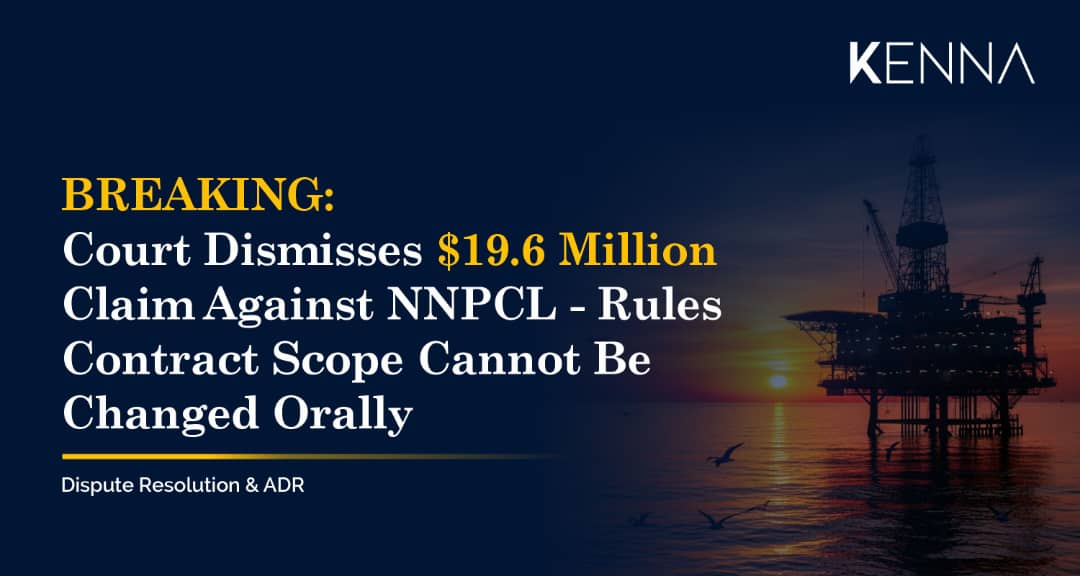
BREAKING: Court Dismisses $19.6 Million Claim Against NNPCL — Rules Contract Scope Cannot Be Changed Orally
In a landmark ruling on Friday, May 22, 2026, the Federal Capital Territory High Court in Abuja threw out a $19.6 million lawsuit filed by Alternate Dimensions Ventures Ltd against the Nigerian National Petroleum Company Limited (NNPCL), affirming a key legal principle: a written contract cannot be expanded through oral agreements or conduct.
Alternate Dimensions had sought $19,600,000 in professional fees, claiming the scope of its Direct Sale, Direct Purchase (DSDP e-pro) contract with NNPCL was orally expanded. Represented by counsel Patrick Peter, the firm argued it was entitled to the revised sum for services rendered under the alleged new terms.
But NNPCL, through its lawyer Ituah Imhanze of KENNA LP, pushed back sharply, arguing that parties are bound exclusively by the clear terms of their written agreement. Imhanze contended that without any written amendment, the claim was legally unsound, and the court agreed.
Delivering judgment, Justice Hamza Mu’azu upheld NNPCL’s defense, stating that the contract was unambiguous and that no evidence was adduced during the trial, which supported the alleged scope expansion. The court further found that NNPCL fully complied with all contractual terms and committed no breach.
Dismissing the suit as meritless, Justice Mu’azu reinforced the doctrine of sanctity of contract: any amendment to a written agreement must be express, unequivocal, and documented, not implied or verbal.
The ruling spares NNPCL from the S19.6 million claim and also a floodgate of similar potential liabilities.


- Uganda: Parliament concludes vetting of ministers June 2, 2026
- Fund for Export Development in Africa (FEDA) Board Appoints Mr. Emmanuel Assiak as Chief Executive Officer June 2, 2026
- Ecobank Group Launches World First Nature Bond Mobilising Global Capital to Protect Africa’s Natural Ecosystems June 2, 2026
- Merck Foundation Chief Executive Officer (CEO) Dr. Rasha Kelej together with Kenya First Lady support the education of 47 Kenyan Schoolgirls by providing Annual Scholarships till they Graduate June 2, 2026
- Annual Meetings 2026: Governors Back the Bank’s Platform Solutions to Transform Aviation and Health Systems in Africa June 2, 2026
- ThinkMarkets launches ChelseaAI, bringing live CFD trading into Artificial Intelligence (AI) assistants June 2, 2026
- Afreximbank Invites Rugby Africa President Herbert Mensah to Address the 33rd Annual Meetings on a Panel Exploring Sport as a Driver of African Industrialisation June 2, 2026
- Afreximbank Deepens Commitment to Economic Progress in The Bahamas June 1, 2026
- African Electric Vehicle (EV) platform Spiro raises $215M in equity to scale electric mobility and energy infrastructure across Africa June 1, 2026
- Africa Centres for Disease Control and Prevention (Africa CDC) Statement on Attacks Against Health Facilities During the Bundibugyo Virus Disease Response in the Democratic Republic of the Congo June 1, 2026
- Uganda: Parliament concludes vetting of ministers June 2, 2026
- Fund for Export Development in Africa (FEDA) Board Appoints Mr. Emmanuel Assiak as Chief Executive Officer June 2, 2026
- Ecobank Group Launches World First Nature Bond Mobilising Global Capital to Protect Africa’s Natural Ecosystems June 2, 2026
- Merck Foundation Chief Executive Officer (CEO) Dr. Rasha Kelej together with Kenya First Lady support the education of 47 Kenyan Schoolgirls by providing Annual Scholarships till they Graduate June 2, 2026
- Annual Meetings 2026: Governors Back the Bank’s Platform Solutions to Transform Aviation and Health Systems in Africa June 2, 2026
- ThinkMarkets launches ChelseaAI, bringing live CFD trading into Artificial Intelligence (AI) assistants June 2, 2026
- Afreximbank Invites Rugby Africa President Herbert Mensah to Address the 33rd Annual Meetings on a Panel Exploring Sport as a Driver of African Industrialisation June 2, 2026
-

 news6 months ago
WHO REALLY OWNS MONIEPOINT? The $290 Million Deal That Sold Nigeria’s Top Fintech to Foreign Interests
-

 society1 month ago
SOCIAL MEDIA IS NOT A BATTLEFIELD COMMAND – WHY THE NIGERIAN ARMY’S ACTION AGAINST JUSTICE CRACK IS A NATIONAL SECURITY IMPERATIVE
-

 celebrity radar - gossips4 months ago
Dr. Chris Okafor Returns with Power and Fire of the Spirit -Mounts Grace Nation Altar with Fresh Anointing and Restoration Grace on February 1, 2026
-

 celebrity radar - gossips6 months ago
Prophet Kingsley Aitafo Releases 2026 Prophecy: ‘Nigeria Will Rise, but the World Must Prepare for Turbulence’
You must be logged in to post a comment Login
You must log in to post a comment.