
news
PVC-NAIJA CHARGES NIGERIAN STUDENTS ON POLITICAL EDUCATION

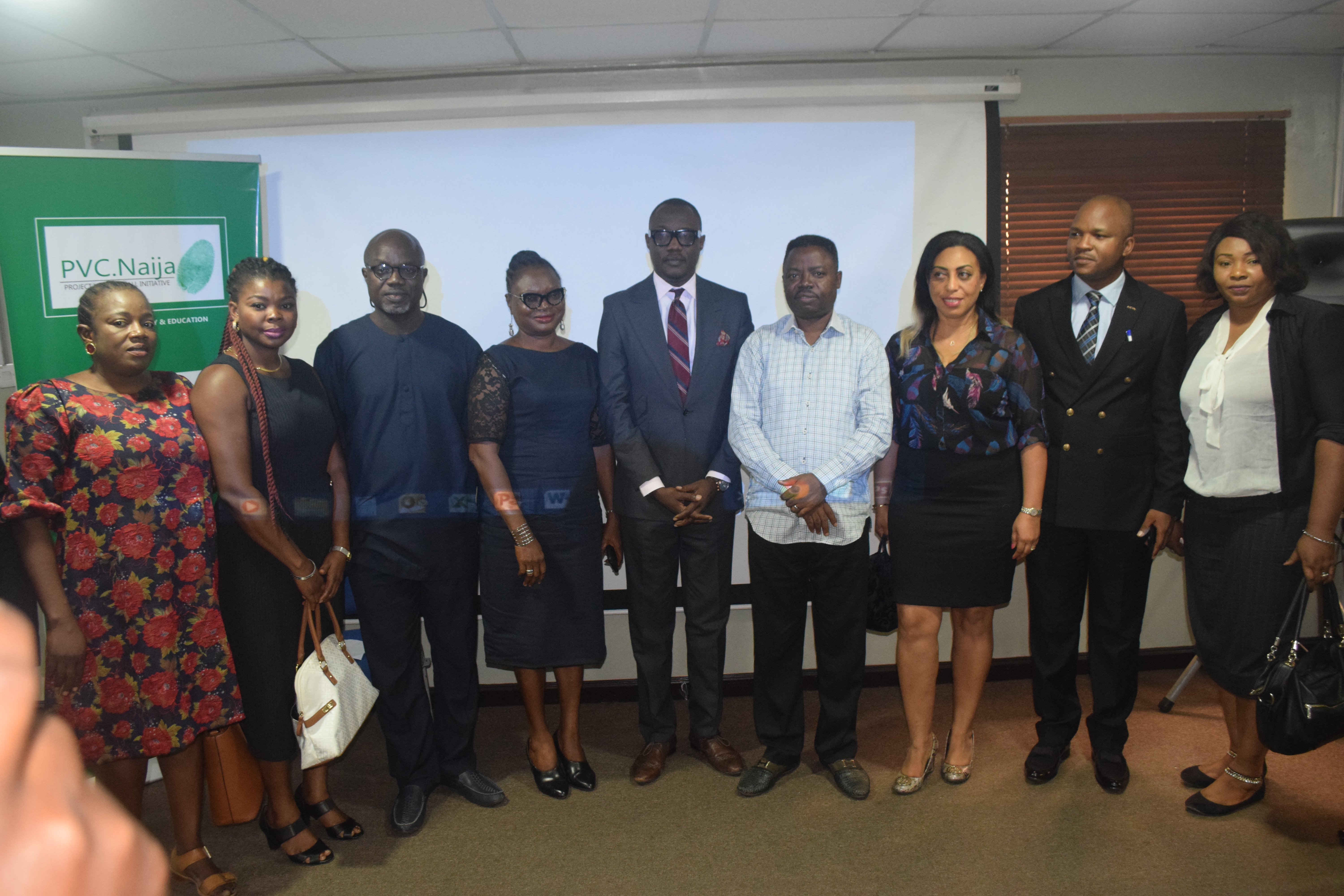

Nigerians students have been charged to take its rightful position as catalysts of global development. Students from across the country were also tasked to make history again and change the order of the loop side political structure in ntthe country. This clarion call was the key message at the Project Victory Call Initiative’s press conference held in commemoration of the World Students Day in Lagos.
Also kown as PVC-NAIJA, the group which is a political advocacy and sensitization movement also unveils a political education project tagged: Relay 2050.
Dr. Bolaji Akinyemi, the National Coordinator of the group stated that Nigerian students have been the life line of this nation. He added that the struggle for our independence was championed by people who were mostly students in their days, and those who were not, caught, the bug while they were students abroad, enduring the temptation to abort their studies to join the struggle for the sole of their mother land from our then colonial Master.

PVC-NAIJA recalled how Ladipo Solanke a Nigerian student demonstrated the high sense of responsibility through the formation of West Africa Student Union (WASU) in 1925.
“At twist and turn in the journey of our father land towards democracy, the voice of Nigerian students has been loud. Their courage was a force; they joined with others like NUJ, NBA, NLC and groups like NADECO who were products of the June 12 struggle to see the military off to the barrack”. Dr. Akinyemi, the National Coordinator of the group said.

“Nigerian students are indeed great. That greatness, we are here to acknowledge and celebrate. “Education is the key to liberation from pre-modal governance, the path way to human intellectual advancements and societal development, A people without education are covenanted to poverty”
“In the past, we have often missed the take when it comes to electing our leaders, but the mistake became very obvious when desperation for change, led to change without a change of order, preparation was not made for the change we make”.
The PVC-NAIJA Coordinator noted that “If Nigeria must be saved come 2019, A step must be taken in the right direction. There is the need to set up a structure of enlightenment for our illiterate voters, Farmers, Artisans, market men and women. They are the proud parents of the great Nigerian students whose simplicities are manipulated for gullibility. This has remained an asset to the political class”.
“Our parents must be rescued through political education. Though the illiteracy of vast majority of our people are counter productive at making informed decision. Very disturbing is the illiteracy of our “educated illiterates” which has sustained the role that fake news and propaganda plays in our political decisions.
The state of our polity is a function of political illiteracy, our social media is awash with political ignorance.
Kofi Anan, said, “Knowledge is power, information is liberating, education is the premise of progress in every society, in family.
Dr. Akinyemi quoted late Kofi Anan model of bottom to top approach to trigger a process of godly change in our society adding that “from LG’s, States and National Government), from the family units to the larger societies, there is need for us to do the needful; educate our teeming illiterate populace”.
“Knowledge must be disseminated via education upon which every societal progress is premised.
“Education is the passport to the future, for tomorrow belongs to those who prepare for it today”- Malcom X
“Students and Youths being that class of our society to which the future belong, must be given the right to lead in making decisions that will impact on their future. They constitute the numerical strength of our voting population and their strength will be harnessed and deployed to prepare a glorious future for them. Their deployment to “RACING WITH THE REST OF THE WORLD” is imperative”.
“The world is in a race, a race so defined to provoke our creativity, but ignored till date by our leaders, defined by the phrase which qualifies the place we are occupying in a racing world; third world country! There is no doubt that the world has left us behind, but must we remain behind?”
“The behind position of Africa is not due to the absence of natural resources. Nigeria alone is more endowed with this, than the whole of Europe put together. It is not in want of intellectual capacities for Africans are among the best of human resources contributing their quota to make other nations and continents attain greatness. We are about the best in every field of life, the realities of life and facts on record attest to this. This speech will end rhetorically without out a mentioned of very few”
Of, Oluwole Akinwande, the poet who gets you dizzy. Bukola Elemide popularly known as “ASA” the “little hawk” because when she was young, will often ran away and changed direction like a hawk.
Ayodeji Ibrahim Balogun, indeed a wizard at his trade, they call him wizkid.
Chimamanda Adichie, the pen merchant whose first two strokes on paper won a literary award.
Adeola Sagoe has given the world of fashion a strict challenge for its tittle.
Genevieve Nnaji has brought fame, glamour and elegance to the Nollywood Industry.
Oluchi and Agbani are among the best of ladies on the walk way.
Shola Ladoja who is redefining the critical area of our agricultural productivity, filling the gap of processing and preservation of farm products.
Laolu Isaac Sebanjo, whose work added value to Beyonce’s on her way to the Grammy.
Jelani Aliyu, the leading Nigeria car designer with General Motors, brought back home to head and give directions to National Automotive Design Development Council, (NADDC).
Bosun Tijani, whose exploit and work in ICT commanded the attention of Mark Zuckerberg to visit Nigeria. The list is endless!
The peril of Africa, is that the educated are not politically educated. The best are led by “The beast” and the mentality of the beast is perpetually to remain premodia so that ancient landmark are maintained, even when they stand in the path of the road we must construct for our development. Status quo, we must maintain even when they tend towards income loss, animals would not be ranched and his environment underdeveloped to retain the identity of a “giant jungle”.
Nigeria must not remain big for nothing.
Time to rise is now!!
Social Capital Investment.
The social capital of love, that nature has bestowed on relationship must become the engine to drive the change expected. The bonds of love between Students and their parents must come handy. The force of social influence generated through peer pressure will for once be positively channelled to bring the nation to the understanding of where we are in the global race, and the effort that must be unleashed to catch up with the rest of the world.
2019 elections for us at Project Victory Call Initiatives, A.K.A PVC-NAIJA, is viewed as hitting the mark for the race we must run.
Staggering Reality.
The population of Nigeria today is a guess, between 150- 200 million. That’s a problem, as certain provisions cannot be made for an uncertain number of people.
Our populations today house the poorest of people in the world, the crisis is compounded with 13.5 million children out of school.
A Looming War.
70% of the proliferation of global small arms numbered at 500 million have found it’s way into Nigeria, with 300 million arms in a nation of 150million. That is an average of 2 arms per person. The monster behind this catche are the political class, whose children are kept far away from the battle ground, but their plan to unleash war against our innocent generation shall not see the light of the day.
What We Must Do!
We must make the right decision in 2019.
A Nigeria students who is 18 years old today would be 50 years old in 2050, the year the United Nations projection says our population will be 3rd largest in the world.
The preparation for 2050 must start now, by those who will be the adult then to manage the reality that 2050 portends.
Racing With The Rest Of The World.
Relay 2018- 2050
2019 must be decided to give us a good ahead start.
1st Leg Nigeria President 2019- 2023 (2027)
2nd Leg Nigeria President 2027- 2035
3rd Leg Nigeria President 2035- 2043
Last Leg Nigeria President 2043- 2051- YOU!!
Project Victory Call Initiatives, PVC-NAIJA is calling Nigerian Students and Youths to arise for a change of order, as we demand from every political parties their ROAD MAP TO 2050.
Earlier in her welcome address, Barister Derin Kappo, the Lagos State Coordinator of the group hails members of the group for coming up with a project that accommodates the students. “What a privilege it is for us, PVC-NAIJA Lagos State, to host this special World Press Conference, with particular reference to the young vibrant souls balance with intelligence and intellectual drive, whose resilience has contributed in no small measure to our democracy”.
The event which also featured goodwill messages from various unions, professional bodies and association also encouraged students to interact and ask questions from members of PVC-NAIJA



More than ₦3 billion was targeted, but about ₦677 million reached the culprits, with recovery and prosecutions underway, reflecting how banks are responding to more sophisticated fraud risks.
Nigeria’s expanding digital banking sector is facing increasingly sophisticated fraud attempts, as financial institutions adapt to faster transactions and broader online services.
A recent case involving First City Monument Bank (FCMB), linked to fraudulent activity detected in December 2025, has drawn attention to how banks are responding to such incidents, with a focus on limiting exposure, recovering funds and working with law enforcement.
According to findings referenced in proceedings before the Lagos State Special Offences Court, the incident involved unauthorised transactions tied to a digital product. Early reports erroneously suggested more than ₦3 billion was lost. Subsequent clarification shows that over ₦3 billion was targeted, ₦2.4 billion was blocked and recovered, while ₦677 million got into the possession of the culprits. This outcome reflects the bank’s cyber security and monitoring capabilities, as well as improved collaboration among regulated financial institutions and with law enforcement agencies. Several suspects and beneficiaries have been apprehended, while recovery and prosecution efforts are ongoing, led by the Economic and Financial Crimes Commission (EFCC).
Proceedings at the Lagos State Special Offences Court have resulted in convictions, including that of a repeat offender, with restitution orders issued. Related matters are also being handled at the Federal High Court in Lagos, where additional suspects are being tried in connection with the scheme. This process is aimed at ensuring that bad actors are identified and permanently blacklisted from the financial system.
Authorities say recovery efforts are continuing as additional funds are traced.
Analysts note that the pace of legal action reflects closer coordination between financial institutions and enforcement agencies in addressing cyber-related financial crime.
The case comes as banks contend with more complex fraud methods, including social engineering and automated exploitation of system processes.
As digital products and platforms expand, so too does the risk associated with cyber-crime and related fraud.
“The scale of digital banking means risks are evolving alongside the systems,” said a Lagos-based financial analyst. “Institutions are now judged by how they manage these events.”
Observers say the sector is moving toward a stronger focus on response and recovery, rather than prevention alone.
This includes improving monitoring capabilities, strengthening transaction controls and enhancing collaboration with regulators and law enforcement. The FCMB case, with limited exposure relative to the amount targeted and ongoing recovery, reflects that shift.
For customers, the primary concern is the safety of their funds. In this case, there has been no indication of losses affecting customer deposits. Maintaining that level of protection remains central to sustaining trust in the financial system.
Nigeria’s financial sector continues to grow, supported by digital innovation and expanding access to banking services.
However, analysts say fraud attempts are likely to persist as systems become more complex and interconnected.
They say institutions will increasingly be judged not only on their ability to prevent incidents, but on how effectively they respond and recover when they occur.
news
Ex-APC Deputy Guber flag bearer, Joshua MacIver backs Tinubu, express fears over implosion in Bayelsa APC
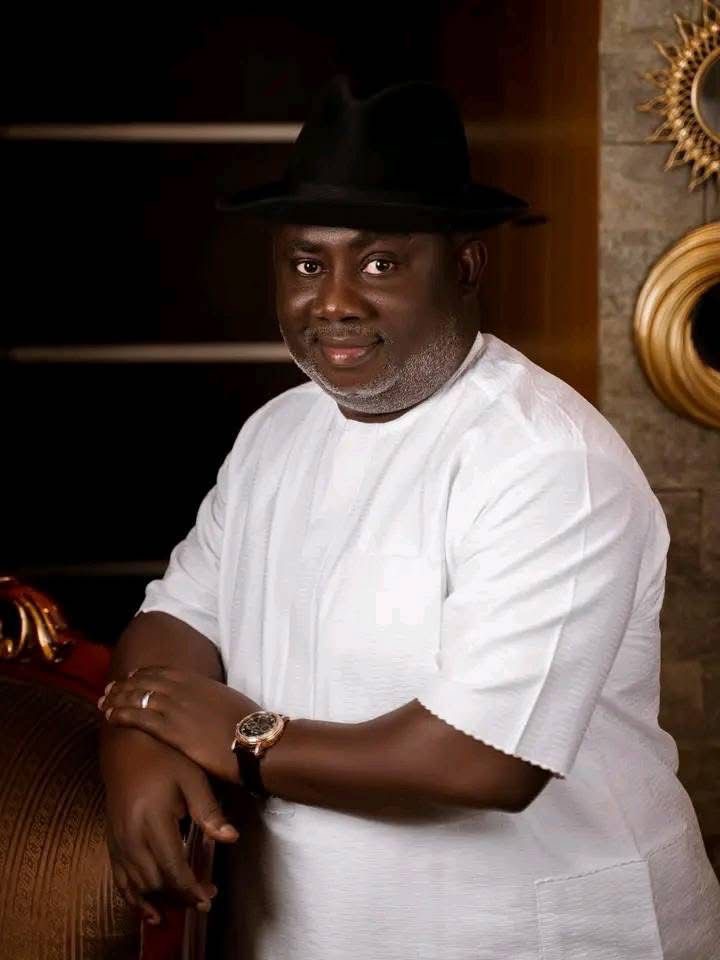
….congratulates new State Party Chairman, Warman Ogoriba
APC Deputy Governorship Candidate in the 2023 general elections in Bayelsa State, Great Joshua MacIver has declared his total commitment to the re-election of President Bola Tinubu come 2027, declaring that the Tinubu re-election project is non-negotiable.
Great Joshua MacIver, in his statement titled ” BAYELSA APC CONGRESSES: GOING FORWARD, A CALL TO LOOK INWARDS” and made available to newsmen in Yenagoa, warned APC leaders in the state to look Inward and take note of certain factors which may hinder or cut short our victory.
According to Great Joshua MacIver, such noticeable pitfalls include the imbalance in the united front being put up by the State Governor,Senator Douye Diri among various political blocs in the state.
In the statement issued at the weekend. Great Joshua MacIver stated that “First, before His Excellency, Senator Douye Diri, joined the APC in the state, there were clearly two political blocs that made up the party, with the approximate population ratios of the blocs standing at 95% to 5%.”
“After the entrance of His Excellency, Senator Douye Diri, ONLY THE SMALLER BLOC IS BEING CARRIED ALONG IN THE AFFAIRS OF THE PARTY, leaving the greater percentage to their fate, and this situation has the potential to build anger and dissatisfaction in our dear party.”
” The consequence of this has been the high level defection we have witnessed in the party recently and we believe more may likely follow, if we do not put our house in order.”
” If we do not pull together as a party, we may witness a situation where we will lose key stakeholders, especially after the State and National Assembly Primaries as well the Gubernatorial Primaries.”
“Finally, while it is very clear that we are the party to beat in the 2027 elections and that our loyalty to Mr. President IS NON-NEGOTIABLE, we must make haste to say that we cannot afford to create situations or loopholes in our unity which will be exploited by other political interests in the state. We cannot afford to under-rate anyone.”
“Our core interest remains the re-election of Mr. President, a project to which we have committed our all. We also pledge our total loyalty to the party as we have no alternative to the APC. However, our concern is that we must, as a party, look inwards and ensure that we do not create loopholes that can impede our common goal.”
Great Joshua MacIver, however congratulated the newly elected State Executives of the APC in Bayelsà State led by Hon. Warman Ogoriba, saying their emergence is welcomed at this critical time in our national history.
At least 23 people were killed in a series of suspected suicide bombings, police in Nigeria’s northeastern city of Maiduguri said on Tuesday.

https://www.stanbicibtcbank.com/nigeriabank/personal/products-and-services/all-loans/stanbic-ibtc-mreif-home-loans
More than 100 other people were injured in the blasts that took place on Monday evening in the capital of Nigeria’s restive Borno state.
No group has claimed responsibility for the suspected attacks.
The deadly blasts come after a military post was attacked overnight Sunday to Monday, which authorities blamed on suspected Islamist militants.
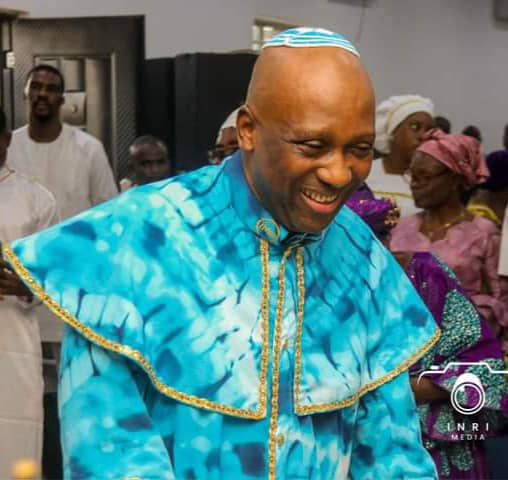
This sad incident is coming barely two weeks after Primate Elijah Ayodele, the Leader of INRI Evangelical Spiritual Church specifically warned against attacks in some states. He mentioned these states while calling on security operatives to pay close attention to them.
These were his words:
“Another attack is coming up in these following states where the military must watch carefully and intelligently; Kano, Kaduna, Zamfara, Kebbi, Niger, Borno, Kwara and Kogi state. They want to do a deadly attack, it’s preventable but it depends on how they will handle it. I have told you about the danger coming up.”
@primateayodele
Unfortunately, some of our military agencies don’t believe spiritual intelligence can save the country from so much danger hence, their neglect of this prophetic warning but now, it has been fulfilled with the miliary losing credibility by the day while Primate Ayodele continues to gain momentum.
Likewise, At least 26 passengers and crew sustained varying degrees of injuries on Monday following an accident involving the Kaduna–Abuja train, according to the Nigerian Railway Corporation (NRC).
Opeifa explained that the train departed Rigasa in Kaduna at 7:15 a.m. and was approaching Asham station around 9:16 a.m. when a loud bang was heard after the power car and trailing locomotive collided with one of the passenger coaches.
In July 2025, Primate Ayodele asked nigerians to pray not to see train mishap on the Kaduna-Abuja route.
@primateayodele #nigeriantiktok🇳🇬 #fulfillment #train #abuja #primateayodele
“Let’s pray not to see train mishap in Abuja-Kaduna, Kaduna-Abuja route.”
This has also been fulfilled.


- Seychelles Strengthens Human Rights Reporting through National Workshop April 8, 2026
- ABB’s Application Configurator brings speed and precision to grid-feeding protection system design April 7, 2026
- Can Equatorial Guinea Reposition as West Africa’s Gas Hub? April 7, 2026
- Afreximbank Partners with African Energy Week 2026 to Drive Africa-Led Energy Deals April 7, 2026
- Merck Foundation Marks ‘World Health Day’ 2026 – Transforming Patient Care in Africa and Beyond through 2600+ Scholarships for Healthcare Providers From 52 Countries April 7, 2026
- Morocco Gas Plan Reset Could Open Door to New Investment Models April 7, 2026
- African Petroleum Producers Organization (APPO) Secretary General Joins Angola Oil & Gas (AOG) 2026 as African Energy Bank Eyes June 2026 Debut April 7, 2026
- Ghanaian Biomedical Specialist Receives International Award April 7, 2026
- Grey Connects the Africa-Canada Money Corridor With Instant Transfers via Interac April 7, 2026
- Nigeria’s Oil Revival in Focus as Petroleum Minister Lokpobiri Joins Paris Energy Forum April 7, 2026
- Seychelles Strengthens Human Rights Reporting through National Workshop April 8, 2026
- ABB’s Application Configurator brings speed and precision to grid-feeding protection system design April 7, 2026
- Can Equatorial Guinea Reposition as West Africa’s Gas Hub? April 7, 2026
- Afreximbank Partners with African Energy Week 2026 to Drive Africa-Led Energy Deals April 7, 2026
- Merck Foundation Marks ‘World Health Day’ 2026 – Transforming Patient Care in Africa and Beyond through 2600+ Scholarships for Healthcare Providers From 52 Countries April 7, 2026
- Morocco Gas Plan Reset Could Open Door to New Investment Models April 7, 2026
- African Petroleum Producers Organization (APPO) Secretary General Joins Angola Oil & Gas (AOG) 2026 as African Energy Bank Eyes June 2026 Debut April 7, 2026
-

 news4 months ago
WHO REALLY OWNS MONIEPOINT? The $290 Million Deal That Sold Nigeria’s Top Fintech to Foreign Interests
-

 society7 months ago
“You Are Never Without Help” – Pastor Gebhardt Berndt Inspires Hope Through Empower Church (Video)
-

 celebrity radar - gossips2 months ago
Dr. Chris Okafor Returns with Power and Fire of the Spirit -Mounts Grace Nation Altar with Fresh Anointing and Restoration Grace on February 1, 2026
-

 celebrity radar - gossips4 months ago
Prophet Kingsley Aitafo Releases 2026 Prophecy: ‘Nigeria Will Rise, but the World Must Prepare for Turbulence’
You must be logged in to post a comment Login
You must log in to post a comment.