
Business
Real reasons we are organising a Nine-million Nigerians march for Buhari – Group reveals

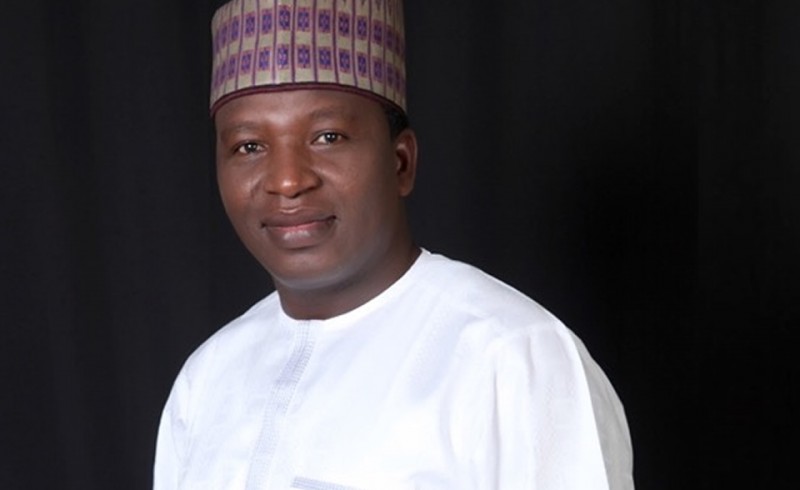

Ibrahim Wala is the Director of Media and Publicity of #IStandWithBuhari. In this interview with PREMIUM TIMES’ Festus Owete, he speaks on the group’s plan to organize a nine million man march for President Muhammadu Buhari across the world as well as other issues.
Excerpts:
PT: Your organisation, I Stand With Buhari, sounds political. What basically is your goal and why do you have this organization at this time when there are no elections?
Wala: It may sound political but the name was carefully articulated to connect Nigerians with the good leadership traits of the man, Muhammadu Buhari. Understandably, the name rings a political bell because of the name Buhari, being a politician. Do not forget that he is the same man we all stood by because of his good characters as a leader.
The mere fact that the name dominated the space in every political news page during the campaign for the elections, everything connected to it (name) must be seen as political.
With all sense of responsibility, we agree with those who say #IStandWithBuhari is nothing but politics. However, the#iStandWithBuhari is an affirmative statement by Nigerians, in total support and solidarity with the actions and leadership style of President Muhammadu Buhari to change Nigeria. We must also understand the importance of coming to terms with the reality that election was a mere transitional stage. The stage we are in today is the moment of regaining all we have lost during the elections. The most important thing to do as a nation is to forget about our political differences and all that has happened to us in the days of context. These are the days of action and development.
PT: Are you saying this has nothing to do with President Buhari, the politician and his party, the All Progressives Congress?
Wala: This is about our own Nigeria; it is not about drumming political support for the person of Mr. President. It was intentionally conceived for the purpose of building a platform that will help in sensitizing Nigerians on the importance of effective governance. It is through such interactive platforms that Nigerians can easily be informed on the policies and programs of the administration of Mr. President. We must not continue with the “I don’t care” attitude. If we do care in the process of choosing our leaders, we must also care when they are in office.
PT: Why now and why standing only with President Buhari?
Wala: This is it! I was waiting for you to ask. I must commend Nigerians for taking advantage of the new media as an instrument of change. First and foremost, the effective use of social media prompted Nigerians to the level of systemic decay in our country. The avalanche of information relating to corruption, impunity, bad governance, poor level of infrastructure, etc, coming out on daily basis overwhelmed the entire citizens. Before you knew it, there was a subconscious call for action because Nigerians understand what went wrong. This means that we knew our problems and without mincing word, we had our solution.
The solution was the outcome of the 2015 presidential elections. On the list of issues responsible for bringing Nigeria backward is corruption, which is more like a Starfish. It has strong tentacles that is capable of transmuting into multiple starfish, especially at the point you want to kill it. Despite all the ceremonial effort to kill corruption by the past administrations it has instead led to a state of failed economic, social and political institutions resulting in unemployment for Nigerian youth and looting of our aged parents pension funds and leaving little or no hope for the present and future of Nigeria. Understanding that the task ahead for the government is huge, it’s also clear that corruption will fight back.
Therefore, #iStandWithBuhari represents a wake up with physical and intellectual revolution strategies to create and guarantee the future of the Nigerian youth by showing solidarity with the principled character and ideologies of President Muhammadu Buhari.
PT: Are you aware that many Nigerians are becoming impatient with the president because they believe he has not lived up to expectation? Some of them believe he is only focusing on corruption leaving other areas unattended to.
Wala: The previous administration depleted our treasury and we saw the revelations from the EFCC that has to do with the so called respected elders and individuals in high places bleeding our resources without considering what the future holds for the younger generations. This means that Nigeria has been stabbed and it is bleeding furiously before the emergence of the Buhari’s administration. Since the nation has been stabbed, the only way to cure the nation is to remove the arrow of impunity and there is no such way that the arrow can be removed without the body (Nigeria) filling temporal pain to enjoy the everlasting comfort. This explains the need for deep-rooted institutional reforms by way of expunging all the corrupt elements within the institutions. Glad to know that every man and woman on the street understands and appreciate the situation we are in. What sacrifice for a better for a better!
PT: How do you intend to achieve with this?
Wala: If you now agree that the ultimate objectives of the #iStandWithBuhari initiative is to galvanize the entire Nigerian citizens into giving emotional support to their president, then we must also agree on how it can be achieved. But before we dwell on that, let’s take a look at the direction Mr. President is headed – fight against corruption, zero tolerance to impunity, building a stronger economy that will foster financial inclusion for all, building stronger institutions, empowering the masses, compliance with Treasury Single Account, good governance, restoring global confidence, etc. None of these can be said to be for the benefit of a particular political party. They are all instruments for developing a nation for the collective benefit for all. In achieving this task, the #iStandWithBuhari Organization has carefully developed strategic programs and activities that will ensure easy implementation. The most prominent of the programs and activities is the AFFIRMATION MARCH which is coming on March 31, 2016.
PT: Is this not another million man march in the making? We saw a similar thing in the days of the former military head of state, Sani Abacha and in the days of Goodluck Jonathan when a group, Transformation Ambassadors of Nigeria (TAN), organized rallies for his re-election.
Wala: Why do you think the previous leaders agreed with the idea of the million man match? The answer is simple. Even when Abacha was a military dictator, he knew very well that there is power in numbers, there is power in people’s opinions and this is what democracy is all about. Therefore, in justifying democratic objectives, the people must be involved and these people must be in numbers. For us to affirm to the President our moral support, we must mobilize Nigerian citizens on the basis of a roll call. Everyone’s opinion must be counted and affirmed because the only language that politicians understand and appreciate is the language of mass mobilization.
To respond to the part of your questions that relate #iStandWithBuhari with TAN, I must totally disagree with you because TAN was a campaign instrument towards the difficult period when there was little hope for the friends of the then president. It was strictly meant to ensure that their principal won the election. Ours is about encouraging President Buhari to stand firm in achieving his noble objectives which is in the interest of the nation.
In essence, this is the reason why mass mobilization is relevant in a situation where few are justifying their selfish and hidden agenda against the wish of the entire citizens. Our wish is to let us end corruption so that any other thing will fall in place. On this note, the Nine Million Nigerians Anti-Corruption Day Global Affirmation March is scheduled to hold in Nigeria and all major cities around the world simultaneously on Thursday 31st March 2016. The Nigerian venue for the March is Abuja.
PT: How do you fund your activities?
Wala: Permit me to highlight key notes in some of the document we made public, which captioned “What We are Not” They are “Not a political organization,” “Non partisan and not affiliated to the APC,” “Not illegally sponsored by Government,” and “…also not personally sponsored by PMB or a politician.” and We are not TAN and we can never tarnish our image. Expanding on the aspect of funding or sponsorship, #iStandWithBuhari is an independent organization that is mindful of integrity and also frowned at corrupt practices. We will not take part in any form of indecent activity or accept to be used as a conduit pipe to any public office holder in the name of seeking for sponsorship or any form of financial support. One of our core values is the fight against corruption and abuse of law. This is why we restrict our sources for funding to the following: Contributions by members of #iStandWithBuhari; sales of merchandize or souvenirs (branded TShirts, mugs, key holders, calendars, etc); transparent fund raising process and partnership with local and international stakeholders and groups.
PT: So, after President Buhari’s days in office, what happens?
Wala: #iStandWithBuhari as an organization will surely outlived the days of President Buhari in office. The characters of role models in leadership positions have always outlived their days. Why are we still reading about the likes of Martin Luther King, Abraham Lincoln, Nelson Mandela, Zik of Africa, Sardauna of Sokoto, etc?




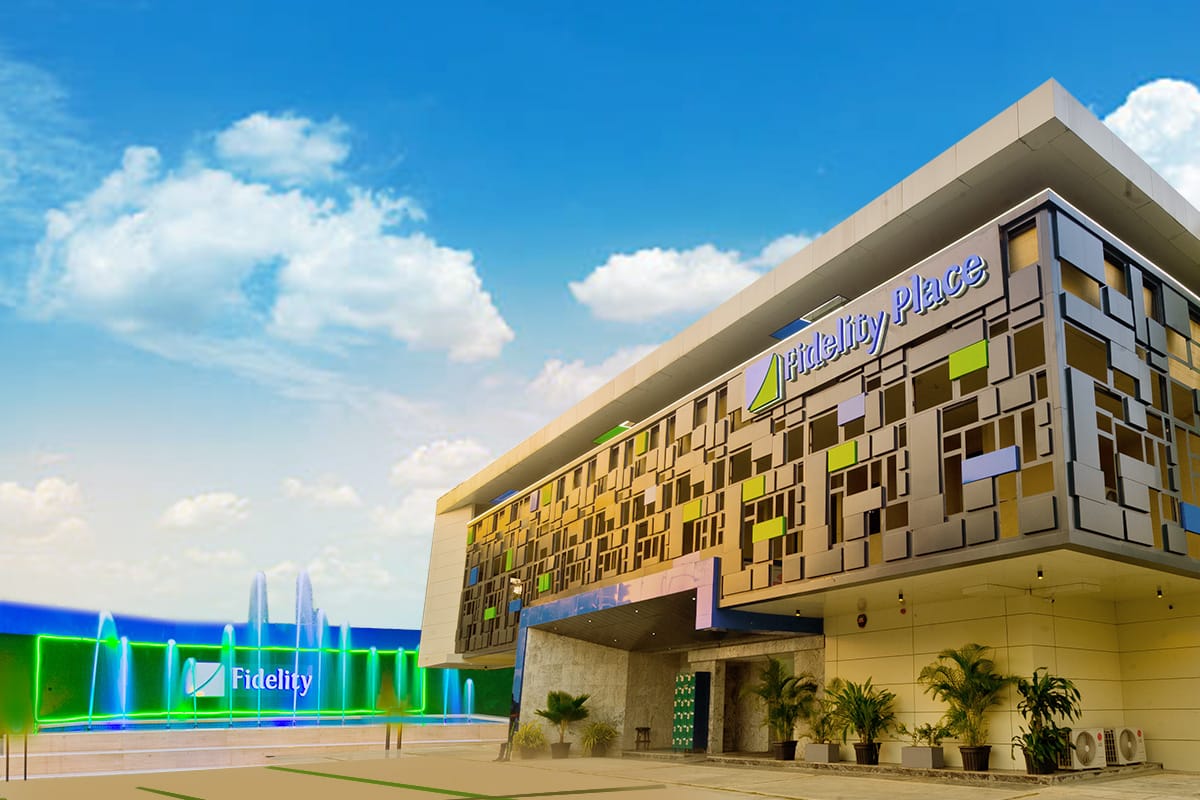
Fidelity Bank grows gross earnings by 38% to N434.95b in Q1
Fidelity Bank Plc recorded 37.9 per cent growth in gross earnings to N434.95 billion in first quarter 2026 as the international commercial bank continued to expand its core banking market share.
Interim report and accounts of Fidelity Bank for the three months ended March 31, 2026 released at the Nigerian Exchange (NGX) showed that gross earnings rose from N315.42 billion in first quarter 20025 to N434.95 billion in first quarter 2026, representing an increase of 37.9 per cent.
The top-line performance was driven by impressive growth in the bank’s core business operations with interest incomes rising by 22.8 per cent to N314.48 billion in first quarter 2026 as against N256.10 billion in first quarter 2025.
With net interest income at N180.97 billion, the bank closed the period with profit before tax of N92.48 billion. After taxes, net profit stood at N74.47 billion for the three-month period. Earnings per share remained high at N5.69, underlining the capacity of the bank to reward its shareholders.
The balance sheet of the bank also emerged stronger. Total assets crossed the N11 trillion mark to N11.35 trillion by March 2026 compared with N10.46 trillion recorded in December 2025. Customers’ deposits increased from N6.89 trillion to N7.38 trillion. Total equity rode on the back of earnings growth to a 27.5 per cent increase from N1.09 trillion in December 2025 to N1.39 trillion by March 2026.
The first quarter 2026 results further consolidated the strong earnings outlook of the bank, which had successfully completed its recapitalisation amidst impressive earnings performance in 2025.
Fidelity Bank had recorded double-digit growths in interest and non-interest incomes as well as key balance sheet items during the year ended December 31, 2025.
The audited report showed that gross earnings rose from N1.04 trillion in 2024 to N1.52 trillion in 2025, an increase of 45.6 per cent. Interest and similar incomes had grown by 38.7 per cent from N803.1 billion in 2024 to N1.11 trillion in 2025. Fees and commission incomes also rose by 44.7 per cent from N78.4 billion to N113.4 billion. The bank recorded net profit after tax of N242.4 billion in 2025.
The bank’s balance sheet emerged stronger with total assets rising by 18.6 per cent to N10.46 trillion in 2025 as against N8.82 trillion in 2024. Customer deposits increased by 16.1 per cent from N5.94 trillion to N6.89 trillion, reflecting continued franchise strength and an improved funding profile. Net loans and advances meanwhile declined by 2.4 per cent to N4.28 trillion in 2025 as against N4.39 trillion in 2024, attributable to customers paying down on their mature obligations.
The bank had in 2025 strengthened its capital position, with eligible capital rising to N561 billion, above the regulatory minimum of N500 billion for banks with international authorisation. In addition, capital adequacy had remained robust, with Capital Adequacy Ratio of 30.94 per cent by December 2025 as against 23.47 per cent by December 2024.
Managing Director, Fidelity Bank Plc, Dr. Nneka Onyeali-Ikpe, said the first quarter 2026 results reinforced the bank’s strong and resilient business model.
She noted that with the remarkable success of its recapitalisation programme and continuing expansion, Fidelity Bank has entered a new era of growth and impressive returns.
“We are on a stronger footing and confident that we will set new growth records that are reflective of our legacy and the future we are working on,” Onyeali-Ikpe said.
Business
Dangote Refinery Ends Nigeria’s Era of Fuel Import Dependence, Boosts GDP, FX Earnings — EIU
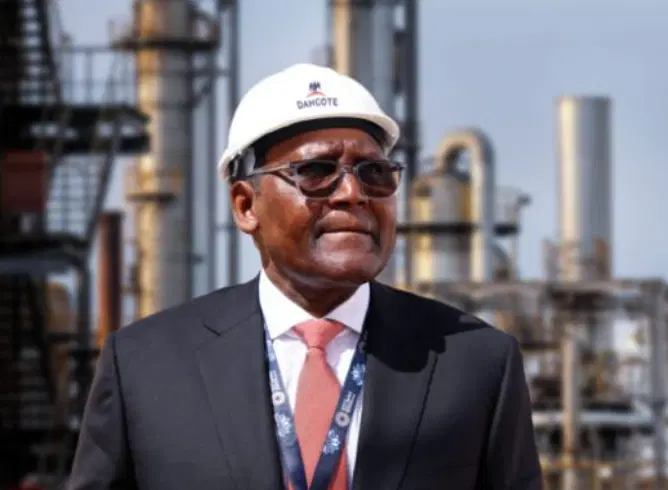
Dangote Refinery Ends Nigeria’s Era of Fuel Import Dependence, Boosts GDP, FX Earnings — EIU
The operational ramp up of the 650,000 barrels per day Dangote Petroleum Refinery & Petrochemicals is fundamentally reshaping Nigeria’s downstream oil sector, significantly reducing the country’s dependence on imported refined petroleum products and strengthening its external position, according to the Economist Intelligence Unit (EIU).
In its latest assessment on Nigeria’s fuel market and regulatory environment, the EIU said the refinery has already transformed a sector that was previously characterised by heavy reliance on imported fuel despite Nigeria being Africa’s largest crude oil producer. The report noted that the refinery met nearly 80 per cent of domestic petrol demand in April and produced enough volumes to satisfy local consumption requirements as operations approached full capacity.
The EIU described Nigeria’s downstream petroleum sector before the refinery as “long dysfunctional”, noting that the country had remained almost entirely dependent on costly imported fuel while producing nearly 1.5 million barrels of crude oil daily.
According to the report, the emergence of the refinery has reduced import dependence, improved domestic fuel availability and strengthened Nigeria’s balance of payments position through lower import demand and rising exports of refined petroleum products.
“The gradual ramp up of the 650,000 barrel/day Dangote refinery since May 2023 has transformed Nigeria’s long dysfunctional downstream sector,” the report stated. “The country’s main refineries, all state owned, had been inoperative for years and Nigeria was almost entirely reliant on costly imported fuel.”
The research and analysis division of The Economist Group, London added that the refinery’s attainment of full operational capacity and its planned expansion would further support Nigeria’s economic growth and foreign exchange earnings over the medium term.
“Meanwhile, the attainment of full capacity at, and an increase in exports from, the Dangote refinery will support real GDP growth and foreign exchange earnings in 2026 and 2027 and beyond, as a planned doubling of the plant’s output comes on stream around the end of the decade,” it added.
Industry analysts said the refinery is increasingly positioning Nigeria as an emerging refining and export hub, altering energy trade flows across Africa and reducing the vulnerability associated with fuel import dependence.
The EIU noted that the refinery’s expansion has coincided with major reforms in Nigeria’s downstream sector, including the removal of fuel subsidies and the introduction of market driven pricing mechanisms.
The report, however, said the transition from a state dominated fuel import structure to large scale domestic refining has triggered resistance from interests linked to the old import regime.
The latest tensions emerged following the decision by the Nigerian Midstream and Downstream Petroleum Regulatory Authority to relax restrictions on petrol imports despite the refinery’s growing capacity to meet domestic demand.
Dangote Industries subsequently initiated legal action, arguing that continued import approvals undermine domestic refining investments and conflict with the objectives of the Petroleum Industry Act, which seeks to encourage local refining capacity and reduce import dependence.
Analysts noted that the availability of large-scale domestic refining capacity has improved Nigeria’s energy security and reduced exposure to external supply shocks and foreign exchange volatility.
The Centre for the Promotion of Private Enterprise also cautioned against unrestrained importation of petroleum products, warning that such a policy could weaken Nigeria’s industrialisation drive and discourage investments in domestic refining.
Chief Executive Officer of CPPE, Muda Yusuf, said continued dependence on imported fuel had historically contributed to pressure on foreign reserves, exchange rate instability and fiscal leakages.
The refinery’s growing impact is also being reflected in Nigeria’s broader macroeconomic indicators. Earlier this month, S&P Global Ratings cited increased domestic refining capacity and rising hydrocarbon exports among the major factors supporting Nigeria’s sovereign credit rating upgrade – the first in 14 years.
Beyond Nigeria, analysts said the refinery is increasingly being viewed as a strategic industrial asset for Africa, where many countries remain heavily dependent on imported fuel despite rising demand for transportation, manufacturing, and power generation.
Business
BREAKING: Court Dismisses $19.6 Million Claim Against NNPCL — Rules Contract Scope Cannot Be Changed Orally
BREAKING: Court Dismisses $19.6 Million Claim Against NNPCL — Rules Contract Scope Cannot Be Changed Orally
In a landmark ruling on Friday, May 22, 2026, the Federal Capital Territory High Court in Abuja threw out a $19.6 million lawsuit filed by Alternate Dimensions Ventures Ltd against the Nigerian National Petroleum Company Limited (NNPCL), affirming a key legal principle: a written contract cannot be expanded through oral agreements or conduct.
Alternate Dimensions had sought $19,600,000 in professional fees, claiming the scope of its Direct Sale, Direct Purchase (DSDP e-pro) contract with NNPCL was orally expanded. Represented by counsel Patrick Peter, the firm argued it was entitled to the revised sum for services rendered under the alleged new terms.
But NNPCL, through its lawyer Ituah Imhanze of KENNA LP, pushed back sharply, arguing that parties are bound exclusively by the clear terms of their written agreement. Imhanze contended that without any written amendment, the claim was legally unsound, and the court agreed.
Delivering judgment, Justice Hamza Mu’azu upheld NNPCL’s defense, stating that the contract was unambiguous and that no evidence was adduced during the trial, which supported the alleged scope expansion. The court further found that NNPCL fully complied with all contractual terms and committed no breach.
Dismissing the suit as meritless, Justice Mu’azu reinforced the doctrine of sanctity of contract: any amendment to a written agreement must be express, unequivocal, and documented, not implied or verbal.
The ruling spares NNPCL from the S19.6 million claim and also a floodgate of similar potential liabilities.


- CANAL+ lists on the Johannesburg Stock Exchange (JSE), strengthening the Group’s dual-continental approach and reinforcing South Africa’s (SA) role as a gateway to global capital and African growth June 3, 2026
- African Mining Week (AMW) Country Focus to Spotlight Liberia’s Iron Ore, Gold and Critical Minerals Prospects June 3, 2026
- Venezuela to Host Its Largest-Ever International Energy Investment Summit June 3, 2026
- Canada–Africa Business Conference Preparations Advance Following Canadian Secretary of State’s High-Level Visit to Nigeria June 3, 2026
- Uganda: Parliament concludes vetting of ministers June 2, 2026
- Fund for Export Development in Africa (FEDA) Board Appoints Mr. Emmanuel Assiak as Chief Executive Officer June 2, 2026
- Ecobank Group Launches World First Nature Bond Mobilising Global Capital to Protect Africa’s Natural Ecosystems June 2, 2026
- Merck Foundation Chief Executive Officer (CEO) Dr. Rasha Kelej together with Kenya First Lady support the education of 47 Kenyan Schoolgirls by providing Annual Scholarships till they Graduate June 2, 2026
- Annual Meetings 2026: Governors Back the Bank’s Platform Solutions to Transform Aviation and Health Systems in Africa June 2, 2026
- ThinkMarkets launches ChelseaAI, bringing live CFD trading into Artificial Intelligence (AI) assistants June 2, 2026
- CANAL+ lists on the Johannesburg Stock Exchange (JSE), strengthening the Group’s dual-continental approach and reinforcing South Africa’s (SA) role as a gateway to global capital and African growth June 3, 2026
- African Mining Week (AMW) Country Focus to Spotlight Liberia’s Iron Ore, Gold and Critical Minerals Prospects June 3, 2026
- Venezuela to Host Its Largest-Ever International Energy Investment Summit June 3, 2026
- Canada–Africa Business Conference Preparations Advance Following Canadian Secretary of State’s High-Level Visit to Nigeria June 3, 2026
- Uganda: Parliament concludes vetting of ministers June 2, 2026
- Fund for Export Development in Africa (FEDA) Board Appoints Mr. Emmanuel Assiak as Chief Executive Officer June 2, 2026
- Ecobank Group Launches World First Nature Bond Mobilising Global Capital to Protect Africa’s Natural Ecosystems June 2, 2026
-

 news6 months ago
WHO REALLY OWNS MONIEPOINT? The $290 Million Deal That Sold Nigeria’s Top Fintech to Foreign Interests
-

 society1 month ago
SOCIAL MEDIA IS NOT A BATTLEFIELD COMMAND – WHY THE NIGERIAN ARMY’S ACTION AGAINST JUSTICE CRACK IS A NATIONAL SECURITY IMPERATIVE
-

 celebrity radar - gossips4 months ago
Dr. Chris Okafor Returns with Power and Fire of the Spirit -Mounts Grace Nation Altar with Fresh Anointing and Restoration Grace on February 1, 2026
-

 celebrity radar - gossips6 months ago
Prophet Kingsley Aitafo Releases 2026 Prophecy: ‘Nigeria Will Rise, but the World Must Prepare for Turbulence’
You must be logged in to post a comment Login
You must log in to post a comment.