
Business
Recapitalisation Without Transformation is a Risk Nigeria Cannot Afford


Recapitalisation Without Transformation is a Risk Nigeria Cannot Afford
BY BLAISE UDUNZE
In barely two weeks, Nigeria’s banking sector will once again be at a historic turning point. As the deadline for the latest recapitalisation exercise approaches on March 31, 2026, with no fewer than 31 banks having met the new capital rule, leaving out two that are reportedly awaiting verification. As exercise progresses and draws to an end, policymakers are optimistic that stronger banks will anchor financial stability and support the country’s ambition of building a $1 trillion economy.
The reform, driven by the Central Bank of Nigeria (CBN) under Governor Olayemi Cardoso, requires banks to significantly raise their capital thresholds, which are set at N500 billion for international banks, N200 billion for national banks, and N50 billion for regional lenders. According to the apex bank, 33 banks have already tapped the capital market through rights issues and public offerings; collectively, the total verified and approved capital raised by the banks amounts to N4.05 trillion.
No doubt, at first glance, the strategy definitely appears straightforward with the idea that bigger capital means stronger banks, and stronger banks should finance economic growth. But history offers a cautionary reminder that capital alone does not guarantee resilience, as it would be recalled that Nigeria has travelled this road before.
During the 2004-2005 consolidation led by former CBN Governor Charles Soludo, the number of banks in the country shrank dramatically from 89 to 25. The reform created larger institutions that were celebrated as national champions. The truth is that Nigeria has been here before because, despite all said and done, barely five years later, the banking system plunged into crisis, forcing regulatory intervention, bailouts, and the creation of the Asset Management Corporation of Nigeria (AMCON) to absorb toxic assets.
The lesson from that experience is simple in the sense that recapitalisation without structural reform only postpones deeper problems.
Today, as banks race to meet the new capital thresholds, the real question is not how much capital has been raised but whether the reform will transform the fundamentals of Nigerian banking. The underlying fact is that if the exercise merely inflates balance sheets without addressing deeper vulnerabilities, Nigeria risks repeating a familiar cycle of apparent stability followed by systemic stress, as the resultant effect will be distressed banks less capable of bringing the economy out of the woods.
The real measure of success is far simpler. That is to say, stronger banks must stimulate economic productivity, stabilise the financial system, and expand access to credit for businesses and households. Anything less will amount to a missed opportunity.
One of the most critical issues surrounding the recapitalisation drive is the quality of the capital being raised.
Nigeria’s banking sector has reportedly secured more than N4.5 trillion in new capital commitments across different categories of banks. No doubt, on paper, these numbers may appear impressive. Going by the trends of events in Nigeria’s economy, numbers alone can be deceptive.
Past recapitalisation cycles revealed troubling practices, whereby funds raised through related-party transactions, borrowed money disguised as equity, or complex financial arrangements that recycled risks back into the banking system. If such practices resurface, recapitalisation becomes little more than an accounting exercise.
To avert a repeat of failure, the CBN must therefore ensure that every naira raised represents genuine, loss-absorbing capital. Transparency around capital sources, ownership structures, and funding arrangements must be non-negotiable. Without credible capital, balance sheet strength becomes an illusion that will make every recapitalization exercise futile.
In financial systems, credibility is itself a form of capital. If there is one recurring factor behind banking crises in Nigeria, it is corporate governance failure.
Many past collapses were not triggered by global shocks but by insider lending, weak board oversight, excessive executive power, and poor risk culture. Recapitalisation provides regulators with a rare opportunity to reset governance standards across the industry.
Boards must be independent not only in structure but also in substance. Risk committees must be empowered to challenge executive decisions. Insider lending rules must be enforced without compromise because, over the years, they have proven to be an anathema against the stability of the financial sector. The stakes are high.
When governance fails, fresh capital can quickly become fresh fuel for old excesses. Without governance reform, recapitalisation risks reinforcing the very weaknesses it seeks to eliminate.
Another structural vulnerability lies in Nigeria’s increasing amount of non-performing loans (NPLs), which recently caused the CBN to raise concerns, as Nigeria experiences a rise in bad loans threatening banking stability.
Industry data suggests that the banking sector’s NPL ratio has climbed above the prudential benchmark of 5 percent, reaching roughly 7 percent in recent assessments. Many of these troubled loans are concentrated in sectors such as oil and gas, power, and government-linked infrastructure projects, alongside other factors such as FX instability, high interest rates, and the withdrawal of Covid-era forbearance, which threaten bank stability.
While regulatory forbearance has helped maintain short-term stability, it has also obscured deeper asset-quality concerns. A credible recapitalisation process must confront this reality directly.
Loan classification standards must reflect economic truth rather than regulatory convenience. Banks should not carry impaired assets indefinitely while presenting healthy balance sheets to investors and depositors.
Transparency about asset quality strengthens trust. Concealment destroys it. Few forces have disrupted Nigerian bank balance sheets in recent years as severely as exchange-rate volatility.
Many banks still operate with significant foreign exchange mismatches, borrowing short-term in foreign currencies while lending long-term to clients earning revenues in naira. When the naira depreciates sharply, these mismatches can erode capital faster than any credit loss.
Recapitalisation must therefore be accompanied by stricter supervision of foreign exchange exposure, as this part calls for the regulator to heighten its supervision. Banks should be required to disclose currency risks more transparently and undergo rigorous stress testing at intervals that assume adverse currency scenarios rather than best-case outcomes. In a structurally import-dependent economy, ignoring FX risk is no longer an option.
Nigeria’s banking system has long been characterised by excessive concentration in a few sectors and corporate clients, which calls for adequate monitoring and the need to be addressed quickly for the recapitalization drive to yield maximum results.
Growth in most advanced economies comes from the small and medium-sized enterprises that are well-funded. Anything short of this undermines it, since the concentration of huge loans to large oil and gas companies, government-related entities, and major conglomerates absorbs a disproportionate share of bank lending. This has continued to pose a major threat to the system, as the case is with small and medium-sized enterprises, the backbone of job creation, which remain chronically underfinanced. This imbalance weakens the economy.
Recapitalisation should therefore be tied to policies that encourage credit diversification and risk-sharing mechanisms that allow banks to lend more confidently to productive sectors such as agriculture, manufacturing, and technology rather than investing their funds into the government’s securities. Bigger banks that remain narrowly exposed do not strengthen the economy. They amplify its fragilities.
Nigeria’s macroeconomic conditions, which are its broad economic settings, are defined by frequent and sometimes sharp changes or instability rather than stability.
Inflation shocks, interest-rate swings, fiscal pressures, and currency adjustments are not rare disruptions; but they have now become a normal part of the economic environment. Despite all these adverse factors, many banks still operate risk models that assume relative stability. Perhaps unbeknownst to the stakeholders, this disconnect is dangerous.
Owing to possible shocks, and when banks increase their capital (recapitalization), it is required that banks adopt more sophisticated risk-management frameworks capable of withstanding severe economic scenarios, with the expectation that stronger banks should also have stronger systems to manage risks and survive economic crises. In Nigeria today, every financial institution’s stress testing must be performed in the face of the economy facing severe shocks like currency depreciation, sovereign debt pressures, and sudden interest-rate spikes.
Risk management should evolve from a compliance obligation into a strategic discipline embedded in every lending decision.
Public confidence in the banking system depends heavily on credible financial reporting.
Investors, analysts, and depositors need to be able to understand banks’ true financial positions without navigating non-transparent disclosures or creative accounting practices, which means the industry must be liberated to an extent that gives room for access to information.
Recapitalisation provides an opportunity to strengthen the enforcement of international financial reporting standards, enhance audit quality, and require clearer disclosure of capital adequacy, asset quality, and related-party transactions. Transparency should not be feared. It is the foundation of trust.
One thing that must be corrected is that while recapitalisation often focuses on financial metrics, the banking sector ultimately runs on human capital.
Another fearful aspect of this exercise for the economy is that consolidation and mergers triggered by the reform could lead to workforce disruptions if not carefully managed. Job losses, casualisation, and declining staff morale can weaken institutional culture and productivity. Strong banks are built by strong people.
If recapitalisation strengthens balance sheets while destabilising the workforce that powers the system, the reform risks undermining its own economic objectives. Human capital stability must therefore form part of the broader reform strategy.
Doubtless, another emerging shift in Nigeria’s financial landscape is the rise of digital financial platforms that are increasingly changing how people access and use money in Nigeria.
Millions of Nigerians are increasingly relying on fintech platforms for payments, microloans, and everyday financial transactions. One of the advantages it offers, is that these services often deliver faster and more user-friendly experiences than traditional banks. While innovation is welcome, it raises important questions about the future structure of financial intermediation.
The point here is that the moment traditional banks retreat from retail banking while fintech platforms dominate customer interactions, systemic liquidity and regulatory oversight could become fragmented.
The CBN must see to it that the recapitalised banks must therefore invest aggressively in digital infrastructure, cybersecurity, and customer experience, while cutting down costs on all less critical areas in the industry.
Nigerians should feel the benefits of recapitalisation not only in stronger balance sheets but also in faster apps, reliable payment systems, and responsive customer service.
As banks grow larger through recapitalisation and consolidation, a new challenge emerges via systemic concentration.
Nigeria’s largest banks already control a significant share of industry assets. Further consolidation could deepen the divide between dominant institutions and smaller players. This creates the risk of “too-big-to-fail” banks whose collapse could threaten the entire financial system.
To address this risk, regulators must strengthen resolution frameworks that allow distressed banks to fail without triggering systemic panic, their collapse does not damage the whole financial system, and do not require taxpayer-funded bailouts to forestall similar mistakes that occurred with the liquidation of Heritage Bank. Market discipline depends on credible failure mechanisms.
It must be understood that Nigeria’s banking recapitalisation is not merely a financial exercise or, better still, increasing banks’ capital. It is a rare opportunity to rebuild trust, strengthen governance, and reposition the financial system as a true engine of economic development.
One fact is that if the reform focuses only on capital numbers, the country risks repeating a familiar pattern of churning out impressive balance sheets followed by another cycle of crisis.
But the actors in this exercise must ensure that the recapitalisation addresses governance failures, asset quality concerns, risk management weaknesses, and transparency gaps; and the moment this is done, the banking sector could emerge stronger and more resilient.
Nigeria does not simply need bigger banks. It needs better banks, institutions capable of financing innovation, supporting entrepreneurs, and building economic opportunity for millions of citizens.
The true capital of any banking system is not just money. It is trust. And whether this recapitalisation ultimately succeeds will depend on whether Nigerians see that trust reflected not only in financial statements but in the everyday experience of saving, borrowing, and investing in the economy. Only then will bigger banks translate into a stronger nation.
Blaise, a journalist and PR professional, writes from Lagos and can be reached via: [email protected]





Fidelity Bank grows gross earnings by 38% to N434.95b in Q1
Fidelity Bank Plc recorded 37.9 per cent growth in gross earnings to N434.95 billion in first quarter 2026 as the international commercial bank continued to expand its core banking market share.
Interim report and accounts of Fidelity Bank for the three months ended March 31, 2026 released at the Nigerian Exchange (NGX) showed that gross earnings rose from N315.42 billion in first quarter 20025 to N434.95 billion in first quarter 2026, representing an increase of 37.9 per cent.
The top-line performance was driven by impressive growth in the bank’s core business operations with interest incomes rising by 22.8 per cent to N314.48 billion in first quarter 2026 as against N256.10 billion in first quarter 2025.
With net interest income at N180.97 billion, the bank closed the period with profit before tax of N92.48 billion. After taxes, net profit stood at N74.47 billion for the three-month period. Earnings per share remained high at N5.69, underlining the capacity of the bank to reward its shareholders.
The balance sheet of the bank also emerged stronger. Total assets crossed the N11 trillion mark to N11.35 trillion by March 2026 compared with N10.46 trillion recorded in December 2025. Customers’ deposits increased from N6.89 trillion to N7.38 trillion. Total equity rode on the back of earnings growth to a 27.5 per cent increase from N1.09 trillion in December 2025 to N1.39 trillion by March 2026.
The first quarter 2026 results further consolidated the strong earnings outlook of the bank, which had successfully completed its recapitalisation amidst impressive earnings performance in 2025.
Fidelity Bank had recorded double-digit growths in interest and non-interest incomes as well as key balance sheet items during the year ended December 31, 2025.
The audited report showed that gross earnings rose from N1.04 trillion in 2024 to N1.52 trillion in 2025, an increase of 45.6 per cent. Interest and similar incomes had grown by 38.7 per cent from N803.1 billion in 2024 to N1.11 trillion in 2025. Fees and commission incomes also rose by 44.7 per cent from N78.4 billion to N113.4 billion. The bank recorded net profit after tax of N242.4 billion in 2025.
The bank’s balance sheet emerged stronger with total assets rising by 18.6 per cent to N10.46 trillion in 2025 as against N8.82 trillion in 2024. Customer deposits increased by 16.1 per cent from N5.94 trillion to N6.89 trillion, reflecting continued franchise strength and an improved funding profile. Net loans and advances meanwhile declined by 2.4 per cent to N4.28 trillion in 2025 as against N4.39 trillion in 2024, attributable to customers paying down on their mature obligations.
The bank had in 2025 strengthened its capital position, with eligible capital rising to N561 billion, above the regulatory minimum of N500 billion for banks with international authorisation. In addition, capital adequacy had remained robust, with Capital Adequacy Ratio of 30.94 per cent by December 2025 as against 23.47 per cent by December 2024.
Managing Director, Fidelity Bank Plc, Dr. Nneka Onyeali-Ikpe, said the first quarter 2026 results reinforced the bank’s strong and resilient business model.
She noted that with the remarkable success of its recapitalisation programme and continuing expansion, Fidelity Bank has entered a new era of growth and impressive returns.
“We are on a stronger footing and confident that we will set new growth records that are reflective of our legacy and the future we are working on,” Onyeali-Ikpe said.
Business
Dangote Refinery Ends Nigeria’s Era of Fuel Import Dependence, Boosts GDP, FX Earnings — EIU
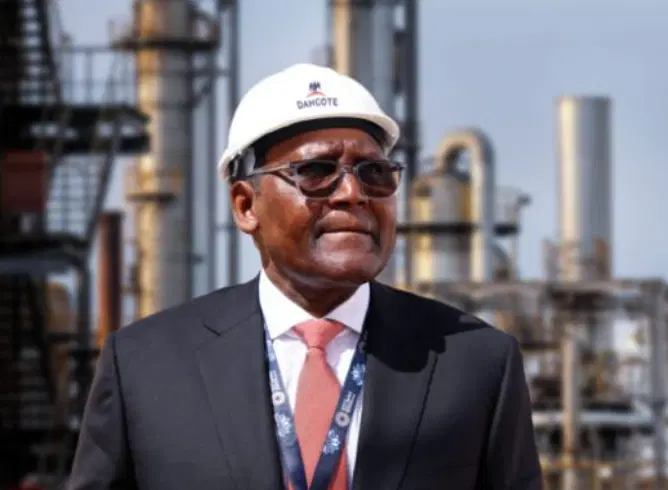
Dangote Refinery Ends Nigeria’s Era of Fuel Import Dependence, Boosts GDP, FX Earnings — EIU
The operational ramp up of the 650,000 barrels per day Dangote Petroleum Refinery & Petrochemicals is fundamentally reshaping Nigeria’s downstream oil sector, significantly reducing the country’s dependence on imported refined petroleum products and strengthening its external position, according to the Economist Intelligence Unit (EIU).
In its latest assessment on Nigeria’s fuel market and regulatory environment, the EIU said the refinery has already transformed a sector that was previously characterised by heavy reliance on imported fuel despite Nigeria being Africa’s largest crude oil producer. The report noted that the refinery met nearly 80 per cent of domestic petrol demand in April and produced enough volumes to satisfy local consumption requirements as operations approached full capacity.
The EIU described Nigeria’s downstream petroleum sector before the refinery as “long dysfunctional”, noting that the country had remained almost entirely dependent on costly imported fuel while producing nearly 1.5 million barrels of crude oil daily.
According to the report, the emergence of the refinery has reduced import dependence, improved domestic fuel availability and strengthened Nigeria’s balance of payments position through lower import demand and rising exports of refined petroleum products.
“The gradual ramp up of the 650,000 barrel/day Dangote refinery since May 2023 has transformed Nigeria’s long dysfunctional downstream sector,” the report stated. “The country’s main refineries, all state owned, had been inoperative for years and Nigeria was almost entirely reliant on costly imported fuel.”
The research and analysis division of The Economist Group, London added that the refinery’s attainment of full operational capacity and its planned expansion would further support Nigeria’s economic growth and foreign exchange earnings over the medium term.
“Meanwhile, the attainment of full capacity at, and an increase in exports from, the Dangote refinery will support real GDP growth and foreign exchange earnings in 2026 and 2027 and beyond, as a planned doubling of the plant’s output comes on stream around the end of the decade,” it added.
Industry analysts said the refinery is increasingly positioning Nigeria as an emerging refining and export hub, altering energy trade flows across Africa and reducing the vulnerability associated with fuel import dependence.
The EIU noted that the refinery’s expansion has coincided with major reforms in Nigeria’s downstream sector, including the removal of fuel subsidies and the introduction of market driven pricing mechanisms.
The report, however, said the transition from a state dominated fuel import structure to large scale domestic refining has triggered resistance from interests linked to the old import regime.
The latest tensions emerged following the decision by the Nigerian Midstream and Downstream Petroleum Regulatory Authority to relax restrictions on petrol imports despite the refinery’s growing capacity to meet domestic demand.
Dangote Industries subsequently initiated legal action, arguing that continued import approvals undermine domestic refining investments and conflict with the objectives of the Petroleum Industry Act, which seeks to encourage local refining capacity and reduce import dependence.
Analysts noted that the availability of large-scale domestic refining capacity has improved Nigeria’s energy security and reduced exposure to external supply shocks and foreign exchange volatility.
The Centre for the Promotion of Private Enterprise also cautioned against unrestrained importation of petroleum products, warning that such a policy could weaken Nigeria’s industrialisation drive and discourage investments in domestic refining.
Chief Executive Officer of CPPE, Muda Yusuf, said continued dependence on imported fuel had historically contributed to pressure on foreign reserves, exchange rate instability and fiscal leakages.
The refinery’s growing impact is also being reflected in Nigeria’s broader macroeconomic indicators. Earlier this month, S&P Global Ratings cited increased domestic refining capacity and rising hydrocarbon exports among the major factors supporting Nigeria’s sovereign credit rating upgrade – the first in 14 years.
Beyond Nigeria, analysts said the refinery is increasingly being viewed as a strategic industrial asset for Africa, where many countries remain heavily dependent on imported fuel despite rising demand for transportation, manufacturing, and power generation.
Business
BREAKING: Court Dismisses $19.6 Million Claim Against NNPCL — Rules Contract Scope Cannot Be Changed Orally

BREAKING: Court Dismisses $19.6 Million Claim Against NNPCL — Rules Contract Scope Cannot Be Changed Orally
In a landmark ruling on Friday, May 22, 2026, the Federal Capital Territory High Court in Abuja threw out a $19.6 million lawsuit filed by Alternate Dimensions Ventures Ltd against the Nigerian National Petroleum Company Limited (NNPCL), affirming a key legal principle: a written contract cannot be expanded through oral agreements or conduct.
Alternate Dimensions had sought $19,600,000 in professional fees, claiming the scope of its Direct Sale, Direct Purchase (DSDP e-pro) contract with NNPCL was orally expanded. Represented by counsel Patrick Peter, the firm argued it was entitled to the revised sum for services rendered under the alleged new terms.
But NNPCL, through its lawyer Ituah Imhanze of KENNA LP, pushed back sharply, arguing that parties are bound exclusively by the clear terms of their written agreement. Imhanze contended that without any written amendment, the claim was legally unsound, and the court agreed.
Delivering judgment, Justice Hamza Mu’azu upheld NNPCL’s defense, stating that the contract was unambiguous and that no evidence was adduced during the trial, which supported the alleged scope expansion. The court further found that NNPCL fully complied with all contractual terms and committed no breach.
Dismissing the suit as meritless, Justice Mu’azu reinforced the doctrine of sanctity of contract: any amendment to a written agreement must be express, unequivocal, and documented, not implied or verbal.
The ruling spares NNPCL from the S19.6 million claim and also a floodgate of similar potential liabilities.


- Uganda: Parliament concludes vetting of ministers June 2, 2026
- Fund for Export Development in Africa (FEDA) Board Appoints Mr. Emmanuel Assiak as Chief Executive Officer June 2, 2026
- Ecobank Group Launches World First Nature Bond Mobilising Global Capital to Protect Africa’s Natural Ecosystems June 2, 2026
- Merck Foundation Chief Executive Officer (CEO) Dr. Rasha Kelej together with Kenya First Lady support the education of 47 Kenyan Schoolgirls by providing Annual Scholarships till they Graduate June 2, 2026
- Annual Meetings 2026: Governors Back the Bank’s Platform Solutions to Transform Aviation and Health Systems in Africa June 2, 2026
- ThinkMarkets launches ChelseaAI, bringing live CFD trading into Artificial Intelligence (AI) assistants June 2, 2026
- Afreximbank Invites Rugby Africa President Herbert Mensah to Address the 33rd Annual Meetings on a Panel Exploring Sport as a Driver of African Industrialisation June 2, 2026
- Afreximbank Deepens Commitment to Economic Progress in The Bahamas June 1, 2026
- African Electric Vehicle (EV) platform Spiro raises $215M in equity to scale electric mobility and energy infrastructure across Africa June 1, 2026
- Africa Centres for Disease Control and Prevention (Africa CDC) Statement on Attacks Against Health Facilities During the Bundibugyo Virus Disease Response in the Democratic Republic of the Congo June 1, 2026
- Uganda: Parliament concludes vetting of ministers June 2, 2026
- Fund for Export Development in Africa (FEDA) Board Appoints Mr. Emmanuel Assiak as Chief Executive Officer June 2, 2026
- Ecobank Group Launches World First Nature Bond Mobilising Global Capital to Protect Africa’s Natural Ecosystems June 2, 2026
- Merck Foundation Chief Executive Officer (CEO) Dr. Rasha Kelej together with Kenya First Lady support the education of 47 Kenyan Schoolgirls by providing Annual Scholarships till they Graduate June 2, 2026
- Annual Meetings 2026: Governors Back the Bank’s Platform Solutions to Transform Aviation and Health Systems in Africa June 2, 2026
- ThinkMarkets launches ChelseaAI, bringing live CFD trading into Artificial Intelligence (AI) assistants June 2, 2026
- Afreximbank Invites Rugby Africa President Herbert Mensah to Address the 33rd Annual Meetings on a Panel Exploring Sport as a Driver of African Industrialisation June 2, 2026
-

 news6 months ago
WHO REALLY OWNS MONIEPOINT? The $290 Million Deal That Sold Nigeria’s Top Fintech to Foreign Interests
-

 society4 weeks ago
SOCIAL MEDIA IS NOT A BATTLEFIELD COMMAND – WHY THE NIGERIAN ARMY’S ACTION AGAINST JUSTICE CRACK IS A NATIONAL SECURITY IMPERATIVE
-

 celebrity radar - gossips4 months ago
Dr. Chris Okafor Returns with Power and Fire of the Spirit -Mounts Grace Nation Altar with Fresh Anointing and Restoration Grace on February 1, 2026
-

 celebrity radar - gossips6 months ago
Prophet Kingsley Aitafo Releases 2026 Prophecy: ‘Nigeria Will Rise, but the World Must Prepare for Turbulence’