
society
Reclaiming Africa’s Narrative: A Call to Unity, Self-determination and Renaissance


Reclaiming Africa’s Narrative: A Call to Unity, Self-determination and Renaissance
By George Omagbemi Sylvester
In 1988, during the waning days of apartheid, South Africa’s then-president P.W. Botha allegedly made a declaration so abhorrent it still echoes in the ears of all who believe in justice and equality: “Black people cannot rule themselves because they don’t have the brain and mental capacity to govern a society.” This vile statement, whether apocryphal or not, encapsulates the supremacist ideology that underpinned centuries of colonial subjugation, racial discrimination and the systemic erosion of African dignity.
But time has proven Botha and all who think like him resoundingly wrong.
The Colonial Disruption of African Societies
Before European intervention, Africa was not a dark, directionless wilderness as imperialists often depicted. It was a continent bursting with vibrant civilizations, flourishing trade routes and governance systems grounded in consensus, justice and communal responsibility. From the intellectual legacy of Timbuktu in Mali, the economic might of the Benin and Oyo empires, to the political sophistication of the Ashanti and Zulu nations, Africa was anything but backward.
Colonialism was not a civilizing mission, it was a criminal enterprise. It dismantled well-structured societies, imposed arbitrary borders, stole natural resources and pitted ethnic groups against one another to divide and rule. The very chaos and underdevelopment often blamed on Africans today are direct consequences of this historical sabotage.
Yet, amid the ruins, Africa’s spirit was never broken.
African Leaders Advocating for Self-Reliance and Unity
Across the ages, a cadre of fearless African leaders emerged to confront neocolonialism and resurrect the dream of a self-determined continent. These were not mere politicians, they were revolutionaries, thinkers and builders.
Thomas Sankara, the martyred President of Burkina Faso, remains one of the most iconic voices against foreign domination. He warned, “He who feeds you, controls you.” Sankara rejected dependency on Western aid, choosing instead to launch agricultural reforms, nationalize land and promote local industries. His vision was clear: true liberation begins with economic independence.
He also exposed the deceptive nature of imperialism: “Imperialism often occurs in more subtle forms like a loan, food aid, blackmail.” His words ring truer today, as many African economies are buried under unsustainable debt and politically motivated aid packages.
Paul Kagame, Rwanda’s transformational leader, has demonstrated that African nations can rise from the ashes of genocide through homegrown solutions. He declared, “In Africa today, we recognize that trade and investment and not aid, are pillars of development.” Under Kagame’s leadership, Rwanda has embraced technology, promoted gender equality and prioritized good governance, becoming a beacon of possibility on a continent that has suffered relentless mischaracterization.
Muammar Gaddafi, controversial but undeniably visionary, imagined a “United States of Africa.” He sought a single African currency, passport and military force—tools that could end external manipulation and promote Pan-African strength. Though his methods were divisive and his end tragic, Gaddafi’s dream for African unity remains relevant and necessary.
These leaders flawed yet courageous yet understood a fundamental truth: Africa’s future cannot be outsourced.
The Path Forward: Rewriting the African Script
To reclaim Africa’s narrative, Africans must take control of the pen. The stories we tell, the policies we adopt and the vision we cast must be authentically African and unapologetically bold.
1. Promote Pan-African Unity
The 55 nations of Africa must act as one. Whether confronting climate change, foreign exploitation or security threats, UNITY is our STRONGEST weapon. Regional integration through platforms like the African Continental Free Trade Area (AfCFTA) is a step in the right direction, but integration must go beyond economics; it must be ideological, cultural and political. Africa must speak with one voice in the global arena.
2. Invest in Education and Innovation
An education system that glorifies colonial figures while ignoring Africa’s own thinkers is complicit in mental slavery. Curricula across Africa must teach our history of our heroes, our philosophers and our scientists. From Imhotep of Egypt to Cheikh Anta Diop of Senegal, Africa has produced intellectual giants. We must train a generation that is technologically competent, globally competitive and deeply rooted in its heritage.
3. Celebrate Cultural Heritage
Our languages, clothing, music and rituals are not primitive relics, they are treasures. The Yoruba, Swahili, Hausa, Zulu and many other languages must be preserved, promoted and passed on. Cultural pride is not merely symbolic. It is the foundation of psychological liberation. Africans must stop measuring progress by how closely they resemble the West.
4. Strengthen Governance and Institutions
Corruption, weak institutions and authoritarianism are cancers eating away at Africa’s future. But they are not intrinsic to African DNA, they are the legacy of extractive colonial structures. We must dismantle those legacies. Transparent elections, independent judiciaries, press freedom and civic engagement are not luxuries; they are necessities. Democracy must be African-owned and people-driven.
5. Reduce Dependency on External Aid
No nation becomes great by surviving on handouts. Aid often comes with strings attached, strings that entangle sovereignty. Africa must mobilize its resources from agriculture and minerals to youth and innovation and to build sustainable economies. Local production, regional value chains and intra-African trade are the way forward.
Reclaiming the Mind: The Final Frontier
Colonialism did not only conquer land, it colonized the mind. Until we unlearn inferiority and embrace the richness of our identity, progress will remain elusive. Frantz Fanon warned, “The colonized can see only one solution: to rise in arms and reclaim his humanity.” Today’s weapons, however, are not guns but ideas. Our battle is against ignorance, division and dependency.
The media must stop portraying Africa as a CONTINENT of DESPAIR. African writers, filmmakers, academics and entrepreneurs must tell their own stories. Platforms like Nollywood, Afrobeat, African Literature and tech startups are already rewriting perceptions, but more must be done.
Lastly: Inventing the Future
The lie that Africans cannot govern themselves has been shattered by history, resilience and the defiant march of time. The continent that gave birth to humanity is more than capable of shaping its own destiny.
As Thomas Sankara passionately declared, “We must dare to invent the future.” That future is one where Africans are united not just by geography but by purpose. A future where the youth are empowered, the elders respected, the culture celebrated and the leadership accountable.
Africa is not a victim, it is a victor in waiting. It needs no savior from the outside. The answer lies within: in its people, its traditions, its resources and its unyielding spirit.
The time to reclaim the narrative is now. The time to rise, to build…to lead is now!





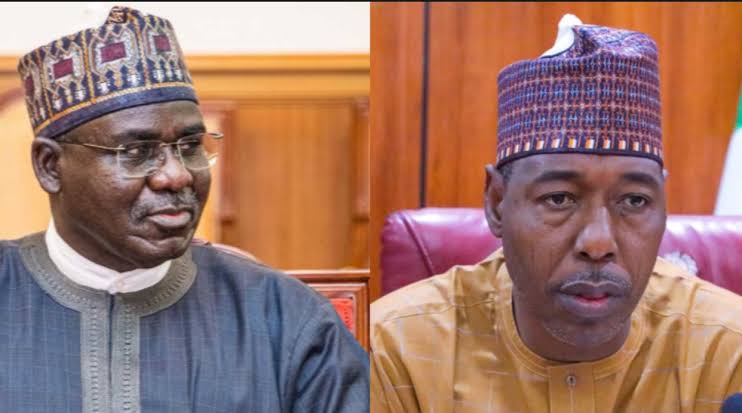
TY BURATAI HUMANITY CARE FOUNDATION COMMENDS GOVERNOR ZULUM FOR HELPING MILITARY FAMILIES
The TY Buratai Humanity Care Foundation has commended Borno State Governor Babagana Umara Zulum for his generous donation of ₦150 million to the families of three military officers who were tragically killed in recent attacks. Each family received ₦50 million as part of the state’s continued commitment to supporting fallen heroes and wounded personnel involved in counter-insurgency operations.
The commendation was contained in a statement signed by the foundation’s chairman, Ibrahim Dahiru Danfulani Sadaukin Garkuwan Keffi/Betara Biu, and made available to the press.
The foundation expressed gratitude for the governor’s compassionate gesture, which included personal visits to the families of the late Lieutenant Colonels Umar Farouq, Salihu Iliyasu, and Aliyu Saidu Paiko in Abuja, Niger, and Kano States. During the visits, Governor Zulum offered his condolences and praised the service, sacrifice, and patriotism of the fallen officers.
The foundation’s Grand Patron, His Excellency, Lieutenant General Tukur Yusufu Buratai, CFR (Rtd), personally commended the governor’s dedication to improving the lives of Borno State residents. He also extended his condolences to the families of the officers and soldiers who made the ultimate sacrifice in service to the nation.
During his visits, Governor Zulum reaffirmed his administration’s commitment to supporting bereaved families, which includes offering scholarships to the orphaned children of fallen personnel. He pledged to extend similar visits to other affected families, underscoring a compassionate approach to addressing the needs of those who have suffered in the line of duty.
society
Queen Amb Dr. Nwamaka Cordelia Anyatonwu Appointed Minister of Humanitarian, Culture, and Kingdom Affairs, United Kingdom of Atlantis
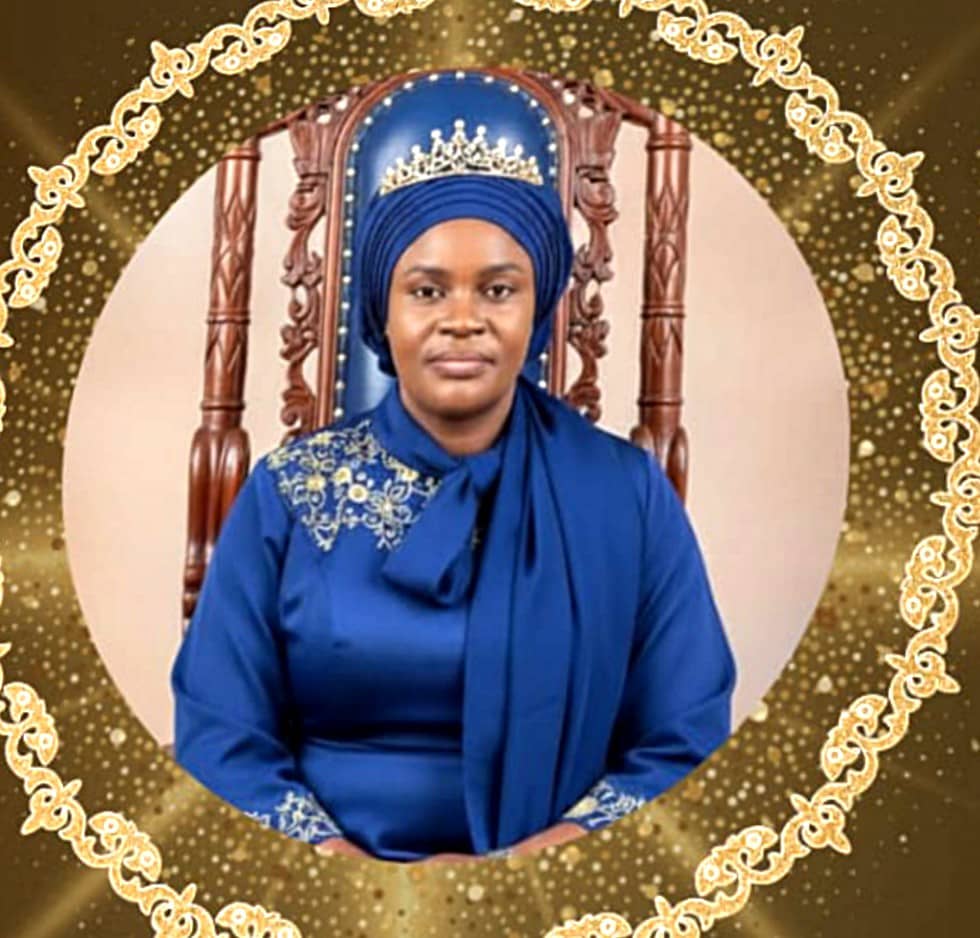
*Queen Amb Dr. Nwamaka Cordelia Anyatonwu Appointed Minister of Humanitarian, Culture, and Kingdom Affairs, United Kingdom of Atlantis
Her Majesty Queen Amb Dr. Nwamaka Cordelia Anyatonwu, Queen of the Aches Empire under the jurisdiction of the United Kingdom of Atlantis (UKA), has been appointed as the Minister of Humanitarian, Culture, and Kingdom Affairs, effective immediately.
This appointment comes as the UKA takes decisive steps to strengthen its humanitarian efforts and protect its citizens from unauthorized activities. In light of recent developments, the UKA has issued an official public disclaimer cautioning citizens, followers, and the general public about the activities of individuals promoting and operating a coin or platform not officially recognized by the Atlantian Gold Coin (ATC). This follows the hijacking of the 5 billion humanitarian project, a move that has been met with concern and condemnation from the international community.
As the newly appointed Minister, Queen Amb Dr. Anyatonwu has announced that all matters pertaining to the 5 billion humanitarian project in UKA should be directed to her office. This includes the newly captured NGOs, which are now required to report to the Office of Humanitarian Affairs, ensuring transparency and accountability in the management of humanitarian resources.
“We are committed to transparency and accountability in our humanitarian efforts,” said Queen Amb Dr. Anyatonwu. “We urge all stakeholders to work with us to ensure the success of our initiatives and protect our citizens from unauthorized activities. We will not tolerate any form of exploitation or mismanagement of humanitarian funds, and we will take all necessary measures to ensure that those responsible are held accountable.”
The UKA has assured its citizens and the international community that it is taking all necessary measures to recover the hijacked funds and bring the perpetrators to justice. The appointment of Queen Amb Dr. Anyatonwu is seen as a significant step towards achieving this goal and ensuring that humanitarian efforts are aligned with the UKA’s values and principles.
For more information. Please contact the Office of the Minister of Humanitarian, Culture and Kingdom Affairs.
*About the United Kingdom of Atlantis*
The United Kingdom of Atlantis is a sovereign nation committed to promoting peace, prosperity, and humanitarian values. The UKA is dedicated to working with international partners to address global challenges and improve the lives of its citizens and people around the world.
NASRE: Building A Safety Net For Nigeria’s Journalists
At a time when Nigeria’s media industry is strained by economic uncertainty, job instability, and shrinking newsroom resources, the Nigerian Association of Social and Resourceful Editors (NASRE) is redefining professional solidarity. More than a network of editors, it is emerging as a critical support system for journalists navigating an increasingly precarious landscape.
Founded on the principles of welfare, solidarity, and professional growth, NASRE has positioned itself as a responsive and forward-looking body within the media ecosystem. While many professional associations remain focused on advocacy and training, NASRE distinguishes itself by combining these roles with direct and practical support for journalists and their families.
At the core of its mission is a clear proposition that no journalist should be abandoned in times of need. Through financial assistance, targeted outreach, and sustained engagement, the association has supported members facing hardship, as well as widows and families of deceased practitioners. These largely understated interventions have steadily earned NASRE credibility and respect across the industry.
The organisation’s approach reflects a keen awareness of the pressures confronting media professionals, including irregular pay, job insecurity, and limited institutional backing. In such an environment, NASRE’s welfare initiatives are not merely charitable, they are essential.
Beyond welfare, the association is investing in professional resilience. Through collaboration, networking, and knowledge-sharing platforms, it is equipping editors and practitioners to remain competitive in a rapidly evolving digital media space, where adaptability is no longer optional.
Headquartered in Lagos, NASRE continues to broaden its reach, attracting a growing membership united by the need for a more responsive and supportive professional community. Its expansion signals a shift in expectations within the industry, away from symbolic affiliations towards institutions that deliver measurable value.
For many observers, NASRE represents a necessary evolution, a professional body anchored not just in ideals, but in impact. By combining empathy with structure, it offers a model of what media associations can become in challenging times.
As the industry continues to evolve, organisations like NASRE may prove indispensable. In a profession devoted to telling society’s stories, it is ensuring that the storytellers themselves are not left behind.


-

 society6 months ago
Religion: Africa’s Oldest Weapon of Enslavement and the Forgotten Truth
-

 news4 months ago
WHO REALLY OWNS MONIEPOINT? The $290 Million Deal That Sold Nigeria’s Top Fintech to Foreign Interests
-

 society6 months ago
“You Are Never Without Help” – Pastor Gebhardt Berndt Inspires Hope Through Empower Church (Video)
-

 celebrity radar - gossips2 months ago
Dr. Chris Okafor Returns with Power and Fire of the Spirit -Mounts Grace Nation Altar with Fresh Anointing and Restoration Grace on February 1, 2026