
society
Relentless Pursuit: NAF Commits to Finding, Fixing, and Striking Insurgents, Records Major Successes in January

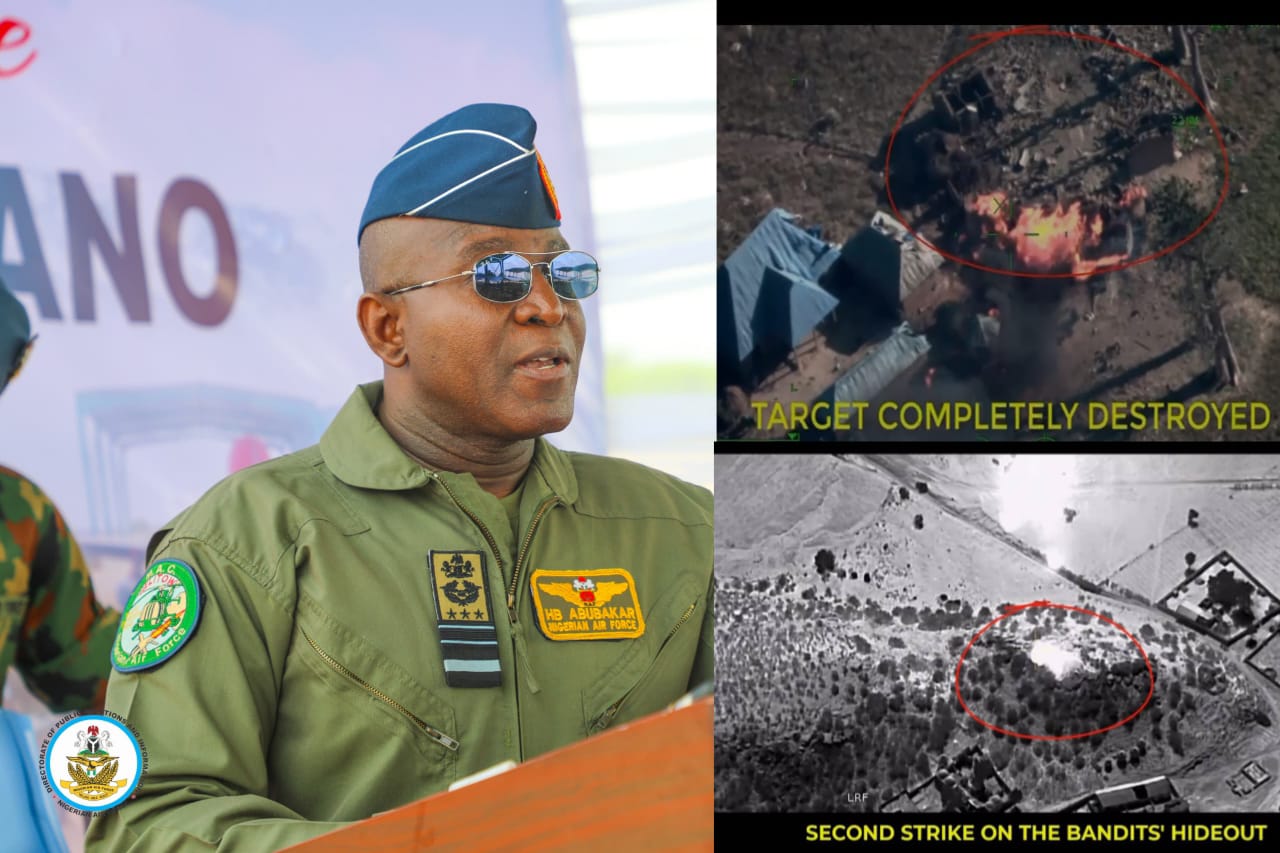
Relentless Pursuit: NAF Commits to Finding, Fixing, and Striking Insurgents, Records Major Successes in January
By Olayemi Esan
… Precision Strikes to Keep Nigeria Safe
The Nigerian military’s air component, the Nigerian Air Force (NAF), recorded significant milestones in January 2025, following a series of successful air interdiction operations across the theatre. The precision strikes, conducted in furtherance of ongoing counter-terrorism and counter-insurgency efforts, yielded substantial results, underscoring the NAF’s commitment to ensuring the security and stability of the nation.
At NAF Administration Personnel Seminar, recently the Chief of the Air Staff, Air Marshal Hasan Abubakar emphasized that the Nigerian Air Force unwavering commitment to national security and the total defeat of terrorism and banditry. He said; “Our relentless operations against criminal elements reaffirm our determination to protect innocent lives and restore peace across the nation. Let me make it clear that airpower will extend the long arm of the law, bringing justice to criminals hiding in ungoverned space. We will find, fix and strike all those who take arms against the State, and we will not relent until Nigeria is safe for all.
SpyeTV Defence Correspondence, Olayemi Esan takes a look at some of the operational successes of the Nigerian Air Force in close coordination with the ground forces (Nigerian Army and Nigerian Navy).
On 2 January 2025, following credible reports and confirmatory ISR on the converging of BH/ISWAP terrorists around the Mandara Mountains, the air component of Operation HADIN KAI conducted air interdiction. The locations were acquired and engaged with stores on boards. Battle Damage Assessment revealed that several terrorists were neutralized and their logistics destroyed. Overall, troops of Operation HADIN KAI neutralized 64 terrorists, arrested 28 suspects and rescued 14 kidnappers hostages.
On 3 January 2025,the air component of Operation FANSAN YAMMA in continuation of its ongoing offensive operations against terrorists conducted air interdiction at Alawa Forest in Shiroro LGA of Niger State. Battle Damage Assessment revealed that several terrorists were eliminated and their structures as well as logistics were destroyed. Overall, troops of Operation FANSAN YAMMA neutralized 21 terrorists, arrested 24 persons and rescued 5 kidnapped hostages.
On 4th January 2025, the air component of Operation HADIN KAI conducted air interdiction on the fleeing ISWAP/BHT terrorists on motorcycles and Gun trucks in the SABON GARI Village of DAMBOA Local Government Area of Borno State Battle Damage Assessment revealed several killed terrorists and recovered weapons. On the whole, 34 terrorists were killed and 23 AK 47 weapons recovered. Troops also recovered with over 200 rounds of 7.62mm special ammunition. Sadly, 6 personnel were killed in action.
The terrorists had attempted to surprise troops and retaliate against the recent killing of their commander and combatants by troops but the troops’ reinforcement team comprised of elements of the Civilian Joint Taskforce, vigilantes as well as hybrid forces timely arrived at the scene to overpower the terrorists.
On 6 January 2025, following credible reports, the air component of Operation FANSAN YAMMA conducted air interdiction in continuation of ongoing offensive operations against terrorist activities within Alawa Forest in Shiroro LGA of Niger State. The location was acquired and attacked with rockets and bombs in multiple passes. Battle Damage Assessment revealed that several terrorists were neutralized and their structures destroyed.
On the same day, based on credible reports and confirmatory ISR on activities of terrorists, the air component also conducted air interdiction at Maikaho and Mashigin areas in Zuru LGA of Kebbi State. Accordingly, the target was acquired and engaged with stores on board. Battle Damage Assessment and local feedback revealed that several terrorists were neutralized as well as over 12 kidnapped hostages rescued.
On 6 January 2025, following credible reports and confirmatory ISR on the activities of the BH/ISWAP terrorists at Wulade in Gwoza LGA of Borno State. The air component of Operation HADIN KAI conducted air interdiction. The target with gun trucks was acquired and attacked with stores on board. Battle Damage Assessment revealed that several terrorists were eliminated and their logistics destroyed. Overall, troops of Operation HADIN KAI neutralized 76 terrorists, arrested 72 suspects and rescued 8 kidnappers hostages.
On 8th January 2025, Director Public Relations and Information, Air Vice Marshal Olusola F Akinboyewa also shared one of the major successful achievements in January, which is the accomplishment of the remarkable feat of reactivating a Dornier DO-228 aircraft, which had been grounded for 23 years. Significantly, this accomplishment builds upon the NAF’s earlier successes, such as the conduct of the first in-country 4,800-hour inspection on another DO-228 aircraft in January 2025.
The aircraft, originally designated “5N-MPS” and operated by the now defunct Ministry of Mines, Power, and Steel, had been grounded at the DANA facility in Kaduna since 2001. However, sequel to a Presidential Directive for Ministries, Departments, and Agencies to transfer such grounded platforms to the NAF for evaluation and possible reactivation, the NAF initiated this project. The NAF took on the challenge of reactivating this aircraft, a Dash 201 Series with only 1,081 flight hours since new, considering the task a unique opportunity to restore a valuable national asset. The reactivation process, for the grounded aircraft – redesignated “NAF-039” – was conducted between June and September 2024, involving meticulous planning and painstaking execution by a crack team of 5 engineering officers and 40 technicians from the NAF 431 Engineering Group (Engr Gp), Kaduna.
On 10 January 2025, Operation FANSAN YAMMA, has delivered a crushing blow to banditry in Zamfara State, through a devastatingly well-coordinated air-ground assault, the Air strikes and synchronized ground assaults at Fakai Hills decimated scores of bandits, leaving many others gravely wounded. This bold operation underscored the unwavering resolve of the Armed Forces of Nigeria to restore peace and security to the region.
Local intelligence reports confirmed that the bandits, loyal to notorious leader Kachallah Bello Turji, suffered heavy casualties. Scores of bandits were neutralized, while many others, including some top commanders, sustained varying degrees of injuries. Sequel to the fierce engagement, Kachallah Turji’s whereabouts remain unknown, adding further pressure on his crumbling network.
The operation was meticulously executed, with real-time coordination from an Intelligence Surveillance and Reconnaissance platform overhead, ensuring accurate target correlation. The identified targets were swiftly engaged using rockets and cannons in multiple passes, delivering devastating blows to the enemy. The aircrew maintained visual and radio contact with the ground troops. The bandits, in a desperate bid to escape, were observed fleeing eastward of the hill, prompting further engagements that successfully neutralized additional targets.
On 12 January 2025, the NAF spokesperson, however, notified the public that due to the reported incidence of civilian casualties in the recent Nigerian Air Force (NAF) airstrikes in Zamfara State, the Chief of the Air Staff (CAS), Air Marshal Hasan Abubakar, has dispatched a fact-finding team to Zamfara to fully investigate the incident and provide a detailed report for further action. The Team, led by Air Vice Marshal Edward K Gabkwet, Director of Coordination and Cooperation (DCC) in the Civil-Military Relations Branch of NAF Headquarters, liaised and interfaced with State and Local Government officials as well as all other critical stakeholders, for a holistic assessment of the situation to drive the appropriate response.
A comprehensive investigation was launched, to ascertain the veracity of the loss of civilian lives in the course of the operation at Tungar Kara in Zurmi Local Government Area of Zamfara State, noting that responsible and professional custodian of airpower for the security of the nation, the NAF believes in the absolute value of the life of every Nigerian.
On 17 January 2025, following credible reports and confirmatory ISR in conjunction with land ground troops, the air component of Operation FANSAN YAMMA conducted air interdiction in Fakai Hill in Shinkafi LGA of Zamfara State. Accordingly, the target was acquired and engaged with rockets and bombs. Battle Damage Assessment revealed that a numbers of terrorists were eliminated. Overall, troops of Operation FANSAN YAMMA neutralized 44 terrorists, arrested 27 persons and rescued 16 kidnapped hostages.
Also, On 17 January 2025, a coordinated operation between troops of Operation FANSAN YAMMA as well as the air component conducted clearance operations along Shinkafi , Kagara, Fakai , Moriki, Maiwa and Chindo axis. The operations killed scores of terrorist including notorious terrorist leaders, Bello TURJI’S, son on Fakai high ground where the terrorist were hiding.
The intensity of troops fire power resulted in high terrorist casualties and their logistics hub destroyed. The operations also resulted in the rescue of several kidnapped hostages held captive by Bello TURJI. The terrorist leader, Bello Turji, in a gross cowardly act escaped abandoning his son and combatants.
Meanwhile, in a related development , troops also destroyed another terrorist kingpin camp known as Idi Mallam along Zango Kagara Forest . During the encounter, troops neutralized 3 terrorist, and arrested 3 suspected collaborators
On 19 January 2025, two prominent terrorist leaders namely, Abu RADDE and UMAR BLACK, operating in Batsari and Safana Local Government Area of Katsina State surrendered to troops of Operation FANSAN YANMA operating in the North West operational theatre of the nation. The surrender was occassioned by ongoing synchronised offensive operations by the the air component and the ground troops which resulted in several terrorist dislodged from their enclaves with high casualties.
During the operations, troops recovered assorted weapons, ammunitions as well as secured the release of 15 hostages held by the terrorist. Troops are nevertheless sustaining the momentum as they continue the hunt for notorious terrorist leader, Bello Turji, among others.
On 21 January 2025, the Air Component of Operation FANSAN YAMMA (AC OPFY) recorded another significant achievement in its counter-terrorism campaign, neutralising scores of bandits and dismantling their logistics base at Alawa Forest in Shiroro Local Government Area of Niger State.
This operation, was based on credible intelligence and follow-up confirmatory aerial surveillance efforts which indicated an influx of armed terrorists into the forest. These criminals were linked to widespread violence, including two Improvised Explosive Device (IED) attacks on 19 December 2024 in Bassa, Shiroro LGA, which claimed several innocent lives.
In response, the Nigerian Air Force (NAF) launched a three-day sustained air operation, code-named KONAN DAJI, to degrade the terrorists’ capabilities and render the forest unhabitable for them. To this end, AC OPFY dispatched a formation of fighter aircraft to execute air interdiction missions in the area. Upon arrival, the jets swiftly engaged the identified targets with precision strikes, neutralising numerous armed fighters and destroying their logistics base, as confirmed by multiple secondary explosions.
Troops recorded several encounters with terrorists during the course of the clearance operations which result in over 70 terrorists combatants including 3 notable terrorist commanders neutralized. The terrorist commanders neutralised include and is not limited to the following: TALHA (Terrorist Special Forces Commander), Mallam UMAR (Terrorist Operations commander) and ABU YAZEED (Terrorist Brigade Commander).
Between the 20-21 Jan 2025, sequel to ongoing military onslaught on terrorist in the North West of the country, between the 20-21 Jan 2025, troops of Operation FANSAN YAMMA neutralized the second-in-command of notorious terrorist leader Bello Turji’s namely, Aminu Kanawa. Troops also inflicted terminal injuries on some of Bello Turji’s close allies namely: Dosso (Bello Turji’s younger brother) and Danbokolo (one of Turji’s closest allies).
Additionally, troops neutralised several of Bello Turji’s key commanders namely: Abu Dan Shehu, Jabbi Dogo, Dan Kane, Basiru Yellow, Kabiru Gebe, Bello Buba and Dan Inna Kahon-Saniya-Yafi-Bahaushe, among others. Furthermore, troops neutralised over 24 fleeing terrorist from Bello Turji’s Camp around Gebe and Isa LGA of Sokoto State, as well as around Gidan Rijiya in Shinkafi LGA of Zamfara State.
Troops also neutralized another notable terrorist during the onslaught on Bello Turji’s Enclave around Fakai high ground. He is identified as Suleiman, and a loyalist of late notorious terrorist leader, Halilu Sububu. The late, Suleiman was leading a reinforcement team to rescue Bello Turji’s Camp which was in disarray, when he was eliminated during the fire fight.
The death of Bello Turji’s second in command, close allies, commanders and combatants is a significant blow to the terrorist network in the NW of the country, as well as their military and fighting capabilities. These group of terrorists were notorious for numerous kidnappings and terrorist attacks across the NW, particularly in Zurmi, Shinkafi, Isa, and Sabon Birni Local Government Areas in Zamfara and Sokoto States.
The NAF, in close coordination with ground forces, remains resolute in its commitment to maintaining operational dominance across the six geopolitical zones of Nigeria. Together, we will defeat all enemies militating against the security of our territories and wellbeing of our people, paving the way for the peace and prosperity of our Great Nation.
OLAYEMI ESAN IS AN AWARD WINNING BROADCAST JOURNALIST AND A PUBLIC RELATIONS PRACTITIONER. SHE IS A MEMBER OF NIPR AND THE MANAGING DIRECTOR OF SPYE TV [SPYE COMMUNICATIONS LIMITED]. SHE CAN BE REACHED VIA 08035132961 OR [email protected]




society
Liberian Leaders, Citizens Bear Witness as Apostle Suleman Hosts Two-Day Power-Packed Crusade
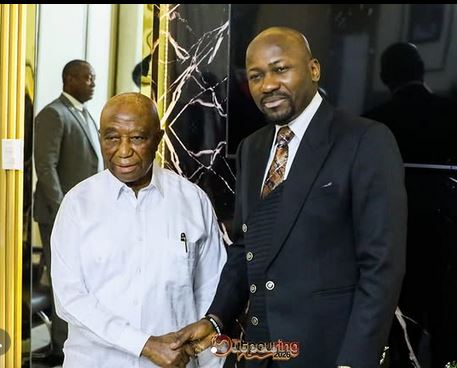
Liberian Leaders, Citizens Bear Witness as Apostle Suleman Hosts Two-Day Power-Packed Crusade
It was testimonies galore on Tuesday, March 31, the first day of the famous servant of God and founder of the Omega Fire Ministries (OFM) worldwide, Apostle Johnson Suleman’s power-packed two-day crusade. The event documented impactful moments with the Gospel and miracles, emphasizing the power of faith and the tangible confirmation of God’s Word through signs and wonders. It was equally an atmosphere of miraculous healing, restoration of lives, and the strengthening of faith.
At the crusade, which was held at the SKD Sports Stadium in Paynesville City, and themed, “Liberia Outpouring Crusade” witnessed testimonies of impact and miracles with participants experiencing instant healing of various kinds of challenges.
Apostle Suleman’s first port of call was Paynesville, the office of Liberian government’s president, Mr. Joseph Nyuma Boakai, who received him in an audience with his junior ministers. Apostle Suleman, who also met with the vice-president, Mr. Jeremiah Kpan Koung, was welcomed by the Liberian leader’s office as part of the president’s ongoing engagements with religious leaders aimed at fostering spiritual support for national development.
The president expressed profound appreciation to Apostle Suleman for the visit and continued prayers and intercessions by men and women of God on behalf of Liberia, emphasizing his firm belief that sustained spiritual guidance and prayer remain vital to the transformation and progress of the nation.
During the visit, Apostle Suleman offered prayers for President Boakai, his cabinet and the Liberian nation, invoking divine alignment, wisdom, and insight in Liberia’s path toward growth and stability. He prayed that the Almighty God would position Liberia for relevance and fulfillment of its national destiny.
Apostle Johnson Suleman, an evangelist who knows no bounds of where preaching the gospel comes to a stop, visited Liberia prepared with the message, compelling power of the Gospel and the work of the Holy Spirit, and bringing people to a point of decision where they surrendered their lives to Christ.
Aside from being prophetic and timely, OFM sources disclosed that the servant of God’s visit underscores the importance of faith-based partnerships in supporting governance and national renewal efforts.
society
Middle Belt Forum Hails Tinubu’s Jos Visit, Calls for United Civil-Military Effort to Restore Lasting Peace

*Middle Belt Forum Hails Tinubu’s Jos Visit, Calls for United Civil-Military Effort to Restore Lasting Peace
The Middle Belt Peace Forum (MBPF) has commended President Bola Ahmed Tinubu for his profound demonstration of empathy and responsive leadership following his decision to postpone an official engagement in Iperu in order to visit victims of the recent attacks in Jos.
In a statement signed by its National Coordinator, Pastor Bulus Garba, in Jos on Friday, the Forum said the President’s decision to personally identify with grieving communities sends a powerful message of solidarity and reinforces public confidence in the commitment of the Federal Government to the protection of lives and property.
“The Middle Belt Peace Forum warmly commends President Bola Ahmed Tinubu for prioritising compassion over ceremony. At a time of deep sorrow for the people of Plateau State, his decision to visit Jos stands as a mark of true leadership—one that listens, responds, and stands with the people in their moment of pain,” the statement read.
The Forum described the perpetrators of the recent attacks as “cowards who prey on innocent and defenceless citizens,” stressing that such acts of violence are not only inhumane but also a direct assault on the unity and peace of the nation.
“We condemn in the strongest terms the actions of these cowardly attackers whose only aim is to instil fear and destabilise peaceful communities. Their actions must be met with firm and decisive resistance from all arms of the state,” Pastor Garba said.
The MBPF further used the opportunity to salute the courage, gallantry, and sacrifices of the Armed Forces of Nigeria under the leadership of the Chief of Defence Staff, General Olufemi Oluyede, noting that their continued efforts remain central to restoring stability across troubled parts of the country.
According to the Forum, the Armed Forces have demonstrated resilience and professionalism in the face of complex security challenges, often operating under difficult conditions to safeguard communities and defend Nigeria’s territorial integrity.
“We salute the Armed Forces of Nigeria for their unwavering commitment and sacrifices. Their gallantry in confronting criminal elements and reclaiming territories is a testament to their dedication to national service. We recognise that the path to peace is demanding, and we honour those who stand daily in defence of our nation,” the statement added.
The Forum pledged its full support to ongoing military operations and called for strengthened collaboration between security agencies and local communities as a critical factor in achieving lasting peace.
It also urged citizens across the Middle Belt to cooperate with security forces by providing timely information and fostering unity within their communities.
The MBPF, however, expressed concern over the need for greater synergy among security agencies, particularly the role of the Nigeria Police in consolidating gains made by the military.
“We call on the Nigeria Police Force to rise fully to its constitutional responsibility by effectively supporting the Armed Forces in stabilising and securing areas that have been cleared of criminal elements. Holding and policing such territories is essential to preventing a resurgence of violence,” Pastor Garba stated.
The Forum emphasised that sustainable peace requires a coordinated approach in which the military clears and secures areas, while the police maintain law and order to enable displaced communities to return and rebuild their lives.
The MBPF concluded by reiterating its commitment to peacebuilding efforts across the Middle Belt and expressed optimism that with sustained leadership, coordinated security efforts, and active citizen participation, lasting peace can be achieved.
“Together, through unity, vigilance, and collective resolve, we can overcome these challenges and build a safer and more peaceful Middle Belt,” the statement added.

Governor Dauda Lawal Wins Face of Africa Governor of the Year Award in London
Governor Dauda Lawal has been honored with the Outstanding Governor of the Year award by Triangle Media International Magazine.
The award was presented during the magazine’s 10th annual lecture and award ceremony, held on Thursday at the Grand Hall of King’s College, London, United Kingdom.
According to a statement by the governor’s spokesperson, Sulaiman Bala Idris, the awards recognize public and private sector leaders whose leadership positively impacts governance and service delivery.
He added that the lecture, themed “Harnessing the Roles of Nigerians in Diaspora for National Development,” brought together stakeholders from both the public and private sectors.
The statement read in part: “Yesterday, in London, Governor Dauda Lawal received the 2026 Face of Africa Leadership Award for Outstanding Governor of the Year.
“The 2026 edition coincides with the 10th anniversary of Triangle International Magazine, which has over the years celebrated notable Africans across diverse fields.
“The award recognizes the Zamfara State Government under Governor Lawal’s leadership for achieving remarkable milestones in service delivery since his inauguration on 29 May 2023.
“The board of Triangle International noted that, despite inheriting an empty treasury, Governor Dauda Lawal has remained true to the Rescue Agenda’s campaign promise: to rescue and rebuild Zamfara.
“The award also reflects the state government’s innovative approach to indirectly curbing insecurity through educational advancement, demonstrated by the declaration of a state of emergency in the education sector.
“This includes the state government’s swift payment of the outstanding N3.4 billion for WAEC and NECO examinations, as well as the reconstruction and rehabilitation of schools across all 14 Local Government Areas of Zamfara State.
“The international magazine finds these initiatives to be strategic interventions toward long-term efforts to make Zamfara State better.”
The colourful event was attended by the Minister of Interior, Olubunmi Tunji-Ojo, and Sahara Group’s Group Managing Director, Kola Adesina, among others.


-

 society7 months ago
Religion: Africa’s Oldest Weapon of Enslavement and the Forgotten Truth
-

 news4 months ago
WHO REALLY OWNS MONIEPOINT? The $290 Million Deal That Sold Nigeria’s Top Fintech to Foreign Interests
-

 society6 months ago
“You Are Never Without Help” – Pastor Gebhardt Berndt Inspires Hope Through Empower Church (Video)
-

 celebrity radar - gossips2 months ago
Dr. Chris Okafor Returns with Power and Fire of the Spirit -Mounts Grace Nation Altar with Fresh Anointing and Restoration Grace on February 1, 2026