
Business
‘If You are richer than you should, you will be held to account for it’ – Acting President, Yemi Osinbajo

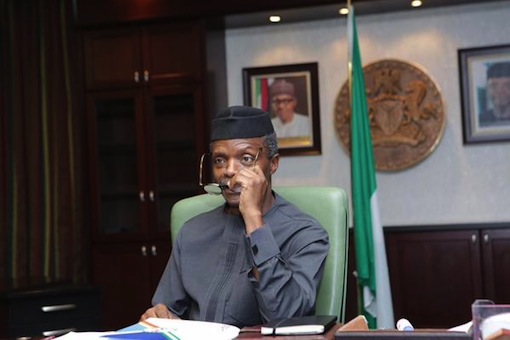

The Acting President, Professor Yemi Osinbajo has said that anybody found out to have more money than he or she should would be held to account for it. He also said that people who loot the public treasury or their organizations are doing so out of greed, and not because of any political objective of keeping a war chest for the future.
Osinbajo made this remark today at the celebration of Father’s Day at Aso Villa Chapel, during which he also challenged the church to teach the lessons of honesty and integrity.
”Many would say the reason why they steal is because they want to have an arsenal for future political exploits. It is a lie. It is greed. In any case, even if you want to do that, you have no right to do it,” he said.
His message from the pulpit certainly strikes a chord against the backdrop of the avalanche of corruption cases the Buhari administration has been pursuing.
The campaign had suffered some setbacks of late, with controversial verdicts by the court that tend to let go the accused.
Osinbajo, a professor of law and also a pastor of the Redeemed Church felt the church has a role to play.
“If the church says we will not accept you here or that we will expose you if you are stealing the resources of the country or stealing the resources of a private company or other establishment where you work, we would not have the type of problem that we have in this country.”
“In Genesis 18:19. God was speaking about Abraham. And God said he had known him or called him in order that he may command his children and his household after him that they keep the way of the Lord with righteousness and justice that the Lord may bring to Abraham what He had spoken to him.
“In other words, God was saying that He called Abraham, in particular, because he realizes that Abraham will command his household, will command his children to do righteousness and justice and to fear God. And if you back this up with Genesis 12:2, God has spoken concerning Abraham, that He will make Abraham a great nation. Genesis 12:3 says, God said, I will make you a great nation.
“In other words, the role of the father is supposed to be that of building nations, building generations. And Abraham is the example God set for us; of a man who God wanted to be the exemplar of the type of conduct that God expects of fatherhood; a man who will teach his children and children thereafter the way of righteousness and justice and the way of fear of God.
“When I listened to His Eminence, the Prelate of the Methodist Church a few minutes ago, talking about the importance of the type of training that he received as a child in his family, I’m sure many of us here are reminded of that type of training. A type of training where you are taught and reminded about integrity, primarily as the first order of business; that you must be a person of integrity.
You must be truthful, you must be trustworthy, you must be honest, you must be forthright. That is the foundation. And in the days he referred to, Catechism was an important part of our lives. Even just knowing the 10 Commandments was enough to teach you about righteousness, teach you about the way of truth and I think that is very important, especially for us today as Christians.
“Christian fatherhood in particular is a position that God has placed us as exemplar to our nation. The Christian father is the one referred to in Genesis 18:19; the one who will teach the way of righteousness and justice to his children and would teach the fear of the Lord.
And I just want to say to all of our leaders (and I was speaking with few of our Christian leaders just last week, both of the PFN and CAN just last week on various occasions) that it is the role of the church to build this nation. And the church has that role because God has said concerning us that we are the light of the world and we are the salt of the earth. That role is a very, very difficult role.
“We are not to teach the world how to be like the world but to teach the world how to be like the one who saved the world, how to be like Jesus. It is not easy.
“Every time that we come to church, we are told about giving. But we need to talk more about honesty. We need to talk far more about honesty. In the same way we talk about giving, we need to talk more about honesty because just like His Eminence said, Nigeria’s great problem is not the absence of prosperity. It is as he so eloquently put it, that we have enough for our needs but we don’t have enough for our greed.
The greed of many is what has landed this country where it is today. It is the greed of so many; many who have been placed in position of authority. It is their greed that has landed us where we are, where it is difficult to do the sorts of things His Eminence saw in Washington and so many other places. You cannot steal half of the resources of the country and expect to build the sort of things you see in other places.
“And if the church says you are not allowed to steal and we will ostracize you in our midst if you did. If what a man has does not measure up to what he has, if we found that a man has more money than he should have, if a man is earning a salary of a civil servant or a public servant and he has houses everywhere, we have to hold him to account. But he must be held to account in the church. He must be told first in the church we will not allow you here.
If the church says we will not accept you here or that we will expose you if you are stealing the resources of the country or stealing the resources of a private company or other establishment where you work, then we would not have the type of problem that we have in this country. If only the church does so, just the church.
“Just as Christian fathers today, it is our duty as God spoke concerning Abraham in Genesis 18:19, it is our duty to build up a generation of righteous men and women, a nation of just men and women who fear God and puts God above everything else. And I believe that the Almighty God will help us.
“I just pray that the Father of fathers, the One who has called us, one who has saved us will bless each and every father here today in the mighty name of Jesus. The Almighty God who is the great Father of all fathers will ensure that we get everything we need to make our families, to make communities truly great and to make our nation g




Business
Dangote Refinery Ends Nigeria’s Era of Fuel Import Dependence, Boosts GDP, FX Earnings — EIU
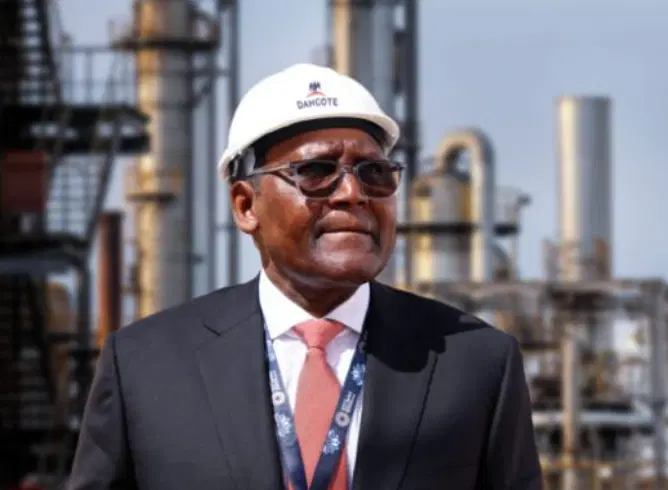
Dangote Refinery Ends Nigeria’s Era of Fuel Import Dependence, Boosts GDP, FX Earnings — EIU
The operational ramp up of the 650,000 barrels per day Dangote Petroleum Refinery & Petrochemicals is fundamentally reshaping Nigeria’s downstream oil sector, significantly reducing the country’s dependence on imported refined petroleum products and strengthening its external position, according to the Economist Intelligence Unit (EIU).
In its latest assessment on Nigeria’s fuel market and regulatory environment, the EIU said the refinery has already transformed a sector that was previously characterised by heavy reliance on imported fuel despite Nigeria being Africa’s largest crude oil producer. The report noted that the refinery met nearly 80 per cent of domestic petrol demand in April and produced enough volumes to satisfy local consumption requirements as operations approached full capacity.
The EIU described Nigeria’s downstream petroleum sector before the refinery as “long dysfunctional”, noting that the country had remained almost entirely dependent on costly imported fuel while producing nearly 1.5 million barrels of crude oil daily.
According to the report, the emergence of the refinery has reduced import dependence, improved domestic fuel availability and strengthened Nigeria’s balance of payments position through lower import demand and rising exports of refined petroleum products.
“The gradual ramp up of the 650,000 barrel/day Dangote refinery since May 2023 has transformed Nigeria’s long dysfunctional downstream sector,” the report stated. “The country’s main refineries, all state owned, had been inoperative for years and Nigeria was almost entirely reliant on costly imported fuel.”
The research and analysis division of The Economist Group, London added that the refinery’s attainment of full operational capacity and its planned expansion would further support Nigeria’s economic growth and foreign exchange earnings over the medium term.
“Meanwhile, the attainment of full capacity at, and an increase in exports from, the Dangote refinery will support real GDP growth and foreign exchange earnings in 2026 and 2027 and beyond, as a planned doubling of the plant’s output comes on stream around the end of the decade,” it added.
Industry analysts said the refinery is increasingly positioning Nigeria as an emerging refining and export hub, altering energy trade flows across Africa and reducing the vulnerability associated with fuel import dependence.
The EIU noted that the refinery’s expansion has coincided with major reforms in Nigeria’s downstream sector, including the removal of fuel subsidies and the introduction of market driven pricing mechanisms.
The report, however, said the transition from a state dominated fuel import structure to large scale domestic refining has triggered resistance from interests linked to the old import regime.
The latest tensions emerged following the decision by the Nigerian Midstream and Downstream Petroleum Regulatory Authority to relax restrictions on petrol imports despite the refinery’s growing capacity to meet domestic demand.
Dangote Industries subsequently initiated legal action, arguing that continued import approvals undermine domestic refining investments and conflict with the objectives of the Petroleum Industry Act, which seeks to encourage local refining capacity and reduce import dependence.
Analysts noted that the availability of large-scale domestic refining capacity has improved Nigeria’s energy security and reduced exposure to external supply shocks and foreign exchange volatility.
The Centre for the Promotion of Private Enterprise also cautioned against unrestrained importation of petroleum products, warning that such a policy could weaken Nigeria’s industrialisation drive and discourage investments in domestic refining.
Chief Executive Officer of CPPE, Muda Yusuf, said continued dependence on imported fuel had historically contributed to pressure on foreign reserves, exchange rate instability and fiscal leakages.
The refinery’s growing impact is also being reflected in Nigeria’s broader macroeconomic indicators. Earlier this month, S&P Global Ratings cited increased domestic refining capacity and rising hydrocarbon exports among the major factors supporting Nigeria’s sovereign credit rating upgrade – the first in 14 years.
Beyond Nigeria, analysts said the refinery is increasingly being viewed as a strategic industrial asset for Africa, where many countries remain heavily dependent on imported fuel despite rising demand for transportation, manufacturing, and power generation.
Business
BREAKING: Court Dismisses $19.6 Million Claim Against NNPCL — Rules Contract Scope Cannot Be Changed Orally
BREAKING: Court Dismisses $19.6 Million Claim Against NNPCL — Rules Contract Scope Cannot Be Changed Orally
In a landmark ruling on Friday, May 22, 2026, the Federal Capital Territory High Court in Abuja threw out a $19.6 million lawsuit filed by Alternate Dimensions Ventures Ltd against the Nigerian National Petroleum Company Limited (NNPCL), affirming a key legal principle: a written contract cannot be expanded through oral agreements or conduct.
Alternate Dimensions had sought $19,600,000 in professional fees, claiming the scope of its Direct Sale, Direct Purchase (DSDP e-pro) contract with NNPCL was orally expanded. Represented by counsel Patrick Peter, the firm argued it was entitled to the revised sum for services rendered under the alleged new terms.
But NNPCL, through its lawyer Ituah Imhanze of KENNA LP, pushed back sharply, arguing that parties are bound exclusively by the clear terms of their written agreement. Imhanze contended that without any written amendment, the claim was legally unsound, and the court agreed.
Delivering judgment, Justice Hamza Mu’azu upheld NNPCL’s defense, stating that the contract was unambiguous and that no evidence was adduced during the trial, which supported the alleged scope expansion. The court further found that NNPCL fully complied with all contractual terms and committed no breach.
Dismissing the suit as meritless, Justice Mu’azu reinforced the doctrine of sanctity of contract: any amendment to a written agreement must be express, unequivocal, and documented, not implied or verbal.
The ruling spares NNPCL from the S19.6 million claim and also a floodgate of similar potential liabilities.
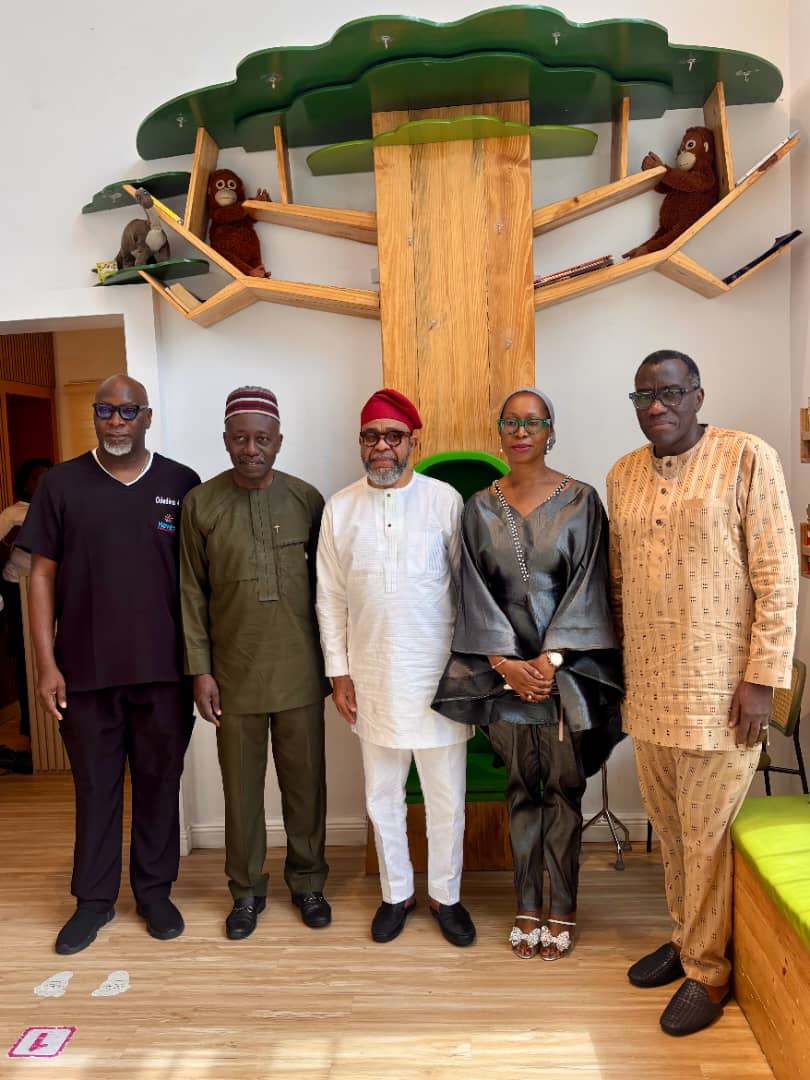
Advanced Neonatal and Pediatric ICU births in Ikeja
Haven Pediatric Practice has officially launched a state-of-the-art Neonatal Intensive Care Unit (NICU) in Ikeja, Lagos State today.
This facility is a direct response to the urgent need for specialized care, bridging the gap between despair and survival for families in Lagos and beyond.
In the world over, the dream for every expectant mother is simple: to carry to term and hold a healthy baby. But when that dream is interrupted by preterm birth, the emotional toll is devastating. In Nigeria, currently ranked as one of the most challenging environments for premature infant survival, the stakes have never been higher.
But by synergizing cutting-edge technology with the highest level of professional expertise, Haven Pediatric Practice has assembled a dedicated team of Neonatologists and pediatric specialists. Recognizing that respiration is the greatest hurdle for “born too early” champions, the clinic has invested in top of the range ventilation technology capable of supporting infants weighing as little as 0.4kg.
The Chief Medical Director of Haven Pediatric Practice Dr. Adebajo Odedina told our correspondent at the event that,
“We aren’t just launching a ward; we are deploying a lifeline. By combining world-class ventilators with specialized, experienced medical hands, we are significantly increasing the chances of survival for even our smallest warriors.”
This expansion reaffirms Haven Pediatrics’ commitment to providing comprehensive, advanced care from the very first breath, ensuring that being born early no longer means losing the fight for life.


- African Leaders Mobilise Funding and Regional Response as Ebola Outbreak Escalates May 26, 2026
- Seychelles: Appointment of the Chief Executive Officer of the Careers and Further Education Agency May 26, 2026
- African Leadership Magazine Announces Winners of the 16th African Business Leadership Awards (ABLA) 2026 May 26, 2026
- President receives credentials of Ambassador of the Kingdom of Sweden to the Republic of Seychelles May 26, 2026
- Seychelles: President Herminie Presented with Future Development Vision for New Baie St Anne Jetty May 26, 2026
- Ammat Global Resources Redefines Local Content Through Congolese-Led Operations May 26, 2026
- Republic of Congo’s Newly-Appointed Hydrocarbons Minister Stev Simplice Onanga to Speak at African Energy Week (AEW) 2026 Amid Major Gas Expansion Push May 26, 2026
- Merck Foundation in partnership with Ghana First Lady and Lordina Foundation launch their “Educating Linda” Program to support Girl Education May 26, 2026
- Transforming Healthcare and Empowering Women: Dr. Rasha Kelej Recognized Among Africa’s 100 Most Influential Women May 25, 2026
- 2026 BASKETBALL AFRICA LEAGUE SEASON: BY THE NUMBERS May 25, 2026
- African Leaders Mobilise Funding and Regional Response as Ebola Outbreak Escalates May 26, 2026
- Seychelles: Appointment of the Chief Executive Officer of the Careers and Further Education Agency May 26, 2026
- African Leadership Magazine Announces Winners of the 16th African Business Leadership Awards (ABLA) 2026 May 26, 2026
- President receives credentials of Ambassador of the Kingdom of Sweden to the Republic of Seychelles May 26, 2026
- Seychelles: President Herminie Presented with Future Development Vision for New Baie St Anne Jetty May 26, 2026
- Ammat Global Resources Redefines Local Content Through Congolese-Led Operations May 26, 2026
- Republic of Congo’s Newly-Appointed Hydrocarbons Minister Stev Simplice Onanga to Speak at African Energy Week (AEW) 2026 Amid Major Gas Expansion Push May 26, 2026
-

 news5 months ago
WHO REALLY OWNS MONIEPOINT? The $290 Million Deal That Sold Nigeria’s Top Fintech to Foreign Interests
-

 society3 weeks ago
SOCIAL MEDIA IS NOT A BATTLEFIELD COMMAND – WHY THE NIGERIAN ARMY’S ACTION AGAINST JUSTICE CRACK IS A NATIONAL SECURITY IMPERATIVE
-

 celebrity radar - gossips4 months ago
Dr. Chris Okafor Returns with Power and Fire of the Spirit -Mounts Grace Nation Altar with Fresh Anointing and Restoration Grace on February 1, 2026
-

 celebrity radar - gossips6 months ago
Prophet Kingsley Aitafo Releases 2026 Prophecy: ‘Nigeria Will Rise, but the World Must Prepare for Turbulence’
You must be logged in to post a comment Login
You must log in to post a comment.