
society
Rivers State: Ibas’ Record Breaking Governance Amidst Peace Restoration* By Randy Owen

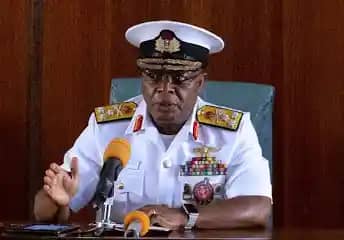
Rivers State: Ibas’ Record Breaking Governance Amidst Peace Restoration
By Randy Owen
In the face of political distrust, upheaval, and societal uncertainty, there exist leaders who frise above the turbulence of their times to deliver stability, order, and progress in sand of history. For Rivers State, that leader is the person of Vice Admiral Ibok-Ete Ibas (rtd), whose appointment as Sole Administrator marked not just a transition in governance, but the opening of a new chapter in transitioning of a disciplined democratic statecraft.
I write to the world not as a distance observer of the happenings on Rivers State but as an individual with firsthand witness. I experienced the remarkable unfolding of events in Rivers, where a leader with a military background has applied the finesse of discipline, humanistic touch of empathy, and the clarity of purpose in governance.

The words of Professor Julius Ihonvbere, Chairman of the House of Representatives Special Adhoc Committee, struck a chord that reverberated across Rivers State when he led a delegation on an unscheduled oversight visit. He said:
“I do not envy you because I know the difficult circumstances and the environment in which you are going to work. But your track record convinced me that you would be able to weather the storm and deliver as required. In any case, military officers at your level never fail on assignments. Having worked with a retired general Obasanjo, I know that whether they are in uniform or out of it, at any time, you call on them. They are always ready to serve the country. So I congratulate you first on the appointment, but also I commend you for what you’ve done so far. Contrary to what people have been marketing, we see evidence of peace and order. We see evidence of people going about their respective businesses. It’s evidence that the reverse is moving in the right direction.”
These words are an encapsulation of both the gravity of the situation on the ground and the magnitude of satisfied expectations delivered by Vice Admiral Ibas.
Emergency rule isn’t a matter to be seen or taken lightly. It is one that signals the breakdown of normalcy, it reveals the collapse of trust in democratic structures, and represents a clarion call on the urgent necessity for salvaging the moral fabric of governance. The suspension of a duly elected governor and legislature weapons all witnessed wasn’t just a constitutional emergency; it was a moral indictment on the governance machinery in Rivers State. Ibok-Ete Ibas stepped into this void, carrying the authority of the federal government and the aspirations of millions that were yearning for stability, peace, and development.
While others might have been intimidated by the enormity of the task, looking at it as an impossibility which may blow up into an international threat, Ibas approached it with the calmness of a seasoned sailor used to navigating tempestuous waters. Understood his mission to be clear and straightforward: to restore law and order, ensure stability, and create an enabling environment for economic growth.
One observable striking hallmarks of Ibas’ administration has been his uncompromising focus on accountability and transparency. The governance under his leadership was shrouded in opaque dealings. Instead, every decision was articulated, every policy grounded in rationality, and every expenditure accounted for.
He made it evident that governance is not a private enterprise but a sacred trust held on behalf of the people. Ibas’ commitment to openness has so far rekindled a sense of public ownership of the government and restoring confidence in the institutions of state once again. He totally changed the rhetoric that governance often falters when not matched with tangible delivery. In Rivers State, Ibas administration has distinguished itself by transforming promises into projects and blueprints into realities. His Midas touch is expressively in governance through several key undertakings like:
The reconstruction of the Rivers assembly complex, which was isn’t just a structural intervention but a symbolic one, but evidence of the determination to prepare Rivers for a smooth democratic rebound. Ibas breathes life back into the very edifice that embodies legislative authority.
Moreover, the completion of the Mother and Child Hospital in Port Harcourt is a landmark achievement that says as a testimony of a state that this led by an individual who is greatly committed to healthcare delivery, particularly maternal and child welfare, which often remain underfunded in times of political crisis. Fortunately for the great people of Rivers, this long-neglected project was not only completed but poised for integration into the Rivers State Teaching Hospital.
Furthermore, the dualization of the Port Harcourt Ring road is perhaps the telling of his intervention. This ambitious project that was awarded July 2023 was aimed to construct a 50.15-kilometer dual carriageway that will seamlessly connect six local government areas: Port Harcourt, Obio-Akpor, Ikwerre, Etche, Eleme, and Ogu-Bolo. This project had been stuck in bureaucratic bottlenecks despite spending a staggering ₦150 billion of the already expended for the ₦195 billionaire budgeted fund. With help of organized meeting with between professionals and Julius Berger contractors that are handling the project, Ibas exposed the rot, took decisive measures, and ensured that work commenced soonest.
These projects are not isolated acts but emblematic of a broader philosophy: that governance must touch the lives of the people directly and meaningfully. Also the improved communication between community and security agencies has helped to curb cultism, kidnapping, and infrastructure vandalism.
There is no doubt that Emergency rule is often greeted with skepticism on how it affects the familiar rhythms of electoral governance. Yet, in all these, Ibas has proven that the suspension of democracy can ever be equated to the suspension of hope in good governance. On the contrary, his deep commitment to restoring democratic order by preparing for the 30 August 2025 local government council elections, also laying the foundation for a credible election by ensuring that the Rivers State Independent Electoral Commission (RVSIEC) is adequately funded, empowered, and shielded from undue interference, reveals a man who is ready for a smooth transition, and has high respect for the choice of the people. The people of Rivers would acknowledge that this Intentional commitment to a timely transition is perhaps one of his most enduring legacies that will keep rest in their heart.
What I believed that Admiral Ibas efficiency in governance it not merely what has endeared us to him, but his humanistic approach to leadership. This is a man who governs not as a commander that he’s known for, but has as an opportune Citizen who listens, consults, and empathizes. His policies resonate because they are people-centered, and his actions inspire because they are purpose-driven.
Rivers people have, for the first time in a long while, felt the warmth of a government that does not merely govern them but governs with them. It would be naïve to forget the situation from which Rivers State was salvaged. Political violence, legislative paralysis, and widespread insecurity had brought the state to the brink of chaos. It is within this context that the stabilising role of Admiral Ibas becomes even more remarkable.
By deploying both his military acumen and his administrative tact, he restored a semblance of order in record time. The streets of Port Harcourt which was once brimming with tension in the media space, have regained their calm. Markets trades are thriving, schools remain open, businesses breathe easier, and there is confident in the predictability of a stable environment and a peaceful transitioning in governance.
It is not a common news for interim administrators to leave a legacy that outlives their tenure. But Admiral Ibas is on the path to becoming an exception. His combination of transparency with decisiveness, firmness with fairness, and accountability with compassion, he has etched his name into the annals of Rivers State’s history as a leader who came in a moment of crisis and left behind a template for sustainable governance.
Vice Admiral Ibok-Ete Ibas has touched Rivers State with the hands of discipline, integrity, and vision—and the result is not just the glitter of cosmetic reforms but the solid gold of institutional renewal and people-centred development. The smooth transition to democracy that he is midwifing will not erase his contributions but enshrine them in the consciousness of Rivers people as the cornerstone upon which a new democratic order was built.
Professor Ihonvbere’s confidence was not misplaced. For indeed, Admiral Ibas has proven that leaders of his calibre do not fail. He has not failed Rivers State. He has not failed Nigeria. And he has not failed history.
As a proud witness to these remarkable transformations, I dare say that Rivers State will remember this season as the dawn of a new paradigm of governance, a paradigm shaped by the steady hands, clear eyes, and golden touch of Vice Admiral Ibok-Ete Ibas, and not merely as the time of emergency rule.
Owen is a public policy analyst writing from Port Harcourt.




society
GEN CHRISTOPHER GWABIN MUSA SUPPORT INITIATIVE EXTENDS WARM BIRTHDAY FELICITATIONS TO PRESIDENT TINUBU ON 74TH BIRTHDAY
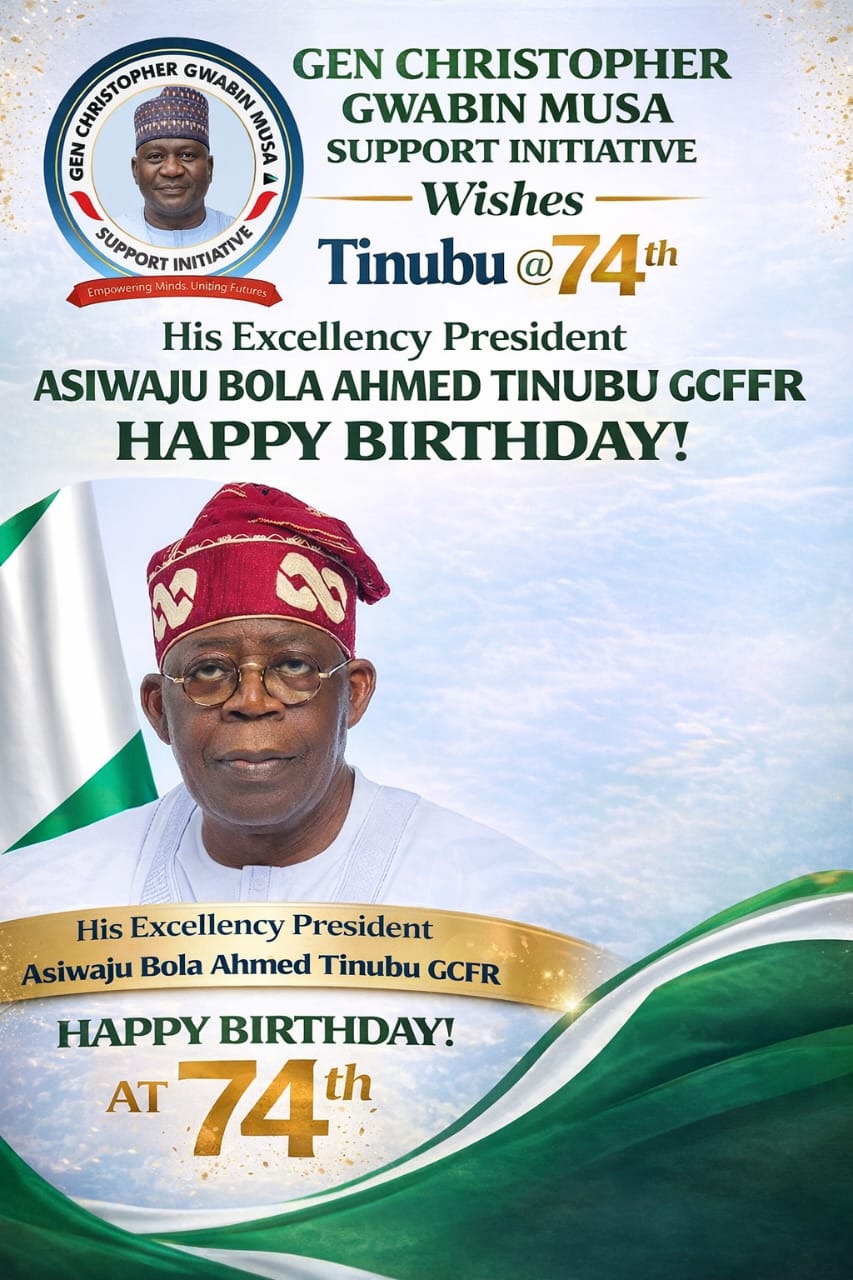
GEN CHRISTOPHER GWABIN MUSA SUPPORT INITIATIVE EXTENDS WARM BIRTHDAY FELICITATIONS TO PRESIDENT TINUBU ON 74TH BIRTHDAY
The Gen Christopher Gwabin Musa Support Initiative has extended heartfelt congratulations to His Excellency President Asiwaju Bola Ahmed Tinubu, GCFR, on the occasion of his 74th birthday.
In a statement released to the press, the Initiative conveyed warm wishes for the President’s personal well-being and for his continued leadership of the nation. The statement, signed by the Convener, Ibrahim Dahiru Danfulani, Sadaukin Garkuwan Keffi/Betara Biu, expressed hope that the coming year would bring the President “renewed strength and more wisdom in guiding the nation.”
The statement further noted that the Grand Patron of the Initiative, His Excellency Gen Christopher Gwabin Musa, OFR, Minister of Defence of the Federal Republic of Nigeria, joined in celebrating the milestone. It added, “Wishing Your Excellency continued good health, vitality, and determination as you lead the country towards greater unity and progress.”
The message underscores support for President Tinubu’s administration and its national objectives, marking the birthday as an occasion to reaffirm commitment to the nation’s unity and advancement under his stewardship.
society
Dominion City to Host Global Camp Meeting, “2 Nights of Glory” 2026 in Lagos, Enugu …Calls for Moral Renewal
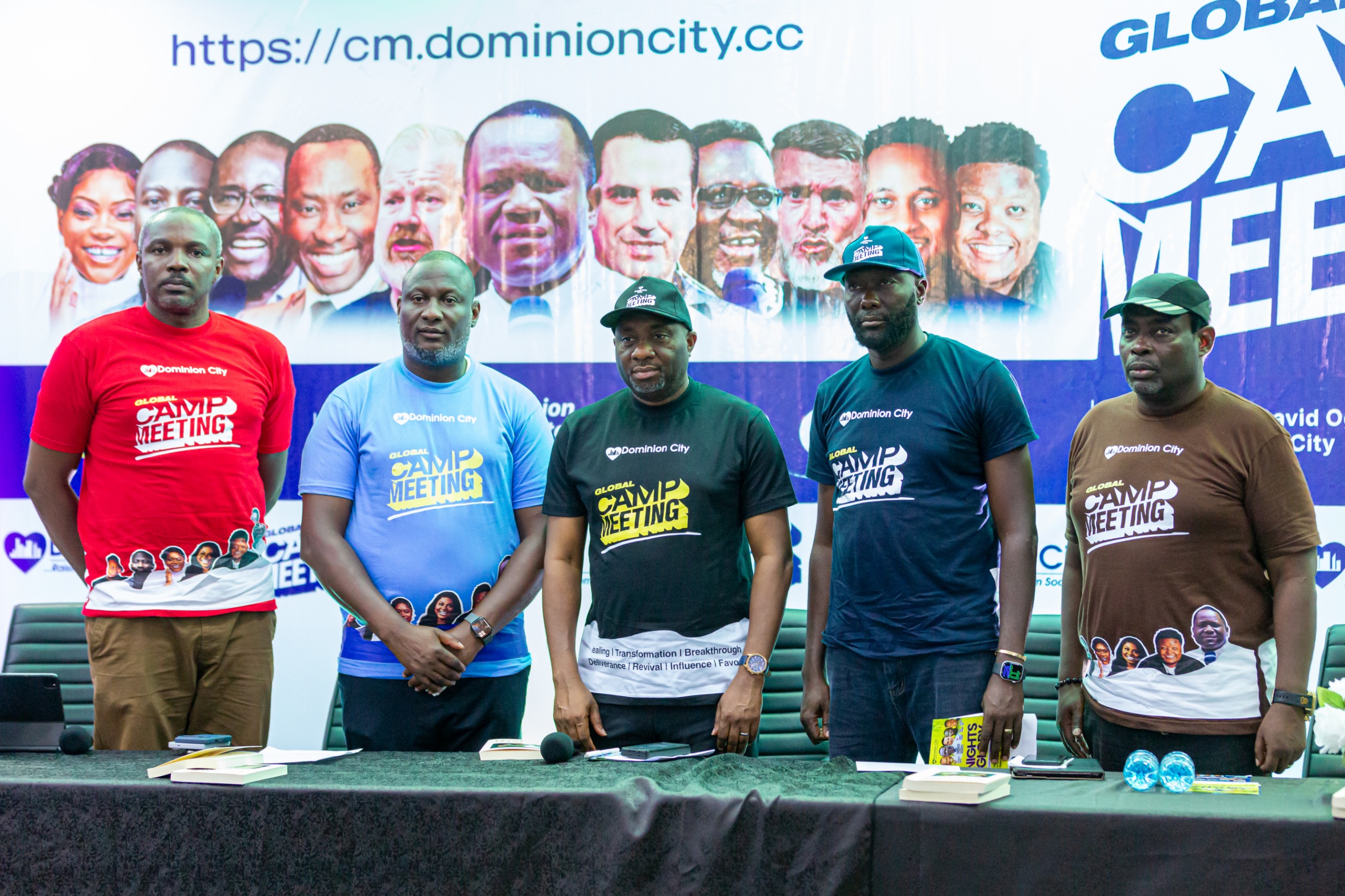
*Dominion City to Host Global Camp Meeting, “2 Nights of Glory” 2026 in Lagos, Enugu
…Calls for Moral Renewal
Lagos – Dominion City has announced plans to host its annual Global Camp Meeting alongside a special “2 Nights of Glory” gathering in April 2026, with events scheduled to be held simultaneously in Lagos and Enugu.
The week-long programme is expected to draw tens of thousands of participants onsite and millions of virtual attendees from across the globe.
The Global Camp Meeting will run from Wednesday, April 1 to Monday, April 6, featuring daily sessions at 8:00 a.m. and 5:00 p.m. The “2 Nights of Glory” is slated for Friday, April 3 and Saturday, April 4 at the Golden Heart Place, Km 22 Lekki-Epe Expressway, beside Lagos Business School, Ajah, Lagos.
Organised by Dominion City, a global church focused on raising transformational leaders, the conference will centre on revival, spiritual renewal, and practical teachings. This year’s theme, “Redigging the Wells of Our Fathers,” underscores a call to return to foundational values and principles.
Speaking ahead of the event, Nobbert Onaga, President, Golden Heart Foundation and Senior Pastor, DC Lagos & Europe, emphasised the need for moral reawakening as a pathway to national transformation. He described the Church as “the pillar and foundation of truth,” noting that the conference aims to confront moral decline and restore core values within society.
“We are going back to foundational truths that established the Church. These truths will help repair societal damage and reposition the Church as a source of hope and light,” Onaga said.
Also speaking, Shola Olapade, Senior Pastor of Dominion City Headquarters, highlighted the Church’s role in addressing ethical and cultural challenges, particularly among young people. He added that the programme would go beyond spiritual teachings to include sessions on artificial intelligence, innovation, business, media, arts, and career development.
“We are equipping people not just spiritually, but with relevant 21st-century skills to thrive in today’s world,” Olapade noted.
The conference will feature teachings and ministrations from a lineup of international ministers, including Dr. David Ogbueli, Dr. Charles Ndifon, Andres Bisonni, Pastor Randy Mitchell, Apostle Ikechukwu Peter Nnajiofor, Dr. Ferdinand Nweke, Apostle Ben Hanyani Ndobe, Evangelist Dan Scott, and Dr. Chiefo Ejiofobiri.
Music ministrations will also be led by notable gospel artists such as Grace Idowu, Rhema Onuoha, Once More Six, David Nkennor, Anthony Kani, and GUC.
Organisers disclosed that over 30,000 participants are expected to attend in person, with free transportation provided from designated locations across Lagos to ease access. In addition, free medical services will be offered daily, building on previous outreaches that benefited over 1,700 people.
To ensure safety and order, more than 200 traffic marshals will be deployed in collaboration with relevant authorities.
Beyond its spiritual impact, organisers project that the event will stimulate local economic activity across hospitality, transportation, and retail sectors.
The Global Camp Meeting remains a key platform for spiritual impartation, leadership development, and societal transformation, aligning with Dominion City’s mission to equip believers to influence their communities positively.
Participation is open to the public, with registration available online for both physical and virtual attendance. //END.//
*PHOTO CAPTIONS:*
L-R: Dr. Godwin Efobi, Head, Medical Team, Dominion City Headquarters (DCHQ); Pastor Shola Olapade, Senior Pastor, DCHQ; Pastor Nobbert Onaga, President, Golden Heart Foundation and Senior Pastor, DC Lagos & Europe; Pastor Chuks Anochie, Head of Security and Traffic Control, Dominion City Headquarters (DCHQ), Camp Meeting 2026; Pastor Josh Tim Vaduchi, Head of Event & Programmes, DCHQ, during the press briefing of the forthcoming Global Camp Meeting, held the weekend of 2026 at the Dominion City Headquarters (DCHQ), Lagos.
L-R: Pastor Chuks Anochie, Head of Security and Traffic Control, Dominion City Headquarters (DCHQ), Camp Meeting 2026; Pastor Shola Olapade, Senior Pastor, DCHQ; Pastor Nobbert Onaga, President, Golden Heart Foundation and Senior Pastor, DC Lagos & Europe; Dr. Godwin Efobi, Head, Medical Team, DCHQ; and Pastor Josh Tim Vaduchi, Head of Event & Programmes, during the press briefing of the forthcoming Global Camp Meeting, held over the weekend in 2026 at the Dominion City Headquarters (DCHQ), Lagos.
society
Oloworo of Oworosoki Kingdom, Oba Babatunde Saliu, Felicitates President Bola Ahmed Tinubu at 74

Oloworo of Oworosoki Kingdom, Oba Babatunde Saliu, Felicitates President Bola Ahmed Tinubu at 74
By Adeyemi Obadimu
The Oloworo of Oworosoki Kingdom, His Royal Majesty, Oba Babatunde Saliu, Elebo II, has extended warm felicitations to the President of the Federal Republic of Nigeria, Bola Ahmed Tinubu, GCFR, on the occasion of his 74th birthday.
In a goodwill message issued from his palace, the revered monarch described President Tinubu as a visionary statesman, a courageous reformer, and an indefatigable democrat whose lifelong commitment to nation-building continues to shape Nigeria’s progress.
Oba Babatunde Saliu praised the President’s unwavering dedication to public service, noting that his leadership has ushered in a new phase of economic reform, infrastructural renewal, and institutional strengthening across the country.
According to the monarch, the President’s Renewed Hope Agenda has begun yielding tangible relief and renewed confidence among citizens, reflecting his determination to reposition Nigeria for sustainable growth and prosperity.
“President Bola Ahmed Tinubu has demonstrated exceptional resilience, strategic foresight, and a deep love for Nigeria. His administration’s bold initiatives are laying the foundation for long-term national transformation. At 74, he remains steadfast in his resolve to build a stronger, more united, and economically vibrant nation,” the monarch stated.
Oba Babatunde further commended the President’s legacy of leadership, describing him as a bridge-builder, a mentor to many leaders, and a symbol of democratic stability. He acknowledged the President’s decades of sacrifice and contribution to the advancement of democracy in Nigeria.
On behalf of the Oworosoki Kingdom, the royal father prayed for divine wisdom, sound health, and renewed strength for the President to successfully complete the noble reforms and developmental strides he has embarked upon for the benefit of all Nigerians.
“As Your Excellency marks 74 remarkable years, we pray that Almighty God grants you long life, continued wisdom, and the fortitude to steer our great nation toward greater heights. May your days be filled with strength and grace as you continue to serve Nigeria with distinction,” Oba Babatunde Saliu added.
President Bola Ahmed Tinubu clocks 74 as a leader whose enduring influence, bold reforms, and steadfast patriotism remain central to Nigeria’s ongoing journey of national renewal.


-

 society6 months ago
Religion: Africa’s Oldest Weapon of Enslavement and the Forgotten Truth
-

 news4 months ago
WHO REALLY OWNS MONIEPOINT? The $290 Million Deal That Sold Nigeria’s Top Fintech to Foreign Interests
-

 society6 months ago
“You Are Never Without Help” – Pastor Gebhardt Berndt Inspires Hope Through Empower Church (Video)
-

 celebrity radar - gossips2 months ago
Dr. Chris Okafor Returns with Power and Fire of the Spirit -Mounts Grace Nation Altar with Fresh Anointing and Restoration Grace on February 1, 2026