
Politics
RIVERS STATE IN THE EYE OF THE STORM: POLITICS, IMPEACHMENT & NATIONAL IMPLICATIONS

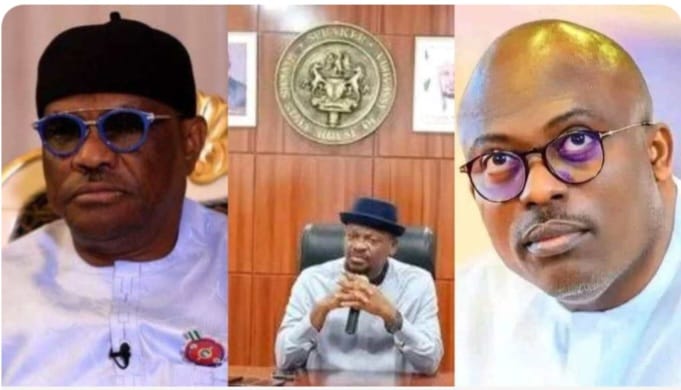
RIVERS STATE IN THE EYE OF THE STORM: POLITICS, IMPEACHMENT & NATIONAL IMPLICATIONS.
By George Omagbemi Sylvester | Published by SaharaWeeklyNG.com
“From Paris to Port Harcourt. A Constitutional Clash, Power Play and the Future of Nigerian Democratic Governance.”
In what can only be described as one of the most explosive and consequential political sagas in Nigeria’s recent history, Rivers State has once again plunged into a constitutional and political crisis that transcends mere state politics in which reverberating across the Nigerian federation and challenging the very essence of democratic governance. At the heart of this unfolding drama is Governor Siminalayi Fubara, his relationship with political heavyweights and the ongoing impeachment proceedings launched against him and his deputy, Professor Ngozi Odu.

This crisis is not a sudden spark but a culmination of prolonged political rivalry, deep factional divisions and contestations over constitutional authority. This write-up does not seek to merely narrate events; it is to contextualise, dissect and scrutinise the interplay of constitutional law, political strategy and democratic principles shaping the crisis in Rivers State whereby leaving no stone unturned in understanding its implications.
A Governor Under Siege: The Genesis of the Crisis.
Siminalayi Fubara (a seasoned accountant turned politician) officially assumed office as the Governor of Rivers State in May 2023 following a decisive electoral victory in what was then a Peoples Democratic Party (PDP) stronghold. However, this ascent was not without internal turmoil. His relationship with his political godfather and predecessor, Minister of the Federal Capital Territory (FCT), Nyesom Wike, deteriorated rapidly, setting the stage for prolonged political strife.
Political observers often quote Alexis de Tocqueville: “A democracy cannot exist without a certain measure of mutual toleration and respect for the rule of law” but yet, in Rivers State, what is unfolding can only be described as a breakdown of mutual political respect, with factional interests dominating constitutional norms.
The House of Assembly (predominantly aligned with Wike’s political camp) has, for the third time, initiated impeachment proceedings against Fubara and his deputy. The motion cites allegations of gross misconduct, including refusal to present the budget, extra-budgetary spending, obstruction of legislative oversight, demolition of the Assembly complex and alleged disregard for judicial directives pertaining to the financial autonomy of the legislature.
Speaker Martins Amaewhule declared that the legislature would pursue due process to its conclusion, even vowing to resign rather than abdicate what he described as constitutional responsibility. Critics, however, argue that this rhetoric masks political theatre rather than due process.

Impeachment vs. Political Sabotage: The APC’s Rejection.
The Rivers State chapter of the All Progressives Congress (APC); the ruling party at the national level has forcefully rejected the impeachment move, describing it as “DESTABILIZING, UNNECESSARY and POLITICALLY MOTIVATED.” In an official statement, the party’s spokesperson, Darlington Nwauju, held that while the legislature enjoys constitutional independence, resorting to impeachment against its own governor and deputy “AMOUNTS TO DESTABILIZATION ” and risks undermining governance in an APC-led administration.
The APC emphasized fiscal and constitutional safeguards: the ₦1.485 trillion budget approved during emergency rule in 2025 remains valid until August 2026, and the Nigerian Constitution permits governors to continue spending for six months into a new fiscal year without presenting a supplementary budget therefore nullifying claims that Fubara failed in fiscal duties.
The APC’s stance is not merely partisan defence; it reflects constitutional reasoning. Impeachment under Section 188 of the 1999 Constitution (which defines the grounds and process) must be anchored in clear and demonstrable gross misconduct, grave violations of the law, or misappropriation of public funds. Citing budget timing and procedural disagreements alone does not constitute such breaches.
Renowned constitutional scholar, Professor Itse Sagay, once asserted: “The impeachment power is created by our Constitution as a last resort and not as a weapon of political vendetta.” Without airtight evidentiary grounding, impeachment becomes a tool for factional politics rather than constitutional accountability.
Fubara’s Strategic Diplomacy: The Paris Intervention.
In a remarkable turn of events, Governor Fubara reportedly traveled to Paris, France, to meet President Bola Ahmed Tinubu ahead of the impeachment session, seeking presidential intervention amid mounting pressure from lawmakers aligned with Wike.
This strategic move underscores the governor’s recognition that the crisis extends beyond state legislature corridors, reaching the national political summit. No democracy can survive if its constitutional actors operate in isolation from constitutional anchors at the federal level. Fubara’s decision to brief the president highlights an attempt to balance regional dynamics with national political order.

Tinubu, arguably Nigeria’s most influential political actor, brokered a ceasefire in 2025 when he declared a six-month state of emergency in Rivers State after earlier impeachment attempts destabilised governance. This intervention elevated the conflict from local politics to federal constitutional negotiations.
Civil Society and Legal Advocacy: Critique of the Impeachment Move.
The impeachment threat in Rivers State has drawn widespread condemnation from civil society groups and legal watchdogs. The Human Rights Writers Association of Nigeria (HURIWA) described the impeachment plot as “reckless, unconstitutional, and a grave danger to democratic stability.” HURIWA accused lawmakers of acting at the behest of political interests rather than genuine constitutional oversight, urging President Tinubu to rein in the situation and uphold democratic norms.
The APC Progressive Mandate Group also criticised the proceedings as “constitutionally flawed and politically motivated,” framing it as an affront to the peace accord personally brokered by Tinubu.
These criticisms align with principles articulated by constitutional scholars: impeachment must remain a last-resort accountability mechanism, not a substitute for political dissatisfaction or factional rivalry.
Wider Political Implications: National Stability & Federalism.
The Rivers State crisis is not an isolated event; it strikes at the heart of Nigerian federalism and democratic sustainability. If a governor can be impeached (or threatened with impeachment) predominantly on political alignments rather than incontrovertible legal evidence, then the doctrine of separation of powers is imperiled.
Political scientist Leo Strauss once warned: “When law becomes subject to politics, democracy is no longer a government of law but of persons.” This insight resonates deeply in the current crisis. The Legislature’s actions risk converting constitutional mechanisms into political instruments, weakening democratic checks and balances.
Moreover, the expanded involvement of national party actors and speculation about the roles of influential figures like Tinubu and Wike, suggest that Rivers State’s political storm has strategic implications for national political alignments and the 2027 elections.
The Road Ahead: Constitutional Order, Political Integrity and the Future of Rivers.
The impeachment crisis in Rivers State represents multiple layers of conflict and constitutional interpretation versus political strategy, executive oversight versus legislative assertiveness, and local factionalism versus national political calculus.
At stake is not merely the political survival of Governor Fubara but the integrity of Nigeria’s democratic institutions. As respected democracy scholar Larry Diamond asserts: “Democracy is more than elections; it is about predictable, transparent governance under the rule of law.”
For Rivers State, the crisis is a stern test of constitutional resilience, political maturity and democratic fortitude. If constitutional processes are subverted for factional ends, the state (and indeed the nation) risks eroding public trust in democratic governance.
As events continue to unfold, Nigerians must watch closely: not just for who wins the political battle in Rivers State, but for whether constitutional order, judicial independence and the rule of law prevail in the face of political turbulence.

Published by SaharaWeeklyNG.com




Politics
APC Group Endorses Fubara for 2027, Calls on Tinubu and APC to Prioritise Performance Over Politics in Backing Governor’s Second Term Ambition
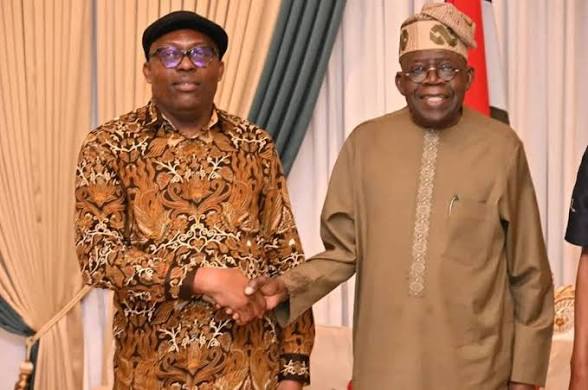
*APC Group Endorses Fubara for 2027, Calls on Tinubu and APC to Prioritise Performance Over Politics in Backing Governor’s Second Term Ambition*
The APC National Vanguard has appealed to President Bola Ahmed Tinubu and the leadership of the All Progressives Congress (APC) to support a second term in office for Siminalayi Fubara, citing what it described as “impressive and verifiable developmental strides” across Rivers State.
In a statement issued on Thursday by its National President, Dr Gbenga Salam (JP), the group said its position followed an extensive assessment tour of key infrastructure and public service projects executed under the Fubara administration.
The APC National Vanguard said the appeal was based strictly on performance, arguing that governance outcomes should outweigh partisan considerations, particularly in a state as economically significant as Rivers.
“We respectfully urge President Bola Ahmed Tinubu and the leadership of the All Progressives Congress to support the continuity of Governor Siminalayi Fubara beyond his current tenure, in recognition of his commitment to development, prudent resource management, and people-focused governance,” the statement read.
According to the group, its delegation visited multiple project sites across the state, observing ongoing and completed works spanning road construction, urban renewal, and public infrastructure upgrades.
It noted that the scale and distribution of these projects reflect a deliberate effort by the state government to extend development beyond traditional urban centres and into underserved communities.
“Our findings from the tour reveal a government that is not only active but intentional in its development agenda. The execution of capital projects across various parts of Rivers State demonstrates a clear understanding of the needs of the people and a commitment to addressing them,” Dr Salam said.
The group particularly commended what it described as prudent financial management by the administration, noting that the projects reviewed showed evidence of careful planning and efficient allocation of resources.
“At a time when economic pressures are evident across the country, it is commendable that the Rivers State government has managed its resources in a way that delivers visible and impactful development without signs of fiscal recklessness,” the statement added.
The APC National Vanguard further observed that despite political tensions in the state, the Fubara administration has maintained focus on governance, ensuring continuity in project execution and service delivery.
The group argued that such stability is critical for sustained development and should be encouraged rather than disrupted.
“Leadership must ultimately be judged by results. In Rivers State, there is clear evidence of progress—projects that are not only announced but executed, and policies that translate into real benefits for citizens,” Dr Salam noted.
The group warned that discontinuity in leadership could stall ongoing projects and reverse gains already recorded, stressing the importance of allowing a performing administration to consolidate its achievements.
“Rivers State is at a pivotal stage where continuity will allow for the completion of ongoing initiatives and the deepening of development gains. Supporting Governor Fubara for a second term is, therefore, a decision in the best interest of the people,” the statement said.
In addition to its call on the APC leadership, the group reaffirmed its support for President Tinubu, expressing confidence in his administration’s broader economic and governance reforms.
The APC group urged Nigerians to remain supportive of efforts aimed at stabilising the economy and strengthening public institutions.
“We reiterate our endorsement of President Bola Ahmed Tinubu for a second term in office, in recognition of his leadership and commitment to national development. With sustained support, the administration can consolidate its reform agenda for the benefit of all Nigerians,” Dr Salam added.
The APC National Vanguard concluded by calling on political actors to prioritise development and public interest over partisan divides, insisting that governance should always be guided by performance and accountability.
“Where leadership demonstrates prudence, delivers development, and remains focused on the welfare of the people, it deserves continuity. This is the position we have reached after a careful and independent assessment of Rivers State,” the statement added.
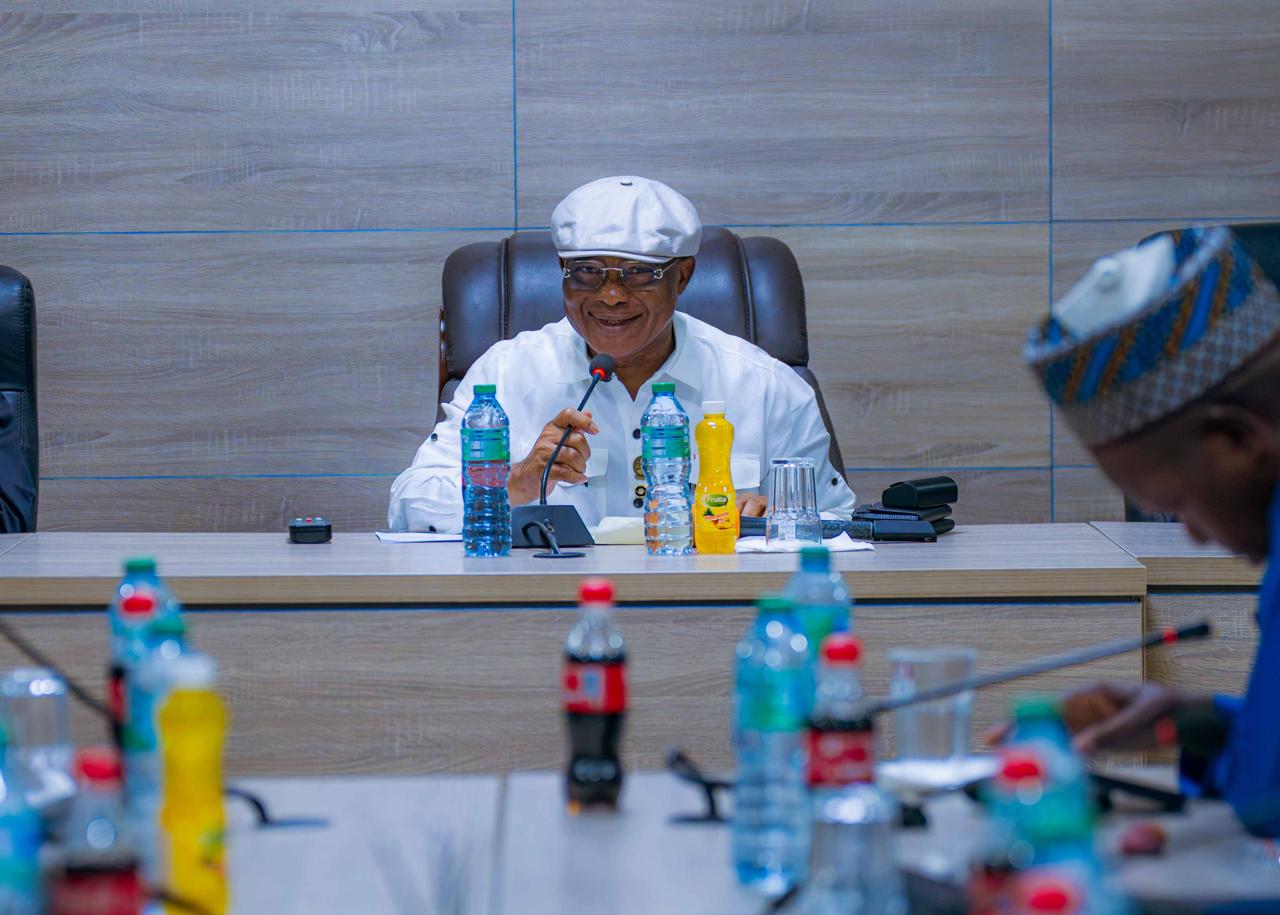
*Renewed Hope Ambassadors Step Into the Next Phase
Fresh from the successful APC 2026 National Convention, the Renewed Hope Ambassadors National, Zonal, and State leadership gathered in Abuja over the weekend, for its fourth strategic meeting, setting the tone for nationwide grassroots activation ahead of 2027.
Chaired by Governor Hope Uzodinma (Imo State) the Director General and National Coordinator of the Renewed Hope Ambassadors, alongside Deputy Director-General, Governor Uba Sani of Kaduna State, and Governor Inuwa Yahaya of Gombe State as Secretary, the session reinforced one clear direction: One Party. One Message. One Mobilization whilst also laying out a strategic roadmap for the activation of the network across all communities in Nigeria.
Backed by the strength of 31 APC-led states, the Renewed Hope Agenda is taking Bola Ahmed Tinubu’s message of progress and reform to every corner of Nigeria.
From bold economic restructuring to initiatives like NELFUND, the increase in the national minimum wage from ₦30,000 to ₦70,000, and strategic investments in critical sectors, including PNiCGI, the mission remains clear: helping Nigerians understand both the purpose and the progress of the Renewed Hope vision.
This is coordination at scale. This is grassroots engagement with purpose. This is the next phase of Renewed Hope with One Party, One Message, and One Mobilisation framework
#RenewedHopeAmbassadors #APC #WeAreAPC


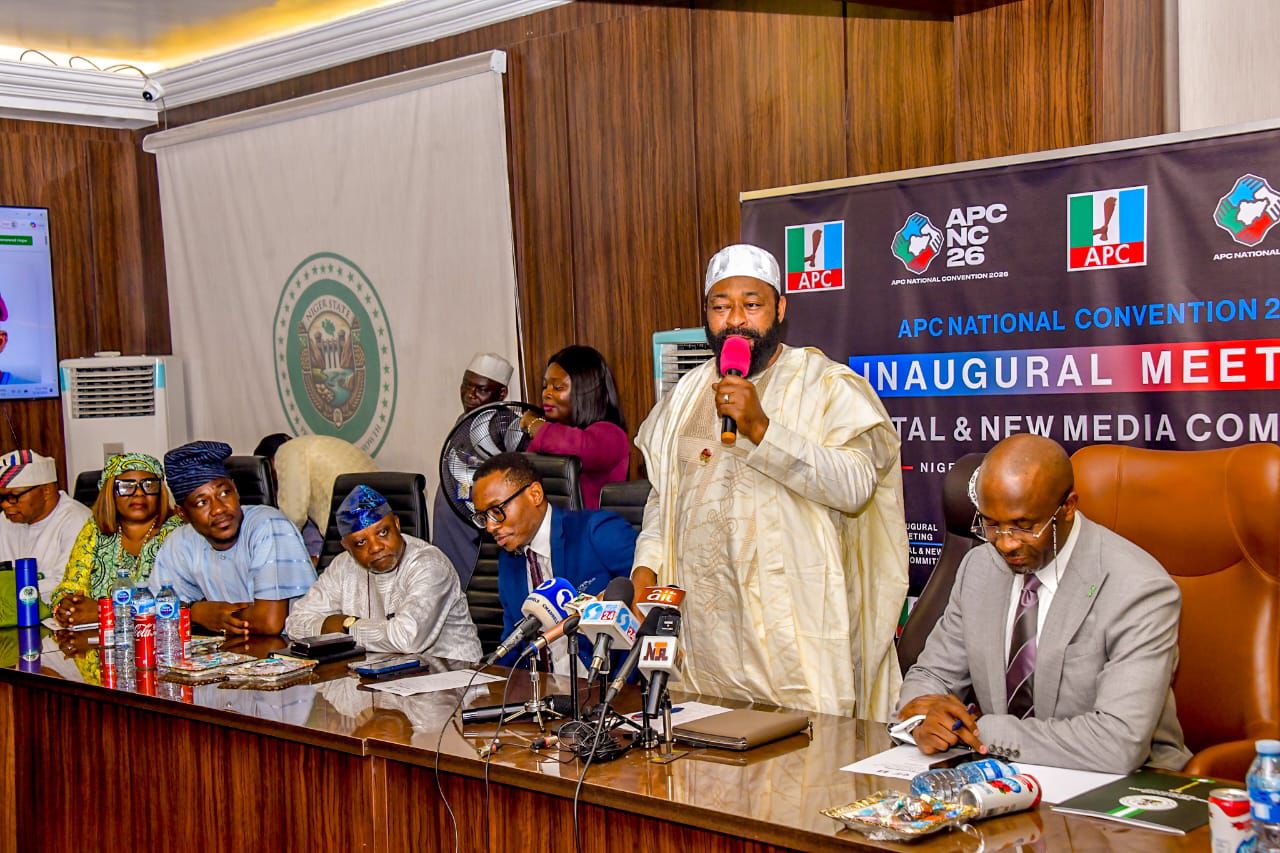
Governor Bago Inaugurates APC Digital Media Sub-Committee Ahead of National Convention.
Governor Umaru Bago has inaugurated the Digital Media Sub-Committee for the forthcoming National Convention of the All Progressives Congress (APC), scheduled to hold on March 27 and 28, 2026 in Abuja.
Chairing the sub-committee, Governor Bago tasked members with the responsibility of effectively communicating the party’s manifesto to the public.
He emphasized the need to leverage social media platforms to highlight the achievements and ongoing efforts of President Bola Ahmed Tinubu, noting that communication gaps have posed challenges that must now be decisively addressed.
The Co-Chair of the sub-committee, Hon. Benjamin Kalu, Deputy Speaker of the House of Representatives, echoed the Governor’s position, urging members to project the activities of both the party and the government to a broader audience.
He called for a deliberate and coordinated effort to showcase the party’s achievements and policy direction, stressing the importance of shaping a compelling and consistent narrative across all digital platforms.
Delivering a presentation to the committee, Otega Ogra, SSA to the President on New Media, who serves as Secretary of the sub-committee, outlined strategic focus areas to guide the team’s operations.
His presentation highlighted communication priorities and actionable steps to achieve the committee’s mandate and strengthen the party’s digital engagement.


-

 society6 months ago
Religion: Africa’s Oldest Weapon of Enslavement and the Forgotten Truth
-

 news4 months ago
WHO REALLY OWNS MONIEPOINT? The $290 Million Deal That Sold Nigeria’s Top Fintech to Foreign Interests
-

 society6 months ago
“You Are Never Without Help” – Pastor Gebhardt Berndt Inspires Hope Through Empower Church (Video)
-

 celebrity radar - gossips2 months ago
Dr. Chris Okafor Returns with Power and Fire of the Spirit -Mounts Grace Nation Altar with Fresh Anointing and Restoration Grace on February 1, 2026