
celebrity radar - gossips
Royal Rivalry Reloaded? Alaafin~Ooni “WAR” Tests History, LAW and Yoruba UNITY

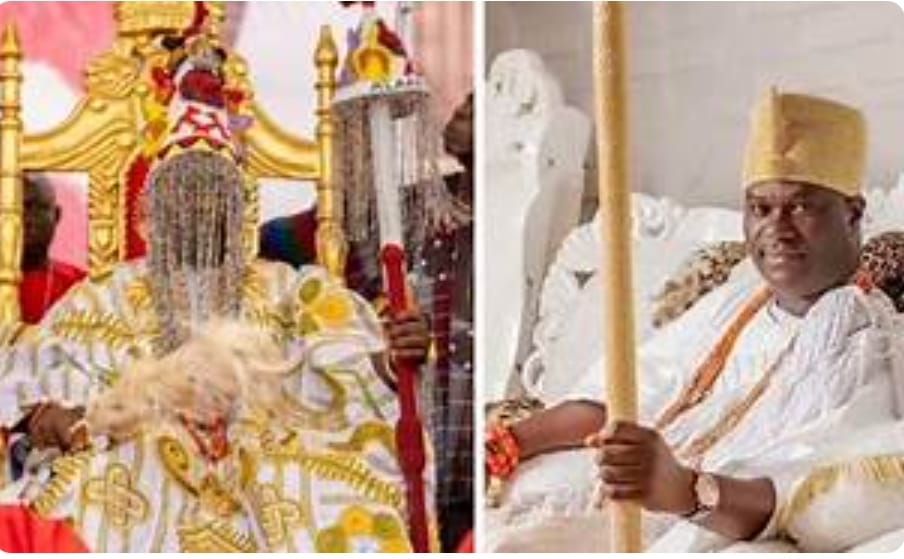
Royal Rivalry Reloaded? Alaafin~Ooni “WAR” Tests History, LAW and Yoruba UNITY.
By George Omagbemi Sylvester | SaharaWeeklyNG.com
There is a rumble in Yorubaland again. Headlines scream of a “ROYAL WAR” between two of the most storied thrones in West Africa (the Alaafin of Oyo and the Ooni of Ife) after the Ooni of Ife reportedly conferred the Yoruba-wide chieftaincy title Okanlomo of Yorubaland on an Ibadan industrialist, Chief Dotun Sanusi. In response, the newly crowned Alaafin of Oyo, Oba Abimbola Akeem Owoade I, issued a 48-hour ultimatum demanding the title be revoked, arguing that only the Alaafin can grant distinctions that purport to cover all Yorubaland.

Before we turn emotion into enmity, let’s interrogate facts, history and law.
What actually happened?
Between 18–21 August 2025, multiple reputable outlets reported a sharp exchange. The Alaafin, through his media office, asserted that the Ooni had overstepped his authority and cited a Supreme Court position (which he vowed to publish) as backing for the claim that Yoruba-wide titles fall under the Alaafin’s exclusive remit. The Ooni’s camp has publicly downplayed talk of a supremacy battle, while civic and cultural voices urged calm.
This is not happening in a vacuum. The Alaafin’s stool has only recently stabilized: Oba Owoade received his staff of office in January 2025 and was crowned on April 5, 2025, after a rancorous succession interregnum. The Ooni, Oba Adeyeye Enitan Ogunwusi, Ojaja II, has been on the throne since 2015 and is globally visible as a cultural symbol.
The long shadow of history.
The Ooni of Ife and the Alaafin of Oyo embody two different but intertwined strands of Yoruba civilization:
Ile-Ife is the spiritual cradle; the site of origin in Yoruba cosmogony and the fountain of sacral authority. Historians from Samuel Johnson to modern scholars consistently frame Ife as the primordial center of Yoruba identity. (Johnson’s classic History of the Yorubas remains foundational.)
Oyo, particularly from the 16th to 19th centuries, was the political-military juggernaut of the western Sudan, a cavalry empire studied by historians such as Robin Law. The Alaafin became synonymous with statecraft, external relations and the adjudication of inter-polity protocols.

Those parallel lineages bred periodic rivalry over status and scope, compounded by colonial-era re-engineering of “TRADITIONAL COUNCILS” and post-1991 state creation (when Osun State was carved from Oyo, relocating Ife to a different administrative orbit). The effect: jurisdictional fog where customary breadth meets modern legal borders—exactly the fault line today’s dispute treads.
Unity is not a myth; there was a reset.
It would be historically dishonest to paint the relationship as perpetual warfare. In January 2016, just weeks after his coronation, Ooni Ogunwusi paid a historic visit to the late Alaafin Lamidi Adeyemi III in Oyo (the first by an Ooni since 1937) in what was widely celebrated as the breaking of a “79-year jinx.” The Ooni declared then: “My mission here is to preach peace among nations of Yoruba both home and abroad.” The Alaafin publicly reciprocated, calling for unity. The symbolism was not cheap theatre; it energized a season of rapprochement.

That 2016 reset is a vital baseline: Yoruba unity is possible when egos bow to heritage.
The law: who can bestow “Yorubaland” titles?
The Alaafin’s media office now cites a Supreme Court pronouncement allegedly limiting Yoruba-wide titles to the Oyo monarchy and confining the Ooni’s writ to his local jurisdictions in Osun State. As of press time, independent legal texts and the specific judgment have not been exhibited publicly, though the Alaafin has hinted at publishing the ruling. Conversely, some commentary questions any absolute reading that one throne “EXCLUSIVELY” controls pan-Yoruba dignities. In short: claims exist on both sides; the documentary proof is awaited. Facts (not folklore) must decide.

Two things can be true at once:
Customary memory often accords the Alaafin a coordinating role in Yoruba-wide protocols; and
The Ooni’s primacy as Arole Oduduwa (heir and standard-bearer of the progenitor) carries trans-local spiritual cachet that many communities recognize.
Only a clear, cited court judgment or a negotiated inter-throne compact can settle the overlap where sacred preeminence meets political hegemony.
Why this “royal war” framing is dangerous.
The language of “WAR” is gasoline on dry grass. Yorubaland faces REAL-WORLD CHALLENGES, SECURITY DEFICITS, YOUTH UNEMPLOYMENT, CULTURAL EROSION. Turning a title dispute into a civilizational crack-up is elite negligence. As Aare Gani Adams (Aare Ona Kakanfo of Yorubaland) cautioned amid this flare-up, the region “can’t afford to be divided.” Leadership requires de-escalation, not victory laps.
From a governance perspective, supremacy theatre distracts from institution-building: codifying jurisdiction, harmonizing chieftaincy protocols and safeguarding cultural diplomacy that brings investment, tourism and respect. From a historical perspective, it trivializes centuries of statecraft and spirituality by reducing them to soundbites.
The path out: six concrete steps.
Publish the Judgment: If there is a determinative Supreme Court ruling, release it; full text, citation, ratio decidendi. Let lawyers and historians test it in daylight. Ambiguity breeds rumor.
Set Up a Royal Protocols Commission: A joint Alaafin–Ooni panel with eminent historians (e.g., Yoruba studies scholars), jurists and culture custodians; should draft a Memorandum on Pan-Yoruba Titles: definitions, limits, consultative triggers and recognition guidelines.
Adopt Mutual Notification: Any proposed. Yorubaland-wide title by either palace should trigger a formal prior-notice and no-objection window for the other.
Historicize, Don’t Weaponize: Commission a scholarly white paper (drawing on Johnson’s History of the Yorubas and modern research on Oyo/Ifẹ̀) to map ancient precedence to contemporary practice, so that tradition informs law, not vice versa.
Speak Once, Calmly: Designate one spokesperson per palace. Mixed messaging feeds social-media gladiators and lowers the stature of both stools.
Stage a Public Re-Embrace: Replicate 2016; a joint public appearance, a short communique using the Ooni’s own 2016 register of “PEACE” and the late Alaafin’s “UNITY” language. Symbols matter.
Intellectual weight: what the scholars teach.
On Ife’s sacral primacy: Nineteenth-century chronicler Samuel Johnson framed Ile-Ife as the cradle of Yoruba civilization, a point echoed across modern Yoruba studies. This does not mechanically translate into administrative supremacy but explains why Ife’s voice carries across sub-ethnic lines.
On Oyo’s political centrality: Histories of the Oyo Empire emphasize its institutional sophistication (checks on royal power, provincial administration and diplomatic precedence) factors that created expectations of arbiter-like roles for the Alaafin.
Takeaway: Spiritual primacy and political centrality are not mutually exclusive; they are complementary pillars. Mature civilizations build mechanisms to let both breathe.
Fact-check corner (so no stone is left unturned)
Did the Ooni confer a Yoruba-wide title on Chief Dotun Sanusi in August 2025?
Yes—credible outlets reported the Ooni conferred Okanlomo of Yorubaland on Sanusi, prompting the Alaafin’s ultimatum.
Is there a published Supreme Court judgment giving the Alaafin exclusive rights over Yoruba-wide titles?
Not yet publicly exhibited. The Alaafin has referenced such a ruling and indicated an intention to publish it; until it is produced and scrutinized, this remains an assertion rather than a verified legal constraint.
Are the thrones historically locked in permanent enmity?
No. The 2016 reconciliation was a watershed (first Ooni visit since 1937) with explicit peace rhetoric from both sides.
Who occupies the thrones today?
Ooni: Oba Adeyeye Enitan Ogunwusi (since 2015). Alaafin: Oba Abimbola Akeem Owoade I (staff of office January 2025; crowned April 5, 2025).
Yorubaland’s greatness was never built on “WINNER-TAKES-ALL” posturing. It was built on the hard weave of sacred legitimacy and statecraft capacity; Ife and Oyo in dynamic tension, not destructive rivalry. The 2016 embrace proved that dignity does not diminish by sharing space. It expands.
Today, the adult thing (the royal thing) is simple: produce the judgment, codify shared protocols and re-enact that embrace. There is more honor in co-guarding a heritage than in “OWNING” it. Royalty is not a megaphone; it is a mirror. Let it reflect the best of the Yoruba nation.
© SaharaWeeklyNG.com. All rights reserved.




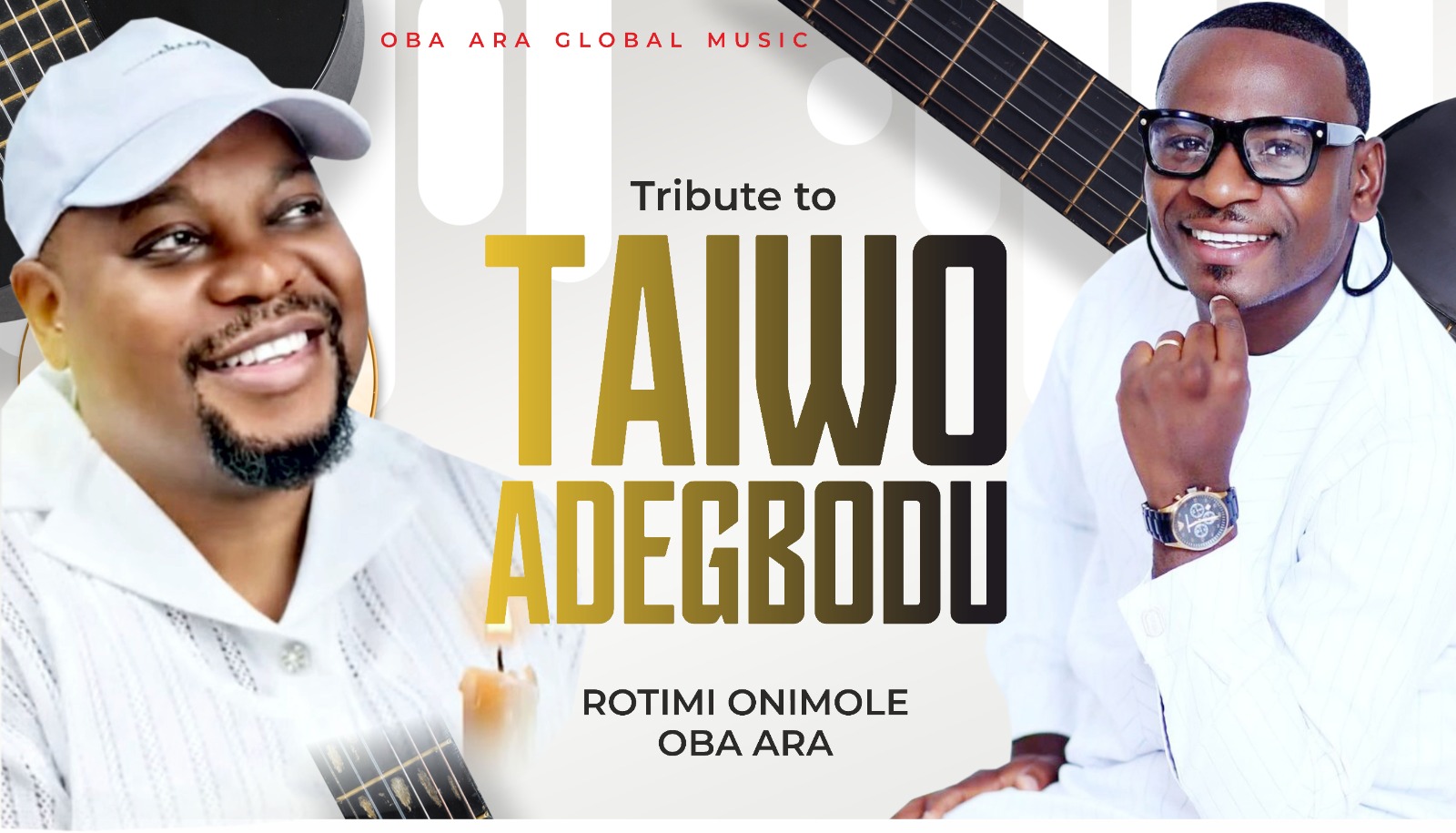
Oba Ara Releases Emotional Tribute to Late Taiwo Adegbodu
Taofik Afolabi
The gospel music community continues to grieve the painful loss of Taiwo Adegbodu, a beloved figure whose sudden departure left a deep void among fans, colleagues, and loved ones. In response to this loss, renowned gospel minister Rotimi Onimole, popularly known as Oba Ara, has released a moving tribute song that captures both the sorrow of the moment and the enduring legacy of the late singer.
Oba Ara, a proud son of Isale Eko, channels raw emotion throughout the song, using heartfelt lyrics and soul-stirring melodies to reflect on his personal connection with Taiwo Adegbodu. In the tribute, he openly expresses how deeply the news of Adegbodu’s passing shook him, describing it as a painful and unexpected loss that is difficult to come to terms with.
The song goes beyond mourning, it celebrates the life, ministry, and impact of Taiwo Adegbodu. Oba Ara highlights the late artist’s dedication to spreading the gospel through music, his inspiring voice, and the spiritual influence he had on many within and beyond Nigeria. Through powerful verses, he paints a picture of a man who lived for God and touched countless lives through his ministry.
Listeners have described the tribute as both comforting and deeply emotional, as it resonates with the collective grief of the gospel music community. It serves as a reminder that although Taiwo Adegbodu is no longer physically present, his music, message, and legacy will continue to live on.
In honoring his late colleague, Oba Ara not only pays his respects but also offers a source of healing for fans and fellow ministers, using music as a tool to process grief and celebrate a life well lived.
celebrity radar - gossips
Buratai, Fagbemi , Shagaya, Olofa, Others Eulogise Olowu Kuta’s Olori On 60th Birthday, Foundation Launch
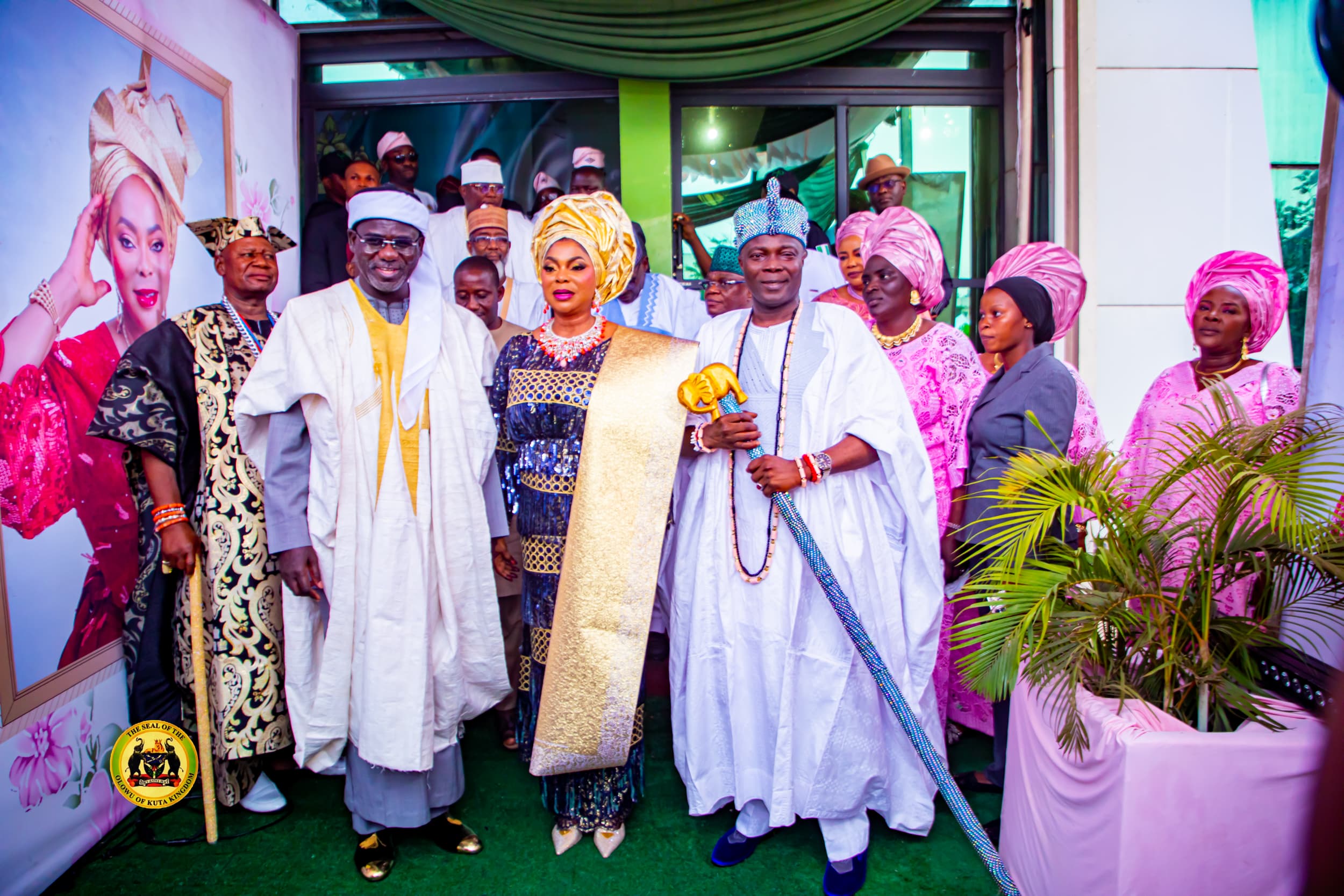
Buratai, Fagbemi , Shagaya, Olofa, Others Eulogise Olowu Kuta’s Olori On 60th Birthday, Foundation Launch
Eminent personalities across the Nigeria stormed the TFK Event Centre, Bala Mohammed Way, Guzape, Abuja, to celebrate the 60th birthday of Olowu Kuta’s Olori, Queen Jumai Amoke and her Foundation Launch on Saturday 28, March 2026.

From former Chief of Army Staff, Lt Gen TY Buratai rtd, to the Minister of Justice and Attorney-General of the Federation, Prince Lateef Fagbemi; Olofa of Offa, HRM Oba Mufutau Gbadamosi. Even top businesswoman and socialite, Chief (Mrs) Bola Shagaya, was in attendance.


Other dignitaries were newly promoted Deputy Inspector-General of Police and former AIG Zone 2 , Lagos , Adegoke Fayoade, Major General Abdumalik, Major General Samuel Adebayo rtd (Fmr CDI);
Major General Anthony Omozoje rtd (Fmr Copp);
Alhaji Tajudeen Owoyemi (Asiwaju of Offa and CEO Radisson Hotel Nigeria;
Dr Waheed Olagunju, former managing director of Bank of Industry, Oniba of Iba, Lagos State, HRM Oba Dr Suleiman Raji ;
Justice Falola, Olu of Ile-Ogbo , Oba Adetoyese amongst many traditional rulers and captains of industry too numerous to mention.
Speaking at the occasion, the Chief Host, Olowu of Kuta, HRM Oba Dr Adekunle Oyelude Makama, CON , Tegbosun iii, who is also the husband of the celebrant commended Queen Jumai for ‘ her slender arms full of kindness’ to establish such humanitarian Foundation, ‘Amoke Children and mother in Need Foundation’ at a time Nigerians are going through economic crisis occassioned by the global meltdown.
Olowu also commended her steadfastness and love for the less privileged and downtrodden.
The monarch refrenced the task before his wife’s humanitarian gesture said her best is yet to come.
” Olori Amoke Jumai, I celebrate you. You will celebrate 70, 80, 90 and continue to shine as you continue to put a smile on people’s faces. I love you, “Olowu Kuta added.
To Lt Gen Buratai, a former army chief and former Nigerian Ambassador to Benin Republic, the reward of hard work is more work.
Buratai, who also doubles as Balogun Agba of Owu Kuta, a chieftaincy title reserved for a generalismo congratulated Queen Jumai for attaining the age of 60 in good health.
The retired army General said he’s not surprised by the turn out of eminent personalities across the country to celebrate the Olowu Kuta’s Olori because she merited it through her hospitality to all, adding that Allah the most merciful, most beneficial would accept all her act of ibadah.
The minister of Justice, Prince Fagbemi, was full of praises for Queen Jumai for deeming it fit to have a place in her heart to accommodate the needy and less privileged in ‘our society.’
Prince Fagbemi urged the guests to contribute generously to support the Foundation in order to continue to alleviate poverty and put a smile on the faces of the people.
” I congratulate you on your 60th birthday and Foundation Launch. I wish you many happy returns of the day and many more fruitful services to the country and motherland”, Prince Fagbemi added.
The celebrant, Queen Jumai who was grining from ear to ear thankfully said she was excited by the turn out and the response of the people to her foundation.
Queen Jumai, however, promised to continue to use her resources and donations received for the good of the needy and less privileged in the society.
” I want to appreciate my own Kabiesi Olofa of Offa , for his presence and im I’m using him as a point of contact to all other Kabiesis present here, the minister of justice and Attorney-General, you’re welcome, sir; Mrs Bola Shagaya, I salute your enterprise, Lt Gen Buratai, I’m grateful, sir; DIG Fayoade, Justice Falola and other dignitaries too numerous to mention, I thank you, all. To my darling husband, Kabiesi Olowu , I thank you immensely for your support. And to my family and friends, I thank you , all. E se pupo!”, she said.
celebrity radar - gossips
Adron Homes Elevates Cultural Pride as Dignitaries Grace 39th Lisabi Festival in Abeokuta
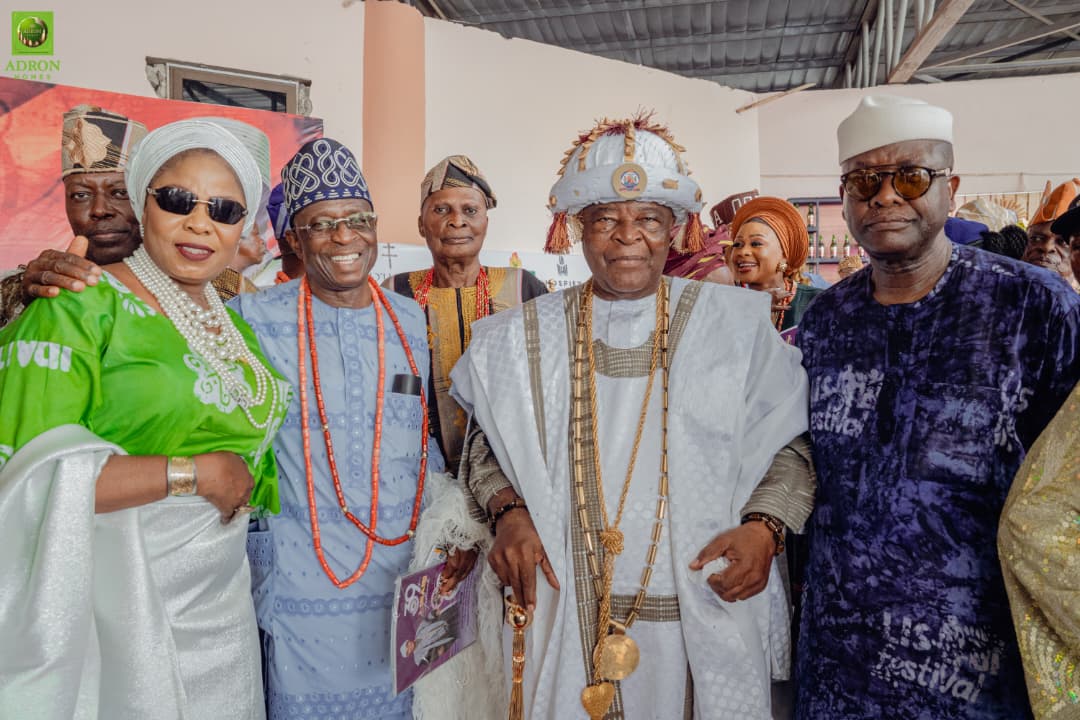
Adron Homes Elevates Cultural Pride as Dignitaries Grace 39th Lisabi Festival in Abeokuta
The ancient city of Abeokuta came alive in a grand display of culture, history, and unity as dignitaries from across Nigeria converged at the iconic Ake Palace Ground for the 39th edition of the Lisabi Festival, an annual celebration deeply rooted in the Egba people’s heritage.
The event, proudly supported by Adron Homes and Properties Limited, witnessed an impressive parade of distinguished personalities, traditional rulers, government officials, business leaders, and cultural enthusiasts, all captured in vibrant pictures that tell the story of a people united by history and pride.
From richly adorned monarchs in regal attire to elegantly dressed guests reflecting the depth of Yoruba tradition, the images from the festival encapsulate moments of honour, reverence, and celebration. Each photograph portrays not just faces, but influence, leaders, and stakeholders who continue to shape cultural preservation and community development.
At the heart of the celebration was the revered Oba Adedotun Aremu Gbadebo, whose presence underscored the festival’s significance as a symbol of Egba resilience and identity. Surrounding him were eminent dignitaries whose attendance further amplified the prestige of the event.
Adron Homes and Properties Limited stood out prominently, not only as a sponsor but as a key driver of cultural sustainability. Through its strategic support, the company reinforced its commitment to preserving indigenous heritage while fostering community engagement. The brand’s visibility across the venue and within the pictorial highlights reflects a deliberate alignment with culture, tradition, and people-centered development.
Beyond real estate, Adron Homes has continued to position itself as a cultural partner, investing in platforms that celebrate history and strengthen communal bonds. Its involvement in the Lisabi Festival is a testament to its broader vision of building not just homes, but legacies rooted in identity and pride.
The 39th Lisabi Festival, as captured through the lens of dignitaries in attendance, is more than an event, it is a narrative of continuity. And through its unwavering support, Adron Homes has once again set the pace, demonstrating that corporate institutions can play a vital role in sustaining the cultural heartbeat of a people.
As the echoes of drums fade and the colours of the festival linger in memory, one thing remains clear: the story told through these images is one of unity, heritage, and the enduring partnership between tradition and progress.


-

 society6 months ago
Religion: Africa’s Oldest Weapon of Enslavement and the Forgotten Truth
-

 news4 months ago
WHO REALLY OWNS MONIEPOINT? The $290 Million Deal That Sold Nigeria’s Top Fintech to Foreign Interests
-

 society6 months ago
“You Are Never Without Help” – Pastor Gebhardt Berndt Inspires Hope Through Empower Church (Video)
-

 celebrity radar - gossips2 months ago
Dr. Chris Okafor Returns with Power and Fire of the Spirit -Mounts Grace Nation Altar with Fresh Anointing and Restoration Grace on February 1, 2026