
news
Sack Jonathan’s last-minutes appointees, review contracts of last 18 months – Joda Committee tells Buhari


The Ahmed Joda transition committee has urged President Muhammadu Buhari to immediately terminate all dubious appointments made by former President Goodluck Jonathan in the last nine months, and review all contracts awarded by the administration in the last 18 months.
The committee said this is to help the new government sidestep ineptitude and waste, and scale up its revenue base.
The recommendations are part of a portfolio of swift steps Mr. Buhari must take within three months of assumption of power if he must save cost and “enhance liquidity”, the committee said in its 800-page report to the president.
Volumes of the report were exclusively obtained , which contain extensive analyses of Nigeria’s key challenges, with suggested responses for the economy and finance, governance and social welfare.
The report details a list of prompt, medium and long term decisions Mr. Buhari must take, or authorise, within 30, 45, 60 and 90 days of taking office, to create immediate impact, reduce government liability, increase revenue and stabilise the polity.
For instance, to deal with crippling fuel crisis, and backlog of unpaid salaries by states and the federal government, the committee advised Mr. Buhari to “borrow immediately or use CBN (Central Bank) advances” for salaries and fuel subsidies to “avoid chaos”.
For contracts, it urged the administration to “review all contracts signed in the last 18 months by FGN”.
“Non-strategic contracts that have not commenced or where no payments have been made can be cancelled,” the committee said, while also urging Mr. Buhari to negotiate exits for projects where mobilisation payments have been made but work not commenced.
That move will “save expenditure on non-strategic projects, and can free up cash flows for other vital initiatives”, the committee said.
The decision on contract is to be taken within 90 days from May 29, and should be handled by the Federal Executive Council and the Bureau of Public Procurement, BPP.
At a time Mr. Buhari is facing growing criticism over his delay in making key appointments, and his failure to lay out initiatives to assure a burdened nation of immediate relief, the Joda report provides a fresh perspective on preparations by the new government and the ruling All Progressives Congress, APC, to confront some of Nigeria’s monstrous problems.
The committee said the president should review all appointments made by Mr. Jonathan in the last nine months, and “for strategic agencies requiring professional leadership, the government should terminate all appointments not based on merit”.
The Joda panel said such move will save costs associated with poor decision making by an incompetent management team, and must be delivered within 45 days of the new government.
That recommendation appears to take into consideration the last minute appointments by Mr. Jonathan after he lost the March 28 elections.
In less than two months, Mr. Jonathan, not previously given to readily hiring and firing, sacked dozens of top officials and replaced them before leaving office.
As further measures to check waste and increase efficiency and accountability, the committee urged the government to quickly implement a single bank account, to be called Treasury Single Account, and to commence full implementation of the Fiscal Responsibility Act within 60 days, and chase up any outstanding funds from all government offices.
This will curtail the “excesses carried forward from previous administration”, it noted.
The committee also advised the government to fully implement the Integrated Personnel and Payroll Information System, IPPIS, and Integrated Government Integrated Financial Management Information System across all MDAs within 60 days.
The two facilities were used by the past government to check thousands of “ghost workers” who drew billions of naira in salaries that ended in the pocket of fraudulent officials.
Despite its claim of saving more than N100 billion from “ghost workers”, the Jonathan administration failed to punish those behind the scam.
Claims by former Finance Minister, Ngozi Okonjo-Iweala, that the case had been transferred to the Independent Corrupt Practices and other Related Offences Commission (ICPC) alongside names of indicted officials, were repeatedly refuted by the anti-graft body.
But more than other proposals in that unit of the report, the committee paid greater attention to government contracts and urged President Buhari to be decisive in reviewing the deals.
The committee said the handover notes from the Jonathan administration showed aggregate contractor liabilities of N4 trillion as at April 2015.
Of that amount, the Ministry of Education owed the most at N1.2 trillion, followed by the finance ministry which has N467.7 billion.
The committee warned Mr. Buhari that it would be irrational to rely on the purported huge balances the former government claimed it left behind.
First, it said, the numbers lacked key information to establish the authenticity of the contracts.
It made the following observation regarding the claims by the former government regarding outstanding liabilities:
– The aging of these liabilities was not provided.
– A detailed list of contracts was not provided and therefore, some balances maybe double counted (eg contracts funded through debt maybe captured in both MoF and the contracting Ministry).
– Some balances may be disputed. Therefore, liabilities may change once settlement/judgement is reached.
– No documentation was provided to confirm if the projects were executed to the agreed specifications.
– Some contracts maybe cancelled or terminated”.
As a first step, the Joda-committee advised Mr. Buhari to establish an Inter-Ministerial Task-Force to review all outstanding contracts (and associated liabilities) across all Ministries, Departments and Agencies within three months.
“The mandate of this Task-Force is to confirm the existence of the liability and authenticate the accuracy of information provided in the handover notes,” it said.
“The Government should only recognize the liabilities verified and confirmed by this Task-Force.”
premium times


At least 23 people were killed in a series of suspected suicide bombings, police in Nigeria’s northeastern city of Maiduguri said on Tuesday.

https://www.stanbicibtcbank.com/nigeriabank/personal/products-and-services/all-loans/stanbic-ibtc-mreif-home-loans
More than 100 other people were injured in the blasts that took place on Monday evening in the capital of Nigeria’s restive Borno state.
No group has claimed responsibility for the suspected attacks.
The deadly blasts come after a military post was attacked overnight Sunday to Monday, which authorities blamed on suspected Islamist militants.
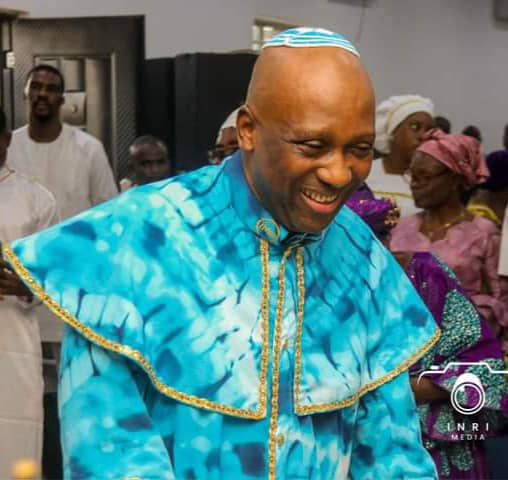
This sad incident is coming barely two weeks after Primate Elijah Ayodele, the Leader of INRI Evangelical Spiritual Church specifically warned against attacks in some states. He mentioned these states while calling on security operatives to pay close attention to them.
These were his words:
“Another attack is coming up in these following states where the military must watch carefully and intelligently; Kano, Kaduna, Zamfara, Kebbi, Niger, Borno, Kwara and Kogi state. They want to do a deadly attack, it’s preventable but it depends on how they will handle it. I have told you about the danger coming up.”
@primateayodele
Unfortunately, some of our military agencies don’t believe spiritual intelligence can save the country from so much danger hence, their neglect of this prophetic warning but now, it has been fulfilled with the miliary losing credibility by the day while Primate Ayodele continues to gain momentum.
Likewise, At least 26 passengers and crew sustained varying degrees of injuries on Monday following an accident involving the Kaduna–Abuja train, according to the Nigerian Railway Corporation (NRC).
Opeifa explained that the train departed Rigasa in Kaduna at 7:15 a.m. and was approaching Asham station around 9:16 a.m. when a loud bang was heard after the power car and trailing locomotive collided with one of the passenger coaches.
In July 2025, Primate Ayodele asked nigerians to pray not to see train mishap on the Kaduna-Abuja route.
@primateayodele #nigeriantiktok🇳🇬 #fulfillment #train #abuja #primateayodele
“Let’s pray not to see train mishap in Abuja-Kaduna, Kaduna-Abuja route.”
This has also been fulfilled.
The project ends decades search for investors, boosts Nigeria’s blue economy
By Prince Adeyemi Shonibare
Nigeria’s maritime sector is set for a major transformation following a landmark agreement involving the world’s largest container shipping company, Mediterranean Shipping Company (MSC), which has secured a 45-year concession to build, manage and operate a modern container terminal at Snake Island Port in Lagos.
The project, to be developed in partnership with Nigerdock, marks one of the most significant private sector investments in Nigeria’s port infrastructure in recent decades and is expected to strengthen the country’s role as a major maritime gateway in West and Central Africa.
For Nigeria, the agreement brings to close decades of efforts to attract large-scale investors to develop Snake Island Port, a strategically located maritime asset in Lagos.
Long-standing concession history
Snake Island’s maritime facilities date back several decades. In 1992, the Federal Government granted a 99-year concession for the island’s port and industrial facilities to Nigerdock, a major maritime engineering and logistics company.
Nigerdock was later privatised and is currently operated by the Jagal Group owned by Nigerian industrialist Maher Jarmakani.
Over the years, the Island Container Terminal fell into disrepair, requiring major rehabilitation and modernization to meet modern global shipping standards.
The new partnership with MSC is expected to transform the port into a state-of-the-art container handling facility capable of attracting larger vessels and increasing Nigeria’s cargo throughput capacity.
Buhari administration approved the project.
The investment framework for the Snake Island development was approved in May 2023 by the Federal Executive Council under then President Muhammadu Buhari.
The approval authorised total private investment of approximately $974.1 million for the project under a Public-Private Partnership structure, including the 45-year concession period.
At the same time, the Federal Government also approved two other major maritime infrastructure projects:
• Development of the Ondo Multipurpose Port in Ilaje, Ondo State, with $1.48 billion in private investment and a 50-year concession.
• Expansion and development of the Burutu Sea Port in Delta State, involving $1.2 billion in private investment and a 40-year concession.
These projects form part of Nigeria’s broader effort to develop its blue economy and expand maritime trade capacity.
Construction partners
Engineering and construction of the Snake Island container terminal will be handled by:
• ITB Nigeria Limited
• DEME Group
ITB Nigeria Limited is part of the Chagoury Group and owned by the Chagoury family, while DEME Group is a globally recognised Belgian marine engineering and dredging company with extensive experience in port construction.
MSC profile
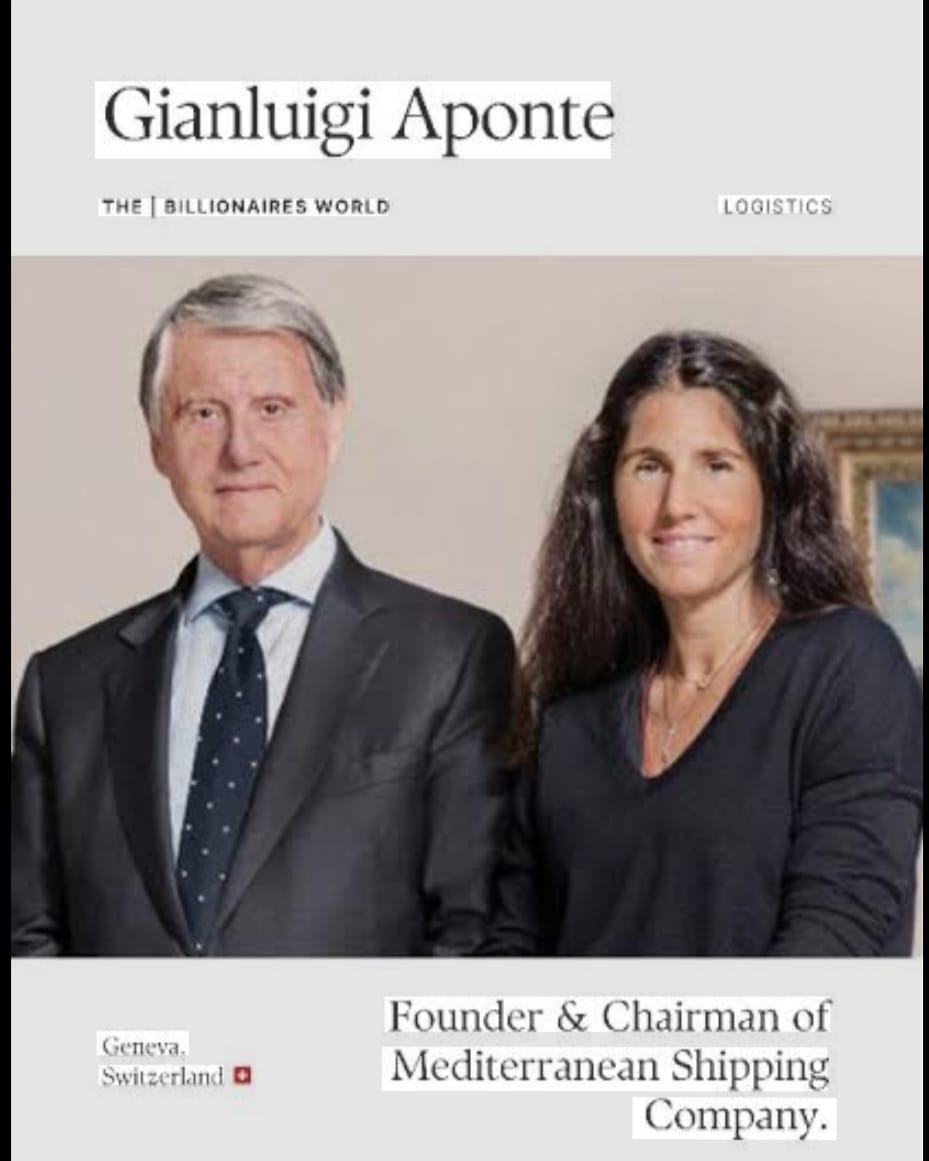
Founded in 1970 by Italian shipping entrepreneur Gianluigi Aponte and his wife Rafaela Aponte-Diamant, MSC has grown from a single cargo vessel into the largest container shipping company in the world.
Headquartered in Geneva, Switzerland, the company operates in more than 155 countries and serves over 500 ports worldwide, with a fleet of roughly 900 container ships and over 200,000 employees globally.
The MSC Group also operates major logistics and maritime businesses including inland logistics through Medlog, cruise tourism through MSC Cruises, and port terminal operations across several continents.
According to Forbes, the estimated net worth of MSC founder Gianluigi Aponte is about $43.9 billion as of February 2026, placing him among the world’s richest shipping magnates. The company remains privately owned by the Aponte family, with both founders holding equal ownership stakes.
Management comments
Speaking on the development, MSC Group President Diego Aponte said the company is committed to strengthening its operations in Nigeria and across Africa.
“We are proud to expand our presence in Nigeria through this important infrastructure project. The Snake Island terminal will enhance service delivery and improve port efficiency for our customers and partners in the region,”
Chief Executive Officer of Nigerdock, Maher Jarmakani, described the agreement as a major milestone for the Nigerian maritime sector.
“We are delighted to partner with MSC in developing a world-class container terminal that will enhance Nigeria’s logistics capabilities and support economic growth,” he said.
Economic impact
Industry analysts say the project could significantly strengthen Nigeria’s maritime economy by expanding cargo handling capacity, reducing congestion at Lagos ports and attracting additional international shipping traffic.
The development is also expected to create thousands of direct and indirect jobs across maritime operations, logistics, transport services and port-related commercial activities.
Infrastructure expansion
Beyond the port development, plans are also underway for Nigeria’s first underwater tunnel, linking Ahmadu Bello Way in Victoria Island through Snake Island and connecting the Lagos-Calabar Coastal Highway with the Sokoto-Badagry Superhighway corridor through Badagry.
The tunnel project is expected to significantly improve freight movement and road connectivity between Lagos ports and national transport networks.
Strategic milestone
With the entry of MSC into the Snake Island development, industry observers say Nigeria is taking a significant step toward modernizing its maritime infrastructure and positioning itself as a regional hub for global shipping and trade.
For a project that has waited for decades for major international investors, the Snake Island concession represents a turning point in Nigeria’s port development strategy and a strong signal of global confidence in the country’s maritime future.
By Prince Adeyemi Shonibare
news
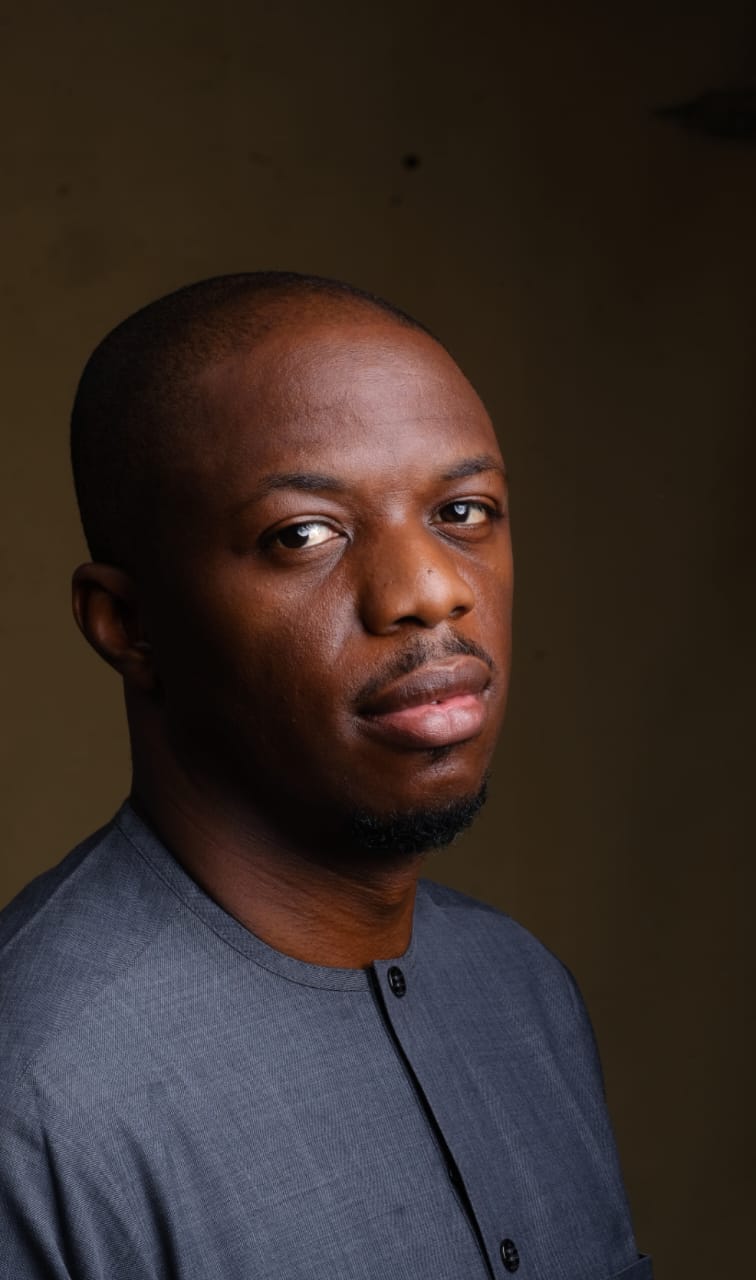
From Construction Sites to Community Service: Temitope Akinyemi Emerges as a Model of Leadership and Impact


-

 society6 months ago
Religion: Africa’s Oldest Weapon of Enslavement and the Forgotten Truth
-

 news3 months ago
WHO REALLY OWNS MONIEPOINT? The $290 Million Deal That Sold Nigeria’s Top Fintech to Foreign Interests
-

 society6 months ago
“You Are Never Without Help” – Pastor Gebhardt Berndt Inspires Hope Through Empower Church (Video)
-

 society7 months ago
Who is Chief Kestin Pondi? Niger Delta’s “People’s Chief” Winning Hearts With Hundreds of Millions in Generosity
You must be logged in to post a comment Login
You must log in to post a comment.