
society
Sambisa Bloodletting: When Boko Haram Turned Its Guns on ISWAP


Sambisa Bloodletting: When Boko Haram Turned Its Guns on ISWAP.
By George Omagbemi Sylvester | Published by SaharaWeeklyNG.com
“The Deadly Turf War That Shakes the Lake Chad Basin.”
A new and grisly chapter has opened in Nigeria’s long-running insurgency; once bitter rivals in name only, Boko Haram and the Islamic State West Africa Province (ISWAP) have for months been fighting not merely for recruits or haulage routes, but for outright territorial control. The latest and most savage manifestation of that internecine war erupted in and around Sambisa and the islands of the Lake Chad corridor, a cascade of assaults that left scores dead, dozens of boats seized and whole communities re-traumatised. Initial field accounts and media investigations put the toll at roughly two hundred militants killed in clashes over the weekend, with Boko Haram reported to have overrun several ISWAP camps and seized key naval assets.
That figure (horrific even in a conflict long accustomed to horror) must be read in context. The Lake Chad Basin has been a theatre of not only cross-border criminality and smuggling, but also of militant adaptation: riverine skirmishes, sudden amphibious raids and the seasonal ebb and flow of civilians and fighters. For years ISWAP and what remains of Boko Haram’s Shekau-loyal factions have alternated between cooperation, coexistence and murderous rivalry. The latest operations, however, were not mere hit-and-run attacks; they were coordinated attempts to seize island strongholds that generate revenue (through fishing taxes and illicit trade) and provide safe havens from military strikes.

Why this flare-up now matters (and why it should alarm us) boils down to three brutal facts. First, when jihadi factions fight each other, civilians pay the price: reprisals, forced displacements and collective punishments typically follow. Second, the victor in a factional fight can absorb weapons, boats and fighters; materially strengthening itself for renewed attacks on towns, garrisons and humanitarian convoys. Third, infighting makes conflict dynamics less predictable and therefore harder for security forces and relief agencies to plan for or to counter. For communities around Sambisa and the Lake Chad islands, the immediate consequence is the collapse of whatever fragile protection existed and a fresh round of displacement and hunger.
UNIDIR → Building a more secure world.

On the ground, the fighting reportedly featured dozens of motorised canoes and heavily armed gunmen which is a reminder that the Lake Chad is no backwater but a strategic corridor. Reports say Boko Haram fighters swept across several ISWAP-held islands, capturing boats and weaponry and inflicting heavy casualties on ISWAP personnel. Local vigilante sources and intelligence leaks described scenes of charred camps and the frantic flight of surviving fighters toward mainland villages. If confirmed, the seizure of riverine assets is strategically significant: control of boats equals control of movement, supplies, taxation points and crucially, escape routes.
Scholars and analysts who have followed the jihadist evolution in north-east Nigeria warn that this is not a mere squabble among thugs; it is the latest phase of a long adaptive conflict. Vincent Foucher, a leading researcher on the Lake Chad jihadist landscape, captures the larger truth: “jihad in the Lake Chad Basin is here to stay.” The line is blunt, but the point is stark; these factions are resilient, they learn from one another and they exploit gaps in state capacity to regenerate. That resilience helps explain why gains against one group are often temporary and why civilian recovery remains painfully fragile.
A tactical victory for Boko Haram in Sambisa (if sustained) raises grave long-term risks. Where one faction consolidates, it does not merely defend borders: it governs, taxes and recruits. It also acquires the spoils of war, captured materiel and the bargaining chips of prisoners and local informants. ISWAP, by contrast, has built an internationalised technical edge in recent years, claiming sophisticated propaganda, reportedly better coordination with transnational ISIS networks and more disciplined battlefield practices. The competition between a predatory, territorially assertive Boko Haram and a bureaucratised, outward-looking ISWAP is not abstract: it shapes attack profiles, civilian targeting and the geography of violence.

What should the Nigerian state and regional partners do? First, stabilisation requires not only kinetic pressure but also rapid civilian protection and humanitarian access. Too often, military wins are undone by the absence of safe returns, reconstruction and meaningful local security arrangements. Second, the region needs sharper, coordinated intelligence (maritime and riverine surveillance in particular) to prevent future seizures of boats and to protect displaced fishing communities. Third, long-term deradicalisation and socio-economic investment in affected communities remain essential; without economic alternatives and credible local governance, the vacuum will be filled again. These are not novel prescriptions, but the Sambisa incidents make them urgent once more.
There is a cautionary counterpoint, too: factional fighting does not automatically benefit the state. When insurgents bleed each other, they can also become more ruthless or more opportunistic; consolidating areas where they can operate freely, or launching terror attacks to signal continued potency. The 2016 schism that birthed ISWAP taught analysts that fragmentation can produce new, more adaptive organisations rather than a longed-for weakening. That lesson is especially important for policymakers tempted to celebrate intra-militant carnage as a win.
For the ordinary people of Sambisa and the Lake Chad littoral, the technical arguments about strategy are cold comfort. Families who returned to their farms after government assurances now find themselves running again; fishermen who paid protection to one group discover their boats confiscated by another. Humanitarian agencies warn that renewed violence will reverse months of fragile progress: food stocks will run low, clinics will close and education (already the first casualty of this insurgency) will be postponed indefinitely. The indirect death toll from hunger, disease and interrupted health care will be the slow, shameful shadow of this weekend’s headlines.
Finally, the Sambisa clashes are a reminder that Nigeria’s security challenge is not merely military but political. Long-term peace will not be won by force alone. It requires the restoration of state legitimacy, accountable local governance, economic opportunity and regional cooperation across Nigeria, Chad, Niger and Cameroon. Until those building blocks are in place, the islands of Lake Chad will remain prize and prey in equal measure and Sambisa will keep teaching the same brutal lesson: in a failed security market, violence simply repackages itself. As Vincent Foucher warns, the jihadist presence here is unlikely to vanish quietly; the only question is whether a savage contest for spoils will give way to yet another calibrated threat to civilians and statehood.
—
Reported and written by George Omagbemi Sylvester for SaharaWeeklyNG.com





NASRE: Building A Safety Net For Nigeria’s Journalists
At a time when Nigeria’s media industry is strained by economic uncertainty, job instability, and shrinking newsroom resources, the Nigerian Association of Social and Resourceful Editors (NASRE) is redefining professional solidarity. More than a network of editors, it is emerging as a critical support system for journalists navigating an increasingly precarious landscape.
Founded on the principles of welfare, solidarity, and professional growth, NASRE has positioned itself as a responsive and forward-looking body within the media ecosystem. While many professional associations remain focused on advocacy and training, NASRE distinguishes itself by combining these roles with direct and practical support for journalists and their families.
At the core of its mission is a clear proposition that no journalist should be abandoned in times of need. Through financial assistance, targeted outreach, and sustained engagement, the association has supported members facing hardship, as well as widows and families of deceased practitioners. These largely understated interventions have steadily earned NASRE credibility and respect across the industry.
The organisation’s approach reflects a keen awareness of the pressures confronting media professionals, including irregular pay, job insecurity, and limited institutional backing. In such an environment, NASRE’s welfare initiatives are not merely charitable, they are essential.
Beyond welfare, the association is investing in professional resilience. Through collaboration, networking, and knowledge-sharing platforms, it is equipping editors and practitioners to remain competitive in a rapidly evolving digital media space, where adaptability is no longer optional.
Headquartered in Lagos, NASRE continues to broaden its reach, attracting a growing membership united by the need for a more responsive and supportive professional community. Its expansion signals a shift in expectations within the industry, away from symbolic affiliations towards institutions that deliver measurable value.
For many observers, NASRE represents a necessary evolution, a professional body anchored not just in ideals, but in impact. By combining empathy with structure, it offers a model of what media associations can become in challenging times.
As the industry continues to evolve, organisations like NASRE may prove indispensable. In a profession devoted to telling society’s stories, it is ensuring that the storytellers themselves are not left behind.
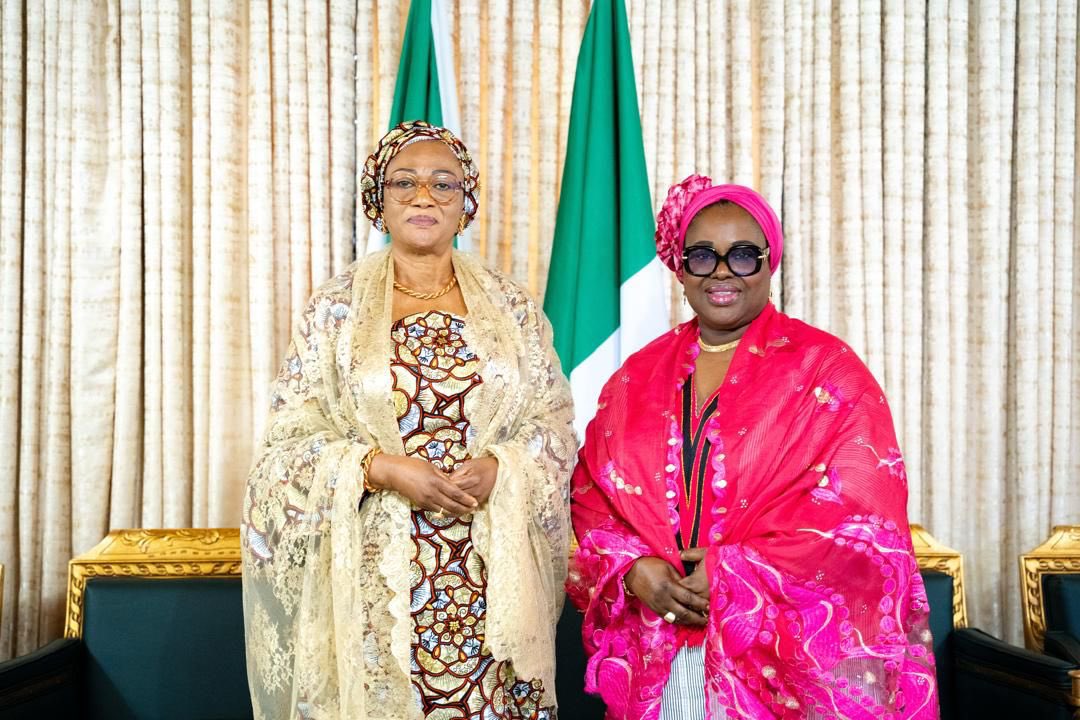
Oluremi Tinubu Hosts Wife of New IGP, Talks Welfare, Empowerment for Police Families
The First Lady of the Federal Republic of Nigeria, Senator Oluremi Tinubu, today welcomed Mrs. Mutiat Disu, wife of the Inspector General of Police, at the State House in Abuja.

During the meeting, the First Lady encouraged Mrs. Disu to continue championing the welfare and wellbeing of police officers’ families, especially through impactful support for their wives.
Speaking after the meeting, Mrs. Mutiat Disu shared her excitement about partnering with the First Lady’s Renewed Hope Initiative (RHI), noting that she is ready to leverage its programs to empower police officers’ wives across the country.
Mrs. Disu, who also serves as the National President of the Police Officers’ Wives Association (POWA), described the meeting as insightful and inspiring. She emphasized her commitment to using RHI platforms to improve healthcare, welfare, and economic empowerment for POWA members nationwide.
“The purpose of this visit is to tap into her wealth of experience and explore how POWA can benefit from her programs,” she said.
She added that her engagement with the First Lady has already provided valuable direction, especially in areas of social intervention and healthcare support for police families.
“I’m ready to work closely with Mama to ensure our women benefit fully, especially since RHI focuses on uplifting women, and POWA is largely made up of women.”
Mrs. Disu assumed leadership of POWA following the appointment of Tunji Disu as Inspector General of Police on February 24, 2026, succeeding Kayode Egbetokun.
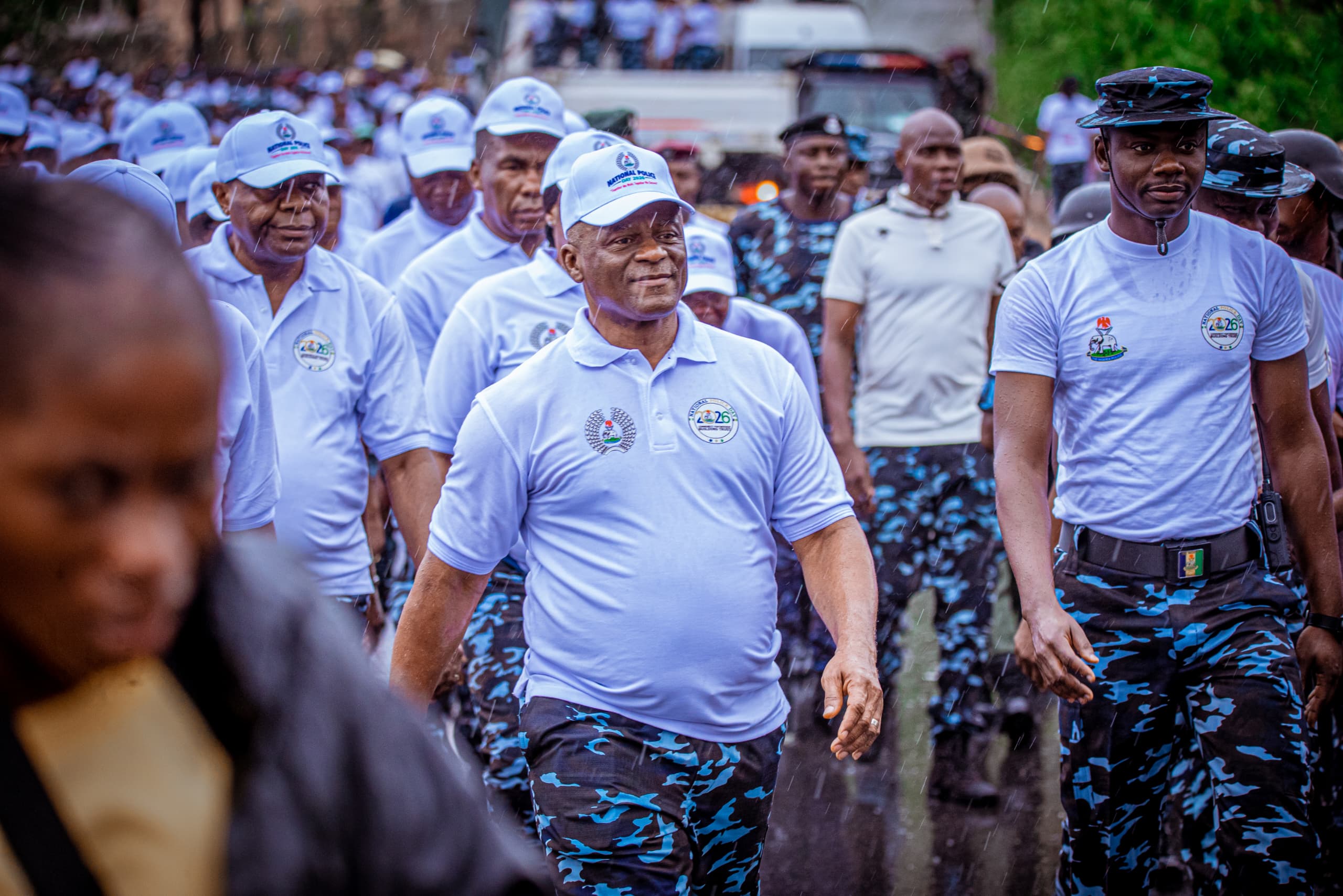
Police Day 2026: IGP Disu Leads Nationwide Walkathon To Strengthen Community Trust
The Inspector-General of Police, Olatunji Disu, on Tuesday led the management team, alongside officers and personnel of the Nigeria Police Force, in a nationwide walkathon to commemorate the 2026 National Police Day.
The event, held across state capitals and the Federal Capital Territory, formed part of activities marking Day Two of the annual celebration, themed “Community Partnership: Building Trust.”
The symbolic exercise, which drew participation from both police personnel and members of the public, was aimed at showcasing unity, discipline, and a renewed commitment to community policing and public safety.
According to the Force leadership, the walkathon underscores the Nigeria Police Force’s resolve to strengthen public trust, deepen engagement with citizens, and enhance collaboration in tackling security challenges across the country.
Participants described the initiative as a practical step toward bridging the gap between law enforcement and the communities they serve, while also promoting physical fitness and mental well-being among officers and civilians alike.
With the theme reflecting a shared responsibility for safety, the Police reiterated that sustainable security can only be achieved through active partnership with the public.
The event concluded with a renewed call for collective action under the banner: “Together We Walk, Together We Secure,” emphasizing unity of purpose in building a safer and more secure society for all Nigerians.


-

 society6 months ago
Religion: Africa’s Oldest Weapon of Enslavement and the Forgotten Truth
-

 news4 months ago
WHO REALLY OWNS MONIEPOINT? The $290 Million Deal That Sold Nigeria’s Top Fintech to Foreign Interests
-

 society6 months ago
“You Are Never Without Help” – Pastor Gebhardt Berndt Inspires Hope Through Empower Church (Video)
-

 celebrity radar - gossips2 months ago
Dr. Chris Okafor Returns with Power and Fire of the Spirit -Mounts Grace Nation Altar with Fresh Anointing and Restoration Grace on February 1, 2026