
news
Sanwo-Olu: Lagosians groan under the under-performing yoke of Tinubu’s overrated boy(Part 1)

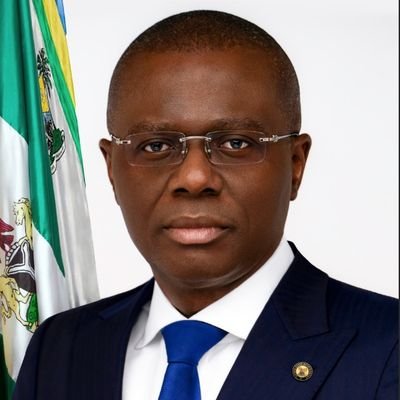
“I am not happy. I believe that Lagos can achieve a bit more. I have been in office for 125 days, I do not have absolute control over the legislature for instance because the legislature is independent and has to remain so.”
The above lamentation from Babajide Sanwo Olu, the executive governor of Lagos State explains, in details, the developmental deficits that define the pathway of his administration even as he momentarily tries to fast track attention to the
deplorable and alarming neglects of critical areas in the State.
Voters, who earnestly still venerate and value Akinwumi Ambode’s administration had wished he continued until APC leaders decided otherwise. On the heels of comparison, those who monitor the developmental graph of the State submit that
Ambode’s first 100 days in office were blessings compared to Sanwo-Olus which has been described as “unimpressive”.
According to Farah Aideed, a social media commentator, “Sanwo Olu days in office so far have been lack lustre with nothing remarkable to write home about apart from returning VIO back to the streets. For Ambode, she stated that he matched words with action just three weeks in office by announcing his decision to realign the Ministry of Rural Development, Parastatals Monitoring Office as well as
Political and Legislative Powers Bureau. This, according to her, set the tone for effective and mass-oriented governance that led to unprecedented
achievements within four years. Continuing, Aideed stated that not many will forget Ambode’s milk of kindness to Mrs. Ruth Uche, the mother of three set of twins whose husband absconded from their home including Oluwajomiloju Ogundimu’s heart surgery on his second working day in office.
She emphasized the setting up of Overseas Affairs and Investment office which clearly spelt out where his administration headed.
In all of this, Aideed is particularly angry and regrets voting Sanwolu saying what seems to be his pre occupation is persecuting his predecessor, Akinwunmi Ambode.
If Aideed has all this to say, the Peoples Democratic Party in Lagos State sees it differently, lambasting and accusing Sanwo-Olu for sleeping on duty as
Lagos governor. The party said the only people who can boast of benefiting from the government of Sanwo-Olu so far are members of the All Progressives Congress
and its leader, Asiwaju Bola Tinubu. The party has since requested he resigns if he can live up to his campaign promises.
The party also advised the governor to spare time and address the traffic congest- ion across Lagos even as the city currently ranks the filthiest in West Africa.
PDPs statement seems a child’s play when compared with the harsh verdict from reputable Economist Intelligence Unit that ranked Lagos as the world’s most
dangerous city to live in.
Sadly, Lagosians are already having misgivings about the direction and effectiveness of Sanwolu. Earlier, there were concerns about Sanwo-Olu’s
experience and the turbulence he faced while trying to emerge as the gubernatorial candidate of his party as Ambode reported that Sanwo-Olu was neither fit nor
qualified to be the governor of Lagos state.
However, his Information Commissioner, Gbenga Omotosho, disagrees with these assertions, saying “Sanwo-Olu’s milestones have been remarkable.
Wherever the governor went he was met by Lagosians who appreciated what he has done. The Mother & Child Hospital was commissioned in Eti-Osa LGA, the
housing estate in Igando, Jakande Gardens was commissioned, there is a new re-orientation about waste management in the state,” he defended.
Gbenga stressed further that the traffic situation has been managed to a bearable situation. “Look at the Apapa axis long lines of trailers from Apapa as long as to
to Surulere, to the stadium, up to Fadeyi area, they are no longer there now. Not that there are no challenges. The challenges are there but they are being tackled
everyday and more creative ways are been used to deal with the traffic.”
But governor Sanwo-Olu had unveiled the
acronym, ‘THEME’’ for his policy initiatives,which he detailed as follows:
T- Traffic Management & Transportation.
H- Health & EnvironmentE- Education & Technology.
M- Making Lagos a 21st century economy
E- Entertainment & Tourism
Supporting the 5 main pillars, he also listed the following as areas of focus; Infrastructure, Housing, Ease of doing business, Land reform and Power.
The policy initiative notwithstanding, stakeholders have been of the view that tangible results would make meaning than theoretical jingoism.
They reckoned that it will be wise if Babajide Sanwo-Olu runs a people-centred government in order to avoid the repetition of what happened to his predecessor. In other words, for Sanwo-Olu to be a man of the people, he must reactivate his
traffic control mechanism. They are worried that on a very bad day, people can spend one or two hours on a journey that should not take them more than
20 minutes.
At the moment, some places in the Oshodi-Iyana Ipaja axis are usually dark when there is no light, making them choice locations for hoodlums and petty thieves to lurk around in order to attack unsuspecting people.
It will be fantastic if Sanwo-Olu orders that street light is fixed in this axis as this will complement the effort to end insecurity. Extortion is still one areas that worries voters who are daily extorted by the area boys in Lagos State.
They harass the drivers in a bid to collect money and by extension, irritate the passengers. A megacity like Lagos State should not be hijacked by area boys.
On bad and potholes filled roads, there are flashes of efforts even as it is not uncommon to find potholes in the Lagos State roads, which are partly
responsible for traffic and accident.
Technically, Sanwo-Olu had embarked on a crash programme at United States of America’s Kennedy Institute of Government where he got trained in government
administration and civil responsibility. His returns from the US programme was to herald freshness into the democratic governance of the 53 years old State. However, lots of party followers and other stakeholders in the state are currently
bewildered about the parochial and selectively guided execution of programmes in the state.
Specifically, road patching has unleashed hardship on motorists as they’re done during the rush hour as opposed to the wee hours when a lot of people have retired to their homes.
Sanwo-Olu who ran a rigorous campaign that’s full of promises for Lagosians,however he has literally gone to sleep since he was sworn-in as Governor of Lagos—Nigeria’s commercial nerve-centre —on May 29, 2019. Today, Lagos residents groan under the burden of Babajide Sanwo-Olu’s cluelessness and our people are faced with myriads of problems all over the state from deplorable road surfaces to dead street lamps. With acute and recurring flash floods, worsening traffic, clogged drainage channels and a spike in
crime, one would say these are enough reasons to believe that Sanwo-
Olu, who ran a viral, ubiquitous, in-your-face election campaign early in the year, has been a disaster in on the job.
Lagosians have also been complaining about pot-hole laden road surfaces, with one commentator on social media posting that there are now as many potholes as there are humans in Lagos.
But over the years in the corridors of power, he has diligently worked his ways into the heart of Asiwaju Bola Ahmed Tinubu and the latter who reposed a lot of confidence in him and his ability to drive Lagos forward is also now at the cross-roads what with a barrage of criticisms from different groups of stakeholders in the state.
According to sources,the slow-coach called Sanwo-Olu is now giving his principal sleepless nights as Asiwaju himself has seen that his stooge is bereft of ideas that that take Lagos to the next level. And the politcal architecture and master-plan of the state of aquatic splendour which Tinubu drafted and implemented very well before passing the baton to Raji Fashola and which the latter gave to Akinwumi Ambode has now droped off Sanwo-Olu’s hand.
Watch out for part two of this article!
Sola Adeyemo is a media entrepreneur and publisher of City News.He’s also the President of Coalition of Online Publishers in West Africa(COPUWA).



More than ₦3 billion was targeted, but about ₦677 million reached the culprits, with recovery and prosecutions underway, reflecting how banks are responding to more sophisticated fraud risks.
Nigeria’s expanding digital banking sector is facing increasingly sophisticated fraud attempts, as financial institutions adapt to faster transactions and broader online services.
A recent case involving First City Monument Bank (FCMB), linked to fraudulent activity detected in December 2025, has drawn attention to how banks are responding to such incidents, with a focus on limiting exposure, recovering funds and working with law enforcement.
According to findings referenced in proceedings before the Lagos State Special Offences Court, the incident involved unauthorised transactions tied to a digital product. Early reports erroneously suggested more than ₦3 billion was lost. Subsequent clarification shows that over ₦3 billion was targeted, ₦2.4 billion was blocked and recovered, while ₦677 million got into the possession of the culprits. This outcome reflects the bank’s cyber security and monitoring capabilities, as well as improved collaboration among regulated financial institutions and with law enforcement agencies. Several suspects and beneficiaries have been apprehended, while recovery and prosecution efforts are ongoing, led by the Economic and Financial Crimes Commission (EFCC).
Proceedings at the Lagos State Special Offences Court have resulted in convictions, including that of a repeat offender, with restitution orders issued. Related matters are also being handled at the Federal High Court in Lagos, where additional suspects are being tried in connection with the scheme. This process is aimed at ensuring that bad actors are identified and permanently blacklisted from the financial system.
Authorities say recovery efforts are continuing as additional funds are traced.
Analysts note that the pace of legal action reflects closer coordination between financial institutions and enforcement agencies in addressing cyber-related financial crime.
The case comes as banks contend with more complex fraud methods, including social engineering and automated exploitation of system processes.
As digital products and platforms expand, so too does the risk associated with cyber-crime and related fraud.
“The scale of digital banking means risks are evolving alongside the systems,” said a Lagos-based financial analyst. “Institutions are now judged by how they manage these events.”
Observers say the sector is moving toward a stronger focus on response and recovery, rather than prevention alone.
This includes improving monitoring capabilities, strengthening transaction controls and enhancing collaboration with regulators and law enforcement. The FCMB case, with limited exposure relative to the amount targeted and ongoing recovery, reflects that shift.
For customers, the primary concern is the safety of their funds. In this case, there has been no indication of losses affecting customer deposits. Maintaining that level of protection remains central to sustaining trust in the financial system.
Nigeria’s financial sector continues to grow, supported by digital innovation and expanding access to banking services.
However, analysts say fraud attempts are likely to persist as systems become more complex and interconnected.
They say institutions will increasingly be judged not only on their ability to prevent incidents, but on how effectively they respond and recover when they occur.
news
Ex-APC Deputy Guber flag bearer, Joshua MacIver backs Tinubu, express fears over implosion in Bayelsa APC
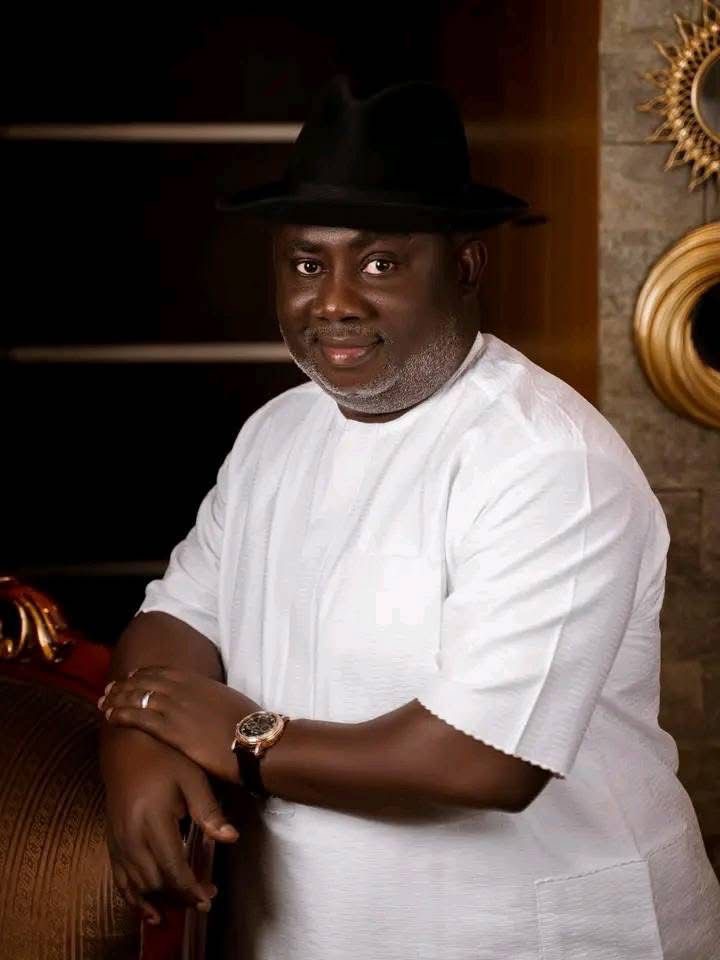
….congratulates new State Party Chairman, Warman Ogoriba
APC Deputy Governorship Candidate in the 2023 general elections in Bayelsa State, Great Joshua MacIver has declared his total commitment to the re-election of President Bola Tinubu come 2027, declaring that the Tinubu re-election project is non-negotiable.
Great Joshua MacIver, in his statement titled ” BAYELSA APC CONGRESSES: GOING FORWARD, A CALL TO LOOK INWARDS” and made available to newsmen in Yenagoa, warned APC leaders in the state to look Inward and take note of certain factors which may hinder or cut short our victory.
According to Great Joshua MacIver, such noticeable pitfalls include the imbalance in the united front being put up by the State Governor,Senator Douye Diri among various political blocs in the state.
In the statement issued at the weekend. Great Joshua MacIver stated that “First, before His Excellency, Senator Douye Diri, joined the APC in the state, there were clearly two political blocs that made up the party, with the approximate population ratios of the blocs standing at 95% to 5%.”
“After the entrance of His Excellency, Senator Douye Diri, ONLY THE SMALLER BLOC IS BEING CARRIED ALONG IN THE AFFAIRS OF THE PARTY, leaving the greater percentage to their fate, and this situation has the potential to build anger and dissatisfaction in our dear party.”
” The consequence of this has been the high level defection we have witnessed in the party recently and we believe more may likely follow, if we do not put our house in order.”
” If we do not pull together as a party, we may witness a situation where we will lose key stakeholders, especially after the State and National Assembly Primaries as well the Gubernatorial Primaries.”
“Finally, while it is very clear that we are the party to beat in the 2027 elections and that our loyalty to Mr. President IS NON-NEGOTIABLE, we must make haste to say that we cannot afford to create situations or loopholes in our unity which will be exploited by other political interests in the state. We cannot afford to under-rate anyone.”
“Our core interest remains the re-election of Mr. President, a project to which we have committed our all. We also pledge our total loyalty to the party as we have no alternative to the APC. However, our concern is that we must, as a party, look inwards and ensure that we do not create loopholes that can impede our common goal.”
Great Joshua MacIver, however congratulated the newly elected State Executives of the APC in Bayelsà State led by Hon. Warman Ogoriba, saying their emergence is welcomed at this critical time in our national history.
At least 23 people were killed in a series of suspected suicide bombings, police in Nigeria’s northeastern city of Maiduguri said on Tuesday.

https://www.stanbicibtcbank.com/nigeriabank/personal/products-and-services/all-loans/stanbic-ibtc-mreif-home-loans
More than 100 other people were injured in the blasts that took place on Monday evening in the capital of Nigeria’s restive Borno state.
No group has claimed responsibility for the suspected attacks.
The deadly blasts come after a military post was attacked overnight Sunday to Monday, which authorities blamed on suspected Islamist militants.
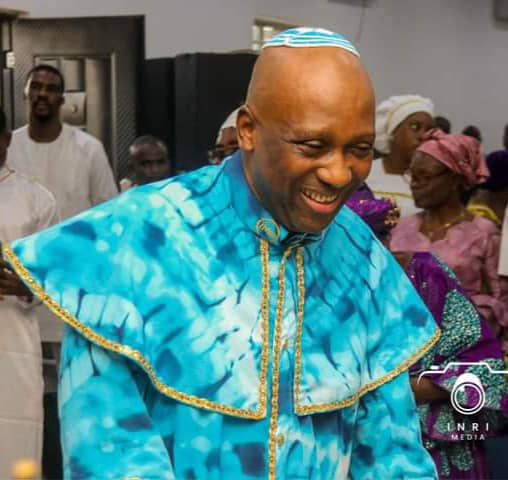
This sad incident is coming barely two weeks after Primate Elijah Ayodele, the Leader of INRI Evangelical Spiritual Church specifically warned against attacks in some states. He mentioned these states while calling on security operatives to pay close attention to them.
These were his words:
“Another attack is coming up in these following states where the military must watch carefully and intelligently; Kano, Kaduna, Zamfara, Kebbi, Niger, Borno, Kwara and Kogi state. They want to do a deadly attack, it’s preventable but it depends on how they will handle it. I have told you about the danger coming up.”
@primateayodele
Unfortunately, some of our military agencies don’t believe spiritual intelligence can save the country from so much danger hence, their neglect of this prophetic warning but now, it has been fulfilled with the miliary losing credibility by the day while Primate Ayodele continues to gain momentum.
Likewise, At least 26 passengers and crew sustained varying degrees of injuries on Monday following an accident involving the Kaduna–Abuja train, according to the Nigerian Railway Corporation (NRC).
Opeifa explained that the train departed Rigasa in Kaduna at 7:15 a.m. and was approaching Asham station around 9:16 a.m. when a loud bang was heard after the power car and trailing locomotive collided with one of the passenger coaches.
In July 2025, Primate Ayodele asked nigerians to pray not to see train mishap on the Kaduna-Abuja route.
@primateayodele #nigeriantiktok🇳🇬 #fulfillment #train #abuja #primateayodele
“Let’s pray not to see train mishap in Abuja-Kaduna, Kaduna-Abuja route.”
This has also been fulfilled.


- Sheraton Nouakchott marks the entry of Marriott International in Mauritania April 10, 2026
- Eritrea: Seminar to Nationals in Nairobi and Its Environs April 10, 2026
- African financial institutions call for coordinated financing solutions to unlock Africa’s digital transformation April 9, 2026
- African Energy Chamber (AEC) Supports Perenco Partnership to Advance Industry 4.0 Skills in Central Africa April 9, 2026
- Youth Charter Calls for “Commonwealth Youth Legacy” Ahead of Glasgow 2026 April 9, 2026
- Securing the bridge between legacy and smart April 9, 2026
- Africa’s Lithium Pipeline Gains Momentum as Global Supply Deficits Loom April 9, 2026
- Afreximbank delivers strong FY2025 results; with a total assets and contingencies base of US$48.5 billion April 9, 2026
- National Council for Curriculum Development (NCDC) seeks Shs17 Billion for curriculum review, teacher training April 9, 2026
- Senegal: A Decade of Unresolved Climate Displacement April 9, 2026
- Sheraton Nouakchott marks the entry of Marriott International in Mauritania April 10, 2026
- Eritrea: Seminar to Nationals in Nairobi and Its Environs April 10, 2026
- African financial institutions call for coordinated financing solutions to unlock Africa’s digital transformation April 9, 2026
- African Energy Chamber (AEC) Supports Perenco Partnership to Advance Industry 4.0 Skills in Central Africa April 9, 2026
- Youth Charter Calls for “Commonwealth Youth Legacy” Ahead of Glasgow 2026 April 9, 2026
- Securing the bridge between legacy and smart April 9, 2026
- Africa’s Lithium Pipeline Gains Momentum as Global Supply Deficits Loom April 9, 2026
-

 news4 months ago
WHO REALLY OWNS MONIEPOINT? The $290 Million Deal That Sold Nigeria’s Top Fintech to Foreign Interests
-

 society7 months ago
“You Are Never Without Help” – Pastor Gebhardt Berndt Inspires Hope Through Empower Church (Video)
-

 celebrity radar - gossips2 months ago
Dr. Chris Okafor Returns with Power and Fire of the Spirit -Mounts Grace Nation Altar with Fresh Anointing and Restoration Grace on February 1, 2026
-

 celebrity radar - gossips4 months ago
Prophet Kingsley Aitafo Releases 2026 Prophecy: ‘Nigeria Will Rise, but the World Must Prepare for Turbulence’