
society
Senate Blocks Mandatory Electronic Transmission of Election Results: Implications for Nigeria’s Electoral Integrity

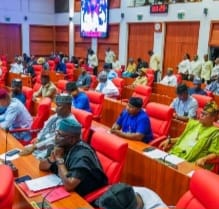
Senate Blocks Mandatory Electronic Transmission of Election Results: Implications for Nigeria’s Electoral Integrity
By George Omagbemi Sylvester | Published by SaharaWeeklyNG
“As the Senate rejects compulsory digital reporting of votes, Nigeria faces renewed debates over transparency, security, and public trust in its democratic processes.”
In a landmark yet controversial decision, the Nigerian Senate has voted against the compulsory electronic transmission of election results, a move that has reignited the long-standing national debate over the integrity and transparency of electoral processes. The decision, which was widely anticipated by political analysts, has drawn mixed reactions from civil society groups, election monitors, and political stakeholders. While proponents of the Senate’s stance cite concerns over security and technological readiness, critics argue that the rejection risks perpetuating inefficiencies and undermining public confidence in Nigeria’s democracy.
The Senate, acting on a bill proposed to institutionalize the electronic transmission of results as mandatory for all elections, voted decisively against making the technology compulsory. Advocates of the measure had argued that such a system would minimize human interference, reduce delays in vote counting and ensure timely dissemination of results to the Independent National Electoral Commission (INEC) and the electorate. However, senators opposing the bill raised apprehensions about cybersecurity threats, infrastructural inadequacies and the potential for technological malfunctions during critical electoral exercises.

“This decision signals a cautionary approach by our lawmakers,” remarked Professor Festus Iyayi, a noted political scientist at the University of Lagos. “While the intention to secure elections through electronic means is laudable, the infrastructure and human capacity to implement it nationwide remain limited. Until these foundational gaps are addressed, mandating such a system could introduce more chaos than clarity.”
The Nigerian political landscape has historically been marked by electoral controversies, ranging from ballot manipulation to delayed result announcements. The 2023 general elections, which were plagued by logistical challenges and sporadic violence, underscored the need for reform in the transmission and verification of results. Proponents of compulsory electronic transmission contend that the adoption of secure digital channels would mitigate these recurrent challenges, increase voter confidence and align Nigeria with global best practices in electoral management.
Dr. Amina Waziri, a governance and elections expert at the Centre for Democratic Development in Abuja, emphasizes the transformative potential of technology in strengthening democratic institutions. “Electronic transmission of results is not merely a technical upgrade; it is a tool for accountability,” Waziri asserted. “Countries across Africa, including Ghana and Kenya, have adopted similar systems to significant effect. Nigeria’s rejection of compulsory electronic transmission delays its entry into this new era of transparent governance.”
Security concerns, however, remain central to the Senate’s rationale. Senators cited the potential vulnerability of digital systems to cyberattacks, manipulation and unauthorized access. In a country where political tensions often escalate rapidly, the fear that election results could be tampered with electronically is not without precedent. Moreover, rural constituencies with limited internet connectivity present additional logistical challenges, raising questions about equitable implementation across Nigeria’s 36 states.

The National Electoral Commission (INEC) has, for years, advocated for the modernization of election processes, emphasizing that technology can enhance efficiency and public confidence. INEC’s previous pilot programs with electronic transmission, although successful in select constituencies, highlighted both the promise and the challenges of scaling the system nationwide. Professor John Olorunfemi, a senior analyst at the Nigerian Institute of Policy and Strategic Studies, notes, “The technical feasibility exists in urban centers and well-equipped districts. The critical question remains whether this can be replicated uniformly across remote areas without disenfranchising voters.”
Political reactions to the Senate’s decision have been sharply divided. Opposition parties and civil society organizations have criticized the rejection as a missed opportunity to institutionalize transparency and reduce electoral malpractices. “This is a step backward for Nigeria’s democracy,” declared Dr. Chinyere Okafor, spokesperson for the Nigerian Electoral Reform Coalition. “We cannot continue to rely solely on manual processes prone to human error and manipulation. The electorate deserves a system that guarantees accuracy, speed and accountability.”
Conversely, some legislators defended their position, arguing that rushing technology adoption without adequate safeguards could jeopardize electoral credibility. Senator Olusegun Balogun, one of the vocal opponents, stated, “We are not against progress, but we must be pragmatic. A nationwide system that fails on election day will do far more damage than benefit. Let us first address infrastructural gaps and train personnel before mandating electronic transmission.”
The decision also reverberates internationally, drawing scrutiny from election observers and governance watchdogs. Nigeria, Africa’s most populous nation and largest economy, often serves as a benchmark for democratic practice across the continent. As Dr. Michael Kofi, a senior analyst at the African Governance Institute, notes, “The credibility of Nigeria’s elections has regional implications. Electronic transmission is a standard adopted by several democracies to mitigate fraud. The Senate’s rejection delays Nigeria’s alignment with these global norms.”
Beyond technical and security considerations, the debate touches on broader societal and political dimensions. Electronic transmission of results is seen by many experts as a critical instrument for reducing the influence of political godfathers and local power brokers who have historically manipulated manual result collation. By ensuring immediate reporting from polling units to central servers, the system can reduce opportunities for vote inflation, result alteration and intimidation.

Yet, the Senate’s cautious stance may reflect a deeper concern over the pace of technological adoption in governance. Nigeria’s experience with digital systems in other sectors (ranging from financial services to civil registration) has been uneven, often complicated by cyber fraud, poor internet penetration and insufficient regulatory oversight. These realities underscore the complexity of introducing a high-stakes system like electronic result transmission in a politically charged environment.
Legal experts also highlight that the rejection does not entirely foreclose technological innovation in elections. INEC retains the authority to deploy electronic transmission as a voluntary or supplementary mechanism, meaning that gradual adoption remains possible. “The Senate has opted for caution, not prohibition,” explains Barrister Emeka Uche, a constitutional law specialist. “The commission can still leverage technology incrementally, allowing lessons to be learned and adjustments made before nationwide implementation becomes mandatory.”
As Nigeria prepares for upcoming gubernatorial and local elections, the Senate’s decision will likely shape both the operational strategy of INEC and the expectations of the electorate. Transparency advocates warn that without decisive reforms, public trust in electoral outcomes may remain fragile, perpetuating cycles of skepticism, protests and litigation.
Ultimately, the rejection of compulsory electronic transmission underscores the tension between ambition and pragmatism in Nigeria’s democracy. It reflects a legislature cautious of technological vulnerabilities, yet it also highlights the persistent struggle to modernize political processes in the face of infrastructural limitations. As Professor Festus Iyayi aptly concludes, “Nigeria stands at a crossroads. Embracing technology is essential for credible elections, but doing so without preparation could undermine the very integrity it seeks to protect. The path forward requires both vision and discipline.”
The decision carries profound implications for the evolution of Nigeria’s democratic practices. For citizens, it is a reminder that the fight for electoral transparency is ongoing, shaped not only by technology but also by political will, institutional capacity and civic engagement. For policymakers, the challenge remains clear: to reconcile the promise of innovation with the realities of implementation, ensuring that every Nigerian’s vote is counted accurately, efficiently and securely.
In conclusion, the Senate’s rejection of compulsory electronic transmission of election results represents both a pause and a warning. While it reflects a legitimate concern over readiness and security, it also delays the adoption of a system that could substantially reduce electoral malpractice and enhance public confidence. The coming months will test Nigeria’s ability to balance caution with reform, ultimately determining whether its democratic institutions can modernize in tandem with public expectations and global standards.




society
ONDO STATE GOVERNMENT MOBILIZES ON #UniteAgainstTerror CAMPAIGN, CALLS FOR NATIONAL UNITY AGAINST TERRORISM
ONDO STATE GOVERNMENT MOBILIZES ON #UniteAgainstTerror CAMPAIGN, CALLS FOR NATIONAL UNITY AGAINST TERRORISM
The Ondo State Government has announced its support for the nationwide #UniteAgainstTerror campaign, calling on all Nigerians to rise above political, ethnic, and religious differences in a collective effort to combat terrorism and other forms of violent crimes threatening the nation’s peace and stability.
2. The campaign mobilization comes in the wake of the recent conviction and sentencing of individuals linked to the horrific Owo church massacre of June 2022, a tragedy that claimed innocent lives and left lasting scars on families, communities, and the nation. While welcoming the judicial outcome as a significant step toward justice, the Government emphasized that the fight against terrorism requires sustained vigilance and the active participation of all citizens.
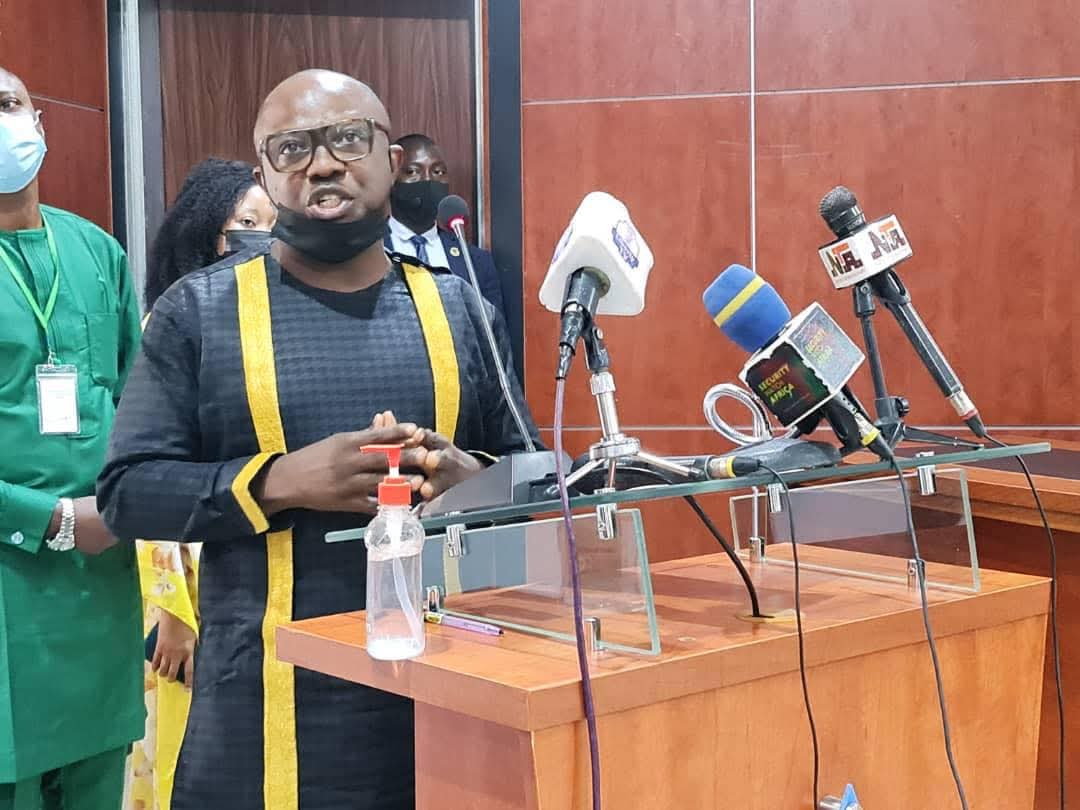
3. Speaking on Channels Television’s Politics Today, Governor Lucky Orimisan Aiyedatiwa stated that this is a defining moment for Nigerians to come together with one voice against terrorism, stressing that national security must transcend partisan interests. According to the Governor, “when we see something, we must say something,” urging citizens to promptly report suspicious activities and security concerns to the appropriate authorities.
4. The Government commends the Armed Forces of Nigeria, the Nigeria Police Force, the Department of State Services, the Nigeria Security and Civil Defence Corps, Amotekun Corps, and other security agencies for their courage, sacrifice, and unwavering commitment to protecting lives and defending the nation’s territorial integrity.
5. Ondo State Government therefore calls on traditional rulers, religious leaders, community associations, youth groups, civil society organizations, media practitioners, and all well-meaning Nigerians to embrace the #UniteAgainstTerror campaign as a patriotic movement aimed at strengthening intelligence gathering, promoting public awareness, and denying criminal elements the space to operate within our communities.
6. The Government reaffirms its commitment to supporting all lawful measures that enhance national security and urges every citizen to remain alert, responsible, and actively involved in the collective task of safeguarding Nigeria. Together, united in purpose and action, we can defeat terrorism and build a safer and more secure nation for present and future generations.
Hon. Idowu Ajanaku,
Commissioner for Information and Orientation
June 5, 2026
society
WAZOBIA: Nigeria’s Hardly Separable Tripod Stand Since 1914; It’s Time To Rotate Presidency Among 6 Geo-Political Zones In 2027
WAZOBIA: Nigeria’s Hardly Separable Tripod Stand Since 1914; It’s Time To Rotate Presidency Among 6 Geo-Political Zones In 2027
Dear High Chief Jibrin Okutepa (SAN), I bring you calvary greetings from the land of Lincoln. I want to first of all commend your continued sincerity of purpose for a united, peaceful, and prosperous Nigeria.
But with all due respect sir, let me reaffirm that since 1914, when the British colonialists led by Lord Frederick Lugard, amalgamated the Northern and Southern Protectorates, Nigeria has always stood on a Tripod called WAZOBIA (Yoruba, Hausa/Fulani, and Igbo). In fact, it is the alleged domination of these three major ethnic nationalities that brought about the doctrine of necessity called the Six Geo-political Zones proposed by Chief Alex Ekwueme, et al., at the 1994/1995 Constitutional Conference chaired by the late Justice Adolphus Karibi-Whyte and empaneled by General Sanni Abacha.
Prior to, and during this period under review, there were legitimate claims and concerns from ethnic minorities across the old Eastern region, the old Northern region, as well as the old Western region that they were being dominated, marginalized, oppressed, and strangulated by the abovementioned three major ethnic nationalities in Nigeria.
So, to solve this hydra-headed problem capable of imploding Nigeria, via a doctrine of necessity, General Sanni Abacha in 1996, partitioned Nigeria into six geo-political zones, namely: North Central, North East, North West, South East, South South, and South West.
The minorities in the old Northern region were majorly zoned into the North Central. This is even as the minorities in the old Eastern region and old Western region were respectively zoned into the South South (a cardinal point unknown to history).
As one of the ardent students of contemporary Nigerian history and politics, permit me to affirm that pertitioning Nigeria into six geo-political zones is the best bet at guaranteeing justice, equity, fairness, national unity, national cohesion, national peace, and commandeering national loyalty in a country like Nigeria with over 385 ethnic nationalities and over 500 languages.
Going forward into 2027, to make Nigeria work, all that is needed has been proferred by Chief Alex Ekwueme during the 1994/1995 Constitutional Conference. Let’s rotate the presidency among the six geo-political zones for a single term of five or six years. This is in line with the spirit and letters of Section 14(3) of Nigeria’s 1999 Constitution (as amended).
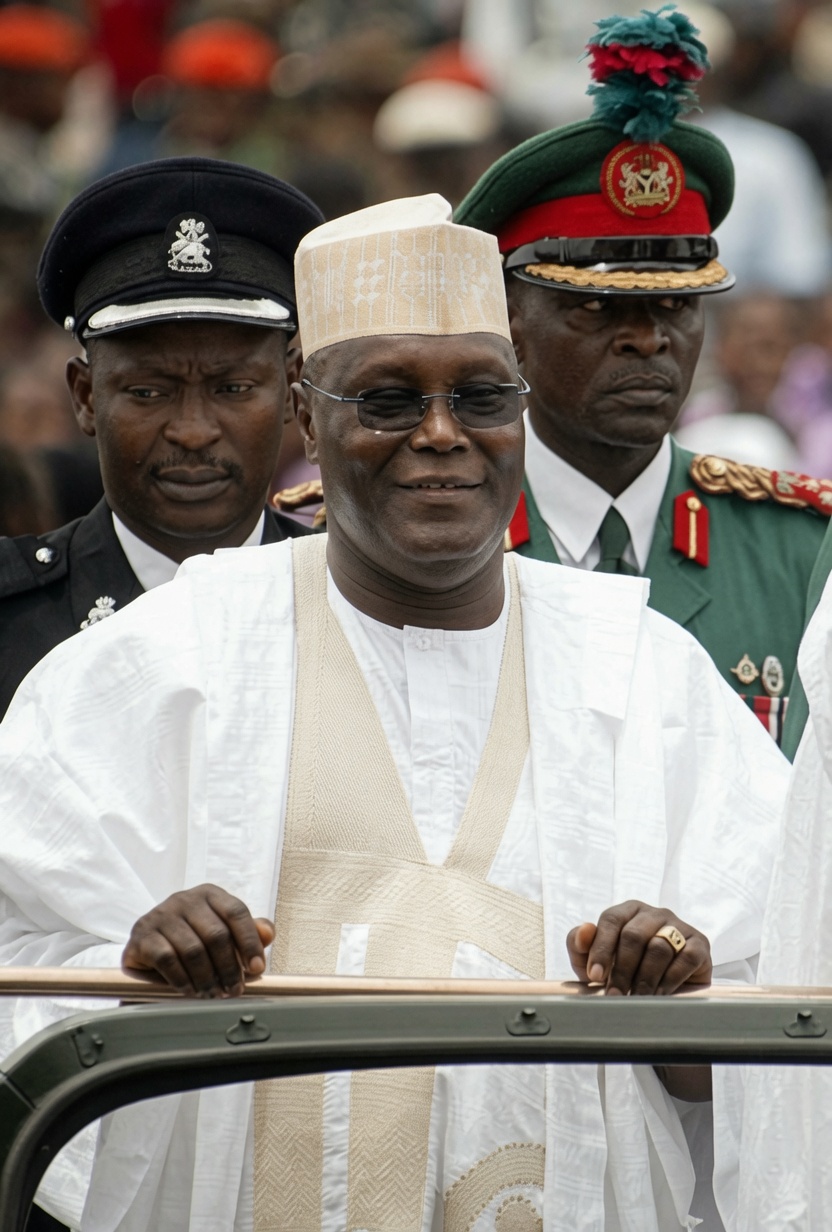
Of all the frontline Presidential candidates for the 2027 all-important elections, only His Excellency Atiku Abubakar- @atiku espouses and religiously supports this equitable zoning arrangement. The North/South zoning arrangement has been a scam all along. It has not been able to restore national unity, national peace, and commandeer national loyalty among Nigerians from across the six geo-political zones for their beloved country.
It is therefore, self-evident and conspicuous like the North Star that when power goes North, the more populated North West hijacks it and runs away with it. And when power comes South, the more populated South West using its mainstream media and propaganda prowess, hijacks it and runs away with it. This malady has continued unabated since 1999 to the chagrin of the marginalized North East, South East, and North Central.
As an emerging political scientist and investigative journalist, I affirm that at this auspicious moment in Nigeria’s chequered history, the country now urgently needs an experienced reformer with the political will and balls of steel like Waziri Adamawa; the Zege Mule u Tiv; and the Ogo wu chi onye 1 of Igboland, to get the failing country out of the woods.
Your (Okutepa’s) proposition to downplay the fact that Nigeria is standing on a Tripod called WAZOBIA can be described as an academic exercise tantamount to futility. Nigeria will always stand on a Tripod. All that is needed is for the 1999 Constitution to be amended to make it an impeachable offence for the Nigerian President to abuse his powers and going contrary against the spirit and letters of Section 14(3) of the 1999 Constitution of the Federal Republic of Nigeria (as amended).
Muhammadu Buhari did it and was not punished with impeachment proceedings from the rubber-stamp Senate Presidency of Ahmed Lawan. Bola Tinubu continued from where Buhari stopped and has not been punished with impeachment proceedings from the rubber-stamp Senate Presidency of Godswill Akpabio.
By and large, I reckon with you in toto, that Nigeria’s problem is not in the 1999 Constitution nor in the law, but in the blatant disregard and disrespect for law and order. Gift the American Constitution to these current crop of rogue politicians in Nigeria, they will still plunge Nigeria into the unfathomable chaos like they have done today.
Going into 2027 all-important presidential election billed for Saturday, January 16, 2027, let me conclude by saying that since 2015, having tried and tested two successive regimes of the ruling All Progressives Congress, APC, it’s time to try and test the main opposition African Democratic Congress, ADC, whose charge is led by His Excellency Atiku Abubakar.
May the Nigerian State and the Nigerian people succeed in 2027!
Ikenna Asomba is a political scientist and journalist. He writes from the State of Illinois, United States.
The Abyss of Silence: Why We All Failed the Oyo Abductees
By Femi Oyewale
The haunting cadence of W.B. Yeats’ The Second Coming, quoted so often by the late Chinua Achebe, has ceased to be mere poetry. It has become a grim, real-time mirror reflecting our national existence: “Things fall apart; the centre cannot hold; / Mere anarchy is loosed upon the world.”

In a nation that boasts some of the brightest minds globally, a land steeped in the communal sanctity of “it takes a village to raise a child,” we have descended into an unthinkable abyss. Daredevil criminals have reached into the heart of Oyo State, snatched our children—the very architects of our future—and vanished. Yet, as the sun rises and sets, from the gilded halls of the Presidency to the dusty corners of the local street, we remain paralyzed, tethered to a collective ignorance that is as chilling as it is shameful.
The Theatre of Performative Outrage
We have become a nation of “noises.” We trade blame with surgical precision—the Presidency points to the state, the state points to the security architecture, and the populace directs its vitriol toward the political elite. We have seen the press releases, the hashtags, the fleeting television appearances, and the hollow promises of “concerted efforts.”
But let us be painfully honest: these are not efforts; they are performances. There is not even a whisper of a “near-success syndrome.” While we debate and defend our preferred political affiliations, our children are sleeping under the cold, unforgiving stars of a forest floor. They are subjected to the kind of trauma that shatters souls long before it breaks bodies. They are waiting for a rescue that we are too divided to coordinate.
The Mirror of Empathy
Let us strip away the facade of civic detachment. I challenge every father in this country: if that abducted child were your only son, would you be content with a tweet? To every mother: if that child were the fruit of your old age, would you accept a press statement as enough?
To our governors, our senators, and our political titans: if these children were the heirs to your empires, would the current pace of “investigation” satisfy you? To our billionaires, our security chiefs, and our local traditional warriors, those who claim the mantle of protectors, what if these children were born of your own loins?
The silence that would follow that personal connection is the same silence currently haunting the homes of these victims. We have allowed the abstraction of “national crisis” to desensitize us to the visceral reality of a child’s terror.
Beyond the “One-Man” Savior Complex
We have developed a dangerous habit of outsourcing our conscience. We wait for the radical activist, the viral influencer, or the singular loud voice to carry the burden of the nation. We expect a solitary figure like VDM or a lone firebrand like Sowore to move mountains that require the combined weight of a movement.
But no singular individual can replace the collective pulse of a people. Their rescue is not a one-man job; it is a fundamental test of our humanity.
The Path to Reclamation
We are currently a house divided by party lines, religious silos, and ethnic prejudices. Yet, we have seen that we possess a dormant capacity for unity. When the Super Eagles take to the pitch, our differences vanish. We become one heartbeat, one voice, one nation. Why is it that a game can unify us, but the abduction of our children leaves us fractured?
We do not need more talk. We do not need more inquiries that lead to no arrests. We need to acknowledge a hard truth: we have failed. We have failed the children, we have failed their teachers, and we have failed ourselves.
No stranger knows our terrain better than we do. No satellite imagery can replace the intelligence of a community that refuses to be silent. It is our land. These are our children.
The systemic rot has metastasized to the point where “efforts” no longer count. Only results matter. The time for performative sorrow is over; the time for a unified, uncompromising demand for their return is now. If we do not rise, if we do not act with the singular intensity of a people reclaiming their future, then let the history books record that when our children were taken, Nigeria chose its politics over its people.
We must rescue them. Not tomorrow. Not after the next meeting. Now.
Femi Oyewale is the publisher of Sahara Online and President of NASRE who
writes on national affairs, security, and social development.


- President Isaias Afwerki Departs for Egypt June 7, 2026
- Eritrea: Athlete Nahom Ermias Champion of Asmara Marathon 2026 June 7, 2026
- World Health Organization (WHO) Hands Over Ebola Preparedness Supplies to Strengthen Zambia’s Readiness June 7, 2026
- Joint Statement by the World Health Organization (WHO) and Food and Agriculture Organization of the United Nations (FAO) in South Africa on World Food Safety Day 2026: From burden to solutions – safe food everywhere June 7, 2026
- Liberia: President Boakai Oversees Signing of US$125 Million in World Bank Financing Agreements for Digital Connectivity, Renewable Energy, and Road Infrastructure June 7, 2026
- President Mahama explores Belarus’ agro-industrial hub; seeks partnerships to boost Ghana’s food security June 7, 2026
- National Insurance Corporation of Eritrea (NICE): Shareholders’ Annual Regular Meeting June 6, 2026
- World Cup accredited journalists raise concerns over unfair United States (US) visa restrictions, International Sports Press Association (AIPS) calls on FIFA to intervene June 6, 2026
- Ghana: President Mahama arrives in Belarus, lays wreath at Victory Monument June 6, 2026
- Liberia: President Boakai Advances Clean Energy Agenda; Dedicates 20-Megawatt Solar Power Plant at Mount Coffee June 6, 2026
- President Isaias Afwerki Departs for Egypt June 7, 2026
- Eritrea: Athlete Nahom Ermias Champion of Asmara Marathon 2026 June 7, 2026
- World Health Organization (WHO) Hands Over Ebola Preparedness Supplies to Strengthen Zambia’s Readiness June 7, 2026
- Joint Statement by the World Health Organization (WHO) and Food and Agriculture Organization of the United Nations (FAO) in South Africa on World Food Safety Day 2026: From burden to solutions – safe food everywhere June 7, 2026
- Liberia: President Boakai Oversees Signing of US$125 Million in World Bank Financing Agreements for Digital Connectivity, Renewable Energy, and Road Infrastructure June 7, 2026
- President Mahama explores Belarus’ agro-industrial hub; seeks partnerships to boost Ghana’s food security June 7, 2026
- National Insurance Corporation of Eritrea (NICE): Shareholders’ Annual Regular Meeting June 6, 2026
-

 news6 months ago
WHO REALLY OWNS MONIEPOINT? The $290 Million Deal That Sold Nigeria’s Top Fintech to Foreign Interests
-

 society1 month ago
SOCIAL MEDIA IS NOT A BATTLEFIELD COMMAND – WHY THE NIGERIAN ARMY’S ACTION AGAINST JUSTICE CRACK IS A NATIONAL SECURITY IMPERATIVE
-

 celebrity radar - gossips4 months ago
Dr. Chris Okafor Returns with Power and Fire of the Spirit -Mounts Grace Nation Altar with Fresh Anointing and Restoration Grace on February 1, 2026
-

 celebrity radar - gossips6 months ago
Prophet Kingsley Aitafo Releases 2026 Prophecy: ‘Nigeria Will Rise, but the World Must Prepare for Turbulence’