
society
Senator Musa’s Legacy of Intellect, Compassion and Delivery

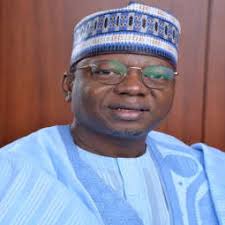
Senator Musa’s Legacy of Intellect, Compassion and Delivery
By Suleiman Adamu
In Nigeria’s dynamic democratic landscape, where leadership often teeters between self-interest and public service, few figures emerge as true exemplars of covenantal representation. Senator Mohammed Sani Musa, CON, affectionately known as “Musa 313,” stands as a beacon of intellectual rigour, empathy, and impactful delivery. Representing Niger East Senatorial District, he has woven a legacy of legislative excellence and grassroots development that resonates far beyond the confines of his constituency, touching the heart of Nigeria’s democratic aspirations.
Great leaders are not born of chance; they are shaped by discipline, preparation, and an unrelenting commitment to progress. Senator Musa embodies this truth. A proud son of Niger State, he embarked on an academic journey that laid the foundation for his remarkable career. At Ahmadu Bello University, Zaria, he earned a Bachelor of Science in Business Administration, specialising in Banking and Finance, in 1990. This degree was not merely a credential but a springboard for his intellectual evolution.
Driven by a thirst for knowledge, he pursued further studies at global institutions, securing a Postgraduate Diploma in Public Policy and Management from the University of London and a Postgraduate Certificate in International Management from the University of Liverpool. These academic milestones equipped him with a nuanced understanding of governance, economics, and institutional reform, moulding him into a technocrat with a worldview enriched by comparative models of development.
Long before he stepped into the political arena, Musa was already a thinker whose ideas were informed by global perspectives and a deep appreciation for systemic change. Senator Musa is no ordinary parliamentarian. His presence reverberates from the hallowed chambers of the National Assembly in Abuja to the dusty roads of rural Niger East. He is a statesman whose intellectual sophistication is matched by his accessibility and empathy, a rare blend that allows him to connect with both policymakers and ordinary citizens.
His nickname, “Musa 313” is a symbol of trust and familiarity, a proof of the bond he has forged with his people. Unlike many legislators whose names fade beyond roll calls, Musa has etched his mark on the annals of parliamentary relevance since his election in 2019. As Chairman of the Senate Finance Committee, he shoulders one of the most critical roles in Nigeria’s legislative framework. His committee oversees fiscal discipline, appropriation, and national planning—responsibilities that demand precision, foresight, and patriotism.
Under his leadership, oversight reports and finance bills are scrutinised with meticulous care, earning him the confidence of Nigerians who see in him a guardian of the nation’s economic integrity. Musa’s legislative contributions are profound and far-reaching. His sponsorship of transformative bills reflects a mind attuned to both the immediate needs of his constituents and the structural challenges facing Nigeria.
Among his notable legislative efforts is the Bill to Regulate and Formalise Employment of Domestic Workers, Interns, and Other Informal Sector Employees (SB 629, 2025), currently in its second reading. Another landmark proposal is the National Rural Employment Guarantee Bill of 2021, a bold initiative to combat rural unemployment and foster economic inclusion in Nigeria’s hinterlands. The Critical Infrastructure Protection Bill of 2021 addresses the pressing need to safeguard Nigeria’s assets against sabotage and insecurity, a critical issue in a nation grappling with infrastructural challenges.
Musa’s vision for education is evident in the National University of Health and Medical Sciences, Suleja Bill, which aims to bolster medical training and healthcare delivery. His Loan Recovery Regulation Bill of 2020 seeks to sanitise the banking sector, while the Constitutional Court of Nigeria Bill of 2020 underscores his commitment to constitutionalism. The Constituency Delimitation Centre Bill of 2020 further demonstrates his dedication to strengthening democratic representation.
Each of these bills reveals a legislator who thinks locally but legislates nationally, addressing the unique needs of Niger East while tackling Nigeria’s broader developmental imperatives. Yet, for Senator Musa, legislation is not an end in itself but a means to transform lives. He understands that parliamentary privilege must translate into tangible progress for his constituents. In Niger East, his interventions are a testament to this philosophy, touching every facet of human development.
In education, Musa recognises that knowledge is the ladder by which societies ascend. He has renovated classrooms and constructed a principal’s office at Government Technical College, Minna, ensuring that students learn in dignified environments. His establishment of an ICT Centre in Ija Gwari, Tafa LGA, is a forward-thinking investment in the digital economy, empowering rural youths to compete in a technology-driven world. His scholarship programs, spanning primary, secondary, and tertiary levels, have opened doors for countless students, with international undergraduate opportunities in China and India offering a global stage for Niger East’s brightest minds. These initiatives are not mere gestures but structural investments in the future, ensuring that the next generation is equipped to lead.

In healthcare, Musa’s mantra of “Health is Wealth” guides his efforts to improve lives. Across the nine local government areas of Niger East, he has facilitated the installation of solar power and generators in primary healthcare centers, ensuring that immunisation, maternal care, and rural treatments are not hampered by power outages. His commitment to maintenance ensures these facilities remain functional, bringing dignity and reliability to healthcare delivery.
In agriculture, the lifeline of Niger East, Musa’s benevolence shines through. He has distributed 10,000 bags of grain to alleviate hunger and provided farm implements and fertilisers to rural farmers, boosting productivity and food security. His tailoring empowerment scheme for 100 youths is a deliberate effort to catalyse cottage industries, fostering economic self-reliance and preserving the region’s agrarian heritage.
Musa’s infrastructure projects further illustrate his responsiveness to his people’s needs. In Ginyin Village, Shiroro LGA, he constructed a solar borehole, delivering clean, safe water to residents who once struggled for this basic necessity. A 1km road in Kuta, Shiroro LGA, has improved connectivity, while electrification projects, including 500KVA transformers in Iwa Gurara and other communities, have brought light to darkened villages.
The renovation of Sukeja Town Hall has provided a communal space for gatherings, reinforcing social cohesion. Each project—water for the thirsty, light for the darkened, roads for the isolated—reflects Musa’s ability to listen and act, addressing the immediate needs of his people while laying the foundation for long-term progress. What sets Senator Musa apart is his embodiment of the qualities that define an uncommon parliamentarian: intellectual grounding, legislative productivity, constituency visibility, empathy, and national relevance.
He is not a populist chasing fleeting applause but a leader who feels the pulse of his people and synchronises it with national priorities. While others may settle for episodic empowerment, Musa builds a systematic architecture of development, weaving together education, healthcare, agriculture, and infrastructure into a cohesive vision for Niger East.
In just two years in the 10th Senate, he has redefined parliamentary responsibility, proving that senators need not be absentee representatives or mere voices in the capital. His work is a bridge between law-making and life-building, a testament to his refusal to divorce policy from people.
Musa’s impact extends beyond Niger East. His legislative efforts address national challenges, from unemployment to infrastructure security, positioning him as a statesman of national consequence. His ability to balance local needs with Nigeria’s broader aspirations makes him a model for aspiring leaders. Niger East is fortunate to have him; Niger State takes pride in his achievements, and Nigeria is enriched by his service.
To honour Senator Musa 313 is to recognise a rare fusion of intellect, compassion, and delivery—a leader who has rewritten the narrative of representation. His contributions are luminous chapters in Nigeria’s democratic journey, illuminating the path for others to follow.
*Adamu PhD is a researcher writing from UniAbuja.



FOPCHEN Seeks Wider Engagement As Court Defers Hearing
OTA, OGUN STATE — The High Court of Ogun State, Ota Division, on Thursday resumed hearing in the ongoing matter involving cultural and societal concerns, before adjourning proceedings till Thursday, July 2, 2026, for continuation of hearing.
At the resumed sitting on May 28, 2026, counsel representing the various parties revisited key issues in the case and made further submissions before the court.
The matter, which has continued to generate public interest across different sectors, again drew attention from legal observers and stakeholders who described the case as one with significant implications for societal values, cultural identity and constitutional interpretation.
Speaking after the proceedings, the Foundation for the Protection of Cultural Heritage in Nigeria, popularly known as FOPCHEN, renewed its appeal for dialogue and constructive engagement among Nigerians, stressing that sensitive cultural and moral issues should not be left entirely within the confines of the courtroom.
According to the group, broader conversations involving traditional institutions, civil society organisations, religious leaders and policy stakeholders remain necessary in addressing issues relating to national values and social responsibility.
Legal analysts at the court premises noted that arguments being canvassed by parties in the suit could shape future legal interpretations surrounding cultural and moral questions in the country.
Following submissions by counsel, the presiding judge adjourned the matter till Thursday, July 2, 2026, to enable parties further prepare and respond to issues raised during the hearing.
The development has continued to spark reactions among observers, with many Nigerians closely monitoring the proceedings ahead of the next hearing date.

US-Based Society Lady, Fehintola-Brat Extends Eid-El-Kabir Greetings To Muslims
United States based fahionista of class, Chief (Mrs) Ayoola Fehintola-Brat has extended a warm greetings to Muslim faithful all over the world on the occasion of the 2026 Eid-El-Kabir celebration.
Fehintola-Brat who is the Balogun Egbe Obaneye Obinrin Akile Ijebu, and the Yeye Asofin of Idenaland in her message to Journalists urged Muslim to continually uphold the enduring values of sacrifice, obedience, faith, and compassion, which are central to the significance of Eid-El-Kabir festival.
A quiet philantropist whose humanitarian services has won her several laurels urged Muslims to use the spiritual occasion to pray for the peace co-existence of Nigerians regardless of religious, social and political leanings stressing that the oneness of the country should not be underplay.
In a related development, she expressed her felicitations to all sons and daughters of Ijebuland on the forthcoming Ojude Oba 2026 celebration, tasking age-groups otherwise known as Regbregbe to be more proactive in giving back to their immediate communities.
According to her, the beauty of the age-groups in Ijebuland is the need to contribute immensely to the development of the land in no small means. “This we will continue to achieve with God on our side”, she concluded.
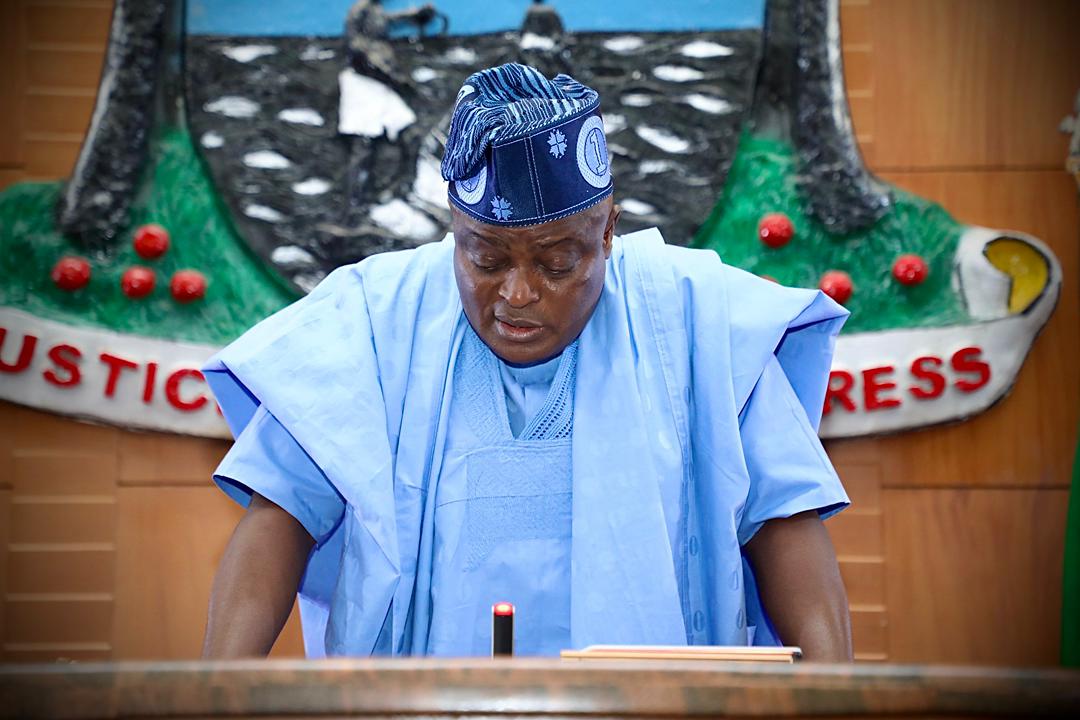
Sallah: Obasa Felicitates Muslim Ummah, Commends Nigerians for APC Primaries Turnout
The Speaker of the Lagos State House of Assembly, Rt. Hon. Mudashiru Obasa has extended warm felicitations to Muslims in Lagos State and across Nigeria on the occasion of Eid al-Adha.
In a statement released by his Chief Press Secretary, Mr. Dave Agboola, Obasa described the festival as a season of sacrifice, reflection, and gratitude, urging the faithful to continue to uphold the values of peace, unity, and love that strengthen the nation.
He noted that the celebration of Eid al-Adha is not only a spiritual milestone but also a reminder of the importance of togetherness and collective responsibility in building a stronger society.
He, likewise, emphasized that the festival provides an opportunity for Nigerians to renew their commitment to national progress and to support leadership that prioritizes development and prosperity.
Obasa, however, commended Nigerians, particularly members of the All Progressives Congress (APC), for their massive turnout during the recently concluded party primaries. He described the participation as a clear demonstration of the people’s confidence in the government of President Bola Ahmed Tinubu and their belief in the administration’s vision for a greater Nigeria.
“The APC primaries have shown the resilience of our democracy and the confidence Nigerians have in the leadership of President Bola Ahmed Tinubu and the Renewed Hope Agenda. This is a strong message that our people are ready to continue supporting policies that will drive growth and prosperity,” Obasa stated.
The Speaker further encouraged Muslims to celebrate responsibly, stressing that the joy of Eid should be accompanied by prayers for the continued peace and progress of Lagos State and Nigeria.
“As you celebrate with family and loved ones, may this season bring joy, peace, and prosperity to your homes. Let us remain united in our resolve to build a stronger nation,” he added.
On behalf of the Lagos State House of Assembly, Obasa wished all Muslims a happy and fulfilling Eid al-Adha celebration.


- Société Nationale des Pétroles du Congo (SNPC) Chief Ominga to Speak at African Energy Week (AEW) 2026 as Congo Accelerates Gas Expansion May 29, 2026
- South Africa: Deputy President Mashatile arrives in India for a Working Visit May 29, 2026
- Seychelles: President Visits Key Development Sites on Coetivy Island May 29, 2026
- Accelerating regional action to advance mental health care in Africa May 29, 2026
- President of the Republic of Seychelles Meets Young La Digue Talent Ahead of London Showcase May 29, 2026
- United Nations Economic Commission for Africa (ECA) launches regional initiative to accelerate women’s digital entrepreneurship across four African countries May 29, 2026
- Ethiopia: International community must act to safeguard press freedom ahead of national election May 29, 2026
- CORRECTION: Annual Meetings 2026 (AM2026): African Development Bank (AfDB) 2025 Trade Finance Report Highlights Resilience of African Financial Institutions After Covid-19 May 29, 2026
- Why Big Tech Could Become Nigeria’s New Gas Partner May 29, 2026
- African Energy Chamber (AEC)-Venezuela Alliance Accelerates Pathways into South-South Energy Expansion May 29, 2026
- Société Nationale des Pétroles du Congo (SNPC) Chief Ominga to Speak at African Energy Week (AEW) 2026 as Congo Accelerates Gas Expansion May 29, 2026
- South Africa: Deputy President Mashatile arrives in India for a Working Visit May 29, 2026
- Seychelles: President Visits Key Development Sites on Coetivy Island May 29, 2026
- Accelerating regional action to advance mental health care in Africa May 29, 2026
- President of the Republic of Seychelles Meets Young La Digue Talent Ahead of London Showcase May 29, 2026
- United Nations Economic Commission for Africa (ECA) launches regional initiative to accelerate women’s digital entrepreneurship across four African countries May 29, 2026
- Ethiopia: International community must act to safeguard press freedom ahead of national election May 29, 2026
-

 news6 months ago
WHO REALLY OWNS MONIEPOINT? The $290 Million Deal That Sold Nigeria’s Top Fintech to Foreign Interests
-

 society4 weeks ago
SOCIAL MEDIA IS NOT A BATTLEFIELD COMMAND – WHY THE NIGERIAN ARMY’S ACTION AGAINST JUSTICE CRACK IS A NATIONAL SECURITY IMPERATIVE
-

 celebrity radar - gossips4 months ago
Dr. Chris Okafor Returns with Power and Fire of the Spirit -Mounts Grace Nation Altar with Fresh Anointing and Restoration Grace on February 1, 2026
-

 celebrity radar - gossips6 months ago
Prophet Kingsley Aitafo Releases 2026 Prophecy: ‘Nigeria Will Rise, but the World Must Prepare for Turbulence’