
Business
Shareholders Commend Access Bank’s 2019 Performance at AGM

It was commendation galore at the 31st Annual General Meeting (AGM) of Access Bank Plc held in Lagos as shareholders hailed the Board of Directors, Management and Staff of the of the Bank for the highly impressive performance for the 2019 financial year.
The meeting, which was held by proxy due to the COVID-19 pandemic, had three leaders of various shareholders’ association present.
Sir Sunny Nwosu of Independent Shareholders Association of Nigeria (ISAN), Mr. Owolabi Peters of Integrated Shareholders Association of Nigeria and Mrs. Bisi Bakare of Pragmatic Shareholders Association of Nigeria, said despite the challenging operating environment, Access Bank Plc did not only record improved results, but also rewarded shareholders with good a dividend that is very timely given the difficulties created by the COVID-19 pandemic.
For instance, Nwosu said Access Bank Plc had a good foresight by merging with defunct Diamond Bank Plc, noting that “the professional and seamless manner with which the integration was done should be commended and shareholders appreciate the board and management.”
According to him, the future remains very bright for the all shareholders, considering the synergy the merger has brought to the Bank and the expertise the management and staff continued to deploy to ensure Access Bank maintain a leading role in the retail banking space.
Nwosu also commended leading efforts of Access Bank in the private-sector led Coalition Against COVID-19 (CACOVID), supporting the Federal Government to fight the pandemic.
On her part, Mrs. Bakare said unlike some of its competitors, Access Bank has recorded increased profits in the past three years, noting that shareholders have confidence in the board and management to continue to deliver improved performance, going forward.
In his address, Group Managing Director/CEO, Access Bank Plc, Dr. Herbert Wigwe, said the Group delivered a 26 per cent increase in gross earnings of N666.8billion from N528.7billion in 2018, comprising interest in-come growth of 41 per cent from previous levels to N155.9billion despite declining interest rate environment.
“The effects of an enlarged loan book contributed significantly to the interest income growth of N155.9billion (+41 per cent y/y), leading to strong bottom-line figures. The net effect on operating income resulted in strong profit before tax (PBT) of N115.4billion as against N103.2billion in 2018. The strength of the performance reflects a growing franchise supported by digital capabilities and improving customer service touchpoints. The retail business gained momentum, leveraging opportunities in key sectors to consolidate market share dominance through our digital loans. The wholesale business also continued to soar in the year, following intense marketing drive and continued investment in the sector to deliver stronger synergies,” he said.
The Bank ended the year with profit after tax (PAT) of N97.509 billion, up from N94.981 billion and paid a final dividend of 40 kobo to bring the total dividend to 65 kobo per share.
Wigwe said the merger with Diamond Bank produced a truly diversified institution with remarkable retail presence and solid wholesale market share.
“This has propelled us towards achieving our five- year strategic objectives to create the largest bank in Nigeria by total assets as well as largest in Africa by customer base with over 36 million unique customers across the network. Using an agile approach and with strong dedication, we have achieved a significant milestone in financial services on the continent whilst delivering the fastest and most seamless customer Day 1 integration globally. With the emergence of the new entity, the bank is well- positioned to cater to the retail business through a broader reach and product offerings tailored to individual customer needs and delivered efficiently. Access Bank is now a tier one retail banking franchise with strong digital payments capabilities and benefiting from a diversified business mix,” he said.
Wigwe said the bank is already addressing the issue high operating expenses and taking drastic measures to ensure that expenses are reduced significantly, adding the effect would be felt mostly in the second, third and final quarter of 2020.
Speaking on how Access Bank is running its business in the COVID-19 period, the GMD assured that Access Bank has put in place a robust business continuity process enough to sustain the bank’s performance going forward.
“Access Bank was well prepared for the COVID-19 early enough and created ways of working from home and working with our customers. We set up links with our customers and many ways of reaching out to our customers three or four times in a day. This happened even before we started working with the larger society and enabled us to start fighting this pandemic. So Access Bank has put a system in place and now working with CACOVID to make sure that everyone knows what he is doing,” he said.


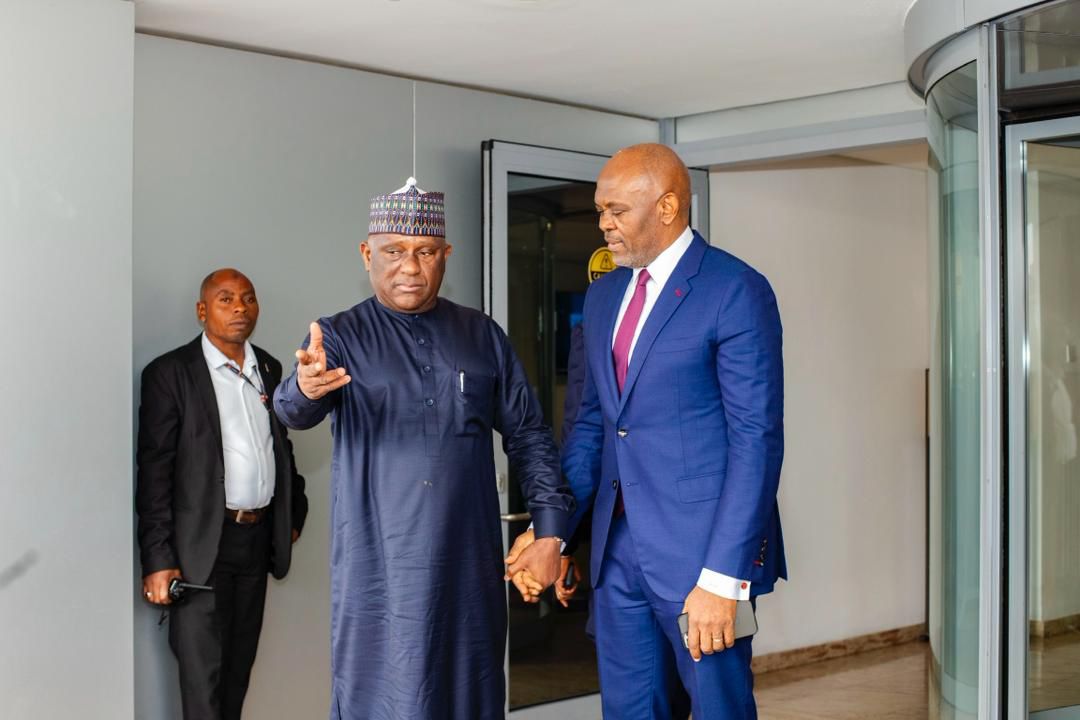
RABIU, ELUMELU ALIGN ON CAPITAL, SCALE, AND INDUSTRIAL EXPANSION AS BUA FOODS POSTS N1.77 TRILLION REVENUE, N28 DIVIDEND
Lagos, Nigeria | March 31, 2026
Nigeria’s industrial and financial heavyweights moved to deepen a partnership that has quietly underpinned decades of enterprise growth, as the Founder and Chairman of BUA Group, Abdul Samad Rabiu, hosted the Chairman of United Bank for Africa, Tony Elumelu and his executive management team at BUA Group’s corporate headquarters in Lagos.

More than a visit, the engagement brought together two institutions whose alignment of capital and industrial capacity has consistently translated into scale, execution, and long-term value creation across Nigeria and Africa’s economy.
At the centre of discussions was a renewed push to expand financing frameworks for large-scale manufacturing, deepen support for domestic production, and unlock the next phase of growth across food, infrastructure, and export-oriented value chains.
Rabiu, reflecting on a relationship that spans nearly three decades, traced its evolution from the early days of Standard Trust Bank to its present form as a mature, trusted partnership with UBA.
“Enduring partnerships are not built on transactions, but on conviction,” Rabiu said. “What we have built with UBA and the Nigerian financial industry over the years is a shared understanding of where Nigeria is going and what it will take to get there. That alignment remains as strong today as it was at the beginning.”
Elumelu underscored the strategic importance of the relationship, positioning it within a broader vision of African-led growth.
“Institutions like BUA Group demonstrate what is possible when long-term capital meets disciplined execution,” Elumelu said. “Our role is to continue enabling that scale, supporting enterprises that are not only growing, but reshaping the Nigerian economy.”
The meeting signals a continued convergence between capital and industry at a time when Nigeria’s growth story is increasingly being driven by indigenous scale, operational depth, positive government action, and sustained investment in real sectors.
In a parallel demonstration of that scale, BUA Foods, a BUA company, has released its audited results for the financial year ended December 31, 2025, delivering revenue of N1.77 trillion, a 16 per cent increase from N1.53 trillion in 2024.
The performance reflects sustained demand across its core segments including sugar, flour, pasta, and rice, alongside continued execution of its expansion strategy.
Gross profit rose to N737.26 billion, up from N540.82 billion, while profit after tax surged by 95 per cent to N518.4 billion, compared to N265.99 billion in the prior year.
Earnings per share increased to N28.80, reinforcing the strength of the Company’s earnings profile.
In line with its commitment to shareholder value, the Board has proposed a dividend of N28 per share, representing a 115 per cent increase from N13 in 2024, with a total proposed payout of N504 billion, subject to shareholder approval.
Cost of sales stood at N1.037 trillion, while total assets grew by 27 per cent to N1.39 trillion, reflecting sustained investment across operations and the broader value chain.
Speaking on the results, the Chairman of BUA Foods, Abdul Samad Rabiu said, “Our 2025 performance reflects a business that is not only growing, but scaling with discipline. We are building capacity, deepening local production, and delivering consistent value to shareholders, all while positioning for the future.”


The Managing Director, Engr. Ayodele Abioye, added; “Our strategy remains to expand capacity, strengthen market presence, and optimise the full supply chain. The demand signals are strong, and we are well positioned to sustain this momentum.”
Taken together, the meeting between BUA Group and UBA, alongside BUA Foods’ record performance, points to a broader shift for Nigeria. Nigeria’s growth is increasingly being shaped by institutions that combine scale, capital discipline, and long-term vision and should be seen as not just an expansion but a consolidation of industrial leadership.
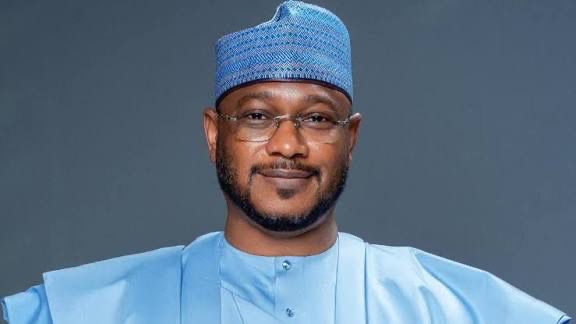
Governor Dauda Lawal Set To Unlock Zamfara’s Economic Potentials with Tinubu’s UK State Visit
By Oladapo Sofowora
As President Bola Ahmed Tinubu commences his landmark state visit to the United Kingdom the first by a Nigerian leader in 37 years, the inclusion of Zamfara State Governor Dauda Lawal in the presidential entourage is not a fluke; rather, it signals a strategic opportunity for the northwest state to transform its economic fortunes. Beyond the ceremonial pageantry, this high-level diplomatic engagement holds concrete prospects for Zamfara, particularly in agriculture and solid minerals development, sectors where the state possesses a comparative advantage but has struggled to attract meaningful investment. With Governor Lawal working assiduously to generate more IGR for the state and also position it as an economically advanced hub within the region with the construction of a Cargo Airport, this ushers in an era where the state is about to witness a great turnaround championed by Governor Lawal.
The timing of the bilateral engagement between the UK and Nigeria is significant, as the trade surplus between the two countries has reached a record £8.1 billion annually, and both nations are intensifying collaboration under the UK–Nigeria Enhanced Trade and Investment Partnership (ETIP) framework.
According to economic pundits, key sectors targeted for cooperation include trade and investment, energy transition, solid minerals development, and security collaboration – all areas with direct implications for subnational governments like Zamfara. For Governor Lawal, being part of this engagement provides direct access to British investors and development partners that could reshape Zamfara’s economic landscape.
Governor Lawal arrives in London with ambitious development plans to corroborate the budget he presented in December 2024, a ₦861.3 billion budget proposal for the 2025 fiscal year submitted to the Zamfara State House of Assembly, a document he described as “a roadmap for transformation and a declaration that Zamfara will rise stronger.” The budget allocates ₦714.05 billion (83 per cent) to capital expenditure, with sectoral allocations including ₦86 billion for agriculture and significant provisions for infrastructure development. However, these ambitious plans require corresponding revenue streams and investment partnerships to allow them to materialise and reach their full potential.
The governor has been implementing domestic reforms to strengthen the state’s fiscal position. In March 2025, he abolished cash revenue collection across Zamfara, directing all Ministries, Departments, and Agencies to adopt digital systems for revenue collection. His administration set an Internally Generated Revenue target of ₦38 billion to ₦42 billion for 2025, building on 2024’s revenue performance of ₦358.9 billion. With all these impeccable performance indicators, domestic resource mobilisation alone cannot fund the scale of transformation he envisions for the state. The only way to scale up is through Foreign Direct Investment, particularly in agriculture and mining, which represents the missing piece of Zamfara’s development puzzle.
Zamfara State is predominantly agrarian, with the majority of its indigenous population engaged in farming. The state’s favourable climate and vast arable land position it as a potential breadbasket for northern Nigeria. However, the sector remains largely subsistence-based, with limited processing capacity and weak linkages to export markets.
The UK state visit offers opportunities to change this dynamic. British companies have demonstrated growing interest in Nigerian agriculture, as evidenced by Twinings Ovaltine’s £24 million manufacturing facility launch in Lagos its first in Africa creating over 100 direct jobs. Similar investments could be directed toward Zamfara’s agricultural sector, which would be a boost and also create more income for farmers in the production of specific crops with value-addition potential. These include:
Zamfara lies within Nigeria’s cotton belt, but the state lacks ginning and textile processing facilities. Partnerships with British textile companies could establish local cotton processing capacity, capturing value currently lost to exports of raw lint. Groundnut is also a major export commodity from northern Nigeria, but production has declined due to neglect of the sector. British confectionery and food processing companies represent potential off-takers for processed groundnuts.
With growing demand for animal feed and industrial starch, Maize and Sorghum crops offer processing opportunities. British agribusiness firms with expertise in agro-processing could establish milling and processing facilities in Zamfara.
With Sesame Seeds already an export crop, sesame production could benefit from improved processing and certification to meet international standards, particularly for the UK market.
For Zamfara, “opportunities for Nigerian businesses” translates directly to potential agricultural partnerships that could modernise farming practices, establish processing infrastructure, and create export linkages.
Perhaps the most significant potential gains for Zamfara lie in the solid minerals sector. The state is renowned for its gold deposits, which have historically attracted both licensed operators and illegal miners. However, the sector has been characterised by informality, environmental degradation, security challenges, and loss of revenue to the state.
Recent developments at the federal level underscore the growing importance of the minerals sector. The Federal Government recently announced the commencement of operations at a high-purity gold refinery in Lagos – a private-sector initiative led by Kian Smith in partnership with UAE-based Suvarna Royal Gold Trading. For Zamfara, this means advocating for gold processing facilities within the state, not merely exporting overseas, but creating a gold refinery which helps create more jobs within the mining value chain. Governor Lawal’s presence in London provides an opportunity to position Zamfara as a preferred location for one of these gold refineries, particularly with British investment partners.
In a bid to redefine the regulatory framework and investment readiness, Zamfara has been taking steps to create an enabling environment for mineral investment. In February 2025, the Federal Ministry of Solid Mineral Development, in collaboration with the Zamfara State Mineral Resources and Environmental Management Committee (MIREMCO), convened a stakeholders’ meeting with quarry operators, mineral processors, and gold dealers to promote safety and regulatory compliance. The Federal Mines Officer in Zamfara State emphasised that both the federal and Zamfara State governments are determined to promote responsible mining practices that enhance security, safeguard the environment, and ensure that solid mineral resources contribute meaningfully to economic development.
This regulatory clarity is essential for attracting foreign investors. British mining companies and equipment manufacturers require assurance that their investments will operate within a predictable legal framework. The UK–Nigeria ETIP discussions in London provide a platform for Governor Lawal to articulate Zamfara’s investment readiness and regulatory improvements directly to potential partners.
No discussion of Zamfara’s economic potential can ignore the security challenges that have plagued the state. Banditry, kidnapping, and community conflicts have disrupted farming, hindered mining operations, and deterred investment. Governor Lawal’s 2025 budget allocates ₦45 billion to public order and safety, recognising that security is foundational to economic development. The UK visit offers opportunities for security collaboration. Improved security cooperation between Nigeria and the UK could translate to enhanced capacity to protect farming communities and mining sites, creating conditions for agricultural and mineral investments to flourish.
As Governor Lawal engages with British investors and policymakers, he would do well to study how other resource-rich regions have successfully attracted investment while ensuring local benefits. For Zamfara under Governor Lawal, the lesson is clear: attracting investment in extraction must be accompanied by deliberate strategies to build local processing capacity. Simply exporting raw gold or agricultural commodities perpetuates the “resource trap” that has left many African regions impoverished despite abundant natural wealth.
If Governor Lawal’s participation in the UK state visit yields tangible results, Zamfara could experience, in agriculture, British investment in agro-processing facilities, creating jobs for local farmers and capturing value from crops like cotton, groundnuts, and sesame. Technical partnerships to improve farming practices and access to UK markets for certified organic or fair-trade products.
In solid minerals, partnerships with British mining companies for responsible gold extraction, potentially including a gold refinery within Zamfara. Technical assistance for artisanal miners to formalise operations and improve safety. Investment in environmental remediation of degraded mining areas.
For Zamfara State, Governor Lawal’s inclusion in the presidential entourage transforms a diplomatic milestone into a concrete opportunity for subnational economic development. The state’s abundant agricultural land, mineral wealth, and a population eager for economic opportunities hold immense potential. The journey from potential to prosperity is long, but it begins with a single step or in this case, a transatlantic flight carrying Zamfara’s hopes to the corridors of British power and finance.
*Oceangate Engineering Oil & Gas LTD to appeal Federal High ruling over forfeiture assets*
Oceangate Engineering Oil & Gas Limited has said it will appeal to the recent ruling of the Federal High Court ordering the forfeiture of certain assets.
Barr. Nnenna Onyeaso, the Company Secretary said in a statement on Thursday insisting that neither the company nor its leadership was found guilty of any wrongdoing.
Onyeaso said that the firm has described the court’s decision as a civil asset forfeiture order based on suspicion rather than proof, stressing that the judgment did not establish any criminal liability against the organisation.
According to her, the company maintain that it has already directed its legal team to file an appeal, expressing confidence in the judicial process and the outcome of a thorough review of the case.
“To be clear, this ruling is a civil asset forfeiture order with no finding of wrongdoing against Oceangate or its leadership.
“The court’s decision rested on a legal standard of suspicion, not proof, and it is one we intend to pursue fully through the appeals process,” she said in a statement.
The firm secretary also said that Oceangate has reiterated its belief in the rule of law, noting that the appellate system exists to address such outcomes.
She added that the company remained confident that the facts of the case will ultimately affirm its integrity and business practices.
Onyeaso said that the firm also emphasised that its operations remained unaffected, stating that it continues to provide employment for many Nigerians while contributing to the country’s energy sector and broader economy.
“We have always believed in the ability of the judicial process, and that belief has not wavered,” she added.
She noted that Oceangate further expressed appreciation to its employees, partners, and clients for their continued support amid the development, assuring stakeholders of its commitment to transparency and accountability.
The Secretary said that the company reaffirmed its confidence in Nigeria as a viable destination for investment, describing the country as a land of equity, growth, and opportunity.
“We remain committed to the continued growth of our business and the communities we serve as we are optimistic that justice will prevail at the end of the legal process.


-

 society6 months ago
Religion: Africa’s Oldest Weapon of Enslavement and the Forgotten Truth
-

 news4 months ago
WHO REALLY OWNS MONIEPOINT? The $290 Million Deal That Sold Nigeria’s Top Fintech to Foreign Interests
-

 society6 months ago
“You Are Never Without Help” – Pastor Gebhardt Berndt Inspires Hope Through Empower Church (Video)
-

 celebrity radar - gossips2 months ago
Dr. Chris Okafor Returns with Power and Fire of the Spirit -Mounts Grace Nation Altar with Fresh Anointing and Restoration Grace on February 1, 2026