
society
SHOMOLU LOCAL GOVT., LAGOS: A LAND OF MANY TROUBLES

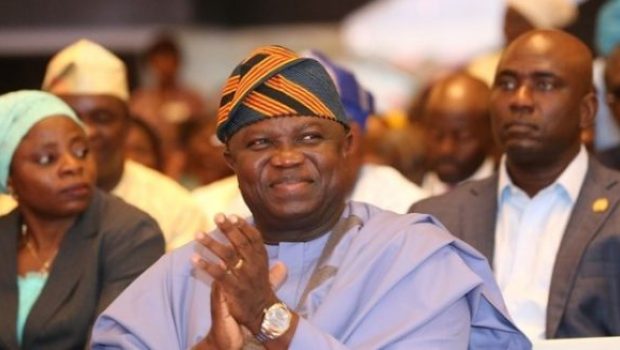
On Wednesday 25th of April, 2018, I was invited as an identified stakeholder by the United State Institute of Peace (USIP) to a forum at the Human and Environmental Development Agenda headquarters in Lagos State, on Election Violent Risk Assessment tagged “Identifying Opportunity for Peace”.
The program was aimed at getting the view of identified stakeholders, mostly Nigerians across board, on the possibility of a violent free election in Nigeria and necessary preventive measure.
Anyone with the slightest interest and sentiment for Shomolu local government, among few others identified, would have been really embarrassed seeing Somolu being used as a case study on possible outburst from intraparty grievances. But as a leader and public administrator, I represent no single local government, but all. So I could not afford to be sentimentally biased and so must admit the fact that Shomolu local government is a good case study of “a land of many troubles”, as painted, hence this report and writeup.
Although there are many issues in Nigeria i.e the Senate drama; Killing in Benue; even the dormancy or better called betrayal of peoples’ trust by the Lagos State House of Assembly by giving automatic rubber stamp to every anti people and exploitative policies and laws by the executive e.t.c. All these would be addressed in future and the leadership of the Human Rights Monitoring Agenda (HURMA) is deliberating day and night on way forward.
The focus at present is how to avoid possible breakdown in Shomolu local government as recently identified by distant speculators.
To start with, the Secretariat of Somolu, just like others in Lagos, is identified to be under the supervision and control of some professional politicians with professional area boys that are better referred to as “Abobaku”, the unprincipled sycophantic loyalists.
As rightly described by Comrade Soetan (Baba Sho) in his recent write-ups: “Between ABOBAKU and a SUPPORTER!”
A major difference between a Supporter and Abobaku of a reigning King is that a Supporter keeps silent when the King is wrong but Abobaku jumps up in jubilation and praises the King! Long live the King, the King can never be wrong!
Though our office is aware and agreed that there are many problems in Shomolu and we have also conducted some research on way out, I never knew Somolu is being watched by many unknown and from a distance.
The Constitution of the Federal Republic of Nigeria stated clearly, what should be the primary aims and objectives of government under Chapter 2 that speaks on “Fundamental Objectives and Directive Principles of State Policies”. The security of lives and properties is clearly identified.
Section 14 (2b) States: the security and welfare of the people shall be the primary purpose of government.
Section 17 speaks on “Social Justice” and in subsection 3(d) states: The State shall direct its policy towards ensuring that there are adequate medical and health facilities for all persons.
Although the Executive Chairman, Hon. Salaudeen, appears to be cool headed and one with listening ears, on the above matters he seems to have failed and as well confused.
The once functional General Hospital is now distressed with no room for admission. People die regularly for this reason with no solution from any end other than promise by the ruling elite since no direct family member of theirs is or could be affected.
On the area of security, the gentle looking poor Dullar, chairman of Somolu local government, who is supposed to be the number one and chief security personnel of the L.G was recently attacked by someone from and within his territory, yet nothing done on the matter till date.
The question people ask till date is “who attacked the chairman and why is the matter not fully investigated? Are these people now playing politics with the lives of the citizenry in the territory, then what becomes of ordinary poor citizens.
By and large, the U.S Institute initiated forum see this part of the country, Lagos State, as not seem to be brutally violent, come 2019 general election, if the intraparty issues are well managed.
The forum identified Lagos state as the melting point of Yoruba politics, which is what Ibadan used to be. As regards the ruling party, most people are identified to see the APC in Lagos, as representing their cultural values.
More so, based on precedence, election in Lagos has not been so violent, though there are recorded cases of politically motivated killing i.e the killing of Funsho Williams in 2003 by God knows who.
Intraparty issue cannot however be ruled out, especially when it comes to imposing unpopular candidate on the people. But the party leadership seem to have control over its subject in the party
It is however unfortunately observed that Somolu L.G among few other areas was identified as territory where even the apex leadership (Jagaban) has not been able to solve the intraparty issues as some elements are still protesting since the last L.G election.
Serious state and party intervention was suggested as to prevent possible peace breach in Somolu community.
One of the most brutal experience in Yoruba land was linked to an attempt to impose the late Akintola on the people of the Southwest by the F.G in 1964 and possible reoccurrence of similar event is envisaged where imposition is seen as the order of the day.
The vice chairman of Somolu local government is observed to not have resumed the office given to him in a silent protest since the last L.G election and yet the highest Oracle of Apc is yet to completely resolve the crisis in the Secretariat.
Reason identified for the internal grumbling was that some are not pleased and are silently protesting the stolen candidacy of a chairmanship aspirant, Bowale, who celebrated his primary victory across the entire local government, but only to be sidelined from a kangaroo arrangement by members of Lagos House of Assembly (LAHA) as dictated by the man on top, to fulfill some hidden agenda.
He is said to have been supported locally for the L.G primary election by a man identified to be most popular in Somolu politics, in person of Hon. Olowo Rotimi, a member of LAHA whose generosity is said to be confirmed by even his enemies. Rotimi Olowo is said to be more popular than the entire local government councillors, even in their various street, but rumor has it that he may not be on the good list of Jagaban, the king maker, with a resultant effect that may not be palatable on the entire community and beyond.
The man Bowale was later made vice but never resume office for ones.
The recent attack on the easy going chairman of the local government was however linked to the candidacy issues above, perhaps by some abobakus.
From the above observations by non political observers, it is glaring that people in the territory may be sitting on a keg of gun powder and truly requires urgent attention.
On a personal note, among what come to my mind on the above sceneries are two major questions:
1. Why would a so called sincerely generous and truthful Hon. Olowo support the removal of his candidate in the first instance, 2 days to election at LAHA?
2. On the Vice Chairman of Somolu L.G, Hon. Bowale, who has refused to resume office since swearing in, who takes his salaries?
On a serious note, our office, HURMA, may assist, with transparency and proper accountability, in judicious distribution of the rejected monies among the oppressed and poor who troop our office on daily basis, if given the opportunity.
May I sincerely hereby advice all members of Nigeria political class or associate, especially in the ruling APC, for the sake of their future, if they care for any. Party members must see the parties as their own and seize the initiative for collective ownership beyond reducing themselves to beggars living on hands outs from their corrupt leaders. This I see as minimum responsibility expected.
Finally as a revolutionary activist in the now more popular Local Government, but unfortunately with possible future violent trait, I would rather refer to the all key political players as same of same. They all belong to the bourgeois capitalist ruling class whose interest is to hold the people down for perpetual oppression and exploitation.
Only a genuine revolution, which we regularly discourse and mobilise people to, at our regular meeting can liberate the poor masses.
For democracy and good governance to thrive in Nigeria, as observed by a leader in struggle, Comrade Adeola Soetan, it is better to be an Abobawi, that is, those who correct the king when he is wrong because he is not infaliable, than to be an Abobaku, that is those who are ready to die with king, rightly or wrongly.
To be an Abobaku is to worship the king as a sycophant and falsely projects the king”s infallibility naively or consciously for whatever personal reason or bandwagon affliction. And in that process, an Abobaku suffers from a self inflicted or contagious debilitating disease of mind closure and anal reasoning complex.
Such tragic human commodities die with the king because they have no souls of their own.
A word is enough for the wise.
Comrade Buna Olaitan Isiak is the Executive Director of Human Rights Monitoring Agenda (HURMA).
A public affairs analyst and a certificated trainee on Anti Corruption by the United Nation Office on Drugs and Crime.




NASRE: Building A Safety Net For Nigeria’s Journalists
At a time when Nigeria’s media industry is strained by economic uncertainty, job instability, and shrinking newsroom resources, the Nigerian Association of Social and Resourceful Editors (NASRE) is redefining professional solidarity. More than a network of editors, it is emerging as a critical support system for journalists navigating an increasingly precarious landscape.
Founded on the principles of welfare, solidarity, and professional growth, NASRE has positioned itself as a responsive and forward-looking body within the media ecosystem. While many professional associations remain focused on advocacy and training, NASRE distinguishes itself by combining these roles with direct and practical support for journalists and their families.
At the core of its mission is a clear proposition that no journalist should be abandoned in times of need. Through financial assistance, targeted outreach, and sustained engagement, the association has supported members facing hardship, as well as widows and families of deceased practitioners. These largely understated interventions have steadily earned NASRE credibility and respect across the industry.
The organisation’s approach reflects a keen awareness of the pressures confronting media professionals, including irregular pay, job insecurity, and limited institutional backing. In such an environment, NASRE’s welfare initiatives are not merely charitable, they are essential.
Beyond welfare, the association is investing in professional resilience. Through collaboration, networking, and knowledge-sharing platforms, it is equipping editors and practitioners to remain competitive in a rapidly evolving digital media space, where adaptability is no longer optional.
Headquartered in Lagos, NASRE continues to broaden its reach, attracting a growing membership united by the need for a more responsive and supportive professional community. Its expansion signals a shift in expectations within the industry, away from symbolic affiliations towards institutions that deliver measurable value.
For many observers, NASRE represents a necessary evolution, a professional body anchored not just in ideals, but in impact. By combining empathy with structure, it offers a model of what media associations can become in challenging times.
As the industry continues to evolve, organisations like NASRE may prove indispensable. In a profession devoted to telling society’s stories, it is ensuring that the storytellers themselves are not left behind.
Oluremi Tinubu Hosts Wife of New IGP, Talks Welfare, Empowerment for Police Families
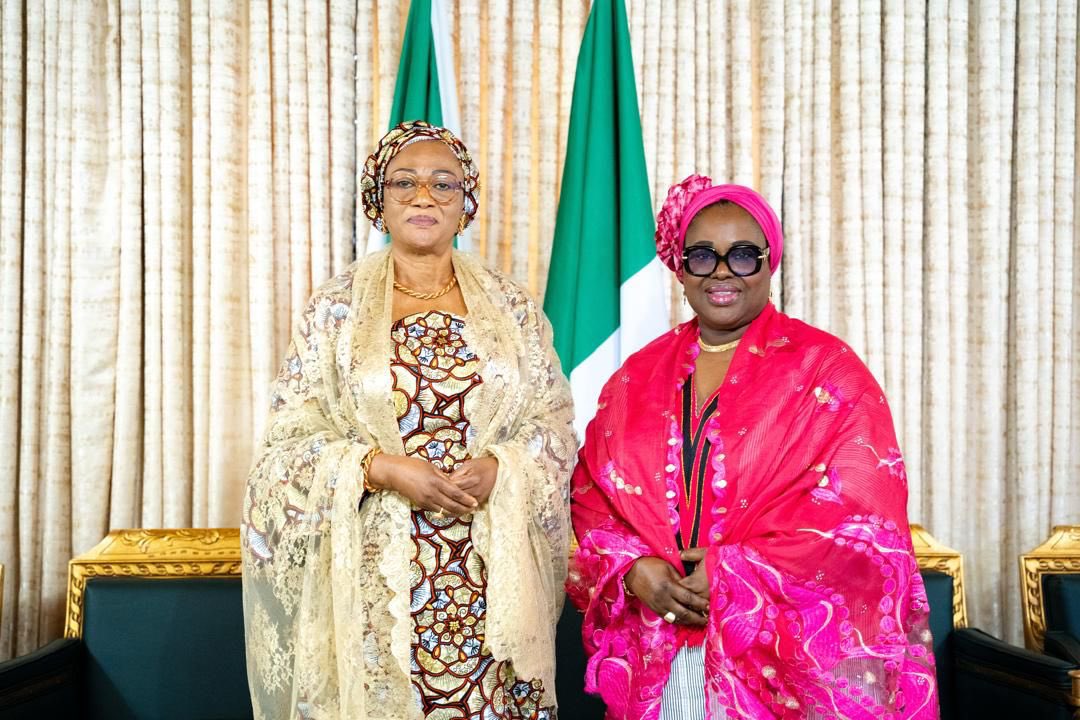
The First Lady of the Federal Republic of Nigeria, Senator Oluremi Tinubu, today welcomed Mrs. Mutiat Disu, wife of the Inspector General of Police, at the State House in Abuja.

During the meeting, the First Lady encouraged Mrs. Disu to continue championing the welfare and wellbeing of police officers’ families, especially through impactful support for their wives.
Speaking after the meeting, Mrs. Mutiat Disu shared her excitement about partnering with the First Lady’s Renewed Hope Initiative (RHI), noting that she is ready to leverage its programs to empower police officers’ wives across the country.
Mrs. Disu, who also serves as the National President of the Police Officers’ Wives Association (POWA), described the meeting as insightful and inspiring. She emphasized her commitment to using RHI platforms to improve healthcare, welfare, and economic empowerment for POWA members nationwide.
“The purpose of this visit is to tap into her wealth of experience and explore how POWA can benefit from her programs,” she said.
She added that her engagement with the First Lady has already provided valuable direction, especially in areas of social intervention and healthcare support for police families.
“I’m ready to work closely with Mama to ensure our women benefit fully, especially since RHI focuses on uplifting women, and POWA is largely made up of women.”
Mrs. Disu assumed leadership of POWA following the appointment of Tunji Disu as Inspector General of Police on February 24, 2026, succeeding Kayode Egbetokun.
Police Day 2026: IGP Disu Leads Nationwide Walkathon To Strengthen Community Trust
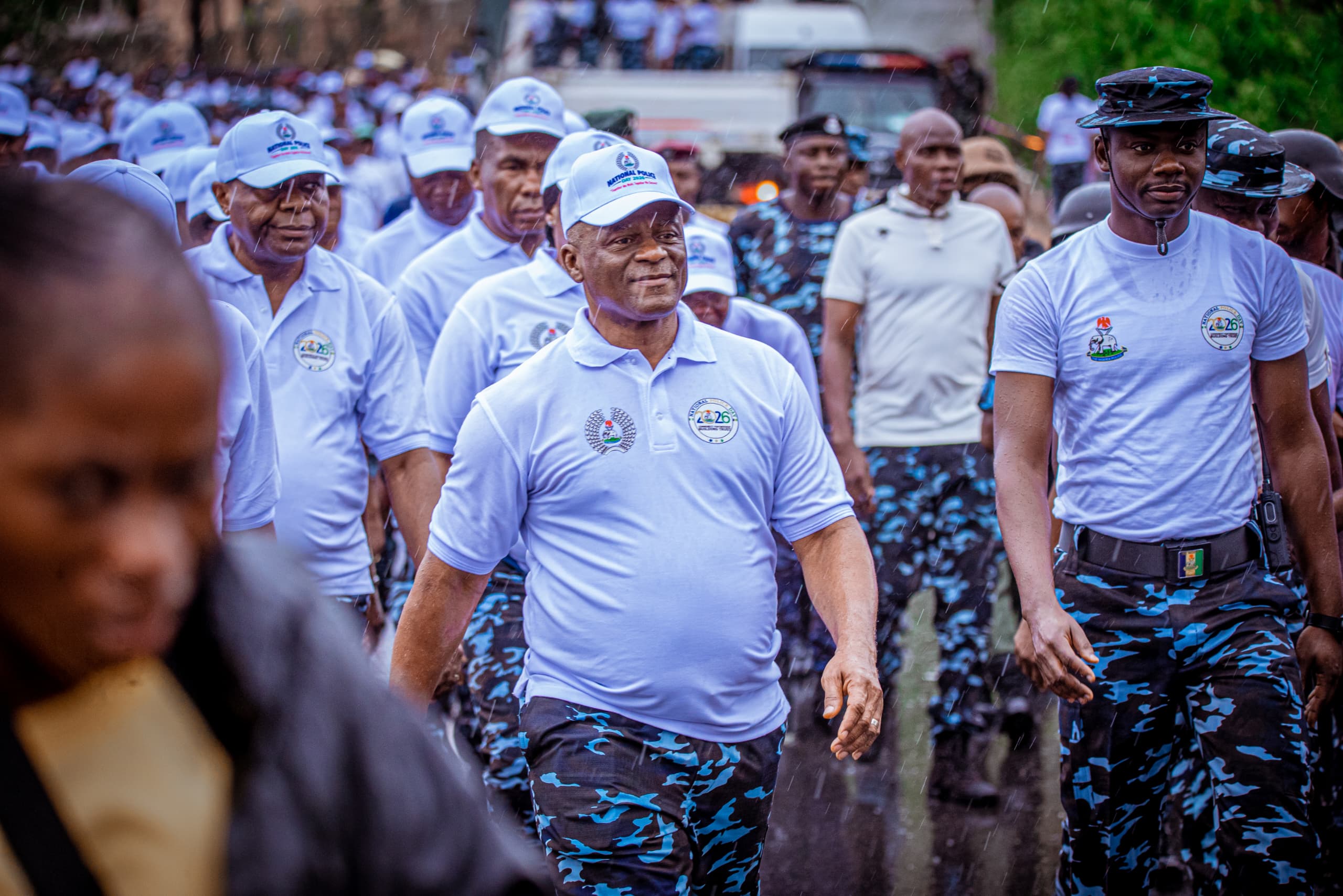
The Inspector-General of Police, Olatunji Disu, on Tuesday led the management team, alongside officers and personnel of the Nigeria Police Force, in a nationwide walkathon to commemorate the 2026 National Police Day.
The event, held across state capitals and the Federal Capital Territory, formed part of activities marking Day Two of the annual celebration, themed “Community Partnership: Building Trust.”
The symbolic exercise, which drew participation from both police personnel and members of the public, was aimed at showcasing unity, discipline, and a renewed commitment to community policing and public safety.
According to the Force leadership, the walkathon underscores the Nigeria Police Force’s resolve to strengthen public trust, deepen engagement with citizens, and enhance collaboration in tackling security challenges across the country.
Participants described the initiative as a practical step toward bridging the gap between law enforcement and the communities they serve, while also promoting physical fitness and mental well-being among officers and civilians alike.
With the theme reflecting a shared responsibility for safety, the Police reiterated that sustainable security can only be achieved through active partnership with the public.
The event concluded with a renewed call for collective action under the banner: “Together We Walk, Together We Secure,” emphasizing unity of purpose in building a safer and more secure society for all Nigerians.


-

 society6 months ago
Religion: Africa’s Oldest Weapon of Enslavement and the Forgotten Truth
-

 news4 months ago
WHO REALLY OWNS MONIEPOINT? The $290 Million Deal That Sold Nigeria’s Top Fintech to Foreign Interests
-

 society6 months ago
“You Are Never Without Help” – Pastor Gebhardt Berndt Inspires Hope Through Empower Church (Video)
-

 celebrity radar - gossips2 months ago
Dr. Chris Okafor Returns with Power and Fire of the Spirit -Mounts Grace Nation Altar with Fresh Anointing and Restoration Grace on February 1, 2026
You must be logged in to post a comment Login
You must log in to post a comment.