
Politics
Show Of Shame’: Full Speech Of Saraki’s World Press Conference On DSS NASS Invasion

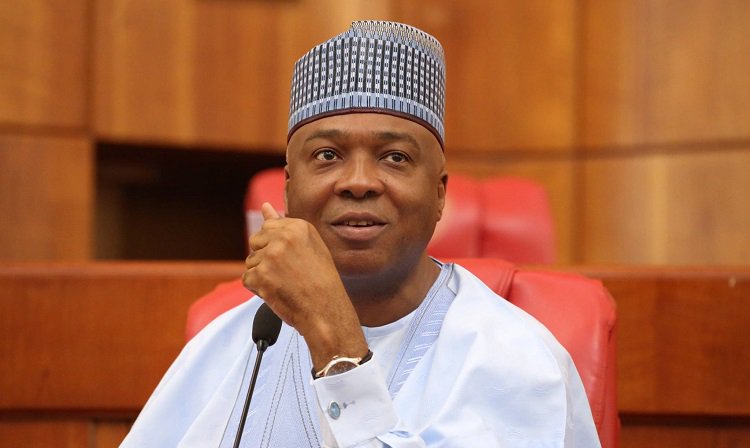
Below is Saraki’s full speech:
It is a matter of record that yesterday, lawmakers and staff of the National Assembly were prevented from entering the National Assembly Complex by heavily armed security agents of the Department of State Services (DSS). All entries to the Complex were blocked. The National Assembly, the seat of democracy in Nigeria, was under lockdown. Senators and Members of the House of Representatives were prevented from gaining access.
2. The ensuring standoff was a show of shame that played itself out over several hours in full view of the country. In no circumstances should this have happened. And we as a nation reaped the bitter fruits instantaneously, as evident in media images relayed around the world, images that shame us as a democratic nation. The siege was also an act of cowardice by those seeking to carry out an illegal impeachment of the leadership of the Senate in flagrant disregard of the law. People who seek control at all costs, by whatever means, never minding the injury to democratic norms.
3. I have to say that this is not about me – Abubakar Bukola Saraki as an individual. It is not about Ike Ekweremadu, nor is it about Yakubu Dogara. I am speaking for my colleagues when I say that this is about the soul of Nigeria, what we represent as a country, and our standing in the comity of nations. This is a country where so much is expected of us, so many rungs of the ladder that we are supposed to have ascended as a nation. Instead we are wallowing in impunity and illegal show of force, all of which slowpoke our progress.
4. This is most disheartening. I don’t get any joy in saying: I said so. I don’t. However, some of you may recall that about two years ago, I stated that there was a government within this government, to a purpose that was not in the interest of what the people voted for. I said it then, and now we are beginning to see the manifestations of that government within a government. It beats one’s imagination how the head of an agency could have authorized the brazen assault on the legislature that we saw yesterday. Despite the threat to our lives, we shall continue to fight impunity and injustice in this country.
5. Happily, by the actions that Nigerians took yesterday, they demonstrated our strong resolve as a nation not to give ground to oppression. The legislature, more than any other institution in this country, more than any other arm of government, represents the will of the people. We are elected by the people, and an assault on the legislature is an assault on the people of Nigeria. The forcible shutdown of the legislature was an unconscionable assault on a national institution, and thanks to all your efforts, the aggressors have been put to shame.
6. The resistance mounted by staff of the National Assembly, my colleagues in both chambers and Civil Society Organisations (CSOs) who refused to leave the entrance of this Complex until the siege was broken, strengthens my faith in the people of this country. The rain fell, the sun rose, but Nigerians stood their ground in defence of democracy. With the strength of will demonstrated by everyone against unwarranted and unconstitutional militaristic might, the siege could not stand.
7. By this, we have shown that Nigerians can resist government within government in whatever guise, and this is humbling for me. Those who sought to attack the National Assembly under my leadership for their selfish ends have only affirmed my belief in this country. They attempted to execute an illegal impeachment of the leadership of the Senate without the backing of the law, but they faltered. I am confident that, together, we shall always defeat acts of unconstitutionality. The rule of law shall always prevail.
8. I want to thank Nigerians, Senators, Members of the House of Representatives and National Assembly Staff, for standing up to be counted for democracy during yesterday’s siege. I thank the thousands who monitored the situation on radio, television and social media, voicing their outrage at the siege, thereby sending a clear message to those that hatched the plot that the Nigerian public would not buy this act of gangsterism using instruments of state such as the DSS.
9. I also thank the international community – particularly the European Union – and the international press, for their prompt reactions to the invasion of the National Assembly. CSOs and Socio-cultural groups were emphatic in their statements during the crisis, and we very much appreciate their vigilance.
10. Among the many that come up for special mention, I believe that Honourable Boma Goodhead, a member of the House of Representatives, stands out. She looked a masked security operative in the eye and dared him to shoot. She let it be known that Nigerians would not stand for the barricade at the National Assembly, that we would not be cowed. It was another pointer to what is possible in this country when women take their place in leadership.
11. I applaud all who kicked against the atrocity and who stood firm until sanity prevailed. I am proud of how everyone conducted themselves in what was no doubt a tense standoff. The principled stance and defiant reactions to the ugly incident, proved crucial to the failure of the plot. This is what we have been saying about the power of the people. The role of the people in defending democracy is paramount.
12. I thank the Acting President, Prof. Yemi Osinbajo, for his handling of the situation we were all confronted with yesterday. His decisive action went a long way towards restoring confidence. It sent a powerful message – that the DSS cannot be recklessly deployed against institutions of our democracy. The path of leadership is not by party, and we must commend it wherever it is found. Mr. Acting President did the right thing. However, the damage control so far does not address the question of how this atrocity happened in the first place.
13. This is an incident concerning which we have it on good authority that it has been in the planning for months, and yet it was allowed to happen. How is it that such an atrocity was not prevented? How is it that the masterminds were not deterred? Very serious questions remain that can only be answered by a full investigation. We call for an investigation, and we demand that all perpetrators are brought to book. We owe it to ourselves to ensure that such a situation never occurs again. Many agencies have abused their powers and acted outside the ambit of the law on occasion. Where abuses occur, similar actions must be taken immediately and full investigation instituted.
14. I must say that when we fought for Change, we could not have envisaged a scenario such as unfolded yesterday – an atmosphere where people cannot tolerate dissent, or mere differences of opinion as to the future of our dear country. This is not the Change we fought for. We did not fight for instruments of state to be used to oppress Nigerians and their lawmakers. I know that I, certainly, did not fight just so the legislature could be undermined and subjected to this onslaught.
15. There are many lessons to be drawn from the ugly incident we all witnessed yesterday. For one, government must ensure that security agencies remain neutral and act in line with the position of the constitution as well as their enabling laws. Heads of Agencies should be accountable, and those who step out of line must be held responsible for their actions. Enough with impunity. Enough with the reckless and senseless deployment of militaristic force. Enough.
16. In this dark cloud, we can see the silver lining, and that silver lining is the commitment of Nigerians to defending their hard-won democracy. I am more than encouraged by the strength, the determination and the resolve of ordinary Nigerians to see to it that democracy survives and thrives in this country. I am also strengthened by the determination of the media to report and analyse the truth as they see it.
17. I want to reassure Nigerians that, on our part, we remain committed to working for a country governed by the rule of law. Our desire is to have a society where there will be equity and justice, not oppression. We stand committed to doing our utmost as lawmakers to ensure that the responsibility and functionality of governance are met. Although we are on annual break, we are daily reviewing the situation and are alive to the responsibility to take action as necessary. Unfortunately, yesterday’s shutdown prevented us from meeting with INEC, as scheduled, to address funding concerns. We will continue to look into the matter. In the spirit of that, we also appeal to Mr. President to sign the 2018 Electoral Act Amendment Bill which has been sent for his assent.
18. I remain confident in the support of my colleagues and their focus on the job at hand, which is to serve the Nigerian people. My confidence is unshaken. I remain committed to the success of the historic 8th National Assembly, and to the continued progress of our count.




Politics
APC Group Endorses Fubara for 2027, Calls on Tinubu and APC to Prioritise Performance Over Politics in Backing Governor’s Second Term Ambition
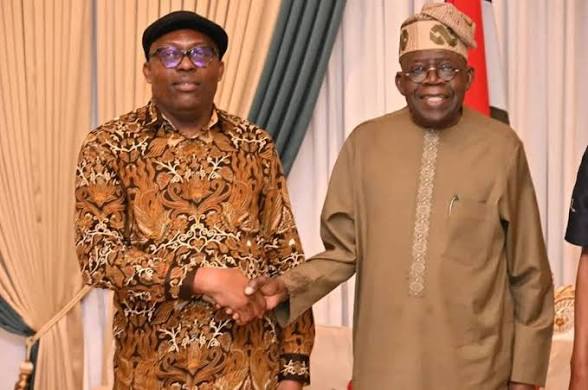
*APC Group Endorses Fubara for 2027, Calls on Tinubu and APC to Prioritise Performance Over Politics in Backing Governor’s Second Term Ambition*
The APC National Vanguard has appealed to President Bola Ahmed Tinubu and the leadership of the All Progressives Congress (APC) to support a second term in office for Siminalayi Fubara, citing what it described as “impressive and verifiable developmental strides” across Rivers State.
In a statement issued on Thursday by its National President, Dr Gbenga Salam (JP), the group said its position followed an extensive assessment tour of key infrastructure and public service projects executed under the Fubara administration.
The APC National Vanguard said the appeal was based strictly on performance, arguing that governance outcomes should outweigh partisan considerations, particularly in a state as economically significant as Rivers.
“We respectfully urge President Bola Ahmed Tinubu and the leadership of the All Progressives Congress to support the continuity of Governor Siminalayi Fubara beyond his current tenure, in recognition of his commitment to development, prudent resource management, and people-focused governance,” the statement read.
According to the group, its delegation visited multiple project sites across the state, observing ongoing and completed works spanning road construction, urban renewal, and public infrastructure upgrades.
It noted that the scale and distribution of these projects reflect a deliberate effort by the state government to extend development beyond traditional urban centres and into underserved communities.
“Our findings from the tour reveal a government that is not only active but intentional in its development agenda. The execution of capital projects across various parts of Rivers State demonstrates a clear understanding of the needs of the people and a commitment to addressing them,” Dr Salam said.
The group particularly commended what it described as prudent financial management by the administration, noting that the projects reviewed showed evidence of careful planning and efficient allocation of resources.
“At a time when economic pressures are evident across the country, it is commendable that the Rivers State government has managed its resources in a way that delivers visible and impactful development without signs of fiscal recklessness,” the statement added.
The APC National Vanguard further observed that despite political tensions in the state, the Fubara administration has maintained focus on governance, ensuring continuity in project execution and service delivery.
The group argued that such stability is critical for sustained development and should be encouraged rather than disrupted.
“Leadership must ultimately be judged by results. In Rivers State, there is clear evidence of progress—projects that are not only announced but executed, and policies that translate into real benefits for citizens,” Dr Salam noted.
The group warned that discontinuity in leadership could stall ongoing projects and reverse gains already recorded, stressing the importance of allowing a performing administration to consolidate its achievements.
“Rivers State is at a pivotal stage where continuity will allow for the completion of ongoing initiatives and the deepening of development gains. Supporting Governor Fubara for a second term is, therefore, a decision in the best interest of the people,” the statement said.
In addition to its call on the APC leadership, the group reaffirmed its support for President Tinubu, expressing confidence in his administration’s broader economic and governance reforms.
The APC group urged Nigerians to remain supportive of efforts aimed at stabilising the economy and strengthening public institutions.
“We reiterate our endorsement of President Bola Ahmed Tinubu for a second term in office, in recognition of his leadership and commitment to national development. With sustained support, the administration can consolidate its reform agenda for the benefit of all Nigerians,” Dr Salam added.
The APC National Vanguard concluded by calling on political actors to prioritise development and public interest over partisan divides, insisting that governance should always be guided by performance and accountability.
“Where leadership demonstrates prudence, delivers development, and remains focused on the welfare of the people, it deserves continuity. This is the position we have reached after a careful and independent assessment of Rivers State,” the statement added.
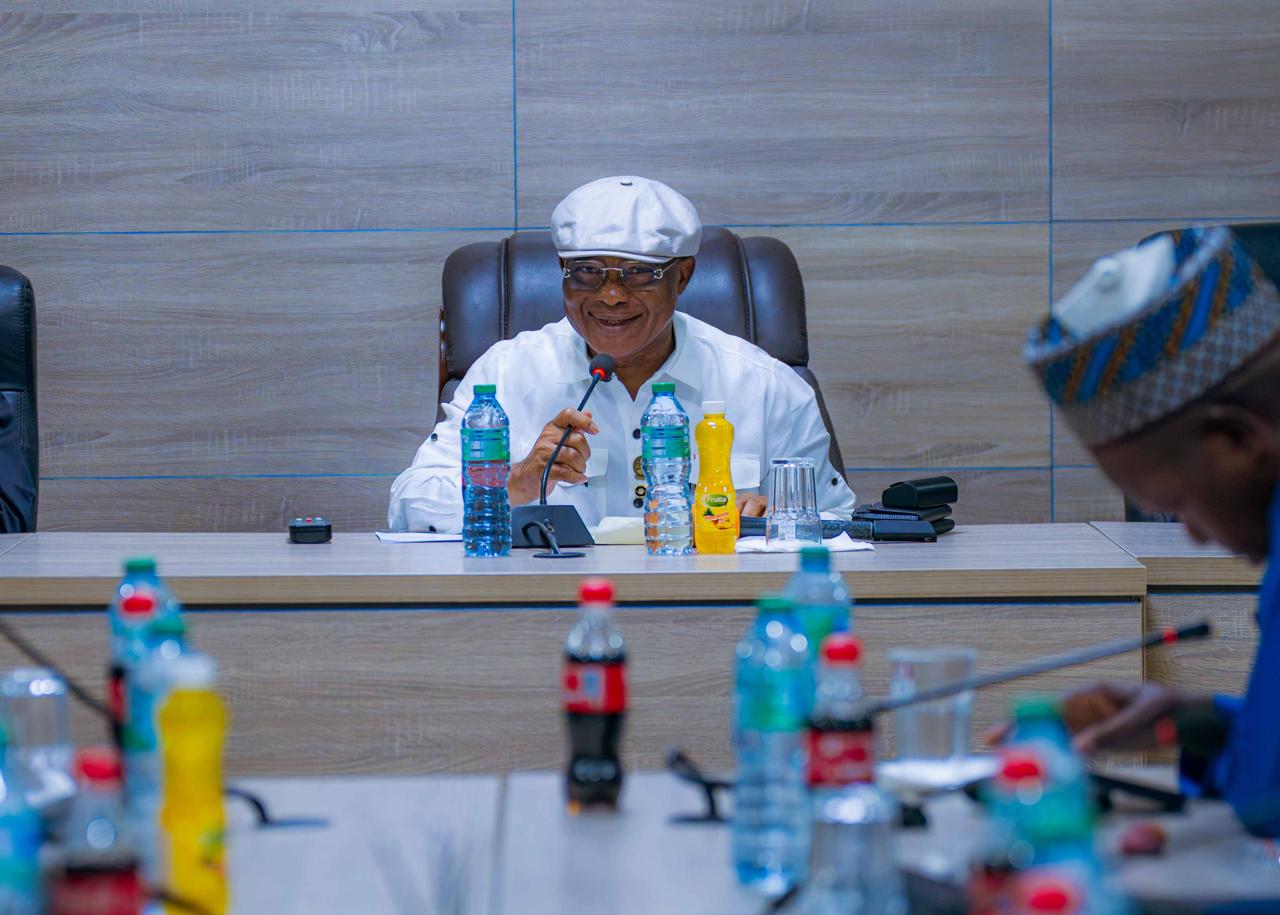
*Renewed Hope Ambassadors Step Into the Next Phase
Fresh from the successful APC 2026 National Convention, the Renewed Hope Ambassadors National, Zonal, and State leadership gathered in Abuja over the weekend, for its fourth strategic meeting, setting the tone for nationwide grassroots activation ahead of 2027.
Chaired by Governor Hope Uzodinma (Imo State) the Director General and National Coordinator of the Renewed Hope Ambassadors, alongside Deputy Director-General, Governor Uba Sani of Kaduna State, and Governor Inuwa Yahaya of Gombe State as Secretary, the session reinforced one clear direction: One Party. One Message. One Mobilization whilst also laying out a strategic roadmap for the activation of the network across all communities in Nigeria.
Backed by the strength of 31 APC-led states, the Renewed Hope Agenda is taking Bola Ahmed Tinubu’s message of progress and reform to every corner of Nigeria.
From bold economic restructuring to initiatives like NELFUND, the increase in the national minimum wage from ₦30,000 to ₦70,000, and strategic investments in critical sectors, including PNiCGI, the mission remains clear: helping Nigerians understand both the purpose and the progress of the Renewed Hope vision.
This is coordination at scale. This is grassroots engagement with purpose. This is the next phase of Renewed Hope with One Party, One Message, and One Mobilisation framework
#RenewedHopeAmbassadors #APC #WeAreAPC


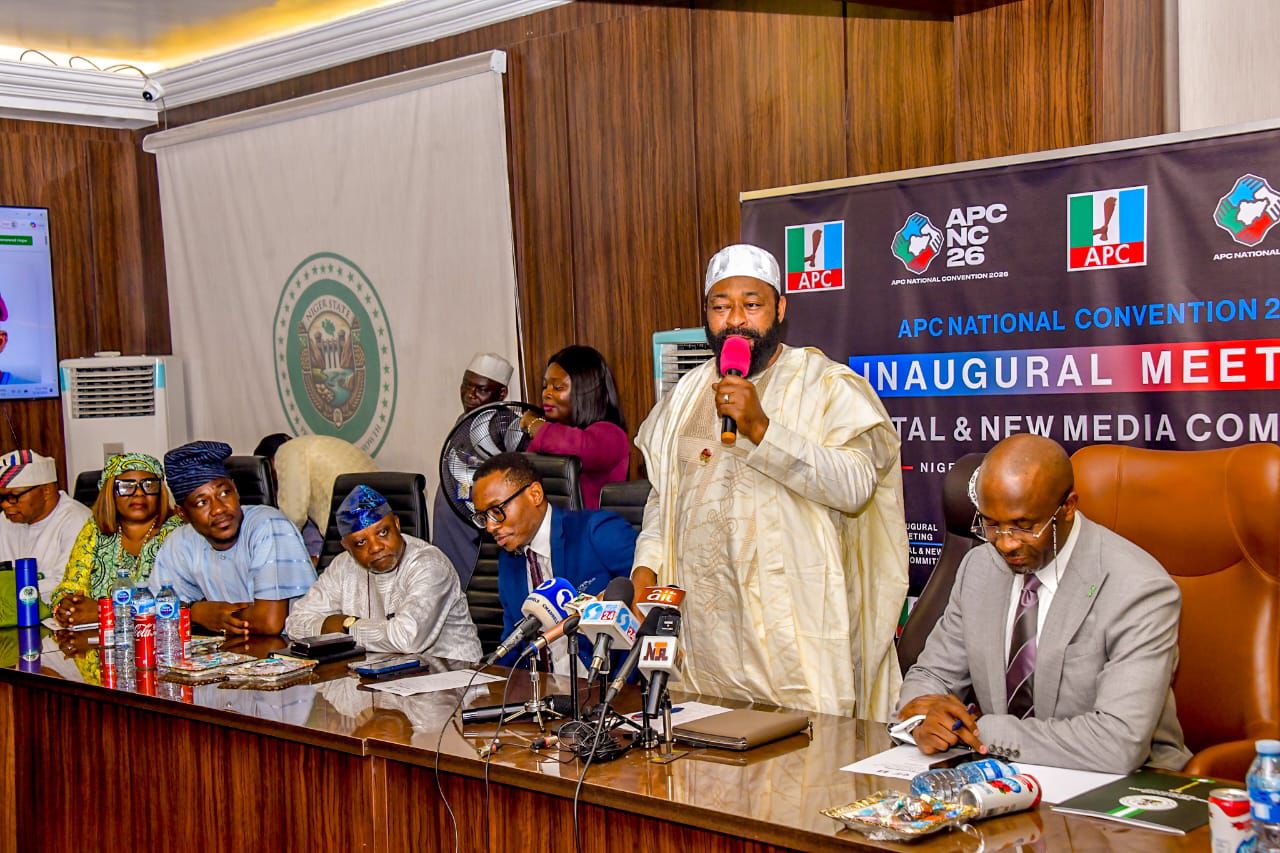
Governor Bago Inaugurates APC Digital Media Sub-Committee Ahead of National Convention.
Governor Umaru Bago has inaugurated the Digital Media Sub-Committee for the forthcoming National Convention of the All Progressives Congress (APC), scheduled to hold on March 27 and 28, 2026 in Abuja.
Chairing the sub-committee, Governor Bago tasked members with the responsibility of effectively communicating the party’s manifesto to the public.
He emphasized the need to leverage social media platforms to highlight the achievements and ongoing efforts of President Bola Ahmed Tinubu, noting that communication gaps have posed challenges that must now be decisively addressed.
The Co-Chair of the sub-committee, Hon. Benjamin Kalu, Deputy Speaker of the House of Representatives, echoed the Governor’s position, urging members to project the activities of both the party and the government to a broader audience.
He called for a deliberate and coordinated effort to showcase the party’s achievements and policy direction, stressing the importance of shaping a compelling and consistent narrative across all digital platforms.
Delivering a presentation to the committee, Otega Ogra, SSA to the President on New Media, who serves as Secretary of the sub-committee, outlined strategic focus areas to guide the team’s operations.
His presentation highlighted communication priorities and actionable steps to achieve the committee’s mandate and strengthen the party’s digital engagement.


-

 society6 months ago
Religion: Africa’s Oldest Weapon of Enslavement and the Forgotten Truth
-

 news4 months ago
WHO REALLY OWNS MONIEPOINT? The $290 Million Deal That Sold Nigeria’s Top Fintech to Foreign Interests
-

 society6 months ago
“You Are Never Without Help” – Pastor Gebhardt Berndt Inspires Hope Through Empower Church (Video)
-

 celebrity radar - gossips2 months ago
Dr. Chris Okafor Returns with Power and Fire of the Spirit -Mounts Grace Nation Altar with Fresh Anointing and Restoration Grace on February 1, 2026
You must be logged in to post a comment Login
You must log in to post a comment.