
celebrity radar - gossips
Sikiru Ayinde Barrister: Prophet without honour (1) Tunde Odesola


Sikiru Ayinde Barrister: Prophet without honour (1)- Zodiac the only thing I had in common with Fuji music creator, Dr. Sikiru Ayinde Agbajelola Balogun Barrister, belongs in antiquity now. But it feels good to share with Barrister, the same birth month, February, which confers the same zodiac sign, Aquarius, on us both.

Today, however, astrology has unravelled as a pseudo-scientific art that can’t provide real solutions to the challenges of hunger, war, insecurity, unemployment etc blighting the modern world.
The zodiac is the only commonality between Barrister and I; while Ayinde’s voice was honey-sweet, mine is bile-bitter. While Ayinde was a musical hero, I’m a musical error. In my family, I was almost called Toad de Croak – on account of my keyless voice.
Ayinde, who could, biologically, father me, was born on February 9, 1948. I was born on the 17th of a February. The 16th of December, 2020 marked the 10th anniversary of his departure from the mortal realm at the age of 62.
But while he lived, I didn’t dislike the music of Ayinde, I hated it. And two reasons accounted for my abiding disgust for his music. The first reason was my nausea for Barrister’s excessive self-praise, which to me, bordered on noisome vainglory and pompous superiority.
Greatness doesn’t jump in people’s faces to demand recognition; greatness cocks the ears, pops the eyes and wows the mouth.
In my teenage years, I couldn’t understand why Barrister dwelt so much on self-adulation despite coming far behind humble Juju superstars, Chief Commander Ebenezer Obey and King Sunny Ade; and much farther behind older legends that include Ambrose Oladipupo Campbell (who first recorded Eni Ri Nkan E, popularised by Obey), I.K Dairo, Bobby Benson, Osita Osadebe, Roy Chicago, S.B. Bakare; Tunde Nightingale, Adeolu Akinsanya, Victor Olaiya, Eddy Okonta, Rex Lawson; Yusuf Olatunji, Haruna Ishola, Ayinla Omowura, Saka Olayigbade, among others.
The second reason for my loathing Ayinde’s music was my proclivity for siding with the underdog. As young as I was then, I felt Barrister wasn’t fair with his genius. I believed he was a ruthless emperor, who wasn’t ready to suffer his childhood friend and kinglet, General Kollington Kolawole Rasaki Ilori Ayinla, gladly.
Issuing from this background, I always felt irritated as a teenager whenever I heard Ayinde delve into the pool of self-importance, reeling out truckloads of his unending names and cognomens such as Sikiru, Ayinde Ogun, Adeyimika, Barrister, Olokunola, Barusati, Dedegbo, Elekun, Adakeja, Agbajelola, Ololade, Olanbiwonninu, Abinuwaye, Balogun etc and rounding them off with the profuse praise of his mother, Olubisi Odere Subuola Sifau omo Salawe Oshodi of Nupe Tapa ancestry in Niger State, almost in every song.
“Doesn’t this man have nothing to sing about except himself and his pepper-seller mother and butcher father?” I would fume anytime I heard Barrister showering praises on himself, his mother and his Ibadan paternal ancestry.
As far back as the early 1980s, I verily knew that Kollington didn’t possess the musical understanding, lyrical flair, oratorial wit and discursive depth of Barrister, but I stuck to Kollington because I felt Barusati was defying the Igbo proverb that says, “Let the eagle perch, let the hawk perch: if one says the other should not perch, let its wings wither.”
Raised as a fake ‘ajebo’ in a Lagos family, passers-by often wondered what was wrong with me whenever I parked my glittering silver-spoon ‘Chopper’ bicycle by the roadside to listen to Kollington’s newly released songs. Then, Fuji was largely seen as unrefined ‘ras’ music.
I don’t blindly support the underdog without a reason even if the reason is just to not follow the crowd. My penchant to support the underdog is the same reason why I prefer artistic Barcelona to mechanical Real Madrid, gamely Rafael Nadal to regal Roger Federer and skillful Maradona to predatory Pele.
It’s the same reason why I loved the emergence of Leventis United FC and NNB FC when they broke onto the Nigerian football scene in the 1980s and threatened Nigerian football big names such as Rangers International, IICC, Stationery Stores, Mighty Jets, Raccah Rovers, Bendel Insurance etc. I had been a fledgling democrat even when Nigeria writhed under the military jackboot of the 1980s.
However, I’m not a blind activist. In some cases, I concede the supremacy of the favourite against the underdog where a level playing field is ensured and the margin of difference in rivalry is the length of the Atlantic Ocean.
For instance, I preferred the King of Pop, Michael Jackson, to pop icon, Prince. For me, Muhammad Ali, was matchless in prose and prowess, Rashidi Yekini remains my all-time greatest Nigerian football striker, and the only god of soccer there is, is Messi!
But, you often meet your fate on the road you take to avoid it, says a French proverb. The very road of panegyrics which I avoided in order not to encounter Barrister, was the road where I was converted to Abinuwaye, like Saul, on the road to Damascus.
It was at an editorial meeting in 2017 when PUNCH Executive Director, Digital Operations and Publications, Mr Joseph Adeyeye, brought up the topic of Barrister’s enduring legacy, noting the wisdom and richness of Ayinde’s lyricism.
A devout Christian and an exemplary leader, Adeyeye, who brought copies of a tribute, “The Poetry of Mr Fuji, Sikiru Ayinde Barrister,” done by Lagbaja for the Ibadan-born multi-talented music machine, to the editorial meeting and opened up a discussion on the oeuvre of Barusati, among PUNCH editors and assistant editors at the meeting.
Lagbaja’s tribute was a transcription of Barrister’s 2006 song, ‘Correction’, into English. Without succumbing Barrister’s poetry to transcriptive linguistic limitations, Lagbaja ensures, as much as possible, the flow of the creative imagination in the song released in response to Kollington’s claim that Barrister wasn’t the originator of Fuji music.
In the twin disc waxed alongside with ‘Correction’ was another song entitled, ‘Wisdom’, which many people believed was a veiled anti-arrogance flak against King Wasiu Ayinde, who enjoys an amazing popularity that cuts across Fuji fans, despite falling out with Sikiru when he released a song, ‘Orin Dowo’, in 2005, wherein he said Barrister wasn’t the originator of Fuji.
An acolyte of Barrister, Wasiu, who later took the Fuji scene by storm with ‘Talazo’ in the 1980s, and Kollington, challenged Barrister’s claim to Fuji kingship.
(To be continued)
Email: [email protected]
Facebook: @tunde odesola
Twitter: @tunde_odesola





Beauty Meets Glamour as Olaide Ogunyemi Opens New Studio in Mushin
Popular Nollywood actress and professional makeup artiste, Olaide Ogunyemi Oluwayemisi aka Damilola, has expanded her footprint in the beauty industry with the grand opening of her new makeup studio in Lagos.
The talented thespian, who is also the Chief Executive Officer of @Dobc_makeovers_andmore, officially unveiled the ultra-modern beauty space last Thursday, April 2, 2026, in a colourful ceremony filled with glamour, fashion, and pageantry.
Strategically located at 101 Palm Avenue, right beside FitPlus and Sparklight Hospital in Mushin area of Lagos, the new studio is designed to offer top-notch beauty services, reflecting Ogunyemi’s commitment to excellence and professionalism in the ever-growing makeup industry.
The opening ceremony attracted friends, colleagues from the Nollywood industry, beauty enthusiasts, and well-wishers who came out in large numbers to celebrate the entrepreneur’s latest milestone. Guests were treated to a vibrant atmosphere that showcased creativity, style, and the evolving standards of the beauty business in Lagos.
Speaking at the event, Ogunyemi expressed her excitement and gratitude, noting that the new studio represents years of hard work, dedication, and passion for her craft. She reaffirmed her commitment to delivering premium beauty services while empowering aspiring makeup artistes.
The launch of the studio further cements her reputation as a dynamic force, successfully blending her career in Nollywood with a thriving beauty brand.
With this latest development, Olaide Damilola Ogunyemi continues to inspire many young entrepreneurs, proving that talent, consistency, and vision remain key drivers of success in Nigeria’s creative and business landscape.


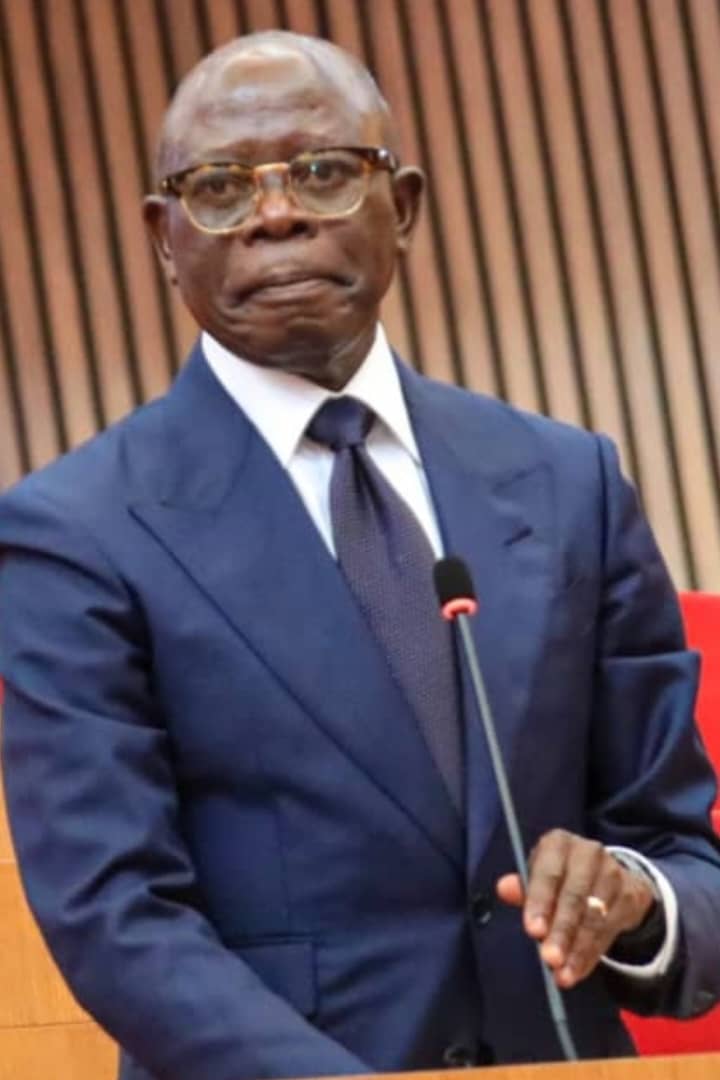
Daniel Eromosele Eulogize Adams Oshiomole as he turns 74 years
Today, I celebrate an exceptional leader, a fearless voice for the people, and a man whose life has remained a symbol of courage, sacrifice, and unwavering commitment to justice—Distinguished Comrade Senator Adams Aliu Oshiomhole.

Your journey has been nothing short of inspiring. From your days as a vibrant labour leader to your impactful tenure as the Executive Governor of Edo State, and now as a respected Senator of the Federal Republic, you have consistently demonstrated what it means to serve with integrity, strength, and purpose. Your contributions to the growth of our nation and the development of Edo State remain indelible and deeply appreciated.
You have not only built structures and institutions but have also built people. I am personally a beneficiary of your leadership, your guidance, and your belief in empowering others. Your influence in my life has been profound, and I remain grateful for the opportunities and inspiration you have given me.
On this special day, I celebrate not just your achievements, but the man you are—resilient, principled, and ever committed to the progress of Nigeria and her people.

May this new year bring you renewed strength, greater wisdom, good health, and more remarkable accomplishments. May your legacy continue to shine brighter with each passing year.
Happy Birthday, sir. Wishing you many more fruitful and impactful years ahead.
celebrity radar - gossips
Accolades to Empress Genevieve Wining as she Celebrate birthday in Grand style

Accolades to Empress Genevieve Wining as she Celebrate birthday in Grand style
Emmanuel Clement
Vilnius, Lithuania – The Grand Hotel Vilnius will host a grand birthday celebration in honor of Her Majesty The Empress Genevieve Wining of the United Kingdom of Atlantis (UKA) on April 4th, 2026.
The four-day event promises to be an extravagant affair, marking the special birthday of Empress Genevieve Wining. The celebration will take place at the prestigious Grand Hotel Vilnius, Lithuania, renowned for its luxurious ambiance and exceptional service.

According to the event flyer, the birthday celebration will be a spectacular occasion, fitting for an empress. Guests can expect an elegant setting adorned with golden accents, sparkling champagne, and festive decorations, creating a regal atmosphere befitting the occasion.
The Empress Genevieve Wining of UKA is expected to grace the event, which will include various festivities and celebrations in her honor. The occasion aims to bring together dignitaries, followers, and guests to commemorate the empress’s birthday with grandeur and joy.
For media inquiries, accreditation, or further information about the birthday celebration of The Empress Genevieve Wining of UKA, please contact the event organizers.
Courtesy of His Excellency Emperor Prof. Solomon Wining. UKA


- United States (U.S.) and Mozambique Advance Cooperation on Emergency Response and Safety April 6, 2026
- The Impacts of the Middle East Conflict on Africa April 6, 2026
- Ghana: President Mahama announces a high-level panel of the Accra Reset April 6, 2026
- Ghana: President Mahama reiterates his determination to build more businesses April 6, 2026
- Mauritius accelerates energy transition with renewable projects of 405 MW April 6, 2026
- Africa Centres for Disease Control and Prevention (Africa CDC) Appoints His Excellency Prof. Yemi Osinbajo as Senior Strategic Advisor to the Director General April 6, 2026
- 2026 Easter Message by the President of the Catholic Bishops’ Conference of Nigeria (CBCN): The Dawn is Coming, Don’t Let Go Now, Hold on to Hope! April 5, 2026
- "A Time to Pause and Begin Again”: President Dr Patrick Herminie reflects in Easter message April 5, 2026
- President Dr. Patrick Herminie Pays Tribute to the Late Seychellois Artist David Philoe April 5, 2026
- Ghana identifies priority areas to strengthen cholera prevention and control April 5, 2026
- United States (U.S.) and Mozambique Advance Cooperation on Emergency Response and Safety April 6, 2026
- The Impacts of the Middle East Conflict on Africa April 6, 2026
- Ghana: President Mahama announces a high-level panel of the Accra Reset April 6, 2026
- Ghana: President Mahama reiterates his determination to build more businesses April 6, 2026
- Mauritius accelerates energy transition with renewable projects of 405 MW April 6, 2026
- Africa Centres for Disease Control and Prevention (Africa CDC) Appoints His Excellency Prof. Yemi Osinbajo as Senior Strategic Advisor to the Director General April 6, 2026
- 2026 Easter Message by the President of the Catholic Bishops’ Conference of Nigeria (CBCN): The Dawn is Coming, Don’t Let Go Now, Hold on to Hope! April 5, 2026
-

 society7 months ago
Religion: Africa’s Oldest Weapon of Enslavement and the Forgotten Truth
-

 news4 months ago
WHO REALLY OWNS MONIEPOINT? The $290 Million Deal That Sold Nigeria’s Top Fintech to Foreign Interests
-

 society6 months ago
“You Are Never Without Help” – Pastor Gebhardt Berndt Inspires Hope Through Empower Church (Video)
-

 celebrity radar - gossips2 months ago
Dr. Chris Okafor Returns with Power and Fire of the Spirit -Mounts Grace Nation Altar with Fresh Anointing and Restoration Grace on February 1, 2026