
celebrity radar - gossips
Sorrowful letter to Asiwaju Bola Tinubu (1) By Tunde Odesola

Sorrowful letter to Asiwaju Bola Tinubu (1) By Tunde Odesola
Dear god of Lagos,
I had vowed not to write about your presidential ambition yet. I was waiting for the time your protegee, Yemi Osinbajo, a pastor in the lush pasture of politics, would confirm his rife presidential ambition.

Honestly, I had patiently waited and hoped to show why both the lion and the lamb are misfits for the presidential villa located on the granite rock named Aso, derived from Asokoro, the name of the Abuja community.
C’mon, the heartless, hardness and stony imagery of the Aso Rock granite as a corollary to Nigeria’s political barrenness since 1991 when the nation’s capital was moved to Abuja never struck me until this very minute!
Seriously, I’ve never seen it this way before. I mean, I’ve never connected Nigeria’s leadership impotence to the rockiness of the Abuja seat of power. In light of the rocky consequences of Aso Rock, I ask two questions: Is it not a foolish nation that expects its fruitless leaders to germinate inside Aso Rock granitic edifice and produce bountiful harvests? Did the Son of God, Jesus Christ, not specifically warn against the futility of planting on rock?
I earnestly plead that the nation’s presidency should come down from the Asokoro Rock of barrenness and meet the masses on the plains of democratic deliverables, breaking away from the fruitless relocation of the seat of power by the bloody General Ibrahim Babangida, who ran up, tail between legs, to the rock 30 years ago.
Jagaban Borgu, National Leader, Kingmaker and Governor Emeritus, I greet you warmly once again, sir. As soon as 2023 politicking is airborne, I hope to remove the ideological caps worn by two contending Yoruba heads; shave the greyey head with a razor of words and paint the shiny skull with black tar.
However, there’s a matter of urgent national importance needing your quick attention at the moment, the great but waning Lion of Bourdillon, sir. It’s the issue of the Frankenstein monster which people say you bred as a self-preservation strategy. The monster is your son, Musiliu Akinsanya aka MC Oluomo, who has become terror by day and pestilence by night in the Oshodi community especially, and the whole of Lagos, in general.
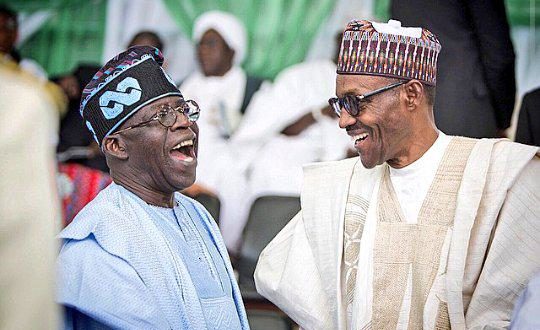
Asiwaju, sir, I’ve seen many pictures of MC Oluomo hobnobbing with your esteemed self in a father-son relationship since your days as Lagos governor and governor of governors. So, I feel duty-bound to, as a patriotic duty, explain to Nigerians why the killings and violence perpetrated by the National Union of Road Transport Workers in Lagos make you a misfit for Nigeria’s presidency.
The god of Lagos, sir, you must have seen countless viral videos wherein MC Oluomo and his mob of roughnecks worship your holey name, showing off their closeness to the feet of the master, where crumbs fall, and vicious dogs wag their tails.
The closeness of the barbarian MC Oluomo mob to the Throne of Lagos located at 26 Bourdillon Road, Ikoyi, probably explains why the state government failed to prosecute NURTW hoodlums who opened gunfire when the All Progressives Congress governorship candidate, Babajide Sanwo-Olu, kicked off his governorship campaign on January 8, 2019, at the Skypower field in Ikeja GRA.
Three journalists, Group Political Editor, The Nation newspapers, Emmanuel Oladesu; New Telegraph correspondent, Temitope Ogunbanke, and Ibile Television cameraman, Abiodun Yusuf, were hit by stray bullets fired by warring NURTW thugs at the campaign.
Three persons died during the gunfire which occurred in the presence of the Lagos APC leadership that included incumbent Governor Akinwunmi Ambode, his wife, Bolanle; Sanwo-Olu, APC deputy governorship candidate, Obafemi Hamzat; Lagos State APC Chairman, Tunde Balogun, among other party bigwigs. Stabbed a couple of times in the fracas, the fearless MC Oluomo fled like the Yoruba comedian, Papalolo, his heels touching the back of his head as he escaped death by the skin of his teeth.
Exactly one year after the gunfight at the APC rally, MC Oluomo celebrated his survival in a literary effusion that was clearly not his, saying: “Looking back at that fateful day and the subsequent happenings that followed, I cannot but appreciate a man of many parts that has genuinely taken me as a son. I am referring to no other person than His Excellency, Asiwaju Bola Ahmed Tinubu. My appreciation also goes to the entire members of Lagos State House of Assembly, APC Lagos State Executives and entire party members.”
Oh, how I breathed a sigh of relief along with your teeming supporters when the authorities of your alma mater, Chicago State University, finally confirmed a few days ago that you truly graduated from their citadel of knowledge with flying colours.
An MC Oluomo, who urged journalists to launch an ‘infestation’ instead of ‘investigation’ into a matter, cannot be the candidate Your Excellency would back for the post of Oba of Oshodi. Sir, if you, as it appears, back MC Oluomo for the post of Oshodi monarch, it means your purported antecedent to headhunt competent hands is a ruse, after all. And this action would confirm the allegation of your legendary penchant to pick and use people for selfish personal interests, and not for public good. After infecting the monarchy in Osun with two misfits, but prominent kings, should the APC, this time in Lagos, inflict royalty with a man of violence?
Like the generality of the Nigerian populace, Tinubu, Sanwo-Olu and the APC know that violence and bloodletting are second nature to the NURTW. Just a few days ago, two persons were reportedly killed during a gunfight between two Lagos Island factions of the union headed by Adekunle Lawal aka Kunle Poly and Mustapha Adekunle aka Sagoe.
Businesses hurriedly shut down as workers fled to safety in order not to be caught in the crossfire at Idumota and its environs. The actual number of deaths, injuries, economic loss and damage suffered during the bloody crisis has yet to be determined. Sadly, no NURTW member belonging to the killer factions has ever been brought to book over the ceaseless bloodletting wrought across the state.
If violence breaks out in Oshodi with an MC Oluomo as king, who do the blood-thirsty factions report to? To a king who is the head of a ruthless state-backed mafia called transport union?
The enormity of the calamity the Tinubu-led APC has inflicted upon Lagos State through NURTW lawlessness was brought home in March 2018 when a confessed serial killer and member of NURTW, Adeola Williams aka Ade Lawyer, confessed to killing over 100 persons.
Ade Lawyer confessed he was hired by a former Chairman, Lagos NURTW, Akanni Olohunwa, to kill Kunle Poly for a bounty of N1.5m. The assassin said Olohunwa paid him N500,000 as the initial payment for Kunle Poly’s life.
Olohunwa, who denied the allegation, said he paid Ade Lawyer N500,000 out of fear when he threatened to wipe him and the members of his household out. Olohunwa revealed that one day, Ade Lawyer opened fire and killed nine passengers in a bus in Lekki.
Ade Lawyer, who the police shamelessly lied was on their wanted list for five years, confessed he operated openly as a unit head of the NURTW in the Ajah axis of Lagos Island around 2001 and 2003 (when Tinubu was governor of Lagos State). He, however, later recanted the allegation of being sponsored by Olohunwa to kill Kunle Poly.
It’s the brazen manner of Ade Lawyer’s operations that showed Lagos State’s hand in NURTW’s lawlessness in the state. While speaking with journalists, Ade Lawyer mentioned the names of MC Oluomo, Sagoe and the immediate past NURTW Chairman in Lagos, Tajudeen Agbede, as NURTW chieftains he had worked with.
To be concluded.
Email: [email protected]
Facebook: @tunde odesola
Twitter: @tunde_odesola




celebrity radar - gossips
Adron Homes Celebrates Visionary Chairman, Aare Adetola Emmanuel King, at 51
Adron Homes Celebrates Visionary Chairman, Aare Adetola Emmanuel King, at 51
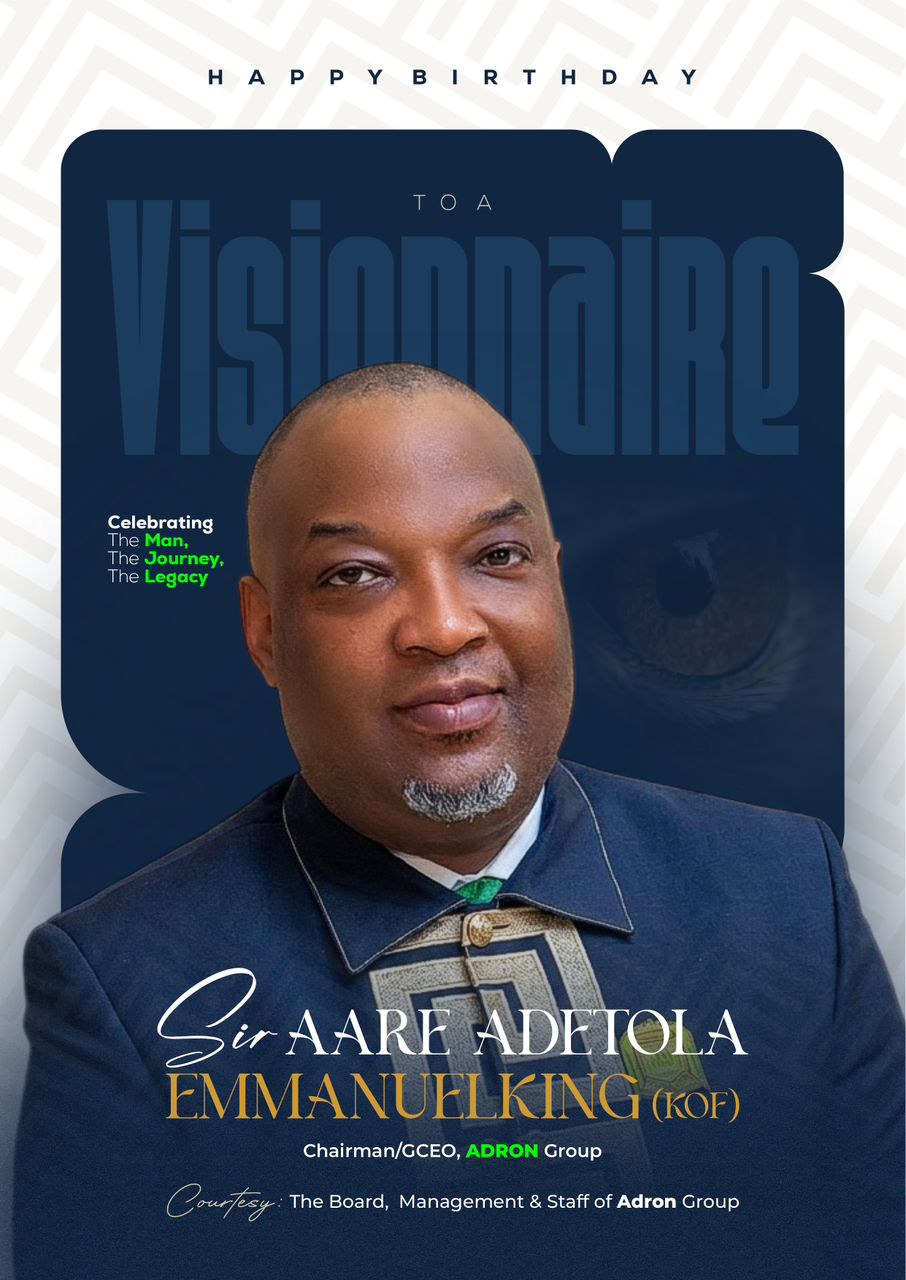
The management and staff of Adron Homes and Properties Limited have joined family, friends, associates, and well-wishers across the globe to celebrate their Chairman and Chief Executive Officer, Aare Adetola EmmanuelKing, as he marks his 51st birthday.

In a statement released by the company, the milestone was described as a celebration of an exceptional leader whose vision, resilience, and entrepreneurial brilliance have not only transformed Adron Homes into a household name in Nigeria’s real estate sector but have also redefined affordable housing across the country.
Under his dynamic leadership, Adron Homes has continued to expand its footprint, delivering value-driven residential solutions while empowering thousands of Nigerians with opportunities for home ownership. His commitment to excellence, innovation, and customer satisfaction has remained the driving force behind the company’s sustained growth and industry leadership.
The statement further highlighted Aare EmmanuelKing’s passion for nation-building and community development, noting his significant contributions to job creation, youth empowerment, and the promotion of socio-economic development through real estate investments.
“As a leader, mentor, and visionary, Aare Adetola EmmanuelKing has consistently inspired a culture of excellence, integrity, and dedication within the organization. His ability to turn bold ideas into reality continues to position Adron Homes as a trailblazer in the industry,” the statement read.
The company expressed profound gratitude for his steadfast leadership and prayed for continued wisdom, strength, and sound health as he embarks on another year of impactful achievements.
As he celebrates his 51st birthday, the entire Adron Homes family proudly honours a man whose legacy continues to shape the future of real estate in Nigeria.
Happy 51st Birthday, Aare Adetola EmmanuelKing!
Oba Ara Releases Emotional Tribute to Late Taiwo Adegbodu
Taofik Afolabi
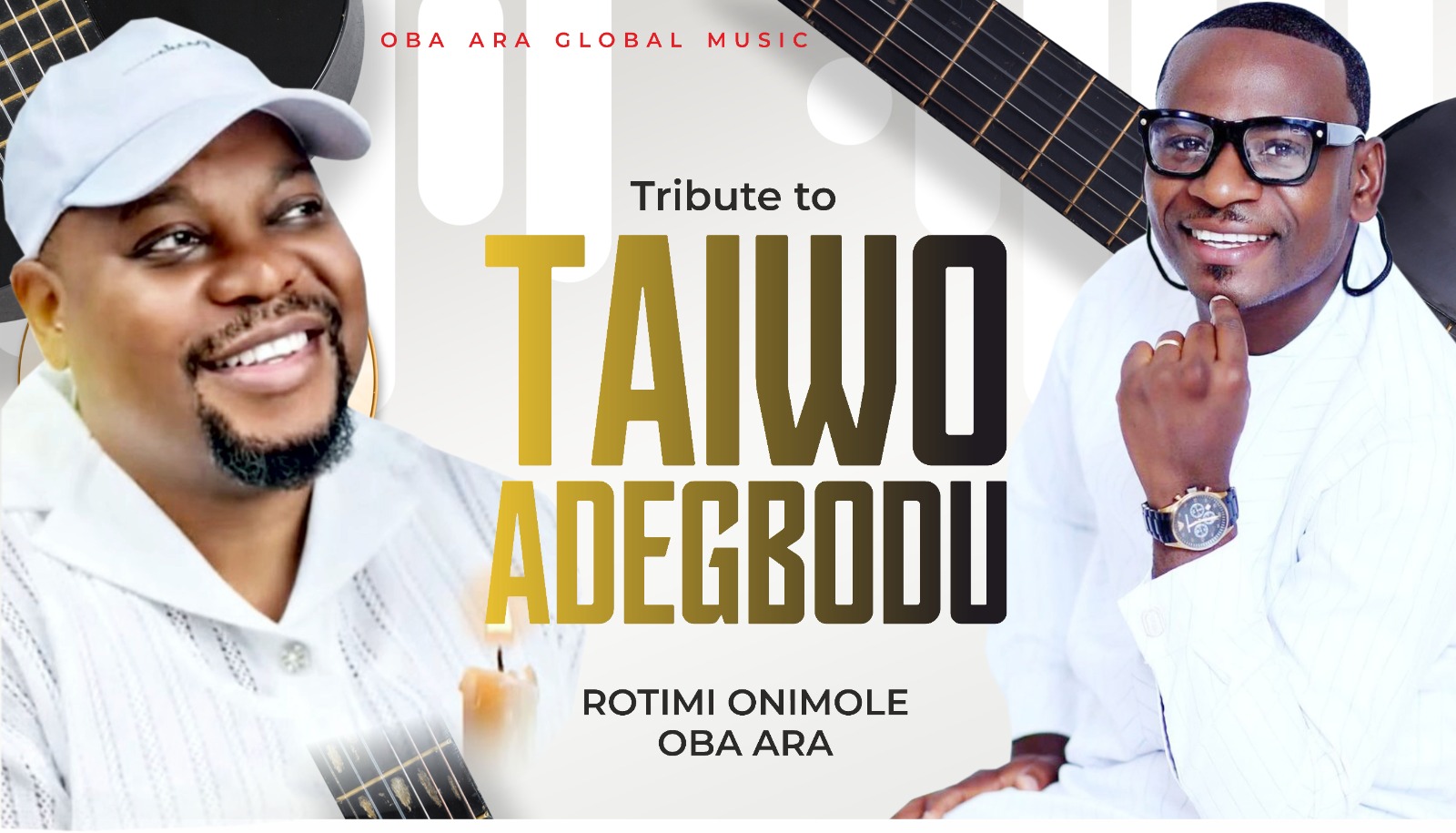
The gospel music community continues to grieve the painful loss of Taiwo Adegbodu, a beloved figure whose sudden departure left a deep void among fans, colleagues, and loved ones. In response to this loss, renowned gospel minister Rotimi Onimole, popularly known as Oba Ara, has released a moving tribute song that captures both the sorrow of the moment and the enduring legacy of the late singer.
Oba Ara, a proud son of Isale Eko, channels raw emotion throughout the song, using heartfelt lyrics and soul-stirring melodies to reflect on his personal connection with Taiwo Adegbodu. In the tribute, he openly expresses how deeply the news of Adegbodu’s passing shook him, describing it as a painful and unexpected loss that is difficult to come to terms with.
The song goes beyond mourning, it celebrates the life, ministry, and impact of Taiwo Adegbodu. Oba Ara highlights the late artist’s dedication to spreading the gospel through music, his inspiring voice, and the spiritual influence he had on many within and beyond Nigeria. Through powerful verses, he paints a picture of a man who lived for God and touched countless lives through his ministry.
Listeners have described the tribute as both comforting and deeply emotional, as it resonates with the collective grief of the gospel music community. It serves as a reminder that although Taiwo Adegbodu is no longer physically present, his music, message, and legacy will continue to live on.
In honoring his late colleague, Oba Ara not only pays his respects but also offers a source of healing for fans and fellow ministers, using music as a tool to process grief and celebrate a life well lived.
celebrity radar - gossips
Buratai, Fagbemi , Shagaya, Olofa, Others Eulogise Olowu Kuta’s Olori On 60th Birthday, Foundation Launch
Buratai, Fagbemi , Shagaya, Olofa, Others Eulogise Olowu Kuta’s Olori On 60th Birthday, Foundation Launch
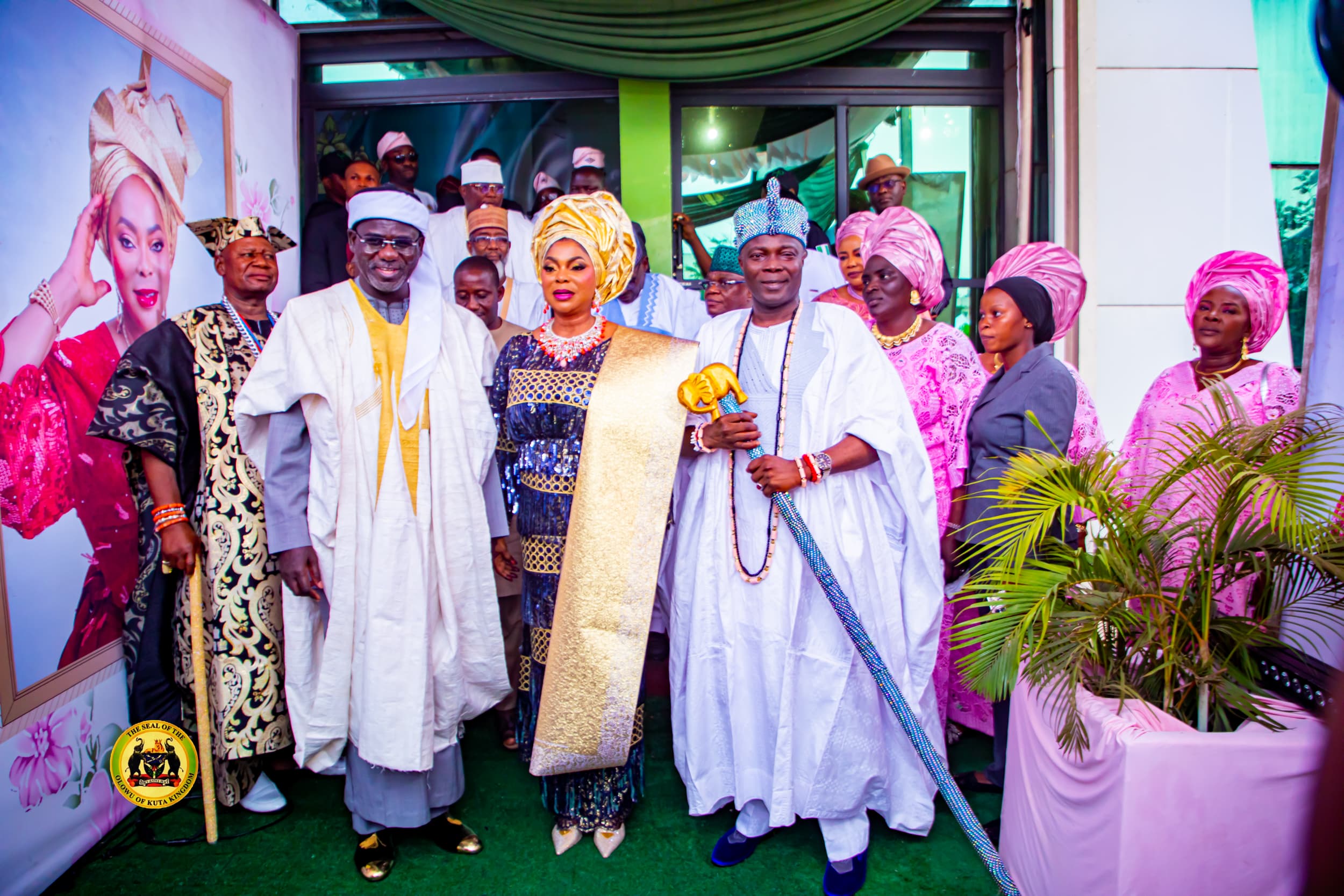
Eminent personalities across the Nigeria stormed the TFK Event Centre, Bala Mohammed Way, Guzape, Abuja, to celebrate the 60th birthday of Olowu Kuta’s Olori, Queen Jumai Amoke and her Foundation Launch on Saturday 28, March 2026.

From former Chief of Army Staff, Lt Gen TY Buratai rtd, to the Minister of Justice and Attorney-General of the Federation, Prince Lateef Fagbemi; Olofa of Offa, HRM Oba Mufutau Gbadamosi. Even top businesswoman and socialite, Chief (Mrs) Bola Shagaya, was in attendance.


Other dignitaries were newly promoted Deputy Inspector-General of Police and former AIG Zone 2 , Lagos , Adegoke Fayoade, Major General Abdumalik, Major General Samuel Adebayo rtd (Fmr CDI);
Major General Anthony Omozoje rtd (Fmr Copp);
Alhaji Tajudeen Owoyemi (Asiwaju of Offa and CEO Radisson Hotel Nigeria;
Dr Waheed Olagunju, former managing director of Bank of Industry, Oniba of Iba, Lagos State, HRM Oba Dr Suleiman Raji ;
Justice Falola, Olu of Ile-Ogbo , Oba Adetoyese amongst many traditional rulers and captains of industry too numerous to mention.
Speaking at the occasion, the Chief Host, Olowu of Kuta, HRM Oba Dr Adekunle Oyelude Makama, CON , Tegbosun iii, who is also the husband of the celebrant commended Queen Jumai for ‘ her slender arms full of kindness’ to establish such humanitarian Foundation, ‘Amoke Children and mother in Need Foundation’ at a time Nigerians are going through economic crisis occassioned by the global meltdown.
Olowu also commended her steadfastness and love for the less privileged and downtrodden.
The monarch refrenced the task before his wife’s humanitarian gesture said her best is yet to come.
” Olori Amoke Jumai, I celebrate you. You will celebrate 70, 80, 90 and continue to shine as you continue to put a smile on people’s faces. I love you, “Olowu Kuta added.
To Lt Gen Buratai, a former army chief and former Nigerian Ambassador to Benin Republic, the reward of hard work is more work.
Buratai, who also doubles as Balogun Agba of Owu Kuta, a chieftaincy title reserved for a generalismo congratulated Queen Jumai for attaining the age of 60 in good health.
The retired army General said he’s not surprised by the turn out of eminent personalities across the country to celebrate the Olowu Kuta’s Olori because she merited it through her hospitality to all, adding that Allah the most merciful, most beneficial would accept all her act of ibadah.
The minister of Justice, Prince Fagbemi, was full of praises for Queen Jumai for deeming it fit to have a place in her heart to accommodate the needy and less privileged in ‘our society.’
Prince Fagbemi urged the guests to contribute generously to support the Foundation in order to continue to alleviate poverty and put a smile on the faces of the people.
” I congratulate you on your 60th birthday and Foundation Launch. I wish you many happy returns of the day and many more fruitful services to the country and motherland”, Prince Fagbemi added.
The celebrant, Queen Jumai who was grining from ear to ear thankfully said she was excited by the turn out and the response of the people to her foundation.
Queen Jumai, however, promised to continue to use her resources and donations received for the good of the needy and less privileged in the society.
” I want to appreciate my own Kabiesi Olofa of Offa , for his presence and im I’m using him as a point of contact to all other Kabiesis present here, the minister of justice and Attorney-General, you’re welcome, sir; Mrs Bola Shagaya, I salute your enterprise, Lt Gen Buratai, I’m grateful, sir; DIG Fayoade, Justice Falola and other dignitaries too numerous to mention, I thank you, all. To my darling husband, Kabiesi Olowu , I thank you immensely for your support. And to my family and friends, I thank you , all. E se pupo!”, she said.


-

 society7 months ago
Religion: Africa’s Oldest Weapon of Enslavement and the Forgotten Truth
-

 news4 months ago
WHO REALLY OWNS MONIEPOINT? The $290 Million Deal That Sold Nigeria’s Top Fintech to Foreign Interests
-

 society6 months ago
“You Are Never Without Help” – Pastor Gebhardt Berndt Inspires Hope Through Empower Church (Video)
-

 celebrity radar - gossips2 months ago
Dr. Chris Okafor Returns with Power and Fire of the Spirit -Mounts Grace Nation Altar with Fresh Anointing and Restoration Grace on February 1, 2026