
celebrity radar - gossips
Sowore and the Nnamdi Kanu Protest; When the state gags one man, it gags the conscience of millions

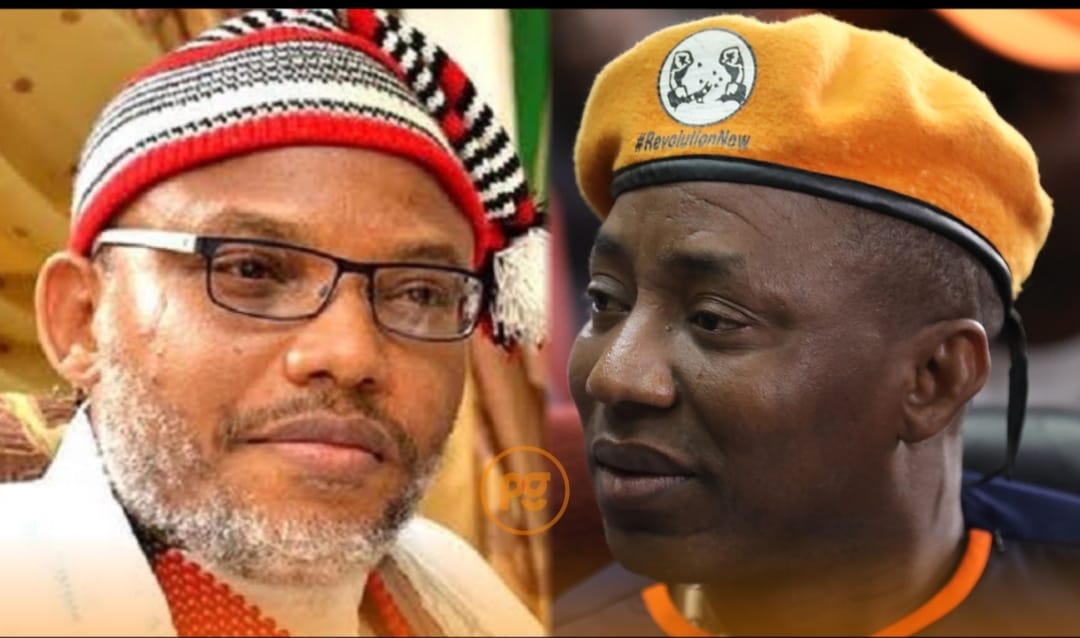
Sowore and the Nnamdi Kanu Protest; When the state gags one man, it gags the conscience of millions.
By George Omagbemi Sylvester | Published by SaharaWeeklyNG.com
Tear gas, court orders and a million promised feet – Abuja became the latest battleground for Nigeria’s right to dissent.
On Monday, October 20, 2025, Nigeria’s capital once again became the theatre of a deepening crisis between an assertive civil society and a nervous state. Human-rights activist Omoyele Sowore (veteran campaigner, publisher and organiser of mass actions) led calls for a #FreeNnamdiKanuNow demonstration that sought to spotlight what many Nigerians say is an overreaching, politicised prosecution of Nnamdi Kanu, leader of the proscribed INDIGENOUS PEOPLE OF BIAFRA (IPOB). The response from the security architecture was predictably heavy: teargas, water cannon, mass arrests, according to witnesses and multiple international news agencies, the sound of gunshots in pockets of the city as police sought to prevent demonstrators from pressing toward sensitive government sites.

Sowore cast the protest as more than a ONE-ISSUE MOBILIZATION. “This is not TRIBAL, not RELIGIOUS, it is social justice,” he declared in speeches and social posts urging Nigerians to remember that the right to assemble is the oxygen of democracy. Thousands answered the call in Abuja and in cities across the southeast, pausing commerce, closing markets and (for a day) forcing the nation to witness a popular outcry against what many see as selective justice. Yet the state quickly sought to frame the demonstrations as a security threat; a Federal High Court order issued days earlier restricted protests around Aso Rock, the National Assembly, the Court of Appeal, Eagle Square and other sensitive locations and the police warned organisers to obey the injunction. Sowore and allies rejected this as a pretext to criminalise dissent.
Facts matter. Nnamdi Kanu (a British citizen who leads the outlawed IPOB) has been in custody since a 2021 re-arrest and faces terrorism and treason charges that carry life sentences if convictions are secured. His trials have been postponed, contested and are now being heard under repeated judicial time pressure; his defence has filed motions and sought extended time to call dozens of witnesses. Kanu’s supporters insist his detention is political, citing years of perceived marginalisation in the southeast. The state insists it is prosecuting criminal conduct. Those competing narratives are at the heart of this confrontation.
The most damning reaction to the security response came from organisations that cannot be easily dismissed as partisan. Amnesty International publicly condemned the “LETHAL USE OF FORCE” and called for impartial investigations into arrests, beatings and indiscriminate use of tear gas on peaceful demonstrators, journalists and lawyers. International and local observers reminded citizens and the authorities alike that the International Covenant on Civil and Political Rights (to which Nigeria is a party) recognises the right to peaceful assembly and places strict limits on state force. Amnesty’s intervention was not rhetorical flourish, but a mirror held up to a state that has frequently weaponised the security apparatus against popular protest.
Sowore’s involvement sharpened the politics. He promised to place “ONE MILLION PEOPLE” on the streets of Abuja a provocative, HEADLINE-GRABBING claim that sought to make the mobilisation irreversible. Critics accused him of grandstanding and of pressing a volatile issue without adequate safeguards; sympathisers argued that bold numbers are sometimes the only way to force a stalled judicial and political process into the light. Veteran commentators and analysts offered sober warnings, the right to protest is sacrosanct, yes, but protests must be responsibly organised to avoid giving authorities the cover to crack down. Reuben Abati, among others, argued that while protest is constitutional, it must be executed within “THE BOUNDS OF REASON AND SANITY” a counsel that simultaneously defends assembly and cautions against actions that might provoke the state into escalation.
What this clash reveals is not merely a TUG-OF-WAR over one man’s freedom; it exposes a broader crisis of trust in Nigeria’s institutions. Courts, security agencies and political leaders are perceived by significant portions of the population as instruments of narrow partisan interest rather than neutral guarantors of rule and rights. When a Federal High Court is asked to restrain a protest, when police posture with armoured vehicles and water cannon and when journalists covering these events report harassment or equipment seizure, the inevitable public reading is that civic space is shrinking. Human-rights veterans such as Chidi Odinkalu have long warned that Nigeria’s right to dissent faces structural threats, warnings validated anew each time citizens exercising their constitutional rights are met with force.
Yet there is a paradox at the core of these confrontations: the more the state attempts to stifle protest with injunctions and baton-charges, the more the grievance it seeks to bury germinates and ripens. The 20 October protests coincided with the fifth anniversary of the EndSARS movement’s climax, a date that carries fresh wounds and unresolved moral questions about the state’s appetite for accountability. By choosing that date, activists deliberately linked Kanu’s case to a broader narrative of impunity and state violence. That linkage is political theatre and sometimes, politics must court theatre to be heard.
What should happen next is not conjecture but a sober checklist of democratic repair. First, the authorities must ensure transparent, impartial investigations into all allegations of excessive force and arbitrary arrests; those found culpable must be prosecuted under the law. Second, the courts must guard their independence and be seen to provide a fair, expeditious hearing for Kanu because JUSTICE DELAYED IS JUSTICE DENIED and because politicised court processes only legitimate extra-legal remedies. Third, civil-society organisers bear responsibility to plan peaceful, de-escalatory demonstrations and to engage neutral observers to reduce the chance of confrontation. Finally, national leaders should step back from demonising dissent and instead treat protest as a barometer of governance; a signal that frustrations exist and must be addressed not a pathology to be cured by force. Amnesty’s call for impartial probes and Human Rights Watch’s repeated admonitions about protest rights should guide any forward-looking response.
There is a temptation in Nigeria’s current moment to reduce the story to binary loyalties, you are either for the state or for separatism; you are either for Sowore or against him. That temptation must be resisted. The essence of democracy is the capacity to tolerate dissent while resolving disputes inside a framework of rights and rules. Sowore’s mobilisation for Kanu’s release (dramatic, disruptive and deeply divisive) forces the country to ask a fundamental question: Will we strengthen institutions so they earn the public’s trust or will we continue the cycle in which force begets protest and protest begets force?
If Nigeria wants peace that lasts, it must first learn to treat protest not as a public nuisance to be smothered but as a legitimate expression of grievance to be heard and addressed. Until then, the streets (and the courts) will remain battlegrounds where citizens and the state test the true limits of the republic. The events of October 20, 2025, were another chapter in that contest: messy, painful, instructive and for the sake of Nigeria’s democratic future, impossible to ignore.





celebrity radar - gossips
Let’s build a future where access to healthcare is strengthened…….Oba Odugbemi
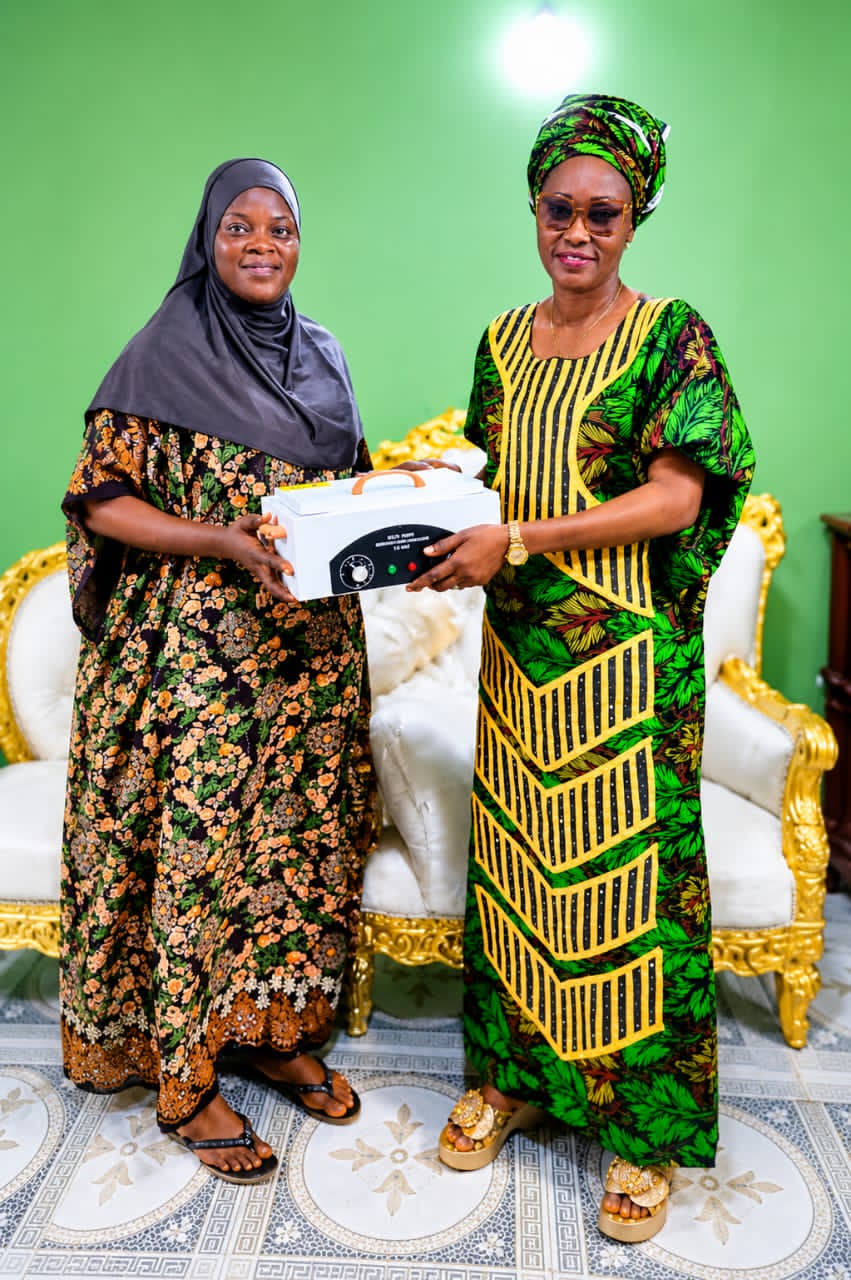
Let’s build a future where access to healthcare is strengthened…….Oba Odugbemi
A call has gone to every stakeholder in the health sector to build a future where access to healthcare is guaranteed and strengthened.
The Onilisa of Lisa Kingdom, Oba Oladele Odugbemi make the call in Lisa while donating a Sanitary Sterilisation Box to the Lisa health centre.
Oba Odugbemi said that the donation became necessary in order to further strengthen the capacity of the health centre for the benefits of the people.
The royal father stressed that his foundation, Oladele Odugbemi foundation would continue to make meaningful impacts in community healthcare aimed at complementing the efforts of government in healthcare delivery system.
He pointed out that the foundation reflects its unwavering commitment to promoting quality healthcare services, enhancing hygiene standards and supporting health institutions with essential tools that contribute to safer and healthier communities.
According to the monarch, all stakeholders in the health sector should work hand-in- hand with government to take healthcare to the doorsteps of the masses as government cannot do it alone, hence health is wealth.
Oba Odugbemi also charged the governments at all levels to declare a state of emergency in the health sector so that every Nigerian can have smooth access to healthcare delivery system in the interest of the country and for the benefits of the masses.
The monarch therefore said that the foundation would continue to care for the people through empowerment by ensuring that masses have good and quality health condition.
The Sanitary Sterilisation Box was presented by the Foundation Director, Hajia Suliat Odugbemi – Tinuosho to the Matron of Lisa Community Health Centre, Mrs Temitope Nofisat Sanni who received it on behalf of the health centre.
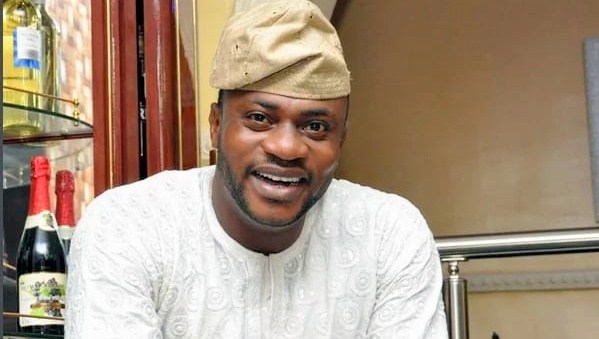
King of the Screen: Why Odunlade, Muyiwa, Femi Adebayo Remain Yoruba Movie Giants
The Yoruba movie industry has continued to produce legendary talents whose influence stretches beyond Nigeria to global audiences. Over the years, some actors have distinguished themselves through consistency, versatility, box office success, and cultural impact.
Among the numerous stars in Nollywood’s Yoruba sector, three actors have remained dominant figures whose names constantly resonate with fans and filmmakers alike — Odunlade Adekola, Muyiwa Ademola, and Femi Adebayo.

Odunlade Adekola: The Street King of Yoruba Cinema
Popularly regarded as one of the most entertaining actors in Nollywood, Odunlade Adekola has built a unique reputation through his energetic delivery, comic timing, emotional depth, and strong connection with grassroots audiences.
From comedy to action and emotional family dramas, the actor has consistently proven his versatility in blockbuster productions. His ability to interpret diverse roles effortlessly has made him a household name across Nigeria.
Industry observers believe his dominance on social media platforms, where his movie clips frequently go viral, has further strengthened his popularity among younger audiences.
Beyond acting, Odunlade has also contributed immensely to mentoring upcoming talents and expanding the commercial value of Yoruba films.
Muyiwa Ademola: The Master Storyteller

For many lovers of indigenous movies, Muyiwa Ademola remains one of the finest storytellers the Yoruba film industry has produced.
Widely respected for producing emotional and morally driven movies, the actor earned massive recognition through classic productions that focused on family values, culture, betrayal, perseverance, and societal lessons.
His calm delivery, deep scripts, and originality have kept him relevant despite changing trends in the entertainment industry.
Film critics often describe Muyiwa Ademola as one of the few actors whose productions combine entertainment with strong cultural education, making his movies timeless among older and younger viewers alike.
Femi Adebayo: The Modern-Day Box Office Force

Femi Adebayo has successfully combined traditional Yoruba storytelling with modern cinematic excellence, helping to project indigenous films to international audiences.
The actor, filmmaker, and producer has recorded major successes with high-budget productions that gained attention on streaming platforms and cinemas.
Known for his professionalism and attention to detail, Femi Adebayo has continued to push Yoruba movies beyond local boundaries while preserving cultural identity.
Entertainment analysts say his ability to blend culture, technology, and quality production has positioned him among the leading faces shaping the future of Yoruba cinema.
Growing Global Influence
The success of these actors reflects the increasing acceptance of indigenous Nigerian content globally. With streaming platforms creating wider access to local movies, Yoruba actors are now gaining international recognition and attracting new audiences.
Fans and stakeholders in the entertainment industry believe the contributions of Odunlade Adekola, Muyiwa Ademola, and Femi Adebayo have not only sustained Yoruba culture through film but have also elevated Nollywood’s global reputation.
celebrity radar - gossips
Eid-el-Kabir: Olowu of Kuta Urges Peace, Unity, Selflessness Among Nigerians
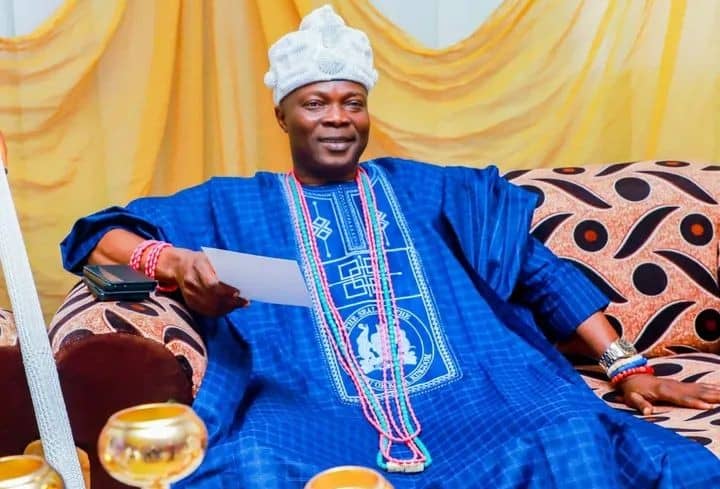
Eid-el-Kabir: Olowu of Kuta Urges Peace, Unity, Selflessness Among Nigerians
The Olowu of Kuta, HRM Oba Dr. Hammed Makama Oyelude, CON, Tegbosun III, has called on the Muslim Ummah and all Nigerians to make peace, unity, and selflessness their guiding principles as the world marks this year’s Eid-el-Kabir celebration.
In his Sallah message, the revered monarch described Eid-el-Kabir as a “highly spiritual occasion that demands dedication, commitment, and selflessness.”
Oba Makama said the period should be used to reflect on societal happenings and promote messages of hope and unity without inciting provocation.
He urged Nigerians to live together harmoniously, irrespective of religious, political, or tribal affiliations, stressing that politicians should exercise restraint and avoid inflammatory rhetoric ahead of the 2027 general elections.
“What should be uppermost in the mind of every patriotic Nigerian is **‘Country first,’” he said.
The monarch also appealed to citizens to remain vigilant in the face of insecurity, reassuring that the armed forces and paramilitary agencies are working round the clock to ensure a smooth and peaceful celebration.
“The price wise men pay for eternal liberty is vigilance. I urge everyone to celebrate moderately and extend a helping hand to the less privileged, widows, and orphans, embracing them as our brothers and sisters,” Olowu Makama added.
He concluded by wishing all Nigerians a peaceful and fulfilling Eid-el-Kabir celebration.


- Deputy (Dep.) Finance Minister Courts Investors to Transform Ghana’s rice Economy June 4, 2026
- Mobile health services in Kenya reduce the risk of stillbirths June 4, 2026
- JustMarkets Research Highlights Global Growth Divergence as a Key Market Driver June 4, 2026
- African Development Bank Group approves $125 million investment in African Trade and Investment Development Insurance (ATIDI) to expand risk insurance capacity in Africa June 4, 2026
- Congo Energy & Investment Forum 2027 to Position Brazzaville as a Hub for Global Energy Deal-Making June 4, 2026
- Africa Skills Hub (ASH) Transitions to ASH Africa as it Marks 10 Years of Impact June 4, 2026
- When women farm better, Eswatini eats better June 3, 2026
- Togo Hosts the 8th Annual Forum of National Volunteer Agencies in the Economic Community of West African States (ECOWAS) Region June 3, 2026
- Indigenous Peoples gravely vulnerable to Ebola epidemic, warn United Nations (UN) independent experts June 3, 2026
- Meeting between Parliamentary Vice-Minister ONISHI and His Excellency (H.E.) Mr. Cosgrow, Principal Minister and Minister for Agriculture, Fisheries and Blue Economy of Seychelles June 3, 2026
- Deputy (Dep.) Finance Minister Courts Investors to Transform Ghana’s rice Economy June 4, 2026
- Mobile health services in Kenya reduce the risk of stillbirths June 4, 2026
- JustMarkets Research Highlights Global Growth Divergence as a Key Market Driver June 4, 2026
- African Development Bank Group approves $125 million investment in African Trade and Investment Development Insurance (ATIDI) to expand risk insurance capacity in Africa June 4, 2026
- Congo Energy & Investment Forum 2027 to Position Brazzaville as a Hub for Global Energy Deal-Making June 4, 2026
- Africa Skills Hub (ASH) Transitions to ASH Africa as it Marks 10 Years of Impact June 4, 2026
- When women farm better, Eswatini eats better June 3, 2026
-

 news6 months ago
WHO REALLY OWNS MONIEPOINT? The $290 Million Deal That Sold Nigeria’s Top Fintech to Foreign Interests
-

 society1 month ago
SOCIAL MEDIA IS NOT A BATTLEFIELD COMMAND – WHY THE NIGERIAN ARMY’S ACTION AGAINST JUSTICE CRACK IS A NATIONAL SECURITY IMPERATIVE
-

 celebrity radar - gossips4 months ago
Dr. Chris Okafor Returns with Power and Fire of the Spirit -Mounts Grace Nation Altar with Fresh Anointing and Restoration Grace on February 1, 2026
-

 celebrity radar - gossips6 months ago
Prophet Kingsley Aitafo Releases 2026 Prophecy: ‘Nigeria Will Rise, but the World Must Prepare for Turbulence’