
society
Speak and Seek Justice: Why Free Speech and the Right to Litigate Stand or Fall Together


Speak and Seek Justice: Why Free Speech and the Right to Litigate Stand or Fall Together.
By George Omagbemi Sylvester | Published by saharaweeklyng.com
There are societies that fear words and there are societies that fear courts. The first tries to gag dissent; the second tries to close the courthouse door. Both are attacks on human dignity. A truly free republic protects both the right to speak and the right to litigate. These are not competing liberties; they are twin pillars of the rule of law. Where speech dies, truth withers. Where litigation is denied, rights become ornaments. We must defend both; without apology, without equivocation.

The Legal Bedrock: Global and African Standards.
Freedom of expression is not a privilege handed out by rulers; it is a human right recognized in black-letter international law. Article 19 of the Universal Declaration of Human Rights (UDHR) affirms that “EVERYONE HAS THE RIGHT TO FREEDOM OF OPINION AND EXPRESSION,” including the freedom to seek, receive and impart information and ideas through any media.
The same guarantee is legally binding under Article 19 of the International Covenant on Civil and Political Rights (ICCPR), which protects the right to hold opinions without interference and to express them; subject only to narrowly tailored restrictions provided by law and necessary for respect of the rights of others or for national security, public order, public health or morals.

On our continent, Article 9 of the African Charter on Human and Peoples’ Rights secures the right to receive information and to express and disseminate opinions within the law. The African Commission’s Declaration of Principles on Freedom of Expression and Access to Information in Africa (2019) further consolidates these protections for the digital age.
Freedom of speech is not a slogan; it is law.
National Constitutions: Nigeria and South Africa.
These global standards breathe through our domestic constitutions. Nigeria’s 1999 Constitution guarantees freedom of expression and the press in Section 39, the right to fair hearing in Section 36, and it establishes a special jurisdiction of High Courts for enforcement of fundamental rights under Section 46; including rules allowing public interest suits.

South Africa’s Constitution echoes the same architecture. Section 16 protects freedom of expression (press freedom, the right to receive or impart information, artistic creativity and academic freedom) while making clear that the right does not extend to incitement of imminent violence, advocacy of hatred that incites harm, or propaganda for war. Section 34 goes further, guaranteeing access to courts, the right of everyone to have legal disputes decided in a fair public hearing before an independent and impartial tribunal. This is the constitutional spine of the right of litigation.

In short: speak freely and if power infringes your liberty, SUE – the Constitution says you can.
The Right to Litigate: Justice Without Violence.
Courts are where citizens contest power without bloodshed. The ICCPR’s Article 14 proclaims equality before courts and tribunals and the right to a fair and public hearing. The African Charter’s Article 7 guarantees the right to have one’s cause heard, a presumption of innocence and the right to defense and counsel. A democracy without these mechanisms is merely orderly despotism.
Over a century ago, the U.S. Supreme Court captured a universal truth that transcends jurisdictions: “The right to sue and defend in the courts is the alternative of force… the right conservative of all other rights.” Deny people the courtroom and you invite the street. That is not a Western aphorism; it is a constitutional logic any RULE-OF-LAW system must accept.

Why Both Rights Rise and Fall Together.
Free speech and fair litigation are interdependent. Speech exposes abuse; litigation remedies it. Journalists and citizens uncover corruption, environmental harm, election irregularities or police misconduct; then litigation compels evidence, checks executive overreach, vindicates rights and develops jurisprudence. Without speech, courts go blind. Without courts, speech is a cry into the wind.
This is why any policy that muzzles the press or criminalizes dissent corrodes judicial independence and why procedural barriers that block public-interest suits or muzzle access to counsel chill speech. Democracies that weaken either liberty eventually weaken both.
As Nigerian comedian I Go Dye once joked in a show, “In Nigeria, if you talk too much, they will say you are disturbing peace. If you keep quiet, they will say you are enjoying the suffering. My brother, which one we go do?” His humor captures the absurdity of silencing voices; it’s a LOSE-LOSE situation when citizens cannot express grievances freely.
The Boundaries: Lawful Limits, Not Convenient Gags.
Rights are robust but not reckless. International law permits narrow, necessary and proportionate restrictions; for example, to prevent incitement to violence or to protect the rights and reputations of others through defamation law. OPEN-ENDED BANS, vague notions of “OFFENSE,” and executive convenience do not meet this test.
The South African Constitution is explicit: advocacy of hatred that incites harm and incitement of imminent violence are outside the protection of Section 16. That clarity both protects pluralism and guards society against genuine danger; without handing censors a blank cheque.
The Intellectual Case: Why Liberty Works.
Great thinkers have long warned against the arrogance of censorship. John Stuart Mill, in On Liberty, called the silencing of any opinion a theft from humanity: if the opinion is right, we lose the chance to exchange error for truth; if it is wrong, we lose the sharper understanding that comes from confronting error.
In modern constitutional thought, Justice Oliver Wendell Holmes Jr. crystallized the “marketplace of ideas”: “the best test of truth is the power of the thought to get itself accepted in the competition of the market.”
Justice Louis Brandeis added the doctrine of counterspeech: “If there be time to expose through discussion the falsehood and fallacies, the remedy to be applied is more speech, not enforced silence.”
Nigerian comedian Gordons brought the same truth home with laughter: “Our leaders do not like people talking because once you talk too much, their lies will need extra lies to cover it.” The humor might sound casual, but it reflects a sharp reality: truth dies in silence and litigation becomes useless when speech is stifled.
Practical Imperatives: What Governments Must Do.
Protect journalists and whistleblowers.
Keep the courthouse door open.
Legislate with precision.
Educate for resilience.
As Gordons quipped in another show: “Na only in Africa person go sue government, government go still be the judge.” The laughter hides a warning: judicial independence must be protected or litigation rights are reduced to theatre.
A Civic Mandate: Citizens, Not Subjects.
Citizens have duties too. Free speech is not a license for slander; it is a calling to truthful, accountable discourse. Litigation is not a toy; it is a sober instrument to vindicate rights and clarify law.
The Bottom Line
The measure of a constitutional order is simple: Can I speak? Can I sue? If either answer is “no,” the promise of freedom is already broken.
Let us say this plainly: There’s the right of free speech. There’s the right of litigation. Nobody should be denied either. Not by the state. Not by mobs. Not by wealthy actors who would rather settle truth with money than with evidence. The only alternative to speech is silence; the only alternative to litigation is force. We choose speech. We choose courts. We choose the rule of law.
Or as I Go Dye might say: “If you silence the people, don’t be surprised when the silence begins to shout louder than words.”





Police Day 2026: IGP Disu Leads Nationwide Walkathon To Strengthen Community Trust
The Inspector-General of Police, Olatunji Disu, on Tuesday led the management team, alongside officers and personnel of the Nigeria Police Force, in a nationwide walkathon to commemorate the 2026 National Police Day.
The event, held across state capitals and the Federal Capital Territory, formed part of activities marking Day Two of the annual celebration, themed “Community Partnership: Building Trust.”
The symbolic exercise, which drew participation from both police personnel and members of the public, was aimed at showcasing unity, discipline, and a renewed commitment to community policing and public safety.
According to the Force leadership, the walkathon underscores the Nigeria Police Force’s resolve to strengthen public trust, deepen engagement with citizens, and enhance collaboration in tackling security challenges across the country.
Participants described the initiative as a practical step toward bridging the gap between law enforcement and the communities they serve, while also promoting physical fitness and mental well-being among officers and civilians alike.
With the theme reflecting a shared responsibility for safety, the Police reiterated that sustainable security can only be achieved through active partnership with the public.
The event concluded with a renewed call for collective action under the banner: “Together We Walk, Together We Secure,” emphasizing unity of purpose in building a safer and more secure society for all Nigerians.


society
Dr. Chris Okafor invokes divine retribution upon individuals blackmailing the Grace Nation church
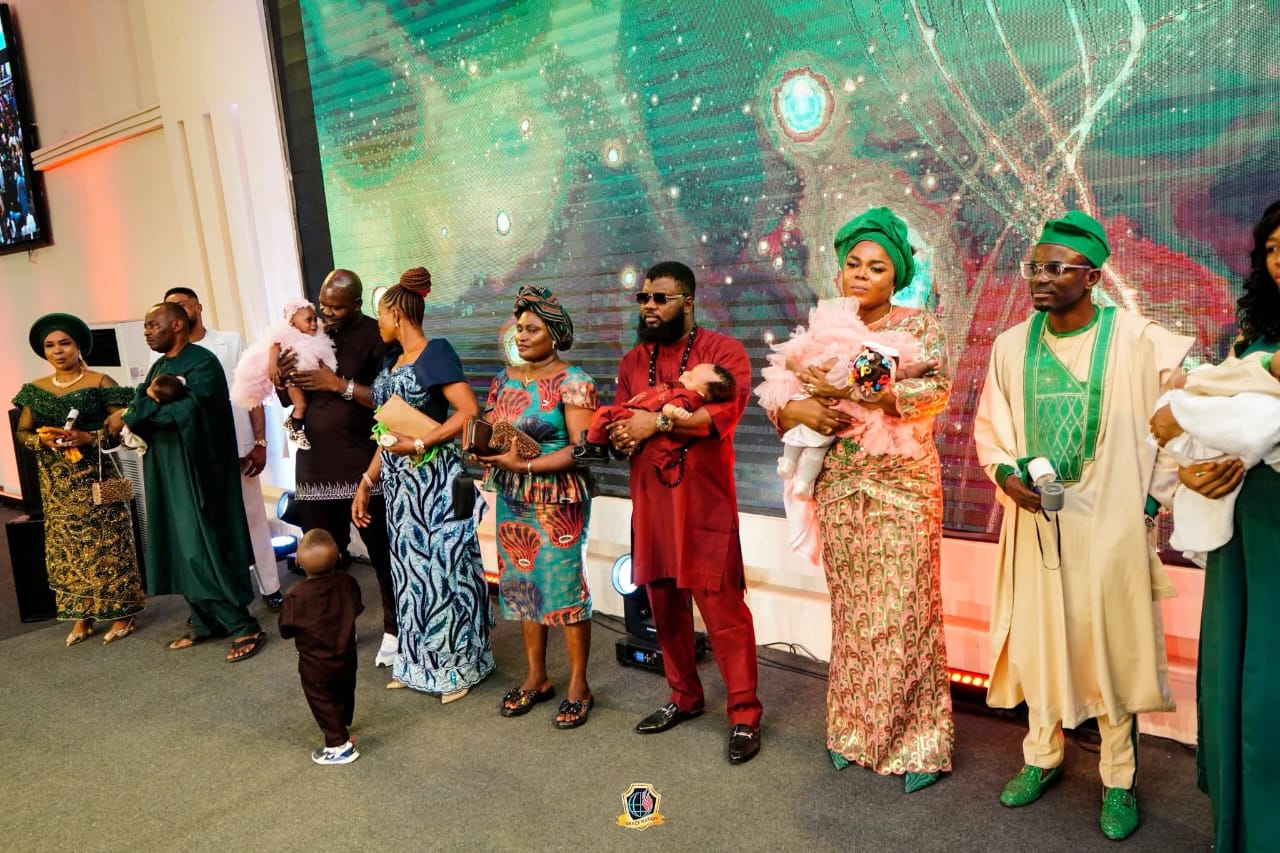
Dr. Chris Okafor invokes divine retribution upon individuals blackmailing the Grace Nation church
… Affirming God’s omnipotence to unveil malicious schemes.
To be frank, the ability of Doris Ogala and her associates to withstand the arduous challenges set by Senior Pastor Dr. Chris Okafor of Grace Nation Global at the culmination of the Harvest of Babies 2026 conference, the church’s flagship event, continues to elude me.
It’s advisable not to offend a powerful spiritual leader like Prophet Chris Okafor to avoid potential consequences, as seen in the situation with Doris Ogala, who was rebuked by the prophet; can she rectify the situation through confession?
Insiders close to the man of God claim that despite relentless online bullying and blackmailing, the Generational Prophet remains resolute, stating that God’s power has been evident throughout the commission’s existence. The reason for this wonderful statement is found in the scriptures, “Upon this rock I shall build my Church, and the gates of hell shall not prevail.” The more falsehoods are spread about the church and its leader, the more God elevates the church and propels him to greater heights, he asserted. He emphasized that blessings and fruitfulness are antidotes to curses, noting that God continues to bestow blessings upon the church, including miracles and the gift of children, which is one reason for the grand finale of the annual family liberation program, The Harvest of Babies.
However, the man of God issued a curse on each person speaking ill of the church, blackmailing, and uttering all sorts of falsehoods against the church, declaring that if they refused to repent within a few days, the earth would swallow them and their family members, stating that they would be of no use to themselves, their families, or society at large.
The spiritual leader cautions his followers to beware of such individuals including Doris Ogala who may taint their faith, and urges them to treat these persons as emissaries of the devil, avoiding them altogether.
Recall that the 2026 harvest of babies concluded with a remarkable birth of a miracle baby boy to a woman on the third day of the conference, accompanied by the dedication of several other miracle babies, all to the glory of God.
Christopher Sunday David writes from
Austria
“Together We Walk, Together We Secure”: Police Launch 2026 Walkathon In Abuja
The Nigeria Police Force has announced plans to host a walkathon in commemoration of the 2026 National Police Day, aimed at promoting unity, peace, and stronger community partnership.
The event is scheduled to take place on Tuesday, March 31, 2026, with participants expected to converge at the Force Headquarters Abuja by 6:00 a.m., where the walk will commence.
According to the organisers, the walkathon is designed to bring together members of the public, stakeholders, and security personnel in a show of solidarity and shared commitment to national security.
With the theme, “Together we walk, together we secure,” the initiative underscores the importance of collaboration between the police and citizens in maintaining peace and safety across the country.
Members of the public have been encouraged to participate in the exercise, which forms part of activities lined up to mark this year’s National Police Day celebration.
It is believed that the walkathon would not only foster closer ties between the police and the communities but also serve as a platform to promote awareness on collective responsibility in ensuring a safer society.


-

 society6 months ago
Religion: Africa’s Oldest Weapon of Enslavement and the Forgotten Truth
-

 news4 months ago
WHO REALLY OWNS MONIEPOINT? The $290 Million Deal That Sold Nigeria’s Top Fintech to Foreign Interests
-

 society6 months ago
“You Are Never Without Help” – Pastor Gebhardt Berndt Inspires Hope Through Empower Church (Video)
-

 celebrity radar - gossips2 months ago
Dr. Chris Okafor Returns with Power and Fire of the Spirit -Mounts Grace Nation Altar with Fresh Anointing and Restoration Grace on February 1, 2026