
society
Sponsored Narratives and International Impact: Who Backed the Screwdriver Trader’s Genocide Petition and What It Actually Means

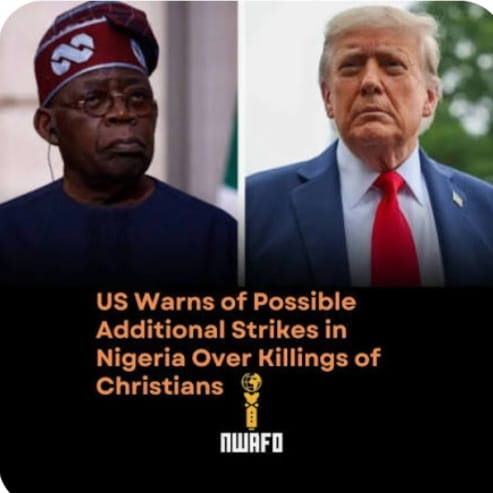
Sponsored Narratives and International Impact: Who Backed the Screwdriver Trader’s Genocide Petition and What It Actually Means.
By George Omagbemi Sylvester | Published by saharaweeklyng.com — for global audiences
“Beyond the Screwdriver, How Unverified Claims from Onitsha Shocked Global Policy and What It Says About Information, Influence and Accountability.”
In January 2026, a New York Times investigation revealed how Emeka Umeagbalasi, a modest screwdriver and tool trader operating from a market stall in Onitsha, Anambra State, somehow became a key source for United States policymakers alleging an ongoing “CHRISTIAN GENOCIDE” in Nigeria this narratives strong enough to influence air strikes carried out by the U.S. military on Nigerian soil.
That alone was shocking; but an even more important question has rarely been asked by domestic or international media: WHO SPONSORED HIM? WHO AMPLIFIED HIS PETITION TO THE UNITED NATIONS, UNITED STATES CONSULATE and INTERNATIONAL MISSIONS AROUND the WORLD? And what does this say about the dangerous intersection of unverified claims, global geopolitics and real consequences?

This article unpacks that complex story, tests Umeagbalasi’s claims against available evidence and explains why this moment is far more than a quirky human-interest tale of a screw-site vendor turned “EXPERT.”
The Screwdriver Trader and the Trump Air Strikes. In late 2025, the U.S. government under President Donald Trump redesignated Nigeria as a “COUNTRY of PARTICULAR CONCERN” a label reserved for nations where religious freedom is believed to be under systematic attack. Soon after, the U.S. launched air strikes on Islamist militants in Nigeria’s northwest on December 26, citing Nigeria’s failure to protect Christians.
The New York Times reported that Umeagbalasi’s advocacy organisation which is the International Society for Civil Liberties and Rule of Law (Intersociety) was cited repeatedly by congressmen and senators who pressed the Trump administration to treat the issue as an existential threat to Christianity.

Key U.S. lawmakers including Senator Ted Cruz and Representatives Riley Moore and Chris Smith have used his figures and narratives, despite the fact that Umeagbalasi openly admitted his data is often unverified and based largely on internet searches, secondary media reports and assumptions about victims religion based on location rather than on thorough field investigation.
In one revealing moment, he told reporters he had documented 125,000 “Christian deaths” since 2009, a number experts and data trackers say is inaccurate, unverified and based on flawed methods.
For a man whose primary business is selling screwdrivers, this leap to the center of global religious geopolitics raises urgent questions about who elevated him and why.
The Sponsorship and Network Behind the Petition. While the New York Times coverage highlights Umeagbalasi’s surprising influence, it does not fully explain who organized, funded or amplified his petitions to international bodies like the United Nations, the U.S. Embassy and missions across Europe.

However, independent reporting and background documents show that the International Society for Civil Liberties and Rule of Law (Intersociety) has a history of crafting and disseminating activism letters and petitions to foreign missions and human-rights bodies and often with the support of allied coalitions, external advocacy groups and diaspora networks. For instance:
In earlier campaigns in 2021 and prior years, Intersociety coordinated letters signed by coalitions of rights groups and intellectuals to African diplomatic corps and foreign missions with demanding accountability for alleged atrocities and urging foreign protection of Nigerian rights. Documents from these campaigns show how coalitions of NGOs can amplify letters by having them co-signed, translated and submitted simultaneously to multiple missions and global institutions.
This pattern of coordinated petitions shows a network of allied groups (not just Umeagbalasi acting in isolation) that has sought to elevate their narratives to international audiences.
Yet there is little evidence that traditional humanitarian monitoring organisations (like the United Nations Office of the High Commissioner for Human Rights, Amnesty International, Human Rights Watch, or established data projects) are backing these genocide figures or methodology. Instead, what we see are activist networks which lean into emotionally charged interpretations of insecurity in Nigeria, often without robust verification.
The Peter Obi Petition: A Pattern of Unverified Alarms. Adding another layer to this puzzle is Umeagbalasi’s past activism. In 2022 and 2023, the same organisation issued an alert alleging an assassination plot against Peter Obi, former Governor of Anambra State and 2023 presidential candidate.
In those statements, Intersociety claimed without verifiable evidence that Boko Haram-linked fighters intended to assassinate Obi and called on foreign governments and the UN to protect him, alarmist language that critics said was politically charged and lacking independent verification.
These earlier petitions were circulated widely to foreign missions, human-rights organisations and international observers and not just within Nigeria but across embassies globally. Coupled with Umeagbalasi’s later Christianity genocide narrative, this repetition shows a pattern of activism that amplifies crisis claims without the methodological rigor required for sound international policy decisions.
It is worth noting that political actors and observers dismissed the assassination claims at the time as unsubstantiated and potentially inflaming tensions without evidence. But the pattern of producing and circulating alarming claims is now part of the public record.
Experts Weigh In: Why Methodology Matters. Nigeria’s security situation is complex. Experts agree that violence (from Boko Haram, Islamic State West Africa Province, ethnic herders and communal conflicts) has caused significant loss of life. But multiple monitoring projects caution against simplistic attributions or religious genocide framing.
ACLED (Armed Conflict Location & Event Data Project) regularly tracks conflict and notes that while Christians have been killed, violence affects all communities (including Muslims and other civilians) and that data does not support a claim of systematic, religion-targeted genocide.
Analysts at the Council on Foreign Relations have emphasised that jihadist groups in Nigeria attack both Christians and Muslims and that framing the violence as exclusively anti-Christian can obscure the broader structural security failures.
Bishop Matthew Hassan Kukah, a senior Catholic cleric, has warned that focusing too narrowly on casualty figures among Christians can misdiagnose the crisis. He argues that Nigeria’s weak institutions fail to protect all citizens and that religion is just one dimension among many in conflict.
These expert voices matter because policy decisions (especially those involving military action) must be grounded in verified evidence and independent data, not individual claims amplified without scrutiny.
The Risks of Narratives Without Verification. There are real consequences when unverified claims gain international traction:
Military Action Based on Flawed Inputs – If policymakers rely on inaccurate narratives, the result can be misguided interventions with unintended consequences for civilians and national sovereignty.
Political Polarisation – Amplifying claims that feed into ethnic or religious narratives can deepen divisions within societies already strained by insecurity.
Delegitimising Genuine Grievances – When exaggerated or poorly supported claims dominate discourse, it can drown out legitimate concerns about human rights abuses that deserve attention and rigorous investigation.
Where This Leaves Nigeria: Accountability, Evidence and Responsible Advocacy. The story of the screwdriver trader whose petitions influenced international discourse (and possibly military actions) is a cautionary tale. It shows how networks of advocacy organisations, amplified through powerful political channels, can escalate unverified narratives into global policy discussions.
It also raises an urgent call for stronger standards of evidence, transparent methodologies and independent verification in human rights advocacy and especially when such claims have the potential to reshape foreign policy and impact the lives of millions.
As global intelligence, advocacy networks and media platforms intersect more than ever, the world must demand accountability not just for atrocities, but for how claims about atrocities are generated, sponsored, circulated and acted upon.
Only through rigorous evidence and balanced reporting can justice be served, though not sensationalism. And only by grounding narratives in verified truth can the international community help build peace not profit from panic.





society
GEN CHRISTOPHER GWABIN MUSA SUPPORT INITIATIVE EXTENDS WARM BIRTHDAY FELICITATIONS TO PRESIDENT TINUBU ON 74TH BIRTHDAY
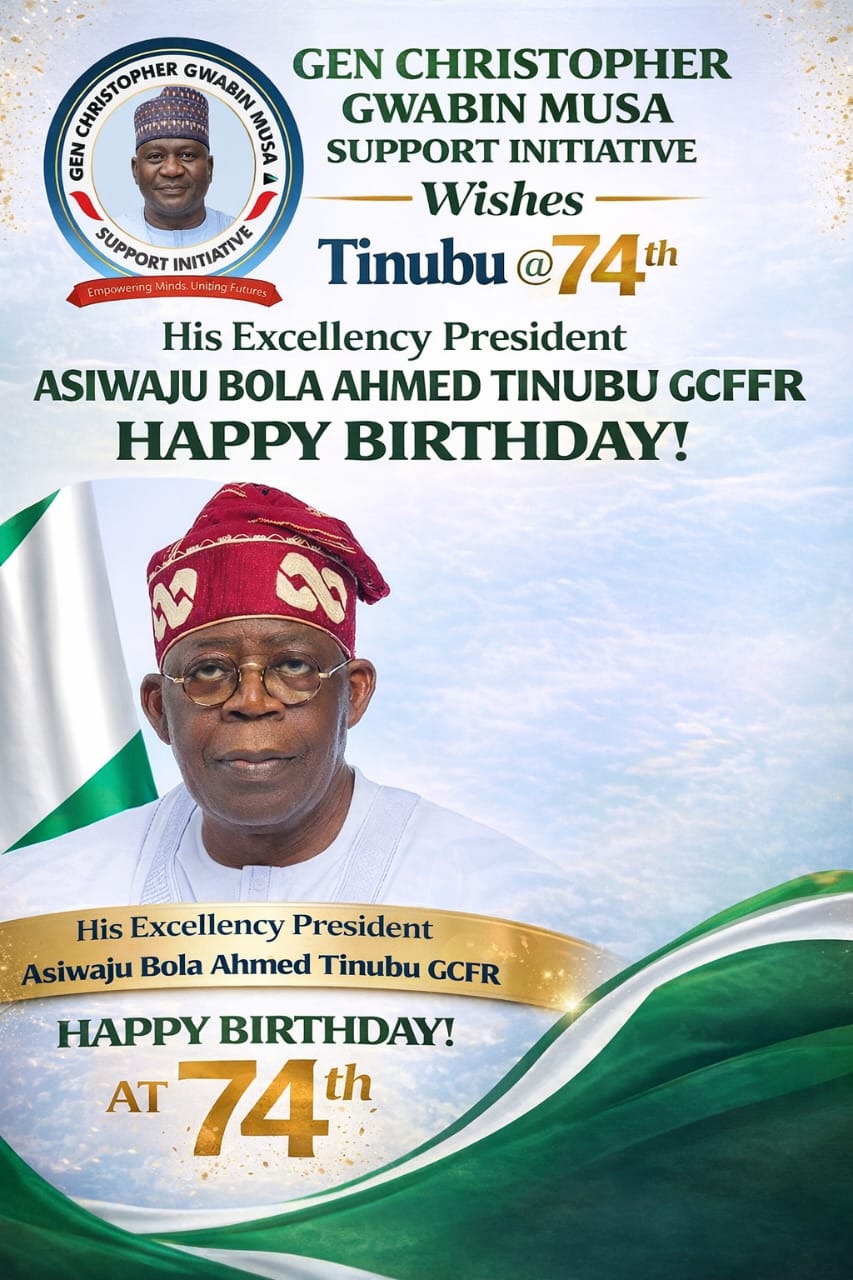
GEN CHRISTOPHER GWABIN MUSA SUPPORT INITIATIVE EXTENDS WARM BIRTHDAY FELICITATIONS TO PRESIDENT TINUBU ON 74TH BIRTHDAY
The Gen Christopher Gwabin Musa Support Initiative has extended heartfelt congratulations to His Excellency President Asiwaju Bola Ahmed Tinubu, GCFR, on the occasion of his 74th birthday.
In a statement released to the press, the Initiative conveyed warm wishes for the President’s personal well-being and for his continued leadership of the nation. The statement, signed by the Convener, Ibrahim Dahiru Danfulani, Sadaukin Garkuwan Keffi/Betara Biu, expressed hope that the coming year would bring the President “renewed strength and more wisdom in guiding the nation.”
The statement further noted that the Grand Patron of the Initiative, His Excellency Gen Christopher Gwabin Musa, OFR, Minister of Defence of the Federal Republic of Nigeria, joined in celebrating the milestone. It added, “Wishing Your Excellency continued good health, vitality, and determination as you lead the country towards greater unity and progress.”
The message underscores support for President Tinubu’s administration and its national objectives, marking the birthday as an occasion to reaffirm commitment to the nation’s unity and advancement under his stewardship.
society
Dominion City to Host Global Camp Meeting, “2 Nights of Glory” 2026 in Lagos, Enugu …Calls for Moral Renewal
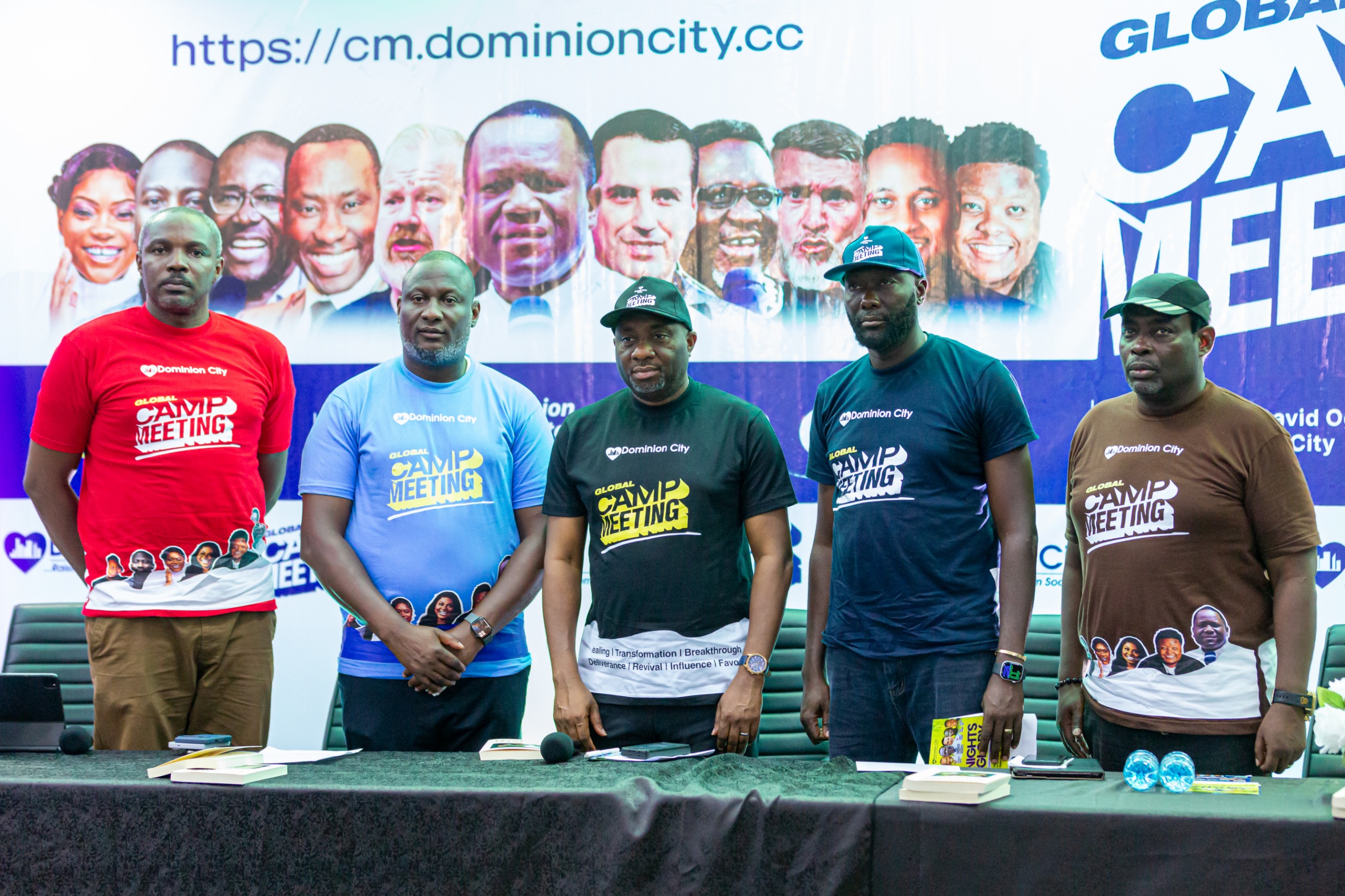
*Dominion City to Host Global Camp Meeting, “2 Nights of Glory” 2026 in Lagos, Enugu
…Calls for Moral Renewal
Lagos – Dominion City has announced plans to host its annual Global Camp Meeting alongside a special “2 Nights of Glory” gathering in April 2026, with events scheduled to be held simultaneously in Lagos and Enugu.
The week-long programme is expected to draw tens of thousands of participants onsite and millions of virtual attendees from across the globe.
The Global Camp Meeting will run from Wednesday, April 1 to Monday, April 6, featuring daily sessions at 8:00 a.m. and 5:00 p.m. The “2 Nights of Glory” is slated for Friday, April 3 and Saturday, April 4 at the Golden Heart Place, Km 22 Lekki-Epe Expressway, beside Lagos Business School, Ajah, Lagos.
Organised by Dominion City, a global church focused on raising transformational leaders, the conference will centre on revival, spiritual renewal, and practical teachings. This year’s theme, “Redigging the Wells of Our Fathers,” underscores a call to return to foundational values and principles.
Speaking ahead of the event, Nobbert Onaga, President, Golden Heart Foundation and Senior Pastor, DC Lagos & Europe, emphasised the need for moral reawakening as a pathway to national transformation. He described the Church as “the pillar and foundation of truth,” noting that the conference aims to confront moral decline and restore core values within society.
“We are going back to foundational truths that established the Church. These truths will help repair societal damage and reposition the Church as a source of hope and light,” Onaga said.
Also speaking, Shola Olapade, Senior Pastor of Dominion City Headquarters, highlighted the Church’s role in addressing ethical and cultural challenges, particularly among young people. He added that the programme would go beyond spiritual teachings to include sessions on artificial intelligence, innovation, business, media, arts, and career development.
“We are equipping people not just spiritually, but with relevant 21st-century skills to thrive in today’s world,” Olapade noted.
The conference will feature teachings and ministrations from a lineup of international ministers, including Dr. David Ogbueli, Dr. Charles Ndifon, Andres Bisonni, Pastor Randy Mitchell, Apostle Ikechukwu Peter Nnajiofor, Dr. Ferdinand Nweke, Apostle Ben Hanyani Ndobe, Evangelist Dan Scott, and Dr. Chiefo Ejiofobiri.
Music ministrations will also be led by notable gospel artists such as Grace Idowu, Rhema Onuoha, Once More Six, David Nkennor, Anthony Kani, and GUC.
Organisers disclosed that over 30,000 participants are expected to attend in person, with free transportation provided from designated locations across Lagos to ease access. In addition, free medical services will be offered daily, building on previous outreaches that benefited over 1,700 people.
To ensure safety and order, more than 200 traffic marshals will be deployed in collaboration with relevant authorities.
Beyond its spiritual impact, organisers project that the event will stimulate local economic activity across hospitality, transportation, and retail sectors.
The Global Camp Meeting remains a key platform for spiritual impartation, leadership development, and societal transformation, aligning with Dominion City’s mission to equip believers to influence their communities positively.
Participation is open to the public, with registration available online for both physical and virtual attendance. //END.//
*PHOTO CAPTIONS:*
L-R: Dr. Godwin Efobi, Head, Medical Team, Dominion City Headquarters (DCHQ); Pastor Shola Olapade, Senior Pastor, DCHQ; Pastor Nobbert Onaga, President, Golden Heart Foundation and Senior Pastor, DC Lagos & Europe; Pastor Chuks Anochie, Head of Security and Traffic Control, Dominion City Headquarters (DCHQ), Camp Meeting 2026; Pastor Josh Tim Vaduchi, Head of Event & Programmes, DCHQ, during the press briefing of the forthcoming Global Camp Meeting, held the weekend of 2026 at the Dominion City Headquarters (DCHQ), Lagos.
L-R: Pastor Chuks Anochie, Head of Security and Traffic Control, Dominion City Headquarters (DCHQ), Camp Meeting 2026; Pastor Shola Olapade, Senior Pastor, DCHQ; Pastor Nobbert Onaga, President, Golden Heart Foundation and Senior Pastor, DC Lagos & Europe; Dr. Godwin Efobi, Head, Medical Team, DCHQ; and Pastor Josh Tim Vaduchi, Head of Event & Programmes, during the press briefing of the forthcoming Global Camp Meeting, held over the weekend in 2026 at the Dominion City Headquarters (DCHQ), Lagos.
society
Oloworo of Oworosoki Kingdom, Oba Babatunde Saliu, Felicitates President Bola Ahmed Tinubu at 74
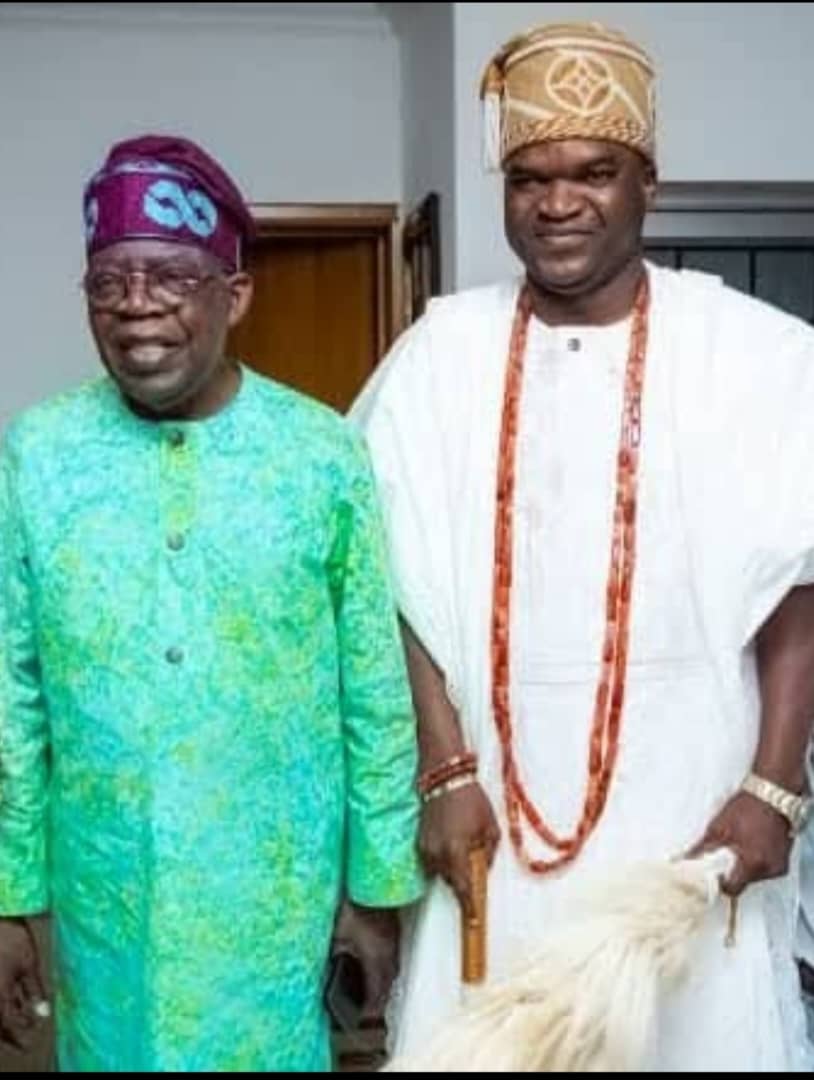
Oloworo of Oworosoki Kingdom, Oba Babatunde Saliu, Felicitates President Bola Ahmed Tinubu at 74
By Adeyemi Obadimu
The Oloworo of Oworosoki Kingdom, His Royal Majesty, Oba Babatunde Saliu, Elebo II, has extended warm felicitations to the President of the Federal Republic of Nigeria, Bola Ahmed Tinubu, GCFR, on the occasion of his 74th birthday.
In a goodwill message issued from his palace, the revered monarch described President Tinubu as a visionary statesman, a courageous reformer, and an indefatigable democrat whose lifelong commitment to nation-building continues to shape Nigeria’s progress.
Oba Babatunde Saliu praised the President’s unwavering dedication to public service, noting that his leadership has ushered in a new phase of economic reform, infrastructural renewal, and institutional strengthening across the country.
According to the monarch, the President’s Renewed Hope Agenda has begun yielding tangible relief and renewed confidence among citizens, reflecting his determination to reposition Nigeria for sustainable growth and prosperity.
“President Bola Ahmed Tinubu has demonstrated exceptional resilience, strategic foresight, and a deep love for Nigeria. His administration’s bold initiatives are laying the foundation for long-term national transformation. At 74, he remains steadfast in his resolve to build a stronger, more united, and economically vibrant nation,” the monarch stated.
Oba Babatunde further commended the President’s legacy of leadership, describing him as a bridge-builder, a mentor to many leaders, and a symbol of democratic stability. He acknowledged the President’s decades of sacrifice and contribution to the advancement of democracy in Nigeria.
On behalf of the Oworosoki Kingdom, the royal father prayed for divine wisdom, sound health, and renewed strength for the President to successfully complete the noble reforms and developmental strides he has embarked upon for the benefit of all Nigerians.
“As Your Excellency marks 74 remarkable years, we pray that Almighty God grants you long life, continued wisdom, and the fortitude to steer our great nation toward greater heights. May your days be filled with strength and grace as you continue to serve Nigeria with distinction,” Oba Babatunde Saliu added.
President Bola Ahmed Tinubu clocks 74 as a leader whose enduring influence, bold reforms, and steadfast patriotism remain central to Nigeria’s ongoing journey of national renewal.


-

 society6 months ago
Religion: Africa’s Oldest Weapon of Enslavement and the Forgotten Truth
-

 news4 months ago
WHO REALLY OWNS MONIEPOINT? The $290 Million Deal That Sold Nigeria’s Top Fintech to Foreign Interests
-

 society6 months ago
“You Are Never Without Help” – Pastor Gebhardt Berndt Inspires Hope Through Empower Church (Video)
-

 celebrity radar - gossips2 months ago
Dr. Chris Okafor Returns with Power and Fire of the Spirit -Mounts Grace Nation Altar with Fresh Anointing and Restoration Grace on February 1, 2026