
Business
STAKEHOLDERS EXTOL JIM OVIA, AS ZENITH BANK NAMESICONIC UNILAG ALUMNI BUILDING IN HONOUR OF LATE PROF. IBIDAPO-OBE

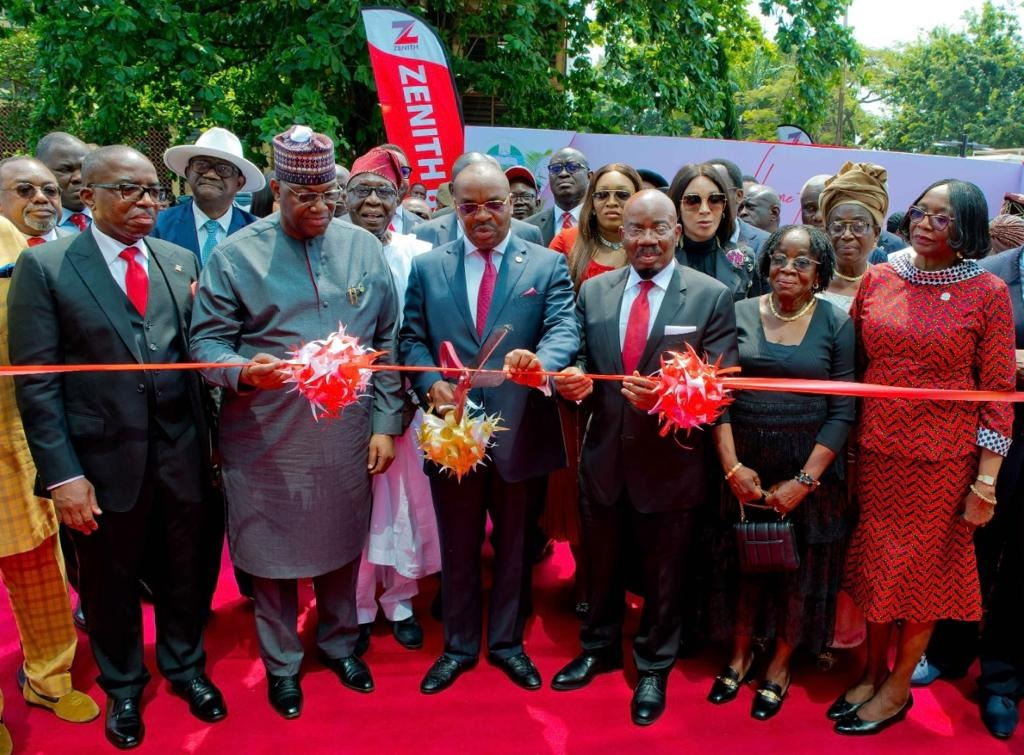
STAKEHOLDERS EXTOL JIM OVIA, AS ZENITH BANK NAMESICONIC UNILAG ALUMNI BUILDING IN HONOUR OF LATE PROF. IBIDAPO-OBE
The memory of Professor OyewusiIbidapo-Obe, a former Vice Chancellor of the University of Lagos, came alive as Zenith Bank Plc named the iconic building housing its Unilag Branch and the University of Lagos (Unilag) Alumni in his honour on Friday, November 25, 2022.

In his opening remarks at the commissioning ceremony, the Group Managing Director/CEO of Zenith Bank Plc and Chairman of the Body of Banks’ CEOs in Nigeria, Mr Ebenezer Onyeagwu, lauded the Founder and Chairman of the bank, Jim Ovia, CFR, for being physically present at the commissioning of the building to honour the memory of his late friend, Prof. OyewusiIbidapo-Obe, who served on the board of Zenith Bank as a
Non-Executive Director, and for his passion for youth education and digital learning.
He noted the remarkable and continued commitment of Jim Ovia, CFR, to education and youth development in Nigeria, especially through the setting up of James Hope College. This co-educational institution offers a combination of British and Nigerian curricula, and the James Hope University, which is billed to commence academic activities next year. He also extolled his philanthropy through the setting up of the Jim Ovia Foundation and Mankind United in Total Support for Education Initiative, which has awarded scholarships and produced over 1500 graduates from among indigent people who would not have had the benefit of having a university education.
Onyeagwu also recalled how the bank’s partnership with the University of Lagos began in 2001 with the donation of the first ICT centre, when the Founder and Chairman was the Group Managing Director/ CEO of the bank. According to him, “Today, Zenith Bank has built not less than 15 ICT centres in various tertiary institutions and cities all over the country. And I just want to say that no single institution or individual has been able to accomplish what we have done in that respect. And this is a demonstration of the passion our Founder and Chairman has, not just for education, but also for digital learning and computer literacy. This is in addition to several other support to the university, including the institution of Academic Excellence Awards in 2001, where the best graduating students from selected departments – Banking & Finance, Business Administration, Economics and Accounting, receive awards with financial rewards (currently NGN500,000) and employment opportunity, and the donation of 3,500 tablets to enable indigent students of the university to learn online effectively in 2020 during the Covid-19 pandemic”.Onyeagwu noted that the building is a strong statement of Zenith Bank’s sustainability initiatives as a signatory to several global sustainability frameworks including the United Nations Principles for Responsible Banking, as it incorporates many of the elements that make a facility environmentally friendly and sustainable.
Speaking at the commissioning of the iconic building, His Excellency, the Executive Governor of AkwaIbom State, UdomEmmanuel noted the huge contributions of Zenith Bank and,in particular, Jim Ovia, CFR, a man he described as a father, to the development of Nigeria. In his words,” when you see things being done consistently in the right way, there is always a man pointing in that direction. A lot of people ask me how come you are doing so much in public service; I say I come from a background where my mentor told me that you don’t report efforts, you don’t give excuses, but you report results. So no matter the situation, even in the midst of an economic recession, in the midst of Covid, you should not stop development and performance. As far as you are from the Zenith family, you are expected to have that creativity and ideas that can make you produce results. In Zenith, we say only the paranoid survive. So I really want to appreciate what I am seeing here today”. Whilst thanking the alumni association and the school authority for their collaborative efforts towards achieving capacity development, which he described as the bane of Nigerian society, he expressed his delight and honour to commission a building named after the revered Late Prof. OyewusiIbidapo-Obe, who touched and impacted so many people while he was alive.
In his address, the National President of Unilag Alumni Association, Dr. John Momoh, thanked the Founder and Chairman of Zenith Bank as well as the management of the bank for the magnificent building and Mrs. Sola Ibidapo-Obe for accepting the association’s request to name the building after her husband as a lasting legacy in his honour. He encouraged everyone to take good care of and maintain the building to serve the university community for years to come.
In her remarks, the Vice Chancellor of the University of Lagos, Prof. FolasadeOgunsola, acknowledged the invaluable contributions of Zenith Bank to the development of the school, promising to work with the Alumni association to ensure that the facility serves not only the Alumni but also the entire students populace. She thanked the Founder and Chairman of Zenith Bank, Jim Ovia, CFR, for donating 3,500 tablets to the university, which ensured that students who could not afford laptops for e-learning during the covid-19 pandemic were not left behind.
In her remarks, the wife of the Late Prof. OyewusiIbidapo-Obe, Mrs. Sola Ibidapo-Obe, thanked the Founder and Chairman of Zenith Bank, Jim Ovia, CFR, for immortalising her late husband with such a great edifice named after him. Recalling how close he was to her late husband, MrsIbidapo-Obe said: “You are my husband’s friend. Dr. Jim Ovia has demonstrated the love that does not die in his friendship with my beloved husband. When he fell ill, Dr. Jim Ovia was there from day one till the last moment. I could feel the way he felt. From then, I knew that he was a genuine friend. He tried his best to ensure my husband survived, but he did not”.

The iconic building, which sits on a total site area of 950m2, was constructed by a team of world-class builders who had the mandate of delivering the best quality possible. The iconic structure is a smart building that incorporates many of the elements that make a facility environmentally friendly and sustainable, including a grid-tie solar system that sustains power load on solar and not on a generator or national grid, an inverter-driven VRF air conditioning system and motion sensor lighting to enhance the energy efficiency, perforated aluminum composite panels for natural lighting and ventilation, free Wi-Fi system to provide internet access for students, fire management systems, including fire hydrant, smoke detector, and fire alarm system, and a LED screen installed on the building for the dissemination of information. The iconic building will house the Unilag Branch of Zenith Bank Plc and the operations of Unilag Alumni. Of the total 1,665m2 of floor area designated for office use in the four-storey building, 585m2 will be used by Unilag Alumni.




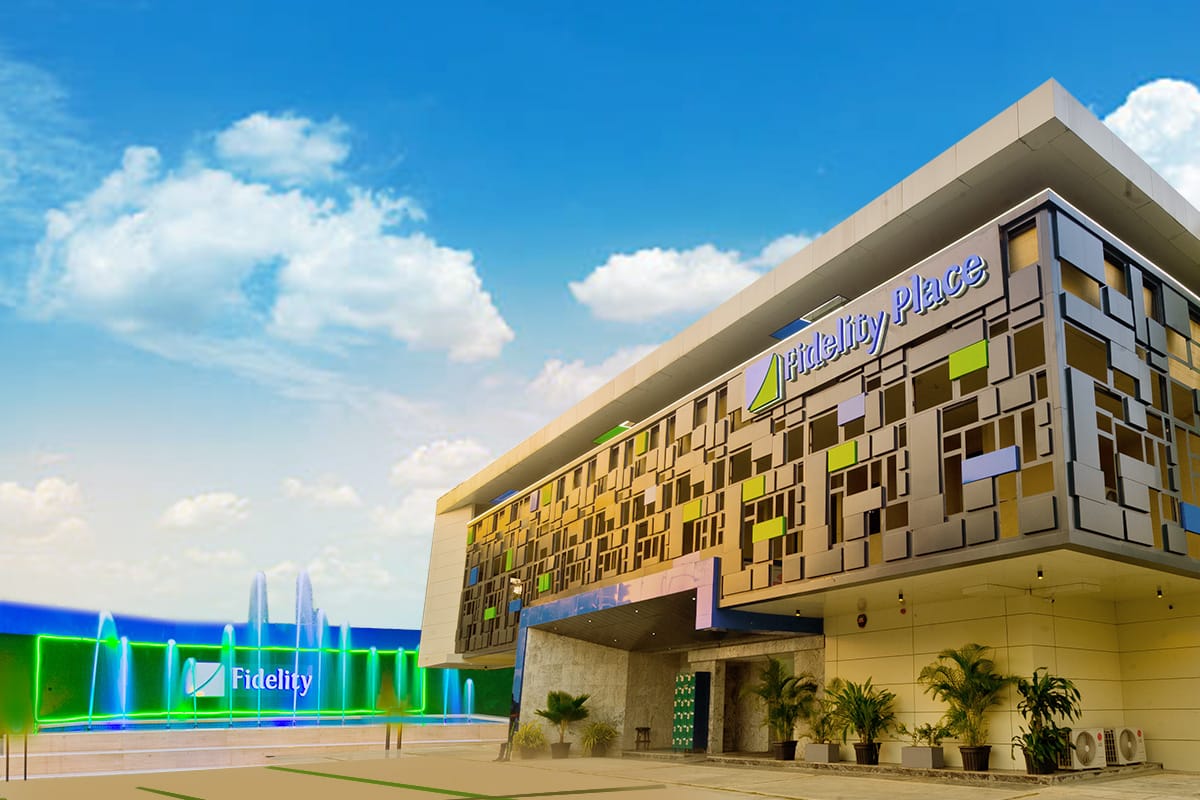
Fidelity Bank grows gross earnings by 38% to N434.95b in Q1
Fidelity Bank Plc recorded 37.9 per cent growth in gross earnings to N434.95 billion in first quarter 2026 as the international commercial bank continued to expand its core banking market share.
Interim report and accounts of Fidelity Bank for the three months ended March 31, 2026 released at the Nigerian Exchange (NGX) showed that gross earnings rose from N315.42 billion in first quarter 20025 to N434.95 billion in first quarter 2026, representing an increase of 37.9 per cent.
The top-line performance was driven by impressive growth in the bank’s core business operations with interest incomes rising by 22.8 per cent to N314.48 billion in first quarter 2026 as against N256.10 billion in first quarter 2025.
With net interest income at N180.97 billion, the bank closed the period with profit before tax of N92.48 billion. After taxes, net profit stood at N74.47 billion for the three-month period. Earnings per share remained high at N5.69, underlining the capacity of the bank to reward its shareholders.
The balance sheet of the bank also emerged stronger. Total assets crossed the N11 trillion mark to N11.35 trillion by March 2026 compared with N10.46 trillion recorded in December 2025. Customers’ deposits increased from N6.89 trillion to N7.38 trillion. Total equity rode on the back of earnings growth to a 27.5 per cent increase from N1.09 trillion in December 2025 to N1.39 trillion by March 2026.
The first quarter 2026 results further consolidated the strong earnings outlook of the bank, which had successfully completed its recapitalisation amidst impressive earnings performance in 2025.
Fidelity Bank had recorded double-digit growths in interest and non-interest incomes as well as key balance sheet items during the year ended December 31, 2025.
The audited report showed that gross earnings rose from N1.04 trillion in 2024 to N1.52 trillion in 2025, an increase of 45.6 per cent. Interest and similar incomes had grown by 38.7 per cent from N803.1 billion in 2024 to N1.11 trillion in 2025. Fees and commission incomes also rose by 44.7 per cent from N78.4 billion to N113.4 billion. The bank recorded net profit after tax of N242.4 billion in 2025.
The bank’s balance sheet emerged stronger with total assets rising by 18.6 per cent to N10.46 trillion in 2025 as against N8.82 trillion in 2024. Customer deposits increased by 16.1 per cent from N5.94 trillion to N6.89 trillion, reflecting continued franchise strength and an improved funding profile. Net loans and advances meanwhile declined by 2.4 per cent to N4.28 trillion in 2025 as against N4.39 trillion in 2024, attributable to customers paying down on their mature obligations.
The bank had in 2025 strengthened its capital position, with eligible capital rising to N561 billion, above the regulatory minimum of N500 billion for banks with international authorisation. In addition, capital adequacy had remained robust, with Capital Adequacy Ratio of 30.94 per cent by December 2025 as against 23.47 per cent by December 2024.
Managing Director, Fidelity Bank Plc, Dr. Nneka Onyeali-Ikpe, said the first quarter 2026 results reinforced the bank’s strong and resilient business model.
She noted that with the remarkable success of its recapitalisation programme and continuing expansion, Fidelity Bank has entered a new era of growth and impressive returns.
“We are on a stronger footing and confident that we will set new growth records that are reflective of our legacy and the future we are working on,” Onyeali-Ikpe said.
Business
Dangote Refinery Ends Nigeria’s Era of Fuel Import Dependence, Boosts GDP, FX Earnings — EIU
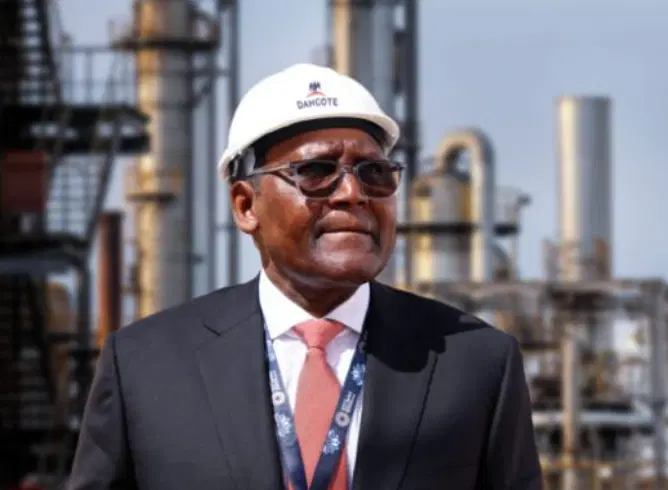
Dangote Refinery Ends Nigeria’s Era of Fuel Import Dependence, Boosts GDP, FX Earnings — EIU
The operational ramp up of the 650,000 barrels per day Dangote Petroleum Refinery & Petrochemicals is fundamentally reshaping Nigeria’s downstream oil sector, significantly reducing the country’s dependence on imported refined petroleum products and strengthening its external position, according to the Economist Intelligence Unit (EIU).
In its latest assessment on Nigeria’s fuel market and regulatory environment, the EIU said the refinery has already transformed a sector that was previously characterised by heavy reliance on imported fuel despite Nigeria being Africa’s largest crude oil producer. The report noted that the refinery met nearly 80 per cent of domestic petrol demand in April and produced enough volumes to satisfy local consumption requirements as operations approached full capacity.
The EIU described Nigeria’s downstream petroleum sector before the refinery as “long dysfunctional”, noting that the country had remained almost entirely dependent on costly imported fuel while producing nearly 1.5 million barrels of crude oil daily.
According to the report, the emergence of the refinery has reduced import dependence, improved domestic fuel availability and strengthened Nigeria’s balance of payments position through lower import demand and rising exports of refined petroleum products.
“The gradual ramp up of the 650,000 barrel/day Dangote refinery since May 2023 has transformed Nigeria’s long dysfunctional downstream sector,” the report stated. “The country’s main refineries, all state owned, had been inoperative for years and Nigeria was almost entirely reliant on costly imported fuel.”
The research and analysis division of The Economist Group, London added that the refinery’s attainment of full operational capacity and its planned expansion would further support Nigeria’s economic growth and foreign exchange earnings over the medium term.
“Meanwhile, the attainment of full capacity at, and an increase in exports from, the Dangote refinery will support real GDP growth and foreign exchange earnings in 2026 and 2027 and beyond, as a planned doubling of the plant’s output comes on stream around the end of the decade,” it added.
Industry analysts said the refinery is increasingly positioning Nigeria as an emerging refining and export hub, altering energy trade flows across Africa and reducing the vulnerability associated with fuel import dependence.
The EIU noted that the refinery’s expansion has coincided with major reforms in Nigeria’s downstream sector, including the removal of fuel subsidies and the introduction of market driven pricing mechanisms.
The report, however, said the transition from a state dominated fuel import structure to large scale domestic refining has triggered resistance from interests linked to the old import regime.
The latest tensions emerged following the decision by the Nigerian Midstream and Downstream Petroleum Regulatory Authority to relax restrictions on petrol imports despite the refinery’s growing capacity to meet domestic demand.
Dangote Industries subsequently initiated legal action, arguing that continued import approvals undermine domestic refining investments and conflict with the objectives of the Petroleum Industry Act, which seeks to encourage local refining capacity and reduce import dependence.
Analysts noted that the availability of large-scale domestic refining capacity has improved Nigeria’s energy security and reduced exposure to external supply shocks and foreign exchange volatility.
The Centre for the Promotion of Private Enterprise also cautioned against unrestrained importation of petroleum products, warning that such a policy could weaken Nigeria’s industrialisation drive and discourage investments in domestic refining.
Chief Executive Officer of CPPE, Muda Yusuf, said continued dependence on imported fuel had historically contributed to pressure on foreign reserves, exchange rate instability and fiscal leakages.
The refinery’s growing impact is also being reflected in Nigeria’s broader macroeconomic indicators. Earlier this month, S&P Global Ratings cited increased domestic refining capacity and rising hydrocarbon exports among the major factors supporting Nigeria’s sovereign credit rating upgrade – the first in 14 years.
Beyond Nigeria, analysts said the refinery is increasingly being viewed as a strategic industrial asset for Africa, where many countries remain heavily dependent on imported fuel despite rising demand for transportation, manufacturing, and power generation.
Business
BREAKING: Court Dismisses $19.6 Million Claim Against NNPCL — Rules Contract Scope Cannot Be Changed Orally
BREAKING: Court Dismisses $19.6 Million Claim Against NNPCL — Rules Contract Scope Cannot Be Changed Orally
In a landmark ruling on Friday, May 22, 2026, the Federal Capital Territory High Court in Abuja threw out a $19.6 million lawsuit filed by Alternate Dimensions Ventures Ltd against the Nigerian National Petroleum Company Limited (NNPCL), affirming a key legal principle: a written contract cannot be expanded through oral agreements or conduct.
Alternate Dimensions had sought $19,600,000 in professional fees, claiming the scope of its Direct Sale, Direct Purchase (DSDP e-pro) contract with NNPCL was orally expanded. Represented by counsel Patrick Peter, the firm argued it was entitled to the revised sum for services rendered under the alleged new terms.
But NNPCL, through its lawyer Ituah Imhanze of KENNA LP, pushed back sharply, arguing that parties are bound exclusively by the clear terms of their written agreement. Imhanze contended that without any written amendment, the claim was legally unsound, and the court agreed.
Delivering judgment, Justice Hamza Mu’azu upheld NNPCL’s defense, stating that the contract was unambiguous and that no evidence was adduced during the trial, which supported the alleged scope expansion. The court further found that NNPCL fully complied with all contractual terms and committed no breach.
Dismissing the suit as meritless, Justice Mu’azu reinforced the doctrine of sanctity of contract: any amendment to a written agreement must be express, unequivocal, and documented, not implied or verbal.
The ruling spares NNPCL from the S19.6 million claim and also a floodgate of similar potential liabilities.


- Afreximbank Deepens Commitment to Economic Progress in The Bahamas June 1, 2026
- African Electric Vehicle (EV) platform Spiro raises $215M in equity to scale electric mobility and energy infrastructure across Africa June 1, 2026
- Africa Centres for Disease Control and Prevention (Africa CDC) Statement on Attacks Against Health Facilities During the Bundibugyo Virus Disease Response in the Democratic Republic of the Congo June 1, 2026
- Putting consumers at the centre of Africa’s dairy transformation June 1, 2026
- International Rescue Committee (IRC) warns Democratic Republic of the Congo (DRC) Ebola outbreak likely far larger than official figures suggest June 1, 2026
- South Africa: Portfolio Committee on Health Marks National Cancer Survivor Day and Reaffirms Importance of Early Detection and Public Awareness June 1, 2026
- Rwanda’s RSSB Tigers Crowned 2026 Basketball Africa League Champions June 1, 2026
- Uganda: Appointments Committee Begins Vetting of Ministerial Nominees June 1, 2026
- Sudan braces for worsening child malnutrition as pre-harvest season starts June 1, 2026
- Etu Energias Strengthens Angolan Footprint, Returns to Angola Oil & Gas (AOG) 2026 as Champion Sponsor June 1, 2026
- Afreximbank Deepens Commitment to Economic Progress in The Bahamas June 1, 2026
- African Electric Vehicle (EV) platform Spiro raises $215M in equity to scale electric mobility and energy infrastructure across Africa June 1, 2026
- Africa Centres for Disease Control and Prevention (Africa CDC) Statement on Attacks Against Health Facilities During the Bundibugyo Virus Disease Response in the Democratic Republic of the Congo June 1, 2026
- Putting consumers at the centre of Africa’s dairy transformation June 1, 2026
- International Rescue Committee (IRC) warns Democratic Republic of the Congo (DRC) Ebola outbreak likely far larger than official figures suggest June 1, 2026
- South Africa: Portfolio Committee on Health Marks National Cancer Survivor Day and Reaffirms Importance of Early Detection and Public Awareness June 1, 2026
- Rwanda’s RSSB Tigers Crowned 2026 Basketball Africa League Champions June 1, 2026
-

 news6 months ago
WHO REALLY OWNS MONIEPOINT? The $290 Million Deal That Sold Nigeria’s Top Fintech to Foreign Interests
-

 society4 weeks ago
SOCIAL MEDIA IS NOT A BATTLEFIELD COMMAND – WHY THE NIGERIAN ARMY’S ACTION AGAINST JUSTICE CRACK IS A NATIONAL SECURITY IMPERATIVE
-

 celebrity radar - gossips4 months ago
Dr. Chris Okafor Returns with Power and Fire of the Spirit -Mounts Grace Nation Altar with Fresh Anointing and Restoration Grace on February 1, 2026
-

 celebrity radar - gossips6 months ago
Prophet Kingsley Aitafo Releases 2026 Prophecy: ‘Nigeria Will Rise, but the World Must Prepare for Turbulence’