
society
Stand Firm Against Discouragement: Why Every Delay Builds Discipline, Every Challenge Refines Character and Every Setback Prepares a Wiser Tomorrow

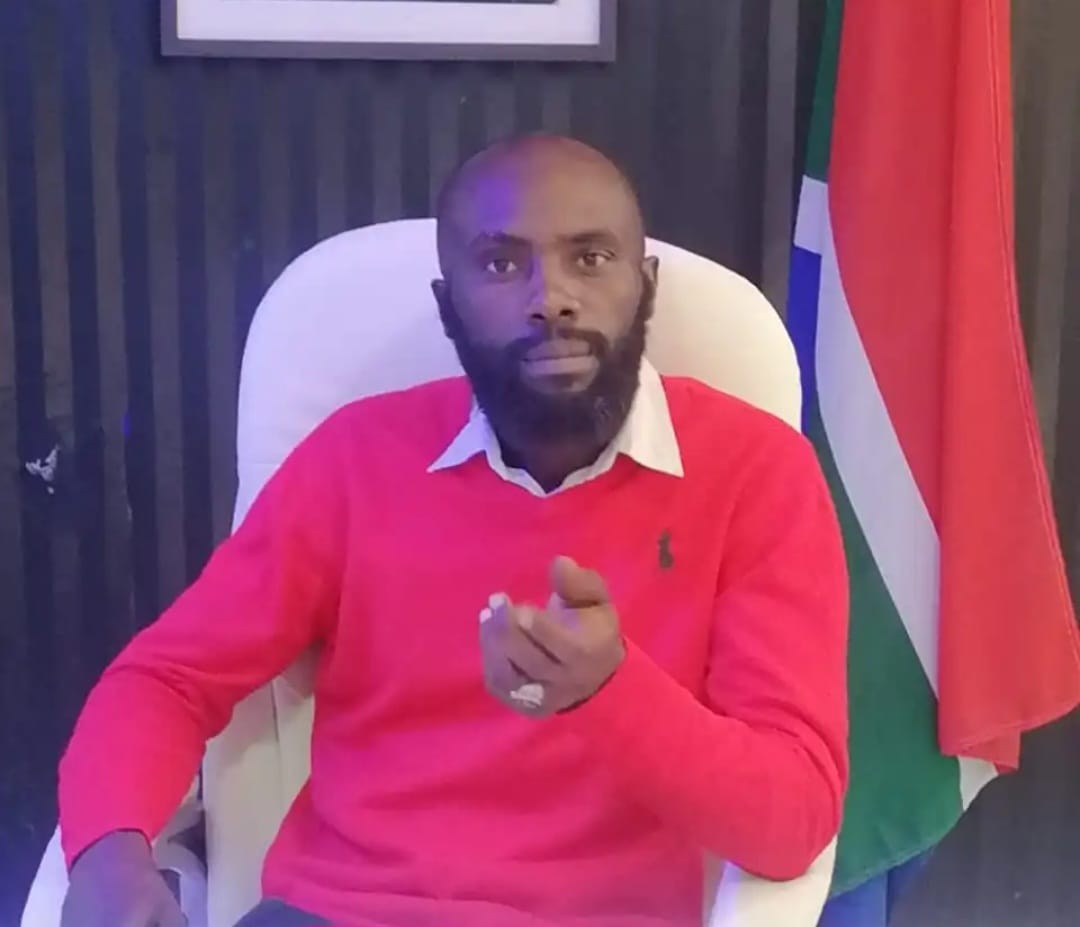
Stand Firm Against Discouragement: Why Every Delay Builds Discipline, Every Challenge Refines Character and Every Setback Prepares a Wiser Tomorrow.
By George Omagbemi Sylvester | Published by saharaweeklyng.com
“How PATIENCE, PERSEVERANCE and PRINCIPLED ENDURANCE turn HARDSHIP into STRENGTH and TRANSFORM STRUGGLE into LASTING PROGRESS.”
No matter where you are today, do not surrender to discouragement. This is not a motivational cliché whispered to soothe broken spirits; it is a timeless principle supported by history, psychology, philosophy and lived human experience. Every generation that has achieved meaningful progress (personally or collectively) has done so not by avoiding hardship, but by confronting it with discipline, resilience and clarity of purpose. Delays are not denials. Challenges are not curses. Setbacks are not verdicts. They are formative processes that prepare the human mind and character for something greater.

Discouragement is one of the most dangerous enemies of progress because it convinces people to abandon the journey too early. It magnifies temporary difficulties into permanent defeat and turns momentary failure into lifelong regret. Yet history repeatedly shows that those who endure discouragement (who refuse to surrender their resolve) often emerge stronger, wiser and better prepared for leadership, innovation and service.
Delay as a School of Discipline. It is one of life’s most misunderstood teachers. In an age obsessed with instant gratification, waiting is often framed as weakness or misfortune. In reality, delay is the training ground of discipline. It forces individuals to master self-control, patience and long-term thinking. Psychological research on delayed gratification demonstrates that the ability to wait, plan and persist is strongly linked to improved decision-making, emotional regulation and life outcomes.
Discipline is not formed in moments of abundance; it is forged in seasons of waiting. When progress seems slow and results invisible, the disciplined individual learns consistency over comfort. Delays strip away entitlement and cultivate humility. They teach people to work without applause, to prepare without guarantees and to remain faithful to process even when rewards are postponed.
The great philosopher Aristotle once observed that EXCELLENCE is not an ACT but a HABIT. Delay forces the repetition that builds habit. Each day of disciplined effort (despite uncertainty) strengthens the internal structure required for lasting success. Those who escape discipline during delay often collapse when success finally arrives.
Challenges as Refiners of Character. Character is not revealed in ease; it is refined in adversity. Challenges test values, beliefs and integrity. They expose weaknesses not to shame us, but to show us where growth is required. Every challenge carries a question: Will you ADAPT, LEARN and ENDURE or RETREAT?

History is unambiguous on this point. Leaders, thinkers, reformers and innovators were shaped by resistance. Nelson Mandela’s moral authority was not born in comfort but refined through decades of imprisonment. Abraham Lincoln’s depth of wisdom was forged through repeated political failures and personal loss. These figures were not extraordinary because they avoided difficulty, but because they allowed difficulty to deepen them rather than destroy them.
Modern psychology affirms this truth through the concept of resilience and post-adversity growth. Individuals who confront hardship with reflection and purpose often develop stronger coping skills, deeper empathy and clearer priorities. Challenges, when rightly interpreted, become instruments of refinement. They teach patience, courage and moral clarity with qualities no classroom can fully impart.
Setbacks as Preparation, Not Punishment. A setback is not proof of incompetence; it is evidence of engagement. Those who never fail are often those who never try. Setbacks provide feedback with honest, sometimes painful, but invaluable. They reveal what does not work, what needs adjustment and what must be strengthened.
Carol Dweck’s work on mindset demonstrates that individuals who view failure as a learning process (rather than a personal indictment) are more likely to improve performance and persist. This growth-oriented perspective transforms setbacks into stepping stones. Each fall becomes a lesson. Each mistake becomes instruction.
Setbacks also cultivate wisdom. Wisdom is not mere knowledge; it is understanding shaped by experience. A person who has stumbled learns caution without fear, confidence without arrogance and ambition without recklessness. Such wisdom cannot be inherited or rushed but it is earned through setbacks survived and lessons applied.
The Inner Architecture of Perseverance. Perseverance is not blind stubbornness; it is disciplined endurance guided by purpose. Scholar and psychologist Angela Duckworth describes this quality as “GRIT”—the sustained passion and perseverance for long-term goals. Grit is what enables individuals to remain committed when motivation fades and obstacles multiply.
Perseverance requires structure. It thrives on routines, accountability, reflection and rest. It is sustained not by emotion, but by conviction. Those who endure understand that progress is often invisible before it becomes undeniable. They commit to daily effort, trusting that consistency compounds even when results are delayed.
Neuroscience reinforces this truth. The human brain is capable of change through repetition and effort with a phenomenon known as neuroplasticity. Each disciplined action strengthens neural pathways associated with focus, resilience and problem-solving. In essence, perseverance reshapes the brain, making future endurance easier and more effective.
Meaning as the Antidote to Discouragement. Austrian psychiatrist and Holocaust survivor Viktor Frankl offered one of the most profound insights into human endurance: meaning sustains life even in suffering. According to Frankl, when individuals find meaning in their struggle, they can endure almost any hardship.

Discouragement thrives where meaning is absent. When effort feels pointless, the spirit collapses. But when struggle is linked to purpose (family, legacy, service, faith or contribution) endurance becomes possible. Meaning transforms pain into sacrifice and delay into preparation.
This is why those who stand firm are often guided by something larger than themselves. They endure not because the road is easy, but because the destination is worthy.
A Call to Stand Firm. To stand firm is not to deny pain or pretend strength. It is to acknowledge difficulty without surrendering to it. It is to keep moving when progress is slow, to keep believing when outcomes are uncertain and to keep learning when mistakes occur.
Progress is rarely linear. It is often messy, uneven and delayed. It is inevitable for those who persist intelligently and ethically. Every delay builds discipline. Every challenge refines character. Every setback prepares a wiser tomorrow.
This is the unglamorous truth of growth. It demands patience, humility and courage. Yet it is the path walked by all who leave a meaningful mark on the world.
No matter where you are today, I ask that you stand firm. The work is not wasted. The struggle is not meaningless. And the future is still listening to the choices you make now.
George Omagbemi Sylvester writes on leadership, society, resilience, and human development. This article is published by saharaweeklyng.com





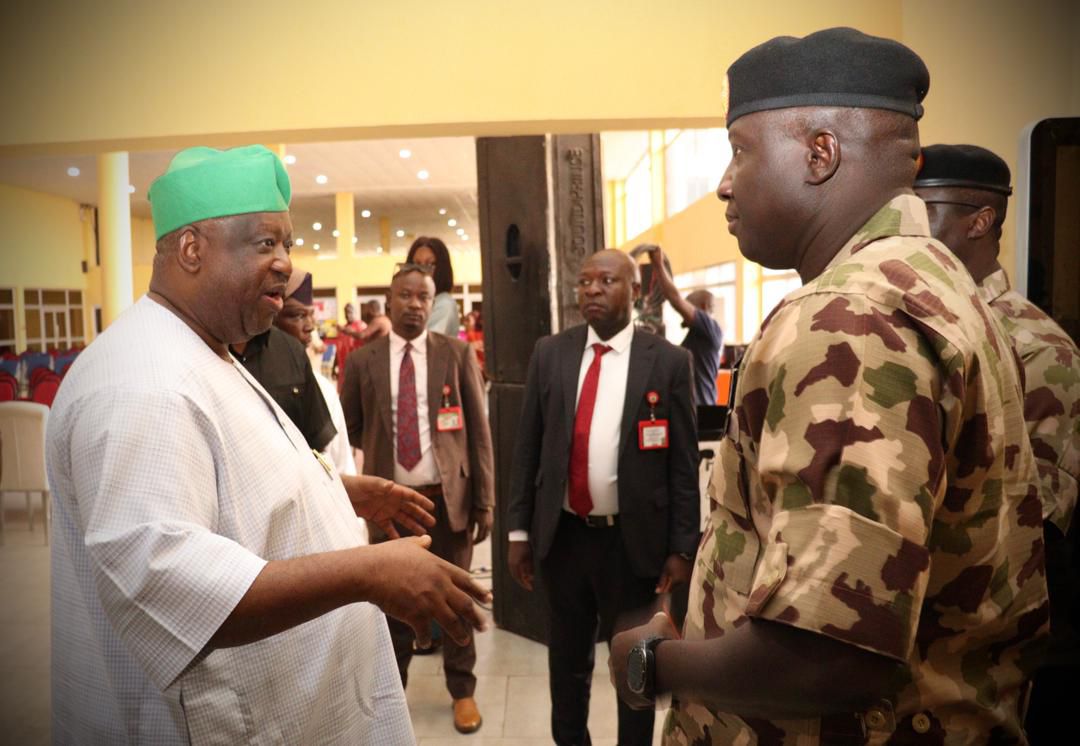
COAS Launches Nationwide Security Renewal Mission in Plateau
The Chief of Army Staff, Lieutenant General Waidi Shaibu, on Thursday led a high-level delegation of security chiefs to Plateau State, flagging off a nationwide security renewal mission aimed at strengthening civil-military cooperation and restoring lasting peace across the country.
The visit to Jos, the Plateau State capital, marks the first phase of a coordinated national effort to address persistent security challenges through joint operations, community engagement, and proactive intelligence gathering.

Governor Caleb Muftwang received the delegation, describing the initiative as a critical step toward stabilizing affected communities and reinforcing public confidence in security institutions.
Civil-Military Synergy Takes Centre Stage
At the heart of the mission is a renewed emphasis on collaboration between the military, civil authorities, and local communities. Speaking during the visit, Lt. Gen. Shaibu stressed that national security must be treated as a collective responsibility.
He urged citizens to support security agencies by remaining vigilant, sharing credible information, and complying with lawful directives, noting that effective security cannot be achieved in isolation.
Community Engagement as Confidence-Building Tool
In a departure from purely operational engagements, the Army Chief held direct consultations with community leaders and residents in Jos, reinforcing the importance of trust and dialogue in conflict resolution.
Lawmakers, including Dachung Bagos and Ladi Dangyok, commended the initiative, stating that visible engagement by top military leadership helps rebuild confidence among citizens and fosters cooperation.

Proactive Security Operations Underway
Operational updates were provided by Major General Folusho Oyinlola, who disclosed that troops under Operation Enduring Peace have intensified surveillance, intelligence-led patrols, and coordinated actions with other security agencies.
According to the Army, the approach is designed to prevent escalation of threats, safeguard lives and property, and stabilize vulnerable communities before crises emerge.
A Shift Toward Sustainable Peace
Military authorities emphasized that the Plateau visit is part of a broader, long-term strategy to transition from reactive responses to sustainable peacebuilding nationwide. The framework includes strengthening local resilience, ensuring justice, and maintaining continuous engagement with stakeholders.
Analysts view the initiative as a significant policy shift, reflecting a more inclusive security architecture that integrates community participation with military operations.
Call for National Unity
The Army leadership concluded with an appeal to Nigerians to reject divisive narratives and support ongoing efforts to promote unity and peace.
“The success of this mission depends not only on the armed forces but on the cooperation of every citizen,” the COAS stated.
The nationwide security renewal campaign is expected to extend to other regions in the coming weeks as authorities seek to consolidate gains and build a safer, more unified Nigeria.



IGP Disu Visits Plateau, Orders Tactical Deployment To Reinforce Security
The Inspector General of Police, Olatunji Disu, on Thursday paid a working visit to Plateau State following recent unrest, holding strategic talks with Governor Caleb Muftwang on measures to strengthen security and prevent further disturbances.
As part of immediate steps to stabilise the situation, the police chief authorised the deployment of specialised tactical units to support officers already on ground across affected areas.
Governor Muftwang commended the swift intervention of the police leadership, praising the dedication and professionalism of security personnel working to restore calm. He also acknowledged the efforts of mobile police officers and lauded the leadership of the state’s Commissioner of Police, Bassey Ewah.
Both the Nigeria Police Force and the Plateau State Government reaffirmed their commitment to safeguarding lives and property, stressing that enhanced collaboration remains key to restoring lasting peace in Plateau State, popularly known as the Home of Peace and Tourism.


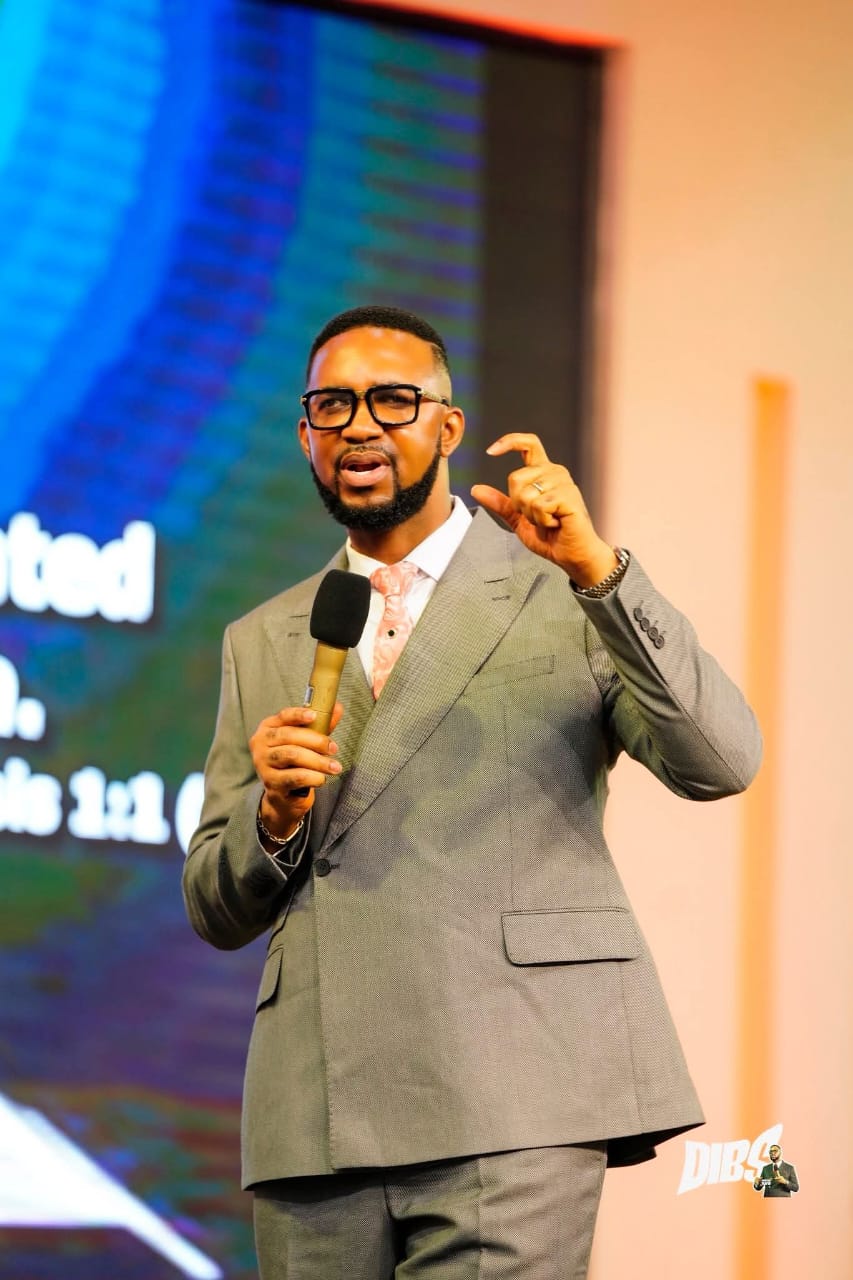
Grace Nation Worldwide: A Living Reality – Dr. Chris Okafor
……“Miracles, Healing, and Deliverance Overflow at Grace Nation Services”
The Grace Nation midweek Prophetic Healing, Deliverance, and Solutions (PHDS) Service on 2nd April 2026 at the international headquarters in Ojodu Berger, Lagos, was a spectacular display of God’s power, marked by miracles, healing, and deliverance.
The God of Grace Nation continues to demonstrate His authority, breaking strongholds, healing the sick, restoring lost glory, and providing solutions to every problem presented at His altar.
Testimonies of God’s Power
One woman, previously diagnosed with a terminal condition and slated for a ₦4.5 million surgery due to inability to excrete, was prayed for by the Generational Prophet, Christopher Okafor, just a week after visiting the church. Declaring healing within 24 hours, she returned to testify to God’s miraculous intervention.
Another pregnant woman, whose baby was bridged and at risk, was located and prayed for. She returned to service with confirmation that her child is now well-positioned for delivery. Similarly, a woman booked for a C-section due to an overdue and poorly positioned pregnancy testified during the service that her baby is now properly positioned, ready for birth.
These testimonies underscore the truth: what God cannot do does not exist. Grace Nation has entered a new level of spiritual authority, and with faith, believers are witnessing the impossible become reality.
God Works by Principle, Not Gossip
In his sermon, Dr. Okafor emphasized that God does not operate on superstition, gossip, or social media pressures. His work is grounded in His Word, and it is through adherence to His principles that Grace Nation continues to flourish.
The Generational Prophet stressed that to enjoy divine blessings and fruitfulness, believers must remain connected to God’s Word, faithfully serve Him, and ignore distractions or side-talks. Focused commitment to God’s service guarantees alignment with His miraculous power.
Join the Movement
Grace Nation Worldwide is open for all who desire a life transformed by divine intervention. Weekly services include:
Sunday Service: 7:00 AM
Grace Nation Island Service (Ogombo): Wednesday, 5:00 PM
Midweek PHDS Service: Thursday, 7:00 AM
Attending these services under the ministry of the Generational Prophet ensures encounters with God’s supernatural power, life-changing miracles, and lasting breakthroughs.
Grace Nation Worldwide is not just a church—it is a reality where faith meets the supernatural.
By Sunday Adeyemi


-

 society7 months ago
Religion: Africa’s Oldest Weapon of Enslavement and the Forgotten Truth
-

 news4 months ago
WHO REALLY OWNS MONIEPOINT? The $290 Million Deal That Sold Nigeria’s Top Fintech to Foreign Interests
-

 society6 months ago
“You Are Never Without Help” – Pastor Gebhardt Berndt Inspires Hope Through Empower Church (Video)
-

 celebrity radar - gossips2 months ago
Dr. Chris Okafor Returns with Power and Fire of the Spirit -Mounts Grace Nation Altar with Fresh Anointing and Restoration Grace on February 1, 2026