
society
Stand Together, Not Apart: Solidarity for MNK October 20, 2025

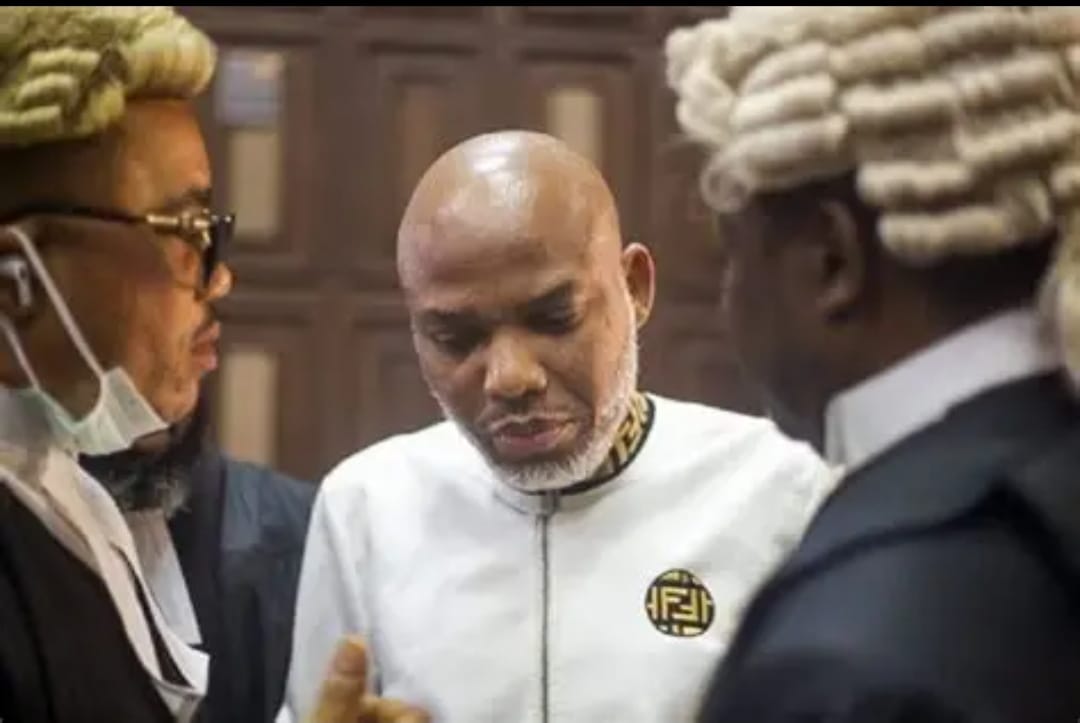
Stand Together, Not Apart: Solidarity for MNK October 20, 2025.
By George Omagbemi Sylvester | saharaweeklyng.com
“One Day. One Demand. Free MNK, Justice Now.”
On Monday, October 20, 2025, Nigerians and friends of justice the world over will again test the promise of democratic life in our country, the promise that the right to assemble, to petition and to demand accountability will not be shrugged aside by injunctions, intimidation or the heavy hand of the state. The #FreeMaziNnamdiKanuNow (MNK) mobilisations (organised by civil society activists, diaspora groups and political figures) present a simple, unavoidable demand, that a man who has become the symbol of a larger grievance be afforded due process, humane treatment and a transparent justice system. The stakes are bigger than one man; they are about whether Nigeria honours the rule of law and the dignity of dissent.
This piece argues, plainly and insistently, that solidarity for MNK’s peaceful protest is not an act of tribalism or lawlessness. It is an affirmation of democratic principle; one that citizens and international partners should support, monitor and protect. It also explains why peaceful solidarity is needed now, what the legal and security context is and how Nigerians and the global community should respond to ensure the exercise of legitimate rights without violence.
The legal and security reality: official warnings, court orders and real risk.
In the run-up to October 20, authorities and external actors have signalled caution. A High Court ruling and subsequent court orders have sought to restrict protests in sensitive locations around Aso Rock, the National Assembly complex and other government precincts, creating a legal fence that organisers and lawyers are actively contesting. The fact of that court action is not in dispute and must be acknowledged by anyone calling for or supporting public demonstrations.
Foreign missions have taken the prospect of large demonstrations seriously, the United States Embassy issued a security alert to its citizens about potential demonstrations on October 20, warning of possible roadblocks, disruptions and confrontation risks. That is a sober reminder that mass protests in Nigeria (as in many countries) can attract opportunists, security countermeasures and flashpoints where peace can be lost.
Though caution is not a licence for suppression. The Nigeria Police Force has publicly affirmed that the right to peaceful protest is inalienable while also urging that assemblies remain within the bounds of court orders and law. This dual message underscores the difficult tightrope, authorities must protect public order without weaponising the law to choke civic space.
Why solidarity matters – beyond headlines and hashtags.
Solidarity for MNK on October 20 is not merely performative. It is an essential democratic corrective for at least three reasons.
First, it centres due process and transparency. Calls for MNK’s release are also calls for a legal process free from clouded procedures, secret detention or politicised prosecutions. When civil society (inside and outside Nigeria) mobilises, it forces scrutiny and sunlight onto legal proceedings that might otherwise proceed behind closed doors. Prominent Nigerians and civic organisations have argued that the manner of his detention and treatment should raise questions about the fairness of our system.
Second, solidarity is a check on the use of force. International human-rights organisations and past reporting have documented instances where security forces used lethal force against protesters in Nigeria; a grim memory that must inform how authorities and protesters conduct themselves now. Amnesty International’s recent investigations into excessive force during Nigeria’s protests in 2024 and earlier incidents in the southeast are a clarion call: both citizens and the state must prevent a replay of violence. If Nigerians are to trust the system, the state must demonstrate restraint and accountability.
Third, unity in dissent breaks the toxic narrative that activism is regional or ethnic. Organisers including mainstream activists have intentionally framed October 20 as a peaceful, national campaign for justice; an invitation for citizens across ethnic and political lines to stand for the rule of law. That is a powerful antidote to deliberate attempts to paint protest as sectarian agitation.
What solidarity should look like; principled, legal, and strategic.
Solidarity must be disciplined. Here are practical, non-negotiable rules for those who will stand with MNK:
Non-violence first. Any legitimate protest that turns violent hands the state an excuse to crush civic space. Organisers and participants must unequivocally commit to peaceful methods: marches, silent vigils, legal petitions and sit-ins not property damage or attacks on people.
Legal preparedness. Support legal teams that can rapidly challenge unlawful injunctions, provide bail funds and document any rights violations. Use professional lawyers; do not rely solely on social-media lawyers.
Documentation and monitoring. Independent monitors, press and human-rights groups should document events in real time. If arrests or use of force occur, filmed evidence and credible eyewitness accounts are the oxygen of accountability.
Clear messaging. Keep the demands specific: humane treatment, transparent legal process, respect for court rulings unless overturned by due process and investigations into any extrajudicial conduct. Avoid incendiary language that can be exploited by those seeking to delegitimise the cause.
International pressure, not intervention. Engage international human-rights bodies and foreign missions to pressure for transparent judicial process and protection of protest rights, while rejecting outside military or clandestine interference.
Voices that matter.
Human-rights advocates and UN special rapporteurs have warned against criminalising dissent and delegitimising protest movements globally; a warning that resonates in Nigeria today. Mary Lawlor, the UN Special Rapporteur on human-rights defenders, has documented a worrying trend of state repression of peaceful activists in recent months, noting the grave dangers when governments treat dissent as a security threat rather than a democratic right. Such expert analysis should guide both authorities and citizens toward restraint and respect.
At home, elder statesmen and civic leaders who have called for due process stress that the health of our republic depends on the ability to hold power to account without descending into anarchy. The police themselves have said the right to peaceful protest is recognised; a statement whose credibility must be matched by action.
The test for our institutions and for Nigerians.
October 20 is a test. It will reveal how robust our institutions are, how committed our security services are to the constitutional order and how mature our civil society can be in the face of provocation. If the state responds with restraint and the organisers maintain discipline, Nigeria will have demonstrated a maturing democratic temperament. If the reverse occurs, the consequences will be ugly; erosion of trust, cycles of recrimination and deeper polarisation.
For those of us writing from the press, civil society and the academy: our duty is to report accurately, to demand accountability and to platform credible voices. For the international community: support monitoring and documentation; press for adherence to international human-rights standards. For ordinary Nigerians: stand in principled solidarity; in the markets that close quietly, in vigils and on the line when lawful mobilisation occurs.
Closing: justice is indivisible.
Solidarity for MNK is not an endorsement of everything he has said or done. It is not a tribal signal. It is a moral posture: that justice must be visible, that trials must be fair, that detention must follow the law and that peaceful calls for redress deserve protection, not pulverisation. If Nigeria is to be proud of its democracy, it must protect the weakest expression of dissent as fervently as it protects the comforts of power.
On October 20, raise your voice; but raise it within the law, with witnesses, with lawyers present and with the unshakable conviction that the cause of justice is indivisible. Stand for due process. Stand for humane treatment. Stand for the principle that no state is strengthened by silencing the people it is meant to serve.
George Omagbemi Sylvester is a journalist and commentator. He can be reached via saharaweeklyng.com






*PDP CHIEFTAIN, ONIRETI RESIGNS FROM PARTY, CITES PERSONAL REFLECTION
A former House of Representatives candidate, Olufemi Onireti, has formally resigned his membership of the Peoples Democratic Party (PDP) in Oyo State.
His resignation was conveyed in a letter addressed to the Chairman of PDP Osupa Ward 9, Ogbomoso North Local Government, on Thursday.
Onireti described the decision as a difficult but necessary step after what he termed a period of “deep personal reflection.”
“I hereby formally resign my membership of the Peoples Democratic Party (PDP), effective immediately,” he wrote.
He acknowledged his years of active involvement in the party, including contesting for the House of Representatives in the last general election, noting that the PDP had offered him a platform for political participation, service, and growth.
Despite his exit, Onireti expressed appreciation to party leaders and members for the support he enjoyed over the years.
“I remain grateful for the opportunity to serve and for the relationships and experiences I gained during my time in the party.
I wish the party well in its future endeavours,” he added.
The development is expected to generate discussions within the Ogbomoso North political circle, as observers await his next political move.
society
Harmony Garden Boss, Mr Ibile Celebrates Mogaji Wole Arisekola, Hails Legacy of Leadership and Excellence
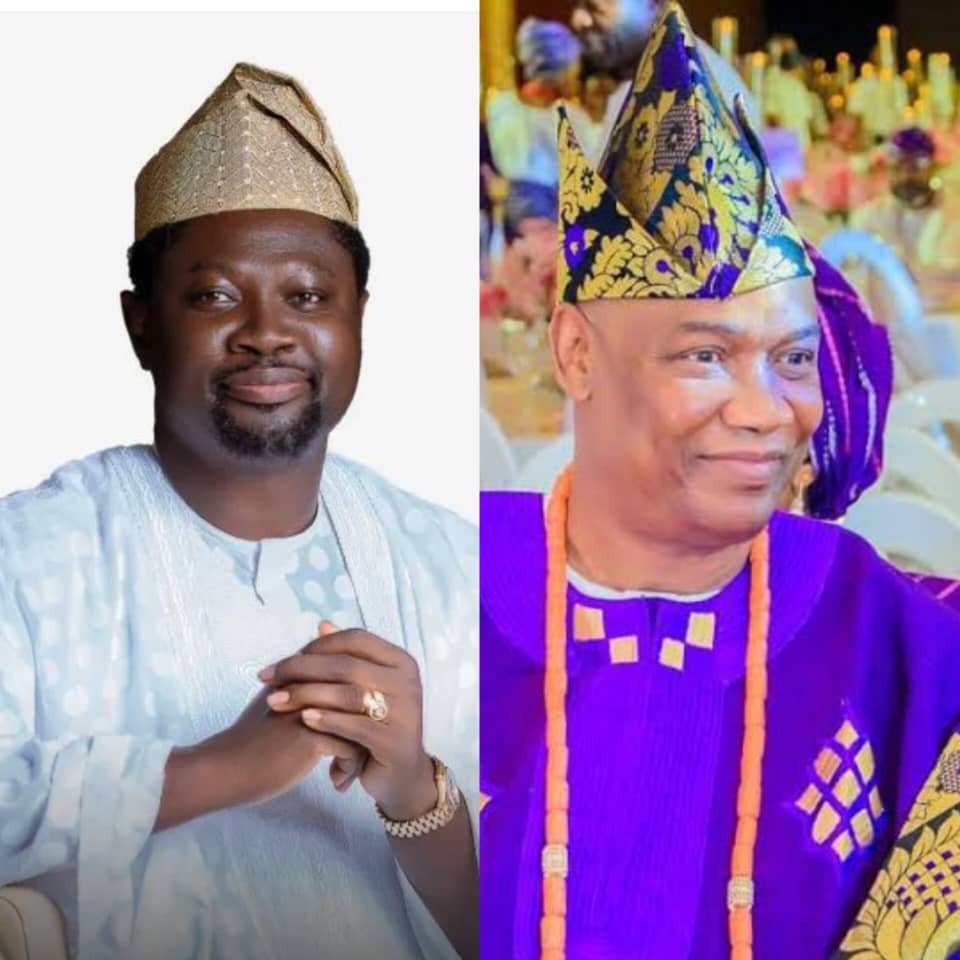
Harmony Garden Boss, Mr Ibile Celebrates Mogaji Wole Arisekola, Hails Legacy of Leadership and Excellence
Renowned real estate entrepreneur and Chief Executive Officer of Harmony Garden & Estate Development Limited, Hon. Dr. Saheed Audullahi Mosadoluwa aka Mr Ibile, has paid glowing tribute to elder statesman, Mogaji Wole Arisekola, in a heartfelt birthday message that has drawn admiration across social circles.
In a message shared on his official platform, Dr. Saheed described the celebrant as “a remarkable man, a pillar of strength, wisdom, and legacy,” highlighting his enduring influence on family, community, and leadership circles. The tribute, written on behalf of himself and his children, praised Arisekola’s life as one that continues to inspire greatness and unwavering commitment to service.
“Iba Eni for Agba Imole,” he wrote, emphasizing deep respect and reverence for the celebrant’s impactful life. According to him, Arisekola’s voice remains respected, while his legacy is firmly rooted in honor and excellence, qualities that have defined his journey over the years.
Offering prayers for continued good health, long life, and greater accomplishments, Mosadoluwa concluded by wishing the elder statesman a peaceful and joyful new year, filled with divine blessings. The message has since resonated with admirers, further reinforcing the strong bond between the two figures and celebrating a legacy of influence and integrity.
celebrity radar - gossips
Accolades to Empress Genevieve Wining as she Celebrate birthday in Grand style

Accolades to Empress Genevieve Wining as she Celebrate birthday in Grand style
Emmanuel Clement
Vilnius, Lithuania – The Grand Hotel Vilnius will host a grand birthday celebration in honor of Her Majesty The Empress Genevieve Wining of the United Kingdom of Atlantis (UKA) on April 4th, 2026.
The four-day event promises to be an extravagant affair, marking the special birthday of Empress Genevieve Wining. The celebration will take place at the prestigious Grand Hotel Vilnius, Lithuania, renowned for its luxurious ambiance and exceptional service.

According to the event flyer, the birthday celebration will be a spectacular occasion, fitting for an empress. Guests can expect an elegant setting adorned with golden accents, sparkling champagne, and festive decorations, creating a regal atmosphere befitting the occasion.
The Empress Genevieve Wining of UKA is expected to grace the event, which will include various festivities and celebrations in her honor. The occasion aims to bring together dignitaries, followers, and guests to commemorate the empress’s birthday with grandeur and joy.
For media inquiries, accreditation, or further information about the birthday celebration of The Empress Genevieve Wining of UKA, please contact the event organizers.
Courtesy of His Excellency Emperor Prof. Solomon Wining. UKA


-

 society7 months ago
Religion: Africa’s Oldest Weapon of Enslavement and the Forgotten Truth
-

 news4 months ago
WHO REALLY OWNS MONIEPOINT? The $290 Million Deal That Sold Nigeria’s Top Fintech to Foreign Interests
-

 society6 months ago
“You Are Never Without Help” – Pastor Gebhardt Berndt Inspires Hope Through Empower Church (Video)
-

 celebrity radar - gossips2 months ago
Dr. Chris Okafor Returns with Power and Fire of the Spirit -Mounts Grace Nation Altar with Fresh Anointing and Restoration Grace on February 1, 2026