
Education
STAY FIT WITH VICKY :Are you tired of that Inner thigh fat? here are some tips to help you through


HOW TO GET RID OF INNER THIGH FAT?
Getting rid of inner thigh fat can only be accomplished by balancing the right diet with thigh-toning exercises. A weight loss diet especially
suitable for those trying to rid themselves of inner thigh fat mostly includes low-fat foods, but diet alone will not be enough to target the fat of the inner thigh.
Here are a few things you should try if losing
inner thigh fat is what you’re aiming for. They are in 6 parts and very effective.
PART 1 of 6: Low-fat, Low-calories diets.
1) UNDERSTAND THE PRINCIPLE BEHIND THE DIET.
Low-fat, low-calorie diets work because you end up storing a limited amount of calories in
forms that are easy for your body to burn off.
• There is no way to target nothing but the fat in your thighs by diet alone. Your best option is to target fat, in general, to reduce the amount of fat stored in your body overall. Combining a diet like this with thigh-toning exercises will help your body target the fat in your thighs.
• The body stores ingested fat with remarkable ease. Unfortunately, it does not burn that fat off with the same sort of zeal. This is especially
true of thigh fat, Someone with excess thigh fat is carrying extra subcutaneous fat. While
this type of fat usually goes hand-in-hand with healthy cholesterol levels and a decreased risk of heart failure, it also has less blood flow, making it harder to get rid of.
• By comparison, your body expends much more energy storing carbohydrates and
proteins, making them more favourable than fats.
• The balance between calories ingested and calories burned is a matter of simple maths.
Every action your body performs burns a certain number of calories, but every food or drink you ingest adds calories. More stored calories leads to more weight gain. A low-calorie diet limits the amounts of calories you
ingest so that your body has enough energy to burn but does not have many excess calories remaining afterward.
2) LIMIT YOUR INTAKE OF SATURATED FATS.
Saturated fats are less beneficial to your body than unsaturated fats and are usually found in animal sources like dairy and meat, as well as hydrogenated oils.
• Palm and coconut oils contain the highest amount of saturated fat, but butter and
rendered animal fats like lard and shortening contain a considerable amount of saturated fat as well. Fish oil, for all its healthy omega-3
fatty acids, also contains a high percentage of saturated fat.
• Dried coconut, cheese, nuts, seeds, processed meats, and whipped cream are other examples of foods notably high in saturated fats. Many foods found in fast food restaurants are also notoriously high in
saturated fat.
It is important to note that you should limit not exclude, saturated fats from your diet. The occasional saturated fat is fine, especially if it offers other health benefits like fish or nuts
do. You simply need to limit the amount you consume.
3) SKIP THE RED MEAT AND GO FOR LEAN PROTEIN.
Simply put, lean protein sources have less saturated fat and fewer calories.
• Replace beef and pork with chicken and turkey. Fish is also lower in fat than most red
meat, but you should opt for fresh fish over sardines, tuna, or other fish packed in oil.
• Legumes like lentils and pinto beans also pack a considerably high about of low-fat protein.
• Roughly 15 to 25 percent of your diet should consist of protein.
4) INCORPORATE PLENTY OF WHOLE GRAINS.
Whole grains and other complex carbohydrates require your body to burn more energy since it takes more effort for your body to break them down.
• Opt for breads, cereals, crackers, and other grain-based products made with whole wheat, oats, or other whole grains over those made with processed all-purpose flour.
• In addition to whole grains, fruits and vegetables also contain complex carbohydrates.
• About 45 to 65 percent of your diet should come from carbohydrates.
• Whole grains also provide plenty of fiber,which flushes out your system and helps to
prevent you from storing excess weight. You should eat 20 to 35 grams (.7-1.2 ounces) of fibre daily.
5) EAT PLENTY OF LOW-FAT DAIRY.
Calcium regulates the way your body stores, builds, and breaks down fat; so it is important that you do not leave all dairy out of your diet.
• Choose low-fat dairy instead of whole or no-fat dairy. Think two-percent milk instead of whole milk or fat-free milk.
• Include more milk, yogurt, and cottage cheese in your diet. These dairy sources are lower in fat than most hard cheeses, creams, and butters.
6) REDUCE YOUR OVERALL CALORIE INTAKE.
Most moderately active women should reduce their calorie intake to 1200 to 1500 calories daily, while moderately active men should reduce their intake
to 1500 – 1800 calories daily.
• Do not drop your diet to fewer than 1000 calories daily, for women, or 1200 calories
daily for men.
• Avoid eating more than 35 to 60 grams (1.2 -2.1 ounces) of fat daily.
• Consume 170 to 240 grams (6- 8.5 ounces) of carbohydrates.
• Eat between 55 and 95 grams (1.9 -3.4 ounces) of proteins.
7) AVOID DIET-BUSTERS.
While there is some room for forgiveness in your diet, there are certain foods and drinks that are more likely to throw your diet off altogether. These should be avoided as much as possible.
• Processed foods are a major source of hydrogenated oils. Avoid greasy fast food, boxed meals from the grocery store, or pre packaged snacks.
•Restrict your alcohol intake. Women should have no more than one alcoholic drink per day to avoid ingesting extra calories.
PART 2 of 6: Side and crossover lunge.
1) STAND WITH YOUR FEET TOGETHER.
Your arms should be down by your sides.
• Keep your posture straight but relax your shoulders.
•This exercise tones your inner thighs by exercising them from numerous angles. It will
also help to tone your rear and mid section, but its primary target is the inner thigh region.
2) TAKE A WIDE SIDE-STEP WITH YOUR LEFT FOOT.
Bend your left knee, pushing your hips behind you as you step out.
• Your right leg should stay extended and your weight should shift to the left side of the body, over your left knee.
• Keep your back straight and your face forward as you move.
3) TOUCH THE GROUND WITH YOUR FINGERTIPS.
Your arms should be on either side of your left foot.
• Continue keeping your back straight and eyes forward.
4) CROSS YOUR LEGS AS YOU STAND BACK UP.
Ease yourself up by pushing off with your left foot.
• As you stand, cross your left foot over your right.
5) IMMEDIATELY BEND AND TOUCH THE FLOOR.
Bend your knees and touch the ground on either side of your left foot with your fingertips.
6) STAND UP AND REPEAT. Stand up, pushing off with your left foot, and return to your starting position with your feet together and your hands at your side.
• Repeat this exercise 15 times with your left leg and 15 times with your right leg for each set.
• Perform three sets.
PART 3 of 6: Scissor Kicks.
1) LIE FLAT ON YOUR BACK. Your heels should also be flat on the ground and your hands should be palm-side-down at your sides.
• Your legs should be completely flat against the
ground.
• Scissor kicks are another exercise designed to tone the muscles in your inner thigh. They also help to tone your lower abdomen.
2) SLIDE YOUR HANDS BENEATH YOUR REAR AND
STRETCH YOUR LEGS.
Lift your legs until they are
4 to 6 inches (10 to 15 cm) off the ground.
• Your feet and knees should be completely off the ground, but your thighs will still be partially flat.
3) CROSS YOUR LEGS BACK AND FORTH.
Perform a scissor-like motion with your legs, lifting one high off the ground as you move the other one lower to the ground.
• You will not actually cross one leg over the other, but your thighs may need to squeeze
together with each pass.
• Your lower abdominal and inner thigh muscles must remain tightened throughout
the exercise.
• Continue with this motion for 8 seconds.
4) REST AND REPEAT.
Return to your starting position with your legs flat on the ground. Rest for 5 to 10 seconds before repeating.
• Repeat the exercise six to eight times per set. Work yourself up to doing three sets during each exercise regimen.
Note: to get a desired result, follow every step thoroughly.
To be continued… Next edition




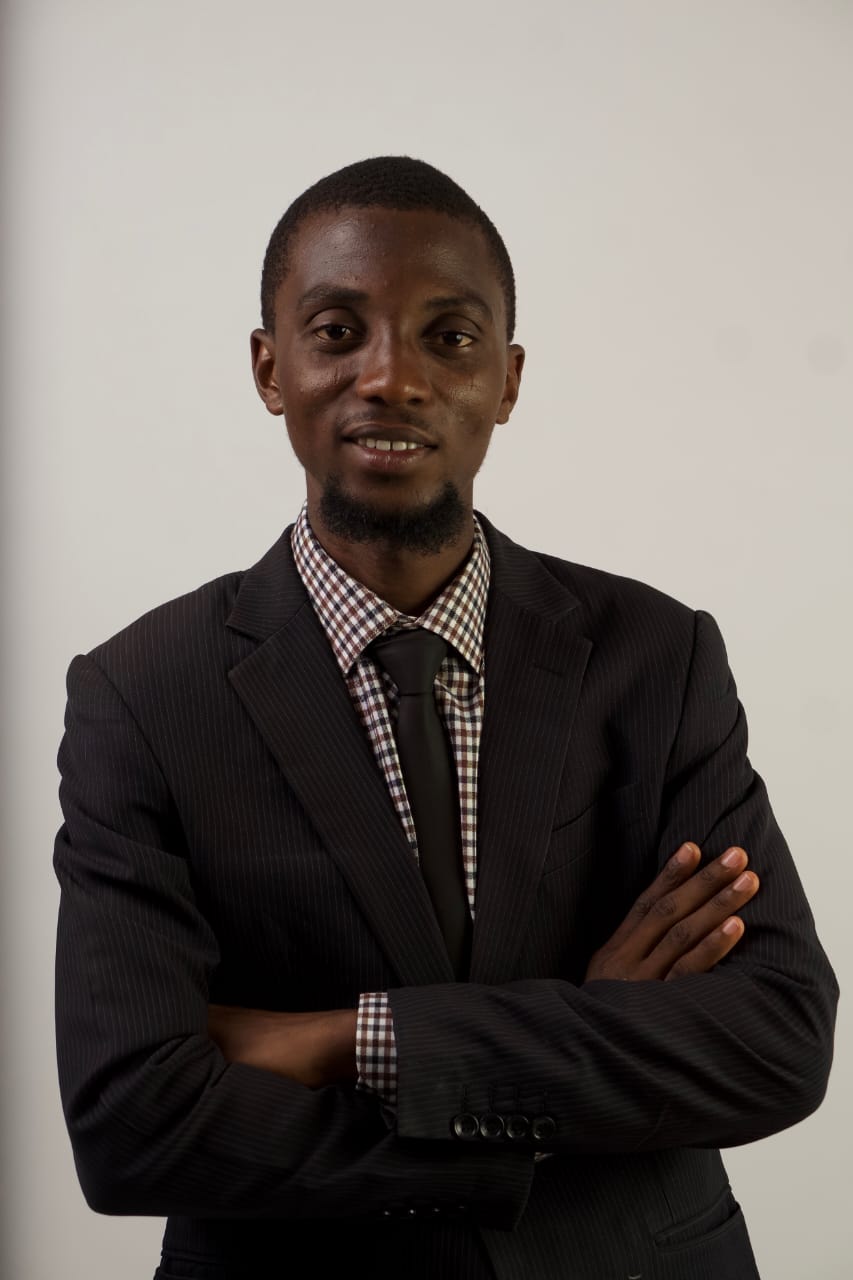
COMR. YUSUF TOBI JAMIU ANNOUNCES SCHEDULE FOR SUG WEEK 2026, CALLS FOR MASS PARTICIPATION
University of Abuja SUG President Unveils 6-Day Programme Focused on Leadership, Innovation, Culture, and Student Unity
ABUJA, NIGERIA — The President of the Students’ Union Government, University of Abuja, Comr. Yusuf Tobi Jamiu (JAMO) has officially unveiled the schedule of activities for SUG WEEK 2026, scheduled to hold from 18th to 23rd May, 2026, at the University of Abuja.
In an official release to the general public, Comr. Yusuf Tobi Jamiu stated that this year’s edition is designed as a comprehensive student engagement and development programme aimed at promoting leadership, innovation, entrepreneurship, culture, intellectual interaction, entertainment, sportsmanship, and social integration within the university community.

“SUG Week 2026 is not merely a celebration, but a reflection of purposeful student leadership and the collective spirit of the University of Abuja student community, ”Comr. Yusuf Tobi Jamiu said. “I encourage every student to participate actively, represent their faculties and departments positively, and make the most of this platform for growth and unity.”
Building on a Record of Student-Centred Governance
Under the leadership of Comr. Yusuf Tobi Jamiu, the current administration, has introduced several initiatives to improve student engagement and institutional representation. These include the unveiling of the official SUG Website, presentation of SUG Buses, development of strategic partnerships, presentation of the SUG Magazine, and various welfare and empowerment-driven programmes.
With the approval and support of University Management led by the Vice-Chancellor, *Prof. Abdulhakeem Fawehinmi Babatunde*, SUG Week 2026 has been structured to provide students with opportunities for networking, creativity, intellectual participation, relaxation, and campus-wide unity.
`
SUG WEEK 2026 Schedule of Activities
Day 1 – Monday, 18th May: Corporate Day
Official Launch & Unveiling
1. Official Unveiling of the SUG Website
2. Presentation and Commissioning of the SUG Buses
3. Presentation of the SUG Magazine
4. Award Presentation Ceremony
5. Leadership and Innovation Summit
6. Networking Session
The opening ceremony will feature distinguished personalities, public office holders, institutional stakeholders, business leaders, and guests from across the country.
Day 2 – Tuesday, 19th May: Old School Day
Inter-Faculty Debate Competition
A day dedicated to celebrating culture, creativity, and intellectual engagement through vintage-themed appearances and an inter-faculty debate competition.
Day 3 – Wednesday, 20th May: Jersey Day
Sports & Health Awareness
Focus on fitness, wellness, sportsmanship, and health awareness through sporting activities, recreational engagements, and sensitisation programmes.
Day 4 – Thursday, 21st May: Denim Day
Career & Entrepreneurship Day
Empowering students with career development opportunities, entrepreneurship knowledge, mentorship, networking, and innovation-driven discussions.
Day 5 – Friday, 22nd May: Fashion Show Day
Fashion Display & Runway Experience
Students will showcase creativity, talent, fashion expression, and entertainment through runway displays and coordinated fashion activities.
Day 6 – Saturday, 23rd May: Fake Wedding / Owambe Finale
Grand Finale
The grand social and cultural finale brings students together through music, culture, fashion, food, entertainment, and social interaction.
Call to Action
Comr. Yusuf Tobi Jamiu and the Students’ Union Government encourage all students to take part in the week’s activities and uphold the spirit of unity and excellence that defines the University of Abuja.
Students interested in volunteering, participating, partnering, sponsoring, modelling, or engaging in any activity are advised to send a direct message to the Union through the provided contacts.
For Sponsorship and Partnership: +234 810 593 0335
Signed:
Comr. Yusuf Tobi Jamiu (JAMO)
President, Students’ Union Government (SUG)
University of Abuja
Education
GIRAU INTERNATIONAL SCHOOL, MILLENNIUM CITY KADUNA, OPENS ADMISSION FOR THE 2025/2026 ACADEMIC SESSION

*GIRAU INTERNATIONAL SCHOOL, MILLENNIUM CITY KADUNA, OPENS ADMISSION FOR THE 2025/2026 ACADEMIC SESSION
Girau International School (GIS), a premier educational institution located in the heart of Millennium City, Kaduna, has officially announced the commencement of admissions for the forthcoming academic year. The school invites applications for its comprehensive educational streams: *Early Years, Primary, Secondary, and Islamiyya*.
Renowned for its unwavering commitment to academic excellence and holistic development, GIS stands as a beacon of learning in Northern Nigeria. The institution is built on a foundational philosophy dedicated to providing *world-class education* that meets international standards while being firmly rooted in positive cultural and moral values.
The school’s mission extends beyond conventional academics. With a dedicated focus on *nurturing young minds and shaping future leaders* of tomorrow, GIS employs a curated blend of innovative teaching methodologies, a blended curriculum, and state-of-the-art facilities. The environment is meticulously designed to ensure that every student excels *academically, socially, and morally*, preparing them to thrive in a dynamic global landscape.
*A CAPACITY FOR EXCELLENCE*
GIS boasts significant capacity to deliver on its promises:
* *Modern Infrastructure:* The campus features purpose-built, technologically integrated classrooms, advanced science and computer laboratories, expansive sports facilities, and dedicated learning spaces for creative and performing arts.
* *Qualified Faculty:* The school employs a team of highly trained, experienced, and passionate educators who are specialists in child-centered and participatory learning.
* *Blended Curriculum:* The academic programme seamlessly integrates the Nigerian/British curriculum ensuring international best practices, complemented by a strong emphasis on character building, leadership skills, and Islamic ethical teachings in its Islamiyya section.
* *Secure and Conducive Environment:* Situated within the serene and secure Millennium City layout, the school provides a safe, inclusive, and stimulating atmosphere ideal for learning and personal growth.
Prospective parents and guardians seeking an educational partnership that prioritizes excellence, discipline, and comprehensive development for their wards are encouraged to secure a place.
Admission forms are available at the school’s administration office. Early application is advised due to limited vacancies across all classes.


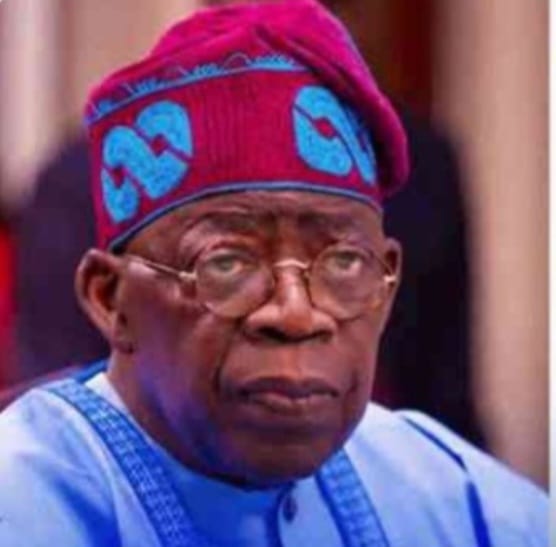
NIGERIA’S EDUCATION STRIDES, GLOBAL ACKNOWLEDGMENT: When Evidence Travels from Jigawa
…as President Tinubu set to commission Africa’s largest schools complex in Lagos
By O’tega Ogra
There is a quiet shift happening in Nigeria’s education system. You will not find it in speeches neither will you find it in long policy documents. But if you look closely, you will see it in something far more difficult to dismiss. Evidence.
Last week in San Francisco, at the Comparative and International Education Society (CIES) conference, data from classrooms in Jigawa State was presented before a global audience. Not projections. Not estimates. A record of what is happening inside a public system in Nigeria. 
That distinction matters. For years, much of what the world has understood about education in countries like ours has been assembled from a distance. National averages. Modelled estimates and reports written long after the fact. What was presented this time came from within. Attendance tracked daily. Teachers reassigned based on need. Classrooms observed as they function. All under a digitalised ecosystem.
In Jigawa, under the JigawaUNITE foundational learning digital programme, the numbers tell a simple story. Within roughly 150 days of implementation which commenced at the end of 2024, 95 previously understaffed schools were fully staffed. Pupil teacher ratio moved from 114:1 to 70:1. Daily attendance rose from 39 per cent to 77 per cent. This remarkable improvement was not achieved by expanding the workforce. It came from reorganising what already existed under a digital umbrella.
There is something instructive in that. Nigeria has never lacked policy. What we have often lacked is the discipline of execution. The ability to take what already exists and make it work as intended. That is where the real shift is beginning to show.
But it would be too convenient to reduce this to one programme.
At the federal level, the direction has also been adjusting. The Minister of Education, Dr. Maruf Tunji Alausa, has placed measurable outcomes, foundational learning, and teacher quality back at the centre of policy. UBEC, the Federal Government’s Universal Basic Education body, continues to drive national interventions around school improvement and teacher development, even as it insists that reform must remain system-led and not fragmented.
The First Lady’s education interventions, through the Renewed Hope Initiative, have reinforced education as a national priority, particularly around access, learning materials, and inclusion. These are different levers, but they are part of the same ecosystem.
And then there is the fiscal reality.
Recent reforms under President Bola Ahmed Tinubu have increased allocations to subnational governments, creating more room for states to act. In a federation like Nigeria, that matters. Because education is not delivered from Abuja. It is delivered in states. In schools. In classrooms.
What Jigawa has done is to use that room and the Executive Governor of the state, the State Universal Basic Education Board, and their partners on the JigawaUNITE project, New Globe, must be given kudos.
However, Jigawa is not alone in this journey.
In Kwara, efforts to align teaching with actual learning levels are beginning to correct a structural mismatch in classrooms. In Lagos and Edo, structured pedagogy and closer monitoring are improving consistency in teaching. Across the entire ecosystem, state governments, federal institutions like UBEC, and delivery partners like NewGlobe are pushing at the same question from different angles.
How do children actually learn better?
In a prior reflection, Ifeyinwa Ugochukwu, VP at NewGlobe, captured the urgency clearly. With the right tools, training, and use of data, foundational learning outcomes can improve at scale. The real risk, she noted, is delay, allowing learning gaps to become permanent.
That warning should not be ignored because the context remains difficult. Nigeria still carries one of the largest out of school populations in the world. Learning gaps remain. Progress in one state does not resolve a national challenge, but it does something else.
It proves that movement is possible.
What was presented in Washington did not claim success. It demonstrated function. It showed that a Nigerian sub-national can generate evidence that holds up in a global room. That reform does not always require something new. Sometimes it requires using what already exists more honestly and more efficiently.
The real question now is whether this remains an exception.
Or whether it becomes a pattern.
Because reform at scale is never built on isolated wins. It is built on systems that can reproduce them.
And perhaps that is why the timing matters.
This week, another subnational, Lagos State, is expected to commission the Tolu Schools Complex in Ajegunle, a sprawling 36-school integrated facility spread across 11.7 hectares, designed to serve over 20,000 students, and described as the largest school community in Africa. 
There is a connection here that should not be missed.
On one hand, a classroom system in Jigawa is learning how to organise itself better. On the other, a state like Lagos is building the physical scale required to carry thousands of learners at once.
One is structure. The other is capacity.
Real progress sits where both meet because education reform is not only about what we build, it is about how well what we build actually works.
For once, the data was not explaining Nigeria from the outside.
It was coming from within.
And it carried weight.


- Uganda: Parliament concludes vetting of ministers June 2, 2026
- Fund for Export Development in Africa (FEDA) Board Appoints Mr. Emmanuel Assiak as Chief Executive Officer June 2, 2026
- Ecobank Group Launches World First Nature Bond Mobilising Global Capital to Protect Africa’s Natural Ecosystems June 2, 2026
- Merck Foundation Chief Executive Officer (CEO) Dr. Rasha Kelej together with Kenya First Lady support the education of 47 Kenyan Schoolgirls by providing Annual Scholarships till they Graduate June 2, 2026
- Annual Meetings 2026: Governors Back the Bank’s Platform Solutions to Transform Aviation and Health Systems in Africa June 2, 2026
- ThinkMarkets launches ChelseaAI, bringing live CFD trading into Artificial Intelligence (AI) assistants June 2, 2026
- Afreximbank Invites Rugby Africa President Herbert Mensah to Address the 33rd Annual Meetings on a Panel Exploring Sport as a Driver of African Industrialisation June 2, 2026
- Afreximbank Deepens Commitment to Economic Progress in The Bahamas June 1, 2026
- African Electric Vehicle (EV) platform Spiro raises $215M in equity to scale electric mobility and energy infrastructure across Africa June 1, 2026
- Africa Centres for Disease Control and Prevention (Africa CDC) Statement on Attacks Against Health Facilities During the Bundibugyo Virus Disease Response in the Democratic Republic of the Congo June 1, 2026
- Uganda: Parliament concludes vetting of ministers June 2, 2026
- Fund for Export Development in Africa (FEDA) Board Appoints Mr. Emmanuel Assiak as Chief Executive Officer June 2, 2026
- Ecobank Group Launches World First Nature Bond Mobilising Global Capital to Protect Africa’s Natural Ecosystems June 2, 2026
- Merck Foundation Chief Executive Officer (CEO) Dr. Rasha Kelej together with Kenya First Lady support the education of 47 Kenyan Schoolgirls by providing Annual Scholarships till they Graduate June 2, 2026
- Annual Meetings 2026: Governors Back the Bank’s Platform Solutions to Transform Aviation and Health Systems in Africa June 2, 2026
- ThinkMarkets launches ChelseaAI, bringing live CFD trading into Artificial Intelligence (AI) assistants June 2, 2026
- Afreximbank Invites Rugby Africa President Herbert Mensah to Address the 33rd Annual Meetings on a Panel Exploring Sport as a Driver of African Industrialisation June 2, 2026
-

 news6 months ago
WHO REALLY OWNS MONIEPOINT? The $290 Million Deal That Sold Nigeria’s Top Fintech to Foreign Interests
-

 society4 weeks ago
SOCIAL MEDIA IS NOT A BATTLEFIELD COMMAND – WHY THE NIGERIAN ARMY’S ACTION AGAINST JUSTICE CRACK IS A NATIONAL SECURITY IMPERATIVE
-

 celebrity radar - gossips4 months ago
Dr. Chris Okafor Returns with Power and Fire of the Spirit -Mounts Grace Nation Altar with Fresh Anointing and Restoration Grace on February 1, 2026
-

 celebrity radar - gossips6 months ago
Prophet Kingsley Aitafo Releases 2026 Prophecy: ‘Nigeria Will Rise, but the World Must Prepare for Turbulence’
You must be logged in to post a comment Login
You must log in to post a comment.