
society
STOP EXPLAINING THE LAW. START EXPOSING THE ROT

STOP EXPLAINING THE LAW. START EXPOSING THE ROT.
By George Omagbemi Sylvester | Published by SaharaWeeklyNG.com
We have spent years preaching COMPLIANCE like a broken record; quoting statutes, reciting sections, promising “zero tolerance.” Meanwhile, the rot has been growing in the walls: procurement cartels, illicit financial flows, bribery-for-basic-services and impunity for the well-connected. The evidence is overwhelming and it is recent. Nigeria’s 2024 Corruption Perceptions Index score is 26/100, ranking 140th of 180 countries. That’s not an abstract number; it is a REAL-TIME diagnosis of how the public sector is perceived to work and why ordinary people brace for a bribe request before they brace for service.
This is not just a Nigerian problem; it is an AFRICAN TRAUMA. The United Nations Conference on Trade and Development (UNCTAD) estimates $88.6 billion leaves Africa annually as illicit financial flows 3.7% of the continent’s GDP. Those are stolen classrooms, stolen hospital beds, stolen futures.

The human cost is brutal. The World Health Organization estimates corruption drains about 7.3% of global health spending (roughly $500 billion) every year. In plain language: avoidable deaths. Empty clinics. Broken trust.
If you want to understand why citizens are cynical, read the most recent fieldwork. Afrobarometer reports that only one in ten Nigerians (10%) believe they can report corruption without fear of retaliation. Majorities who sought public services say they had to pay bribes: 67% for police assistance, 56% for a government document, 26% at public medical facilities. WHEN FEAR SILENCES WITNESSES, CORRUPTION FLOURISHES.


There is, however, a flicker of resistance in daily life. A 2024 UNODC/NBS survey found over 70% of Nigerians who were asked to pay a bribe in 2023 refused at least once. That’s courage at the counter-top; citizens pushing back even when institutions hesitate.
The rot behind the rhetoric.
For decades, political speeches have chased the “AWARENESS” rabbit while grand theft ran the marathon. We know where the blood-loss happens: public procurement. Globally, governments spend about $9.5 trillion a year buying goods and services. In that torrent of money, “COMMISSIONS,” bid rigging, change orders and phantom deliveries hide in plain sight. Serious studies and international guidance consistently warn that 10–30% of the value of publicly funded construction can vanish to mismanagement and corruption. Even cautious reviewers concede the losses are large and chronic.
The financial-crime gatekeepers are waking up slowly. South Africa’s grey-listing in 2023 forced sweeping upgrades to ANTI–MONEY LAUNDERING and TERROR-FINANCE ENFORCEMENT. In June 2025, the FATF acknowledged that South Africa had substantially completed its action plan and merits an ON-SITE assessment toward REMOVAL—PROOF that pressure works when it is real, measured and externally verified.

The moral case is settled
International voices have said the quiet part out loud. UN Secretary-General António Guterres: “Corruption is criminal, immoral and the ultimate betrayal of public trust.” Jim Yong Kim, former World Bank President: “In the developing world, corruption is public enemy number one.” These are not slogans; they are conclusions drawn from lost lives, stunted growth and broken institutions.
From law lectures to enforcement shock therapy.
Enough awareness. Here is what exposing the rot looks like; PRACTICAL, MEASURABLE and HARD to GAME: Publish every contract, line by line, in MACHINE-READABLE FORMATS. Not press releases; data: tender notices, bidder lists, evaluation reports, award values, change orders, delivery milestones, payments and beneficial owners. E-procurement plus open contracting standards have a track record of exposing bid-rigging and price padding. In a market worth ~15% of GDP globally, opacity is the oxygen of cartels.
Name the people behind the companies. Beneficial-ownership registers must be public, searchable and verified. When shell companies can’t hide their human owners, conflicts of interest surface and prosecutors have a map.
Trace the money across borders then bring it home. Use the AML/CFT toolset that FATF expects: customer due diligence, suspicious transaction reports, asset freezing, non-conviction–based forfeiture where appropriate and international cooperation. South Africa’s sprint to satisfy FATF shows compliance rises when delisting has economic consequences, higher borrowing costs, investor hesitation and disrupted correspondent banking force action.

Fix the frontline: health, police, licensing. Health corruption kills. Plug procurement leakages (drug tenders, equipment purchases), audit payrolls and protect whistleblowers. In policing and licensing, slash face-to-face discretion with digital workflows and verifiable queues. The empirical target is simple: reduce the bribery incidence that Nigerians now report in police and documentation services.
Protect whistleblowers and witnesses for real. Afrobarometer’s 10% statistic is a siren: people won’t report if retaliation is likely. Independent reporting channels, legal shields, and time-bound follow-ups must be non-negotiable.
Turn “recoveries” into public goods; visibly. Nigeria’s EFCC reports nearly $500 million recovered in a single year, along with thousands of convictions. Ring-fence those funds to visible, high-impact projects (clinics, classrooms, court upgrades) and publish project-level dashboards so citizens can see where seized assets are building something honest.
Audit construction like a forensic accountant. The sector bleeds money. Independent quantity surveyors, open bills of quantities, satellite verification of progress and delivery-linked payments can reduce the well-documented 10–30% “DISAPPEARANCE” rate. If that figure shocks you, good, because it should.
Measure fear, not only fraud. Add a retaliation risk index to every anti-corruption scorecard. If citizens are too afraid to file a complaint, any “CLEAN” metric is noise. Afrobarometer has already shown how to ask the question; governments should report (and reduce) that fear annually.
The economics are irrefutable.
Consider the counterfactuals. UNCTAD’s $88.6 billion in African illicit outflows could finance clinics, classrooms and court reforms many times over. In health alone, shrinking corruption by even a fraction of the $500 billion annual leak would save more lives than many new policies combined. Add procurement leakages of 10–30% in big-ticket construction and you have a fiscal space story ~without raising taxes.
What “EXPOSING the ROT” means for leaders
It means naming names, not just “STRENGTHENING SYSTEMS.” It means publishing the last 10 years of contracts, mapping politically exposed persons to award histories and explaining every change order over 15%. It means PROSECUTING PROCUREMENT FRAUD as the economic sabotage it is. It means inviting independent observers (civil society, media, academia) into the tender room and the data room.
And it means telling the truth when the numbers improve and when they do not. If bribery incidence at the police desk falls from 67% to 40% in two years, trumpet it and show how you did it. If it rises, admit it and fix the choke points. Sunlight is only disinfectant when it’s direct.
What it means for citizens.
First, know your power. The UNODC/NBS finding that most Nigerians asked for bribes refused at least once shows that small acts compound. Second, use the data when it’s published: follow the money, flag the red flags and demand remedies in writing. Third, demand protection: no anti-corruption drive is credible if whistleblowers are hung out to dry.
A final word.
This is not a sermon about ethics; it is a plan to stop hemorrhaging public value. Guterres called corruption the “ULTIMATE BETRAYAL of PUBLIC TRUST.” Jim Yong Kim called it “PUBLIC ENEMY NUMBER ONE.” They were right and the latest data confirms it. If we keep explaining the law while thieves expertly exploit it, we will lose another decade. The pivot is overdue: from AWARENESS to EXPOSURE, from OPACITY to DATA, from PLATITUDES to PROSECUTIONS. The tools exist. The FACTS are FRESH. The ROT is VISIBLE.
Now, turn on the lights.
~ George Omagbemi Sylvester




society
GEN CHRISTOPHER GWABIN MUSA SUPPORT INITIATIVE EXTENDS WARM BIRTHDAY FELICITATIONS TO PRESIDENT TINUBU ON 74TH BIRTHDAY
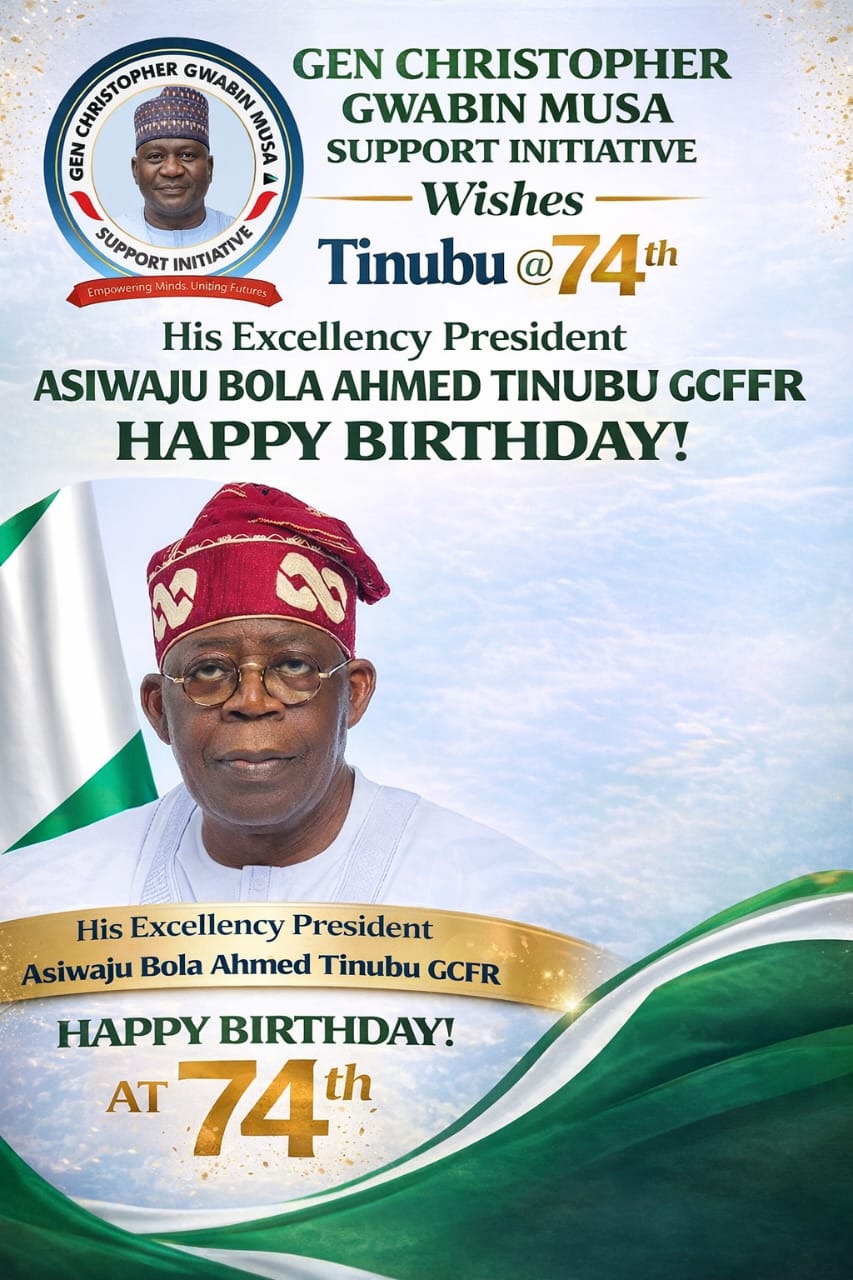
GEN CHRISTOPHER GWABIN MUSA SUPPORT INITIATIVE EXTENDS WARM BIRTHDAY FELICITATIONS TO PRESIDENT TINUBU ON 74TH BIRTHDAY
The Gen Christopher Gwabin Musa Support Initiative has extended heartfelt congratulations to His Excellency President Asiwaju Bola Ahmed Tinubu, GCFR, on the occasion of his 74th birthday.
In a statement released to the press, the Initiative conveyed warm wishes for the President’s personal well-being and for his continued leadership of the nation. The statement, signed by the Convener, Ibrahim Dahiru Danfulani, Sadaukin Garkuwan Keffi/Betara Biu, expressed hope that the coming year would bring the President “renewed strength and more wisdom in guiding the nation.”
The statement further noted that the Grand Patron of the Initiative, His Excellency Gen Christopher Gwabin Musa, OFR, Minister of Defence of the Federal Republic of Nigeria, joined in celebrating the milestone. It added, “Wishing Your Excellency continued good health, vitality, and determination as you lead the country towards greater unity and progress.”
The message underscores support for President Tinubu’s administration and its national objectives, marking the birthday as an occasion to reaffirm commitment to the nation’s unity and advancement under his stewardship.
society
Dominion City to Host Global Camp Meeting, “2 Nights of Glory” 2026 in Lagos, Enugu …Calls for Moral Renewal
*Dominion City to Host Global Camp Meeting, “2 Nights of Glory” 2026 in Lagos, Enugu
…Calls for Moral Renewal
Lagos – Dominion City has announced plans to host its annual Global Camp Meeting alongside a special “2 Nights of Glory” gathering in April 2026, with events scheduled to be held simultaneously in Lagos and Enugu.
The week-long programme is expected to draw tens of thousands of participants onsite and millions of virtual attendees from across the globe.
The Global Camp Meeting will run from Wednesday, April 1 to Monday, April 6, featuring daily sessions at 8:00 a.m. and 5:00 p.m. The “2 Nights of Glory” is slated for Friday, April 3 and Saturday, April 4 at the Golden Heart Place, Km 22 Lekki-Epe Expressway, beside Lagos Business School, Ajah, Lagos.
Organised by Dominion City, a global church focused on raising transformational leaders, the conference will centre on revival, spiritual renewal, and practical teachings. This year’s theme, “Redigging the Wells of Our Fathers,” underscores a call to return to foundational values and principles.
Speaking ahead of the event, Nobbert Onaga, President, Golden Heart Foundation and Senior Pastor, DC Lagos & Europe, emphasised the need for moral reawakening as a pathway to national transformation. He described the Church as “the pillar and foundation of truth,” noting that the conference aims to confront moral decline and restore core values within society.
“We are going back to foundational truths that established the Church. These truths will help repair societal damage and reposition the Church as a source of hope and light,” Onaga said.
Also speaking, Shola Olapade, Senior Pastor of Dominion City Headquarters, highlighted the Church’s role in addressing ethical and cultural challenges, particularly among young people. He added that the programme would go beyond spiritual teachings to include sessions on artificial intelligence, innovation, business, media, arts, and career development.
“We are equipping people not just spiritually, but with relevant 21st-century skills to thrive in today’s world,” Olapade noted.
The conference will feature teachings and ministrations from a lineup of international ministers, including Dr. David Ogbueli, Dr. Charles Ndifon, Andres Bisonni, Pastor Randy Mitchell, Apostle Ikechukwu Peter Nnajiofor, Dr. Ferdinand Nweke, Apostle Ben Hanyani Ndobe, Evangelist Dan Scott, and Dr. Chiefo Ejiofobiri.
Music ministrations will also be led by notable gospel artists such as Grace Idowu, Rhema Onuoha, Once More Six, David Nkennor, Anthony Kani, and GUC.
Organisers disclosed that over 30,000 participants are expected to attend in person, with free transportation provided from designated locations across Lagos to ease access. In addition, free medical services will be offered daily, building on previous outreaches that benefited over 1,700 people.
To ensure safety and order, more than 200 traffic marshals will be deployed in collaboration with relevant authorities.
Beyond its spiritual impact, organisers project that the event will stimulate local economic activity across hospitality, transportation, and retail sectors.
The Global Camp Meeting remains a key platform for spiritual impartation, leadership development, and societal transformation, aligning with Dominion City’s mission to equip believers to influence their communities positively.
Participation is open to the public, with registration available online for both physical and virtual attendance. //END.//
*PHOTO CAPTIONS:*
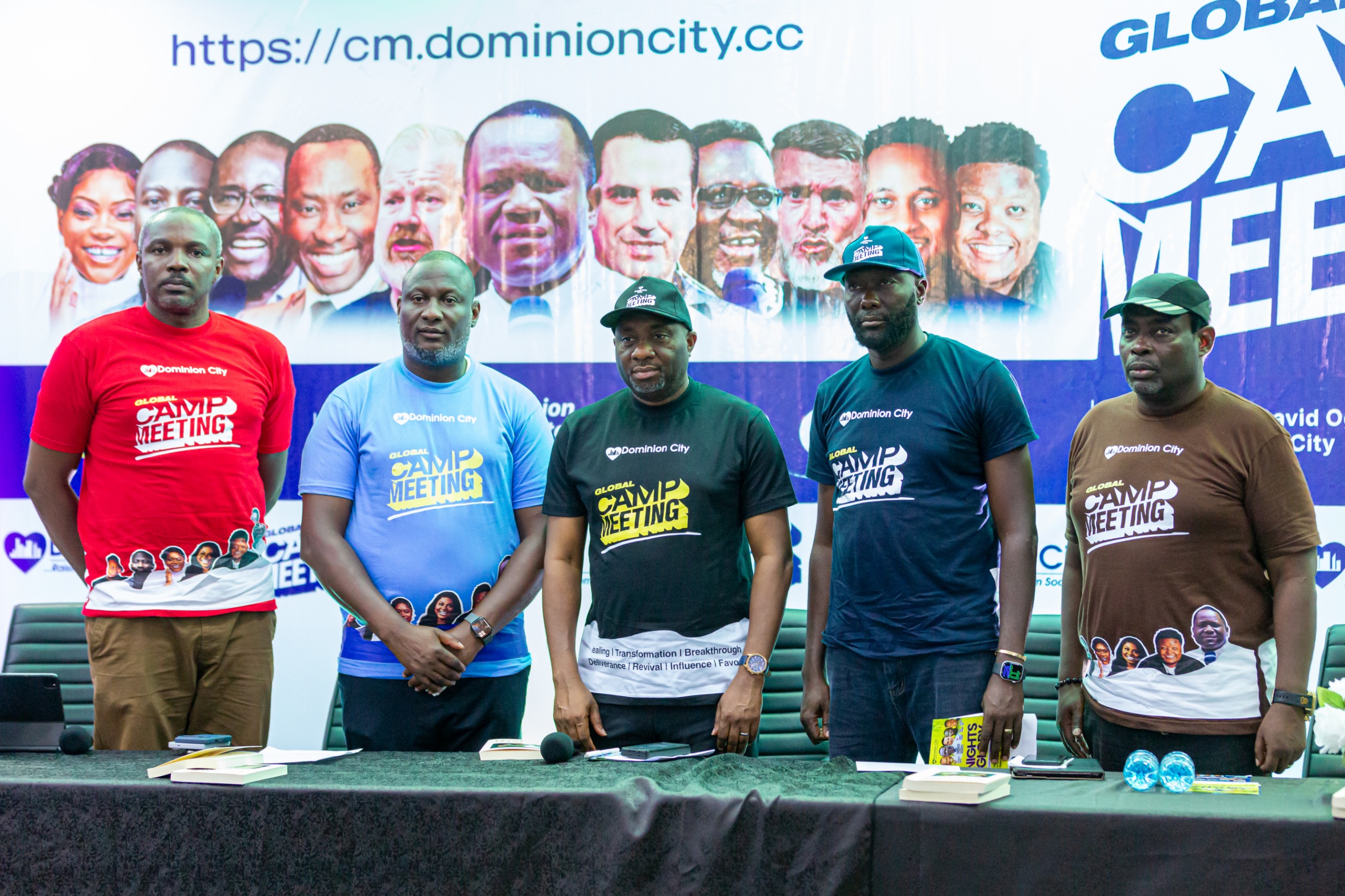
L-R: Dr. Godwin Efobi, Head, Medical Team, Dominion City Headquarters (DCHQ); Pastor Shola Olapade, Senior Pastor, DCHQ; Pastor Nobbert Onaga, President, Golden Heart Foundation and Senior Pastor, DC Lagos & Europe; Pastor Chuks Anochie, Head of Security and Traffic Control, Dominion City Headquarters (DCHQ), Camp Meeting 2026; Pastor Josh Tim Vaduchi, Head of Event & Programmes, DCHQ, during the press briefing of the forthcoming Global Camp Meeting, held the weekend of 2026 at the Dominion City Headquarters (DCHQ), Lagos.
L-R: Pastor Chuks Anochie, Head of Security and Traffic Control, Dominion City Headquarters (DCHQ), Camp Meeting 2026; Pastor Shola Olapade, Senior Pastor, DCHQ; Pastor Nobbert Onaga, President, Golden Heart Foundation and Senior Pastor, DC Lagos & Europe; Dr. Godwin Efobi, Head, Medical Team, DCHQ; and Pastor Josh Tim Vaduchi, Head of Event & Programmes, during the press briefing of the forthcoming Global Camp Meeting, held over the weekend in 2026 at the Dominion City Headquarters (DCHQ), Lagos.
society
Oloworo of Oworosoki Kingdom, Oba Babatunde Saliu, Felicitates President Bola Ahmed Tinubu at 74
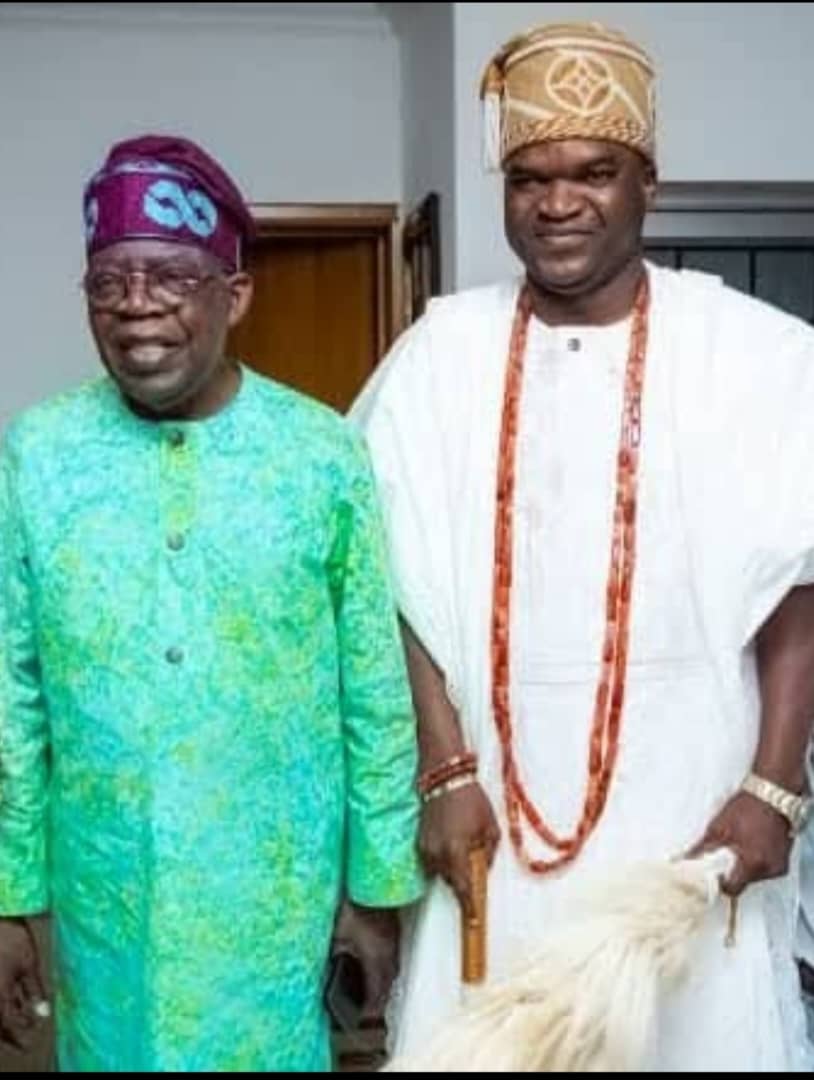
Oloworo of Oworosoki Kingdom, Oba Babatunde Saliu, Felicitates President Bola Ahmed Tinubu at 74
By Adeyemi Obadimu
The Oloworo of Oworosoki Kingdom, His Royal Majesty, Oba Babatunde Saliu, Elebo II, has extended warm felicitations to the President of the Federal Republic of Nigeria, Bola Ahmed Tinubu, GCFR, on the occasion of his 74th birthday.
In a goodwill message issued from his palace, the revered monarch described President Tinubu as a visionary statesman, a courageous reformer, and an indefatigable democrat whose lifelong commitment to nation-building continues to shape Nigeria’s progress.
Oba Babatunde Saliu praised the President’s unwavering dedication to public service, noting that his leadership has ushered in a new phase of economic reform, infrastructural renewal, and institutional strengthening across the country.
According to the monarch, the President’s Renewed Hope Agenda has begun yielding tangible relief and renewed confidence among citizens, reflecting his determination to reposition Nigeria for sustainable growth and prosperity.
“President Bola Ahmed Tinubu has demonstrated exceptional resilience, strategic foresight, and a deep love for Nigeria. His administration’s bold initiatives are laying the foundation for long-term national transformation. At 74, he remains steadfast in his resolve to build a stronger, more united, and economically vibrant nation,” the monarch stated.
Oba Babatunde further commended the President’s legacy of leadership, describing him as a bridge-builder, a mentor to many leaders, and a symbol of democratic stability. He acknowledged the President’s decades of sacrifice and contribution to the advancement of democracy in Nigeria.
On behalf of the Oworosoki Kingdom, the royal father prayed for divine wisdom, sound health, and renewed strength for the President to successfully complete the noble reforms and developmental strides he has embarked upon for the benefit of all Nigerians.
“As Your Excellency marks 74 remarkable years, we pray that Almighty God grants you long life, continued wisdom, and the fortitude to steer our great nation toward greater heights. May your days be filled with strength and grace as you continue to serve Nigeria with distinction,” Oba Babatunde Saliu added.
President Bola Ahmed Tinubu clocks 74 as a leader whose enduring influence, bold reforms, and steadfast patriotism remain central to Nigeria’s ongoing journey of national renewal.


-

 society6 months ago
Religion: Africa’s Oldest Weapon of Enslavement and the Forgotten Truth
-

 news4 months ago
WHO REALLY OWNS MONIEPOINT? The $290 Million Deal That Sold Nigeria’s Top Fintech to Foreign Interests
-

 society6 months ago
“You Are Never Without Help” – Pastor Gebhardt Berndt Inspires Hope Through Empower Church (Video)
-

 celebrity radar - gossips2 months ago
Dr. Chris Okafor Returns with Power and Fire of the Spirit -Mounts Grace Nation Altar with Fresh Anointing and Restoration Grace on February 1, 2026