
religion
The Inspiring Story Behind the Popular Gospel Song “Oluwatosin, This Jesus That I Serve Is Enough for Me”


The Inspiring Story Behind the Popular Gospel Song “Oluwatosin, This Jesus That I Serve Is Enough for Me”
How a Tragic Bank Robbery Gave Birth to a Song of Unwavering Faith
By Femi Oyewale
Ado Ekiti — On the morning of May 31, 2011, the usually bustling Okeiyimi community in Ado Ekiti was thrown into panic when about twenty heavily armed men stormed the First Bank branch in the area. The brazen attack, carried out in broad daylight with sophisticated weapons, left residents gripped with fear and chaos.
In the midst of the gunfire and confusion, a young man’s life would be changed forever—yet his story would go on to inspire thousands through a simple but powerful gospel song.
That man is Oluwatosin Oluwasola, now widely known for the heartfelt refrain: “Oluwatosin, this Jesus that I serve is enough for me.”
A Life Altered by a Stray Bullet
At the time of the attack, Oluwatosin was at home in Oke Ila with his younger brother. Suddenly, the deafening sound of bullets tore through the air. One of those stray bullets struck him inside his own room.

The impact was devastating. After medical intervention, doctors were forced to amputate his right arm to save his life. A once-thriving professional photographer, Oluwatosin, saw his career abruptly cut short. His life took a dramatic, painful turn.
Yet, amid the loss and uncertainty, a remarkable testimony was unfolding.
From Tragedy to Testimony
Both Oluwatosin and his younger brother miraculously survived the incident. While the scars of that day remain, Oluwatosin refused to let despair define him.
Instead, he turned to the one constant in his life—his faith in Jesus Christ. In the depths of his pain, he found the words that would become his anthem:
“This Jesus that I serve is enough for me.”

What began as a personal declaration of hope soon became a song of inspiration, echoing across churches and communities. Sung with unshakable conviction, the song embodies resilience, gratitude, and the sustaining power of God’s grace.
A Song that Speaks to Many
For believers and non-believers alike, Oluwatosin’s story is a reminder of the strength found in faith during life’s darkest hours. His song continues to uplift countless people, turning a tragedy into a message of hope.
“Jesus’s saving grace has a clear purpose,” Oluwatosin often says, pointing to his own survival as living proof. “What the enemy meant for evil, God turned around for good.”
The Legacy of Unwavering Joy
Today, Oluwatosin is not just remembered as a victim of a bank robbery gone wrong. He is celebrated as a beacon of hope—a man who, in the face of suffering, found a reason to rejoice.
His story stands as a powerful testament that faith can transform pain into purpose, and that joy can still spring forth from the ashes of despair.



Adamawa Progressive Elders Council Felicitates Muslim Ummah @ Eid-el Fitri
The Adamawa Progressives Elders Council under the leadership of His Excellency Brigadier Gen. Buba Marwa (Rtd) has sent a strong worded message of felicitations to the Muslim Ummah in Adamawa State and indeed the entire country on the occassion of the Eid-El-Fitr celebrations marking the end of the Ramadan season.
In a message sent by the Media office of the Organization, the group extended warm felicitations to the Leaders of APC in Adamawa State particularly the National Security Adviser Mallam Nuhu Ribadu and His Excellency Governor Ahmadu Umaru Fintiri. Also the group sends Sallah salutations to the National Vice Chairman North East of the APC, the State Chairman of the party and all members of the state working committee.
While acknowledging that the one month long spiritual exercise was marked by sacrifices and charity, General Marwa said the Council “expects every member of the Council and indeed every citizen of Adamawa state to live in peace with one another and to embrace a culture of unity, fraternity and the pursuit of an Adamawa state that promotes our common heritage and shared prosperity”.
Addressing the core issues related to the establishment of the Council, the leader of the group said in celebrating a spiritual event like Sallah, what normally happens are moments of joy and happiness that transcends our natural faultlines. In his words, “in times like this we normally set aside our differences to rejoice with each other, l therefore enjoin us to carry this spirit beyond the Sallah period. We should build a bond of unity that endures”
The Adamawa Progressives Elders Forum therefore calls on all the people of Adamawa state to rededicate themselves to the peace, unity and progress of Adamawa state.
The group urges the Muslim Ummah to carry on the lessons of piety and charity imbibed during the Ramadan season beyond the end of fasting period.
Speaking further on behalf of the group, General Buba Marwa called on the members of the APC in Adamawa state to approach all the political activities coming up within the INEC timetable with maturity, understanding and brotherhood.
According to him “the goal of the progressive elders council is peace, unity and understanding among all members of the party in the state and by extension the entire citizens of the state”
While reflecting on the recently concluded e-registration of party members in the state, General Marwa celebrated Adamawa state for emerging with the second highest figure nationwide after Lagos State.
He commended the NSA, the Governor, the State Chairman of the Party and State Working Committee members for this unprecedented feat.
Gen Marwa as the leader of the Council believes that this is an affirmation of the confidence the people of Adamawa have in the leadership of His Excellency President Bola Ahmed Tinubu, GCFR.
On behalf of the entire Membership of the Adamawa Progressives Elders Council, His Excellency Gen. Buba Marwa felicitates with the Muslim Ummah and prays for a very successful celebrations in peace, unity and brotherhood. May the season bring abundant blessings to the land and to the people of Adamawa state.
news
ANOTHER PROPHECY FULFILLMENT BY PROPHET KINGSLEY AITAFO OVER THE EXIT OF DR. KENOLY, ANNOUNCING FEBRUARY’S OPEN PROPHETIC REVIVAL

ANOTHER PROPHECY FULFILLMENT BY PROPHET KINGSLEY AITAFO OVER THE EXIT OF DR. KENOLY, ANNOUNCING FEBRUARY’S OPEN PROPHETIC REVIVAL
– Another Prophecy Fulfillment by Prophet Kingsley Aitafo Following the Passing of Ron Kenoly Ahead of February Open Prophetic Revival
– Prophet Kingsley Aitafo Records Another Prophecy Fulfillment as February Open Prophetic Revival Is Announced
In the released prophecies for 2026, renowned Nigerian cleric, Prophet Kingsley Aitafo, shared a series of revelations touching on Nigeria’s economy, global events, political transitions, natural disasters, religious transformations, and the future of world leaders.
During a special prophetic session, the prophet stated that he foresaw the departure of two world-renowned musicians in 2026 and urged the Nigerian people and the global community to pray for them.

He urged Nigerians and everyone around the globe to pray for the musicians, among other prophecies, and already gave insight concerning them.
On February 3, 2026, American gospel singer, songwriter, and worship leader Ron Kenoly passed away at the age of 81. Widely known as the “Professor of Praise,” Kenoly was celebrated for anthems such as “Majesty” and “Lift Him Up,” which have significantly influenced modern congregational worship around the world.
He was recognized as a pioneer of the contemporary praise and worship movement, leading Scripture-based worship services that became widely adopted in churches across different nations and cultures.
The development has been described by followers of Prophet Kingsley Aitafo as a confirmation of the prophecy earlier declared in the year.
Meanwhile, Prophet Kingsley Aitafo, leader and shepherd in charge of Oneness in Christ, in conjunction with CCC Living Grace Tabernacle, invites everyone to its February Open Revival. It is a prophetic service determined to change lives through miracles, healings, signs, and wonders.

It is not an ordinary service; it is another time for a divine encounter where your faith is strengthened, prayers are answered, and breakthroughs and favour are about to rain. With its theme — Jesus Christ is the same forever — the revival is promised to release the power of Jesus Christ like never before. It is a period of shift and divine encounter.
This revival service is said to hold on the 25th of February, 2026, from 5pm – 8pm at 20, Showole Street, Ewupe, Singer Sango, Ogun State.
It is a season where God is ready to reveal Himself like never before. Members of the public are invited to attend.
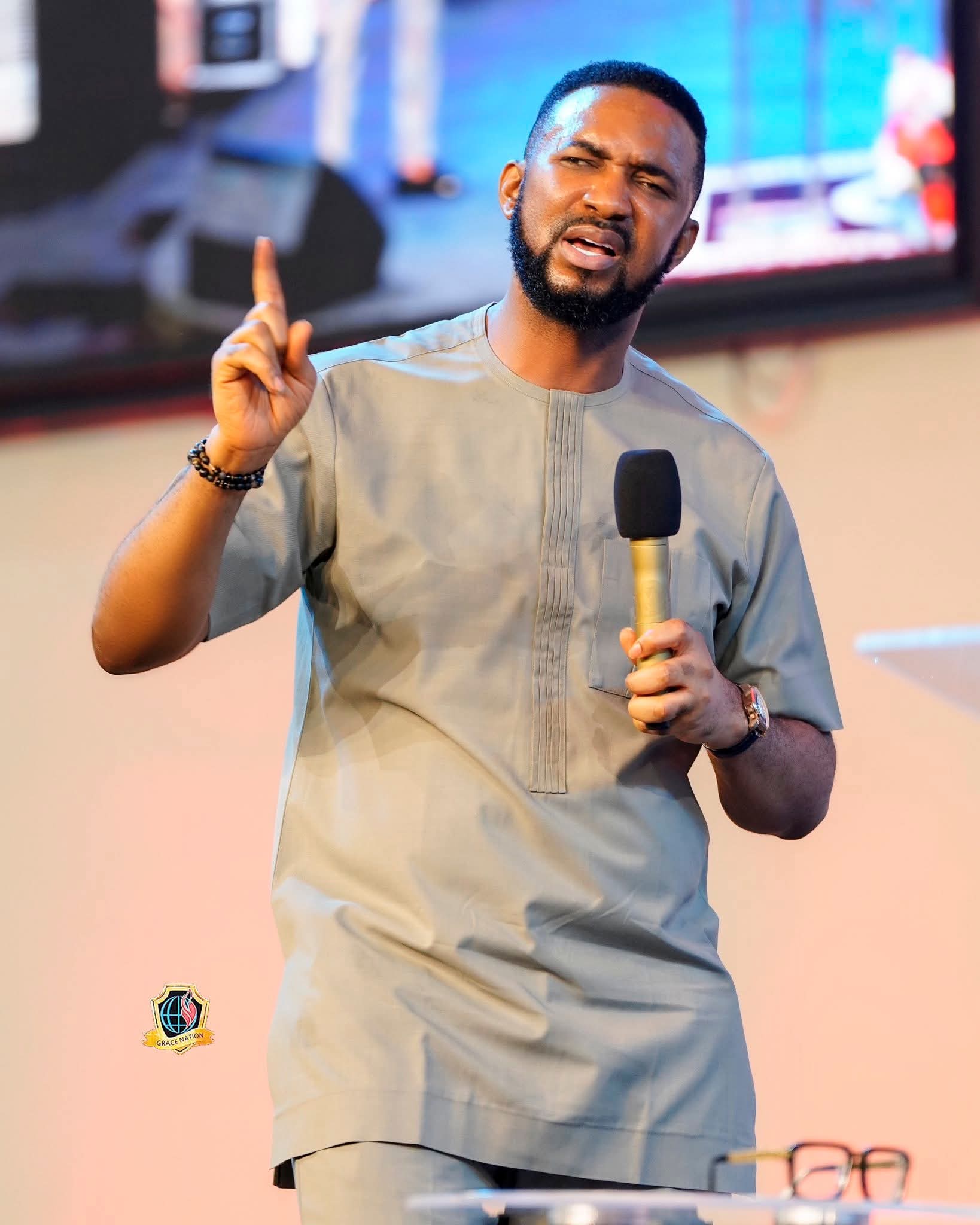
Manipulation: Ignorance Is a License to Bondage — Dr. Chris Okafor
“Nothing honours until a spirit interferes.”
Manipulation, broadly defined, is the act of influencing or controlling a person or situation through subtle or overt tactics for personal advantage. In many cases, such influence is perfected through spiritual interference, because the spiritual realm ultimately governs the physical.
This profound subject formed the focus of the midweek non-denominational Prophetic Healing, Deliverance and Solutions (PHDS) Service ministered by the Generational Prophet of God and Senior Pastor of Grace Nation Worldwide, Dr. Chris Okafor, at the international headquarters of the ministry in Ojodu Berger, Lagos, Nigeria.

Speaking on the topic “Manipulation”, with the subtitle “The Spiritual Aspect,” Dr. Okafor explained that manipulation exists in two dimensions: demonic manipulation and divine manipulation.
Demonic Manipulation
According to the Generational Prophet, demonic manipulation represents the negative expression of spiritual control, where individuals are influenced by the spirit of darkness to act contrary to their true intentions and divine purpose.
He noted that under demonic manipulation, people often say or do things their inner conscience did not authorize, acting solely under satanic influence. This, he explained, accounts for the increasing hostility, false accusations, and defamatory statements directed at genuine servants of God in contemporary times.
“Many people speak evil against true men of God, maligning those sent by God to help them. Often, it is not entirely their fault—it is the work of demonic manipulation,” he stated.
Dr. Okafor, however, offered reassurance, emphasizing that a prayerful life and proper spiritual alignment provide immunity against such attacks. He stressed that when a believer is connected to a spiritual father and guided correctly, no level of manipulation can stop destiny or destroy God-ordained blessings.
He warned that unchecked manipulation can damage destiny and limit access to divine blessings.
Divine Manipulation
The Prophet further taught that just as there is demonic manipulation aimed at destruction, there is also divine manipulation—the intervention of God to protect, guide, and align His people with His eternal purpose.
“If there is a demon manipulating destinies wrongly, there is also a God in heaven who divinely interferes to preserve glory,” he declared.
Dr. Okafor explained that believers who understand the principles of serving God in truth and in spirit operate under divine manipulation, where God orchestrates events in their favour. Under such covering, no demonic manipulation can prevail.
He added that consistent prayer, commitment to kingdom service, partnership with God’s work, and active soul-winning neutralize every form of demonic interference.
Solutions to Manipulation
According to Dr. Okafor, the ultimate safeguard against manipulation is a disciplined prayer life and total commitment to the things of God. Such spiritual alignment ensures that no demonic influence can infiltrate a believer’s path.
The PHDS midweek service witnessed a mighty move of the Holy Spirit, marked by deliverance, healings, miracles, restoration, and divine solutions to numerous cases presented before Elohim, the God of Grace Nation.


-

 society7 months ago
Religion: Africa’s Oldest Weapon of Enslavement and the Forgotten Truth
-

 news4 months ago
WHO REALLY OWNS MONIEPOINT? The $290 Million Deal That Sold Nigeria’s Top Fintech to Foreign Interests
-

 society6 months ago
“You Are Never Without Help” – Pastor Gebhardt Berndt Inspires Hope Through Empower Church (Video)
-

 celebrity radar - gossips2 months ago
Dr. Chris Okafor Returns with Power and Fire of the Spirit -Mounts Grace Nation Altar with Fresh Anointing and Restoration Grace on February 1, 2026