
Business
Taxing, Borrowing the Future Without Building: What Has Nigeria’s Fiscal Authority Done for the Real Sector?

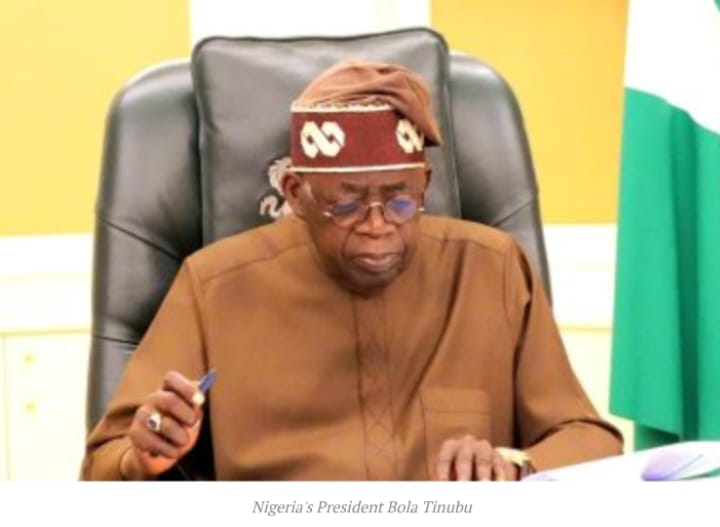
Taxing, Borrowing the Future Without Building: What Has Nigeria’s Fiscal Authority Done for the Real Sector?
BY BLAISE UDUNZE
In today’s Nigeria, one uncomfortable truth has become glaring that the fiscal authority collects, but it does not build. It borrows, but it does not produce. It taxes, but it does not empower. For years, the Nigerian government has pursued fiscal policies more obsessed with revenue than with results.
The removal of fuel subsidy in 2023 was supposed to mark a new dawn. It was sold to Nigerians as a path to fiscal freedom as a step that would redirect over $10 billion annually from consumption subsidies to capital investment, infrastructure, health care, education and job creation. Two years later, that promise has vanished into a fog of political spending and bureaucratic complacency.
The question now is not how much the government has collected, but what it has done with it. What tangible impact have these revenues from taxations and borrowings had on the real sector which is the part of the economy that actually produces goods, creates jobs, and drives development?
A Fiscal Authority Fixated on Taxation, Not Production
Nigeria’s fiscal policy in recent years has tilted dangerously toward aggressive revenue collection. Under immense pressure to grow non-oil income, the Federal Inland Revenue Service (FIRS) has expanded its reach to virtually every corner of the economy. From VAT on electricity and telecommunications (data usage) to call credits, bank transactions to stamp duties on bank transfers, to levies on postal deliveries for online purchases, almost nothing escapes the government’s tax net.
The average Nigerian entrepreneur now faces a labyrinth of taxes such as company income tax, education tax, signage fees, land use charges, and a myriad of local levies. Yet the same entrepreneur operates in an environment defined by power shortages, failing infrastructure, forex volatility, and regulatory uncertainty. These are not conditions for business growth; they are conditions for extinction.
Taxation, in principle, should be a partnership between the state and the productive class as a social contract that trades compliance for development. But in Nigeria, taxation has become punishment, not partnership. The fiscal authority appears to be taxing poverty to sustain bureaucracy. It has forgotten that the strength of any economy lies not in how much it extracts, but in how much it enables.
Taxing Without Building
For a government that collects billions of naira daily from taxes, surcharges, levies, and newly designed revenue streams, it is difficult to find any visible reflection of these revenues in the productive base of the economy.
Based on FIRS and government releases, tax collections amounted to about N34 trillion in 2023-2024, and non-oil receipts reached around N20.6 trillion in January to August 2025, indicating total government collections of at least N50-N55 trillion since mid-2023, depending on how partial-year and FAAC items are aggregated and without double counting.
The contradiction is glaring that Nigeria’s fiscal managers have become more efficient at collecting taxes but less effective at building the economy that sustains those taxes.
The reality is sobering. SMEs that stand as the true backbone of national productivity are closing shop in droves. The cost of diesel, transportation, and rent have tripled, while the naira’s freefall continues to eat away at margins. Rather than offer relief, fiscal agencies have tightened the noose with new charges and penalties. The result is a climate of exhaustion and economic fatigue.
Borrowing Without Building
If taxation is squeezing businesses dry, borrowing is suffocating the nation’s future. As if taxes were not enough, Nigeria’s fiscal authorities have doubled down on borrowing, amassing debts at an unprecedented rate. These have resulted to spiral of loans justified in the name of development but rarely seen in tangible outcomes.
As of mid-2025, Nigeria’s total public debt has ballooned to N152.4 trillion, a staggering 348.6 percent increase since President Bola Tinubu assumed office in June 2023, when the figure stood at N33.3 trillion. For a country already struggling to meet basic obligations, this is unsustainable.
Reflecting on the wider African context, the picture is equally alarming. The continent’s external debt now exceeds $1.3 trillion, with debt servicing costs hitting $89 billion this year alone. Nigeria is one of the hardest hits, not merely by the size of its debt, but by its lack of productive return.
Even as businesses groan under the weight of multiple taxation, the Federal Government has kept its foot firmly on the borrowing pedal. Between July and October 2025, Nigeria’s fiscal authorities secured over $24.79 billion (plus €4 billion, ¥15 billion, N757 billion, $500 million in Sukuk) in new borrowings and facilities, the bulk of which were justified as “development financing.” Yet the real sector still awaits to feel the promised impact.
Over 25 percent of Nigeria’s annual revenue now goes into debt servicing, leaving little fiscal space for investment in health, education, or industry. Experts warn that when over 90 percent of government revenue is consumed by old debts, governance becomes survival, not progress.
Uche Uwaleke, professor of finance and capital markets at Nasarawa State University, said the high cost of debt repayment continues to undermine the country’s economic potential.
“Nigeria’s debt service ratio is inimical to economic development, chiefly because what could have been used to build infrastructure and invest in human capital is used to service debt,” Uwaleke told BusinessDay. “The opportunity cost for the country is high. To ensure debt sustainability, the government should tie future borrowings to self-liquidating projects that can generate revenue to repay the loans.”
At the 2025 IMF and World Bank Annual Meetings in Washington D.C., global leaders again pledged to tackle developing countries’ debt burdens. But as Nigeria’s borrowing continues unchecked through Eurobonds, sukuk, and bilateral loans. The question Nigerians should be asking is simple, who benefits from all this borrowing?
What is more troubling is the government’s pattern of borrowing to service past debts and fund recurrent expenditures. Instead of financing projects that create value, loans are spent plugging budget holes. The chain of debt grows longer, and the productive economy remains static.
We are witnessing a fiscal irony as in a nation borrowing to survive, not to thrive.
The Missed Opportunity of Subsidy Savings
The removal of fuel subsidy was supposed to free up capital for productive investments. Instead, it has freed up more money for recurrent consumption. Subsidy funds are now shared monthly among the three tiers of government, with no visible developmental footprint.
Nigerians were told that the subsidy windfall would improve power supply, roads, and transport infrastructure. But more than a year later, there is little to show.
In one of the world’s largest oil producing nations, fuel prices quintupled, increasing more than 514 percent from N175 in May 2023 to N900. Across the country, small businesses are closing down; transport fares remain unbearable; and electricity supply remains erratic. The fiscal authority appears to have replaced subsidy waste with revenue waste.
Instead of using subsidy savings to ignite productivity, the funds have been channeled into the same unsustainable cycle of political spending, salary payments, and administrative overheads. This is not reform, it’s redistribution without responsibility.
Where Is the Fiscal Policy Coordination?
The disconnect between Nigeria’s fiscal and monetary authorities has become a fundamental barrier to progress. While the Central Bank of Nigeria (CBN) tightens liquidity to control inflation, the fiscal authority simultaneously floods the economy with new taxes and levies, inflating business costs and undermining the same stability the CBN is trying to achieve.
The contradictions are endless. The CBN preaches financial inclusion, yet fiscal agencies impose bank transfer duties that discourage banking usage. The CBN claims to promote SME credit schemes, yet fiscal authorities drain disposable income with new taxes.
This absence of policy synergy sends mixed signals to investors and citizens alike. Businesses cannot plan, investors cannot forecast, and even the government’s own intervention funds lose impact. Nigeria’s economic management, as it stands, resembles an orchestra without a conductor.
State Governments as the Silent Beneficiaries
While the federal government collects the bulk of taxes, state governments have become silent beneficiaries of the subsidy savings. Each month, they receive billions from FAAC allocations swollen by oil receipts, VAT, and subsidy removals.
Based on data from NEITI and OAGF/NBS monthly communiqués, the conservative FAAC disbursement total from June 2023 to June 2025 stands at approximately N25.65 trillion, covering only months with publicly available and verifiable reports.
Yet, few states have anything to show for it. Industries are dying, roads are deteriorating, and capital budgets are chronically underfunded. In many states, governance has been reduced to salary payments and political campaigns, not development.
Nigeria’s fiscal success cannot be measured by how much Abuja collects but by what states deliver. Development is a chain, if one link is weak, the entire system collapses. Yet, most states continue to depend on federal allocations as a feeding bottle rather than a development engine.
The federal fiscal authority cannot claim progress while sub-national governments squander shared revenues without accountability. Until FAAC allocations are tied to measurable developmental outcomes, Nigeria will keep sharing poverty, not prosperity.
The Real Sector being Neglected and Starved
Nigeria’s real sector, particularly SMEs continues to suffer neglect. Despite contributing about 48 percent of GDP, accounting for over 90 percent of businesses and employing over 80 percent of the workforce, SMEs receive less than 5 percent of total bank credit. Fiscal policy has done little to change that.
Rather than providing targeted tax reliefs, infrastructure subsidies, or credit guarantees, government policies have worsened the cost of doing business. The manufacturing sector’s growth rate remains sluggish, and capacity utilisation in many factories has dropped below 50 percent.
Manufacturers grapple with power cuts, forex scarcity, and multiple taxation. Many are forced to rely on expensive diesel generators, further eroding competitiveness. Import duties remain high, ports are congested, and logistics costs keep rising.
Ajayi Kadiri, Director-General of the Manufacturers Association of Nigeria (MAN), recently captured this frustration bluntly:
“We can’t plan under fiscal chaos. Manufacturing in my village is extremely expensive. Multiple levies, some without a legal basis, are suffocating businesses. You can wake up one day and see a 50 percent increase in port charges without prior consultation. That’s not policy that’s chaos.”
Kadiri’s statement is more than an industry complaint; it is a mirror of national dysfunction. When manufacturers cannot plan, the economy cannot grow. When fiscal policy becomes unpredictable, investment flees. The result is a landscape of abandoned factories, unemployed youth, and shrinking export potential.
In effect, the fiscal authority is extracting value without creating it. Government has become an expert in revenue collection but a failure in economic coordination.
The Human Cost of Fiscal Mismanagement
Behind the numbers lies a painful reality. Every percentage increase in tax or tariff translates into higher prices, lower wages, and fewer jobs. The removal of subsidy without a viable safety net pushed millions deeper into poverty. Despite the inflation claimed to have eased to 18.02 percent from 20.12 is still eroding purchasing power and diminished consumer demand, which is the lifeblood of production.
The market woman who pays for electricity she rarely gets, the manufacturer laying off workers due to diesel costs, the young entrepreneur crushed by levies, as these are not statistics. They are the casualties of a fiscal system that prioritises collection over compassion.
Instead of designing targeted support, energy rebates, SME tax credits, or rural infrastructure programs the fiscal authority has chosen the easier path by taking more from those already struggling. This short-term approach sacrifices long-term productivity for instant revenue gratification.
Need for Building, Not Just Taxing
To rescue the economy, Nigeria’s fiscal managers must adopt a production-first mindset. A nation cannot tax or borrow its way to prosperity. It must produce, build, and export its way there.
Rebalance fiscal priorities.
– Channel subsidy savings into infrastructure, agro-industrial hubs, and SME credit facilities not recurrent spending.
– Reward production, not compliance. Offer tax breaks for local manufacturers, exporters, and innovators.
– Enforce fiscal transparency. Every borrowed dollar should be tied to measurable outcomes, with clear public reporting.
– Align fiscal and monetary policy. End the contradiction between tax expansion and credit tightening.
– Demand state-level accountability. States must show what they are doing with FAAC allocations through verifiable projects, not political slogans.
The Urgency of a Fiscal Rethink
Nigeria’s fiscal policy has lost its moral and developmental compass. It has become a machine that extracts without empowering as a structure more focused on sustaining government than building an economy.
Taxation should create an environment where businesses thrive. Borrowing should build the future, not mortgage it. And subsidy savings should become the foundation of national renewal, not political redistribution.
Until Nigeria’s fiscal authorities understand that revenue collection is not development, and that loans are not progress, the economy will remain trapped in a vicious cycle of taxing without building, borrowing without producing, and spending without transforming.
Blaise, a journalist and PR professional writes from Lagos, can be reached via: [email protected]



Fidelity Bank grows gross earnings by 38% to N434.95b in Q1
Fidelity Bank Plc recorded 37.9 per cent growth in gross earnings to N434.95 billion in first quarter 2026 as the international commercial bank continued to expand its core banking market share.
Interim report and accounts of Fidelity Bank for the three months ended March 31, 2026 released at the Nigerian Exchange (NGX) showed that gross earnings rose from N315.42 billion in first quarter 20025 to N434.95 billion in first quarter 2026, representing an increase of 37.9 per cent.
The top-line performance was driven by impressive growth in the bank’s core business operations with interest incomes rising by 22.8 per cent to N314.48 billion in first quarter 2026 as against N256.10 billion in first quarter 2025.
With net interest income at N180.97 billion, the bank closed the period with profit before tax of N92.48 billion. After taxes, net profit stood at N74.47 billion for the three-month period. Earnings per share remained high at N5.69, underlining the capacity of the bank to reward its shareholders.
The balance sheet of the bank also emerged stronger. Total assets crossed the N11 trillion mark to N11.35 trillion by March 2026 compared with N10.46 trillion recorded in December 2025. Customers’ deposits increased from N6.89 trillion to N7.38 trillion. Total equity rode on the back of earnings growth to a 27.5 per cent increase from N1.09 trillion in December 2025 to N1.39 trillion by March 2026.
The first quarter 2026 results further consolidated the strong earnings outlook of the bank, which had successfully completed its recapitalisation amidst impressive earnings performance in 2025.
Fidelity Bank had recorded double-digit growths in interest and non-interest incomes as well as key balance sheet items during the year ended December 31, 2025.
The audited report showed that gross earnings rose from N1.04 trillion in 2024 to N1.52 trillion in 2025, an increase of 45.6 per cent. Interest and similar incomes had grown by 38.7 per cent from N803.1 billion in 2024 to N1.11 trillion in 2025. Fees and commission incomes also rose by 44.7 per cent from N78.4 billion to N113.4 billion. The bank recorded net profit after tax of N242.4 billion in 2025.
The bank’s balance sheet emerged stronger with total assets rising by 18.6 per cent to N10.46 trillion in 2025 as against N8.82 trillion in 2024. Customer deposits increased by 16.1 per cent from N5.94 trillion to N6.89 trillion, reflecting continued franchise strength and an improved funding profile. Net loans and advances meanwhile declined by 2.4 per cent to N4.28 trillion in 2025 as against N4.39 trillion in 2024, attributable to customers paying down on their mature obligations.
The bank had in 2025 strengthened its capital position, with eligible capital rising to N561 billion, above the regulatory minimum of N500 billion for banks with international authorisation. In addition, capital adequacy had remained robust, with Capital Adequacy Ratio of 30.94 per cent by December 2025 as against 23.47 per cent by December 2024.
Managing Director, Fidelity Bank Plc, Dr. Nneka Onyeali-Ikpe, said the first quarter 2026 results reinforced the bank’s strong and resilient business model.
She noted that with the remarkable success of its recapitalisation programme and continuing expansion, Fidelity Bank has entered a new era of growth and impressive returns.
“We are on a stronger footing and confident that we will set new growth records that are reflective of our legacy and the future we are working on,” Onyeali-Ikpe said.
Business
Dangote Refinery Ends Nigeria’s Era of Fuel Import Dependence, Boosts GDP, FX Earnings — EIU
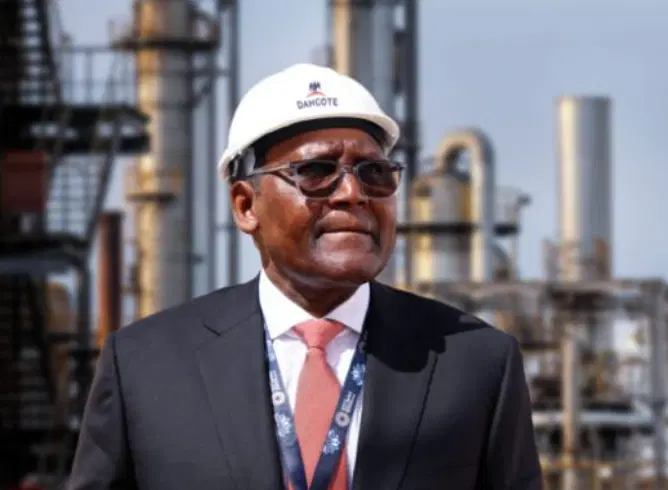
Dangote Refinery Ends Nigeria’s Era of Fuel Import Dependence, Boosts GDP, FX Earnings — EIU
The operational ramp up of the 650,000 barrels per day Dangote Petroleum Refinery & Petrochemicals is fundamentally reshaping Nigeria’s downstream oil sector, significantly reducing the country’s dependence on imported refined petroleum products and strengthening its external position, according to the Economist Intelligence Unit (EIU).
In its latest assessment on Nigeria’s fuel market and regulatory environment, the EIU said the refinery has already transformed a sector that was previously characterised by heavy reliance on imported fuel despite Nigeria being Africa’s largest crude oil producer. The report noted that the refinery met nearly 80 per cent of domestic petrol demand in April and produced enough volumes to satisfy local consumption requirements as operations approached full capacity.
The EIU described Nigeria’s downstream petroleum sector before the refinery as “long dysfunctional”, noting that the country had remained almost entirely dependent on costly imported fuel while producing nearly 1.5 million barrels of crude oil daily.
According to the report, the emergence of the refinery has reduced import dependence, improved domestic fuel availability and strengthened Nigeria’s balance of payments position through lower import demand and rising exports of refined petroleum products.
“The gradual ramp up of the 650,000 barrel/day Dangote refinery since May 2023 has transformed Nigeria’s long dysfunctional downstream sector,” the report stated. “The country’s main refineries, all state owned, had been inoperative for years and Nigeria was almost entirely reliant on costly imported fuel.”
The research and analysis division of The Economist Group, London added that the refinery’s attainment of full operational capacity and its planned expansion would further support Nigeria’s economic growth and foreign exchange earnings over the medium term.
“Meanwhile, the attainment of full capacity at, and an increase in exports from, the Dangote refinery will support real GDP growth and foreign exchange earnings in 2026 and 2027 and beyond, as a planned doubling of the plant’s output comes on stream around the end of the decade,” it added.
Industry analysts said the refinery is increasingly positioning Nigeria as an emerging refining and export hub, altering energy trade flows across Africa and reducing the vulnerability associated with fuel import dependence.
The EIU noted that the refinery’s expansion has coincided with major reforms in Nigeria’s downstream sector, including the removal of fuel subsidies and the introduction of market driven pricing mechanisms.
The report, however, said the transition from a state dominated fuel import structure to large scale domestic refining has triggered resistance from interests linked to the old import regime.
The latest tensions emerged following the decision by the Nigerian Midstream and Downstream Petroleum Regulatory Authority to relax restrictions on petrol imports despite the refinery’s growing capacity to meet domestic demand.
Dangote Industries subsequently initiated legal action, arguing that continued import approvals undermine domestic refining investments and conflict with the objectives of the Petroleum Industry Act, which seeks to encourage local refining capacity and reduce import dependence.
Analysts noted that the availability of large-scale domestic refining capacity has improved Nigeria’s energy security and reduced exposure to external supply shocks and foreign exchange volatility.
The Centre for the Promotion of Private Enterprise also cautioned against unrestrained importation of petroleum products, warning that such a policy could weaken Nigeria’s industrialisation drive and discourage investments in domestic refining.
Chief Executive Officer of CPPE, Muda Yusuf, said continued dependence on imported fuel had historically contributed to pressure on foreign reserves, exchange rate instability and fiscal leakages.
The refinery’s growing impact is also being reflected in Nigeria’s broader macroeconomic indicators. Earlier this month, S&P Global Ratings cited increased domestic refining capacity and rising hydrocarbon exports among the major factors supporting Nigeria’s sovereign credit rating upgrade – the first in 14 years.
Beyond Nigeria, analysts said the refinery is increasingly being viewed as a strategic industrial asset for Africa, where many countries remain heavily dependent on imported fuel despite rising demand for transportation, manufacturing, and power generation.
Business
BREAKING: Court Dismisses $19.6 Million Claim Against NNPCL — Rules Contract Scope Cannot Be Changed Orally

BREAKING: Court Dismisses $19.6 Million Claim Against NNPCL — Rules Contract Scope Cannot Be Changed Orally
In a landmark ruling on Friday, May 22, 2026, the Federal Capital Territory High Court in Abuja threw out a $19.6 million lawsuit filed by Alternate Dimensions Ventures Ltd against the Nigerian National Petroleum Company Limited (NNPCL), affirming a key legal principle: a written contract cannot be expanded through oral agreements or conduct.
Alternate Dimensions had sought $19,600,000 in professional fees, claiming the scope of its Direct Sale, Direct Purchase (DSDP e-pro) contract with NNPCL was orally expanded. Represented by counsel Patrick Peter, the firm argued it was entitled to the revised sum for services rendered under the alleged new terms.
But NNPCL, through its lawyer Ituah Imhanze of KENNA LP, pushed back sharply, arguing that parties are bound exclusively by the clear terms of their written agreement. Imhanze contended that without any written amendment, the claim was legally unsound, and the court agreed.
Delivering judgment, Justice Hamza Mu’azu upheld NNPCL’s defense, stating that the contract was unambiguous and that no evidence was adduced during the trial, which supported the alleged scope expansion. The court further found that NNPCL fully complied with all contractual terms and committed no breach.
Dismissing the suit as meritless, Justice Mu’azu reinforced the doctrine of sanctity of contract: any amendment to a written agreement must be express, unequivocal, and documented, not implied or verbal.
The ruling spares NNPCL from the S19.6 million claim and also a floodgate of similar potential liabilities.


- When women farm better, Eswatini eats better June 3, 2026
- Togo Hosts the 8th Annual Forum of National Volunteer Agencies in the Economic Community of West African States (ECOWAS) Region June 3, 2026
- Indigenous Peoples gravely vulnerable to Ebola epidemic, warn United Nations (UN) independent experts June 3, 2026
- Meeting between Parliamentary Vice-Minister ONISHI and His Excellency (H.E.) Mr. Cosgrow, Principal Minister and Minister for Agriculture, Fisheries and Blue Economy of Seychelles June 3, 2026
- Eritrea: Construction of Elementary School in Gogni Sub-Zone June 3, 2026
- African Union Commission (AUC) Chairperson His Excellency (H.E.) Mahmoud Ali Youssouf highlighted thePermanent Representatives’ Committee (PRC) critical role in advancing the Union’s agenda and laying the groundwork for the forthcoming Mid-Year Coordination Meeting (MYCM) June 3, 2026
- Eritrea: Eighth Grade National Examination Commences June 3, 2026
- Many Africans see justice system as unequal, costly, and slow, Afrobarometer survey reveals June 3, 2026
- Prof. Benedict Oramah to Chair Finance Summit as African Energy Week (AEW) 2026 Prepares for Major Deal Flow June 3, 2026
- The Islamic Development Bank (IsDB) Group Affiliates to Host the 14th Private Sector Forum in Baku, Azerbaijan (16-19 June 2026) June 3, 2026
- When women farm better, Eswatini eats better June 3, 2026
- Togo Hosts the 8th Annual Forum of National Volunteer Agencies in the Economic Community of West African States (ECOWAS) Region June 3, 2026
- Indigenous Peoples gravely vulnerable to Ebola epidemic, warn United Nations (UN) independent experts June 3, 2026
- Meeting between Parliamentary Vice-Minister ONISHI and His Excellency (H.E.) Mr. Cosgrow, Principal Minister and Minister for Agriculture, Fisheries and Blue Economy of Seychelles June 3, 2026
- Eritrea: Construction of Elementary School in Gogni Sub-Zone June 3, 2026
- African Union Commission (AUC) Chairperson His Excellency (H.E.) Mahmoud Ali Youssouf highlighted thePermanent Representatives’ Committee (PRC) critical role in advancing the Union’s agenda and laying the groundwork for the forthcoming Mid-Year Coordination Meeting (MYCM) June 3, 2026
- Eritrea: Eighth Grade National Examination Commences June 3, 2026
-

 news6 months ago
WHO REALLY OWNS MONIEPOINT? The $290 Million Deal That Sold Nigeria’s Top Fintech to Foreign Interests
-

 society1 month ago
SOCIAL MEDIA IS NOT A BATTLEFIELD COMMAND – WHY THE NIGERIAN ARMY’S ACTION AGAINST JUSTICE CRACK IS A NATIONAL SECURITY IMPERATIVE
-

 celebrity radar - gossips4 months ago
Dr. Chris Okafor Returns with Power and Fire of the Spirit -Mounts Grace Nation Altar with Fresh Anointing and Restoration Grace on February 1, 2026
-

 celebrity radar - gossips6 months ago
Prophet Kingsley Aitafo Releases 2026 Prophecy: ‘Nigeria Will Rise, but the World Must Prepare for Turbulence’