
Politics
Ten Years of Progressive Governance in Nigeria: From Reform to Renewal

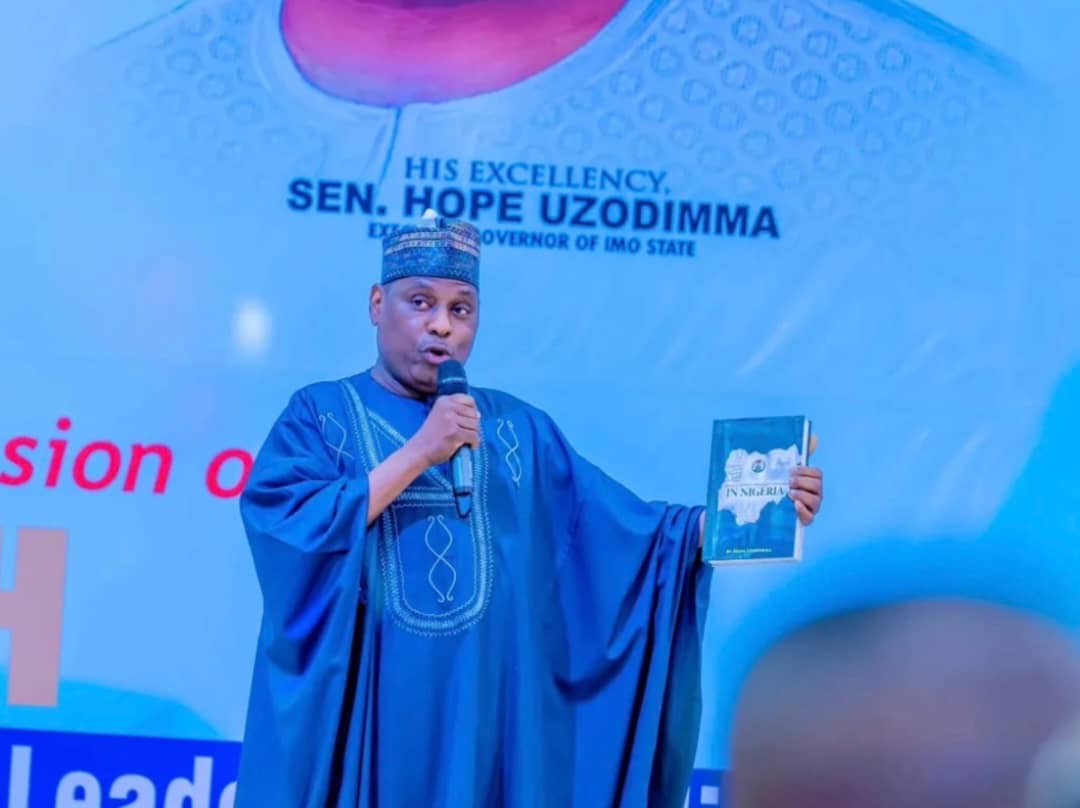
Ten Years of Progressive Governance in Nigeria: From Reform to Renewal
By Rabiu Isyaku Rabiu
During the public presentation of the book “Ten Years of Impactful Progressive Governance in Nigeria,” authored by the Chairman of the Progressive Governors’ Forum and Executive Governor of Imo State, His Excellency Governor Hope Uzodinma, I reflected on Nigeria’s decade-long journey under successive progressive administrations as Chief Presenter. Though time did not allow me to deliver my written remarks, the message remains vital to our national conversation on leadership, governance, and reform.
There are moments for politics and moments for governance. Once elections are over, governance must take precedence. Our duty as citizens is to move beyond division and measure progress not by sentiment but by delivery, performance, and impact.
Over the past ten years, Nigeria’s story has been one of courage and continuity, of institutions learning discipline, and of leaders willing to face hard truths about our economy. President Muhammadu Buhari laid the foundation of fiscal prudence, agricultural revival, and infrastructure renewal. President Bola Ahmed Tinubu has advanced that legacy through decisive structural reforms such as removing the fuel subsidy, unifying exchange rates, modernising tax policy, and restoring credibility to public finance. These choices were not easy, but they were necessary. They broke habits that had become too costly to sustain and redirected public wealth toward productivity.
Since May 2023, government non-oil revenue has grown by more than 400 percent. This is not coincidence. It is the outcome of intentional policy and technological transparency. The Presidential Fiscal Policy and Tax Reform Committee has simplified compliance, eliminated duplication, and placed technology at the centre of revenue collection. Revenue agencies that once competed now cooperate. Multiple taxation is being dismantled. Incentives for businesses are transparent and available online without intermediaries or privileged access. Every entrepreneur, large or small, can now apply for fiscal waivers or export credits within minutes. Fairness by design and technology is replacing favour by connection.
Energy stability has returned as proof that reform, though painful, delivers results. The queues that once defined our petrol stations are gone. Deregulation has reopened the downstream market and restored investor confidence in oil and gas, bringing new capital into deep-water, midstream, and modular-refinery projects. Parallel reforms in the Presidential CNG Initiative are changing urban mobility by replacing petrol fleets with cleaner and cheaper gas vehicles. At the same time, a nationwide solar-power rollout is providing electricity to schools, clinics, and small industries. Together, these initiatives reflect a balanced energy future built on efficiency, competition, and sustainability.
Security remains the foundation of every reform. In 2024, ₦3.85 trillion, about 13 percent of the national budget, was allocated to defence and internal security. For 2025, that figure rose to ₦6.57 trillion, with significant investment in equipment, intelligence, and personnel welfare. The Nigerian Air Force is modernising with 24 M-346 attack jets and 10 AW-109 helicopters. The Navy has commissioned new patrol ships and maritime helicopters to strengthen coastal and energy-asset protection. Across all theatres, joint operations by the Nigerian Armed Forces and intelligence agencies have neutralised tens of thousands of terrorists, insurgents and criminal elements, arrested many more, and rescued tens of thousands of hostages and displaced persons. The tempo has changed. Our armed forces now take the initiative rather than wait for it.
Infrastructure remains the bridge between ambition and opportunity. Across the country, more than 260 major projects in roads, bridges, ports, and pipelines are under construction or near completion. The Lagos to Calabar Coastal Highway and the Sokoto to Badagry Super Highway are redefining commerce and mobility. The national Bridge Fibre Project is expanding digital connectivity across cities and rural areas, strengthening the country’s broadband backbone and opening new corridors for education, innovation, and enterprise.
Digital governance reform is also deepening national capacity. The ongoing overhaul of the National Identity Management Commission has expanded NIN registration to tens of millions of citizens, creating a reliable digital backbone for planning, financial inclusion, and social protection. For the first time, national data is being harmonised across agencies, improving service delivery, strengthening security coordination, and helping the country plan development with precision.
Work along the River Niger corridor from Lokoja to Baro Port is progressing to enable future inland-waterway operations that can reduce transport costs and improve market access across regions. These projects reflect a deliberate effort to balance regional growth, from the Niger Delta cleanup and gas expansion in the South to new exploration in the North and industrial corridors across the Middle Belt.
Reform without human investment is reform without soul. The $2.2 billion Health Sector Renewal Programme is upgrading 17,000 primary health centres and training 120,000 health workers, while free caesarean care and subsidised dialysis are easing the burden on families. In education, student-loan schemes, digital-skills initiatives, and new STEM and AI curricula are preparing our young people for a digital economy. Through the Student Loan Fund, access to higher education is becoming a right, not a privilege. Its synergy with new financing institutions such as CREDICORP and the Nigeria Credit Guarantee Company ensures that young Nigerians can pursue knowledge with the same confidence that entrepreneurs pursue capital. Free technical and vocational training at the tertiary level will supply the technicians and artisans required for industrial growth.
Agriculture and food security have become the centre of national resilience. Beyond grains, the Federal Ministry of Livestock Development is unlocking a trillion-naira value chain in meat, dairy, and leather. Expanded fertiliser blending, mechanisation, irrigation, and storage are supporting millions of smallholders. With increased investment in rice, cassava, and cash-crop processing, Nigeria is moving toward genuine food sovereignty. Food security is not an aspiration but a necessity for economic stability.
The government’s economic renewal is also anchored on access to finance, enterprise, and inclusion. The establishment of CREDICORP, the Nigeria Credit Guarantee Company, and the Student Loan Fund has strengthened the foundation for a credit-based economy as well as human capital and domestic productivity. Together, these institutions expand access to credit for small businesses, farmers, civil servants, individuals, and students while derisking lending and empowering citizens to build their future without political connections. In promoting local production over import dependence, the Nigeria First Policy is not only conserving foreign exchange but also creating pathways for skilled youth employment and industrial apprenticeship across states.
I say this not out of any search for appointment, business patronage, or reward, but from a place of patriotism and conviction. In any case, President Tinubu has made it possible for any Nigerian engaged in productive enterprise and producing goods in Nigeria, to get business patronage without knowing anyone. From where I stand, and for every Nigerian, the true beauty of the Nigeria First Policy is that it invites us all to become participants in our country’s renewal. We can each now go into productive enterprise and live the Nigerian dream, so long as we care enough to believe in this nation and invest in our people, resources, and future.
In the midst of reform, President Tinubu’s words have been both compass and caution: “As we continue to reform the economy, I shall always listen to the people and will never turn my back on you.” That statement captures the essence of progressive governance which I define as courage guided by compassion. Under this directive, Nigeria’s social-protection system has been rebuilt on transparency and technology. The Conditional Cash Transfer programme now reaches more than 15 million households on a verified digital register, each linked to a NIN-validated wallet or bank account for direct payment. No intermediaries and no leakages. In addition, ₦344 billion has been disbursed in three tranches to the 36 states and the FCT to support local welfare and enterprise programmes. The Renewed Hope Ward Development Programme, which will operate across 8,809 wards, will economically engage over 10 million Nigerians and ensure that national policy translates into local opportunity.
The humanitarian principle of progressivism is simple. Reform must lift, not leave behind. Fiscal discipline restores credibility. Social investment restores trust. When citizens see roads being built, hospitals working, and social payments arriving on time, faith in reform deepens and the social contract is strengthened. Special attention is also being given to women, rural communities, and persons with disabilities through targeted enterprise and skills-support initiatives under the Renewed Hope framework.
The numbers also tell their own story of impact and renewed hope in Nigeria. Non-oil revenues continue to rise. Exports are diversifying. Nigeria has recorded its first trade and balance-of-payments surplus in years, a sign of growing production and renewed confidence in the naira. Oil output is improving, new investments are flowing into the upstream and midstream segments, and our current account is gaining strength as reforms take hold. President Bola Tinubu and his government recognise that inflation and living costs remain a strain on households, but the fiscal discipline now taking root is designed to restore purchasing power in a sustainable way. President Tinubu has also acknowledged that meaningful reform takes time. While citizens are beginning to see the first trickles of progress, the greater task is to ensure that these trickles flow downward to communities, markets, classrooms, and farms where growth becomes tangible and human.
The task ahead is to sustain this momentum but it won’t be easy. Every child must be in school. NIWA must be further strengthened to expand partnerships for safer and cleaner waterways. NDLEA must receive greater support to combat the rising threat of drug trafficking and addiction, and NAFDAC must be empowered with stronger laboratories and technology to protect the public from counterfeit medicines and unsafe food. These are not peripheral agencies. They are frontline guardians of national wellbeing, and their effectiveness determines the credibility of our progress.
Communities themselves must also understand that with all the support given to our security agencies and the military, their partnership is vital. Cooperation between citizens, traditional institutions, and security operatives will solidify these gains, strengthen intelligence at the grassroots, and prevent a return to disorder. National security is not the burden of the state alone. It is the shared duty of all Nigerians determined to protect their future.
The state governors of Nigeria, under this Renewed Hope and progressive compact, also have a historic role to play. We have faith that with President Tinubu’s commitment, they can write their names in gold, but that gold must first be mined in proper service of the people.
The progress of any nation is not measured only by its wealth, but by the collective will of its people to do right, even when it is hard. That is the essence of progressive governance and the covenant that must bind us for the next decade.
I imagine a Nigeria where every child learns, every farmer prospers, every hospital has power, and every young person earns a dignified living. That is the spirit of renewal behind this progressive decade. It is the belief that courage and compassion are not opposites but partners in building a fair and prosperous country. Tomorrow’s Nigeria is not waiting to be discovered. It is waiting to be delivered with courage, competence, and care. I am Rabiu Isyaku Rabiu and I endorse the publication of this message.
God bless our President.
God bless the Federal Republic of Nigeria.
Alhaji Rabiu Isiyaku Rabiu is a business entrepreneur who advocates private-sector innovation that strengthens reform and institutional growth. Drawing from experience across critical sectors, his reflections on governance, accountability, and shared prosperity are grounded in both enterprise and national purpose.




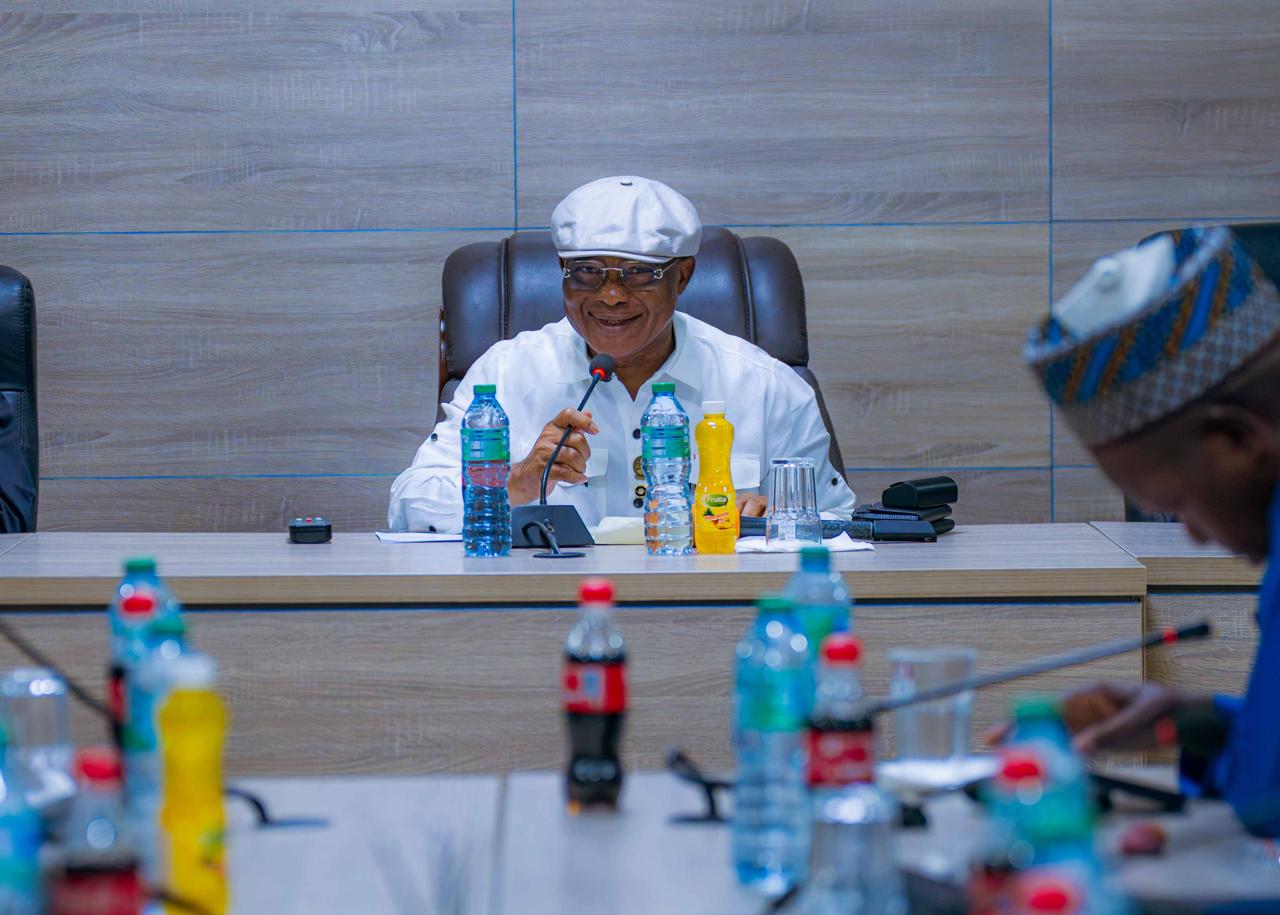
*Renewed Hope Ambassadors Step Into the Next Phase
Fresh from the successful APC 2026 National Convention, the Renewed Hope Ambassadors National, Zonal, and State leadership gathered in Abuja over the weekend, for its fourth strategic meeting, setting the tone for nationwide grassroots activation ahead of 2027.
Chaired by Governor Hope Uzodinma (Imo State) the Director General and National Coordinator of the Renewed Hope Ambassadors, alongside Deputy Director-General, Governor Uba Sani of Kaduna State, and Governor Inuwa Yahaya of Gombe State as Secretary, the session reinforced one clear direction: One Party. One Message. One Mobilization whilst also laying out a strategic roadmap for the activation of the network across all communities in Nigeria.
Backed by the strength of 31 APC-led states, the Renewed Hope Agenda is taking Bola Ahmed Tinubu’s message of progress and reform to every corner of Nigeria.
From bold economic restructuring to initiatives like NELFUND, the increase in the national minimum wage from ₦30,000 to ₦70,000, and strategic investments in critical sectors, including PNiCGI, the mission remains clear: helping Nigerians understand both the purpose and the progress of the Renewed Hope vision.
This is coordination at scale. This is grassroots engagement with purpose. This is the next phase of Renewed Hope with One Party, One Message, and One Mobilisation framework
#RenewedHopeAmbassadors #APC #WeAreAPC


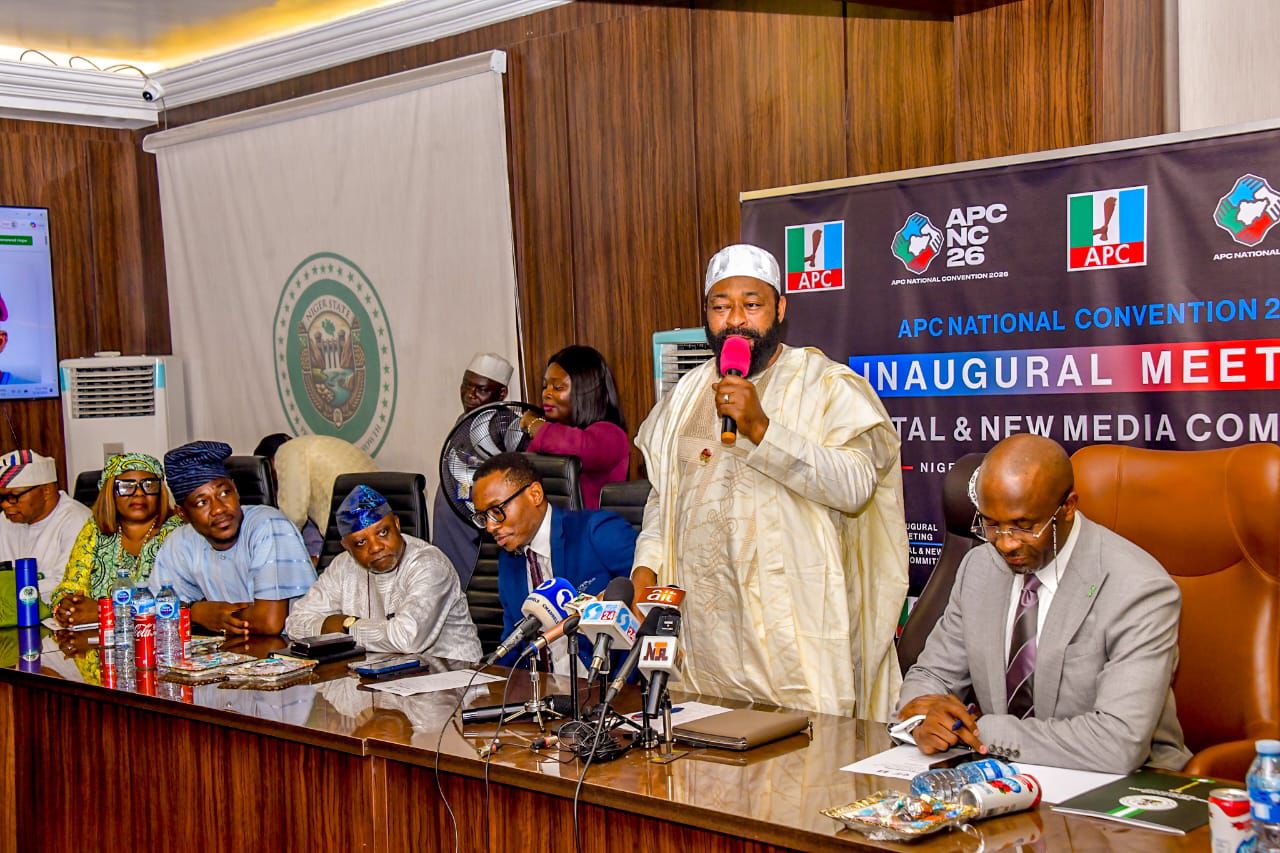
Governor Bago Inaugurates APC Digital Media Sub-Committee Ahead of National Convention.
Governor Umaru Bago has inaugurated the Digital Media Sub-Committee for the forthcoming National Convention of the All Progressives Congress (APC), scheduled to hold on March 27 and 28, 2026 in Abuja.
Chairing the sub-committee, Governor Bago tasked members with the responsibility of effectively communicating the party’s manifesto to the public.
He emphasized the need to leverage social media platforms to highlight the achievements and ongoing efforts of President Bola Ahmed Tinubu, noting that communication gaps have posed challenges that must now be decisively addressed.
The Co-Chair of the sub-committee, Hon. Benjamin Kalu, Deputy Speaker of the House of Representatives, echoed the Governor’s position, urging members to project the activities of both the party and the government to a broader audience.
He called for a deliberate and coordinated effort to showcase the party’s achievements and policy direction, stressing the importance of shaping a compelling and consistent narrative across all digital platforms.
Delivering a presentation to the committee, Otega Ogra, SSA to the President on New Media, who serves as Secretary of the sub-committee, outlined strategic focus areas to guide the team’s operations.
His presentation highlighted communication priorities and actionable steps to achieve the committee’s mandate and strengthen the party’s digital engagement.


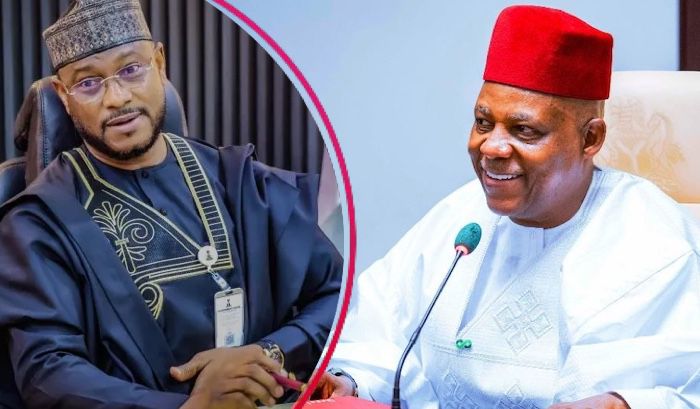
VP Shettima Set to Lead Delegation to Zamfara as Governor Dauda Lawal Formally Joins APC
The Zamfara State chapter of the All Progressives Congress (APC) has finalized plans to receive Vice President Kashim Shettima for the formal defection and reception of Governor Dauda Lawal into the ruling party, scheduled to take place on Tuesday.
State APC Chairman, Tukur Danfulani Maikatako, disclosed this during a high-level stakeholders’ meeting held in Gusau, the state capital. He noted that the Vice President would be joined by the party’s national leadership to mark what he described as a landmark political realignment in the state.
Maikatako expressed the party’s excitement over Governor Lawal’s return, recalling that Zamfara had historically been an APC stronghold and that the Governor was previously a bona fide member of the party before his earlier exit.
“We all know that Zamfara has long been one of the APC’s stronghold states, where the defected Governor was once a bona fide member. Now that he has decided to return home, having been satisfied that the APC remains his second choice after the one he left for obvious reasons,” Maikatako stated.
The Chairman called on all party faithful across the 147 wards in the state’s 14 local government areas to turn out en masse to honour the Vice President’s visit. He emphasized that the event was strategically positioned to bolster the party’s popularity and strengthen its structures ahead of the 2027 general elections.
In a strong appeal for unity, Maikatako urged members to set aside all factional tendencies, stressing that the APC remained one political family with shared goals, particularly the ambition to make Zamfara and Nigeria great again.
Echoing similar sentiments, a former state APC Chairman, Lawal M. Liman, appealed to members to cascade the message to their wards and local government areas. He reinforced the need for cohesion, noting that the party’s collective strength would be critical to achieving success in future elections.

All eyes are now on Gusau as the ruling party prepares for a high-profile political gathering expected to further consolidate its influence in Zamfara State.


-

 society6 months ago
Religion: Africa’s Oldest Weapon of Enslavement and the Forgotten Truth
-

 news4 months ago
WHO REALLY OWNS MONIEPOINT? The $290 Million Deal That Sold Nigeria’s Top Fintech to Foreign Interests
-

 society6 months ago
“You Are Never Without Help” – Pastor Gebhardt Berndt Inspires Hope Through Empower Church (Video)
-

 celebrity radar - gossips2 months ago
Dr. Chris Okafor Returns with Power and Fire of the Spirit -Mounts Grace Nation Altar with Fresh Anointing and Restoration Grace on February 1, 2026