
Politics
THAT LAGOS APC MAY SURVIVE AHEAD OF 2027

THAT LAGOS APC MAY SURVIVE AHEAD OF 2027
By Animashaun Ogundele
Sahara Weekly Reports That It did not start right now, but what has the tendency to finally destroy the All Progressives Congress (APC) in Lagos has become a foetus that could be birthed before the 2027 general election. The party in the state is still trying to strengthen-up from its loss at the presidential election of 2023. That was, indeed, a shocking output from which many fingers point at the leadership of the party in the State led by Pastor Cornelius Ojelabi.

A review of the 2023 election by some members of the party showed that the usual steps to victory for the party was jettisoned under Ojelabi, whose exco decided to hire consultants. The party had always incorporated all the ward chairmen for mobilisation during electioneering. It was not done. And the result? A strike below the spine that got all and sundry bracing up urgently ahead of the governorship election that followed.
It is known the world over that one beautiful goal of a political party is winning elections but this is supposed to be through an effective membership drive. Thus, the more the members of a political party, the more strength the party garners. But in the case of the Lagos APC, the party has embarked on what is now termed ‘a weeding spree’, an action that has caused anger and opposition by some members. Currently, the exco is now said to be thriving in confusion following an escalation of an action it thought was close-knit.
THE BEGINNING
What is now becoming a danger to the party started on Monday, June 24, 2024, when Ojelabi reportedly met with stakeholders in the APC in the Alimosho area of the state. Alimosho had been challenged by a leadership crisis which is believed to result from loyalty to two groups – Justice Forum of Nigeria and The Mandate Movement of Nigeria – within the party. Ojelabi, a member of the Justice Forum, had reportedly caused suspicion when he was said to have invited members of his group in Alimosho led by former Deputy Governor Adejoke Orelope-Adefulire. Also invited was Abdullahi Ayinde Enilolobo, an ought-to-be member of the Mandate Movement, but whose tendencies favour the Justice Forum. With the news filtering out that Enilolobo was invited, suspicion took centre-stage. The members of the Mandate Movement marched on the party secretariat and met a defiant chairman who initially declined honouring them until he realised how resolute the protesters were. The protesters wanted to be part of the meeting because they did not trust Enilolobo, whose antics, they claimed, led to the defeat of the party in the presidential election of 2023.
However, while the meeting lasted, a separate template was being hatched by the exco. In just 24 hours after the meeting, some leaders of The Mandate Movement in Alimosho were summoned by the police in Alagbon based on a petition on behalf of Ojelabi. Among other allegations, they were accused of cyber stalking, threat to life and illegal possession of firearms. The police found nothing against the leaders.
On July 1, 2024, the party, through its secretary, Dr. Adeola Jokomba, sent a letter to the ward chairmen in Alimosho to activate Article 21 of the party constitution “to investigate the said occurrence of 24th June, 2024.” This letter came with a pre-assumed list of those to be investigated, many of whom were said not to be at the party secretariat on the day of the protest. The letter had claimed that the protesters were armed and unleashed violence on the chairman. This, meanwhile, is against the explanation that the same chairman held a fruitful meeting with them after his initial stance.
One of the suspended members, who said he received the letter through Whatsapp explained that Article 21 of the party constitution emphasises fair hearing, but “without even inviting us for a defence, we suddenly started seeing our suspension letters on social media. Some letters were sent on July 3rd while some people got theirs on July 5th. In fact, what they did was to profile all members of The Mandate Movement for suspension. In Ward A of Ayobo-Ipaja LCDA alone, 54 members of the party were issued suspension letters. Using some local government council chairmen, this same suspension has been extended to some political appointees at the local government levels suspected to be loyal to The Mandate Movement of Nigeria.
A PARTY WITHOUT MEETINGS
First, a part of the grievance within the party stems from a complaint that since the 2023 elections, the party has hardly held general ward or local government meetings as it used to happen. General Ward meetings have only been held four times while LGA meetings have been held just three times. Meetings with LGA party chairmen were held only three times while no meeting has been held between him and all the 376 ward chairmen since he became the state chairman. The members are now left in limbo.
One issue pointing against Ojelabi is that under his leadership, the party still grapples with two parallel excos in the Mainland area of the state. According to insiders, the issue had been resolved by the last state chairman of the party. However, to shore up the strength of the Justice Forum, he was said to have declared that he was reviewing the resolutions following fresh petitions. “Now, there are two factions of the Mainland exco of the party. During the election and up till now, he uses his friends and cohorts as consultants thus jettisoning the party structures,” an aggrieved member said noting that APC canvassers and some agents of the party during the election have not been paid till now.
Aside from this fact, insider sources say polling unit committees set up to administer voting during the elections have mostly remained unpaid till now. Reliably gathered, some ward chairmen had at a time complained to the Governor who, in turn, told them to ask from Ojelabi how the latter expended the N2 billion out of donated campaign funds set aside for that purpose. Confronted, Ojelabi reportedly said he was not aware that his consultants had not paid most Polling Unit committee members. He promised to look into the matter. Since then, those affected say they have remained unpaid.
Checks show that the supposed consultants are not just party members who should ordinarily contribute like others to the party’s progress, they are also drawn from his Justice Forum. They include two former commissioners, one from Agege and the other from Alimosho, and the third a former head of one of the parastatals in Lagos. A general belief among party members is that the supposed consultants are channels through which party funds are piped out of the secretariat by the chairman.
Members continue to grudge over his strategy which they claim is a major reason APC lost the presidential election in Lagos. Ojelabi lost the presidential and National Assembly elections in his federal constituency. He lost all the polling units around his Iba/New Site residence too to the Labour Party. A strongly held view among party members is that the APC under his watch would hardly match the fortunes recorded under Chief Henry Ajomale and Tunde Balogun, who once held sway as chairmen. As it is, party members are left confused. They say it does not look like there are structures in place to begin to smarten up from the last election as activities at the APC secretariat are at their lowest ebb.
ONE-MAN SHOW
For some members of the State Executive Committee, the APC secretariat on Acme Road is run more like it is handled by a sole administrator and a member of the party lamented: “you either shape in or fall out. You don’t only fall out if you oppose, you also fall out of every favour. Whatever opportunity you have to make a contribution, the chairman thinks he is doing you a favour.” According to them members, no other member of the exco has a say in the running of the party. And for his decisions? They are final once he takes them. No recourse to anybody. An evidence of this, they pointed out, is how he had allegedly constantly cowed and intimidated the party secretary and treasurer frustrating them at will. It is a gossip within the secretariat that anybody who tries to oppose him should be ready to face frustration beyond limit.
“His word is law oh! That was how he orchestrated the suspension of an exco member leading to other exco members being mindful, conscious, and scared of making inputs no matter how important and beneficial such would be,” an aggrieved party member within the secretariat complained.
In fact, it is claimed that one reason attributed to the loss of the party at the 2023 election was that Ojelabi “moved the secretariat from Acme to an unknown location making it a Herculean task for party chiefs, LGA and ward party chairmen who had complaints about developments during the election from reaching or accessing him.
PARTY LARGESSE/SHARING FORMULA
One baggage that Pastor Ojelabi carries on his shoulders is the allegation that his leadership makes sure that largesse and palliatives to party members are skewed in favour of the Justice Forum within his constituency and the state. This is believed to have happened consistently. Examples are said to have been noted in the federal and state governments’ palliatives and cash transfers. One such occasion occurred when he was said to have under-declared the number of palliative slots given to the party at a meeting he held with his exco members. Some of the exco members at the meeting could not stomach this. They openly criticised him at the meeting.
AMBITION 2027
Those kicking against Ojelabi’s current style of leadership say he is tilted to achieving an acclaimed goal of becoming the running mate to Deputy Governor Obafemi Hamzat in 2027. Engineer Hamzat is believed to be eyeing the governorship seat and according to insiders, Ojelabi has mapped out his own plan ahead of the election and has begun “hatching the eggs” by cajoling council chairmen to either belong to the Justice Forum overseen by Hamzat or get their fingers burnt.
CHALLENGE BEFORE OJELABI
A major headache before the party chairman and the exco currently is how to effectively mop up the suspension letters issued out already. It was learnt that leaders within the Governance Advisory Council had blamed him for his shoddy handling of the protest. He was also said to have been reminded that as chairman, he should allow democracy thrive in every of his actions. Coincidentally, while the intervention by the GAC was ongoing, the suspension letters had been released creating for difficulties in retrieving them. The only option left to the chairman was for an outright public denial of the order suspending the members. A press release was issued by the party in this regard, but those already suspended, said the letters sent to the ward chairmen ordering investigation as well as the suspension letters to the members were proofs that the Ojelabi meant to ostracise them. There is no doubting the fact that despite these challenges reeled out, APC in Lagos remains strong in comparison with other political organisations. However, this health, though fragile, is laced with injuries. What is left to be done is for well-meaning party leaders to salvage the party, heal these injuries and make it hale and hearty again.
Ogundele, a political analyst and APC supporter, writes from Lagos.




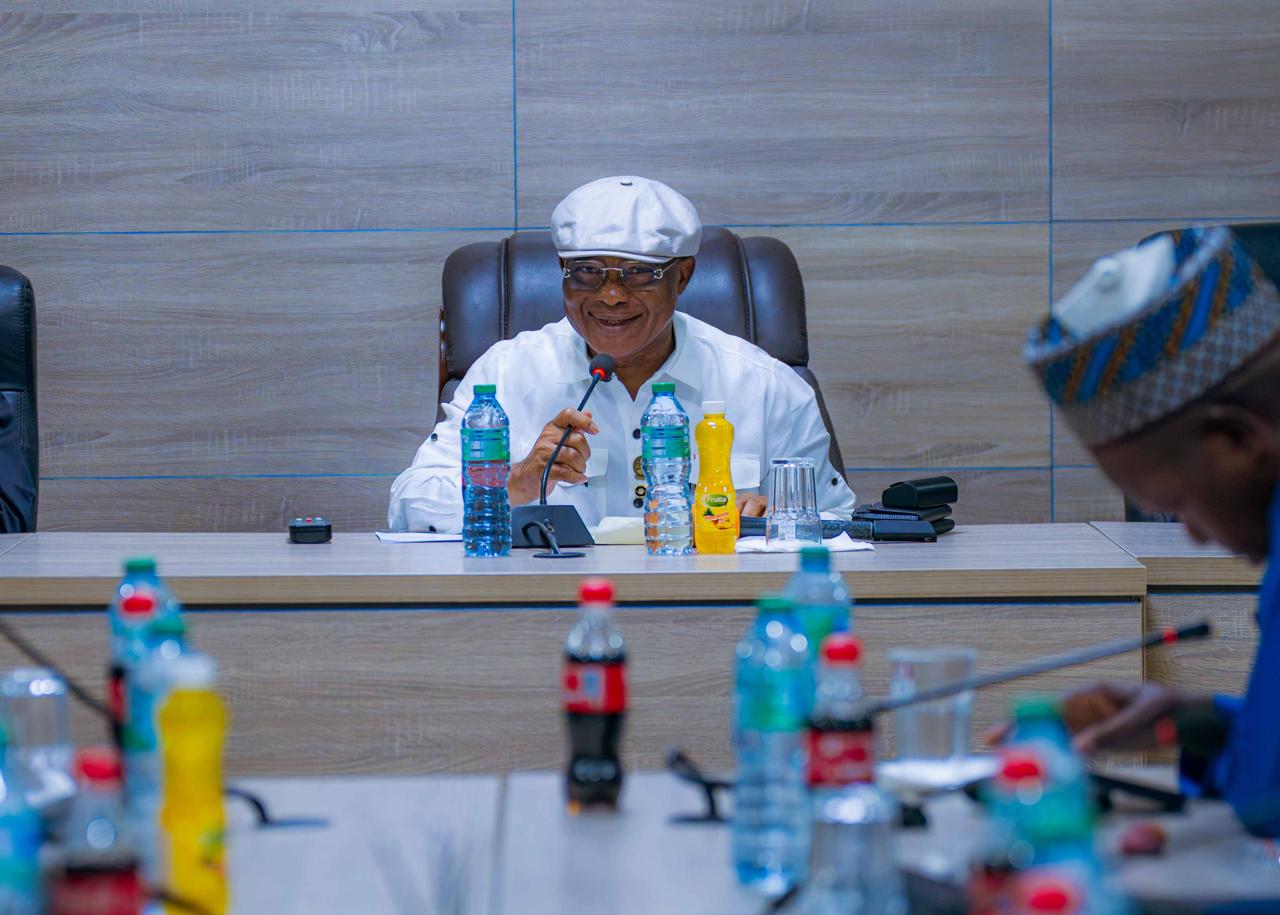
*Renewed Hope Ambassadors Step Into the Next Phase
Fresh from the successful APC 2026 National Convention, the Renewed Hope Ambassadors National, Zonal, and State leadership gathered in Abuja over the weekend, for its fourth strategic meeting, setting the tone for nationwide grassroots activation ahead of 2027.
Chaired by Governor Hope Uzodinma (Imo State) the Director General and National Coordinator of the Renewed Hope Ambassadors, alongside Deputy Director-General, Governor Uba Sani of Kaduna State, and Governor Inuwa Yahaya of Gombe State as Secretary, the session reinforced one clear direction: One Party. One Message. One Mobilization whilst also laying out a strategic roadmap for the activation of the network across all communities in Nigeria.
Backed by the strength of 31 APC-led states, the Renewed Hope Agenda is taking Bola Ahmed Tinubu’s message of progress and reform to every corner of Nigeria.
From bold economic restructuring to initiatives like NELFUND, the increase in the national minimum wage from ₦30,000 to ₦70,000, and strategic investments in critical sectors, including PNiCGI, the mission remains clear: helping Nigerians understand both the purpose and the progress of the Renewed Hope vision.
This is coordination at scale. This is grassroots engagement with purpose. This is the next phase of Renewed Hope with One Party, One Message, and One Mobilisation framework
#RenewedHopeAmbassadors #APC #WeAreAPC


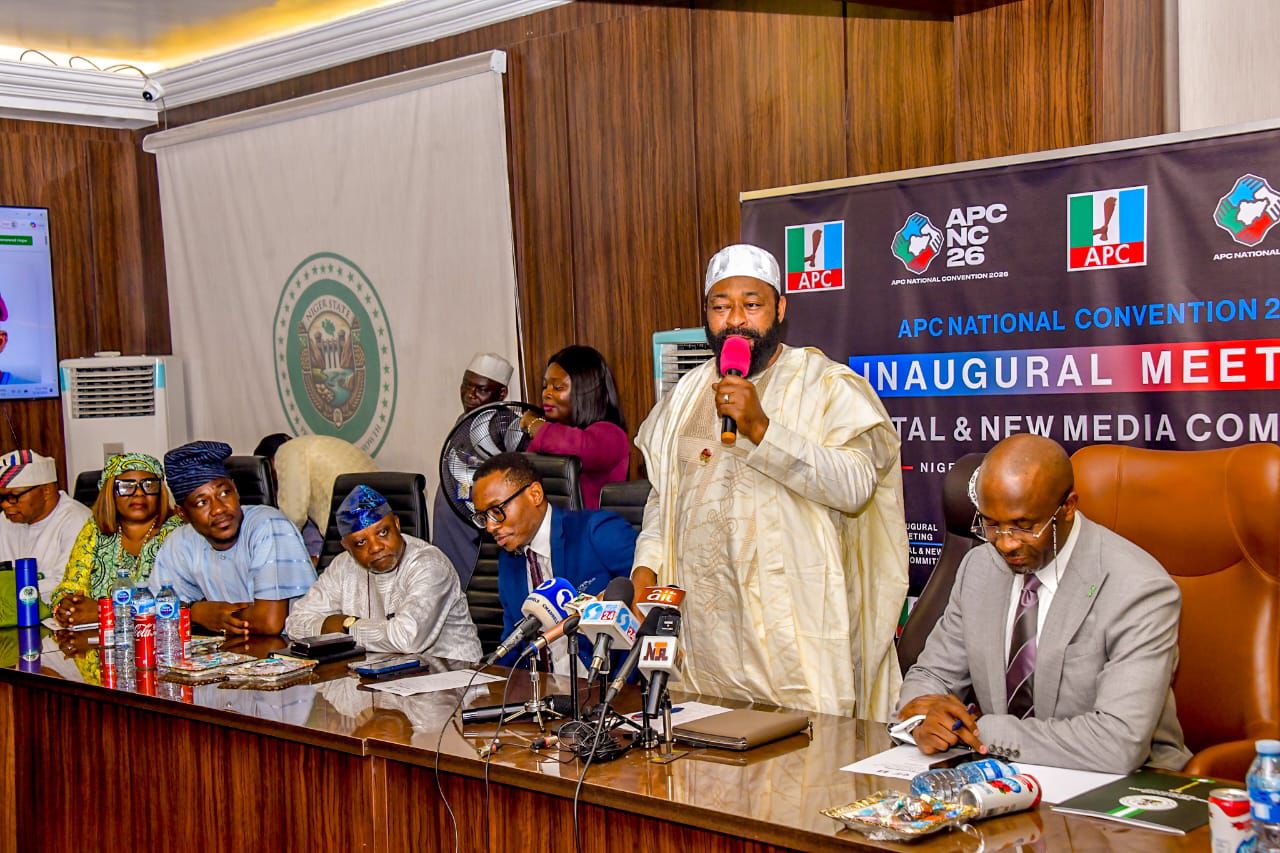
Governor Bago Inaugurates APC Digital Media Sub-Committee Ahead of National Convention.
Governor Umaru Bago has inaugurated the Digital Media Sub-Committee for the forthcoming National Convention of the All Progressives Congress (APC), scheduled to hold on March 27 and 28, 2026 in Abuja.
Chairing the sub-committee, Governor Bago tasked members with the responsibility of effectively communicating the party’s manifesto to the public.
He emphasized the need to leverage social media platforms to highlight the achievements and ongoing efforts of President Bola Ahmed Tinubu, noting that communication gaps have posed challenges that must now be decisively addressed.
The Co-Chair of the sub-committee, Hon. Benjamin Kalu, Deputy Speaker of the House of Representatives, echoed the Governor’s position, urging members to project the activities of both the party and the government to a broader audience.
He called for a deliberate and coordinated effort to showcase the party’s achievements and policy direction, stressing the importance of shaping a compelling and consistent narrative across all digital platforms.
Delivering a presentation to the committee, Otega Ogra, SSA to the President on New Media, who serves as Secretary of the sub-committee, outlined strategic focus areas to guide the team’s operations.
His presentation highlighted communication priorities and actionable steps to achieve the committee’s mandate and strengthen the party’s digital engagement.


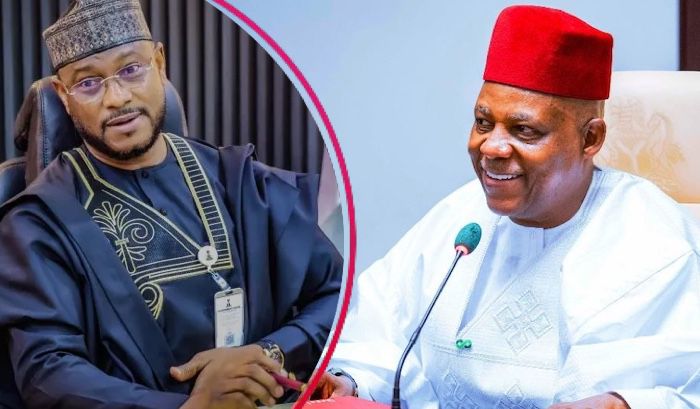
VP Shettima Set to Lead Delegation to Zamfara as Governor Dauda Lawal Formally Joins APC
The Zamfara State chapter of the All Progressives Congress (APC) has finalized plans to receive Vice President Kashim Shettima for the formal defection and reception of Governor Dauda Lawal into the ruling party, scheduled to take place on Tuesday.
State APC Chairman, Tukur Danfulani Maikatako, disclosed this during a high-level stakeholders’ meeting held in Gusau, the state capital. He noted that the Vice President would be joined by the party’s national leadership to mark what he described as a landmark political realignment in the state.
Maikatako expressed the party’s excitement over Governor Lawal’s return, recalling that Zamfara had historically been an APC stronghold and that the Governor was previously a bona fide member of the party before his earlier exit.
“We all know that Zamfara has long been one of the APC’s stronghold states, where the defected Governor was once a bona fide member. Now that he has decided to return home, having been satisfied that the APC remains his second choice after the one he left for obvious reasons,” Maikatako stated.
The Chairman called on all party faithful across the 147 wards in the state’s 14 local government areas to turn out en masse to honour the Vice President’s visit. He emphasized that the event was strategically positioned to bolster the party’s popularity and strengthen its structures ahead of the 2027 general elections.
In a strong appeal for unity, Maikatako urged members to set aside all factional tendencies, stressing that the APC remained one political family with shared goals, particularly the ambition to make Zamfara and Nigeria great again.
Echoing similar sentiments, a former state APC Chairman, Lawal M. Liman, appealed to members to cascade the message to their wards and local government areas. He reinforced the need for cohesion, noting that the party’s collective strength would be critical to achieving success in future elections.

All eyes are now on Gusau as the ruling party prepares for a high-profile political gathering expected to further consolidate its influence in Zamfara State.


-

 society6 months ago
Religion: Africa’s Oldest Weapon of Enslavement and the Forgotten Truth
-

 news4 months ago
WHO REALLY OWNS MONIEPOINT? The $290 Million Deal That Sold Nigeria’s Top Fintech to Foreign Interests
-

 society6 months ago
“You Are Never Without Help” – Pastor Gebhardt Berndt Inspires Hope Through Empower Church (Video)
-

 celebrity radar - gossips2 months ago
Dr. Chris Okafor Returns with Power and Fire of the Spirit -Mounts Grace Nation Altar with Fresh Anointing and Restoration Grace on February 1, 2026