
Business
The Aviation General: Celebrating Festus Keyamo’s Transformative One Year in Office

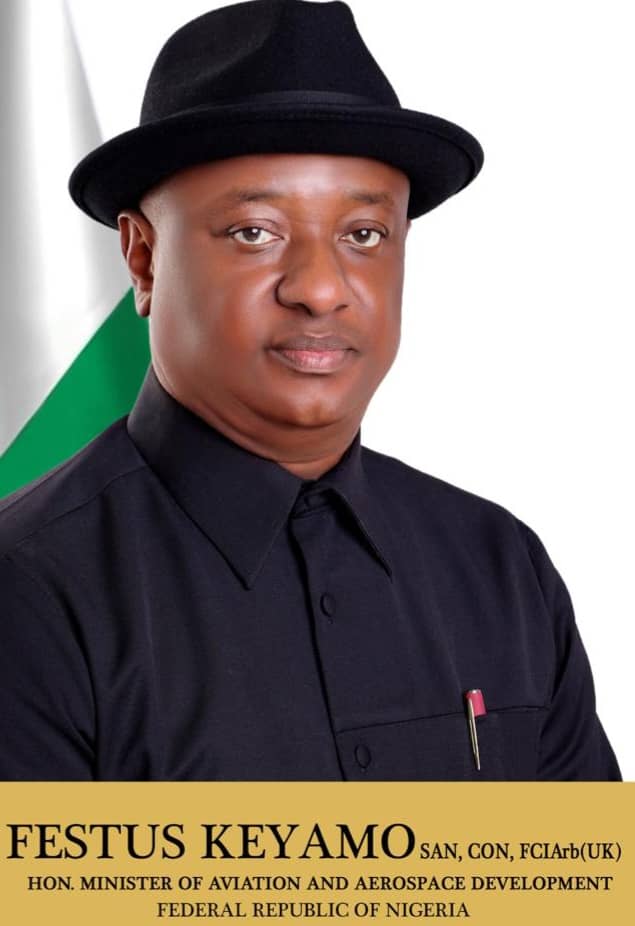
One Year In Office: Celebrating Festus Keyamo’s Developmental Strides As Aviation General
Exactly one year ago, the appointment of Festus Keyamo SAN CON FCIarb (UK) as Nigeria’s Minister of Aviation and Aerospace Development was met with widespread skepticism. A renowned lawyer and public advocate, Keyamo was seen as an outsider to the aviation sector—a square peg in a round hole. Critics questioned his ability to navigate the complex world of aviation, where technical expertise and industry experience are often considered prerequisites for success. However, as we mark the one-year anniversary of his tenure, it is clear that Keyamo has defied expectations, emerging as a transformative force and a visionary leader in the aviation sector.

From the outset, Keyamo demonstrated a proactive approach that would come to define his leadership. One of his earliest victories was the realignment of Nigeria with the Capetown Convention, a crucial move that will open doors for local aviators to access international leasing markets. This achievement was not just a matter of policy but of strategic diplomacy. Keyamo’s engagement with the Attorney General, the Chief Justice of Nigeria, and other legal stakeholders is paving the way for this milestone, setting a strong foundation for future growth in the aviation sector.
Keyamo’s foresight was further evident when he facilitated the launch of Air Peace’s London Gatwick route. Many faulted his involvement in this endeavour, viewing it as too patronizing. Today, Keyamo’s decision has proven to be a masterstroke, significantly enhancing Nigeria’s presence on the global aviation stage. This bold move is a reflection of his broader vision to elevate the country’s aviation industry to international standards.

Central to Keyamo’s agenda has been the renegotiation of the London Heathrow Bilateral Air Service Agreement (BASA). Recognizing the imbalance in the current agreement, Keyamo has been a staunch advocate for fairness and reciprocity. His efforts to secure more favorable terms for Nigeria’s flag carriers underscore his commitment to ensuring that Nigerian airlines are not merely participants but key players in global aviation.

When tensions flared in the aviation sector over the contentious 50% revenue deductions, it was Keyamo’s diplomatic finesse that averted a potential crisis. His open letter to aviation workers, coupled with strategic negotiations with the federal government, resulted in a reduction of the deductions to 20%, thereby easing tensions and restoring industrial harmony. This episode highlighted Keyamo’s ability to navigate complex challenges with tact and resolve.

Keyamo’s engagement with global aviation giants like Boeing and Airbus further illustrates his determination to position Nigeria as a significant player in the industry. His discussions with Airbus in Toulouse and ongoing talks with Boeing in the U.S. are aimed at facilitating dry leasing options for Nigerian airlines, a move that could significantly boost the sector’s capacity and competitiveness.
Under Keyamo’s watch, Nigeria’s major airports have undergone significant improvements. From tackling corruption and touting to launching a Ministerial Task Force on Illegal Private Charter Operations, the transformation is palpable. Perhaps one of his most notable achievements was the swift resolution of the protracted land dispute that had stalled the Abuja Second Runway project for years. In just two weeks, Keyamo achieved what his predecessors could not, clearing the way for the commencement of construction—a clear indicator of his no-nonsense approach to governance.
Keyamo’s impact extends beyond infrastructure. Within a month of taking office, he ordered all international airlines to relocate to the new Lagos terminal, making it fully operational. His quick fixes to design flaws and collaboration with the immigration service to remodel Wing E at the Murtala International Airport, Lagos, have transformed the terminal into a state-of-the-art facility. This public-private partnership model exemplifies the innovative spirit Keyamo brings to his role.
The reactivation of Lagos’ Second Runway, which had been out of service for two years, is another feather in Keyamo’s cap. His decisive action restored full operational capacity to Nigeria’s busiest airport, further demonstrating his ability to tackle longstanding issues with urgency and efficiency.
One of the most vexing challenges in the industry—trapped funds for foreign airlines—was also resolved under Keyamo’s leadership. By working closely with the Central Bank of Nigeria, he cleared the backlog, restoring confidence in Nigeria’s aviation sector and reaffirming the country’s commitment to honoring its international obligations.
Some of the benefits of clearing the foreign airlines’ trapped funds is the resolve of Dubai visa issuance to Nigerians and the return of Emirates’ Nigeria/UAE flights, which industry experts have applauded as commendable. In not so long a time, specifically by October 1st, this year, Nigerians will have the luxury of reverting status quo by having the opportunity of frequenting the UAE once again, both for leisure and business purposes.
Keyamo’s successful negotiation with UK authorities to grant Air Peace reciprocal operating rights was a groundbreaking achievement. This move broke the longstanding monopoly of foreign airlines on the UK-Nigeria route, leading to more competitive airfares for Nigerian travelers and enhancing the nation’s aviation footprint.
In a bold step towards financial sustainability, Keyamo obtained Federal Executive Council (FEC) approval to require all VIPs to pay access fees at airport toll gates nationwide. This decision, ending decades of tradition, is a testament to his willingness to challenge the status quo in pursuit of progress.
Another monumental achievement under Keyamo’s watch was the United States-Nigeria Open Skies Air Transport Agreement entering into force. This agreement will pave the way for Nigerian airlines, as long as they can show capacity and consistency, to operate more freely on this crucial route, marking a significant leap forward for the industry.
Keyamo’s relentless efforts to establish a standard Maintenance, Repair, and Overhaul (MRO) facility that’ll accommodate wide-body-aircraft in Nigeria are nearing fruition. This initiative is poised to be a game-changer, reducing reliance on foreign facilities and cutting costs for airlines—a testament to Keyamo’s forward-thinking approach.
Perhaps one of his biggest challenges, the National Carrier project, is being handled with the utmost care and precision. With the supervision of Mr. President, Keyamo is keen on ensuring that this initiative is not just another political gimmick but a sustainable and profitable venture that will stand the test of time.
To combat illegal private charters and boost revenue, Keyamo launched a task force dedicated to this purpose. This initiative is already yielding results, with increased revenue generation for the industry and enhanced regulatory compliance.
Keyamo’s tenure has also been marked by a firm stand against corruption and misconduct in the aviation sector. His crackdown on touts and corrupt officials at airports has restored a sense of order and discipline in these critical hubs, enhancing the overall experience for travelers.
The ongoing upgrades to airport infrastructure across the country are a direct result of Keyamo’s proactive approach. His focus on quality and efficiency is evident in the improved facilities that travelers are beginning to experience, setting a new standard for the industry.
As the Honourable Minister celebrates his first year in office, it is clear that his appointment was one of the most astute decisions of President Tinubu’s administration. In just one year, he has laid a solid foundation for what promises to be a transformative tenure. His leadership is not just about fixing immediate problems but about building a legacy of excellence that will endure long after he has left office.
This 21-gun salute is not just a tribute to his remarkable achievements but a signal of the great things yet to come. With Festus Keyamo at the helm, Nigeria’s aviation sector is set to soar to new heights, cementing its place on the global stage.
Comrade Onajite Usman is a public affairs analyst and commentator from Ubiaja, Edo State.





Precision and Heritage: How Fifi Stitches Is Rewriting African Fashion Narratives
A Nigerian-born designer is gradually carving out a cross-continental footprint in contemporary fashion, blending African textile heritage with British technical discipline.
Esther Fiyinfoluwa Adeosun, Founder and Creative Director of Fifi Stitches, is gaining recognition for structured womenswear and bridal couture that reinterprets traditional fabrics through architectural tailoring and precision construction.
Born in Ibadan, Oyo State, Adeosun’s fashion journey began at home, seated beside her mother’s sewing machine. What started as childhood curiosity, sometimes jamming the machine just to understand its mechanics—evolved into a disciplined design practice now operating between Nigeria and the United Kingdom.
During an interview with journalists the fifi Stitches once mentioned “I was fascinated by how flat fabric could transform into something structured and meaningful”.
In her Story , early designs made for her family, though imperfectly finished, were worn with pride—an encouragement that laid the foundation for her professional confidence.
Today, Fifi Stitches is recognised for sculpted bodices, controlled tailoring, corsetry construction, and the contemporary reinterpretation of Ankara, Aso Oke, and Adire textiles.
The brand challenges the long-held perception that African fabrics belong solely in ceremonial contexts, instead positioning them within global luxury and modern design spaces.
Adeosun’s training reflects this dual perspective. She studied Fashion Design and Entrepreneurship at the Institute for Entrepreneurship and Development Studies, Obafemi Awolowo University, and earned a Diploma in Fashion Design through Alison Online.
In the UK, she undertook industry-focused technical training with Fashion-Enter Ltd and gained fashion business exposure through Fashion Capital UK.
Her technical expertise spans pattern drafting, draping, garment technology, structured tailoring, corsetry, and bespoke fittings—skills she describes as central to credibility in fashion. “Precision builds trust,” she says. “A designer must understand construction as deeply as creativity.”
Fifi Stitches has showcased collections at the Suffolk Fashion Show, Liverpool Fashion Show – FB Fashion Ball, Red Carpet Fashion Event in London, and through editorial features in London Runway Magazine.
The brand has also received coverage in The Guardian Nigeria and Vanguard Allure, expanding its visibility across markets.
Beyond couture, Adeosun integrates community impact into her practice.
She has facilitated garment construction workshops, draping sessions, and introductory training programmes for women and emerging creatives, promoting fashion as both artistic expression and vocational empowerment.
Fifi Stcithes Boss operates between Nigeria and the UK, in order to continue to shape her brand identity.
According to her “Nigeria provides cultural richness and expressive textile traditions, while the UK offers structured production systems, sustainability conversations, and institutional frameworks”.
Looking ahead, Adeosun said she plan to establish a fully structured fashion house spanning Africa and the UK, develop scalable production partnerships, launch capsule collections, and expand independent editorial visibility.
Her broader ambition is clear: to position African textile craftsmanship within global contemporary design conversations—through structure, discipline, and technical excellence.

GTCO Launches “Take on Squad” Hackathon 3.0, Opens Call for Applications
Guaranty Trust Holding Company Plc (“GTCO” or the “Group”) has announced the launch of “Take on Squad” Hackathon 3.0, reaffirming its commitment to fostering innovation, empowering talent, and supporting the development of technology-driven solutions that address real-world challenges across Africa.
Now in its third edition, the Hackathon brings together developers, designers and entrepreneurs across Nigeria in a collaborative environment to build practical solutions across key sectors including financial services, healthcare, commerce and digital inclusion. Under the theme “Smart Systems: The Intelligent Economy,” participants are challenged to design and build intelligent, data-driven solutions that transform how communities engage with money.
Applications are now open, and interested teams can find full guidelines and registration details on the official portal at https://squadco.com/hackathon.
Speaking on the initiative, Eduophon Japhet, Managing Director of HabariPay, stated: “Today’s dynamic, digitally driven world demands continuous innovation, which is shaping how economies grow, how businesses scale, and how societies evolve. Through “Take on Squad” Hackathon, we are deliberately investing in the ideas and talent that will define the future. Our objective is not simply to encourage innovation, but to enable its translation into scalable solutions that deliver real and measurable impact. This reflects GTCO’s role as a financial services platform that connects capital, capability, and creativity to drive sustainable progress.”
The social coding event remains a cornerstone of HabariPay’s mission to foster creativity and problem-solving among emerging tech talents. Competing teams will leverage Squad’s advanced APIs to create scalable digital tools that address everyday challenges faced by businesses and individuals.
Through initiatives such as this, GTCO continues to position itself at the intersection of finance, technology and enterprise, actively shaping the future of digital transformation in Africa.
About HabariPay
HabariPay Ltd is the fintech subsidiary of Guaranty Trust Holding Company Plc (GTCO), one of the largest financial services institutions in Africa with direct and indirect investments in a network of operating entities located in 10 countries across Africa and the United Kingdom.
Licensed by the Central Bank of Nigeria (CBN), our goal is to support SMEs, micro merchants, large corporations and other fintechs (Tech Stars) with the tools they need to thrive in an evolving digital economy and expand beyond their current market reach. HabariPay’s solutions include Squad, a full-scale digital payments toolkit to make in-person and online payments simpler, HabariPay Storefront, an e-commerce website to facilitate online purchases, Value-Added Services to help merchants access cost-effective and flexible airtime and data bundles to run their businesses, as well as a switching infrastructure that enables tech-focused businesses to optimise cost and make transactions more efficient.
HabariPay’s contributions to Accelerating Digital Acceptance in Africa have not gone unnoticed–it received Mastercard’s Innovative Mobile Payment Solution Award at TIA 2022 for its innovative payment solution, SquadPOS.
About Squad
Squad is a complete digital payments solution that is reliable, secure, and affordable, making receiving in-person and online payments simpler and convenient.
Thousands of merchants currently leverage Squad’s payment solutions for their daily business operations. Squad’s current products and service offerings include SquadPOS, Squad Payment Links, Squad Virtual Accounts, USSD, and E-Commerce Storefront.
Find out more at www.squadco.com.

Electric 8-Seater Tula Moto Keke Enters Nigerian Market, Targets Higher Operator Earnings
LAGOS — A new electric-powered tricycle with an expanded passenger capacity has been introduced into Nigeria’s urban transport sector, offering operators a potentially more profitable and eco-friendly alternative to conventional petrol-driven “keke.”
The newly launched 8-seater electric tricycle, now available in Lagos with plans for nationwide distribution, features a dual-row seating arrangement capable of accommodating up to eight passengers per trip—significantly higher than the standard three-passenger configuration common across the country.
Promoters of the innovation say the increased capacity is designed to boost daily earnings for operators, particularly amid persistent fluctuations in fuel prices. By running entirely on electric power, the vehicle eliminates dependence on petrol, reducing operating costs and shielding drivers from fuel price volatility.
According to the distributors, the tricycle is equipped with a durable battery system capable of covering extended distances on a single charge, making it suitable for commercial operations across high-traffic routes, residential estates, campuses, and marketplaces.
“The concept is straightforward—enable drivers to earn more while spending less,” a company representative stated. “With higher passenger capacity and zero fuel requirements, operators can maximise each trip without the burden of daily fuel expenses.”
Beyond its cost-saving potential, the electric keke is also said to require less maintenance than traditional models, offering additional long-term savings. Its quieter and smoother operation is expected to enhance passenger comfort and overall commuting experience.
Industry analysts note that the introduction of electric mobility solutions reflects a growing shift toward cleaner and more sustainable transportation alternatives in Nigeria, particularly in densely populated urban centres such as Lagos.
The distributors added that the product is currently available under a limited promotional offer, with delivery options across the country.
For inquiries and purchase: 📞 08153432071
📞 08035889103
Office Address:
📍 Plot 9, Block 113, Beulah Plaza,
Lekki–Epe Expressway,
Lekki Phase 1, Lagos
As transportation costs continue to rise and environmental concerns gain prominence, innovations like the electric 8-seater keke may signal an emerging transition toward more efficient and sustainable mobility solutions nationwide.


-

 society7 months ago
Religion: Africa’s Oldest Weapon of Enslavement and the Forgotten Truth
-

 news4 months ago
WHO REALLY OWNS MONIEPOINT? The $290 Million Deal That Sold Nigeria’s Top Fintech to Foreign Interests
-

 society6 months ago
“You Are Never Without Help” – Pastor Gebhardt Berndt Inspires Hope Through Empower Church (Video)
-

 celebrity radar - gossips2 months ago
Dr. Chris Okafor Returns with Power and Fire of the Spirit -Mounts Grace Nation Altar with Fresh Anointing and Restoration Grace on February 1, 2026