
society
THE BANDITS STRANGLEHOLD: HOW NIGERIA’S FAILURE TO SECURE ITS PEOPLE EMPOWERS TERRORISTS AND IMPLICATES THE STATE ITSELF

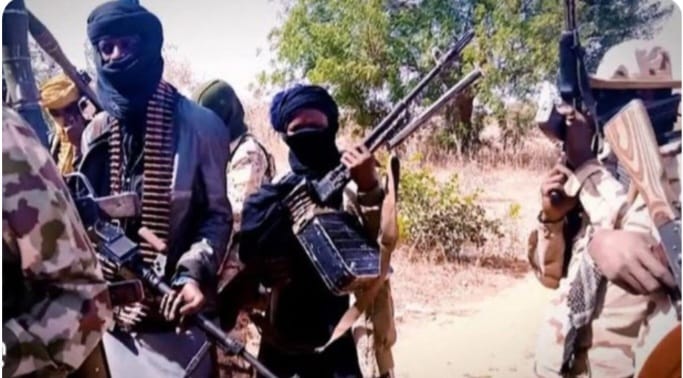
THE BANDITS STRANGLEHOLD: HOW NIGERIA’S FAILURE TO SECURE ITS PEOPLE EMPOWERS TERRORISTS AND IMPLICATES THE STATE ITSELF.
By George Omagbemi Sylvester | Published by saharaweeklyng.com
A Nation Held Hostage, When Criminals Dictate Terms of Survival, What Happens to Sovereignty?
On the bitter cusp of 2026, a grim reality has descended upon the heart of Nigeria’s middle belt (specifically Kwara State’s South Senatorial District) where armed bandits have not only asserted their dominance but brazenly dictated terms that should chill any sane observer to the bone. Over twenty-two innocent citizens are currently being held hostage across several rural communities and their captors have issued a chilling ultimatum: “PAY AN ASTRONOMICAL ₦400 MILLION, DELIVER FOOD, DRINKS AND OTHER SUPPLIES OR THE CAPTIVES WILL NOT WALK FREE.”

Think about that for a moment: criminals (self-styled bandits) establishing economic demands on behalf of human freedom, goods and the sustenance of desperate families. This is not rural barter or a local dispute. This is extortion on an industrial scale which is been carried out not by a sovereign power of state but by men with guns hiding in forests and hills.
A Crime Syndicate Operating in Broad Daylight.
The incident has left families, elders and local leaders in agonizing limbo. A traditional ruler, Oba Simeon Olanipekun of Ile-Ere district, his son and a Youth Corps member were among those seized in December 2025 and are still in captivity. Observers report that these criminals migrated from areas where security presences were stronger to communities with little or no military or police infrastructure, highlighting the glaring holes in Nigeria’s security architecture.
Local communities such as Adanla, Isapa, Isanlu-Isin, and Owa-Onire (places once known for farming, trade and family life) are now theaters of terror. These kidnappers are no longer isolated marauders; they are organized, emboldened and adaptive, shifting operations to areas of least resistance and most vulnerability.
The Systemic Failure of the Security State.
Where, one must ask with righteous fury, is the Nigerian government while this unraveling disaster continues? How can a nation that claims sovereignty and constitutional duty to protect lives and property sit idle while armed bandits determine ransom for human freedom?
This is not an anomaly. This is not a rare incident. Nigeria is experiencing a nationwide epidemic of insecurity, from schoolchildren abducted in the Northwest to communities ravaged by bandits and terrorists demanding multimillion-naira ransoms.
According to research, between July 2022 and June 2023 alone, 3,620 kidnapping incidents across the country resulted in ransom demands totaling at least ₦5 billion, with verified payouts in the hundreds of millions. This demonstrates not only the scale of the problem but the systemic normalization of ransom as a revenue stream for criminals.

Let that sink in: criminal enterprises are effectively shaping economic transactions that should be under the sovereign domain of the state. It is a reality that no responsible government should tolerate and YET HERE WE ARE.
The Brutal Logic of Kidnap for Ransom.
These kidnappings are not isolated blips; they erode the very fabric of society. Land becomes unsafe. Farms lie fallow. Education grinds to a halt. Markets shrink. Life itself becomes a negotiable commodity.
The terrains where these bands operate (dense forests, hills, and porous borders) indeed give these criminals a tactical advantage. This is not just geography; it is a reflection of governance abandonment. When the state abandons its highways, villages and forests to lawlessness, it is no wonder that bandits fill the vacuum.
Professor Alex Egwu, a renowned Nigerian security expert, once stated:
“Security is the cornerstone of every functioning society. Without it, livelihoods wither, economies fail and the social contract between the people and the state collapses.”
Today, that collapse is evident in the cries of Kwara families who have watched their loved ones taken with impunity, while the state appears still.
The Myth of Government Commitment.
Officials from both the federal government and the Kwara State Government have spoken of efforts to deploy forest guards, engage in joint patrols and coordinate security agencies. While these statements sound reassuring on paper, they have done little to dislodge the terror networks or bring victims home.
Critics argue that these measures are toothless gestures, designed more for public relations than decisive action. Lieutenant-General Chukwuma Okeke (Rtd.), a former military strategist, warned:
“When security strategies are reactive instead of proactive and lack sustained intelligence and local engagement, they become ceremonial instead of effective.”
And that is precisely what we are witnessing: a ceremonial response to a crisis that requires strategic, coordinated military and civil action.
The Question of Complicity.
As the ransom demands grow larger and the captors bolder, a troubling question emerges: Has the Nigerian government implicitly tolerated banditry? At what point does tolerance become complicity? When criminals can call the shots, demand ransom, and flaunt their activities without fear of immediate arrest or neutralization, is the state still governing?
Some analysts argue that military and political neglect, corruption and internal fractures within Nigerian security agencies have created an environment where kidnappers operate with confidence. This is not mere speculation, it is the observable consequence of decades of underinvestment in security, poor leadership and political distractions.
The Human Toll and National Impact.
The impact of this insecurity moves beyond Kwara. Farmers abandon crops. Children fear school. Entire towns warn travellers away. Insurance markets collapse. Investments dry up. Confidence in public institutions plummets.
As economist Dr. Funmi Olajide once observed:
“Insecurity is not just a security issue, it is an economic and social catastrophe that stifles growth and destroys potential.”
Nigeria (a nation with vast human and natural resources) should be feeding not only itself but exporting to the world. Instead, it imports food it could grow, as farmers are too afraid to till their lands due to bandit threats. The ransom economy feeds criminal networks and starves legitimate economic growth.
The Time for Half-Measures Has Passed.
Where on Earth does a government sit still and allow common bandits to make demands on its people as though they were sovereign powers? The Nigerian state must be reminded (forcefully) that security is not optional but foundational.
The Nigerian Constitution’s first obligation is the safety and security of its citizens. To allow bandits to hold communities for ransom is to abdicate that responsibility.
President Theodore Roosevelt once said:
“The first duty of government is to protect the lives, liberty and property of the people.”
TODAY, THAT DUTY STANDS UNFULFILLED IN KWARA AND ACROSS NIGERIA.
Summative Insight: A Nation at a Crossroads.
Nigeria is at a crossroads. It can continue with reactive, minimal interventions that yield negligible results and or it can confront this crisis head-on with strategic military action, robust community intelligence networks, genuine political will and zero tolerance for ransom economies.
The people of Kwara deserve more than platitudes. They deserve action. They deserve a state that secures its borders, protects its citizens and confronts criminality wherever it lurks and without hesitation, without equivocation, without delay.
The world is watching. Nigeria itself cannot afford to look away any longer.





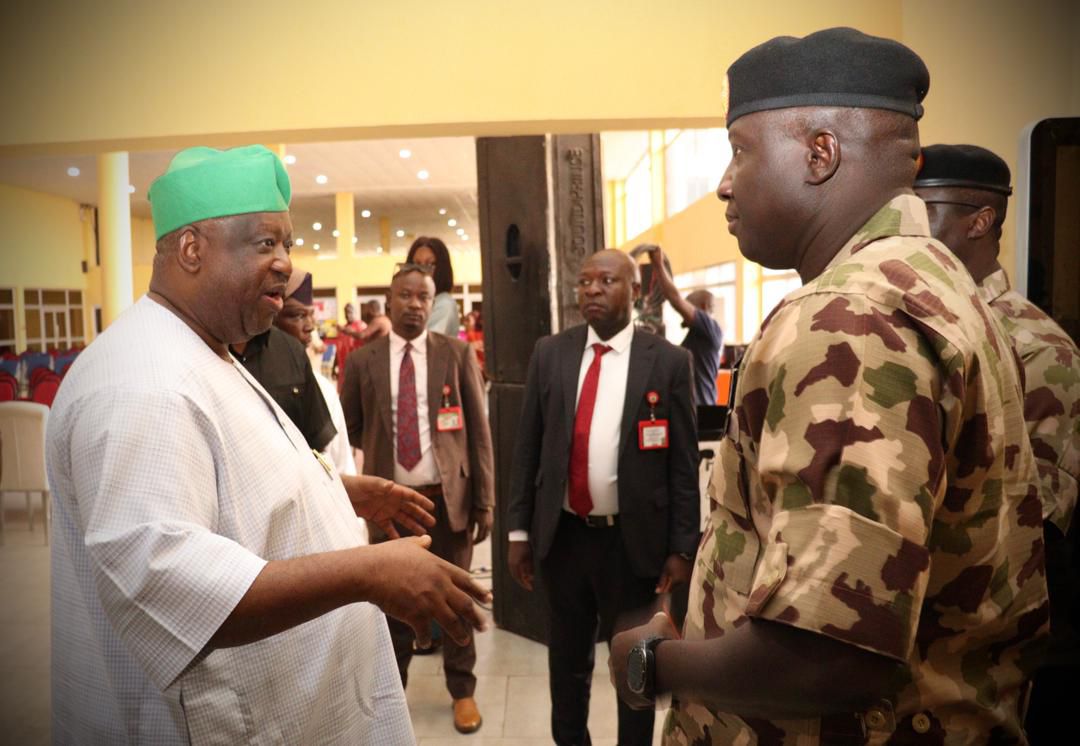
COAS Launches Nationwide Security Renewal Mission in Plateau
The Chief of Army Staff, Lieutenant General Waidi Shaibu, on Thursday led a high-level delegation of security chiefs to Plateau State, flagging off a nationwide security renewal mission aimed at strengthening civil-military cooperation and restoring lasting peace across the country.
The visit to Jos, the Plateau State capital, marks the first phase of a coordinated national effort to address persistent security challenges through joint operations, community engagement, and proactive intelligence gathering.

Governor Caleb Muftwang received the delegation, describing the initiative as a critical step toward stabilizing affected communities and reinforcing public confidence in security institutions.
Civil-Military Synergy Takes Centre Stage
At the heart of the mission is a renewed emphasis on collaboration between the military, civil authorities, and local communities. Speaking during the visit, Lt. Gen. Shaibu stressed that national security must be treated as a collective responsibility.
He urged citizens to support security agencies by remaining vigilant, sharing credible information, and complying with lawful directives, noting that effective security cannot be achieved in isolation.
Community Engagement as Confidence-Building Tool
In a departure from purely operational engagements, the Army Chief held direct consultations with community leaders and residents in Jos, reinforcing the importance of trust and dialogue in conflict resolution.
Lawmakers, including Dachung Bagos and Ladi Dangyok, commended the initiative, stating that visible engagement by top military leadership helps rebuild confidence among citizens and fosters cooperation.

Proactive Security Operations Underway
Operational updates were provided by Major General Folusho Oyinlola, who disclosed that troops under Operation Enduring Peace have intensified surveillance, intelligence-led patrols, and coordinated actions with other security agencies.
According to the Army, the approach is designed to prevent escalation of threats, safeguard lives and property, and stabilize vulnerable communities before crises emerge.
A Shift Toward Sustainable Peace
Military authorities emphasized that the Plateau visit is part of a broader, long-term strategy to transition from reactive responses to sustainable peacebuilding nationwide. The framework includes strengthening local resilience, ensuring justice, and maintaining continuous engagement with stakeholders.
Analysts view the initiative as a significant policy shift, reflecting a more inclusive security architecture that integrates community participation with military operations.
Call for National Unity
The Army leadership concluded with an appeal to Nigerians to reject divisive narratives and support ongoing efforts to promote unity and peace.
“The success of this mission depends not only on the armed forces but on the cooperation of every citizen,” the COAS stated.
The nationwide security renewal campaign is expected to extend to other regions in the coming weeks as authorities seek to consolidate gains and build a safer, more unified Nigeria.


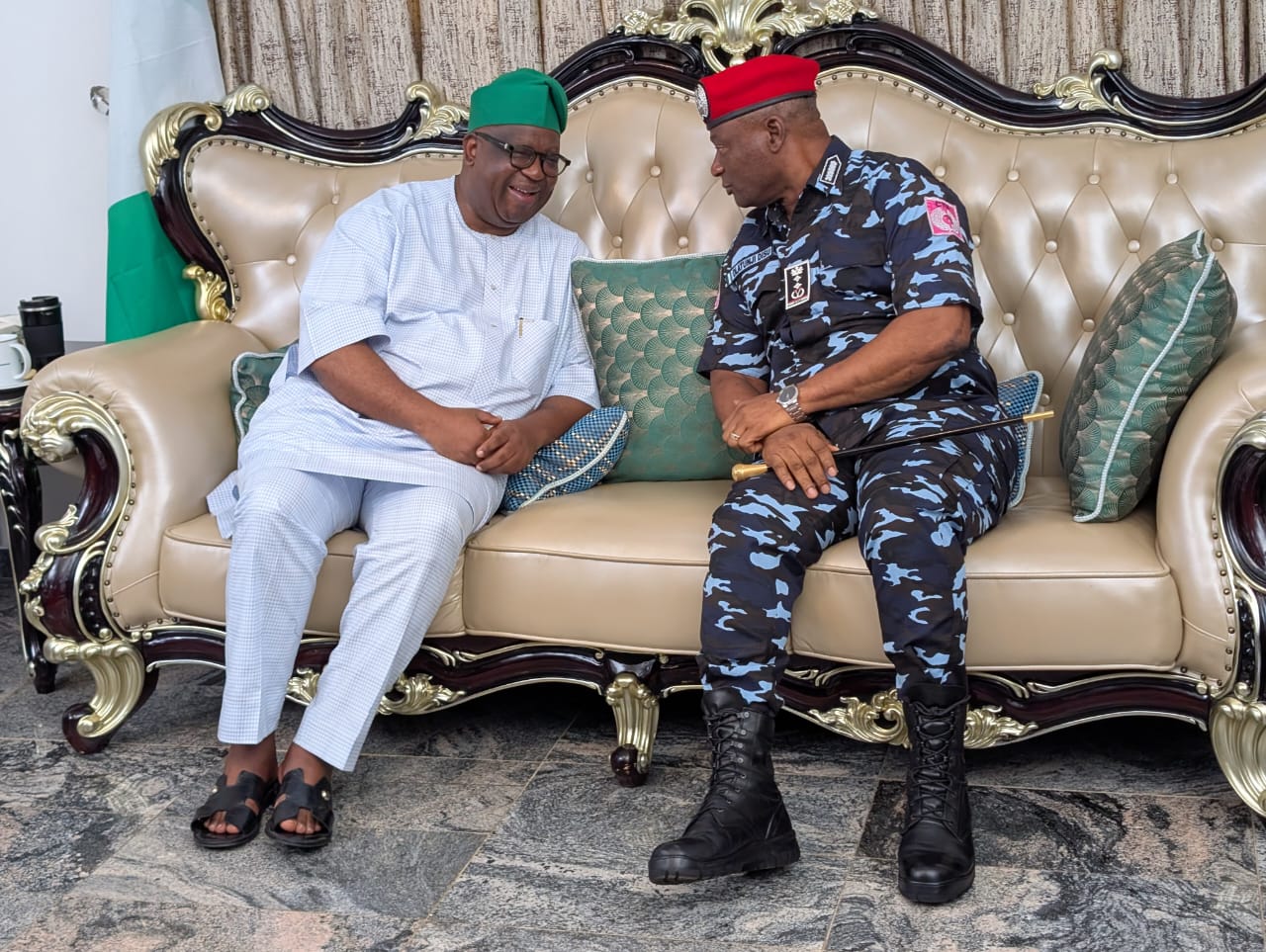
IGP Disu Visits Plateau, Orders Tactical Deployment To Reinforce Security
The Inspector General of Police, Olatunji Disu, on Thursday paid a working visit to Plateau State following recent unrest, holding strategic talks with Governor Caleb Muftwang on measures to strengthen security and prevent further disturbances.
As part of immediate steps to stabilise the situation, the police chief authorised the deployment of specialised tactical units to support officers already on ground across affected areas.
Governor Muftwang commended the swift intervention of the police leadership, praising the dedication and professionalism of security personnel working to restore calm. He also acknowledged the efforts of mobile police officers and lauded the leadership of the state’s Commissioner of Police, Bassey Ewah.
Both the Nigeria Police Force and the Plateau State Government reaffirmed their commitment to safeguarding lives and property, stressing that enhanced collaboration remains key to restoring lasting peace in Plateau State, popularly known as the Home of Peace and Tourism.


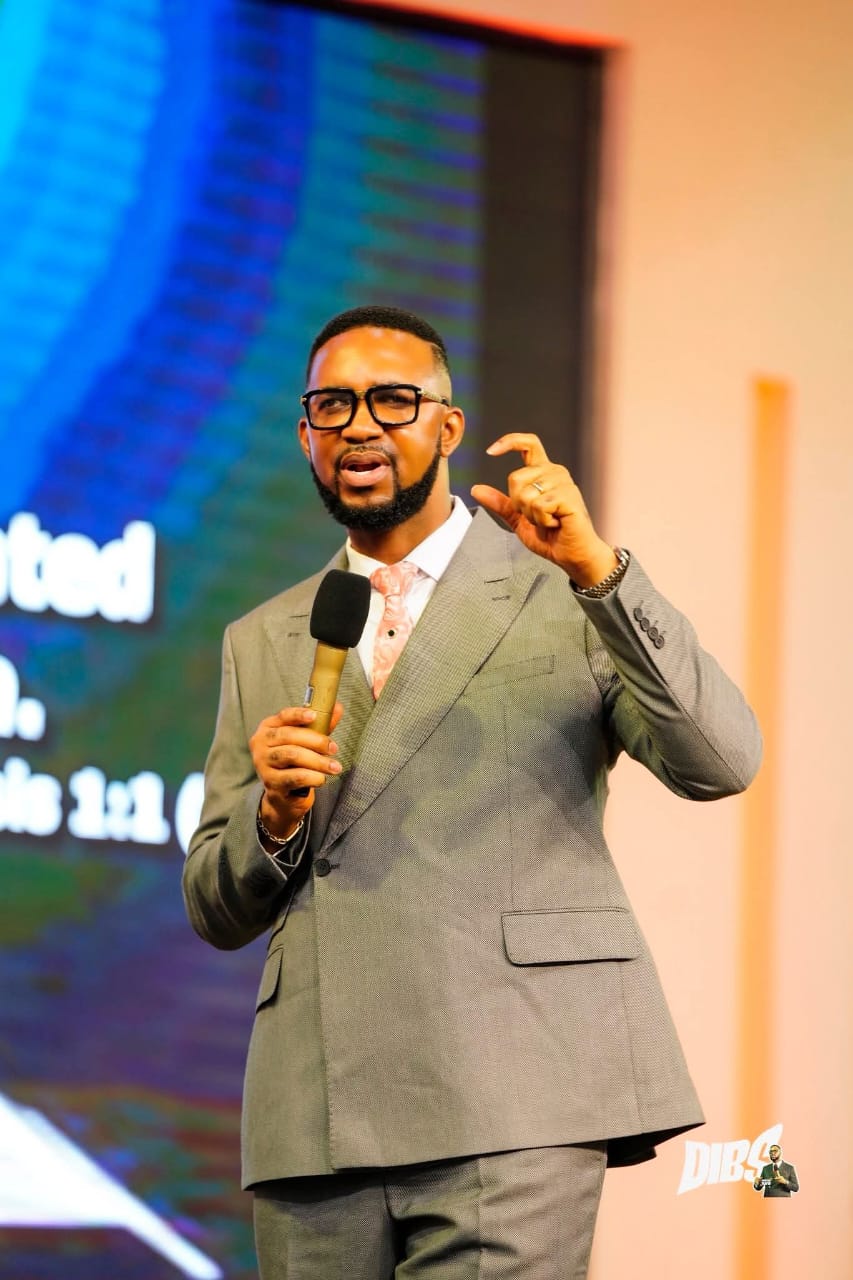
Grace Nation Worldwide: A Living Reality – Dr. Chris Okafor
……“Miracles, Healing, and Deliverance Overflow at Grace Nation Services”
The Grace Nation midweek Prophetic Healing, Deliverance, and Solutions (PHDS) Service on 2nd April 2026 at the international headquarters in Ojodu Berger, Lagos, was a spectacular display of God’s power, marked by miracles, healing, and deliverance.
The God of Grace Nation continues to demonstrate His authority, breaking strongholds, healing the sick, restoring lost glory, and providing solutions to every problem presented at His altar.
Testimonies of God’s Power
One woman, previously diagnosed with a terminal condition and slated for a ₦4.5 million surgery due to inability to excrete, was prayed for by the Generational Prophet, Christopher Okafor, just a week after visiting the church. Declaring healing within 24 hours, she returned to testify to God’s miraculous intervention.
Another pregnant woman, whose baby was bridged and at risk, was located and prayed for. She returned to service with confirmation that her child is now well-positioned for delivery. Similarly, a woman booked for a C-section due to an overdue and poorly positioned pregnancy testified during the service that her baby is now properly positioned, ready for birth.
These testimonies underscore the truth: what God cannot do does not exist. Grace Nation has entered a new level of spiritual authority, and with faith, believers are witnessing the impossible become reality.
God Works by Principle, Not Gossip
In his sermon, Dr. Okafor emphasized that God does not operate on superstition, gossip, or social media pressures. His work is grounded in His Word, and it is through adherence to His principles that Grace Nation continues to flourish.
The Generational Prophet stressed that to enjoy divine blessings and fruitfulness, believers must remain connected to God’s Word, faithfully serve Him, and ignore distractions or side-talks. Focused commitment to God’s service guarantees alignment with His miraculous power.
Join the Movement
Grace Nation Worldwide is open for all who desire a life transformed by divine intervention. Weekly services include:
Sunday Service: 7:00 AM
Grace Nation Island Service (Ogombo): Wednesday, 5:00 PM
Midweek PHDS Service: Thursday, 7:00 AM
Attending these services under the ministry of the Generational Prophet ensures encounters with God’s supernatural power, life-changing miracles, and lasting breakthroughs.
Grace Nation Worldwide is not just a church—it is a reality where faith meets the supernatural.
By Sunday Adeyemi


-

 society6 months ago
Religion: Africa’s Oldest Weapon of Enslavement and the Forgotten Truth
-

 news4 months ago
WHO REALLY OWNS MONIEPOINT? The $290 Million Deal That Sold Nigeria’s Top Fintech to Foreign Interests
-

 society6 months ago
“You Are Never Without Help” – Pastor Gebhardt Berndt Inspires Hope Through Empower Church (Video)
-

 celebrity radar - gossips2 months ago
Dr. Chris Okafor Returns with Power and Fire of the Spirit -Mounts Grace Nation Altar with Fresh Anointing and Restoration Grace on February 1, 2026