
society
THE BANQUET OF BETRAYAL: HOW TINUBU TURNED DEMOCRACY INTO A DYNASTY OF DECEIT AND A NATION INTO A PRISON OF PAIN

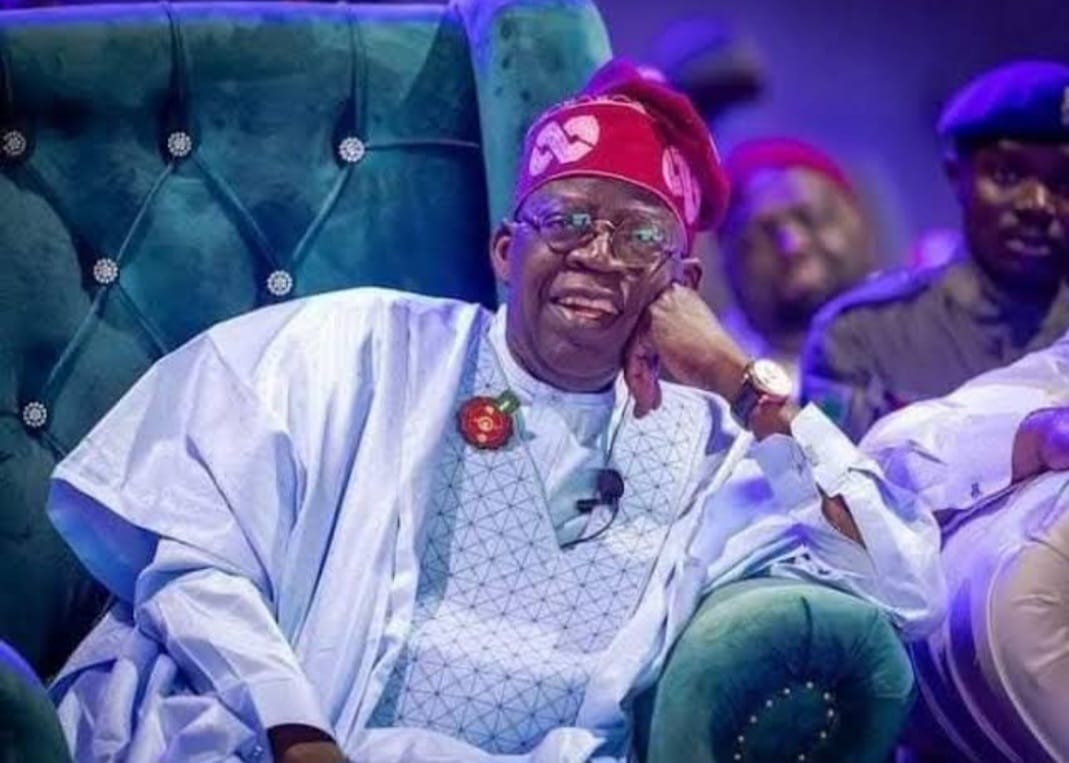
THE BANQUET OF BETRAYAL: HOW TINUBU TURNED DEMOCRACY INTO A DYNASTY OF DECEIT AND A NATION INTO A PRISON OF PAIN.
By George Omagbemi Sylvester | Published by saharaweeklyng.com
“From the abolition of subsidy to the devaluation of the naira; a chronicle of promises broken, lives hollowed and institutions hollowed out.”
Nigeria entered the Tinubu era in 2023 with weary hope and brittle expectations. A man who campaigned on renewal and competence promised national rebirth; instead, two years in, many Nigerians find themselves marooned on an island of austerity while corridors of power host a banquet of betrayal. This is not mere rhetoric; it is an accounting of policy choices, institutional opacity and political signals that have combined to make democracy look like a dynasty and the state feel like a cage.
The signal moment (and the beginning of the banquet) came on 29 May 2023, when President Bola Ahmed Tinubu declared, in his inaugural address, that “the fuel subsidy is gone.” The line was short, performative and definitive; its policy tail was long and brutal. Within days, pump prices tripled in many places and transport and food costs ballooned, hitting the poorest households first and hardest. The subsidy’s removal was not a private misstep or a technical tweak: it was a public re-ordering of the social contract, executed with scant preparation for the human cost.

Economic governance under Tinubu has been characterised by shock therapy over gradualism. The naira was allowed to tumble (a policy some outside experts applaud as necessary for competitiveness) but the domestic reality has been wrenching. Between late-2023 and 2025 Nigeria’s currency slumped dramatically, inflation soared into double digits that bite into family budgets and food insecurity rose. Think tanks and international institutions concede that reforms have improved macro indicators (reserves and a more rational foreign-exchange regime) but they have been blunt: these “gains have yet to benefit all Nigerians.” In short: the economy’s scoreboard improved for investors while the scoreboard for ordinary citizens registered collapse.
Make no mistake: policy changes that correct long-standing distortions are defensible in theory. The political choice is what separates responsible reformers from rulers who rule by decree. Reforms must be sequenced, cushioned and accompanied by transparent social protections. Instead, the Tinubu administration has pursued hard-edged measures (subsidy removal, a unified exchange rate, monetary tightening) with insufficient buffers for the poor, weak social safety nets and an administrative state that oftentimes appears reactive rather than humane. The result is a country where macro stability is invoked as an argument for the very hardship that is tearing apart households and livelihoods.

Political legitimacy is the currency of democracy. Where did it go? First, by concentrating economic decisions in a narrow circle and by elevating elites to roles that feel like patronage rather than public service, the administration has fed a sense of exclusion. Second, the opacity around critical issues (from public contracts to foreign engagements) has made accountability a performative drama rather than a civic instrument. Third, when serious allegations linger (including the prolonged saga in which U.S. agencies were ordered by a court to release records related to past investigations) the Presidency’s responses have been defensive and to many citizens, evasive. The American court rulings and filings are not gossip; they are court documents and reputable reporting. Those controversies erode trust and feed the narrative that power has developed immunity to scrutiny.
The human price is measurable. The IMF and other multilateral institutions have repeatedly warned that while reform has stabilised some macro variables, poverty and food insecurity remain painfully high. Recent IMF reporting estimated that poverty continues to afflict a huge share of Nigerians and cautioned that “gains have yet to benefit all Nigerians.” In practice, this means more families skipping meals, more children out of school and more skilled workers looking outward for escape. Democracy, when it no longer delivers basic livelihoods, becomes a hollow ritual.
Yet the language of “reform” has served convenient political ends. It has been wielded as a shield for tellingly concentrated appointments, for reshuffles that redistribute influence rather than lift capacity, and for a style of governing that prizes headline sovereign-debt wins and investor feel-good stories while everyday Nigerians drown in the rising cost of living. Sahara, Reuters, AP and other outlets documented the government’s managerial re-organs (a new economic council and emergency taskforces) but also recorded the public anger: strikes, protests and palpable frustration that has occasionally spilled into violence and arrests. Governance cannot be judged only by bond markets; it must be judged by how it protects the vulnerable.
If we are to name the disease, let us call it what it is: a politics of elite consolidation that borrows the language of reform but advances the interests of the few. The dynasty is not a royal family by blood, but a recurring pattern; a revolving door in which political survival is secured by alliances with moneyed interests and by the manufacture of consent via technocratic rhetoric. Meanwhile, ordinary citizens condition their lives on unpredictable policy swings: the sudden removal of subsidies, abrupt currency realignments and fiscal choices that transfer risk from the state to households. The “banquet” is thus two tables: one for the elites who dine on patronage and gates to capital and another for the mass of the people who pay the bill.
What must Nigerians and their friends around the world demand? First, transparency: publish procurement details, fiscal retentions and revenue accounts in machine-readable form. Second, social cushioning: targeted cash transfers, food programmes and a durable plan to tackle the immediate pain of inflation. Third, genuine institutional reform: strengthen anti-corruption institutions, fortify the judiciary’s independence and ensure electoral bodies are beyond partisan capture. Fourth, open dialogue: a government that truly consults broad civic actors will reduce the temptation to govern by executive fiat.
It is still possible to repair the damage to turn reforms into broad-based recovery rather than elite enrichment. The IMF and leading policy institutes have signalled the route: pair macro stabilisation with social protection; raise revenues equitably rather than squeeze the poor and rebuild trust through accountability. If these steps are not taken, the dynasty will calcify and the prison of pain will become permanent.
In the end, the choice is stark and moral. Democracy cannot survive as a brand for the few; it must be a shared project. The banquet of betrayal must end. Else we will have traded a republic for a regime that calls itself a government and anoint a dynasty that calls itself reform. Nigerians deserve better and history will not forget who served the people and who served only themselves.






US-Based Society Lady, Fehintola-Brat Extends Eid-El-Kabir Greetings To Muslims
United States based fahionista of class, Chief (Mrs) Ayoola Fehintola-Brat has extended a warm greetings to Muslim faithful all over the world on the occasion of the 2026 Eid-El-Kabir celebration.
Fehintola-Brat who is the Balogun Egbe Obaneye Obinrin Akile Ijebu, and the Yeye Asofin of Idenaland in her message to Journalists urged Muslim to continually uphold the enduring values of sacrifice, obedience, faith, and compassion, which are central to the significance of Eid-El-Kabir festival.
A quiet philantropist whose humanitarian services has won her several laurels urged Muslims to use the spiritual occasion to pray for the peace co-existence of Nigerians regardless of religious, social and political leanings stressing that the oneness of the country should not be underplay.
In a related development, she expressed her felicitations to all sons and daughters of Ijebuland on the forthcoming Ojude Oba 2026 celebration, tasking age-groups otherwise known as Regbregbe to be more proactive in giving back to their immediate communities.
According to her, the beauty of the age-groups in Ijebuland is the need to contribute immensely to the development of the land in no small means. “This we will continue to achieve with God on our side”, she concluded.
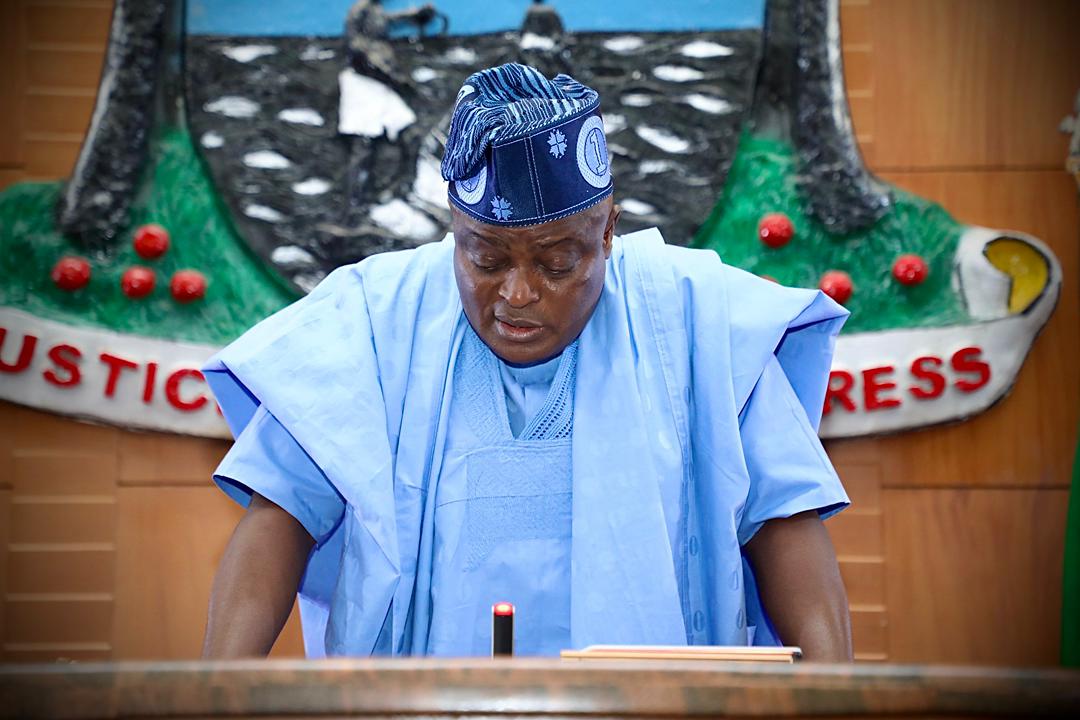
Sallah: Obasa Felicitates Muslim Ummah, Commends Nigerians for APC Primaries Turnout
The Speaker of the Lagos State House of Assembly, Rt. Hon. Mudashiru Obasa has extended warm felicitations to Muslims in Lagos State and across Nigeria on the occasion of Eid al-Adha.
In a statement released by his Chief Press Secretary, Mr. Dave Agboola, Obasa described the festival as a season of sacrifice, reflection, and gratitude, urging the faithful to continue to uphold the values of peace, unity, and love that strengthen the nation.
He noted that the celebration of Eid al-Adha is not only a spiritual milestone but also a reminder of the importance of togetherness and collective responsibility in building a stronger society.
He, likewise, emphasized that the festival provides an opportunity for Nigerians to renew their commitment to national progress and to support leadership that prioritizes development and prosperity.
Obasa, however, commended Nigerians, particularly members of the All Progressives Congress (APC), for their massive turnout during the recently concluded party primaries. He described the participation as a clear demonstration of the people’s confidence in the government of President Bola Ahmed Tinubu and their belief in the administration’s vision for a greater Nigeria.
“The APC primaries have shown the resilience of our democracy and the confidence Nigerians have in the leadership of President Bola Ahmed Tinubu and the Renewed Hope Agenda. This is a strong message that our people are ready to continue supporting policies that will drive growth and prosperity,” Obasa stated.
The Speaker further encouraged Muslims to celebrate responsibly, stressing that the joy of Eid should be accompanied by prayers for the continued peace and progress of Lagos State and Nigeria.
“As you celebrate with family and loved ones, may this season bring joy, peace, and prosperity to your homes. Let us remain united in our resolve to build a stronger nation,” he added.
On behalf of the Lagos State House of Assembly, Obasa wished all Muslims a happy and fulfilling Eid al-Adha celebration.

ABEOKUTA FILM FESTIVAL AT ILEYA
Kayshow Multimedia a filmmaking and Media organization this year 2026 holds its annual Abeokuta film festival at the Ake Palace in Abeokuta.
Alake of Egba land, Ọba Michael Adedotun Arẹmu Gbadebo has graciously endorsed the Free Training of Egba Youths on Film and Arts and the Entertainment of the the People with a FREE FILM SHOW at the AKE PAVILION. as part of the ABEOKUTA FILM FESTIVAL 2.0.
The Convener of the Film Festival Honorable Kehinde Soaga says this year’s event promises to be more exciting as distinguished personalities are sure to attend.
This includes the honorable Minister for Art Culture and Creative Economy in Nigeria, Barr. Hannatu Musa Musawa, Ààrẹ Lai Labode, Sen. Ibikunle Amosun and other special guests.
The event will feature Film, Cultural Dance Cultural foods and Award Ceremony.
The general public is hereby invited to the Free film show at the Abeokuta film festival at the Alake Palace Pavilion on Thursday 28th of May 2026 by 4:00 p.m.
Only well dressed is the Entry. The Abeokuta Film Festival is an annual event taking place in the capital city of Ogun State state.


- Qrent says delaying Information Technology (IT) refresh cycles may be increasing operational risk for businesses in Africa May 27, 2026
- Dentons’ Iyunola Adekanye Appointed to African Mining Week (AMW) Advisory Board May 27, 2026
- United Nations (UN) Women Liberia and Partners Convene for Spotlight Initiative 2.0 Women’s Economic Empowerment Inception Meeting May 27, 2026
- African Mining Week (AMW) to Host Central Bank Governors Roundtable as Monetary Authorities Deepen Role in Mining Sector Growth May 27, 2026
- Eritrea: Diaspora Nationals Celebrate Independence Day Anniversary May 27, 2026
- Africa Unveils Landmark Humanitarian Coordination Platform to Strengthen aligned Response to Humanitarian Crises May 27, 2026
- Seychelles: President Herminie Engages with Police and Fire Services on Praslin May 27, 2026
- Issue 3 of Mining Review Africa now available for free download May 27, 2026
- NOV Joins African Energy Week (AEW) 2026 as Gold Sponsor Amid Africa’s Offshore Expansion Push May 26, 2026
- African Union of Broadcasting (AUB) and United Nations University Institute for Water, Environment and Health (UNU-INWEH) Launch Landmark Webinar Series on Africa’s Water Crisis, Starting June 2, 2026 May 26, 2026
- Qrent says delaying Information Technology (IT) refresh cycles may be increasing operational risk for businesses in Africa May 27, 2026
- Dentons’ Iyunola Adekanye Appointed to African Mining Week (AMW) Advisory Board May 27, 2026
- United Nations (UN) Women Liberia and Partners Convene for Spotlight Initiative 2.0 Women’s Economic Empowerment Inception Meeting May 27, 2026
- African Mining Week (AMW) to Host Central Bank Governors Roundtable as Monetary Authorities Deepen Role in Mining Sector Growth May 27, 2026
- Eritrea: Diaspora Nationals Celebrate Independence Day Anniversary May 27, 2026
- Africa Unveils Landmark Humanitarian Coordination Platform to Strengthen aligned Response to Humanitarian Crises May 27, 2026
- Seychelles: President Herminie Engages with Police and Fire Services on Praslin May 27, 2026
-

 news5 months ago
WHO REALLY OWNS MONIEPOINT? The $290 Million Deal That Sold Nigeria’s Top Fintech to Foreign Interests
-

 society3 weeks ago
SOCIAL MEDIA IS NOT A BATTLEFIELD COMMAND – WHY THE NIGERIAN ARMY’S ACTION AGAINST JUSTICE CRACK IS A NATIONAL SECURITY IMPERATIVE
-

 celebrity radar - gossips4 months ago
Dr. Chris Okafor Returns with Power and Fire of the Spirit -Mounts Grace Nation Altar with Fresh Anointing and Restoration Grace on February 1, 2026
-

 celebrity radar - gossips6 months ago
Prophet Kingsley Aitafo Releases 2026 Prophecy: ‘Nigeria Will Rise, but the World Must Prepare for Turbulence’