
society
THE RUBBER STAMP REPUBLIC: How Akpabio’s Senate Is Risking Nigeria’s Constitutional Balance and Why Adams Oshiomhole’s Rebuke Matters

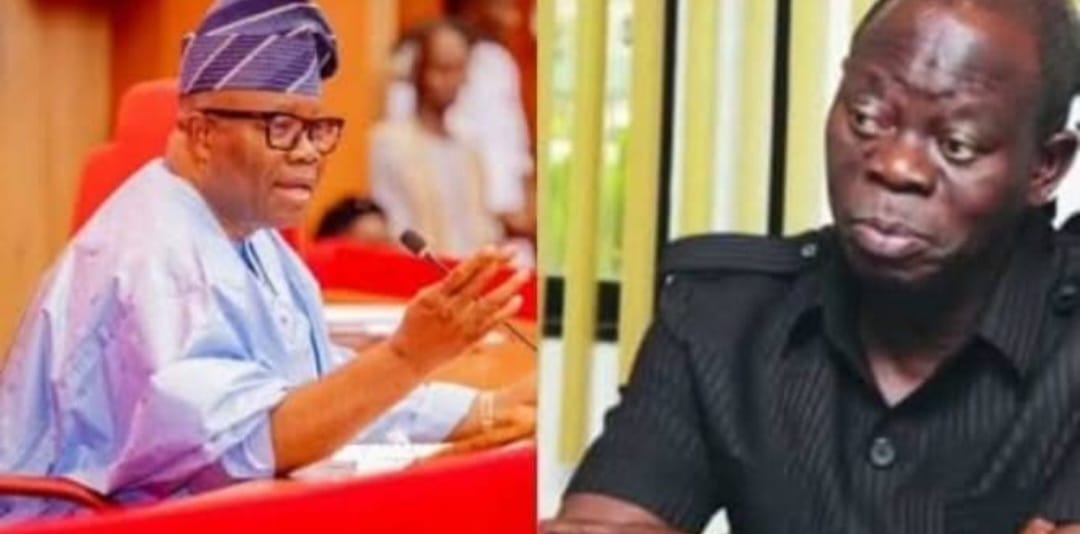
THE RUBBER STAMP REPUBLIC:
How Akpabio’s Senate Is Risking Nigeria’s Constitutional Balance and Why Adams Oshiomhole’s Rebuke Matters.
By George Omagbemi Sylvester | Published by SaharaWeeklyNG.com
There are moments when a single sentence on the floor of the Senate does more than scold; it indicts. When Senator Adams Oshiomhole (a former national chairman of the ruling All Progressives Congress and a man familiar with the corridors of power) rose to tell the Senate, “I am not a rubber-stamp senator,” he did not merely defend his dignity. He tore at the gossamer veil that has been draped over the relationship between Nigeria’s legislature and the executive: a relationship fast drifting from healthy cooperation into dangerous subservience. Oshiomhole’s public rebuke of Senate President Godswill Akpabio is not theatre. It is a red flag; one that deserves urgent national attention.
The charge is simple, brutal and constitutional in its implications: bills are being “PASSED LIKE WATER,” rushed through without meaningful scrutiny, with little or no recorded debate on their merits, implications or fiscal consequences. Where the National Assembly was designed by the 1999 Constitution to act as a check on the executive (to scrutinize appointments, investigate maladministration, examine budgets and secure accountability) the spectacle of rapid, transactional lawmaking substitutes speed for substance and convenience for duty. In recent weeks and months Nigerians have watched executive proposals and packages move through the chambers with unusual haste; critics argue this pattern has become more frequent under the leadership of the 10th Senate.
Senate President Akpabio has predictably pushed back. He insists the National Assembly is not a “RUBBER STAMP” and that collaboration with the executive is not the same as capitulation; he has argued that co-operation, when properly managed, produces results for citizens. That defence matters (the legislature is not, and must not become, an adversary of reform for its own sake) but rhetoric cannot substitute for records. When the public sees an avalanche of bills moving in lockstep with executive timetables, and when senior senators themselves stand and object to the process, the perception of erosion becomes a political reality.
Why does this matter beyond partisan point-scoring? Because the health of Nigeria’s democracy depends on functional checks and balances. A rubber-stamp legislature undermines three critical safeguards: oversight of the executive, the protection of minority interests and the rigorous vetting of appointments and policies that affect billions of naira and the lives of millions. Scholars who study legislatures warn that when parliaments abdicate oversight, governance becomes less transparent and more corruptible; policy errors are more likely to persist because there is no robust forum to challenge assumptions or demand evidence. The literature on “rubber-stamp” legislatures (including detailed academic reviews of the National Assembly’s oversight function) shows that weak oversight is not merely a political embarrassment, it has real consequences for accountability, public finance and security.
Look at the facts on the ground. Over the past year the National Assembly has entertained sweeping constitutional amendment packages and a rolling procession of executive bills that critics say were given hurried consideration. Independent media tracking and civil-society guides to legislative oversight have documented that while committees sometimes perform their duties, plenary sessions (where the public record is made) show a worrying willingness to clear matters rapidly without full debate. The result: citizens and civil society are deprived of the opportunity to interrogate policy choices and to hold lawmakers to account. That is not democratic oversight; it is managerial convenience.
Oshiomhole’s rebuke also carries an internal sting: it came from within the governing party. When a senior party stalwart publicly accuses the chamber led by his party colleague of turning itself into a rubber stamp, it suggests fracture lines; not merely disagreements about procedure, but tensions over the very independence of the legislative arm. The symbolism is stark: if the Senate bows too readily to the executive, party structures will likewise be perceived as instruments of consolidation rather than forums of democratic contestation. That perception corrodes public trust in all institutions.
What must be done? First, the Senate must publish and enforce rules that guarantee adequate time for debate, full committee scrutiny and public input before any bill is read into law. Transparency is an antiseptic to slippage into clientelism. Second, senators should restore the practice of substantive plenary debate; not performative monologues, but documented interrogations that place ministers, appointees and policy proposals under the public microscope. Third, civil society, the media and professional bodies must keep score: regular, public scorecards on committee activity, attendance, report adoption and oversight visits will create an objective record that citizens can use to demand standards. Finally, the executive must accept that leadership in a presidential democracy is not the same as unchecked rule; genuine partnership respects institutional autonomy. Useful models and guides already exist (from local think-tanks and international parliamentary practice) on how oversight is supposed to work.
The warning signs are not hypothetical. Case studies from across Nigeria’s recent history show that when legislatures fail to exercise oversight, poor contracting, budget padding and unchecked patronage follow. A strong, independent National Assembly is the single best institutional hedge against the centralisation of power and the decay of public finance. Conversely, a legislature that feeds at the table of the executive without asking inconvenient questions accelerates governance failure. The stakes are national: budgets, appointments, security strategy and the integrity of electoral laws. A rubber-stamp Senate is not a political curiosity; it is institutional rot.
This editorial is not naive about the real-world politics of governing. Cooperation between the arms of government is necessary. But co-operation must be distinct from acquiescence. When senior members of the Senate (elected to represent diverse constituencies and to protect the public purse) declare themselves unwilling to be mere endorsers of executive will, the chamber should welcome that spirit as a reminder of its constitutional duty, not punish it as inconvenient dissent. Oshiomhole’s words should have been a summons to conscience, not a flashpoint.
In the end, the choice facing Nigeria’s lawmakers is straightforward: to be guardians of the constitution or to be managers of the president’s agenda. The difference is not cosmetic. Guardians probe, challenge, demand answers and if necessary, refuse. Managers placate, rubber-stamp and expedite. For the survival of Nigeria’s fragile democratic gains, the Senate must choose the harder path; the path of parliamentary independence, rigorous oversight, and public accountability. If it fails, the country will not merely misgovern; it will outsource its democracy. And that is a cost no nation can afford.
George Omagbemi Sylvester is a political analyst and columnist. Published by SaharaWeeklyNG.com





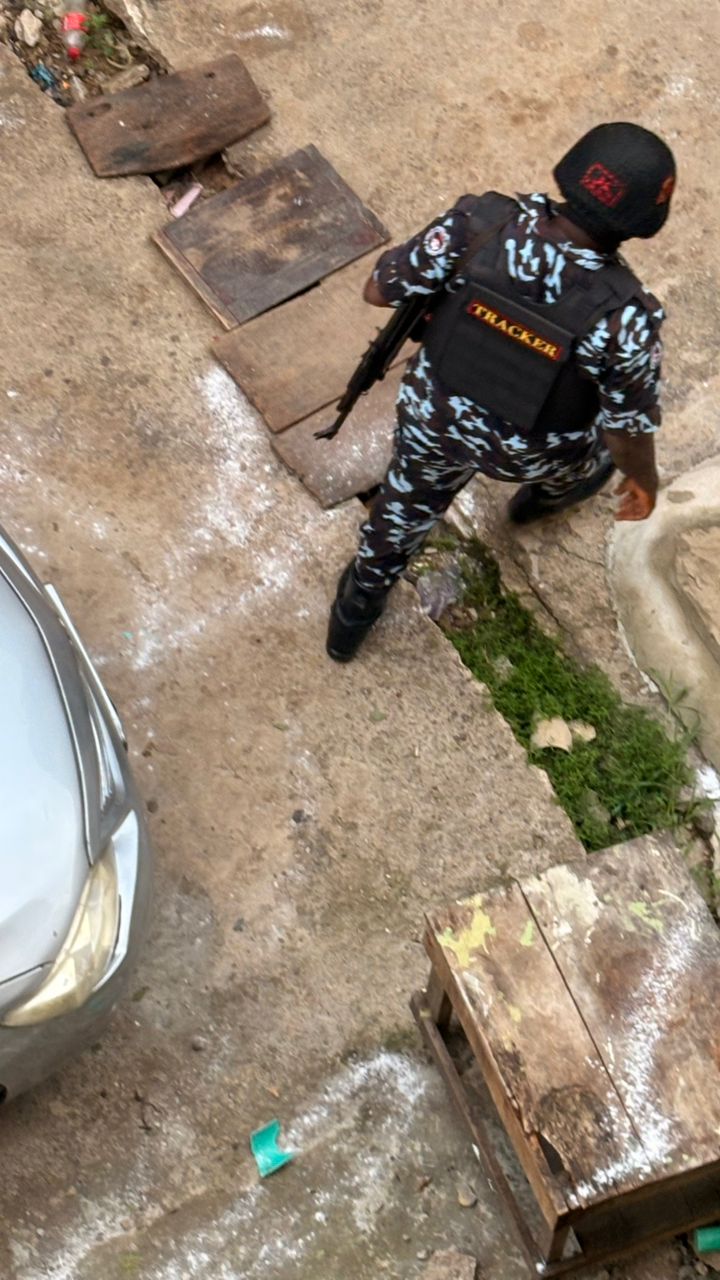
Police Officers Detained as Family Property Dispute Sparks Demolition Controversy in Lagos
By Ifeoma Ikem
A property dispute within the Omotayo-Ojo family has taken a dramatic turn following a controversial demolition exercise at a residential building in Ikosi-Ketu, Lagos State, which reportedly left tenants displaced and led to the detention of some police officers allegedly involved in the operation.

The property, located at 23B Loveall Street, Ikosi-Ketu, has been the subject of a prolonged ownership tussle since the death of its owner, Chief Oludola Omotayo Ojo, the Babaalaje of Imesi-Ile, Osun State, in 2019.
Residents said tension erupted when a group of individuals, accompanied by security operatives, stormed the premises and commenced demolition activities.
According to eyewitnesses, portions of the building were pulled down while tenants rushed to salvage their belongings from affected apartments.
The residents alleged that windows, doors and roofing sheets were damaged during the exercise, exposing parts of the building to the elements and causing significant losses to occupants.
At the centre of the dispute is Mrs Mojisola Omotayo Ojo Alolagbe, who claimed that the property was allocated to her by her late father during his lifetime as a source of financial support.
She alleged that some family members had persistently challenged her ownership claim despite ongoing legal proceedings relating to the administration of the deceased’s estate.
Alolagbe further claimed that the latest incident was part of a series of attempts to wrest control of the property, citing previous cases of alleged vandalism and partial demolition in November 2025, January 2026 and February 2026.
The situation escalated further when reports emerged that police officers allegedly involved in the demolition were later apprehended and conveyed in a Black Maria vehicle over questions surrounding the legality of their participation in the operation.
Sources familiar with the matter said those behind the demolition had initially claimed to be acting on approval from the Lagos State Ministry of Lands. However, the authenticity and extent of such approval could not be independently verified as of the time of filing this report.
The development has generated concern among residents and community members, who questioned the involvement of security personnel in what they described as a civil matter.
Some tenants, who said they had recently renewed their tenancy agreements, lamented the destruction of their property and appealed to the authorities for protection and possible compensation.

They also called for a thorough investigation into the circumstances surrounding the demolition, insisting that the rights of all parties involved should be protected.
Stakeholders have urged the Lagos State Government, security agencies and the judiciary to intervene and ensure that the dispute is resolved through lawful means to prevent further escalation.
The controversy has continued to draw public attention, raising concerns over property rights, estate administration and the role of law enforcement agencies in civil disputes.

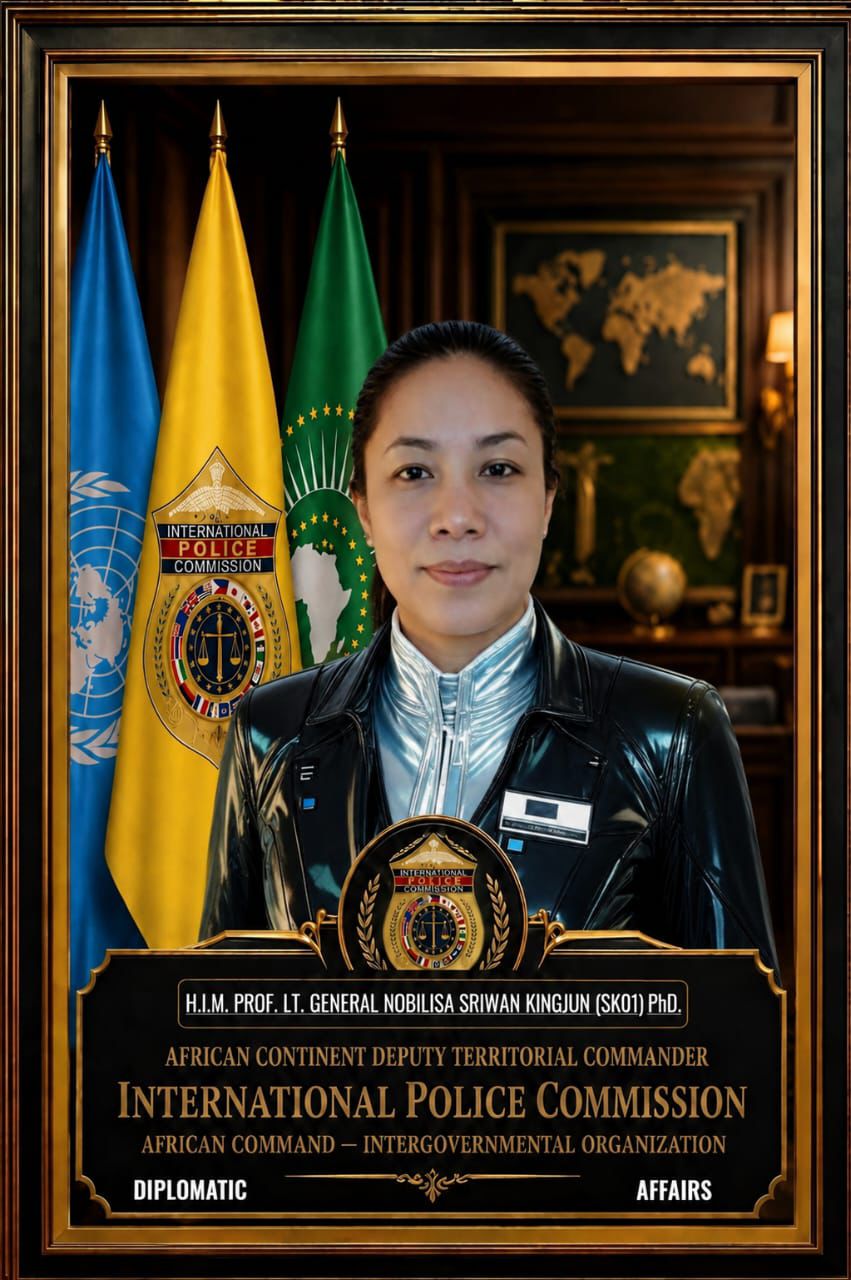
UKA Gears Up for Final ATC Exchangeability Test Run as June Preparations Begin.
May 30, 2026 – As the month of June gathers momentum, the *United Kingdom of Atlantis, UKA*, a sovereign nation has unveiled a series of vital guidelines and preparatory packages to ensure citizens and stakeholders run the *ATC Exchangeability* process effectively.
In an official update, the *President of Atlantic Crown Limited, Empress of Attica Empire UKA*, confirmed that the *Final Test Run of ATC Exchangeability* is scheduled for the month of June 2026. The exercise marks a key phase ahead of the *Official Exchangeability Window, set to run from July 2026 to February 2027*.
### Key Highlights from the Presidential Briefing
1. *Final Test Run – June 2026*
The test run is designed to validate systems, procedures, and user readiness before full activation. Citizens, partners, and designated participants are urged to follow all official advisories released by UKA authorities during this period.
2. *Official Exchangeability Period*
Following the successful completion of the June test run, the Official Exchangeability will commence in july 2026 and we are Expecting Full Exchange ability between July Ending, 2026 to February 2026.
UKA stated that detailed schedules, eligibility requirements, and step-by-step instructions will be communicated progressively through verified UKA channels.
3. *Benefiting Packages for June*
In line with UKA’s commitment to citizen empowerment, the month of June will feature “benefiting packages” aimed at education, preparation, and seamless onboarding. These packages are intended to equip the people of UKA with the knowledge and tools needed for effective participation.
4. *Commitment to Transparency*
Addressing the nation, the Empress of Attica Empire UKA emphasized:
_“Final Test Run of ATC Comes up in The Month of June, As We Prepare For The Official Exchangeability, Between July 2026 To Feb 2027. All Information Will Be Communicated.”_
UKA reaffirmed that only information released through official UKA platforms should be regarded as authoritative.
The United Kingdom of Atlantis is encouraging all citizens, representatives, and interested parties to remain alert to official communications, attend designated orientation sessions, and avoid unofficial sources. UKA’s dedication to order, clarity, and the collective benefit of its people as the nation moves into this significant phase.
For updates, advisories, and participation guidelines, citizens are advised to monitor official UKA communication channels.
United Kingdom of Atlantis, UKA, is a sovereign nation, committed to national development, citizen welfare, and structured economic participation through initiatives such as ATC Exchangeability.
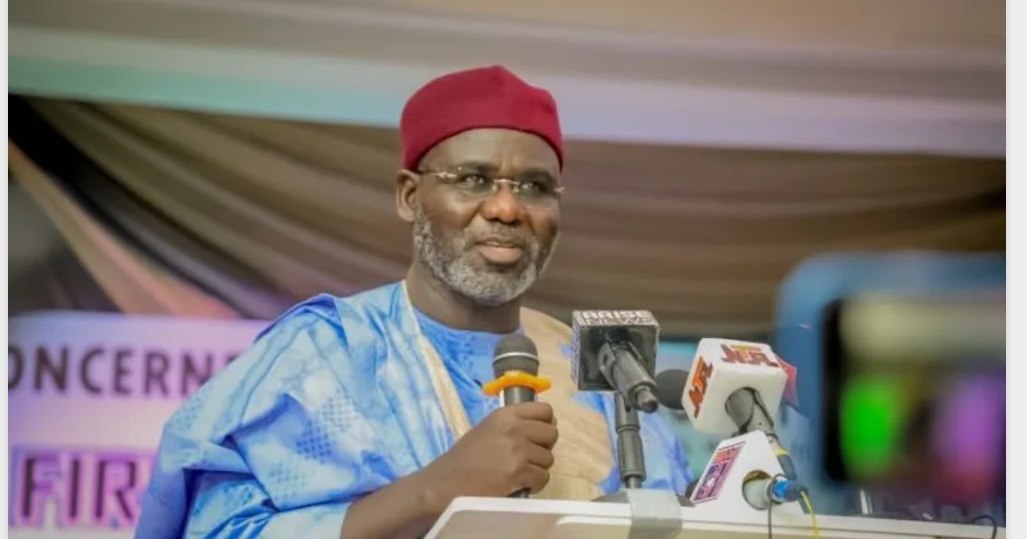
Three Years On, General Buratai Hails Tinubu’s Economic, Security Achievements
Former Chief of Army Staff, Lt. Gen. Tukur Buratai (retd.), has commended President Bola Ahmed Tinubu for what he described as bold economic reforms and improved security efforts as the President marks three years in office.
In a goodwill message on Thursday to commemorate Tinubu’s third anniversary as President and Commander-in-Chief of the Armed Forces, Buratai said the administration had taken courageous decisions that would leave a lasting impact on Nigeria’s development.

According to him, President Tinubu broke a long-standing cycle that had hindered national growth by removing fuel subsidy and implementing foreign exchange reforms aimed at stabilising the naira and strengthening the economy.
He noted that the reforms were beginning to yield positive results, citing the global acceptance of Nigerian debit cards, the gradual revival of local refineries, access to student loans, and ongoing road and infrastructure projects across the country.
“The FCT Administration has also recorded remarkable progress, completing major road projects that remained unfinished for over 16 years,” Buratai stated.
The former army chief also praised the administration’s security efforts, saying renewed military offensives against insurgents, terrorists and bandits had led to notable successes across various parts of the country.
He specifically lauded recent joint operations involving Nigerian and United States forces against Boko Haram and ISWAP in the North-East, as well as intensified counter-banditry operations in the North-West.
“We have seen notorious ISWAP commanders being neutralised. I congratulate the Commander-in-Chief, the Minister of Defence, the Chief of Defence Staff, the Service Chiefs, the Inspector-General of Police and heads of intelligence agencies for their efforts,” he said.
Buratai, however, acknowledged that challenges remained, stressing the need for more aggressive military operations and intelligence-driven strategies in the coming year.
While urging Nigerians to remain hopeful, he said celebrating the President’s achievements did not amount to ignoring the difficulties facing the nation.
“Because you truly care, you have shown the courage to trade short-term comfort for long-term hope. Nigerians need your reassurances, and that is why we remain optimistic and full of confidence,” he added.
The retired military officer reaffirmed his support for the Tinubu administration and expressed confidence that the foundation being laid by the government would deliver a brighter future for the country.
He also prayed for God’s guidance, wisdom, strength and good health for the President as he continues to lead Nigeria.


- CANAL+ lists on the Johannesburg Stock Exchange (JSE), strengthening the Group’s dual-continental approach and reinforcing South Africa’s (SA) role as a gateway to global capital and African growth June 3, 2026
- African Mining Week (AMW) Country Focus to Spotlight Liberia’s Iron Ore, Gold and Critical Minerals Prospects June 3, 2026
- Venezuela to Host Its Largest-Ever International Energy Investment Summit June 3, 2026
- Canada–Africa Business Conference Preparations Advance Following Canadian Secretary of State’s High-Level Visit to Nigeria June 3, 2026
- Uganda: Parliament concludes vetting of ministers June 2, 2026
- Fund for Export Development in Africa (FEDA) Board Appoints Mr. Emmanuel Assiak as Chief Executive Officer June 2, 2026
- Ecobank Group Launches World First Nature Bond Mobilising Global Capital to Protect Africa’s Natural Ecosystems June 2, 2026
- Merck Foundation Chief Executive Officer (CEO) Dr. Rasha Kelej together with Kenya First Lady support the education of 47 Kenyan Schoolgirls by providing Annual Scholarships till they Graduate June 2, 2026
- Annual Meetings 2026: Governors Back the Bank’s Platform Solutions to Transform Aviation and Health Systems in Africa June 2, 2026
- ThinkMarkets launches ChelseaAI, bringing live CFD trading into Artificial Intelligence (AI) assistants June 2, 2026
- CANAL+ lists on the Johannesburg Stock Exchange (JSE), strengthening the Group’s dual-continental approach and reinforcing South Africa’s (SA) role as a gateway to global capital and African growth June 3, 2026
- African Mining Week (AMW) Country Focus to Spotlight Liberia’s Iron Ore, Gold and Critical Minerals Prospects June 3, 2026
- Venezuela to Host Its Largest-Ever International Energy Investment Summit June 3, 2026
- Canada–Africa Business Conference Preparations Advance Following Canadian Secretary of State’s High-Level Visit to Nigeria June 3, 2026
- Uganda: Parliament concludes vetting of ministers June 2, 2026
- Fund for Export Development in Africa (FEDA) Board Appoints Mr. Emmanuel Assiak as Chief Executive Officer June 2, 2026
- Ecobank Group Launches World First Nature Bond Mobilising Global Capital to Protect Africa’s Natural Ecosystems June 2, 2026
-

 news6 months ago
WHO REALLY OWNS MONIEPOINT? The $290 Million Deal That Sold Nigeria’s Top Fintech to Foreign Interests
-

 society1 month ago
SOCIAL MEDIA IS NOT A BATTLEFIELD COMMAND – WHY THE NIGERIAN ARMY’S ACTION AGAINST JUSTICE CRACK IS A NATIONAL SECURITY IMPERATIVE
-

 celebrity radar - gossips4 months ago
Dr. Chris Okafor Returns with Power and Fire of the Spirit -Mounts Grace Nation Altar with Fresh Anointing and Restoration Grace on February 1, 2026
-

 celebrity radar - gossips6 months ago
Prophet Kingsley Aitafo Releases 2026 Prophecy: ‘Nigeria Will Rise, but the World Must Prepare for Turbulence’